Pilates guide

Pilates for hip arthritis: the evidence, moves to change, stiffness and the hip flexors, before and after a replacement, and a class

Pilates can be a good way to do the exercise that guidelines put first for hip arthritis (osteoarthritis): it works the hip in every direction, lying, on your side and standing, with little impact. No trial of Pilates in hip arthritis has been published yet, so this guide leans on the evidence for exercise in general, which helps a little on average and more for some people, and shows how to adapt Pilates to a stiff, sore hip.

Pilates sits beside your care, not in place of it. It won't cure arthritis or rebuild the joint, and a physiotherapist's programme, your GP's advice and, before or after a replacement, your surgical team's limits come first.

This guide covers which movements hip arthritis takes away and how to keep them, the moves to change (mostly deep bends), the reformer, flares, Pilates before and after a hip replacement and the warning signs, with a new 25-minute class that keeps hip bends to about a right angle. Our hip arthritis guide has the full exercise plan.

The short version

No Pilates trial in hip arthritis has been published

One small Turkish trial (52 people, clinical Pilates against standard exercise for 12 weeks) finished in June 2025. A conference abstract from October 2026 appears to report it (same university and topic), and we couldn't read it. Claims that research shows Pilates significantly helps hip arthritis run ahead of the evidence.

Sources 1, 2, 3

Exercise is still the first treatment

NICE says to offer exercise, tailored to the person, to everyone with osteoarthritis, and every major guideline agrees. Arthritis UK names Pilates among strengthening exercises. Pilates is one way to do it, not a treatment of its own.

Sources 4, 5, 6, 7, 8

Exercise helps a little on average

In the 2026 Cochrane review (18 studies, 1,368 people), exercise probably reduced hip pain by about 7 points out of 100 and improved function by about 9, changes its authors call unlikely to be clinically meaningful on average. People with worse pain to start with gained more.

Sources 9, 10

Keep the hip moving in every direction

Hip arthritis tends to take away turning the leg in, bending the hip and straightening it behind you. Pilates can keep each direction moving and strong within a pinch-free range; that's our reading, as no trial shows Pilates range work changes how the hip moves.

Sources 11, 12, 13

Change the deep bends

Roll-ups, rolling moves, the teaser and deep knee-to-chest positions bend the hip a long way. Keep bends above any pinch, and after a replacement keep to your team's limit, which the NHS gives as a right angle while the hip recovers.

Source 14

Some pain is all right

Pain up to 5 out of 10 during and after exercise is acceptable if it's back to usual by the next day, the rule in a programme for severe hip and knee arthritis. NICE says pain may rise when you start, and exercise still helps.

Sources 15, 4

Hip arthritis, and where Pilates fits

What hip arthritis is

The cartilage on the ends of the bones breaks down, bony growths can form and the joint stiffens. The NHS says hip osteoarthritis often makes it hard to put on shoes and socks or get in and out of a car, with pain in the groin or outside the hip; Arthritis UK adds pain in the buttock that can spread to the knee. NICE's diagnosis without an X-ray applies: aged 45 or over, pain with activity, and morning stiffness of 30 minutes or less.

Sources 16, 17, 13, 4

Which movements go first

The American College of Rheumatology's criteria for hip osteoarthritis rest on turning the hip in (15° or less, or painful) and bending it (115° or less). In 598 people with early hip or knee symptoms, limited turning in and limited bending best separated people with and without changes on X-rays. People with hip arthritis also straighten the hip less behind them when walking, and in late-stage disease they load the hip less, protecting it.

Sources 11, 18, 12, 19

Where Pilates fits

Arthritis UK says exercise is the best thing you can do at home for hip osteoarthritis, combining strength, aerobic and range-of-movement work, with strengthening at least two days a week, and names Pilates among strengthening exercises. Mat Pilates works the hip lying, on your side, face down and standing, with little impact. The NHS has no Pilates video just for the hip, but its free arthritis and chair-based Pilates classes suit hip arthritis too (our reading).

Its weak points for hip arthritis are the deep hip bends of the classical order and big leg circles, and, as for the knee, it usually lacks progressive load, so add sit-to-stands, step-ups and balance (our reading of EULAR's call for enough exercise, built up over time).

Sources 13, 8, 7, 20, 21

Hip shape and impingement

A cam-shaped hip (a bump where the ball meets the neck of the thigh bone) raised the odds of developing hip osteoarthritis within 8 years, across 23,886 hips. It's a shape seen on scans, not a reason to stop exercising. Younger, active people with hip-related pain are a different group: experts advise at least 3 months of exercise-based treatment, and our Pilates for a hip labral tear and hip impingement guides cover them.

Sources 22, 23

What the evidence says

No published Pilates trial in hip arthritis; a modest, well-studied benefit from exercise in general.

No published Pilates trial in hip arthritisStrong evidence

Our searches in November 2026 found no published randomised trial of Pilates in hip osteoarthritis. One Turkish trial randomised 52 people aged 18 to 75 to clinical Pilates or strengthening and stretching with bands, 45 minutes twice a week for 12 weeks, supervised by a physiotherapist; it finished in June 2025 and has no results posted on its registry. A conference abstract from the same university on the same topic appeared in October 2026 and appears to report it; we couldn't read it, so we can't say what it found. In a UK interview study, people in physiotherapist-led Pilates classes, some with osteoarthritis, described more confidence and better self-management.

Sources 1, 2, 3, 24

Exercise in general: a small average benefitStrong evidence

In the 2026 Cochrane review (18 studies, 1,368 people, most small and unblinded), exercise probably reduced pain by about 7 points out of 100 and improved function by about 9 compared with no treatment (moderate certainty), changes the authors call unlikely to be clinically meaningful on average. The 2014 version found a similar effect but rated its evidence higher. Averages hide a spread: in pooled trials, people with worse pain and function to start with gained more.

Sources 9, 25, 10

Against a sham treatmentEmerging evidence

Against placebo or attention control (2 studies, 123 people), exercise may make little or no difference to pain (low certainty). In one of those trials, 102 people with painful hip osteoarthritis did no better with 10 physiotherapy sessions over 12 weeks than with sham treatment, and mild side effects were more common (41% against 14%).

Sources 9, 26

Enough of it, for long enoughEmerging evidence

Across 12 supervised programmes (1,202 people), those that met recommended exercise doses reduced pain, and those where it wasn't clear people did the exercise didn't. Across 92 knee and hip trials, no type of exercise clearly beat another.

Sources 27, 28

Exercise and a hip replacementEmerging evidence

In 109 people, exercise therapy plus education against education alone: 41% against 25% still had their own hip 6 years later, and the wait for a replacement was longer. Function was better before surgery, but pain and stiffness weren't different. It's one trial.

Source 29

Programmes in everyday careEmerging evidence

In Denmark, the GLA:D programme went with pain about 12 to 14 points lower in 9,825 people with hip or knee arthritis, and in Australia's registry of 9,938 people, hip results were similar across settings; neither had a comparison group. ESCAPE-pain runs 12 classes over 6 weeks for knee and hip pain and says it doesn't cure arthritis or remove pain completely.

Sources 30, 31, 32

Guidelines, tai chi, yoga and water exerciseStrong evidence

NICE, OARSI, the American College of Rheumatology and EULAR make exercise a core treatment for hip osteoarthritis, and none names Pilates. The American College of Rheumatology strongly recommends tai chi for the hip and makes no recommendation on yoga for the hip, for lack of data. OARSI recommends water exercise for the knee, not the hip. No trial has compared Pilates with yoga or tai chi in hip arthritis.

Sources 4, 5, 6, 7

How often and how it should feel

How often

Arthritis UK suggests strengthening on at least two days a week, with 2 hours 30 minutes of aerobic activity a week and range-of-movement work. The finished Turkish trial ran twice a week for 12 weeks. Our editorial starting point: the 25-minute class 2 or 3 times a week, with walking, cycling or swimming on other days.

Sources 13, 8, 2, 27

The pain ruleEmerging evidence

In a programme for 76 people with severe hip or knee osteoarthritis, pain up to 5 out of 10 was allowed during and after training, as long as it was back to usual by the next day; if it wasn't, the training was eased. NICE says joint pain may rise when you start, and exercise still helps. If your hip is worse that night or the next morning, do less next time, with fewer repetitions or a smaller range, not nothing (our suggestion, from that programme).

Sources 15, 4

Flares

NICE describes a flare as a temporary worsening of pain, swelling and stiffness. We found no figures for hip flares; in one diary study of 67 people with knee pain, flares lasted a median of 8 days and were more likely after heavy days. No flare treatment has been proven; the only two studies favoured a modified exercise programme. Do less, not nothing: the flare-day moves below, a shorter walk, and build back over a few days (our suggestion).

Sources 4, 33, 34, 35

Stiffness and the front of the hip

Straightening the hip behind youEmerging evidence

Across 10 studies, people with hip osteoarthritis straightened the affected hip less behind them when walking. Face-down leg lifts, bridges, standing band hip extension and the standing hip flexor stretch all work that direction (our reading).

Source 12

Tight hip flexors aren't proven to be the causeMixed evidence

No study we found shows that tight hip flexors cause the loss of straightening rather than the joint itself (our reading of the walking review). Stretching the front of the hip is reasonable as part of a programme that also strengthens; promising it will release the hip isn't.

Source 12

Morning stiffness, and stiffness after sitting

Morning stiffness in osteoarthritis is usually short, 30 minutes or less. The NHS describes more pain and stiffness when you haven't moved for a while, so a few minutes of gentle hip movement before standing work, and moving often through the day, help (our suggestion). Stiffness that lasts more than 30 minutes after waking is a reason to see a GP. If long drives stiffen your hip, our hip pain when driving guide covers seat set-up and breaks.

Sources 4, 17, 36

The reformer

What changes on the reformer

Footwork works the legs lying down against springs; feet in straps (leg circles and frogs) take the hip through big circles and deep bends; and the stomach massage and short box are done sitting with the hips well bent. Keep footwork in a comfortable range, keep circles and frogs small and above any pinch, and sit on a raised surface if sitting bent forward pinches (our reading of the method).

Source 37

No reformer trial in hip arthritis

Our searches found no reformer trial in hip or knee arthritis. Mat and standing moves work the same muscles (our reading).

Source 1

Lying: move the hip in every direction

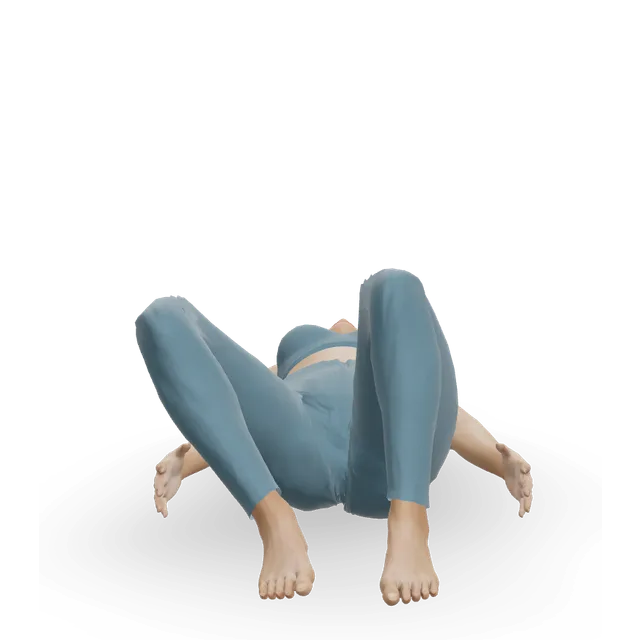
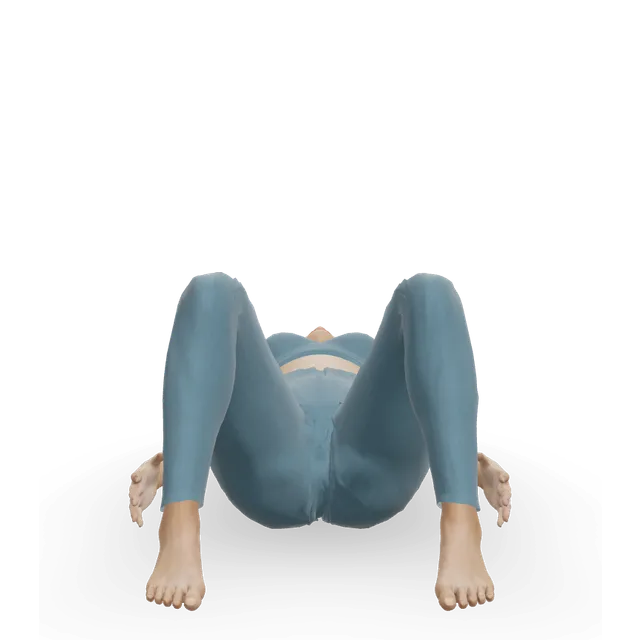
Lateral breathing: the move page's dose, "5 to 8 breaths at the start of every session". Heel slides: the move page's dose, "10 slow repetitions each side, once or twice a day", sliding only as far as is comfortable. Hip windshield wipers: the move page's dose, "10 slow passes side to side, 2 rounds (our editorial starting point)"; a pinch in the groin means make the movement smaller, as its page says. Bent-knee fall-outs and knee folds: 5 each side (adapted from the move pages' doses), knee folds to a right angle and no further. Leg circles: 5 small circles each way, each leg (adapted from the move page's dose); stop if you feel groin pain.

Lying, on your side and face down: strength

Belt press: the move page's dose, "3 to 5 holds of 5 to 10 seconds, twice a day, at a light effort: the starting dose in the LEAP trial programme". Side kick: the move page's dose, "8 to 10 each side", with the front swing no higher than the hip. Bridge, 8 slow, and swimming, 2 sets of 20 seconds (our Pilates after a hip replacement class). Side-lying leg raise, 8 each side, leg slightly behind your body line (our Pilates for knee pain class).

Standing: strength, everyday movement and balance

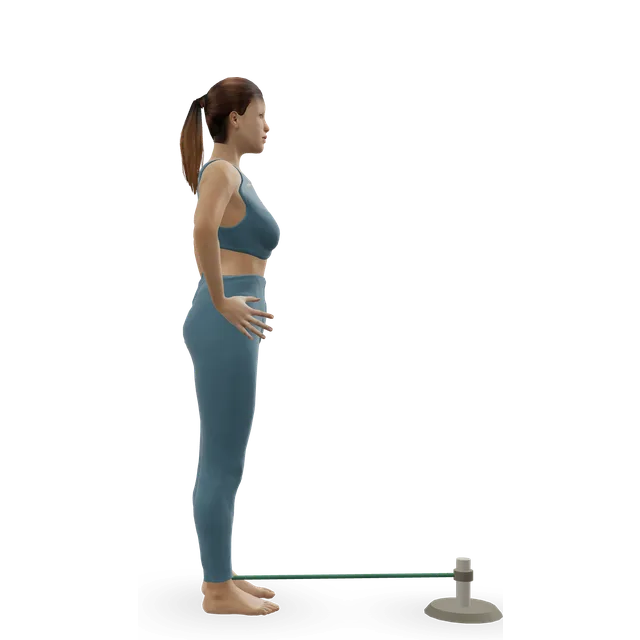
Standing wall press: the move page's dose, "3 to 5 holds of 5 to 15 seconds each side, twice a day: the standing hold in the LEAP trial programme". Standing hip circles: the move page's dose, "3 slow circles each way with each leg, 20 to 30 seconds a circle (our editorial starting point)", stopping at any pinch. Band hip extension: 2 sets of 8 each side with a light band (adapted from the move page's dose). Sit to stand, 2 sets of 5 to 8 from a higher chair, hands allowed; step-ups, 2 to 3 sets of 8 each side on a low step (our hip arthritis guide's plan). Single-leg stand, 2 holds of 20 to 30 seconds each side (our Pilates after a hip replacement class). Side-stepping: the move page's dose, "10 steps each way, next to a counter (the NHS balance exercises)".

Stretch the front of the hip

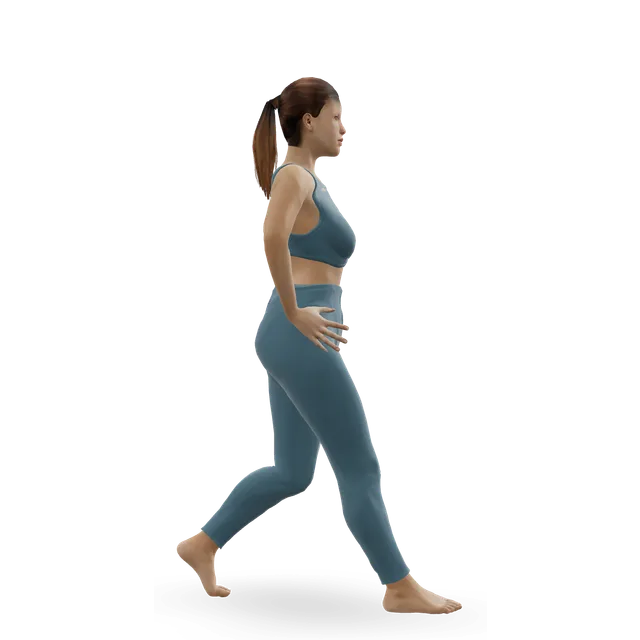
Standing hip flexor stretch: the move page's dose, "Hold 20 to 30 seconds, 2 to 4 times each side (our editorial starting point)". Half-kneeling hip flexor stretch: 2 holds of 30 seconds each side, knee padded (our Pilates for a hip labral tear class); use the standing version if kneeling hurts. Hamstring stretch with a strap: 30 seconds each leg (our Pilates for knee pain class), bending the hip only as far as is comfortable.

On a flare day

5 to 10 slow repetitions of each, within a comfortable range and never forced into pain (our editorial starting point, as our exercise for arthritis guide gives it); for the belt press, a few gentle holds.

What to change or leave out

Deep hip bends

The roll-up, the teaser, rolling like a ball, the seal, the spine stretch forward, child's pose and a deep squat hold: keep the bend above any pinch, and sit on a cushion for seated moves. While you recover from a replacement, leave them out if your team limits bending past a right angle, and our class keeps the hip at a right angle or less if you're waiting for one.

Source 14

Big circles and turning to the end of the range

Frog rock, pigeon, the reclined figure four, the 90-90 switch, the corkscrew and big leg circles: make them small or swap them. The reclined figure four's page already says deep hip bending with the leg crossed is one to clear with your surgeon after a replacement.

After a hip replacement

While a new hip recovers, the NHS advises not bending it more than 90 degrees, not crossing your legs, not bending down to touch your feet, and avoiding jumping and sudden turns. That rules out the roll-up, the teaser and the rolling moves, a deep knee-to-chest in the single-leg stretch, and the inner thigh lift, which crosses one leg over the other. Keep leg circles small, and follow your own team's limits.

Source 14

Outer hip pain too

Outer hip pain often comes with hip arthritis. Leave out clams and lying on the sore side, and don't let the top leg cross or drop in side-lying work or the inner thigh lift, as the clamshell and inner thigh lift pages say. Our Pilates for hip bursitis guide covers it.

With thinner bones too

Modify or avoid exercises that round your back deeply or repeatedly, especially with a weight: sit-ups, toe touches, Pilates roll-downs and curl-ups, and extreme yoga forward folds. Bend from the hips instead. You do not need to avoid bending, twisting or lifting altogether: move smoothly and keep your upper back straight.

Source 38

Before and after a hip replacement

Before surgeryEmerging evidence

In 28 trials, exercise before surgery had a modest effect on pain, function and quality of life in the first 6 months afterwards. In a 2026 network analysis of 21 trials before hip replacement, tai chi, mixed exercise and leg strength training helped, at low to very low confidence; no Pilates trial was included. NICE asks for advice on exercises to do before and after a hip or knee replacement.

Sources 39, 40, 41

Hip precautionsEmerging evidence

The NHS lists not crossing your legs, not bending the hip past a right angle, not bending down to touch your feet or ankles, and no jumping or sudden turns while the hip recovers. Two meta-analyses found routine precautions after a posterior-approach replacement didn't reduce early dislocation, at low certainty. Teams still differ, so follow yours.

Sources 14, 42, 43

Pilates after surgeryMixed evidence

In one surgeon's series of 38 people, modified mat Pilates started within 2 weeks of leaving hospital, within each person's precautions, and no adverse events were seen; it was a look back at records, not a trial. In 6 people with sensor-fitted hip replacements, most stretching and band exercises loaded the hip about as much as walking, or less. Our Pilates after a hip replacement guide has the stages, the warning signs and a class.

Sources 44, 45

Classes to follow

Our new class keeps every hip bend to about a right angle, moves the hip in every direction and has a flare-day stop point; its structure is our own and untested. The hip pain class is the gentlest start and suits outer hip pain too; the arthritis class suits several sore joints; the hip replacement class is for after surgery, once your team agrees; the hip strengthening workout is the next step once the class feels easy; and the arthritis routine, chair class and balance class suit other days.

Every-direction hip Pilates for arthritis: a 25-minute class with no deep bends and a flare-day stop point

A 25-minute Pilates class for hip arthritis: hip movement in every direction, lying and standing strength, and balance, with no deep bends and a flare-day stop.

25 minBeginner19 movesBand, wall

Pilates for hip pain: a 20-minute class that spares the hip

A 20-minute Pilates class for hip pain: bridges, outer-hip holds, standing leg work and balance, without deep bends, crossed legs or lying on the sore side.

20 minBeginner14 movesBand, wall

Pilates for arthritis: a 25-minute joint-friendly class (no kneeling)

A gentle 25-minute Pilates class for arthritis: lying, side-lying, chair and standing moves, with no kneeling or weight on your hands, and flare-day options.

25 minBeginner16 movesBench or box, something with weight

Mat Pilates after a hip replacement: a 25-minute return class with no deep hip bends

A 25-minute Pilates class for after a hip replacement: hip, trunk and balance work that keeps your hip bend at a right angle and your knees apart.

25 minBeginner18 movesBand, wall

Hip strengthening workout: bridges, side hips, single-leg control and balance

A 30-minute session for hips that don't currently hurt: bridges, side-hip work, step-ups and single-leg control, an optional harder block, then balance.

30 minBeginner13 movesWall, band

Arthritis exercise routine: a joint-friendly circuit

A 30-minute joint-friendly circuit built like the GLA:D and ESCAPE-pain programmes: a gentle warm-up, chair, step and band strength moves, balance, then stretches.

30 minBeginner14 movesBench or box, step

Chair Pilates workout

A 20-minute chair Pilates workout for beginners and older adults: breathing, sitting tall, gentle spine and leg moves, and a standing finish at the chair.

20 minBeginner14 movesBench or box, something with weight

Standing Pilates for balance: a 25-minute counter and mat class

A 25-minute Pilates class for steadier balance: standing balance and leg strength at a kitchen counter, then mat work for your trunk and hips.

25 minBeginner17 movesWall, bench or box

Plans

The beginner plan builds a Pilates habit over 4 weeks (keep its deep bends above any pinch); the seniors plan adds walking and strength.

When to stop and get help

This is general information, not a diagnosis. A&E means accident and emergency; in the US, call 911 for 999, and use your doctor's urgent line or urgent care for NHS 111.

Call 999 or go to A&E

Call 999 or go to A&E for severe hip pain after a fall or injury, if you can't walk or put weight on your leg, or for tingling or loss of feeling in your hip or leg after an injury.

Call 999 or go to A&E if breathing suddenly becomes difficult, if pain in your chest or upper back comes on suddenly with breathlessness or a very fast heartbeat, or if someone passes out. Do not drive yourself. It can be a blood clot that has reached the lungs.

Sources 36, 46

Urgent GP appointment or NHS 111

  • Ask for an urgent GP appointment or get help from NHS 111 if you have severe hip pain that started suddenly but you've not had a fall or injured your hip, your hip is swollen and feels hot, the skin around your hip has changed colour, or you have hip pain, feel generally unwell and have a high temperature (or feel hot, cold or shivery). A hot, swollen hip with a high temperature can be a joint infection.
  • Same day (urgent GP appointment or NHS 111): throbbing pain in one leg (rarely both), usually the calf or thigh; swelling in one leg (rarely both); red, blue or darkened skin around the painful area, which may be harder to see on brown or black skin; or swollen veins. It could be a blood clot (deep vein thrombosis, DVT), which is more likely while you're moving about much less than usual or after a hospital stay.

Sources 36, 47, 48

Get help the same day if

Ask for an urgent GP appointment or get help from NHS 111. In the US, use your doctor's urgent line or urgent care.

  • You have severe pain and swelling in just 1 joint that started suddenly.
  • Your pain doesn't get better with painkillers, such as paracetamol.
  • The skin around your joint is red or hot (redness may be harder to see on brown and black skin).
  • You have sore joints with a high or low temperature, or you feel hot, cold or shivery.

Source 49

See a GP or physiotherapist

  • Hip pain that stops normal activities or disturbs sleep, keeps getting worse or keeps coming back, or has not improved after 2 weeks of looking after it at home.
  • Stiffness lasting more than 30 minutes after waking.
  • You have unexplained pain, swelling or stiffness in your joints that doesn't go away in a few days.

Sources 36, 49

After a hip replacement

Our Pilates after a hip replacement guide lists the signs of a dislocated hip, a blood clot and a wound infection, and when to go back to your team.

During Pilates

A sharp pinch in the groin at the end of a bend or turn means make the movement smaller, not push through. A dull ache within the pain rule that settles by the next morning is expected (our suggestion, from the pain rule above).

Source 15

Chest pain or fainting: call 999

Call 999 if:

  • You get sudden pain or discomfort in your chest that doesn't go away; it can feel like squeezing or pressure, burning or indigestion.
  • The pain spreads to your left or right arm, or your neck, jaw, stomach or back.
  • You have chest pain and feel sweaty, sick, light-headed or short of breath.
  • Someone faints while exercising, can't be woken within 1 minute, or has chest pain or a pounding, fluttering or irregular heartbeat.

Sources 50, 51, 52

Breathlessness

Call 999 or go to A&E (accident and emergency) straight away for severe difficulty breathing (gasping, choking or not able to get words out), a chest that feels tight or heavy, pain that spreads to your arms, back, neck and jaw, lips or skin turning very pale, blue or grey, or sudden confusion. If you're more short of breath than usual, or your heart is racing, fluttering or skipping beats, contact NHS 111.

Source 53

Stop and get advice if

You feel any pain or become unwell, as the NHS advises for its Pilates videos, and especially for chest pain or pressure, unusual breathlessness, dizziness or fainting. If you have a health problem, an injury or any symptoms, get advice from a healthcare professional, such as a GP, before you start.

Sources 54, 20

Myths

"Research shows Pilates significantly improves hip arthritis"Strong evidence

No trial of Pilates in hip osteoarthritis has been published. One small trial has finished, and a conference abstract that appears to report it is all that has appeared so far.

Sources 1, 2, 3

"Exercise wears out an arthritic hip"Strong evidence

NICE says exercise isn't harmful to arthritic joints. Recreational runners had less hip and knee arthritis than people who didn't run, and in one trial people who exercised kept their own hip longer.

Sources 55, 56, 29

"Stretch your tight hip flexors and the arthritis pain will go"Mixed evidence

People with hip arthritis straighten the hip less when walking, but no study shows tight hip flexors cause the pain; the joint itself may be what limits the movement (our reading). Stretching the front of the hip is fine as part of a programme that also strengthens.

Sources 12, 13

"Rest the hip until it stops hurting"Emerging evidence

Arthritis UK says exercise is the best thing you can do at home for hip osteoarthritis. Keep moving within the pain rule; in a flare, do less, not nothing.

Sources 13, 35

"You'll need a hip replacement soon anyway"Emerging evidence

Many people manage for years with exercise. In one trial, exercise plus education kept more people on their own hip at 6 years, and NICE suggests considering referral only when symptoms substantially affect quality of life and non-surgical care hasn't worked.

Sources 29, 4

"After a hip replacement, you can never bend or cross your legs in Pilates"Mixed evidence

Precautions apply while the hip recovers, routine precautions didn't reduce dislocation in trials, and a surgeon's series used modified Pilates from the first weeks. Follow your own team, especially in the first months.

Sources 42, 44, 14

"Only swimming is safe for an arthritic hip"Strong evidence

Arthritis UK suggests swimming, cycling and water exercise as good options, but OARSI's core treatment for the hip is structured exercise on land, and it recommends water exercise for the knee, not the hip.

Sources 13, 5

"You need a reformer"Emerging evidence

No trial has tested the reformer in hip arthritis, and mat and standing moves work the same muscles (our reading).

Source 1

Questions people ask

Is Pilates good for hip arthritis?

It's a sensible way to do the exercise that guidelines put first, but no trial of Pilates in hip arthritis has been published yet. Exercise in general helps hip arthritis a little on average, and Pilates works the hip in every direction with little impact. Add standing strength work and walking or cycling.

Is there an NHS Pilates class for hip arthritis?

Not one just for the hip, but the NHS has a free 32-minute Pilates class for arthritis and a chair-based Pilates class. Our 25-minute Pilates for hip arthritis class keeps hip bends to about a right angle.

What Pilates exercises are good for hip arthritis?

Moves that keep the hip turning, bending and straightening and strengthen the muscles round it: heel slides, small leg circles, windscreen wipers with your feet down, bridges, side-lying leg lifts, face-down leg lifts, standing presses against a wall, sit-to-stands and a standing hip flexor stretch. Our 25-minute class puts them together, keeping each bend above any pinch.

Which Pilates moves should I avoid with hip arthritis?

None is banned, but deep hip bends (the roll-up, the teaser, rolling like a ball, a deep knee-to-chest) and big leg circles often pinch an arthritic hip. Keep each bend above any pinch, and after a replacement follow your team's precautions.

Is reformer Pilates good for hip arthritis?

It can be: footwork strengthens the legs lying down against springs. Keep leg circles and frogs in the straps small and above any pinch. No trial has tested the reformer in hip arthritis.

Can Pilates make hip arthritis worse?

Exercise isn't harmful to arthritic joints, NICE says. Pain up to 5 out of 10 that's back to usual by the next day is fine; if your hip is worse that night or the next morning, do less next time, not nothing.

Is yoga or Pilates better for hip arthritis?

No trial has compared them, and neither has a published trial in hip arthritis on its own. Tai chi is the mind-body exercise with a strong recommendation for the hip; pick the one you'll keep doing.

Can Pilates delay a hip replacement?

No trial has tested Pilates for this. In one trial of exercise therapy plus education, more people still had their own hip 6 years later (41% against 25%).

Should I do Pilates before a hip replacement?

It can be part of getting ready: exercise before a replacement has a modest effect on recovery in the first months, and NICE asks hospitals to advise on exercises before and after. Keep within your pain and pinch limits.

When can I do Pilates after a hip replacement?

When your surgical team or physiotherapist agrees. In one surgeon's series, modified mat Pilates started within 2 weeks of leaving hospital, within each person's precautions. Our Pilates after a hip replacement guide has the stages.

How often should I do Pilates for hip arthritis?

Two or three times a week, with walking, cycling or swimming on other days; Arthritis UK suggests strengthening on at least two days a week. Programmes that meet recommended doses do better than token ones.

When should I see a doctor about hip arthritis?

Call 999 or go to A&E for severe hip pain after a fall or injury, or if you can't walk or put weight on the leg. Get an urgent GP appointment or NHS 111 for a hot, swollen hip with a high temperature, and see a GP for hip pain that keeps getting worse, disturbs sleep or hasn't improved after 2 weeks.


Sources

  1. PubMed, Europe PMC, ClinicalTrials.gov and Crossref · Our searches for Pilates trials in knee and hip osteoarthritis, around joint replacement and on the reformer (November 2026)
  2. ClinicalTrials.gov · NCT06783452: clinical Pilates or standard exercise in 52 people with hip osteoarthritis, Turkey (completed June 2025, no results posted)
  3. Polat 2026 · Clinical Pilates in hip osteoarthritis (conference abstract, Gait Posture; only its record could be opened, not the abstract)
  4. NICE NG226 · Osteoarthritis in over 16s: diagnosis and management (2022): recommendations (read in full)
  5. Bannuru 2019 · OARSI guidelines for the non-surgical management of knee, hip and polyarticular osteoarthritis (guideline, Osteoarthritis Cartilage)
  6. Kolasinski 2020 · 2019 American College of Rheumatology and Arthritis Foundation guideline for osteoarthritis of the hand, hip and knee (Arthritis Rheumatol; read in full; an erratum to one figure exists, which we couldn't open)
  7. Moseng 2024 · EULAR recommendations for the non-drug core management of hip and knee osteoarthritis: 2023 update (Ann Rheum Dis; read in full)
  8. Arthritis UK · What type of exercise should I do? (read in full)
  9. Hall 2026 · Exercise for osteoarthritis of the hip: 18 studies, 1,368 people (Cochrane review)
  10. Holden 2023 · Who gains most from exercise for knee and hip osteoarthritis: 31 trials, 4,241 people (individual participant data meta-analysis, Lancet Rheumatol; a correction exists, which we couldn't open)
  11. Altman 1991 · American College of Rheumatology criteria for classifying hip osteoarthritis (Arthritis Rheum)
  12. Steingrebe 2023 · How hip osteoarthritis changes walking and other movements: hip extension in 10 studies (systematic review and meta-analysis, Front Sports Act Living; read in full)
  13. Arthritis UK · Osteoarthritis of the hip (read in full)
  14. NHS · Recovering from a hip replacement
  15. Ageberg 2010 · The NEMEX-TJR programme for severe hip or knee osteoarthritis, with its pain rule: 76 people (feasibility study, BMC Musculoskelet Disord; read in full)
  16. NHS · Osteoarthritis (past its review date: reviewed March 2023, review due March 2026)
  17. NHS · Osteoarthritis: symptoms (past its review date: reviewed March 2023, review due March 2026)
  18. Holla 2012 · Hip and knee range of movement in 598 people with early symptoms (diagnostic study, Arthritis Care Res)
  19. Diamond 2018 · Hip loading during walking in hip osteoarthritis (systematic review and meta-analysis, Osteoarthritis Cartilage)
  20. NHS · Arthritis Pilates video workout (past its review date: reviewed August 2022, review due August 2025)
  21. NHS · Chair-based Pilates video workout (past its review date: reviewed August 2022, review due August 2025)
  22. Tang 2026 · Cam-shaped hips and hip osteoarthritis within 8 years: 23,886 hips (individual participant data meta-analysis, Br J Sports Med)
  23. Kemp 2020 · Physiotherapist-led treatment for hip-related pain in young and middle-aged active adults (Zurich consensus, Br J Sports Med)
  24. Gaskell 2019 · Experiences of 22 adults in physiotherapist-led Pilates classes for chronic musculoskeletal conditions (qualitative study, Musculoskeletal Care)
  25. Fransen 2014 · Exercise for osteoarthritis of the hip: 10 trials (Cochrane review, replaced by the 2026 update)
  26. Bennell 2014 · Physiotherapy or sham treatment in 102 people with hip osteoarthritis (RCT, JAMA)
  27. Moseng 2017 · Exercise dose in supervised programmes for hip osteoarthritis: 12 programmes (systematic review and meta-analysis, Osteoarthritis Cartilage; a corrigendum exists, which we couldn't open)
  28. Liang 2025 · Exercise type and dose for knee or hip osteoarthritis: 92 trials (network and dose-response meta-analysis, Semin Arthritis Rheum)
  29. Svege 2015 · Exercise therapy and time to hip replacement over 6 years in 109 people (long-term follow-up of an RCT, Ann Rheum Dis)
  30. Skou 2017 · GLA:D, education and supervised exercise for knee and hip osteoarthritis in 9,825 people in Denmark (registry study, BMC Musculoskelet Disord; read in full)
  31. Alamneh 2026 · GLA:D in Australia: 9,938 people with hip or knee osteoarthritis (cohort study, Osteoarthr Cartil Open)
  32. ESCAPE-pain · I have knee or hip pain (programme page; read in full)
  33. King 2021 · The domains of a knee and hip osteoarthritis flare (OMERACT consensus, Semin Arthritis Rheum)
  34. Parry 2019 · Flare-ups in 67 people with knee pain or knee osteoarthritis (daily diary study, Osteoarthritis Cartilage)
  35. Bowden 2021 · Managing flares in osteoarthritis (scoping review, Semin Arthritis Rheum)
  36. NHS · Hip pain in adults
  37. Pilatesology 2024 · Classical reformer order and spring settings: basic (PDF; read in full)
  38. Brooke-Wavell 2022 · Strong, steady and straight: UK consensus on physical activity and exercise for osteoporosis (Br J Sports Med; read in full)
  39. Hayashi 2023 · Exercise before surgery: 28 trials (systematic review and meta-analysis, Phys Ther)
  40. van der Vorst 2026 · Prehabilitation before hip replacement: 21 trials (network meta-analysis, Ann Phys Rehabil Med)
  41. NICE NG157 · Joint replacement (primary): hip, knee and shoulder (2020): recommendations (read in full)
  42. Korfitsen 2023 · Hip precautions after posterior-approach hip replacement: 8,835 people (systematic review and meta-analysis, Acta Orthop)
  43. Guo 2024 · Hip precautions after posterior-approach hip replacement (systematic review and meta-analysis, Medicine)
  44. Levine 2009 · Pilates after hip and knee replacement in 38 people (retrospective case series, Clin Orthop Relat Res; read in full)
  45. Haffer 2021 · Loads inside replaced hips during gymnastics and aerobics exercises in 6 people (lab study, Sci Rep; read in full)
  46. NHS · Pulmonary embolism
  47. NHS · Septic arthritis
  48. NHS · DVT (deep vein thrombosis)
  49. NHS · Arthritis
  50. NHS · Chest pain (past its review date: reviewed August 2023, review due August 2026)
  51. NHS · Fainting
  52. NHS · Heart attack
  53. NHS · Shortness of breath
  54. NHS · Pilates video for beginners, with its safety advice
  55. NICE NG226 · Osteoarthritis in over 16s: rationale and impact (2022; read in full)
  56. Alentorn-Geli 2017 · Recreational and competitive running and hip and knee osteoarthritis (meta-analysis of observational studies, J Orthop Sports Phys Ther)

Exercise education, not a personal prescription, and clinical review of these guides is pending. If you are pregnant, have a health condition or have had recent surgery, check with a doctor, midwife or physiotherapist before starting, and stop for sharp or increasing pain. Health disclaimer.