Usually the tendons, not the bursa
On ultrasound in 877 people with outer hip pain, only about 1 in 5 had bursitis, while half had changes in the gluteal tendons. The tendons are what the advice and exercise aim at.
Pilates guide
Hip bursitis is pain over the bony point on the outside of your hip, worse lying on that side, on stairs and after sitting with your legs crossed. It's usually the gluteal tendons rather than just the bursa, which is why it's also called gluteal tendinopathy or greater trochanteric pain syndrome. We found no trial of Pilates for it, but in the LEAP trial, advice on avoiding positions that squeeze the tendons plus exercise beat a steroid injection, and some of the best-known Pilates moves do the squeezing.
This guide covers why squeezing matters, which Pilates moves to change (clams, side-lying series, crossed legs and outer hip stretches) and what to do instead, the trial's stages and doses, the menopause, the reformer, and a 25-minute class for when our hip pain class feels easy. Severe hip pain after a fall, or not being able to put weight on the leg, needs 999: the warning signs are below.
On ultrasound in 877 people with outer hip pain, only about 1 in 5 had bursitis, while half had changes in the gluteal tendons. The tendons are what the advice and exercise aim at.
We found no trial of Pilates for this pain (our searches, October 2026); the LEAP trial even excluded people who did Pilates regularly. The closest trial, in 60 women, found motor control exercise no better than general exercise.
In LEAP, 204 people with at least 3 months of outer hip pain had 8 weeks of education and exercise, a steroid injection, or wait and see. At 8 weeks, 77% felt better with education and exercise, against 58% after the injection and 29% with wait and see; at a year it still led the injection on overall improvement, though pain had become similar.
Source 6
When the thigh moves across the body, the tight band down the outer thigh presses the tendons against the bone. An NHS trust's patient advice lists crossed legs, hanging on one hip, low chairs and lying on the sore side; in Pilates, clams, the side-lying inner thigh lift and letting the top leg drop in side-lying work do the same.
LEAP started with lying and standing presses, bridges, squats and side-steps, then moved weight onto one leg. Weight-bearing moves work the side-hip muscles hardest. One NHS trust says recovery with exercise can take 6 to 12 months.
Severe hip pain after a fall, or not being able to put weight on the leg, needs 999. A hot, swollen hip with a high temperature needs help the same day, and so does a child or teenager with hip pain or a limp. The full list, in the words of our hip pain guides, is below.
The pain sits over the greater trochanter, the bony point on the side of the hip, sometimes spreading down the outer thigh. It's often worse lying on that side, on stairs, standing on one leg and getting up after sitting with your legs crossed. The NHS hip pain page links pain that "may feel worse when moving or lying" on your side with bursitis. A doctor or physiotherapist can usually recognise it from where it hurts and a few simple tests.
On ultrasound in 877 people, 79.8% had no bursitis, 49.9% had gluteal tendon changes and 28.5% a thickened IT (iliotibial) band; the authors wrote that "Bursitis is present in only the minority of patients". In 24 women on MRI (magnetic resonance imaging), a swollen bursa "did not occur in the absence of gluteus medius pathology". Reviews now call it gluteal tendinopathy, "previously referred to as trochanteric bursitis". The NHS's general bursitis page advises rest, but it covers bursitis anywhere in the body and doesn't mention the gluteal tendons.
In 3,026 adults aged 50 to 79, 15.0% of women and 6.6% of men had it on one side, and 8.5% and 1.9% on both; women had over 3 times the odds, while body weight made no clear difference. In Dutch general practice it was the commonest tendon problem in the leg. It is especially common in women around and after the menopause.
In 164 people seen in general practice, at least 36% still had pain at a year and 29% at 5 years. In LEAP, 29% of the wait-and-see group felt better by 8 weeks and about half by a year. It often settles slowly on its own; exercise gets there faster and more reliably.
The treatment with evidence is education plus progressive exercise. We found no Pilates trial.
Our searches of PubMed, Europe PMC and ClinicalTrials.gov (October 2026) found no trial of Pilates in greater trochanteric pain syndrome, gluteal tendinopathy or trochanteric bursitis. LEAP excluded anyone who had done "regular appropriate Pilates in the last 3 months". A clinical Pilates trial in hip arthritis finished in 2025 but hasn't posted results.
In LEAP, 204 people aged 35 to 70 (82% women) with at least 3 months of outer hip pain had 14 physiotherapy sessions of education and exercise over 8 weeks with 4 to 6 daily home exercises, one steroid injection, or one session of advice. At 8 weeks, 51 of 66, 38 of 65 and 20 of 68 reported success. At a year, education plus exercise still beat the injection on overall improvement, though pain no longer differed. "No participant or practitioner reported a serious adverse event." One trial, and the people taking part knew their group.
Source 6
Strength didn't differ between LEAP's groups, so its authors think the benefit "might well be more in the education aspect of the programme"; a later analysis found it worked through better function, less constant pain and more confidence. In 132 postmenopausal women all taught to avoid squeezing the tendons, tendon exercise did no better than sham exercise, and everyone improved. An earlier trial of 94 women from the same group found the same; whether the two share participants isn't stated, so don't count them as two.
In 60 women, 8 weeks of supervised motor control exercise, the approach closest to clinical Pilates, did no better than general exercise that included stretching, at 8 or 60 weeks; the authors suggest "patient (and therapist) preferences should be considered". Choose exercise you'll keep doing, and keep the squeeze out of it.
Source 5
A review of the better trials found "moderate strength evidence of a medium effect on pain" from exercise and education in the short term, with smaller effects later, and says they "can be cautiously recommended as the core approach". Others rate the certainty low to very low, or rank exercise first from few trials. There is no Cochrane review or treatment guideline.
In 120 general practice patients, a steroid injection helped more people recover at 3 months (55% against 34%) but not at a year (61% against 60%). Platelet-rich plasma did no better than a placebo injection in 79 people. Injections are a GP's or specialist's decision; this guide is about exercise.
In healthy people, weight-bearing moves (standing presses, one-leg bridges, step-ups, side-steps) and side-lying leg lifts worked the gluteus medius and minimus hardest, and the clam was among the weakest for gluteus medius, though one fine-wire study found it the most selective for the gluteal muscles. With outer hip pain, the case against clams is that they squeeze a painful tendon, not that they don't work the muscles. All of this was measured in people without pain.
Hormone therapy cream made no clear difference overall in 132 postmenopausal women; only women with a body mass index (BMI) under 25 did better with it on top of exercise and advice. Menopausal status didn't change who benefited in LEAP. Talk to your doctor about hormone therapy for its own reasons; our hip pain in menopause guide covers it.
Tendon researchers think "The combination of excessive compression and high tensile loads within tendons are thought to be most damaging", and that the thigh moving across the body is a key factor. In cadavers and during surgery, the pressure of the IT band on the bony point rose as the hip moved across the body. People with this pain let the hip drop and shift more when they stand on one leg, and their gluteal muscles are smaller. It's the leading explanation, not a proven fact.
The programme left out the usual piriformis and IT band stretches because they hold the hip "in forced adduction, which is a position of high compressive loads on the gluteal tendons", and limited how far the thigh crossed the body in its exercises. The trial papers say the education covered tendon load, with handouts and a DVD, without listing everyday positions.
An NHS trust's patient advice says to avoid hanging on one hip, sitting with your legs crossed, low chairs, and lying with the painful leg across the other one; to sleep on your back with a pillow under your knees, or on your good side with a pillow between your legs; and that "Exercise is safe and pain does not mean harm."
Source 8
Side-lying series put you on one hip, and if the top knee drops, the top thigh crosses the body. A hip physiotherapist and researcher advises leaving out clams with outer hip pain, because "As the knees come together the ITB is wrapped firmly around the greater trochanter, compressing the gluteal tendons and bursae against the underlying bony trochanter"; she also warns against letting the top ankle drop to the bottom one on every lift, and against long-lever leg circles in the reformer straps. This is expert advice, not trial evidence.
Up to 6 exercises at home every day, and physiotherapy once a week for 2 weeks, then twice a week for 6. Week 1 was gentle presses of the knees outwards lying down (holds of 5 to 10 seconds) and standing (5 to 15 seconds), 3 to 5 at a time, twice a day, plus bridges, squats and side-steps. From week 2 it moved weight onto one leg, then added heavier, slower strengthening.
The LEAP programme accepted no increase in outer hip pain during squats, bridges and side-stepping, because pain there suggested the tendon was being squeezed. During heavier strengthening, pain up to about 5 out of 10 was fine if it eased afterwards and was no worse that night or the next morning.
Source 4
Week 1: our 20-minute Pilates for hip pain class 2 or 3 times a week, with the lying and standing presses on other days. From about week 2 or 3, when those bring on no extra outer hip pain, the 25-minute class below. Give it 8 to 12 weeks before you judge it; the full recovery can take months.
In class, lie on your back or on your good side with a pillow between your knees so the top leg stays level, and never on the sore side. At night, the same: on your back with a pillow under your knees, or on your good side with a pillow between your legs. Our hip pain at night guide covers getting back to lying on the sore side.
Source 8
The LEAP starting moves. Belt press: "3 to 5 holds of 5 to 10 seconds, twice a day, at a light effort: the starting dose in the LEAP trial programme." (the move page's dose). Standing wall press: "3 to 5 holds of 5 to 15 seconds each side, twice a day: the standing hold in the LEAP trial programme." (the move page's dose), standing hip level. Bridge: 10 slow reps once a day, knees hip-width apart, and partial squats: 10 slow reps, knees over toes (the LEAP week 1 doses, as our hip bursitis guide gives them). Side-stepping: "10 steps each way, next to a counter (the NHS balance exercises)." (the move page's dose). Warm-up moves that don't squeeze the hip, from our Pilates for hip pain class: lateral breathing (5 breaths), knee folds (5 each side, knee no higher than the hip), heel slides (8 each side) and pelvic tilts into a bridge (8 slow reps, knees apart).
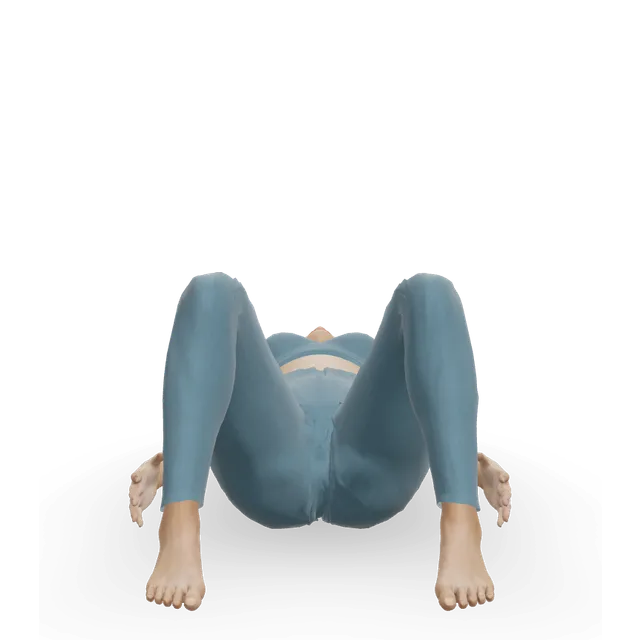 3D demoSupine isometric hip abduction (belt press)Beginner · A band
 3D demoStanding wall-press hip abductionBeginner · A wall
 3D demoGlute bridgeBeginner · No equipment
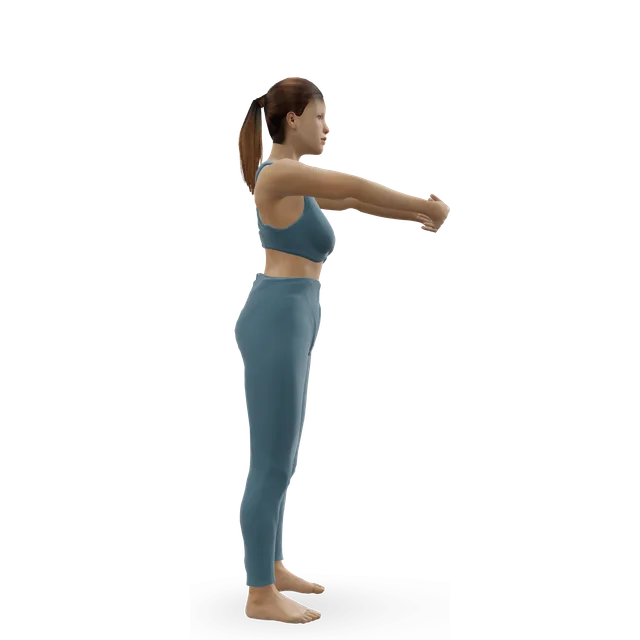 3D demoSit squat (partial squat)Beginner · No equipment
 3D demoSide-stepping (sideways walking)Beginner · A wall
 3D demoLateral breathing (Pilates breathing)Beginner · No equipment
 3D demoKnee foldBeginner · No equipment
 3D demoSupine heel slideBeginner · No equipment
 3D demoPelvic tilt into bridgeBeginner · No equipment
Offset bridge: "5 slow repetitions each side once a day, building to 2 sets of 5 to 10 at a somewhat hard effort, as in the LEAP trial programme." (the move page's dose). Wall side leg lift: "10 to 12 each side" (the move page's dose), lifting slightly behind your body line with the standing hip level. Band walk: 10 to 15 steps each way with a band; one-leg stand: 3 holds of 10 to 30 seconds, pelvis level; low step-up: 2 sets of 8 each side (our hip bursitis guide's second stage). Sit to stand: 8 slow reps from a higher chair (our Pilates for hip pain class).
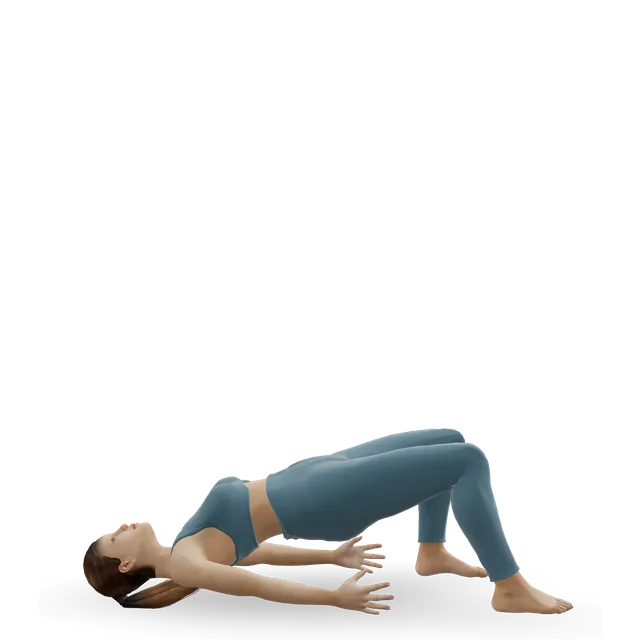 3D demoStaggered-stance bridge (offset bridge)Beginner · No equipment
 3D demoWall side leg lift (standing side kick at the wall)Beginner · A wall
 3D demoLateral band walkBeginner · A band
 3D demoSingle-leg standBeginner · A wall
 3D demoLow step-upBeginner · A step
 3D demoSit to stand from a chairBeginner · A bench or box
This stage is editorial, following our hip bursitis guide rather than the LEAP papers, and experts disagree about side-lying work with this pain: leave the side-lying moves out if they bring on outer hip pain, and keep to the standing ones. One-leg bridge: 2 to 3 sets of 8 each side. Side-lying leg lift on your good side, pillow between your knees, leg slightly behind the body line and never dropping below level: 2 to 3 sets of 8 to 12 (our hip bursitis guide); its own page says to leave it out while the hip hurts at night. Side kick on your good side, top leg level: 8 with the sore leg on top (adapted from the move page's dose). Side plank from the knees: 3 holds of 15 to 30 seconds each side (our hip bursitis guide). Bird dog: 5 each side, holding each for 3 breaths (our Pilates for back pain class).
The move pages' own cautions, and our suggestions from the LEAP programme, which limited how far the thigh crossed the body, and a hip physiotherapist's advice.
Leave them out while the outside of your hip hurts, as our hip pain and hip bursitis guides do. The clam's own page says to leave them out "while it hurts at night"; we'd leave them out for as long as the outer hip hurts, day or night, and use the belt press and standing wall press instead.
The inner thigh lift's page says "With pain on the outside of the hip, our suggestion is to leave this one out". Do the side-lying leg circles and side kick only on your good side, with a pillow between your knees, and don't let the top ankle drop to touch the bottom one, as their pages say.
Leave out the lying IT band stretch and the knee-across-the-body stretch (both pages say skip them with outer hip pain), foam rolling the outer thigh (its page says "skip it if the bony point on the outside of your hip is sore"), and figure-four stretches that pull the knee across the body.
The corkscrew and hip twist carry the legs across the middle of the body, as their pages say: leave them out for now. Keep single-leg circles small and on your own side (our suggestion).
For the mermaid, the page says "If side-sitting bothers your knees or hips, sit cross-legged, on a block or on a chair." Leave the side bend and kneeling side kick off the sore side, and leave out the crab, which crosses the legs (our suggestion).
Footwork and bridging are fine. Avoid side-lying work on the sore side, and long-lever leg circles in the straps that carry the leg across your body; a hip physiotherapist advises against those circles for hip pain. Tell the teacher which side hurts (our suggestion).
Source 35
Week 1: the 20-minute Pilates for hip pain class, which leaves out side-lying work, clams, crossed legs and deep hip bends. From about week 2 or 3: the 25-minute build-stage class. The yoga, glute and balance routines suit later; swap any clams and side-lying moves as above.
A 20-minute Pilates class for hip pain: bridges, outer-hip holds, standing leg work and balance, without deep bends, crossed legs or lying on the sore side.
20 minBeginner14 movesA band, A wallA 25-minute Pilates class for outer hip pain once the hip pain class is easy: one-leg bridges, standing side-hip work, step-ups and balance, and no clams.
25 minBeginner15 movesA band, A wallTwenty-five minutes of hip-friendly yoga: lying and standing hip strength, a mild hip flexor stretch and a supported rest, with no crossed legs or deep bends.
25 minBeginner13 movesA band, A wallA 25-minute glute workout with bodyweight and a mini band: bridges, clamshells, band walks, kickbacks and lunges.
25 minBeginner9 movesA wall, A bandBalance practice in 10 minutes: tandem stance, single-leg stands, marches, heel walks, tree pose and floor transfers.
10 minBeginner7 movesA wall, A bench or boxThese are the warning signs from our hip pain guides, word for word. This is general information, not a diagnosis. A&E means accident and emergency; in the US, call 911 for 999, and use your doctor's urgent line or urgent care for NHS 111.
Source 11
Ask for an urgent GP appointment or get help from NHS 111 if you have severe hip pain that started suddenly but you've not had a fall or injured your hip, your hip is swollen and feels hot, the skin around your hip has changed colour, or you have hip pain, feel generally unwell and have a high temperature (or feel hot, cold or shivery). A hot, swollen hip with a high temperature can be a joint infection.
Source 11
Call 999 or go to A&E if your child gets sudden pain in their hip, knee or thigh (hip problems can sometimes be felt in the thigh or knee) or cannot put any weight on their leg. If your child is limping, ask for an urgent GP appointment or get help from NHS 111 the same day. This applies to teenagers too, and in some children knee pain is the only sign.
Hip bursitis is rare in children, so outer hip or thigh pain with a limp in a child or teenager needs checking rather than a Pilates class (our suggestion).
Source 12
Source 11
The LEAP programme accepted no increase in outer hip pain during squats, bridges and side-stepping, because pain there suggested the tendon was being squeezed. During heavier strengthening, pain up to about 5 out of 10 was fine if it eased afterwards and was no worse that night or the next morning.
Stop the move for a sharp pinch at the front of the hip in deep bends or circles, a catching or locking feeling, or outer hip pain that builds during side-lying work, and swap to the versions on this page (our suggestion).
Source 4
Call 999 if:
Call 999 or go to A&E (accident and emergency) straight away for severe difficulty breathing (gasping, choking or not able to get words out), a chest that feels tight or heavy, pain that spreads to your arms, back, neck and jaw, lips or skin turning very pale, blue or grey, or sudden confusion. If you're more short of breath than usual, or your heart is racing, fluttering or skipping beats, contact NHS 111.
Source 39
You feel any pain or become unwell, as the NHS advises for its Pilates videos, and especially for chest pain or pressure, unusual breathlessness, dizziness or fainting. If you have a health problem, an injury or any symptoms, get advice from a healthcare professional, such as a GP, before you start.
Source 40
The NHS advises getting advice from a healthcare professional first if you have a health problem, an injury or symptoms, or have recently had a heart attack or an operation.
Source 40
No trial tests it, and LEAP left those stretches out because they squeeze the tendons; an NHS trust says stretching "can irritate it if done repeatedly". The US surgeons' patient page still suggests IT band stretches, so the advice differs; we follow the trial and the NHS trust.
Most people with this pain have tendon changes rather than bursitis, and the trial that helped combined education with progressive exercise. A 2025 expert review says it's time to put aside rest and steroid injections as the first treatment.
In healthy people, clams worked the main side-hip muscle less than side-lying or standing moves, though one study found them selective for the gluteals. With outer hip pain, a hip physiotherapist advises leaving them out because they squeeze the tendons.
It helps for weeks. At a year, education plus exercise did better on overall improvement, and injections did no better than usual care.
In LEAP, strength didn't differ between groups, and in postmenopausal women taught to avoid squeezing the tendons, sham exercise did as well as tendon exercise. The advice and steady loading seem to matter as much as strength.
No trial has tested any kind of Pilates for this pain. The same rules apply on a mat, at a wall or on a reformer: no squeezing, and weight onto one leg over time.
Source 3
It can be, with changes, though we found no trial of Pilates for it. Education plus exercise beat a steroid injection in the LEAP trial, and Pilates can supply the exercise if you leave out the moves that squeeze the side of the hip.
Some moves can aggravate it: clams, side-lying work on the sore side, the inner thigh lift and letting the top leg drop across the body all press the tendons against the bone. Swap those, and most of a Pilates class is fine.
While it hurts, leave out clams, the side-lying inner thigh lift, lying on the sore side, big leg circles that cross the body, crossed-leg positions and outer hip stretches. Side-lying work on your good side is fine with a pillow between your knees, if it doesn't bring on outer hip pain.
Start with the LEAP trial's moves: pressing your knees out against a belt lying down, a standing wall press, bridges, partial squats and side-steps. Then move weight onto one leg with offset bridges, standing side leg lifts, step-ups and one-leg balance.
Usually, with the same rules: footwork and bridging are fine, but avoid lying on the sore side and leg circles in the straps that carry your leg across your body. Tell the teacher which side hurts.
Not while it hurts. In healthy people they work the main side-hip muscle less than standing exercises, and a hip physiotherapist advises leaving them out because the knees coming together squeezes the tendons. Use a belt press or a standing wall press instead.
Not while it hurts. Pulling the leg across the body is the squeezing position, the LEAP programme left those stretches out, and an NHS trust warns they can irritate the tendons.
Usually the tendons: on ultrasound, only about 1 in 5 people with this pain had bursitis, and half had tendon changes. The exercise advice is the same either way.
Usually months. In LEAP, most people who did education plus exercise felt better at 8 weeks, but in general practice a third still had pain at a year, and one NHS trust says it can take 6 to 12 months with exercise.
It's about 3 times more common in women from mid-life, and the reason isn't clear. In a trial of 132 postmenopausal women, hormone cream made no clear difference overall, and everyone improved with advice on avoiding the squeezing positions.
On your back with a pillow under your knees, or on your good side with a pillow between your legs so the top leg stays level, as one NHS trust advises. Our hip pain at night guide has more.
Call 999 for severe hip pain after a fall, or if you can't put weight on the leg. Get same-day help for a hot, swollen hip with a high temperature, and for a child with hip pain or a limp. See a GP or physiotherapist if it isn't better after 6 weeks of this advice.
Exercise education, not a personal prescription, and clinical review of these guides is pending. If you are pregnant, have a health condition or have had recent surgery, check with a doctor, midwife or physiotherapist before starting, and stop for sharp or increasing pain. Health disclaimer.










