Pain guide · Leg pain

Outer thigh pain: a trapped nerve, the hip tendons, the IT band or your back, and how to build back

Pain on the outside of the thigh usually comes from one of a few places. An ache that starts at the bony point of the hip and spreads down the side of the thigh is usually the outer hip tendons; a burning, tingling or numb patch you could draw round is usually a squeezed skin nerve (meralgia paresthetica); pain at the outside of the knee in runners and cyclists is usually the iliotibial (IT) band; and pins and needles or a burning pain, sometimes without any back pain, can come from your back. The tendons and the nerve both tend to settle with the right changes, though the tendons can take months.

This guide starts with the signs that need help today, from accident and emergency (A&E) and the National Health Service's 111 line (NHS 111) to a general practitioner (GP). Then find your pain on the map, read what the research supports (including why stretching or rolling the IT band isn't the answer), and follow a three-stage plan, with a 3D demo of every move, that ends with walking, stairs, lying on that side and sport.

When to get help first

Exercise is for pain that has been checked or is clearly mild and settling.

Get urgent medical help if

  • Call 999 or go to A&E: severe hip pain after a fall or injury, or you cannot stand, walk or put weight on the leg. In an older adult this can be a broken hip; the leg may be at an odd angle or look shorter. Don't drive yourself.
  • Call 999 or go to A&E: tingling or loss of feeling in the hip or leg after an injury.
  • Call 999 or go to A&E after an injury if the leg is twisted or bent, a bone is sticking out, there's a bad cut or wound, or there are signs of shock: cold, sweaty skin, a fast or weak pulse, fast or shallow breathing, or blue, grey, pale or blotchy skin or lips. While you wait, don't move the leg or put weight on it, and don't eat or drink in case you need surgery.
  • Call 999 or go to A&E: loss of feeling or numbness around the genitals or bottom, new trouble peeing or controlling your bladder or bowels, changes in genital sensation during sex or problems with erections or orgasm, or pain, tingling, weakness or numbness in both legs. These are signs of cauda equina syndrome, which needs treating in hospital urgently. Don't drive yourself.
  • Same day (GP or NHS 111): weakness in the leg, or numbness that is spreading quickly or getting worse. Meralgia never makes the leg weak, because the nerve it affects carries only feeling.
  • Phone NHS 111: a new, significant injury to the thigh in the last 7 days, such as a fall from a height or a direct blow, or you can't move your leg at all.
  • Contact your GP practice, or phone NHS 111 if it's closed: your thigh is hot, swollen or tender, especially if you can't remember an injury, or you can't put any weight through your leg.
  • Ask for an urgent GP appointment or get help from NHS 111: the skin on your thigh is painful, hot and swollen. It could be cellulitis, a skin infection. With a very high temperature, a fast heartbeat or fast breathing, purple patches, dizziness, confusion, or cold, clammy or pale skin, call 999 or go to A&E.
  • Call 999 or go to A&E: a cut, a wound or a red or swollen area of skin that is much more painful than you would expect, or comes with a high temperature, headache, tiredness and aching muscles, or with black, purple or grey blotches or blisters near it. It could be a rare but serious skin infection (necrotising fasciitis).
  • Ask for an urgent GP appointment or get help from NHS 111 if you have severe hip pain that started suddenly but you've not had a fall or injured your hip, your hip is swollen and feels hot, the skin around your hip has changed colour, or you have hip pain, feel generally unwell and have a high temperature (or feel hot, cold or shivery). A hot, swollen hip with a high temperature can be a joint infection.
  • Same day (urgent GP appointment or NHS 111): throbbing pain in one leg (rarely both), usually the calf or thigh; swelling in one leg (rarely both); red, blue or darkened skin around the painful area, which may be harder to see on brown or black skin; or swollen veins. This can be a deep vein thrombosis (DVT). It is more likely after surgery, a hospital stay, 3 or more days in bed, a journey of over 4 hours, pregnancy or a recent birth, cancer, a previous clot, or oestrogen-containing contraception or HRT.
  • Call 999: calf or leg pain or swelling with breathlessness or chest pain. It could be a clot that has reached the lungs. Do not drive yourself to A&E.
  • Same day, and stop running now: groin or front-of-hip pain in a runner, sometimes felt in the thigh or knee, that builds with running, hurts with every step or at night, or hurts when the hip is turned to the end of its range. Keep weight off the leg, using crutches if you have them, and get an urgent GP appointment or help from NHS 111 the same day: a stress fracture of the hip (femoral neck) needs urgent imaging.
  • After an operation near the hip, in the tummy or on the spine: new numbness, tingling or weakness down the leg or in the foot, or a cold, pale leg. Get help the same day, and follow your surgical team's leaflet.
  • Call 999 or go to A&E if your child gets sudden pain in their hip, knee or thigh (hip problems can sometimes be felt in the thigh or knee) or cannot put any weight on their leg. If your child is limping, ask for an urgent GP appointment or get help from NHS 111 the same day. This applies to teenagers too, and in some children knee pain is the only sign.

See a doctor or physiotherapist if

  • Weakness, a knee that gives way, or trouble climbing stairs or getting up from a chair; numbness that spreads to the front or inside of the thigh, below the knee or into the foot; back pain with the thigh symptoms; or symptoms in both thighs. These point to a nerve in the back or another cause, so see a GP.
  • Outer hip pain that hasn't improved within 6 weeks of following this advice, or that gets worse: talk to a GP or physiotherapist. In many areas you can refer yourself.
  • A limp, or your pelvis dropping on the other side when you stand on the painful leg, that isn't getting better with exercise: ask about a scan. A tear in the gluteal tendon can look like stubborn bursitis, and large tears often do well with surgery (our suggestion).
  • Pins and needles that keep coming back or don't go away: see a GP.
  • If you're pregnant, tell your midwife. If you have diabetes, or signs of it such as being very thirsty or peeing more than usual, tell your GP: meralgia is linked with diabetes.
  • Pain that comes on when you walk a set distance and goes after a few minutes' rest, especially if you smoke or have diabetes. Exercise treats it well, but it needs a diagnosis first.
  • Bone pain that is constant or worse at night, especially with a lump, unexplained weight loss, fever or tiredness, or a past history of cancer.

Where does it hurt?

Location narrows the likely causes; it does not diagnose.

A burning, tingling or numb patch on the outer or front-outer thigh that you could draw round, often worse standing or walking and eased by sitting

Usually meralgia paresthetica: a skin nerve squeezed where it leaves the pelvis. It affects feeling only, so weakness points elsewhere.

Read: Meralgia paresthetica →
An ache from the bony point on the side of the hip that spreads down the outer thigh, worse lying on that side, crossing your legs or standing on that leg

Usually the outer hip tendons (greater trochanteric pain syndrome, often called hip bursitis).

Read: Outer hip pain →
That ache mainly at night, or when you lie on your side

Our hip pain at night guide covers sleeping positions and pillows.

Read: Hip pain at night →
Pain at the outside of the knee in a runner or cyclist

Usually IT band syndrome, felt over the outer knee rather than along the thigh.

Read: IT band syndrome →
Pins and needles or a sharp, hot or burning pain down the thigh, with or without back pain

It can come from a nerve in the lower back. Weakness, numbness that spreads, or symptoms in both legs need checking: see the warning signs.

Read: Sciatica →
A deep ache in the groin and thigh, stiff after rest, from mid-life

Possibly the hip joint (arthritis), which can be felt in the thigh.

Read: Hip arthritis →
A sudden pull while kicking or sprinting, or a tender bruise after a knock

A thigh muscle strain or a dead leg.

Read: Quad strain →
Numbness on the outer thigh after a hip operation

Common after some hip operations, because the same skin nerve can be stretched. New weakness, a cold leg or worsening pain needs help the same day.

Read: Meralgia paresthetica →
One swollen, throbbing leg, or hot, red, swollen skin

A possible clot or skin infection: see the warning signs rather than exercising it.

Thigh pain somewhere else

Our thigh pain guide maps the front and inner thigh, and our back of thigh pain guide the back.

Read: Thigh pain →

Understand it

Where it hurts is the best clue

The outer thigh has a few common sources of pain, each with a typical pattern. A deep ache from the bony point of the hip down the side of the thigh, worse lying on it, points to the outer hip tendons, which NHS inform says affect the outer side of the hip and thigh. A patch of skin that burns, tingles or feels numb points to a squeezed skin nerve. Pins and needles or a sharp, hot or burning pain can come from the back, even without back pain, NHS inform says. The map above points to a likely cause and its guide; an examination decides.

Sources 1, 2, 3, 4

A burning, numb patch: meralgia parestheticaStrong evidence

Meralgia paresthetica is a squeezed skin nerve, the lateral cutaneous nerve of the thigh, where it leaves the pelvis near the front of the hip. It causes a painful, numb or tingling patch on the outer thigh, often one you can draw round with a finger, and NHS Borders' referral guidance says it causes no other symptoms in the legs, so it never makes the leg weak. In one series of 120 people described in a review, the outer thigh alone was affected in 73% and the front-outer thigh in 26%.

It is often worse with long standing and walking and eased by sitting. Tight clothing, belts, a heavy tool belt, body armour and seat belt injuries are named by the American Academy of Orthopaedic Surgeons (AAOS) and a review, but no study has measured them as causes. The growing womb can press on the nerve in pregnancy, an NHS trust leaflet says, and it can follow some hip operations, when the nerve is stretched.

Sources 3, 5, 4, 6

Who gets meralgiaEmerging evidence

In a US population study, about 32.6 people in 100,000 developed meralgia each year, and 7 times as many of those with diabetes. People with meralgia were twice as likely to be diagnosed with diabetes later, and their average body mass index (BMI) was higher (30.1 against 27.3). In Dutch general practice it was seen in 4.3 in 10,000 people a year, and was linked with carpal tunnel syndrome and with pregnancy, though the pregnancy figure was very imprecise and most cases had no clear cause. NHS Borders' guidance names recent weight gain or pregnancy as the commonest causes. These are links, not proof that one causes the other.

Sources 7, 8, 3

The outer hip tendonsStrong evidence

Greater trochanteric pain syndrome affects the outer side of the hip and thigh, NHS inform says. It's commoner in women and between the ages of 40 and 60, and it hurts lying on that side, crossing the legs, standing on that leg, climbing stairs and getting in or out of a car. The NHS says hip bursitis pain may spread to the upper leg (thigh), and the AAOS that it usually extends to the outside of the thigh.

In 3,026 US adults aged 50 to 79, it was present on one side in 15.0% of women and 6.6% of men, and was linked with knee arthritis and low back pain but not with body weight. It is usually the tendons rather than a bursa: of 877 people scanned for this pain, 49.9% had changes in the gluteal tendons and only 20.2% an inflamed bursa.

Sources 2, 9, 10, 11, 12

IT band syndrome is felt at the kneeEmerging evidence

Iliotibial (IT) band syndrome is the commonest injury on the outside of the knee in runners, affecting an estimated 5% to 14% of them, though studies of its causes conflict. In 15 cadavers there was no bursa under the band, and MRI scans suggested the band squeezes a layer of fat at about 30 degrees of knee bend rather than rubbing over the bone. It is a knee problem, not the usual cause of pain along the thigh.

Sources 13, 14

Your back, the hip joint or a strainEmerging evidence

NHS inform says thigh and hip symptoms can come from the back even without back pain, often as pins and needles or a sharp, hot or burning pain. In 17 people with a trapped third lumbar nerve root (average age 76), 12 had thigh pain and 4 were first treated for hip or knee problems. A study of examination tests for these upper nerve roots found some useful ones, but in small numbers and mostly for the front of the thigh.

It works the other way round too: in one spine clinic, 20.2% of people referred with low back pain had outer hip tendon pain instead. The hip joint itself sent pain to the thigh in 57% of 51 people, and to the buttock in 71%. A sudden pull while kicking or sprinting, or a heavy knock, is usually a thigh muscle strain or a bruised muscle (a dead leg), the AAOS says.

Sources 1, 15, 16, 17, 18, 19, 20

Tests and scansEmerging evidence

Meralgia is recognised from the story and an examination, and NHS Borders' guidance says no further tests are needed. When it's unclear, nerve tests can help, though in the studies a review summarises they picked up only 65% to 81% of cases; a pressure test over the pelvis looked accurate, but in just 20 people.

Outer hip tendon pain is recognised from the history and examination. In 65 people with outer hip pain, pain within 30 seconds of standing on the affected leg made tendon changes on a magnetic resonance imaging (MRI) scan very likely, and no tenderness over the bony point made them unlikely; a review agreed that single-leg standing is one of the most useful tests. But 20 of the 65 had tendon changes on MRI without the matching signs, so a scan alone doesn't make the diagnosis. A scan helps when a tendon tear is suspected, such as a limp that isn't improving, or when another cause is possible; for back and leg pain, the National Institute for Health and Care Excellence (NICE) advises against routine imaging outside specialist care.

Sources 3, 4, 21, 22, 23

How it usually goesEmerging evidence

Meralgia often settles. In the one study that followed it without treatment, 20 of 29 people improved, and when it follows an operation, 99 of 102 recovered completely in the studies a Cochrane review found. NHS Borders' guidance says most people need no treatment, but symptoms can persist.

Outer hip tendon pain is slower. In the LEAP trial, 20 of 68 people left to wait and see reported success at 8 weeks and 31 of 60 at a year; with education and exercise, 51 of 66 and 51 of 65. NHS inform says it can take 6 to 12 months of rehabilitation, with flare-ups along the way, and that most new thigh problems begin to settle within 6 weeks. No one can promise a date.

Sources 24, 3, 25, 2, 1

What helps, and how strong the evidence is

The outer hip tendons: education plus exercise did best in a trialEmerging evidence

In the LEAP trial, 204 Australians aged 35 to 70 with outer hip pain and tendon changes confirmed on MRI had 14 physiotherapy sessions of education and exercise over 8 weeks, one steroid injection, or wait and see. At 8 weeks, 51 of 66 in the education and exercise group reported success, against 38 of 65 after the injection and 20 of 68 waiting; at a year, 51 of 65, against 36 of 63 and 31 of 60. Pain at a year was no different between exercise and the injection, and both beat waiting.

The trial recruited people with confirmed outer hip tendon pain, not everyone with outer thigh pain. Using it for an ache that spreads from the hip down the thigh is our inference, which is why this note is graded emerging rather than strong.

Sources 25, 26

Take the squeeze off the tendonsEmerging evidence

NHS inform's advice is to spread your weight across both feet, avoid sitting with your legs crossed and avoid lying on the painful side, and the NHS says don't sit in low chairs. These positions draw the thigh across the body and press the tendons against the bone; a review suggests that this pressure, combined with high tension, is the most damaging load for them. The LEAP programme left out the IT band and piriformis stretches for that reason: its protocol says they hold the hip in a position of high compressive load on the tendons. The AAOS still suggests IT band stretching for hip bursitis; this guide follows the trial.

Sources 2, 26, 27, 11, 12

A steroid injection: short-term helpEmerging evidence

One steroid injection helped more than waiting at 8 weeks in the LEAP trial (38 of 65 against 20 of 68 reporting success), but education and exercise did better, and by a year the injection group's overall improvement had fallen behind the exercise group's. NHS inform says a healthcare professional may discuss an injection if painkillers aren't controlling the pain. Our outer hip pain guide covers shockwave, platelet-rich plasma and surgery for tears.

Sources 25, 2

The skin nerve: take the pressure off; other treatments rest on weak evidenceMixed evidence

There are no randomised trials of any treatment for meralgia. In the case series a Cochrane review found, 69% of people improved with no treatment (20 of 29, one study), 83% after an injection of steroid and local anaesthetic (130 of 157), 88% after an operation to free the nerve (264 of 300) and 94% after cutting it (45 of 48). With no comparison groups, these numbers can't show what works.

The usual first step is taking the pressure off: looser waistbands and clothing, no tight belt, and a toolbox instead of a tool belt, as the AAOS advises, and breaking up long spells of standing and walking, as a review suggests. NHS Borders' guidance names recent weight gain as a common cause; one study found people with meralgia were heavier on average, and another found no clear link. A GP can suggest medicines if the pain is bad.

Sources 24, 5, 3, 4, 7, 8

In pregnancyEmerging evidence

An NHS trust leaflet for meralgia in pregnancy says symptoms usually go away once the baby is born. Until then it advises loose clothing and no belt, not standing or walking for too long, and a pregnancy pillow, with hip stretches held for at least 30 seconds 3 times a day, a nerve glide at least 10 times 3 times a day, a wide bridge (10 with a 10-second hold, 3 times a day) and clams (10, 3 times a day). The leaflet's exercises haven't been tested in a trial.

Source 6

IT band syndrome: hip strength and the running loadEmerging evidence

Strengthening the hip abductors, the muscles that lift the leg out to the side, is the commonest treatment for IT band syndrome. In 13 small studies of 201 runners, 6 of them single case reports, pain fell by 27% to 100% over 2 to 8 weeks. The studies were too different to pool, and an earlier review found the evidence on causes and treatment limited. Our IT band syndrome guide covers changing the running load first.

Sources 28, 13

When it's your back: keep activeStrong evidence

For back and leg pain from a nerve, NICE advises staying active and against routine scans, and the NHS says keep moving: even if it hurts, it isn't harmful. NHS inform expects most new thigh problems to begin to settle within 6 weeks. Our sciatica guide has the plan.

Sources 23, 29, 1

How much pain is OK while you exercise?

Tendons: no extra outer hip pain in everyday moves, up to 5 in strength work; the nerve: the patch shouldn't spreadEmerging evidence

If the ache comes from the outer hip tendons, squats, bridges and side steps shouldn't increase the pain on the outside of the hip and thigh. If they do, make the move smaller or gentler, because pain there suggests the tendon is being squeezed. In the harder strength exercises, up to 5 out of 10 is fine if it settles afterwards and isn't worse that night or the next morning. This is the rule from the LEAP trial's programme, as in our outer hip pain guide.

If it's the skin nerve (a burning or numb patch), exercise shouldn't make the patch spread or the burning linger: ease off anything that does. That's our meralgia guide's rule, not a tested one.

For anything else, NHS inform's scale fits: 0 to 3 out of 10 is minimal pain, 4 to 5 acceptable and 6 to 10 too much, and your pain should be no worse the morning after. In trials of long-lasting muscle and joint pain, exercising into some pain did no worse than pain-free exercise.

Sources 26, 30, 31

The exercise plan: 3 stages

Start at the first stage. Each move opens a full guide with a 3D demo.

Stage 1

Settle: take the squeeze off, and load without squeezing

About weeks 0 to 2. Change the positions in the written steps below first, then load the outer hip muscles in positions that don't press the tendons against the bone. With a burning, numb patch, take the pressure off and keep your fitness up; for the nerve, the holds and bridges are general strength work (our meralgia guide).

Supine isometric hip abduction (belt press) demonstrated on the 3D figure3D demoSupine isometric hip abduction (belt press)Beginner · A band

3 to 5 holds of 5 to 10 s, twice a day, at a light effort · The move page's dose, from the LEAP trial programme. Lying on your back, not your side

Harder: Lateral band walk

Standing wall-press hip abduction demonstrated on the 3D figure3D demoStanding wall-press hip abductionBeginner · A wall

3 to 5 holds of 5 to 15 s each side, twice a day · The move page's dose, from the LEAP trial programme. Keep the standing hip level rather than letting it sag out, as the move page says

Easier: Supine isometric hip abduction (belt press) · Harder: Lateral band walk

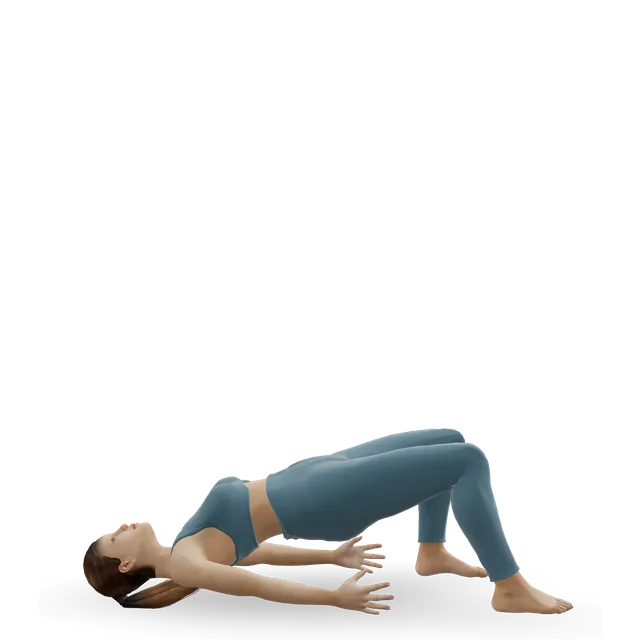
Glute bridge demonstrated on the 3D figure3D demoGlute bridgeBeginner · No equipment

Tendons: 10 slow bridges, once a day. Nerve: feet wide apart, 10 bridges with a 10 s hold, up to 3 times a day · The LEAP programme's first-week bridging; the wide bridge and its dose come from an NHS trust leaflet for meralgia in pregnancy, as in our meralgia guide

Easier: Pelvic tilt into bridge · Harder: Single-leg glute bridge

Sit to stand from a chair demonstrated on the 3D figure3D demoSit to stand from a chairBeginner · A bench or box

10 slow reps, once a day, from a seat high enough that your hips stay a little above your knees · The LEAP programme's first-week squat (10 a day, slow), done to a chair (our adaptation); the NHS advises against low chairs with hip pain. Keep your knees in line with your toes

Easier: Sit to stand, pushing on the thighs · Harder: Bodyweight squat

Side-stepping (sideways walking) demonstrated on the 3D figure3D demoSide-stepping (sideways walking)Beginner · A wall

10 steps each way next to a counter, once a day · The move page's 10 steps each way (the NHS balance exercises); once a day follows the LEAP programme's first week, which used 10 each way too

Harder: Lateral band walk

Recumbent exercise bike demonstrated on the 3D figure3D demoRecumbent exercise bikeBeginner · Cardio machine

10 to 20 minutes at a moderate effort, building towards 30 · The move page's dose, an editorial starting point. With a burning, numb patch it keeps you fit without long standing (our meralgia guide)

Harder: Stationary cycling

Move on when: The holds, bridges and chair squats cause no extra outer hip or thigh pain, and lying and sitting are starting to ease (our suggestion).

Follow along: a timer, a cue and the next move, one step at a time.
Stage 2

Build: one leg at a time, with the pelvis level

About weeks 2 to 6: shift the work onto one leg while keeping the tendons out of the squeezed position, as the LEAP programme does from its second week.

Staggered-stance bridge (offset bridge) demonstrated on the 3D figure3D demoStaggered-stance bridge (offset bridge)Beginner · No equipment

5 slow reps each side once a day, building to 2 sets of 5 to 10 at a somewhat hard effort · The move page's dose, from the LEAP trial programme

Easier: Pelvic tilt into bridge · Harder: Single-leg glute bridge

Split squat demonstrated on the 3D figure3D demoSplit squatIntermediate · No equipment

5 slow reps each side, a short range, building to 2 sets of 5 to 10 · The LEAP programme's offset squat, as in our hip bursitis and outer hip pain guides. Keep a hand on a wall or rail while you learn the balance, as the move page says

Easier: Bodyweight squat · Harder: Reverse lunge

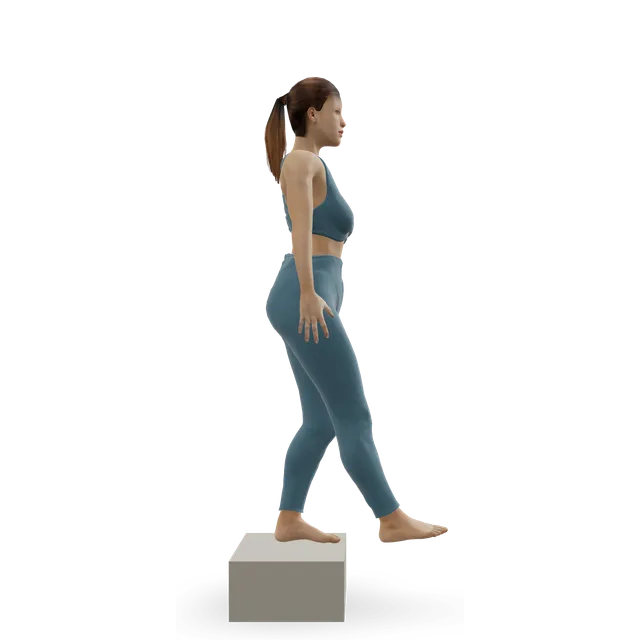
Step-up demonstrated on the 3D figure3D demoStep-upBeginner · A step

Lead with the sore leg onto a low step: 2 to 3 at a time, building to sets of 8, up to 2 sets of 15 · NHS inform's pacing, as our outer hip pain guide uses it. Keep the pelvis level

Easier: Low step-up · Harder: Dumbbell step-up

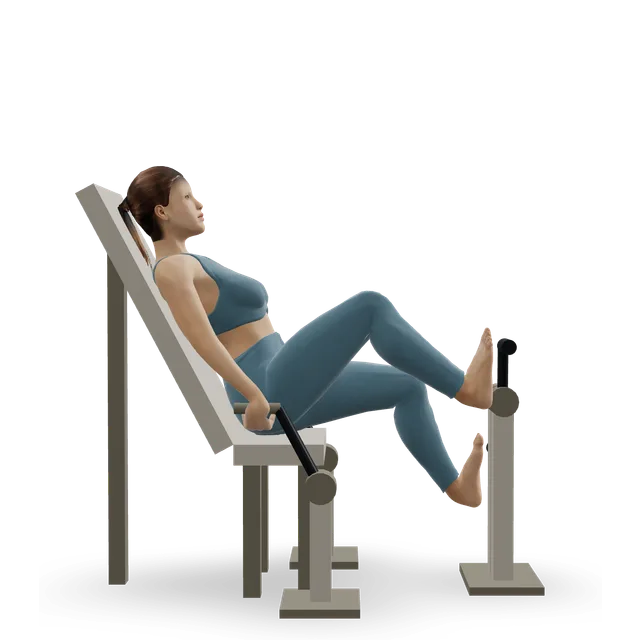
Lateral band walk demonstrated on the 3D figure3D demoLateral band walkBeginner · A band

5 to 10 steps each way with a band, 1 to 2 sets, at a somewhat hard effort · The LEAP programme's band side steps, which start in its third week. Stay low and keep the toes pointing forward, as the move page says

Easier: Hip abduction machine · Harder: Lateral band walk, band at the feet

Single-leg stand demonstrated on the 3D figure3D demoSingle-leg standBeginner · A wall

3 holds of 10 to 30 s each side, pelvis level, a hand near a support · As in our hip bursitis guide. Standing on the sore leg for 30 s is also a test for tendon pain, so stop if it brings the pain on

Easier: Tandem stance and heel-to-toe walk · Harder: Single-leg reach matrix

Move on when: Single-leg work stays within the pain rule, and you can stand on the sore leg for 30 s without outer hip pain (our suggestion).

Follow along: a timer, a cue and the next move, one step at a time.
Stage 3

Strengthen, then walking, stairs, lying on that side and sport come back

From about week 6, two or three days a week: heavier one-leg strength, while longer walks, stairs, sleeping on that side and sport come back by the written steps below. NHS inform says outer hip tendon pain can take 6 to 12 months, with flare-ups, so keep going.

Single-leg glute bridge demonstrated on the 3D figure3D demoSingle-leg glute bridgeIntermediate · No equipment

2 to 3 sets of 8 each side · As in our hip bursitis guide

Easier: Glute bridge · Harder: Barbell hip thrust

Single-leg Romanian deadlift demonstrated on the 3D figure3D demoSingle-leg Romanian deadliftAdvanced · A dumbbell

2 to 3 sets of 6 to 8 each side, fingertips on a wall at first · As in our hip bursitis guide; the wall support is the move page's advice

Easier: Dumbbell Romanian deadlift

Patrick step-down demonstrated on the 3D figure3D demoPatrick step-downIntermediate · A step

3 sets of 8 each side · As in our hip bursitis guide

Easier: Bodyweight squat · Harder: Skater squat

Knee side plank demonstrated on the 3D figure3D demoKnee side plankBeginner · No equipment

3 holds of 15 to 30 s each side, lying on the good side first · As in our hip bursitis guide

Harder: Side plank

Dumbbell goblet squat demonstrated on the 3D figure3D demoDumbbell goblet squatIntermediate · A dumbbell

3 sets of 8 to 10, once chair squats are easy · Our meralgia guide's strength stage (editorial)

Easier: Bodyweight squat · Harder: Barbell front squat

Treadmill jogging demonstrated on the 3D figure3D demoTreadmill joggingIntermediate · Cardio machine

Runners: jog 1 minute and walk 1 minute for 30 minutes, every other day, building over 6 weeks to 30 minutes' jogging · An NHS sports medicine service's return to running programme, started once 30 minutes of fast walking is pain-free. With outer knee pain from the IT band, run on the flat first and add hills last (our IT band guide)

Easier: Treadmill walking · Harder: Sprint intervals

Move on when: Our suggestion: walking, stairs, lying on that side and your sport stay within the pain rule. Keep two strength sessions a week.

Follow along: a timer, a cue and the next move, one step at a time.

What to change for now

What to change for now (written steps)

Our 3D figure can't show these changes. They come from NHS inform, the NHS, the AAOS, a review and an NHS trust leaflet unless marked as our suggestion.

  • 1. Legs: sit with your knees hip-width apart rather than crossed, and stand with your weight on both feet rather than hanging on one hip (NHS inform).
  • 2. Sleep: lie on your back with a pillow under your knees, or on your good side with a pillow between your knees so the top leg stays in line with the hip (NHS inform).
  • 3. Chairs: avoid low chairs and sofas (the NHS), or sit on a firm cushion so your hips stay a little above your knees (our suggestion).
  • 4. A burning, numb patch: wear looser waistbands and clothing, skip a tight belt, and carry tools in a toolbox rather than a tool belt (the AAOS). Break up long spells of standing or walking with a few minutes' sitting (a review).
  • 5. In pregnancy: loose clothing, no belt, not standing or walking for too long, and a pregnancy pillow at night (an NHS trust leaflet).
  • 6. Stairs: good leg first going up, sore leg first coming down, using the rail (NHS inform).
  • 7. Keep moving: in the first day or two of a new thigh problem, move the leg gently for 10 to 20 seconds every waking hour, then use it more; heat or ice can ease the pain, with a towel between it and your skin (NHS inform).

Sources 2, 11, 5, 4, 6, 1

Walking, stairs, lying on that side and sport come back (written steps)

No trial has tested how to bring these back after outer thigh pain. These steps are our suggestion unless a source is named.

  • 1. Walking: add a little each week on the flat, then slopes, staying within the pain rule.
  • 2. Stairs: step over step once single-leg step-ups and step-downs stay within the pain rule.
  • 3. Lying on that side: try a few minutes on a soft mattress with a pillow between your knees, and build up.
  • 4. Running: start once 30 minutes of fast walking is pain-free, follow the walk-jog weeks in the plan, then add no more than 10% a week (an NHS sports medicine service's programme).
  • 5. Flare-ups: they're normal with tendon pain; cut back the repetitions or rest for a few days, then build again (NHS inform).
  • 6. If it hasn't started to settle within 6 weeks, or it's getting worse, see a GP or physiotherapist; in many areas you can refer yourself (NHS inform).

Sources 32, 1, 2

Positions to swap, and why

Habit or positionWhy it mattersInstead
Sitting with your legs crossedThe thigh crosses the body and presses the gluteal tendons against the bone; NHS inform advises avoiding it.Knees hip-width apart, hips a little higher than the knees.
Standing hanging on one hip, or carrying a child on that hipThe hip drifts out sideways under your weight, squeezing the tendons; NHS inform advises spreading your weight across both feet.Weight even on both feet; swap sides.
Lying on the painful side, or on the good side with the top knee dropped acrossHours of pressure on the bony point, or the top thigh falling across the body; NHS inform advises against both.On your back with a pillow under your knees, or on the good side with a pillow between them.
Low chairs, sofas and car seatsThe NHS advises against low chairs with hip pain.A higher seat or a firm cushion.
IT band and outer hip stretchesThe stretch position is the squeezed position: the LEAP programme left these stretches out, and the move page says skip it if the bony point on the outside of your hip is sore.Leave the outer hip unstretched while it's sore, and load it with lying holds.Try: Supine isometric hip abduction (belt press)
The knee-across-the-body stretchIt draws the thigh across the body; the move page says skip it with pain on the outside of the hip.Standing wall-press holds.Try: Standing wall-press hip abduction
Foam rolling the outer thighIt presses on the sore area and hasn't been shown to help; the move page says roll gently, if at all, and skip it if the bony point is sore.Bridges instead.Try: Glute bridge
Side-lying leg raises in the first weeksThe move page says this position can aggravate a painful outer hip.Holds and bridges first, side-lying raises later if at all.Try: Standing wall-press hip abduction
Tight belts, waistbands or shapewear, or a heavy tool belt, with a burning, numb patchThey press on the skin nerve where it leaves the pelvis, the AAOS and a review say.Looser clothing, braces instead of a belt, and a toolbox instead of a tool belt.
Long spells of standing or walking, with a burning, numb patchThey often make meralgia worse, and sitting eases it.Break them up with a few minutes' sitting, and cycle for fitness.Try: Recumbent exercise bike
The couch stretch and other deep stretches at the front of the hip, with a burning, numb patchOur meralgia guide leaves out deep stretches at the front of the hip because they can aggravate the nerve, and there's no evidence they help.A gentle side-lying quad stretch, only if it doesn't set off the burning.Try: Side-lying quad stretch with a strap

Routines to follow

More moves for this area

Questions people ask

What causes pain on the outside of my thigh?

Most often the gluteal tendons at the outer hip, which ache from the bony point of the hip down the side of the thigh, or a squeezed skin nerve, which causes a burning or numb patch. Pain at the outer knee in runners is usually the IT band, and pins and needles or a burning pain can come from your back, even without back pain. A strain or a knock, the hip joint and, rarely, a clot or an infection are the other causes.

Why does my outer thigh hurt when I press on it?

Tenderness over the bony point on the side of the hip, spreading down the thigh, is typical of the gluteal tendons; in one study, not being tender there made tendon trouble unlikely. A tender, bruised area in the muscle after a knock is a dead leg. A patch that burns, tingles or feels odd to touch is more likely the skin nerve.

Why does my outer thigh hurt at night or when I lie on my side?

Lying on the painful side presses the tendons against the bone, and lying on the other side lets the top knee drop across, which squeezes them too. Try lying on your back with a pillow under your knees, or on your good side with a pillow between your knees. Bone pain that is worse at night, or night pain with a fever or weight loss, needs a GP.

Why does my outer thigh burn or feel numb?

A burning, tingling or numb patch you could draw round is usually meralgia paresthetica, a skin nerve squeezed where it leaves the pelvis. It's linked with tight clothing and belts, pregnancy, recent weight gain and diabetes, and it often settles once the pressure is off, though some numbness can last. Weakness in the leg, or numbness that spreads, needs checking the same day.

Can my back cause outer thigh pain?

Yes. NHS inform says thigh symptoms can come from the back even without back pain, often as pins and needles or a sharp, hot or burning pain. In a series of people with a trapped nerve root high in the lower back, most had thigh pain and some were first treated for hip or knee trouble. Weakness, a knee that gives way, or numbness spreading to the front or inside of the thigh points to the back, so see a GP.

Is outer thigh pain my IT band, and should I foam roll it?

IT band syndrome is felt at the outside of the knee, mostly in runners and cyclists, not along the thigh. For outer thigh pain from the hip, rolling and IT band stretches haven't been shown to help, and the stretch position squeezes the gluteal tendons, so the trial programme that worked best left them out. Holds, bridges and strength work are the better bet.

Why is my outer thigh numb or sore after a hip replacement?

Numbness on the outer thigh after some hip operations is common, because the same skin nerve can be stretched during surgery, and in a study summarised in a review it was usually mild and didn't limit everyday activities. New weakness, numbness or tingling down the leg or in the foot, a cold, pale leg, or one swollen, throbbing leg needs help the same day. Follow your surgical team's leaflet; our meralgia and hip replacement guides cover what to expect.

Why does my outer thigh hurt when I walk or stand?

Standing on one leg and long walks load the gluteal tendons, and pain within 30 seconds of standing on the sore leg makes them the likely cause. A burning patch that builds with standing and walking and eases when you sit is more likely the skin nerve. An ache in the thigh, hip or buttock that comes on after a set distance and goes with rest can be the arteries, so see a GP.

I'm pregnant and my outer thigh is numb or burning. Is that normal?

It's common: the growing womb can press on a skin nerve in the groin, and an NHS trust leaflet says the symptoms usually go away after the birth. Loose clothing, no belt, not standing or walking for too long, and a pregnancy pillow can help, along with gentle stretches and exercises. Tell your midwife, and get help the same day for weakness or numbness that spreads.

What exercises help outer thigh pain?

For the tendons, the programme from the LEAP trial: holds lying and standing, bridges, chair squats and side steps, then one-leg strength work, alongside avoiding positions that squeeze the tendons. For the nerve, exercise is mainly for fitness while the pressure is taken off. The plan on this page covers both, with a 3D demo of every move.

When should I worry about outer thigh pain?

Call 999 after a fall with severe pain or a leg you can't stand on, or for numbness around your genitals or bottom, or changes in your bladder or bowels. Get same-day help for weakness, numbness that spreads, one swollen, throbbing leg, or hot, red, swollen skin with a fever. See a GP if it hasn't started to settle within 6 weeks.

How long does outer thigh pain take to go?

New thigh problems often begin to settle within 6 weeks, but outer hip tendon pain can take 6 to 12 months of steady exercise, with flare-ups along the way. In the LEAP trial, about three-quarters of people who had education and exercise reported success at 8 weeks. Meralgia often settles once the pressure is off, but numbness can last.

Related exercise guides

Other pain guides

Sources

  1. NHS inform · Thigh problems
  2. NHS inform · Greater trochanteric pain syndrome
  3. NHS Borders (Right Decisions) · Meralgia paraesthetica (referral guidance, reviewed March 2025)
  4. Cheatham 2013 · Meralgia paresthetica: a review of the literature (review, Int J Sports Phys Ther)
  5. American Academy of Orthopaedic Surgeons (AAOS, OrthoInfo) · Burning thigh pain (meralgia paresthetica)
  6. Royal Berkshire NHS Foundation Trust · Meralgia paraesthetica in pregnancy (physiotherapy leaflet, June 2025)
  7. Parisi 2011 · Meralgia paresthetica, weight, age and diabetes in a US population (population study, Neurology)
  8. van Slobbe 2004 · How often meralgia paresthetica is seen in Dutch general practice, and what goes with it (cohort and case-control study, J Neurol)
  9. Segal 2007 · Outer hip pain (greater trochanteric pain syndrome) in 3,026 adults aged 50 to 79 (cohort study, Arch Phys Med Rehabil)
  10. Long 2013 · Ultrasound of outer hip pain in 877 people: an inflamed bursa in only a fifth (case series, AJR Am J Roentgenol)
  11. NHS · Hip pain in adults
  12. AAOS (OrthoInfo) · Hip bursitis
  13. van der Worp 2012 · IT band syndrome in runners: causes, diagnosis and treatment (systematic review, Sports Med)
  14. Fairclough 2006 · The IT band at the knee: compression of fat rather than friction, in 15 cadavers and MRI scans (anatomical study, J Anat)
  15. NHS inform · Hip problems
  16. Hirabayashi 2009 · Thigh pain from the third lumbar nerve root in 17 people (case series, Surg Neurol)
  17. Suri 2011 · How accurate the examination is for trapped nerve roots in the lower back (diagnostic study, Spine)
  18. Tortolani 2002 · Outer hip pain in people referred to a spine clinic for low back pain (case series, Spine J)
  19. Lesher 2008 · Where pain from the hip joint is felt, in 51 people (descriptive study, Pain Med)
  20. AAOS (OrthoInfo) · Muscle strains in the thigh
  21. Grimaldi 2017 · Clinical tests against MRI for gluteal tendinopathy in 65 people with outer hip pain (diagnostic study, Br J Sports Med)
  22. Sunil Kumar 2021 · Causes and diagnosis of outer hip pain (scoping review, Knee Surg Sports Traumatol Arthrosc)
  23. NICE · Low back pain and sciatica in over 16s: assessment and management (NG59, guideline)
  24. Khalil 2012 · Treatment for meralgia paraesthetica: no randomised trials, and what case series show (Cochrane systematic review)
  25. Mellor 2018 · Education plus exercise, a steroid injection or wait and see for outer hip tendon pain in 204 people: the LEAP trial (RCT, BMJ)
  26. Mellor 2016 · The LEAP trial protocol: exercise and load advice for outer hip tendon pain, with its pain rule (trial protocol, BMC Musculoskelet Disord)
  27. Grimaldi 2015 · Gluteal tendinopathy: mechanisms, assessment and management (review, Sports Med)
  28. Sanchez-Alvarado 2024 · Treatments for IT band syndrome in runners: 13 studies, 201 runners (systematic review, Front Sports Act Living)
  29. NHS · Sciatica
  30. NHS inform · Exercises for thigh problems (including how to tell if you're exercising at the right level)
  31. Smith 2017 · Should exercise be painful? 7 trials of long-lasting muscle and joint pain (systematic review and meta-analysis, Br J Sports Med)
  32. Oxford University Hospitals NHS Foundation Trust (OxSport) · Return to running programme (patient leaflet, September 2024)
  33. NHS · Broken hip
  34. NHS · Broken leg
  35. NHS · Back pain
  36. NHS · Cellulitis
  37. NHS · Necrotising fasciitis
  38. NHS · DVT (deep vein thrombosis)
  39. NHS · Pulmonary embolism
  40. NHS · Hip pain in children (irritable hip)
  41. NHS · Pins and needles
  42. NHS · Symptoms of bone cancer
  43. NHS · Peripheral arterial disease (PAD)

Exercise education, not a diagnosis or treatment plan. It is written from the guidelines and studies listed above; review by a clinician is pending. If your pain follows an injury, is severe, is getting worse, or comes with any warning sign listed on this page, get it assessed. Health disclaimer.