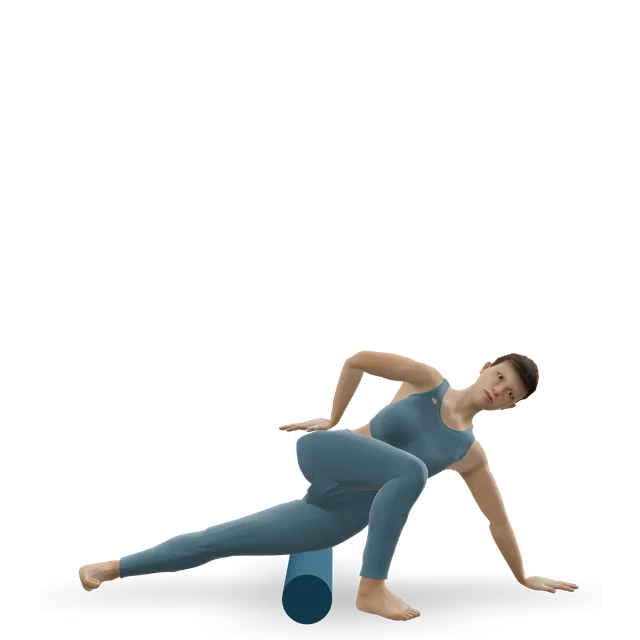
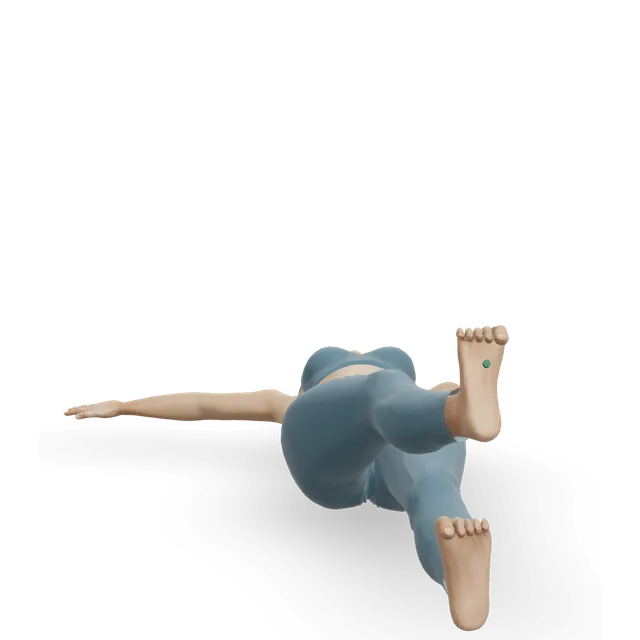
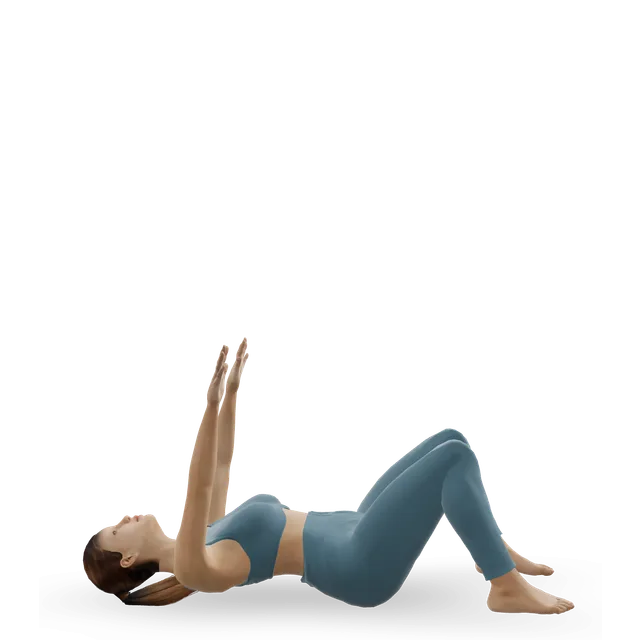
No Pilates trial
Our searches found no Pilates trial in IT band syndrome. The side kick series, bridges and standing balance can carry the hip work the studies used, but that is our reading, not a tested treatment.
Source 1
Pilates guide
No trial has tested Pilates for iliotibial (IT) band syndrome, the pain on the outside of the knee that builds during a run or a ride. The usual advice is to stretch or roll the IT band, but it's anchored to the thigh bone and barely lengthens, and in one small study of runners with the condition it wasn't tighter than normal. What the studies used most is hip strengthening alongside changes to running, and Pilates' side kick series, bridges and standing balance can carry the hip work.
This guide covers what the IT band is and why it hurts, why stretching and rolling are comfort rather than a cure, hip strength on the mat and the reformer, keeping the pelvis level on one leg, running changes, which moves to change, what the evidence shows, and the classes to follow. If your knee locks, gives way or swells fast, go straight to the warning signs.
Our searches found no Pilates trial in IT band syndrome. The side kick series, bridges and standing balance can carry the hip work the studies used, but that is our reading, not a tested treatment.
Source 1
It's anchored to the thigh bone along its length. It lengthened less than 0.5% during a hip contraction in living people, and one session of rolling or stretching didn't change its stiffness.
In one small study of 14 runners with IT band syndrome, which we could read only as an abstract, the band was no stiffer than on the other leg or in healthy runners, and 6 weeks of physiotherapy made it stiffer while pain eased. So loosening it is probably the wrong goal.
Source 5
Hip strengthening is the common thread in the studies, and pain fell in most of them, but they were small and mostly had no comparison group. The newest review says most treatments can't yet be recommended over one another.
Pain peaks just after the foot lands, with the knee slightly bent, and downhill running makes it worse. Cut your distance, leave downhill out for now and bring hills back last.
Source 9
The hip programmes in the studies ran for 6 weeks; in novice runners, the median recovery was 88 days.
The IT band is a thickening of the fascia lata, the thigh's outer wrapping, running from the hip to the knee and anchored to the thigh bone along the way. IT band syndrome is the commonest cause of outer knee pain in runners, affecting about 5% to 14%, and cyclists get it too. Our IT band fascia guide has the anatomy.
In 15 cadavers, the band was tied to the lower thigh bone by fibrous strands over a fat layer rich in nerves and blood vessels, with no fluid sac (bursa) underneath, and on scans it pressed on that fat at about 30 degrees of knee bend. In runners, the irritation happened just after the foot landed, at about 21 degrees of knee bend. So the pain fits squeezing of a sensitive layer, not the band rubbing over bone.
Position and load. In 16 people standing on one leg, letting the pelvis drop away from the standing leg made the band about 32% stiffer. Women who went on to develop it ran with more hip adduction (the thigh drifting in) in one study that followed runners forward. Hip abductor weakness shows up mainly in women with current symptoms, and whether it causes the condition or follows it is unclear.
In living people the band lengthened less than 0.5% during a hip contraction, and in cadavers the strain differed between common stretches. A mathematical model suggests forces beyond the body's normal range would be needed to deform this fascia by even 1%. In 6 cadaver specimens, a simulated stretch lengthened the band mostly near the hip, and the authors judged lasting change from clinical stretching unlikely.
In 30 healthy adults, "A single episode of stretching and foam rolling does not affect short-term ITB stiffness" (ITB is the IT band). And in the small study of 14 runners, the band wasn't stiffer in IT band syndrome to begin with.
In healthy adults, foam rolling gives short-term gains in range about equal to stretching, and a review found some support for stretching or release early in rehabilitation, with no evidence of harm. So roll or stretch if it feels good, as comfort, not as the fix.
Usually lying with a strap, or in the reformer straps, drawing the straight leg across the body. The band itself barely lengthens, so what you feel is mostly the hip muscles (our reading), and the position presses on the outer hip. The lying IT band stretch's own caution: "Skip it if the bony point on the outside of your hip is sore: drawing the leg across the body presses the gluteal tendons against the bone."
Our searches of PubMed, Europe PMC and ClinicalTrials.gov in October 2026 found no Pilates trial in IT band syndrome. The nearest: 12 weeks of home mat Pilates didn't significantly change knee movement in 34 novice runners, and one case report described a runner with recurring leg injuries who returned to running after a year of Pilates-based training.
In 24 runners, after 6 weeks of hip abductor strengthening, "22 of 24 athletes were pain free with all exercises and able to return to running", with no recurrence at 6 months, but there was no comparison group. In 16 people, side-lying hip holds, a standing pelvic hold and lunges improved strength and function over 6 weeks, again without a comparison group.
A 2024 review of 13 studies (201 people) found hip strengthening the common thread, with pain falling 27% to 100% over 2 to 8 weeks, though the top of that range came from single case reports. In a 2026 pilot of 34 runners, strength training cut pain more than manual therapy, with no follow-up.
In 60 wrestlers, movement control exercises, the nearest thing to how Pilates is taught, beat standard exercise, but the reported effects are implausibly large and the exercises weren't described in the abstract. A review points to control of movement rather than strength alone.
A 2026 review of 24 studies (1,012 patients) concluded that "most treatment modalities cannot yet be recommended over one another" and that "Structured rehabilitation remains the reasonable first-line approach", and found no study with a sham comparison. An older review called the research poor and its results highly conflicting.
A 2022 review warns that hip abductor strengthening "may correct excessive hip adduction but also increase ITB strain", so build it up gradually, within the knee pain rule.
Source 27
Sometimes offered: in 18 runners with recent symptoms, an injection eased running pain more than a local anaesthetic alone between days 7 and 14. That is one tiny trial; it's a question for your GP or physiotherapist, not a substitute for the hip work.
Source 28
The irritation happens with the knee slightly bent, just after the foot lands. Downhill running predisposes to it; faster running on the flat is less likely to provoke it.
Source 9
Cut your distance to what you can run without the outer knee pain building, leave downhill out for now, and bring flat running back first and hills last (our suggestion, following our IT band syndrome guide's stages).
In 45 healthy runners, a 10% quicker step at the same speed reduced how far the thigh drifted in and the forces behind it. No trial has tested it in IT band syndrome, so it's optional; our running form guide covers step rate.
Source 29
In 11 novice runners with IT band syndrome, the median recovery was 88 days (from 22 to 398). The hip programmes in the studies ran for 6 weeks.
Our order, from the Beers programme (side-lying holds, then a standing pelvic hold and lunges) and our IT band syndrome guide's stages. The side-lying leg lift, side plank, one-leg stand and step doses are that guide's; the wall press dose and the hip hitch's 3 sets of 15 are the move page's dose, and its 2 sets of 10 the move page's editorial starting point.
See the movement on the 3D figure: Hip hitch (pelvic drop)
Side-lying leg raise, 3 sets of 12 to 15 each side, and clamshell, 3 sets of 15 each side (our IT band syndrome guide). Side kick, "8 to 10 each side", and side leg circles, "8 each direction, each side" (the move page's dose for each). With outer hip pain too, start on your back: lying hip abduction holds, "3 to 5 holds of 5 to 10 seconds, twice a day, at a light effort: the starting dose in the LEAP trial programme" (the move page's dose).
 3D demoSide-lying leg raiseBeginner · No equipment
 3D demoClamshellBeginner · No equipment
 3D demoSide kick (Pilates side kick series)Beginner · No equipment
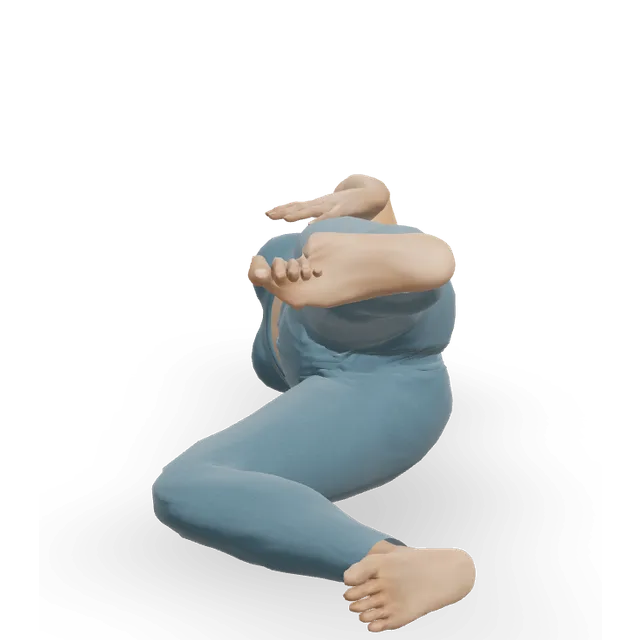 3D demoSide-lying leg circles (Pilates side kick series)Beginner · No equipment
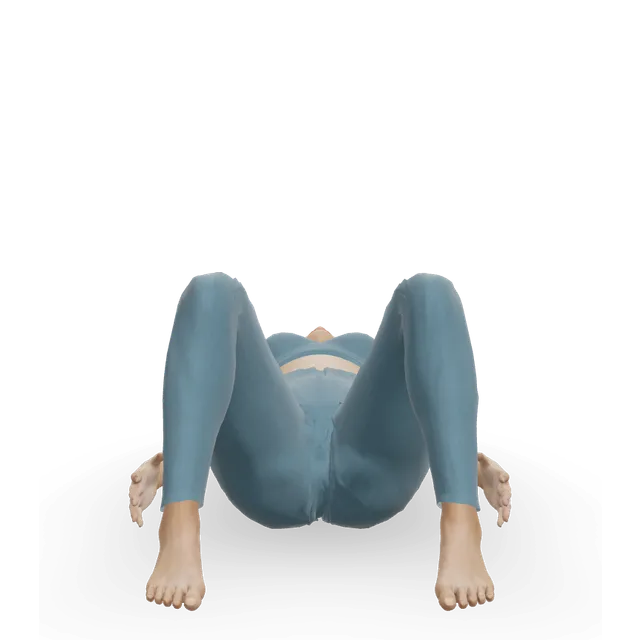 3D demoSupine isometric hip abduction (belt press)Beginner · A band
Glute bridge, 3 sets of 12; single-leg bridge, 3 sets of 10 each leg; knee side plank, 3 holds of 20 to 30 seconds each side; side plank, 3 holds of 30 seconds each side, then side plank with a leg lift, 3 sets of 8 to 10 each side (our IT band syndrome guide's stages). Shoulder bridge, "3 to 5 kicks each leg" (the move page's dose).
 3D demoGlute bridgeBeginner · No equipment
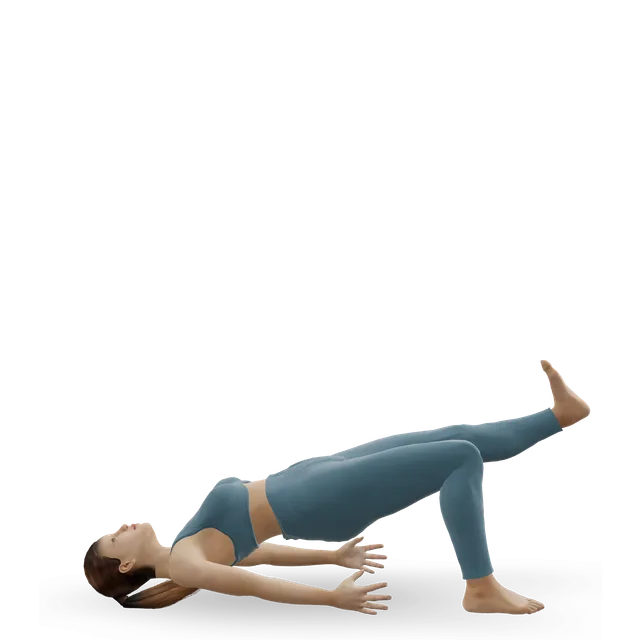 3D demoShoulder bridge (Pilates)Intermediate · No equipment
 3D demoSingle-leg glute bridgeIntermediate · No equipment
 3D demoKnee side plankBeginner · No equipment
 3D demoSide plankIntermediate · No equipment
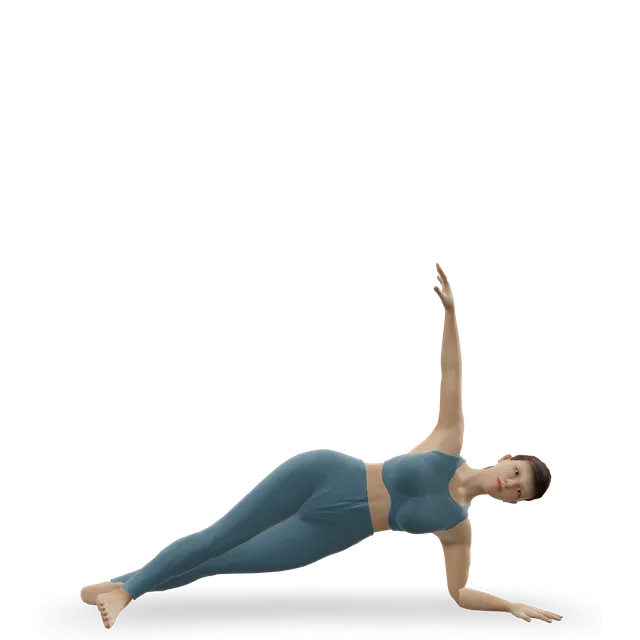 3D demoSide plank with leg liftAdvanced · No equipment
The part side-lying work leaves out. Hip hitch, "3 sets of 15 slow reps each side, 3 times a week: the dose in a runners' trial that included this move"; standing wall press, "3 to 5 holds of 5 to 15 seconds each side, twice a day: the standing hold in the LEAP trial programme" (the move page's dose for each). Lateral band walk, 3 sets of 12 to 15 steps each way; one-leg stand, 3 holds of 30 to 45 seconds each leg; step-up, 3 sets of 10 each leg; later, step-down, 3 sets of 10 each leg, and single-leg Romanian deadlift, 3 sets of 8 each leg (our IT band syndrome guide's stages).
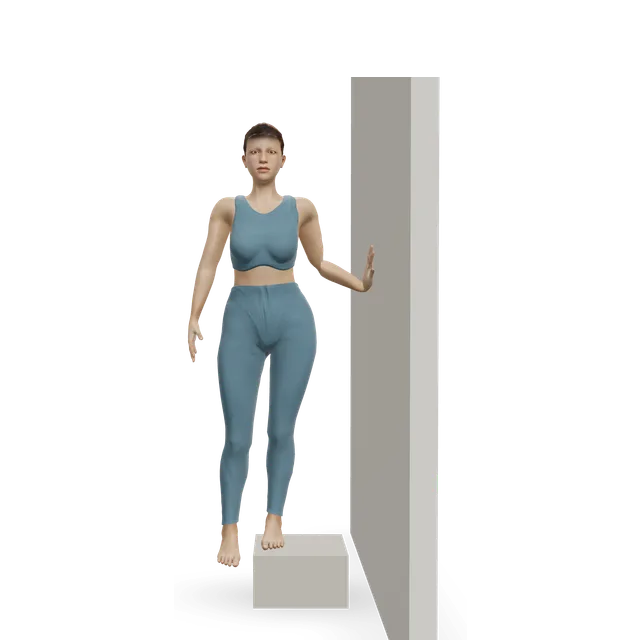 3D demoHip hitch (pelvic drop)Beginner · A step
 3D demoStanding wall-press hip abductionBeginner · A wall
 3D demoLateral band walkBeginner · A band
 3D demoSingle-leg standBeginner · A wall
 3D demoStep-upBeginner · A step
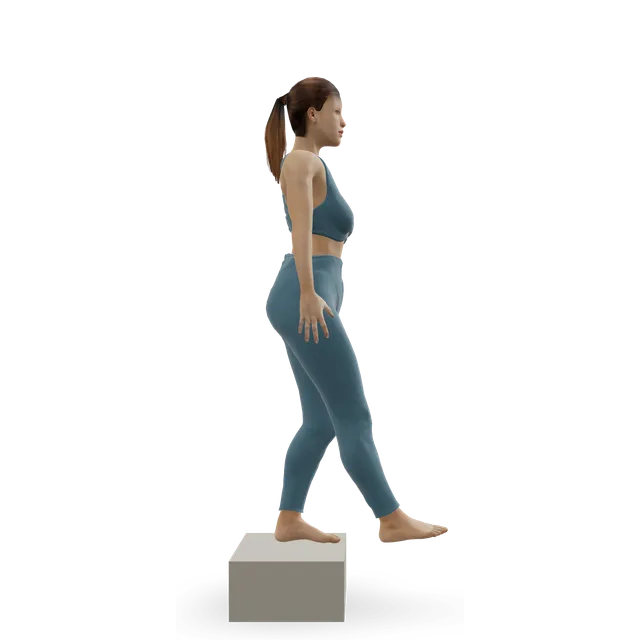 3D demoPatrick step-downIntermediate · A step
 3D demoSingle-leg Romanian deadliftAdvanced · A dumbbell
Foam rolling the side of the thigh, "About 90 seconds for each muscle you roll, for example 2 or 3 slow rounds of 30 to 45 seconds", and the lying IT band stretch, "Hold 20 to 30 seconds, 2 to 4 times each side (our editorial starting point)." (the move page's dose for each). Skip both if the bony point on the outside of your hip is sore. Neither changes the band.
Footwork, bridging and side-lying leg work in the straps are usually fine within the knee pain rule. If deep knee bending under the springs brings on the outer knee pain, shorten the range for now (our suggestion).
Source 30
The classical side splits, standing on the reformer, are described as an exercise that "Encourages proper standing posture, improves balance": side-to-side control on two legs that suits the later stages. The IT band stretch in the straps draws the leg across the body, so leave it out with outer hip pain.
Source 31
The lying IT band stretch, the reformer's IT band stretch in the straps and a figure-four with the knee pulled across: comfort only, and leave them out with outer hip pain. The foam rolling move's caution: "Roll gently, if at all, and skip it if the bony point on the outside of your hip is sore."
Lie on your good side with a pillow between your knees, or use a standing version at a wall, as the side-lying Pilates moves' own cautions suggest. Our Pilates for hip pain guide covers outer hip pain.
In the first weeks, if deep lunges, squats or loaded knee bends on the reformer bring on the outer knee pain, shorten the range, within the knee pain rule (our suggestion, from the knee angle where the pain peaks).
Source 9
Lowering off a step loads the kneecap more than stepping up the same step, and more the higher the step: with pain at the front of the knee, start with low step-ups and add step-downs from a low step once those are comfortable.
That is the step-down's own caution.
Keep the knees soft, not locked, in standing work (our suggestion).
Our Pilates glute workout carries the side kick series, bridges, clamshells and band walks: 2 to 3 times a week while you cut back your running. Add the knee control warm-up on 2 other days for standing control, and the runners' class once you're running again. With outer hip pain too, use the hip pain class until the hip settles.
A 25-minute Pilates class for your glutes: bridges, the side kick series, face-down kicks and standing work at a wall, with a band to make it harder.
25 minBeginner16 movesA wall, A bandA 20-minute warm-up that trains your knees to track over your toes: side-hip strength, squats and lunges with alignment practice, balance and quiet landings.
20 minBeginner10 movesA wall, A bandA 30-minute mat Pilates workout for runners, adapted from one small trial's programme: the abdominal series, side kicks for the hips, planks and balance.
30 minIntermediate18 movesA wallA 20-minute Pilates class for hip pain: bridges, outer-hip holds, standing leg work and balance, without deep bends, crossed legs or lying on the sore side.
20 minBeginner14 movesA band, A wallA 40-minute strength workout for runners at home: hops, Bulgarian split squats, single-leg deadlifts, step-ups, calf raises and side planks.
40 minIntermediate15 movesA wall, A bench or boxThese are the same warning signs as our IT band syndrome and knee pain guides, word for word. This is general information, not a diagnosis. A&E means accident and emergency; in the US, call 911 for 999, and use your doctor's urgent line or urgent care for NHS 111.
Source 32
Rate your knee pain from 0 to 10 during and after exercise. In the pain-monitoring model used in knee trials, 0 to 2 counts as safe, up to 5 as acceptable and above 5 as too much. Aim for 0 to 3 most of the time.
Sharp, catching or giving-way pain, or new swelling, is a reason to stop and get it checked.
Call 999 if:
Call 999 or go to A&E (accident and emergency) straight away for severe difficulty breathing (gasping, choking or not able to get words out), a chest that feels tight or heavy, pain that spreads to your arms, back, neck and jaw, lips or skin turning very pale, blue or grey, or sudden confusion. If you're more short of breath than usual, or your heart is racing, fluttering or skipping beats, contact NHS 111.
You feel any pain or become unwell, as the NHS advises for its Pilates videos, and especially for chest pain or pressure, unusual breathlessness, dizziness or fainting. If you have a health problem, an injury or any symptoms, get advice from a healthcare professional, such as a GP, before you start.
Source 36
The NHS advises getting advice from a healthcare professional first if you have a health problem, an injury or symptoms, or have recently had a heart attack or an operation.
Source 36
The band barely lengthens, one session of either didn't change its stiffness, and in one small study it wasn't tighter in people with the condition. Stretching may ease symptoms early, with no harm shown, so it's comfort, not a cure.
In one small study, read as an abstract, the band was no stiffer than on the other leg or in healthy runners. The pain fits compression of a sensitive fat layer near the knee.
Weakness shows up mainly in women with current symptoms. Hip strengthening is the common thread in small, mostly uncontrolled studies, and the newest review can't rank treatments.
No trial has tested it. A supervised hip and core programme cut overuse injuries in novice runners overall, but without changing hip strength or running mechanics, and with no IT band result available to us.
Downhill running predisposes to it. Cut distance and leave downhill out, then bring them back in steps, within the knee pain rule.
Source 9
It hasn't been tested, but its side kick series, bridges and standing balance work the hip muscles that the IT band studies strengthened. Pair it with changes to your running.
Not much: it's anchored to the thigh bone, lengthened less than 0.5% during a hip contraction, and one session of rolling or stretching didn't change its stiffness. IT band stretches can still feel good, so use them for comfort.
Usually lying with a strap, or in the reformer straps, drawing the straight leg across the body. What you feel is mostly the hip muscles, and the position presses on the outer hip, so skip it if the bony point on the outside of your hip is sore.
Probably not: in one small study of runners with IT band syndrome, it was no stiffer than on the other leg or in healthy runners. The pain comes from the band pressing on a sensitive layer near the knee, especially with the knee slightly bent and the thigh drifting in.
Side-lying leg lifts and the side kick series, clamshells, bridges and single-leg bridges, side planks, then standing work with a level pelvis: the hip hitch, a wall press hold and one-leg balance. None has been tested in a Pilates trial for IT band syndrome.
Usually, yes: footwork, bridging and side-lying work are fine within the knee pain rule, and the standing side splits train side-to-side control. If deep knee bending under the springs brings on the outer knee pain, shorten the range for now.
Only if it feels good: rolling changes range for a short while, about as much as stretching, and doesn't change the band. Skip it if the outside of your hip is sore.
Often, with less distance and no downhill running for now: downhill running predisposes to it, and faster running on the flat is less likely to provoke it. A slightly quicker step reduced how far the thigh drifted in for healthy runners, but it hasn't been tested in IT band syndrome.
Long side-lying sessions on the sore side, crossing the leg over in stretches, or deep loaded knee bends can irritate it (our suggestion, from the anatomy and load studies). Change those and keep the hip strength work.
The hip programmes in the studies ran for 6 weeks, and in novice runners the median recovery was 88 days. Bring downhill running back last.
It's the most common treatment in the studies and pain fell in most of them, but they were small and mostly without a comparison group, and the newest review can't rank treatments. Hip work plus changes to your running is a reasonable first step.
Get advice from NHS 111 now if your knee locks or gives way, or is hot, red and swollen with a high temperature; a knee that swells within a few hours of a pop or a twist needs assessing the same or the next day. Outer knee pain that started with a twist, or comes with swelling or locking, isn't typical of IT band syndrome.
Exercise education, not a personal prescription, and clinical review of these guides is pending. If you are pregnant, have a health condition or have had recent surgery, check with a doctor, midwife or physiotherapist before starting, and stop for sharp or increasing pain. Health disclaimer.