Yoga flows
Gentle yoga for fibromyalgia: a 30-minute class with a stop point
A gentle 30-minute class based on the yoga programme tested in women with fibromyalgia: slow, supported poses with a chair version of each, slow breathing and a long rest. There's a stop point after about 15 minutes: on a bad day, in your first week, or if you're unsure, stop there and go straight to the rest. It goes alongside walking or other gentle cardio, and it isn't for ME/CFS (myalgic encephalomyelitis or chronic fatigue syndrome).
Arrive (4 minutes)
- Easy pose (Sukhasana)1 to 2 minBeginner · Hip flexors, Back · 3D demoSit on a folded blanket, or on the edge of a chair if the floor is hard to reachHarder: Pigeon preparation (Eka Pada Rajakapotasana prep)
- Beginner · 3D demoIn for about 4, out for about 6, with no holds; or just notice your breathEasier: Breath reachHarder: Crocodile breathing (prone diaphragmatic breathing)


Loosen, sitting on a chair (5 minutes)
- Shoulder rolls10 each wayBeginner · Shoulders, Back, Neck · 3D demoSlow and smoothHarder: Shoulder CARs (controlled articular rotations)
- Side neck stretch2 holds of 10 s each sideBeginner · Neck, Shoulders · 3D demoEar towards your shoulder; let your head's weight do the work, with no pullingHarder: Upper trap release
- Thoracic rotation5 each side, 5 s holdsBeginner · 3D demoSeated (the demo shows it standing): arms crossed, hips facing forward, turn smoothlyEasier: Side-lying open bookHarder: World's greatest stretch
- Cat-cow6 slow roundsBeginner · Back, Abs · 3D demoSeated (the demo shows all fours): hands on your knees, round gently, then lift your chestHarder: Half lord of the fishes (Ardha Matsyendrasana)




Stand, holding a chair (6 minutes)
- Mountain pose (Tadasana)5 slow breathsBeginner · Calves, Back, Abs · 3D demoOne hand on the back of the chair, feet hip-width apartHarder: Tree pose (Vrksasana)
- Breath reach5 breaths, exhale longer than inhaleBeginner · 3D demoArms float up as you breathe in, only as high as is comfortableHarder: Slow breathing (6 breaths a minute)
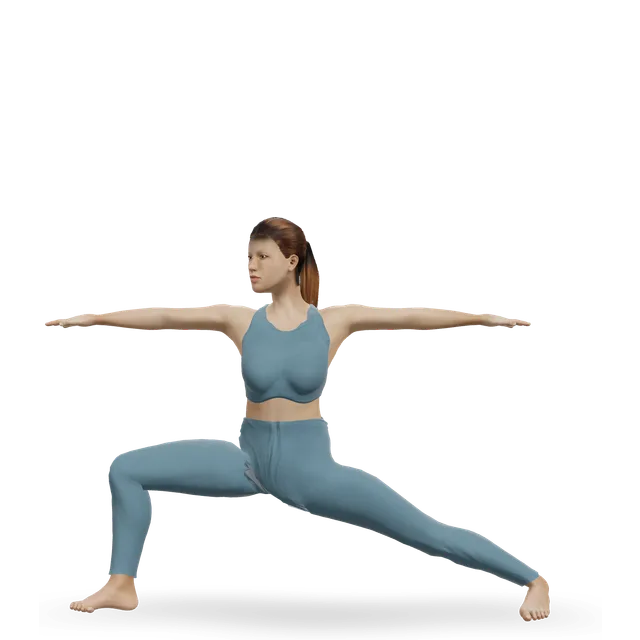
- Warrior II (Virabhadrasana II)3 breaths each sideIntermediate · Quads, Glutes, Adductors · 3D demoSide-on to the chair, one hand on its back, with a short stanceEasier: Chair pose (Utkatasana)Harder: Extended side angle (Utthita Parsvakonasana)
- Chair pose (Utkatasana)2 holds of 3 to 5 breathsBeginner · Quads, Glutes, Shoulders · 3D demoA shallow bend, hands on your thighs or the chairHarder: Revolved chair pose (Parivrtta Utkatasana)
- Hip hinge fold5 slow foldsBeginner · 3D demoHands on the chair seat, back long: the trial's downward dog on a chair. Stop point: on a bad day, in your first week or if you're unsure, go straight to the rest at the endHarder: Seated forward fold (Paschimottanasana)





On the floor (10 minutes)
- Sphinx pose (Salamba Bhujangasana)2 holds of 3 to 5 breathsBeginner · Back, Abs, Chest · 3D demoOn your forearms, elbows under your shoulders; skip it if you're bloated or your back pinchesHarder: Cobra pose (Bhujangasana)
- Locust pose (Salabhasana)3 holds of 3 breathsBeginner · Back, Glutes, Hamstrings · 3D demoChest and legs a little off the floor, neck long, eyes downEasier: Seated upper-back lift (sit tall, shoulders back)Harder: One-legged bow (half locust)
- Child's Pose (Balasana)30 to 60 sBeginner · Back, Shoulders, Glutes · 3D demoKnees wide, with a cushion under your hips or chestHarder: Extended puppy pose (Uttana Shishosana)
- Beginner · Glutes, Abs, Hamstrings · 3D demoKnees bent, a cushion under your head; peel up only as high as is easyHarder: Glute bridge
- Beginner · Glutes · 3D demoHold behind the thigh, and never press on the crossed kneeHarder: Pigeon preparation (Eka Pada Rajakapotasana prep)
- Supine spinal twist (Supta Matsyendrasana)45 s each sideBeginner · Back, Glutes · 3D demoA cushion under the top knee keeps the twist gentleHarder: Seated twist, bottom leg straight
- Double knee-to-chest stretch2 holds of 20 to 30 sBeginner · Back, Glutes · 3D demoRock gently if it feels goodEasier: Single knee-to-chest stretchHarder: Overhead lat stretch at a bench (elbows on the bench)




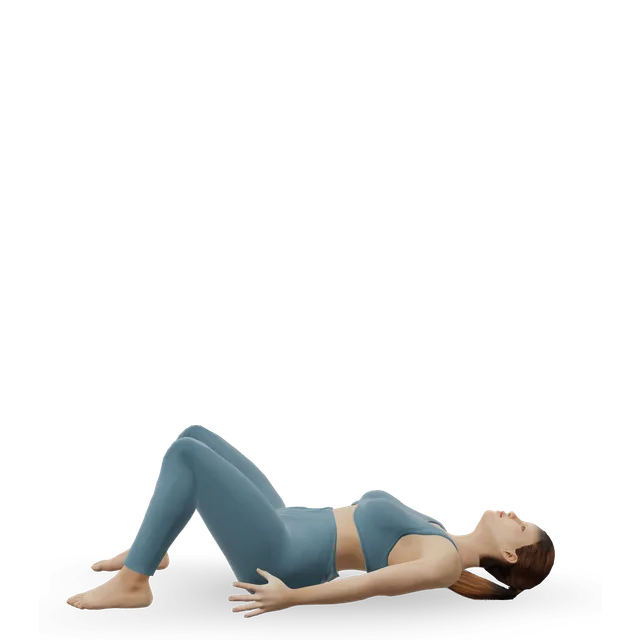


Rest (5 minutes)
- Beginner · 3D demoA cushion under your knees and a blanket over you, or lie on your side. To get up, roll to your side, pause, then come up slowly

Tips
- On a bad day, in your first week, or if you're unsure, use the stop point: do the first three blocks, then go straight to the rest, or just do the breathing. Pacing means balancing activity and rest so you don't overdo it on good days, Arthritis UK says.
- Feeling a bit more sore or tired for a day or so is common when you start, and isn't damage. If you feel much worse the next day, drop back to the last version that felt manageable, then build up more slowly.
- Do it 2 or 3 times a week. Each week, if you haven't had a flare lasting more than a day or two, add a block, building up to the full class over a few weeks (our suggestion).
- Use the chair version of anything that hurts, move slowly, and come up from the floor slowly: the trial programme built these into every pose.
- Keep holds short, and stop any pose that brings on sharp pain, or pain, pins and needles or numbness travelling down an arm or leg.
- Add walking, cycling or water exercise on other days, and a little strength work twice a week: stretching on its own helps fibromyalgia least.
- Take time to relax every day: the NHS says deep breathing or meditation may be just as effective as relaxation aids.
- This class isn't for ME/CFS. If activity is regularly followed by a delayed crash that takes days to recover from, see a GP; and don't put new or different symptoms down to fibromyalgia: get them checked.
The doses are suggested starting points, not a prescription. Choose a range you can control and stop for sharp or increasing pain, numbness or tingling. Get individual advice after an injury or surgery, or if you are pregnant or managing a health condition.
Guides that recommend it
Find more moves like these
More yoga flows
Beginner yoga flow
A 20-minute beginner yoga sequence: mountain, chair, warrior II, triangle, tree, down dog, cobra and child's pose.
20 minBeginner11 movesA step


Sun salutation flow
A 20-minute flow built on sun salutations A and B, with warrior poses and a short cool-down.
20 minIntermediate8 movesNo equipment



Yoga for tight hips
A hip-opening yoga sequence: low lunge, lizard, goddess, pigeon, bound angle and happy baby.
25 minBeginner10 movesA wallQuestions people ask
How long does the gentle yoga for fibromyalgia: a 30-minute class with a stop point take?
About 30 minutes, including any warm-up and cool-down listed. Shorten it by doing fewer rounds; lengthen it by adding one.
What equipment do I need?
No equipment: your body and some floor space. A mat makes floor work more comfortable.
Is it suitable for beginners?
It is written for beginners. 5 of its 19 moves have an easier option listed beside them if you need one.
How do I make it easier or harder?
Use the easier or harder option listed under each move, change the number of rounds, or adjust the rest. Progress one change at a time.