Losing hair every day is normal
The NHS (National Health Service) says most people lose 50 to 100 hairs a day, often without noticing.
Yoga guide
No trial has tested yoga for hair growth, and no pose has been shown to send enough blood to your scalp to regrow hair. Most lasting hair loss is pattern hair loss, which runs in families, and the treatments that work are medical. Stress can trigger a kind of shedding that usually grows back on its own, and that's where yoga can help a little: it eases stress, alongside the right treatment.
This guide covers how much shedding is normal, the main types of hair loss and the medical causes worth checking, what we know about stress and hair, the balayam and headstand claims, the treatments with evidence, and when to see a GP (general practitioner), with a calming yoga class to follow.
The NHS (National Health Service) says most people lose 50 to 100 hairs a day, often without noticing.
Male and female pattern hair loss come from genes and hormones. Shedding after illness, childbirth, crash dieting or a stressful time (telogen effluvium) usually grows back by itself, and patchy hair loss (alopecia areata) often does too.
Stressful events are one trigger of telogen effluvium. Beyond that, a 2022 review says the scientific evidence that stress causes hair loss "is arguably much thinner" than popular belief.
Yoga eases stress a little in trials, which makes it a reasonable addition when stress is part of the picture. It isn't a hair treatment.
No study has tested rubbing your nails together or going upside down for hair. Headstands are the pose most often named in published reports of harm from yoga.
Minoxidil helps women and men with pattern hair loss, and finasteride helps men. See a GP for sudden hair loss, bald patches, hair coming out in clumps or a scalp that itches and burns.
About 85% of the follicles on your scalp are growing hair at any time and about 15% are resting. A resting follicle stops for 2 to 4 months, then a new hair grows and pushes the old one out. The British Association of Dermatologists (BAD) says losing 30 to 150 hairs a day is normal; the NHS says 50 to 100.
The most common type in men: a receding hairline and thinning on top, with the back and sides spared. Genes (over 190 have been found) and a hormone called dihydrotestosterone make the follicles gradually produce thinner, shorter hairs. There's no cure, and it progresses slowly, over years to decades.
Source 3
The most common type in women: thinning over the top of the head with a wider parting, while the hairline at the front usually stays. It usually starts in the 50s or 60s, sometimes in the 30s or 40s, comes from genes and hormones, and can go with conditions that raise male-type hormones.
Source 4
More hair than usual falls out all over the scalp, often suddenly and about 3 months after a trigger such as childbirth, a severe illness or high fever, a stressful or major life event, an operation, a lot of weight loss or extreme dieting, a new medicine, or stopping a hormone treatment such as the pill. For 1 in 3 people no cause is found. It usually gets better without treatment: the shedding lasts 3 to 6 months, though hair can take many months to look as thick as before.
Source 2
The immune system attacks hair follicles, usually causing smooth, round bald patches. It's linked with thyroid disease, vitiligo and type 1 diabetes. Depending on how much hair is lost, about 4 in 5 people regrow it fully within a year without treatment, but only about 1 in 10 when more than half the hair is lost at the start, and patches can come back.
Source 5
Less common types destroy the follicles. In frontal fibrosing alopecia, the hairline at the front gradually moves back, sometimes with itching, burning or redness around the hairs, and the BAD says "Once a hair has fallen out, it will not re-grow in this area". That's why scarring hair loss needs to be seen early.
Source 15
The NHS lists dry hair or hair loss with an underactive thyroid, patchy hair loss or thinning with an overactive thyroid, more hair coming out when brushing or washing with iron deficiency anaemia, and hair loss with polyendocrine metabolic ovarian syndrome (PMOS), the condition it used to call polycystic ovary syndrome (PCOS). Illness, cancer treatment and weight loss can cause temporary hair loss too. A GP can check with blood tests.
The BAD lists stressful or major life events among the triggers of telogen effluvium, and the NHS names stress among the causes of temporary hair loss.
In mice, long-term stress raised a stress hormone that kept hair follicles resting for longer. In people, the studies are small. In 33 female medical students, the 18 sitting a major exam had more stress and changes in hair growth, but the changes stayed within the normal range. In 25 women with unexplained hair loss and 25 without, more of those with hair loss reported high stress. In identical twins, the twin reporting more stress had more hair loss in some areas, among many factors tested.
A 2022 review sums it up: popular belief has "little doubt" that stress causes hair loss, but the evidence "is arguably much thinner".
Stress is one suggested trigger, but the BAD says "it is also possible that this link may be coincidental", because no trigger can be found for many people.
Source 5
We searched for studies of yoga, pranayama or exercise and hair loss and found 19 records in one database and 24 in another, but no trial that tested yoga for hair growth or hair fall.
In 13 trials of stressed adults, yoga lowered how stressed people felt in the short term compared with doing nothing, on low-certainty evidence, and in 36 studies the effect was larger in people who were more stressed. Whether that means less shedding hasn't been tested.
In alopecia areata, a review of complementary treatments found that hypnosis and mindfulness improved wellbeing and quality of life on low-quality evidence. They haven't been shown to regrow hair.
Source 26
In 1,182 Korean adults, those with pattern hair loss exercised more, especially at low intensity, which the authors couldn't explain and which can't show cause. In identical twins, less exercise went with more crown hair loss in women, and more exercise with more hair loss in men. These are snapshots that point both ways; keep exercising for your health.
In 9 men who used a massage device on their scalp for 4 minutes a day for 24 weeks, hairs got slightly thicker (from 0.085 to 0.092 mm), with no comparison group. In an online survey, 69% of 327 people who tried daily scalp massage said their hair loss had stabilised or improved, which is what people reported, not what was measured. Gentle massage is harmless and can feel relaxing; it isn't a proven treatment.
The NHS says no treatment is 100% effective, many aren't available on the NHS, and you should see a GP before going to a commercial hair clinic.
In a review of 47 trials in women with pattern hair loss, minoxidil roughly doubled the chance of noticeable regrowth compared with a dummy treatment (157 of 593 against 77 of 555), with about 13 more hairs per square centimetre; the 2% and 5% strengths did about as well as each other. It helps men too. It takes at least 6 months to show a benefit, can cause extra shedding in the first weeks, works only while you use it, and isn't on NHS prescription.
Finasteride tablets beat a dummy pill for male pattern hair loss in pooled trials. The BAD says it can take up to 14 months to see a benefit and that reduced sex drive and erection problems affect about 2% of men. In trials in women, it did no better than a dummy pill, and the NHS says women should not use it.
Steroid injections are the most effective approach for small patches. Steroid creams, other skin treatments and, for severe hair loss, tablets called JAK inhibitors are options from a specialist.
Source 5
Usually no treatment is needed, and the BAD says medicine doesn't speed up regrowth. If a cause such as iron deficiency isn't treated, it can come back. Gentle hair care, a balanced diet with iron and protein, and hair fibres or volumising products to disguise thinning can help in the meantime.
Source 2
Hair loss can be upsetting. The NHS says your GP may be able to help you get counselling, and support groups help many people.
Source 1
Our editorial starting point: the NHS breathing exercise every day, for at least 5 minutes, and a yoga class or home session 2 or 3 times a week, as on our yoga for stress guide. Judge your hair by what your GP or dermatologist finds, not by the yoga.
Sitting, standing or lying comfortably:
Source 30
Balayam means rubbing the fingernails of both hands against each other. No study has tested it. It's harmless, and so is a gentle fingertip scalp massage if you enjoy it, but neither is a treatment.
Slow breathing: at least 5 minutes; breath reach: 5 breaths; cat-cow: 8 slow waves; child's pose: 1 to 3 minutes; corpse pose: at least 5 minutes, up to 10 (the moves' pages). Reclining bound angle: 2 to 5 minutes with a support under each thigh (the move page's editorial starting point).
 3D demoSlow breathing (6 breaths a minute)Beginner · No equipment
 3D demoBreath reachBeginner · No equipment
 3D demoCat-cowBeginner · No equipment
 3D demoChild's Pose (Balasana)Beginner · No equipment
 3D demoReclining bound angle pose (Supta Baddha Konasana)Beginner · Firm cushion
 3D demoCorpse pose (Savasana)Beginner · No equipment
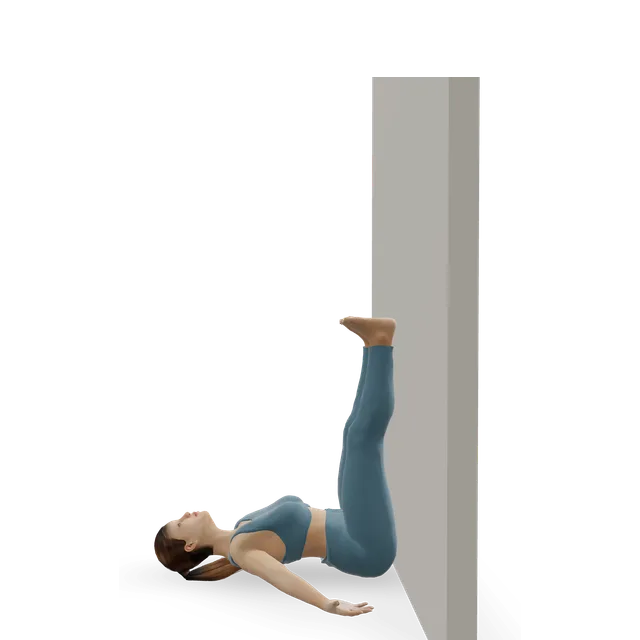
Legs up the wall: 2 minutes (our bedtime stretch routine). It's restful and puts no weight on your head or neck. It won't grow hair. With glaucoma, ask your eye doctor first and keep your hips on the floor.
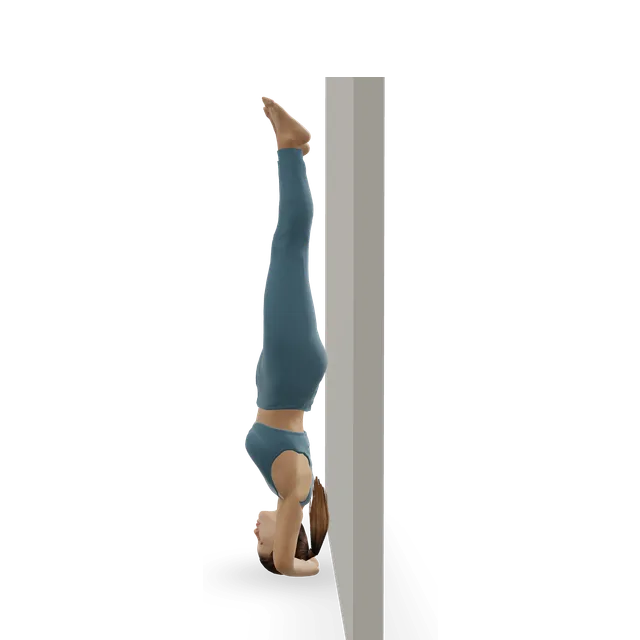
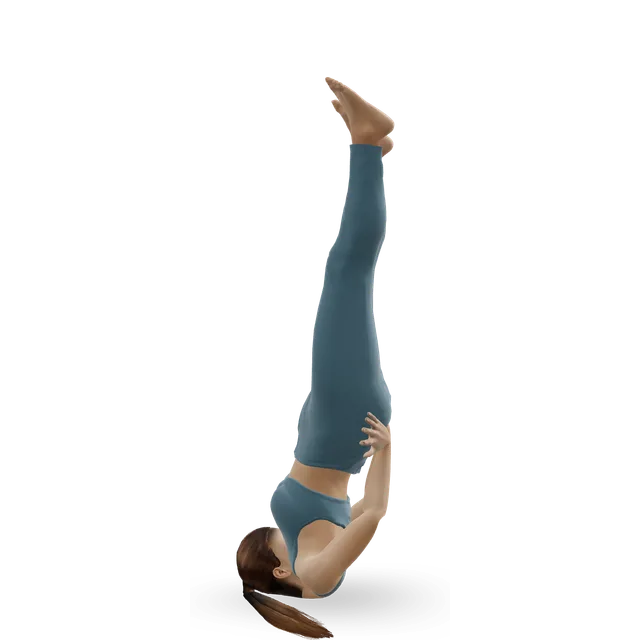
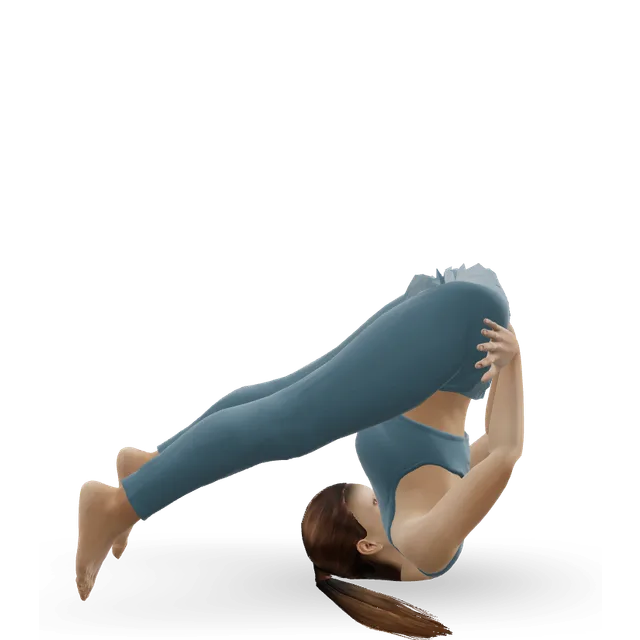
Headstand, shoulder stand and plough haven't been shown to help hair, put weight on the head and neck, and raise the pressure in your eyes. Beginners are advised to avoid them, and so is fast, forceful breathing.
There's no hair class, because no routine regrows hair. For stress, use the 20-minute yoga for stress class 2 or 3 times a week and the breathing routine on other days (leave out the breath holds if they make you feel short of air). With a thyroid problem, see our thyroid class.
Twenty minutes of yoga for stressful days: the NHS breathing exercise, neck, shoulder and spine moves, standing poses that warm you up, then a slow wind-down.
20 minBeginner13 movesA wallA 6-minute breathing routine: slow breathing, crocodile breathing, alternate nostril breathing, box breathing and 4-7-8 breathing.
6 minBeginner5 movesNo equipmentA 20-minute beginner yoga sequence: mountain, chair, warrior II, triangle, tree, down dog, cobra and child's pose.
20 minBeginner11 movesA stepA 45-minute restorative yoga sequence: five fully supported poses held for 4 to 10 minutes each, with slow breathing and a long final rest.
45 minBeginner6 movesFirm cushion, A wallA slow, 10-minute floor routine to unwind before sleep: child's pose, twists, happy baby and slow breathing.
10 minBeginner7 movesFirm cushion, A wallThirty minutes of slow breathing, gentle neck and spine movement, standing poses and rest for thyroid problems, with legs up the wall instead of shoulder stand.
30 minBeginner15 movesA wallnidirect, adapted from the NHS, says to see your GP if:
See a GP if hair loss comes with feeling very tired, feeling cold, weight gain or low mood (signs of an underactive thyroid); weight loss, a fast or irregular heartbeat, trembling or sweating (an overactive thyroid); tiredness, breathlessness, palpitations or paler skin (iron deficiency anaemia); or irregular periods, excess facial or body hair, or acne (PMOS).
A hairline that's moving back with itching, burning or redness around the hairs can be scarring hair loss, which doesn't regrow, so see a GP soon (our suggestion, from the BAD leaflet). See a GP about bald patches or hair loss in a child too.
Source 15
Your GP may be able to help you get counselling. The BAD notes higher rates of anxiety and depression in people with alopecia areata. If you're struggling, our yoga for stress guide lists where to get urgent help.
Stop for chest pain, dizziness or feeling faint, unusual breathlessness, or palpitations that don't settle as you slow down. Call 999 for chest pain that feels tight or spreads to your arms, neck or jaw.
No trial has tested it. Yoga eases stress a little, and stress is one trigger of one type of shedding, which usually grows back by itself.
We found no study of balayam at all. It's harmless, but there's no evidence it does anything for hair.
Source 10
No study has tested it. Headstands were the pose most often named in 84 published reports of harm from yoga, head-down poses raise eye pressure within a minute, and beginners are advised to avoid headstands.
Pattern hair loss, from genes and hormones, is the most common type. Stress can trigger temporary shedding, and the evidence that it causes lasting hair loss is thin.
Minoxidil and finasteride have trial evidence for pattern hair loss; yoga has none for hair.
Snapshot and twin studies point both ways, and no trial shows exercise causes hair loss.
Thyroid problems are treated with medicine. No pose has been shown to act on the thyroid, as our yoga for thyroid guide explains.
Source 16
There's no trial showing it can. Yoga can ease stress a little, and stress is one trigger for a type of shedding that usually grows back by itself, so it can help as part of looking after yourself, not as a hair treatment.
None has been shown to grow hair. If stress is part of your hair loss, slow breathing, a gentle class and a wind-down are the useful parts, as in our yoga for stress class.
No study has tested it. It's harmless, but there's no evidence it does anything for hair.
No study shows they do. Headstands are the pose most often named in reports of harm from yoga, they raise the pressure inside your eyes, and they aren't for beginners.
It can trigger telogen effluvium: extra shedding all over that usually starts about 3 months after a stressful event or illness and grows back within months. Stress may also play a part in patchy hair loss, though the British Association of Dermatologists says the link may be coincidental.
Usually, yes: telogen effluvium normally gets better without treatment, though it can take many months to look as thick as before. See a GP if the shedding doesn't settle, to check for causes such as iron deficiency or a thyroid problem.
Losing 50 to 100 hairs a day is normal, often without noticing. More shedding than usual after washing or brushing, or new thinning, is worth mentioning to a GP.
For pattern hair loss, minoxidil on the scalp helps women and men, and finasteride tablets help men. They take months to work, only work while you use them, and many treatments aren't available on the NHS.
If you have sudden hair loss, bald patches, hair coming out in clumps, a scalp that itches and burns, or you're worried. See your GP before paying for a hair clinic.
Yes: the NHS lists hair loss with an underactive or overactive thyroid and with iron deficiency anaemia. A GP can check with a blood test.
It hasn't been shown to treat hair loss: one study of 9 men found slightly thicker hairs after 24 weeks, with no comparison group. It's harmless if you enjoy it.
There's no trial showing it does, and studies that compared people's habits point both ways. Keep exercising for your health.
Exercise education, not a personal prescription, and clinical review of these guides is pending. If you are pregnant, have a health condition such as glaucoma, high blood pressure or osteoporosis, or have had recent surgery, check with a doctor, midwife or physiotherapist before starting, and stop for sharp or increasing pain. Health disclaimer.