Side crow (Parsva Bakasana)
From a squat with the knees together, you twist until the outside of one thigh rests on the opposite upper arm, bend the elbows to a right angle as in chaturanga and tip forward until both feet lift, the legs stacked out to the side. Crow faces forward over both arms; side crow adds a deep twist and loads the arms unevenly. Yoga Journal says the abdominals hold you up and take pressure off the wrists, and suggests resting the forehead on a block while you learn.
Movement guide
Side crow (Parsva Bakasana)
Make it easier or harder
Choose a version that fits your control and comfort.
Easier option
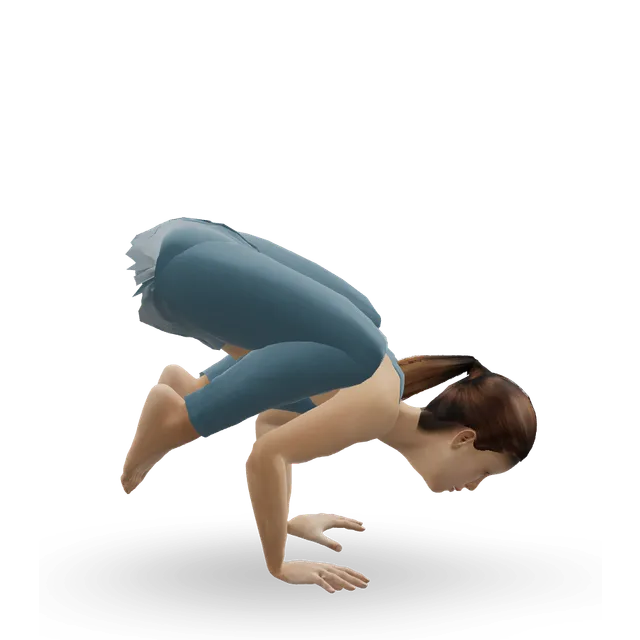 3D demoCrow pose (Bakasana)Intermediate · No equipment
Similar move, intermediate grade.
Harder option
 Eight-angle pose (Astavakrasana)Expert · No equipment
Similar move, expert grade.
Source-researched guide.
How to move
- Squat on the balls of the feet with the feet and knees together. Twist to the right and place both hands flat on the floor outside the right foot, shoulder-width apart, fingers spread.
- Twist further until the outside of the right thigh, just above the knee, rests on the back of the left upper arm.
- Lean forward and bend the elbows to about a right angle, keeping them over the wrists and close to your sides so the arms make a shelf.
- Tip your weight onto the hands until the feet lift, knees and feet together, the legs stacked out to the right. Hold.
- Lower the feet to the floor, come back to the squat and repeat to the left.
Form cues
- Twist deeply and keep the belly firm: the abdominals hold you up.
- As an easier step, rest the other hip on the other upper arm so the legs sit across both arms.
- Avoid: letting the shoulders dip below the elbows.
Practice and cautions
3 to 5 attempts of 5 to 15 seconds each side, resting about a minute between them, while you are fresh (our editorial starting point).
While learning, rest the forehead on a block or bolster in front of you as you lean, and lift one foot at a time, so you are never far from the floor. Wrist pain is common when the hands carry your weight: in a survey of 321 adults who practise handstands, 57% reported chronic wrist pain. Not with a disc problem or a recent rib injury, since the twist under load is the risky part. Pad the floor in front of you. This is movement education, not an assessment or treatment prescription. Stop for sharp or increasing pain, dizziness, numbness or tingling; seek individual guidance for symptoms, injury or restrictions.
Sources and review status
Sources support the educational description; they do not establish that this exercise is suitable for you.
- Yoga Journal · Side crane (crow) pose (how-to: from a squat, the elbows bent to 90 degrees as in chaturanga; the forehead on a block while learning) ↗
- Yoga International · Side crane (crow) pose (the legs on one upper arm; resting the hip on the other arm is the easier version) ↗
- Martonovich 2025 · 57% of 321 adults who practise handstands, about a quarter of them from yoga, reported chronic wrist pain (cross-sectional survey, J Funct Morphol Kinesiol; a sibling skill) ↗
No variation is labeled clinically validated.
What it works
Muscles
Main: Shoulders, Triceps, Abs. Also: Chest, Adductors.
Anatomy: Deltoid, Rotator cuff, Supraspinatus, Infraspinatus, Subscapularis, Teres minor.
Equipment
None: body weight and floor space.
Level
Advanced. See the easier and harder options above.
Guides that use it
Similar moves
Crane pose (Bakasana, straight arms)Advanced · No equipmentPeacock pose (Mayurasana)Expert · No equipmentScale pose (Tolasana)Advanced · A step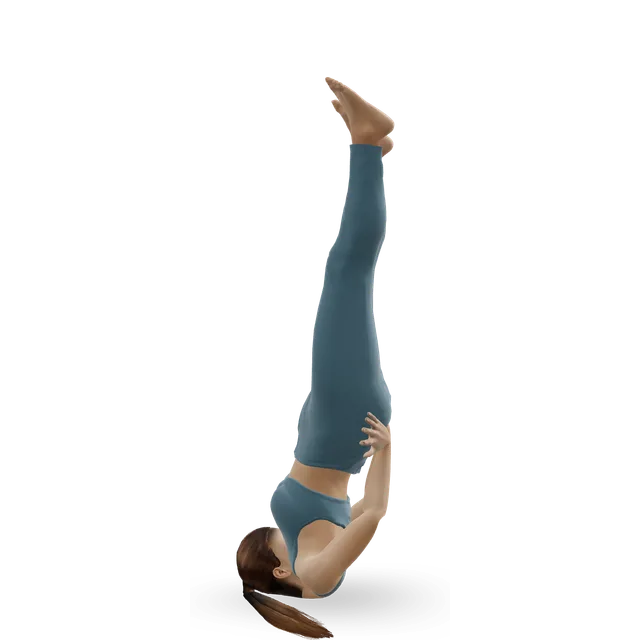 3D demoSupported shoulderstand (Salamba Sarvangasana)Advanced · No equipment
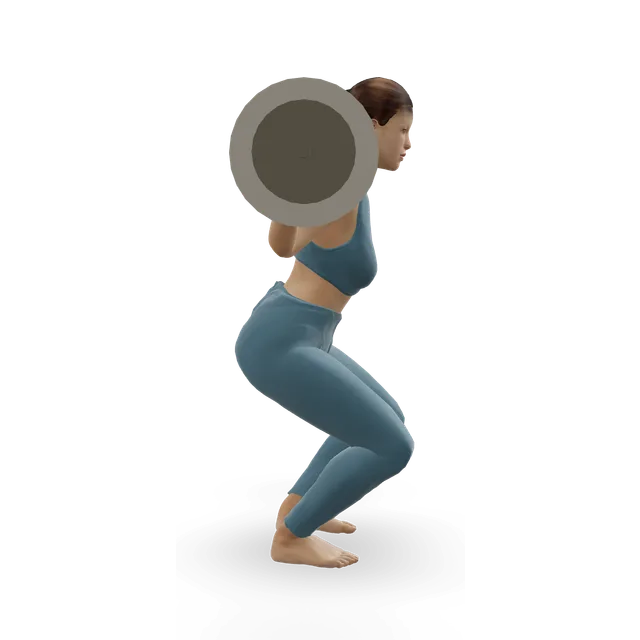 3D demoSots pressAdvanced · A barbell + A dumbbell
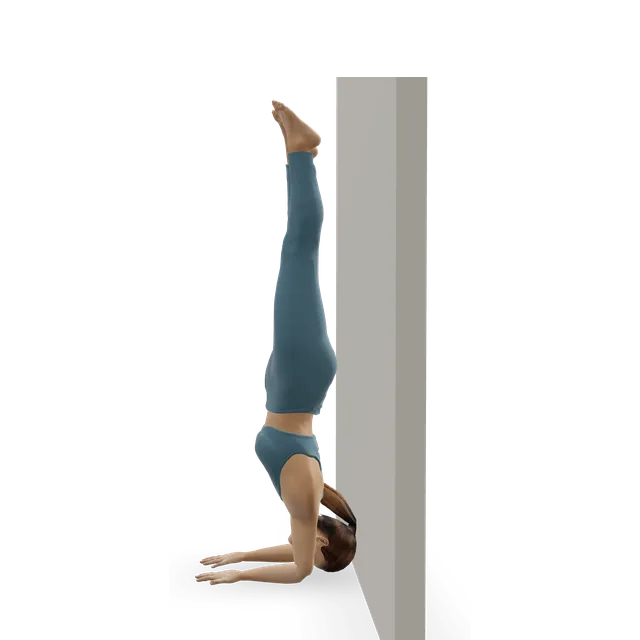 3D demoForearm stand (Pincha Mayurasana)Advanced · A wall
Browse more
Questions people ask
What muscles does the Side crow (Parsva Bakasana) work?
Mainly the shoulders, triceps and abs, with help from the chest and adductors.
What equipment do I need for the Side crow (Parsva Bakasana)?
No equipment: your body weight and a little floor space.
Is the Side crow (Parsva Bakasana) good for beginners?
It is an advanced move. Build up to it with the Crow pose (Bakasana) first.
What is an easier alternative to the Side crow (Parsva Bakasana)?
Try the Crow pose (Bakasana) or the Upward plank pose (Purvottanasana). It works similar muscles at a lower grade.
How do I make the Side crow (Parsva Bakasana) harder?
Progress to the Eight-angle pose (Astavakrasana) or the Flying pigeon (Eka Pada Galavasana). Follow that guide’s technique and any stated timing.