No yoga trial in triathletes
We found no trial of yoga in triathletes, and no stretching trial in triathletes that counted injuries. Use yoga for comfort, range, balance and winding down, not as injury prevention.
Source 1
Yoga guide
Triathletes train three sports on one body: overhead swimming loads the shoulders, the bike holds the hips bent for hours, and running causes most triathlon injuries. One or two yoga sessions a week can cover all three: the upper back and shoulder blades, the front of the hips, calves and hamstrings, one-leg balance and slow breathing on land. But no trial has tested yoga in triathletes, and stretching doesn't prevent running injuries, so yoga goes alongside strength training and a gradual build-up, not instead of them.
This guide covers where triathletes get hurt, when to flow and when to hold, how yoga fits your training load and taper, hot yoga and the heat, the heart and the swim, older triathletes, the poses for each sport and a free 25-minute class with a 3D demo of every move. Our yoga for swimmers, cyclists and runners guides go deeper into each sport.
We found no trial of yoga in triathletes, and no stretching trial in triathletes that counted injuries. Use yoga for comfort, range, balance and winding down, not as injury prevention.
Source 1
In short-course triathletes, 45% to 92% of injuries happened running; swimming caused the fewest, but most of the shoulder injuries. In iron-distance triathletes, the knee, lower leg and lower back led.
Stretching didn't prevent injuries in 1,538 army recruits or across 6 trials of 5,130 people, while strength and balance training did cut injuries across sport.
Holds of 60 seconds or more per muscle just before testing cut performance by about 4.6% on average, while short stretches followed by dynamic movement didn't change running economy. Keep long holds for after easy sessions or rest days.
Cycling and running add up, and moving extra load into another sport when injured may raise the chance of the injury coming back. A strong yoga class is a session; a gentle one is closer to rest.
In US races, most deaths and cardiac arrests happened in the swim, mostly in middle-aged and older men. Check with a GP first if you have heart symptoms or a family history of sudden death young, and know the signs of heatstroke. Breathing practice belongs on land.
Across 42 studies of short-course triathletes, injuries ran at 15.7 to 24.3 per 1,000 sessions or races, though no cohort study had a low risk of bias. In long-distance triathletes (6 studies, of relatively poor quality), 37% to 91% had an overuse injury, mostly at the knee and spine. In 174 iron-distance entrants followed for 26 weeks, on average 56% had an overuse problem at any one time: knee 25%, lower leg 23% and lower back 23%. In 50 elite Australian triathletes over 4 years, ankle, foot and lower leg injuries were commonest.
In age-group triathletes, a previous injury and high running mileage before the season went with more injuries. In British squad Ironman athletes, overuse injuries tracked hard running and cycling sessions, and the authors suggest cycling and running add up as cumulative stress.
Swimming has a lower injury rate than cycling or running, but the shoulder is the commonest site of pain in competitive swimmers. In 80 young elite swimmers, 91% reported shoulder pain, and hours swum went with tendon trouble at the top of the shoulder. These are swimmers, not triathletes: borrowed evidence.
In elite Australian triathletes, 40% had a bone stress injury over 4 years, about three times as often in women. In 86 German squad triathletes, 23% had had a stress fracture, all in the legs, linked with female sex, low vitamin D or iron, missed periods and high training hours.
An easy-day session that covers all three sports in one: the upper back and shoulder blades for the swim, the front of the hips and the back for the bike, calves, hamstrings and one-leg balance for the run, and slow breathing on land. It doesn't replace strength training, a gradual build-up across three sports or open-water safety, which our triathlon page covers.
Strength training, a gradual build-up and open-water safety carry the evidence. Yoga has no trial in triathletes.
PubMed found 1 record for yoga with triathlon, a survey that wasn't a yoga study, and no stretching trial in triathletes counted injuries. In runners, the yoga studies are tiny: 3 weeks of yogic breathing didn't change running economy in 21 runners, and 30 minutes of yoga after a long run kept one immune measure from dropping in 7 men. Neither tells you about injuries or race times.
In 1,538 army recruits randomised to stretch or not before exercise, injuries didn't differ. In 421 recreational runners, a warm-up, cool-down and stretching programme didn't reduce running injuries. Across 6 trials (5,130 people), there was no evidence that stretching reduces leg soft-tissue injuries. Across 9 trials in endurance runners, exercise programmes didn't reduce injuries overall, and 7 of the 9 were low quality. Across sport, strength training cut injuries to under a third and balance training to about half, while stretching made no difference, and stretching researchers agree stretching isn't an all-round injury prevention strategy.
Static holds of 60 seconds or more per muscle just before testing cut performance by 4.6% on average, against 1.1% for shorter holds. Four 15-second stretches followed by dynamic movement didn't change running economy in 18 trained runners and triathletes. Over weeks, static stretching barely changes jumping and doesn't clearly change sprinting.
In 20 athletes, 15 minutes of yoga after hard intervals settled breathing and heart rate variability faster than stretching for 10 to 15 minutes. But 4 weeks of slow breathing after sprint training didn't improve recovery or performance, and stretching barely changes next-day soreness.
Use your usual warm-up, with a few minutes of flowing yoga inside it if you like, and keep holds under 30 seconds (our suggestion, as on our yoga for athletes guide).
Source 7
Our 25-minute class, once or twice a week, fits an easy day (our editorial starting point). In a taper week, keep it gentle; a restorative or yin class is closer to rest.
The International Olympic Committee (IOC) says poor load management is a major cause of injury, and its illness statement advises small increases in load (under 10% a week) and planned recovery, including relaxation strategies, sleep and rest. In 95 endurance athletes followed for a year, spikes in load went with new injury or pain. A strong flow class is a session; keep gentle yoga for easy days.
Triathletes often keep training by adding load in another sport when injured, which the authors of one British squad study say may raise the risk of the injury coming back. Keep yoga gentle and around the injury, not instead of rest (our reading).
Source 9
In 10 elite field hockey players with no comparison group, six 60-minute hot yoga sessions first lowered blood plasma volume, then expanded it 72 hours later, with only trivial changes in maximal fitness. Heat acclimatisation for racing means repeated exercise in the heat over 1 to 2 weeks, as our running in the heat guide explains. A hot class adds heat and fluid loss to a heavy week, so skip it in the 24 hours before a long race.
In a World Cup sprint triathlon held in a heatwave, 17 of the 44 athletes whose core temperature was measured passed 40°C. Race medical teams find overheating and heatstroke in most running and triathlon events they study.
In US races, most sudden deaths and cardiac arrests happened in the swim; from 2006 to 2016 the rate was 1.74 per 100,000 participants (2.40 in men and 0.74 in women), and 18.6 in men aged 60 and over. Of 61 people examined after death, 27 (44%) had heart disease that mattered. In UK races from 2009 to 2015 there were 5 deaths in 991,186 participants, 3 of them during or after the swim. Why the swim is unclear: one review favours heart rhythm problems, another series suggests fluid in the lungs.
Chest pain, palpitations, dizziness or fainting with exercise, a heart condition, or a relative who died suddenly when young: see your GP, who may refer you to a cardiologist, before your first race. In those examined after a death in a US race, 44% had heart disease that mattered.
Source 11
Teenage triathletes had almost twice the injury prevalence of 30 to 39 year olds, and over-40s didn't differ from under-40s in another study. Older Ironman entrants reported more fractures, and at the Ironman World Championship, under-35s and over-70s visited the medical tent more often than 36 to 69 year olds. The heart risk rises with age in men, which is a reason to check first, not to stop.
Modify or avoid exercises that round your back deeply or repeatedly, especially with a weight: sit-ups, toe touches, Pilates roll-downs and curl-ups, and extreme yoga forward folds. Bend from the hips instead. You do not need to avoid bending, twisting or lifting altogether: move smoothly and keep your upper back straight.
Twisting should be safe if you do it smoothly and comfortably. Slow down and shorten fast or forceful twists, and leave out the added weight.
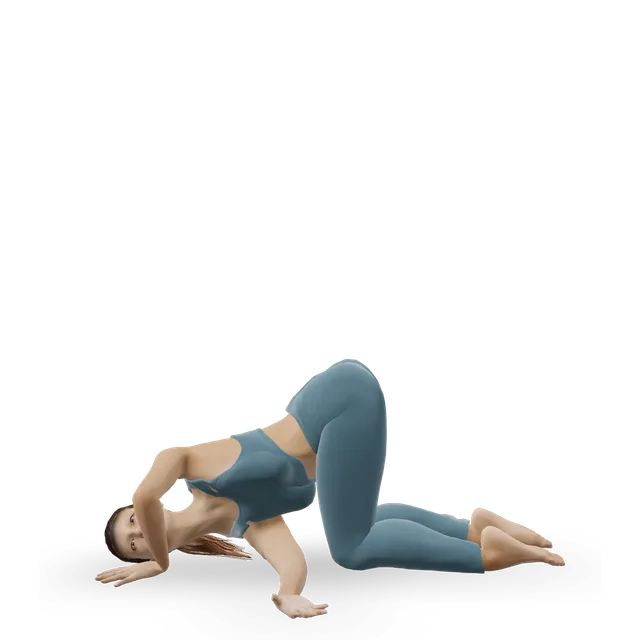
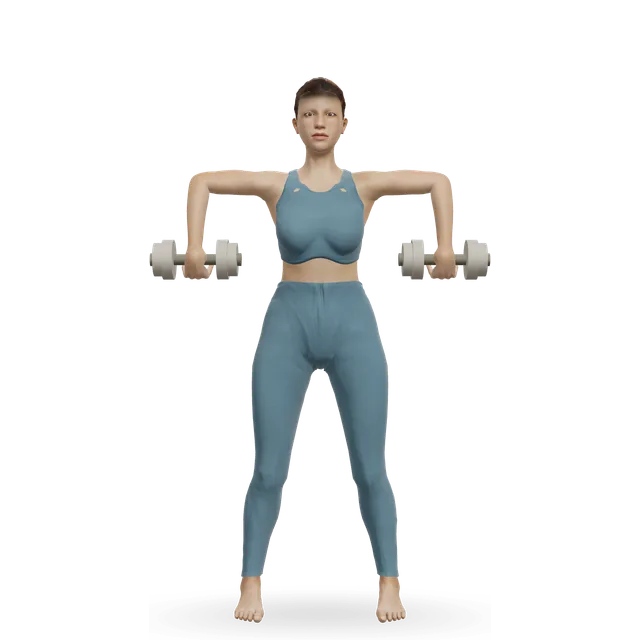
Thoracic rotation: "6 rotations per side, moving with the breath" (the move page's dose). Open book, 8 each side, top arm low if the shoulder feels loose, Y-T-W raises, 1 round of 8 of each letter, and locust with the arms reaching forward, 2 holds of 5 breaths (our yoga for swimmers class). Thread the needle, 30 to 45 seconds each side (our yoga for cyclists class).
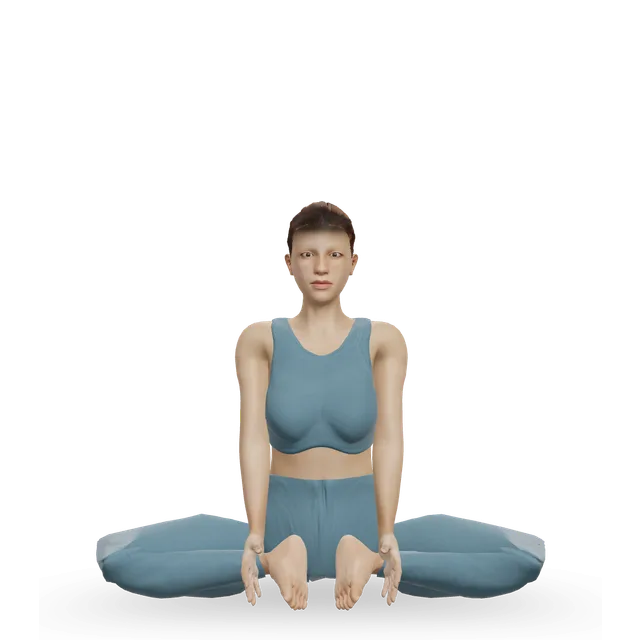
Low lunge, 45 seconds each side, and chin tuck, 10 holds of 5 seconds (our yoga for cyclists class). Sphinx, 2 holds of 20 to 30 seconds, only if leaning back eases your back (our yoga for swimmers class). Cat-cow: "8 waves, slower than feels natural" (the move page's dose).
Downward dog, 2 holds of 50 seconds pedalling the heels, strap hamstring stretch and reclined figure four, 45 seconds each side (our yoga for runners routine). Wall calf stretch, 30 seconds each side, only if your ankle is stiff (our trail yoga class). With Achilles pain where the tendon meets the heel, bend your knees and keep your heels lifted, as our yoga for Achilles tendinopathy guide explains.
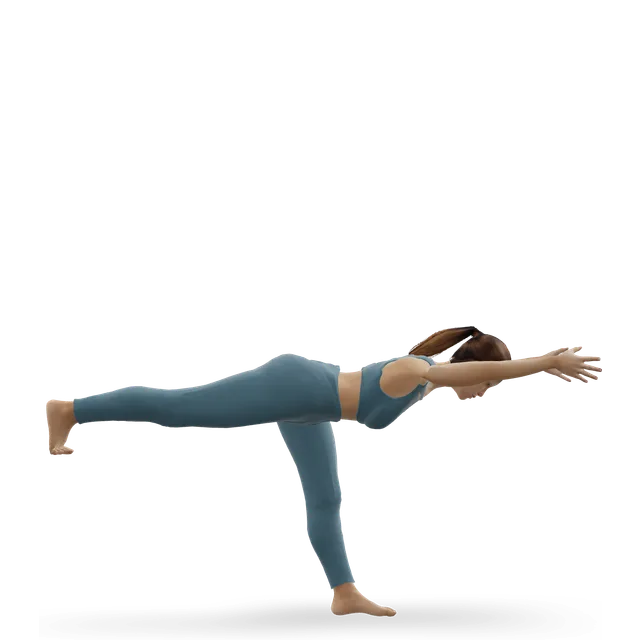
Single-leg stand, 2 holds of 30 seconds each leg, and warrior III, 3 breaths each side, twice, hands on a chair (our trail yoga class). Tree pose, 30 seconds each side, fingertips on a wall (our yoga for runners routine).
Slow breathing, 2 minutes, with no holds, on land only (our yoga for swimmers class). Legs up the wall, 2 minutes, optional (our yoga for runners routine). Corpse pose, 3 minutes (adapted from the move page's dose).
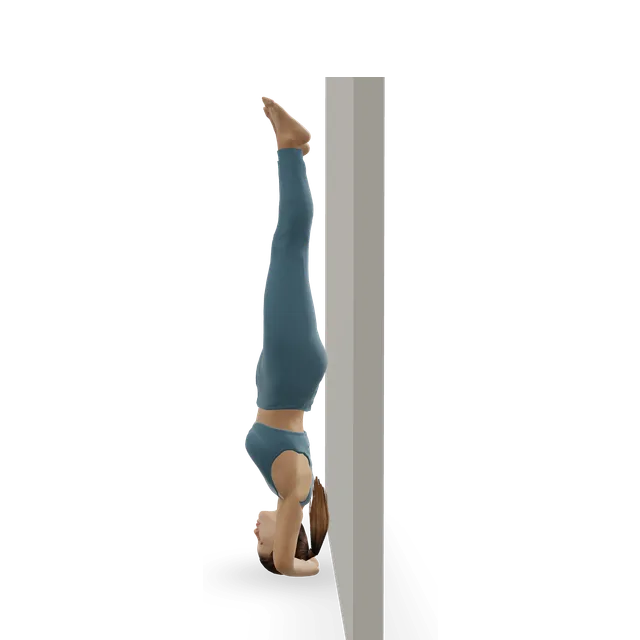
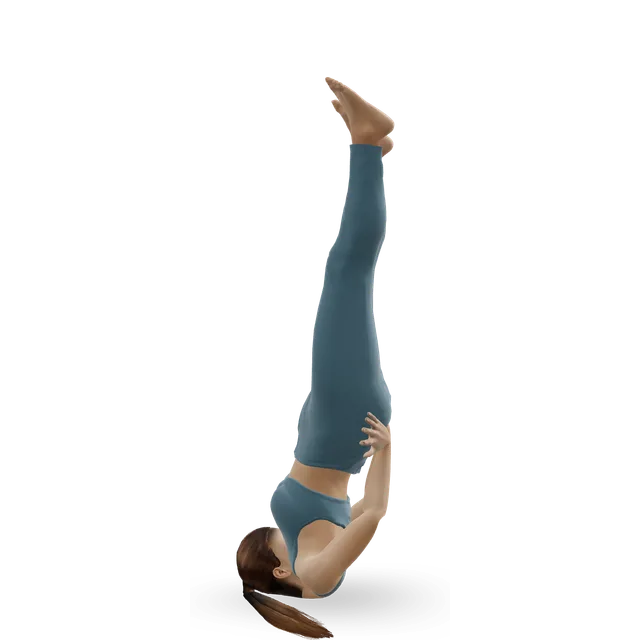
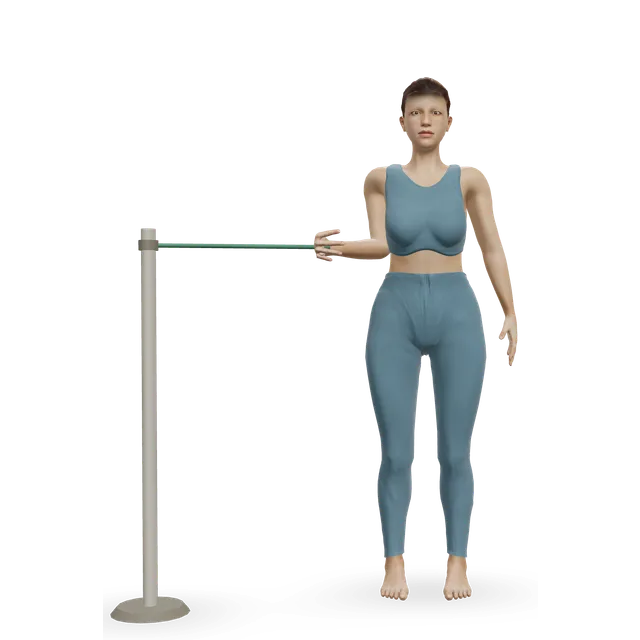
Only stretch a shoulder across the body for a clear one-sided loss, and never with a loose or dislocated shoulder (our yoga for swimmers class). Headstands and shoulder stands aren't needed. Leave out fast, forceful breathing such as kapalabhati and bhastrika, and never practise breath-holding in the water (our yoga for athletes and swimmers guides).
On an easy day, our 25-minute class for triathletes: our own selection, untested in a trial. For the sport you train most, use our yoga for swimmers, cyclists or runners class. Keep two strength sessions a week.
A 25-minute yoga class for triathletes on an easy day: the upper back for the swim, the hips and neck for the bike, calves and hamstrings for the run.
25 minBeginner14 movesA wallA 25-minute dryland yoga class for swimmers: upper-back turns, shoulder-blade and trunk holds, hips for kicking and slow breathing, safe for loose shoulders.
25 minBeginner16 movesA wallA 25-minute yoga class for riders: front of the hips, hamstrings and buttocks, gentle back bends, chest, neck and hands, after a ride or on a rest day.
25 minBeginner15 movesA wallA 20-minute yoga cool-down for runners: calves, hip flexors, hamstrings and glutes, one balance pose and a rest, after an easy run or on a rest day.
20 minBeginner11 movesA wallA strength session for triathletes: squats, Romanian deadlifts, split squats, heavy calf raises, pulldowns, rows and trunk work, building to heavier sets.
50 minIntermediate13 movesCardio machine, A bandA beginner brick: an easy then a steady ride, a calm change of shoes, 10 to 15 minutes of easy running, then a walk and calf and hip stretches.
50 minBeginner5 movesCardio machine, A wallA 20-minute rotator cuff and shoulder-blade routine for swimmers, from a 12-week trial in competitive swimmers, plus a daily cross-body stretch.
20 minBeginner9 movesA wall, A dumbbellA 45-minute restorative yoga sequence: five fully supported poses held for 4 to 10 minutes each, with slow breathing and a long final rest.
45 minBeginner6 movesFirm cushion, A wallA 35-minute yin-style session: seated and lying poses held for 2 to 4 minutes with slow breathing, finishing with legs up the wall and a long rest.
35 minBeginner9 movesA wallThese are the warning signs from our triathlon, swimming, hiking and yoga guides, word for word. This is general information, not a diagnosis. A&E means accident and emergency; in the US, call 911 for 999.
Call 999 if:
Chest pain, palpitations, dizziness or fainting with exercise, a heart condition, or a relative who died suddenly when young: see your GP, who may refer you to a cardiologist, before your first race. In those examined after a death in a US race, 44% had heart disease that mattered.
Source 11
Sudden breathlessness, a cough, frothy or pink spit, or a tight chest: stop, roll onto your back, raise an arm for the safety crew and get out. If it doesn't settle quickly, call 999 (our suggestion), and don't swim again until a doctor has checked your heart and lungs.
Breathe slowly on land only. Never practise breath-holding or over-breathing in the pool: it can cause a blackout underwater without warning.
The NHS says to call 999 for signs of heatstroke: still being unwell after 30 minutes of resting somewhere cool, being cooled and drinking; a very high temperature; hot skin that isn't sweating; a fast heartbeat; fast breathing or breathlessness; confusion and lack of coordination; a seizure; or loss of consciousness.
Source 12
Confusion, a severe headache, repeated vomiting or a seizure after a long race needs emergency help: call 999. Low blood sodium from drinking too much is one cause (our reading).
Source 50
Shivering, numbness, slowing down, stiffness, confusion, blue lips or slurred speech: get out and warm up. Go to A&E or call 999 if you think someone has hypothermia.
Call 999 if someone has been knocked out, can't stay awake, has a fit, or has new numbness, weakness or problems with vision, speaking or walking. If in doubt, sit them out, and follow the UK's grassroots concussion guidelines and our concussion guide: no competition before day 21.
Pain in one spot of a bone that builds with running, then aches at rest or at night, can be a stress fracture: stop running and get it checked. Our stress fracture guide explains.
See a GP: both can be signs of not eating enough for your training. Our women's guide explains the checks.
Call 999 or go to A&E (accident and emergency) straight away for severe difficulty breathing (gasping, choking or not able to get words out), a chest that feels tight or heavy, pain that spreads to your arms, back, neck and jaw, lips or skin turning very pale, blue or grey, or sudden confusion. If you're more short of breath than usual, or your heart is racing, fluttering or skipping beats, contact NHS 111.
Source 43
A joint pain that is sharp, gets worse during a session, lingers into the next day or changes how you move is a reason to use an easier version, and to see a GP or physiotherapist if it keeps happening (the rule in our plans). Muscle soreness for a day or two after something new is normal. In a hot class, stop if you feel dizzy, sick or unwell; our hot yoga guide lists the signs of heat illness.
With glaucoma, or high blood pressure that isn't under control, skip headstands, shoulder stands and long head-down holds. With osteoporosis, swap deep forward folds for a flat-back hinge from the hips, and twist smoothly. In pregnancy, our yoga in pregnancy guide covers the changes. NCCIH advises beginners to avoid headstands, shoulder stands, the lotus position and forceful breathing.
You can say no to any hands-on adjustment, and a teacher registered with Yoga Alliance must get your explicit consent each time.
Source 44
The NHS advises getting advice from a healthcare professional first if you have a health problem, an injury or symptoms, or have recently had a heart attack or an operation.
Not in 1,538 army recruits, not in 421 runners and not across 6 trials of 5,130 people. Strength and balance training have the better evidence.
Long holds just before hard efforts cost a little power, and stretching improves range without preventing injuries. Triathletes need enough range, plus strength.
In 10 hockey players with no comparison group, hot yoga barely changed maximal fitness. Acclimatise with 1 to 2 weeks of exercise in the heat.
Yoga settled breathing faster for 10 to 15 minutes after hard intervals, but 4 weeks of slow breathing didn't speed recovery, and stretching barely changes soreness.
Moving extra load into another sport when injured may raise the chance of the injury coming back. Rest the injured part.
Source 9
Breathe slowly on land only. Never practise breath-holding or over-breathing in the pool: it can cause a blackout underwater without warning.
It can help with range, balance and winding down across three sports. No trial has tested yoga in triathletes, so use it on easy days alongside strength training, not instead of it.
Upper-back turns and Y-T-W raises for the swim, low lunge, sphinx and chin tucks for the bike, downward dog, a strap hamstring stretch and figure four for the run, and tree pose for balance. Our 25-minute class covers all three.
It hasn't been tested, and stretching doesn't prevent running injuries. Most triathlon injuries come from running, so build your running gradually and keep your strength sessions.
After easy sessions or on rest days. Before hard sessions or races, flow briefly and keep holds short: holds of a minute or more just before hard efforts cost a little power.
A slow, gentle session suits a rest day or taper week (our suggestion). Long holds improve range, but they don't speed recovery.
Briefly: in 20 athletes, yoga after hard intervals settled breathing faster than stretching for 10 to 15 minutes. But slow breathing practised for 4 weeks didn't improve recovery, so sleep, food and easy days still do the work.
No. In a small study it barely changed maximal fitness. Acclimatise with 1 to 2 weeks of exercise in the heat, and skip hot classes in the 24 hours before a long race.
A strong flow class does, so count it in your week; a gentle class is closer to rest. Cycling and running already add up.
Practise slow breathing on land only. Never practise breath-holding or over-breathing in water, which can cause a blackout without warning, and no study has tested yoga breathing in triathletes.
Yes, for range and balance, with changes if you have osteoporosis. The heart risk in races rises with age in men, so check with a GP first if you have symptoms or a family history.
Chest pain, fainting or palpitations, breathlessness with a cough or frothy spit in the water, signs of heatstroke, or bone pain that builds with running. The warning signs on this page say what to do for each.
Exercise education, not a personal prescription, and clinical review of these guides is pending. If you are pregnant, have a health condition such as glaucoma, high blood pressure or osteoporosis, or have had recent surgery, check with a doctor, midwife or physiotherapist before starting, and stop for sharp or increasing pain. Health disclaimer.