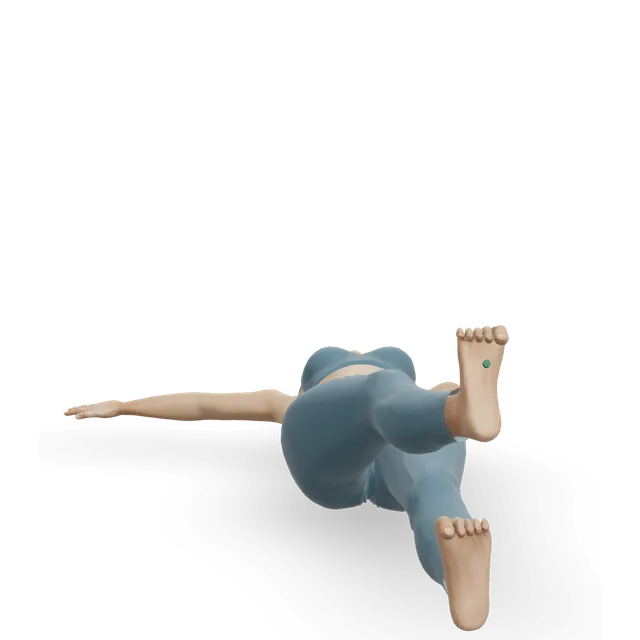
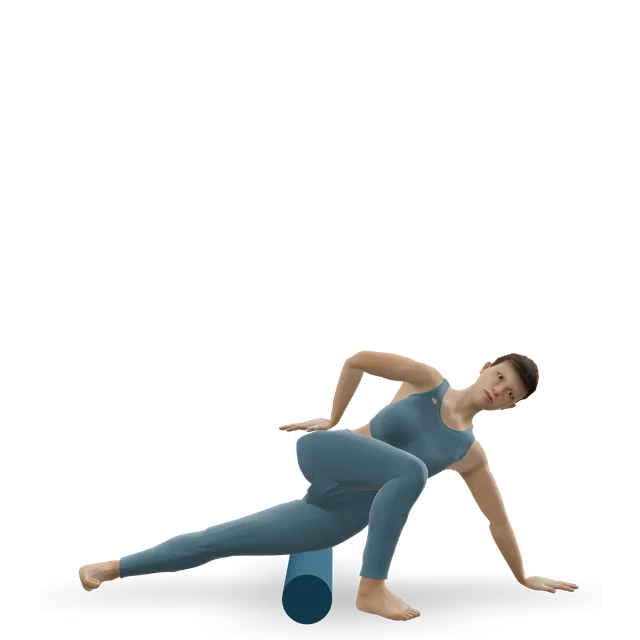
Yoga guide

Yoga for IT band syndrome: the hip and the knee, why stretching the band isn't the answer, which poses to change, what the evidence shows, and a class

No trial has tested yoga for iliotibial (IT) band syndrome, the pain on the outside of the knee that builds during a run or a ride and is often worst downhill. The usual yoga advice is to stretch the IT band, but it's a thick sheet of fascia anchored along the thigh bone, and it lengthened less than half a per cent in living people. What the treatment studies used most is hip strengthening alongside changes to running, and yoga's side planks, bridges and one-leg poses can carry that hip work.

This guide covers what the IT band is and why it hurts, why stretching and rolling are comfort rather than a cure, the side-hip and one-leg poses to build up, which poses to change, running and cycling, what the evidence shows, and a free 25-minute class with a 3D demo of every move. If your knee locks, gives way or swells fast, go straight to the warning signs.

The short version

No yoga trial

Our searches of PubMed, Europe PMC and ClinicalTrials.gov found no trial, cohort or case series of yoga for IT band syndrome or outer knee pain. What follows comes from studies of exercise, running and anatomy, and where yoga fits beside them.

Source 1

It's probably compression, not friction

The band is a thickening of the thigh's outer fascia, anchored to the thigh bone. No fluid sac (bursa) was found under it in 15 cadavers, and at about 30 degrees of knee bend it presses on a sensitive layer of fat. That's why it hurts most when the knee is slightly bent under load, as in downhill running.

Source 2

You can't stretch the band longer

It lengthened less than 0.5% in living people, one session of stretching or foam rolling didn't change its stiffness, and in 14 runners with the condition it was no tighter than the other leg. Stretches and rolling can feel good; they aren't the treatment.

Sources 3, 4, 5

Hip strength is the common thread, on weak evidence

In one small study, 22 of 24 runners were running pain-free after 6 weeks of hip strengthening, with no comparison group. Across 24 studies, improvements were reported with every kind of treatment, but most can't yet be recommended over one another; structured rehabilitation is the usual first step. Yoga's side planks, bridges and one-leg poses can carry the hip work.

Sources 6, 7, 8

Change the running first

Downhill running brings the painful knee angle in at every step. Cut your distance, leave hills out for now and bring them back last; if running still hurts, cross-train with whatever doesn't.

Sources 9, 10

Most people get better in weeks to months

In 138 recreational runners with a new knee injury (about a quarter of them IT band syndrome), 71% had recovered by 16 months, after a median of 8 weeks. A third hadn't, so pain that isn't easing after 6 to 8 weeks of changes needs a physiotherapist.

Source 11

What IT band syndrome is

Pain on the outside of the kneeStrong evidence

It's pain on the outer side of the knee that builds during a run or a ride, often worse downhill, and eases with rest. Reviews call it the commonest cause of outer knee pain in runners, at about 5% to 14% of running injuries. Rankings differ between reviews, so it isn't the commonest running injury overall.

Sources 12, 13, 14, 15, 16

Who gets itEmerging evidence

It's about twice as likely in female runners. In a survey of 76,654 entrants to a South African race series that includes a 56 km ultra, 1.63% had it in the past year, more often in women, younger runners, newer runners and the longer race. Among 6,608 British Army recruits it was the commonest diagnosis and the quickest to rehabilitate, at about 8 days.

Sources 17, 18, 19

Compression, not frictionEmerging evidence

The band isn't a separate strap but "a thickened part of the fascia lata which envelops the thigh", anchored along the thigh bone. In 15 cadavers and the scans of 8 people, no bursa was found under it, and it pressed on the bone at 30 degrees of knee bend. The authors read the pain as squeezing of a fatty, nerve-rich layer underneath, not rubbing. These are anatomy studies with small numbers.

Sources 2, 20, 13

What loads itEmerging evidence

In runners, the knee lands bent about 21 degrees, less when running downhill, which brings it into the painful zone at every step; faster running on the flat is less likely to aggravate it. In cycling the knee passes through the same angle with much lower forces, and in a model the saddle's position changed how hard the band pressed.

Sources 9, 21, 22

Is it weak hips?Mixed evidence

Female runners who later developed it ran with their knee drifting inwards and turning more, in a study of 18 cases. Women with current symptoms had weaker hip muscles, but an earlier review called the strength findings inconclusive, and a recent review reads the weakness as something that comes with the injury rather than its cause.

Sources 23, 17, 24, 13

What yoga asks of the outer knee and hip

Most yoga doesn't repeat the slight knee bend under load the way downhill running does, but some flows pulse in and out of chair pose and lunges at about that depth. One-leg poses ask the side of the hip to hold the pelvis level, the job hip strengthening trains. And the poses sold as IT band stretches (cow face, eagle, twists with the knee pulled across, the lying strap stretch) draw the leg across the body, which presses the tendons on the outside of the hip. No study has measured these poses in IT band syndrome; this is our reading.

Can you stretch the IT band?

It barely lengthensStrong evidence

The band is "firmly attached along the linea aspera (femur) from greater trochanter up to and including" the outer knee, and in living people it lengthened less than 0.5% during a hip contraction. A simulated stretch lengthened 6 cadaver bands by 2 to 4 mm, mostly near the hip, but whether that lasts is unknown, and a model put the force needed to deform this kind of tissue by even 1% outside the normal range of the body.

Sources 3, 25, 26

Rolling and stretching don't change itEmerging evidence

One session of stretching or foam rolling didn't change band stiffness in 30 healthy adults. In 14 runners with the condition, the band wasn't stiffer than on the other leg, and 6 weeks of physiotherapy made it stiffer while pain eased. Rolling raises range of movement for a short time, about as much as stretching, but in a condition thought to come from compression it adds more pressure.

Sources 4, 5, 27, 13

The tightness test isn't a test of the bandEmerging evidence

The Ober test, lying on your side and letting the top leg drop, is often used to call the band tight, but it "is not a valid assessment of ITB tightness"; the authors of a 2026 trial agree that it mostly reflects the hip.

Sources 13, 28

Comfort is fineMixed evidence

In the first trial of its kind, 20 athletes added foam rolling and stretching to 8 weeks of strengthening: pain fell by 81% with them and 80% without, with no blinding and no follow-up. A review calls the role of stretching unclear, and another says stretching now and then is unlikely to change the band. If a gentle stretch or roll feels good, use it, and skip both if the bony point on the outside of your hip is sore.

Sources 28, 29, 30

What the evidence says

Hip strengthening, running changes and time carry the evidence, all of it from small studies. Yoga has no trial in IT band syndrome.

No yoga trialStrong evidence

We found no trial of yoga for IT band syndrome or outer knee pain. The only randomised yoga trial in runners tested a short session before a one-mile run in 90 high school runners and measured speed, not knees; a study of video yoga for front-of-knee pain in 24 teenagers had no comparison group and wasn't about the outer knee.

Sources 1, 31, 32

Hip strengthening: small, uncontrolled studiesMixed evidence

After 6 weeks of hip strengthening, 22 of 24 runners were pain-free and running, with no recurrence at 6 months, in a study with no comparison group. In 16 people, 9 were discharged after 6 weeks and the rest needed up to 5 months. In small randomised studies, stretching did as well as hip strengthening in 24 female runners, and strengthening did better than hands-on therapy in 34 runners.

Sources 6, 33, 34, 35

No clear winner among treatmentsEmerging evidence

Across 13 studies (201 people), pain fell by 27% to 100% over 2 to 8 weeks, but the studies were too different to combine. The newest review, of 24 studies and 1,012 patients, found improvements reported with every kind of treatment, but most can't yet be recommended over one another, with structured rehabilitation the sensible first step. Another review warns that hip strengthening could add strain to the band as well as correct the knee drifting in.

Sources 7, 8, 30

Hip work may not change how you runEmerging evidence

In 178 novice runners, 6 months of hip and core or foot and ankle training made no meaningful change to running movement or strength. If hip work helps, it may not be by changing how you run (our reading).

Sources 36, 13

Hip and core work and running injuriesEmerging evidence

In 325 novice runners, a hip and core programme went with fewer leg injuries over 24 weeks than static stretching, and 39% less time with an overuse injury. The study didn't report IT band syndrome on its own.

Source 37

Running retraining: promising, untestedMixed evidence

Experts recommend running retraining for IT band syndrome, and in a model a quicker step reduced strain on the band, but the only clinical report is one runner who raised his step rate by 5% and was pain-free within 6 weeks. No trial has tested it.

Sources 38, 39, 13

Injections and surgeryMixed evidence

A steroid injection eased running pain over 2 weeks in 18 runners with recent symptoms. Surgery is for the few who don't improve with rehabilitation; US surgeons say it is very rarely needed.

Sources 40, 41, 42

How long it takesEmerging evidence

In recreational runners with knee injuries, the median recovery was 8 weeks, and a third were still not recovered at 16 months. US surgeons say most people return to running within 6 weeks of treatment; a review reports 44% back in their sport after 6 to 8 weeks.

Sources 11, 42, 7

Running and cycling with IT band syndrome

Downhill makes it worseEmerging evidence

"Downhill running predisposes the runner to iliotibial band friction syndrome because the knee flexion angle at footstrike is reduced", and faster running on the flat is less likely to aggravate it. The study, from 1996, explained the pain as friction; the knee angle it describes still holds.

Source 9

Cut distance, bring hills back last

A US government patient page: "Try running or cycling shorter distances than you usually do. If you still have pain, avoid these activities completely." Build back slowly once the strength work is pain-free, on the flat first. The NHS advises stopping running and getting knee pain checked if it doesn't go away after a week.

Sources 10, 43

CyclingMixed evidence

The authors of a lab study suggest a saddle that is too high and training errors may aggravate it, and in a model the saddle's setback changed how hard the band pressed. Neither has been tested in people with the condition, but a bike fit is worth checking.

Sources 21, 22

Side hips, lying, then bridges and side planks

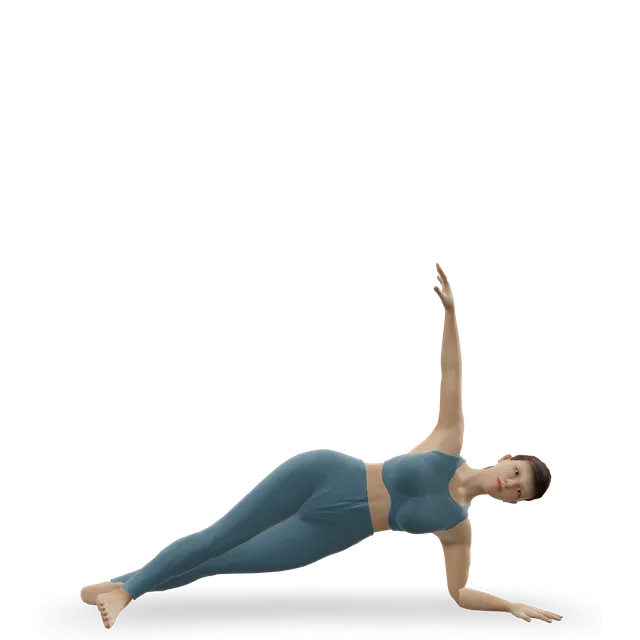
Start here, 3 days a week, lying on your good side with a pillow between your knees; the hip programmes in the studies ran about 6 weeks. The belt press lying on your back, from the move's page: "3 to 5 holds of 5 to 10 seconds, twice a day, at a light effort: the starting dose in the LEAP trial programme." Side-lying leg raise: 3 sets of 12 to 15 each side; clamshell: 3 sets of 15 each side; glute bridge: 3 sets of 12; knee side plank: 3 holds of 20 to 30 seconds each side (our IT band syndrome guide's first stage, weeks 1 to 2). Single-leg bridge: 3 sets of 10 each leg; side plank: 3 holds of 30 seconds each side (its second stage, weeks 2 to 4); side plank with a leg lift: 3 sets of 8 to 10 each side (its third stage, weeks 4 to 8). The guide's doses are editorial starting points. If your outer hip hurts at night, leave the side-lying raise and clamshell out for now, as their own pages say.

Standing on one leg, pelvis level

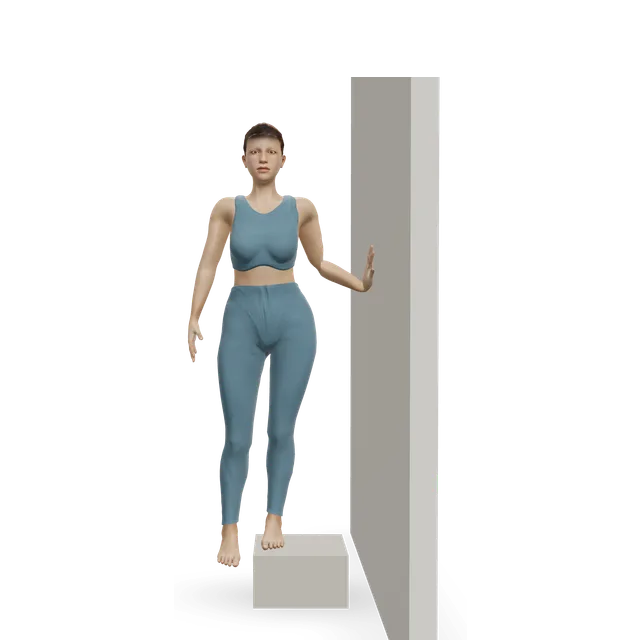
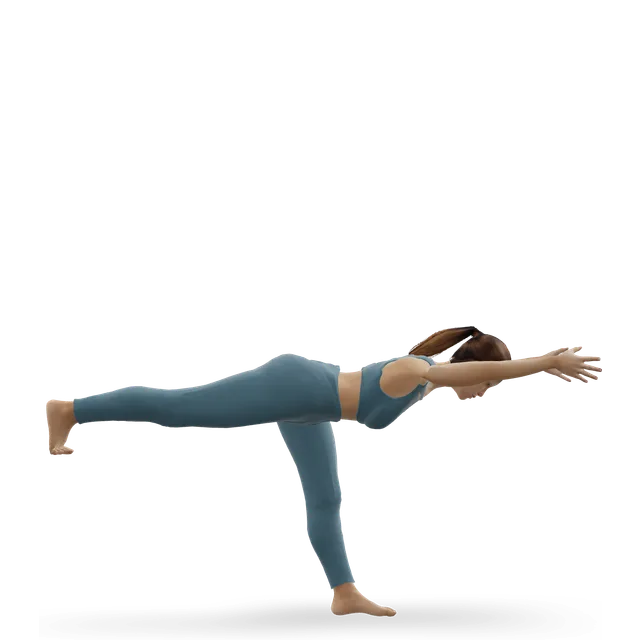
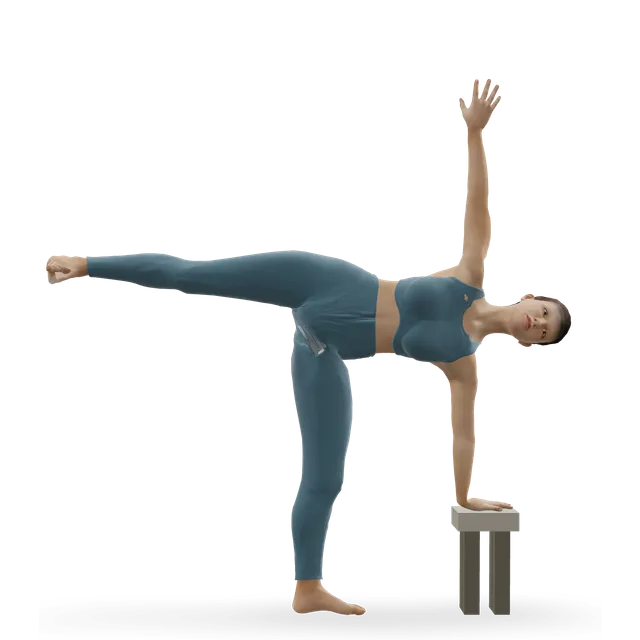
Keep the standing hip from sagging out. Standing wall press, from the move's page: "3 to 5 holds of 5 to 15 seconds each side, twice a day: the standing hold in the LEAP trial programme." Hip hitch, from the move's page: "3 sets of 15 slow reps each side, 3 times a week: the dose in a runners' trial that included this move. Start with 2 sets of 10 (our editorial starting point)." One-leg stand: 3 holds of 30 to 45 seconds each leg; band walk: 3 sets of 12 to 15 steps each way; step-up: 3 sets of 10 each leg; single-leg Romanian deadlift: 3 sets of 8 each leg, fingertips on a wall (our IT band syndrome guide). Tree pose, fingertips on a wall: 2 holds of 20 to 30 seconds each side (our yoga for plantar fasciitis class). Warrior III, hands on a chair: 3 breaths each side, twice (our yoga for footballers class). Half moon, bottom hand on a block: 3 to 5 breaths each side (our yoga for glutes class).

Standing poses, and optional comfort

Chair pose: 2 holds of 3 to 5 breaths; warrior II with a short stance: 3 to 5 breaths each side (our yoga for plantar fasciitis class). Low lunge: 45 seconds each side, back knee padded (our yoga for footballers class); reclined figure four: 45 seconds each side, skipped if the outside of your hip hurts (our yoga for runners class). If they feel good and your outer hip isn't sore, the lying IT band stretch, from the move's page: "Hold 20 to 30 seconds, 2 to 4 times each side (our editorial starting point)."; and IT band rolling, gently, from the move's page: "About 90 seconds for each muscle you roll, for example 2 or 3 slow rounds of 30 to 45 seconds. In a review of rolling studies, about 90 seconds per muscle was the least that eased soreness after exercise." Neither changes the band.

Poses to change or leave out

Our suggestions, from the anatomy above and the site's move cautions; no study has tested these poses in IT band syndrome.

Stretches that pull the leg across the body

Cow face, eagle, twists that pull the knee across, and the lying IT band stretch. With a sore outer hip, skip them, as the stretch's own page says:

Skip it if the bony point on the outside of your hip is sore: drawing the leg across the body presses the gluteal tendons against the bone.

Without hip pain they are optional comfort, not treatment.

Long, passive IT band holds in yin yoga

They don't lengthen the band. Keep them short and comfortable, or leave them out.

Sources 3, 30

Pulsing in shallow knee bends

Hold chair pose and lunges rather than pulsing in and out of them, and step rather than jump in flows while running is cut back. If a shallow bend brings on the outer knee pain, try a little deeper or a little straighter. This is our reading of the knee angle that brings the pain on in runners; it hasn't been tested in yoga.

Source 9

Lying on the sore side

For side-lying work, lie on your good side with a pillow between your knees, and keep the lifts small.

Hard rolling

Roll gently, if at all, and skip it if the bony point on the outside of your hip is sore.

Source 13

Front-of-knee pain on steps

Lowering off a step loads the kneecap more than stepping up the same step, and more the higher the step: with pain at the front of the knee, start with low step-ups and add step-downs from a low step once those are comfortable.

Hands-on adjustments

You can say no to any hands-on adjustment, and a teacher registered with Yoga Alliance must get your explicit consent each time.

Classes

Our 25-minute class follows our IT band syndrome guide's order: side-hip work lying, then bridges and side planks, then one-leg control standing, with no cross-body stretches. Its structure is our editorial choice. Do it 2 to 3 times a week alongside less running and no downhill, on a rest day or after an easy, flat run. The yoga for glutes and hip pain classes are close cousins, and the hip strengthening workout goes further.

Yoga for IT band syndrome: a 25-minute class for side-hip strength and one-leg control, with no cross-body stretches

A 25-minute yoga class for IT band syndrome: side-hip work lying down, bridges and side planks, then one-leg poses with the pelvis level, and a rest.

25 minBeginner17 movesA band, A wall

Yoga for glutes: a 25-minute class for the big and side glutes

A 25-minute yoga class for your glutes: bridges and locust, chair pose and lunges, warrior III and half moon, side work, then a short stretch and rest.

25 minBeginner16 movesA step, A wall

Yoga for hip pain: a 25-minute routine that strengthens without squeezing

Twenty-five minutes of hip-friendly yoga: lying and standing hip strength, a mild hip flexor stretch and a supported rest, with no crossed legs or deep bends.

25 minBeginner13 movesA band, A wall

Hip strengthening workout: bridges, side hips, single-leg control and balance

A 30-minute session for hips that don't currently hurt: bridges, side-hip work, step-ups and single-leg control, an optional harder block, then balance.

30 minBeginner13 movesA wall, A band

Lateral pelvic tilt routine: side-hip strength and control

A 25-minute routine for uneven hips: side-hip holds, leg raises, single-leg bridges, step-ups, side planks and balance, for hip strength and pelvic control.

25 minBeginner10 movesA wall, A step

Yoga for runners: 20 minutes after a run or on a rest day

A 20-minute yoga cool-down for runners: calves, hip flexors, hamstrings and glutes, one balance pose and a rest, after an easy run or on a rest day.

20 minBeginner11 movesA wall

Strength alongside running

Two strength sessions a week through a training block.

Warning signs: when to get help

These are the warning signs from our knee pain and IT band syndrome guides, word for word, apart from the one line marked as our suggestion. This is general information, not a diagnosis. A&E means accident and emergency; in the US, call 911 for 999.

A knee injury

Go to A&E (accident and emergency) if you've injured your knee and it has changed shape, it becomes very swollen very quickly, you felt a pop or snap, you can see bone sticking out, or it's bleeding heavily. Don't drive yourself: ask someone to take you, or call 999 if the pain means you can't move your leg to get there.

Get advice from NHS 111 now: you cannot move the knee or put any weight on it, or it is very painful, badly swollen or has changed shape, or it locks, gives way or clicks painfully. A pop, quick swelling and a knee that gives way point to an ACL injury: our ACL injury guide says what to do.

Sources 44, 45

A hot, swollen knee

Get advice from NHS 111 now: a hot, red or swollen knee with sudden severe pain, a very high temperature, or feeling hot, cold or shivery. This can be a joint infection.

Sources 45, 46

After a fall or a twist

You hurt your knee and cannot take 4 steps, or you are 55 or over and have injured it: get it checked the same day for a broken bone.

Get advice from NHS 111 now: after a twist, your knee won't go fully straight, or something blocks the last part of straightening, even if you can still walk on it. A torn piece of meniscus caught in the joint can do this, and it needs checking promptly.

Signs of a torn ligament: you felt or heard a pop, the whole knee swelled within a few hours, or it gives way, feels loose or bends further back than the other knee. Get it assessed promptly, the same or the next day: our ACL, PCL and outer knee ligament (LCL) guides explain what happens next.

A swollen, painful leg

Same day (urgent GP appointment or NHS 111): throbbing pain in one leg (rarely both), usually the calf or thigh; swelling in one leg (rarely both); red, blue or darkened skin; or swollen veins; or sudden worse pain and swelling around a lump at the back of the knee (a possible clot or a burst Baker's cyst).

Call 999 or go to A&E if breathing suddenly becomes difficult, if pain in your chest or upper back comes on suddenly with breathlessness or a very fast heartbeat, or if someone passes out. Do not drive yourself. It can be a blood clot that has reached the lungs.

Source 47

See a GP or physiotherapist

  • Outer knee pain that started with a twist, or comes with swelling or locking: that is not typical of IT band syndrome. After a blow or a twist, see our LCL sprain guide.
  • Knee pain that has not improved within a few weeks of looking after it at home. Many areas offer NHS physiotherapy without a GP referral.
  • Numbness, tingling or weakness that travels down the leg from the back. That points to a nerve (sciatica) rather than the knee.

Sources 45, 43

If it isn't easing

Outer knee pain that still stops you running after about 6 to 8 weeks of hip strengthening and less running: see a sports physiotherapist or sports medicine doctor (our suggestion, from the 6-week programmes in the studies).

Sources 11, 6

The knee pain rule

Rate your knee pain from 0 to 10 during and after exercise. In the pain-monitoring model used in knee trials, 0 to 2 counts as safe, up to 5 as acceptable and above 5 as too much. Aim for 0 to 3 most of the time.

By the next morning your knee should be back to its usual level. If it is not, drop back one step next time (fewer sets, a shallower range, a lower step), not to nothing. Over the weeks pain should hold steady or ease; that last check is our suggestion rather than a tested rule.

Sharp, catching or giving-way pain, or new swelling, is a reason to stop and get it checked.

Chest pain or fainting: call 999

Call 999 if:

  • You get sudden pain or discomfort in your chest that doesn't go away; it can feel like squeezing or pressure, burning or indigestion.
  • The pain spreads to your left or right arm, or your neck, jaw, stomach or back.
  • You have chest pain and feel sweaty, sick, light-headed or short of breath.
  • Someone faints while exercising, can't be woken within 1 minute, or has chest pain or a pounding, fluttering or irregular heartbeat.

Sources 48, 49

Unusual breathlessness

Call 999 or go to A&E (accident and emergency) straight away for severe difficulty breathing (gasping, choking or not able to get words out), a chest that feels tight or heavy, pain that spreads to your arms, back, neck and jaw, lips or skin turning very pale, blue or grey, or sudden confusion. If you're more short of breath than usual, or your heart is racing, fluttering or skipping beats, contact NHS 111.

Source 50

Very flexible joints

If you're hypermobile, don't use mobility work to push further: the NHS says "do not overextend your joints just because you can". See a GP if you think you have joint hypermobility syndrome: for example, your joints keep dislocating, or you keep getting sprains, strains, pain or stiffness.

Source 51

During yoga

A joint pain that is sharp, gets worse during a session, lingers into the next day or changes how you move is a reason to use an easier version, and to see a GP or physiotherapist if it keeps happening (the rule in our plans). Muscle soreness for a day or two after something new is normal. In a hot class, stop if you feel dizzy, sick or unwell; our hot yoga guide lists the signs of heat illness.

Before you start

The NHS advises getting advice from a healthcare professional first if you have a health problem, an injury or symptoms, or have recently had a heart attack or an operation.

Myths

"Stretching the IT band cures IT band syndrome"Strong evidence

The band lengthened less than 0.5% in living people and one stretching session didn't change its stiffness. Stretching did no worse than hip strengthening in one small trial, so a stretch can ease symptoms for some people, but it isn't changing the band.

Sources 3, 4, 30, 34

"A tight IT band causes the pain"Emerging evidence

In runners with the condition, the band was no stiffer than on the other leg, and the common tightness test doesn't measure the band.

Sources 5, 13

"Foam roll it every day"Emerging evidence

Rolling raises range for a short time, no more than stretching; in a condition thought to come from compression it adds pressure; and adding it to strengthening changed pain little in the one small trial. Gentle and optional at most.

Sources 27, 13, 28

"It's the band rubbing over the knee"Emerging evidence

No bursa was found under the band; it presses on a fatty layer when the knee is bent about 30 degrees. These are anatomy studies with small numbers.

Sources 2, 20

"Weak glutes cause it, so glute work will fix it"Mixed evidence

Women with the condition have weaker hip muscles, but that may follow the injury rather than cause it, and most treatments can't yet be recommended over one another. Hip work is still the most sensible exercise base, as part of a plan with running changes.

Sources 17, 13, 8

"Stretching before a run prevents it"Emerging evidence

Novice runners who did a hip and core programme had fewer leg injuries than those who did static stretching, and across 25 trials stretching didn't prevent sports injuries.

Sources 37, 52

"Keep running through it"Emerging evidence

Downhill running at the painful knee angle aggravates it. Cut your distance, leave hills out, and build back slowly.

Sources 9, 10

Questions people ask

Is yoga good for IT band syndrome?

It can help as a way to do the hip strengthening and one-leg control that treatment studies used, but no trial has tested yoga for IT band syndrome. The useful parts are side planks, bridges and standing balances; the stretches sold as IT band stretches are comfort at most. Pair it with less running and no downhill for now.

What are the best yoga poses for the IT band?

Poses that work the side of your hip: knee side plank, bridges, tree pose with your fingertips on a wall, warrior III with your hands on a chair, and the wall press. They train your hip to hold your pelvis level on one leg. Our 25-minute class puts them in order.

Can you stretch your IT band with yoga?

Not in any lasting way. It's a thick sheet of fascia anchored along the thigh bone, and it lengthened less than half a per cent in living people; one stretching session didn't change its stiffness. A gentle stretch can still feel good, but skip it if the outside of your hip is sore.

Is my IT band too tight?

Probably not. In runners with IT band syndrome the band was no stiffer than on the healthy leg, and the common tightness test mostly reflects the hip. The pain is thought to come from the band pressing on a sensitive layer at the outer knee.

Is yin yoga good for IT band syndrome?

Long, passive holds won't lengthen the band, and the usual yin shapes for it cross the leg over the body, which can irritate a sore outer hip. Yin is fine for relaxing, but it doesn't build the hip strength the studies used.

Should I foam roll my IT band?

Gently if it feels good, but don't expect it to change anything: rolling raises range for a short time, no more than stretching, and it adds pressure to an area that's already squeezed. Skip it if the bony point on the outside of your hip is sore.

Which yoga poses should I avoid with IT band pain?

Poses that pull the leg across your body if your outer hip is sore too, pulsing in shallow knee bends, and lying on the sore side. Hold poses rather than bouncing in them, and keep the side-hip strength and balance work.

Can I keep running with IT band syndrome?

Often, with less distance and no downhill running for now; faster running on the flat is less likely to aggravate it. If running still hurts, cross-train with whatever doesn't, and build back slowly once the hip work is pain-free. Our IT band syndrome guide has the stages.

Does yoga help IT band pain from cycling?

No study has tested it. Cycling takes the knee through the same painful angle with lower forces, and saddle height and position changed the load in a model, so check your bike fit alongside the hip strengthening.

How long does IT band syndrome take to get better?

Usually weeks to a few months. The hip programmes in studies ran 6 weeks, and in recreational runners with knee injuries the median recovery was 8 weeks, though a third still had symptoms at 16 months. If it isn't easing after 6 to 8 weeks of changes, see a sports physiotherapist.

When should I see a doctor about outer knee pain?

Straight away for a knee that locks, gives way or swells fast after a twist or a pop, or a hot, swollen knee with a fever: those aren't IT band syndrome. See a GP or physiotherapist if it isn't improving after a few weeks of looking after it.

Sources

  1. PubMed, Europe PMC and ClinicalTrials.gov · Our searches for yoga trials in IT band syndrome or outer knee pain (none) (31 October 2026)
  2. Fairclough 2006 · The anatomy of the IT band in 15 cadavers and 8 scans (anatomy study, J Anat)
  3. Falvey 2010 · How far the IT band lengthens: cadavers and 20 living people (anatomy and lab study, Scand J Med Sci Sports)
  4. Pepper 2021 · One bout of foam rolling or stretching and IT band stiffness in 30 adults (randomised trial, Int J Sports Phys Ther; read in full)
  5. Friede 2020 · IT band stiffness in 14 runners with IT band syndrome, before and after physiotherapy (cohort study, Phys Ther Sport)
  6. Fredericson 2000 · Hip abductor weakness and a 6-week programme in 24 runners with IT band syndrome (case series, Clin J Sport Med)
  7. Sanchez-Alvarado 2024 · Treatments for IT band syndrome in runners: 13 studies, 201 people (systematic review, Front Sports Act Living; read in full)
  8. Ferrero 2026 · Treatments for IT band syndrome: 24 studies, 1,012 patients (systematic review, Orthop Res Rev)
  9. Orchard 1996 · Knee angles in 9 runners with IT band syndrome, and downhill running (biomechanics study, Am J Sports Med)
  10. MedlinePlus (US National Library of Medicine) · IT band syndrome: aftercare
  11. Cloosterman 2022 · Recovery from knee injuries in 138 recreational runners (cohort study, Clin J Sport Med)
  12. van der Worp 2012 · IT band syndrome in runners (systematic review, Sports Med)
  13. Hutchinson 2022 · The IT band: a complex structure with versatile functions (narrative review, Sports Med; read in full)
  14. Aderem 2015 · Running mechanics and IT band syndrome: 13 studies (systematic review, BMC Musculoskelet Disord; read in full)
  15. Kakouris 2021 · Running-related injuries by diagnosis (systematic review, J Sport Health Sci)
  16. Lopes 2012 · The main running-related injuries: 8 studies, 3,500 runners (systematic review, Sports Med; read in full)
  17. Foch 2023 · Running mechanics and hip strength in IT band syndrome (systematic review and meta-analysis, Gait Posture)
  18. Marais 2024 · A history of IT band syndrome in 76,654 race entrants (cross-sectional study, Phys Sportsmed)
  19. Sharma 2015 · Injuries and rehabilitation times in 6,608 British Army recruits (prospective study, BMC Musculoskelet Disord; read in full)
  20. Fairclough 2007 · Is IT band syndrome really a friction syndrome? (commentary, J Sci Med Sport)
  21. Farrell 2003 · Cycling forces at the knee angle that loads the IT band (lab study, Knee)
  22. Ménard 2020 · Saddle setback and IT band compression in 10 cyclists (modelling study, Int J Sports Phys Ther)
  23. Noehren 2007 · Running mechanics before IT band syndrome in female runners (prospective study, Clin Biomech)
  24. Louw 2014 · Running mechanics and IT band syndrome in distance runners (systematic review, Phys Ther Sport)
  25. Wilhelm 2017 · A simulated stretch of the IT band in 6 cadavers (lab study, Int J Sports Phys Ther)
  26. Chaudhry 2008 · The force needed to deform fascia lata (mathematical model, J Am Osteopath Assoc)
  27. Wilke 2020 · Foam rolling and range of movement in healthy adults: 26 trials (meta-analysis, Sports Med)
  28. Naderi 2026 · Foam rolling and stretching added to strengthening in 20 athletes with IT band syndrome (randomised trial, PLoS One; read in full)
  29. Opara 2023 · Stretching and releasing the IT band complex in IT band syndrome (narrative review, J Funct Morphol Kinesiol)
  30. Friede 2022 · Treating IT band syndrome in runners: are we targeting the right goals? (narrative review, Phys Ther Sport)
  31. Donohue 2006 · Brief yoga before a one-mile run in 90 high school runners (randomised trial, Br J Sports Med)
  32. Price 2025 · Video yoga for front-of-knee pain in 24 adolescents (before-and-after study, J Pediatr Soc North Am)
  33. Beers 2008 · Physiotherapy with hip abductor strengthening in 16 people with IT band syndrome (before-and-after study, Physiother Can)
  34. McKay 2020 · IT band stretching against two strengthening programmes in 24 female runners (pilot randomised trial, J Orthop Surg Res; read in full)
  35. Khizar 2026 · Manual therapy against strength training in 34 runners with IT band syndrome (pilot trial, Int J Ther Massage Bodywork; read in full)
  36. Jarske 2026 · Hip and core or foot and ankle training and running mechanics in 178 novice runners (randomised trial, Gait Posture)
  37. Leppänen 2024 · A hip and core programme and running injuries in 325 novice runners (randomised trial, Br J Sports Med)
  38. Barton 2016 · Running retraining for leg injuries: the evidence and 16 experts (mixed-methods review, Br J Sports Med)
  39. Allen 2014 · Step rate retraining in one runner with IT band syndrome (case report, Int J Sports Phys Ther)
  40. Gunter 2004 · A steroid injection in 18 runners with recent IT band syndrome (randomised trial, Br J Sports Med)
  41. Bolia 2020 · Surgery against non-surgical care for IT band syndrome: 15 studies (systematic review, Arthrosc Sports Med Rehabil)
  42. American Academy of Orthopaedic Surgeons · Iliotibial band (IT band) syndrome (OrthoInfo)
  43. NHS · Knee pain and other running injuries (past its review date: reviewed November 2022, review due November 2025)
  44. NHS · Dislocated kneecap
  45. NHS · Knee pain
  46. NHS · Septic arthritis
  47. NHS · DVT (deep vein thrombosis)
  48. NHS · Chest pain (past its review date: reviewed August 2023, review due August 2026)
  49. NHS · Fainting
  50. NHS · Shortness of breath
  51. NHS · Joint hypermobility syndrome (past its review date: reviewed August 2023, review due August 2026)
  52. Lauersen 2014 · Exercise programmes to prevent sports injuries: 25 trials, 26,610 people (meta-analysis, Br J Sports Med)

Exercise education, not a personal prescription, and clinical review of these guides is pending. If you are pregnant, have a health condition such as glaucoma, high blood pressure or osteoporosis, or have had recent surgery, check with a doctor, midwife or physiotherapist before starting, and stop for sharp or increasing pain. Health disclaimer.