Yoga for Down syndrome: children and adults, strength before stretch, the neck, balance, the heart, and a class with a buddy
Yoga can be a fun, calm way for children and adults with Down syndrome (also called Down's syndrome) to build strength and balance, alongside strength training, sport and the usual health checks. We found no peer-reviewed yoga trial in people with Down syndrome (searched November 2026), so the advice here leans on what works for strength and balance. Because ligaments are looser and muscle tone is lower, the aim is stronger muscles and better control, not more stretching, and a few poses that put weight on the head and neck are best left out.
This guide covers what the small studies show, strength and balance poses, the neck warning signs, the heart, hearing and vision, how to teach a class, and when to get help, with a free 20-minute class to do with a buddy. Down syndrome is a genetic condition, not something yoga treats.
Down syndrome is a genetic condition, and the Down's Syndrome Association asks people to call it a "Condition OR genetic condition", not a "Disease/illness/handicap". Yoga is one more way to be active, alongside the yearly GP check and the heart, thyroid, eye and hearing checks.
Our searches (November 2026) found no peer-reviewed yoga trial in people with Down syndrome. Two conference abstracts from one Texas group describe yoga classes for young children and for adults as possible, with gains in walking measures, but without a fair comparison with another group.
Supervised strength training made teenagers and adults with Down syndrome stronger in trials, with no serious side effects. The Down's Syndrome Association: "Physiotherapy can help to strengthen the muscles around the joints and can improve stability and coordination."
Leave out poses that put weight on the head or neck
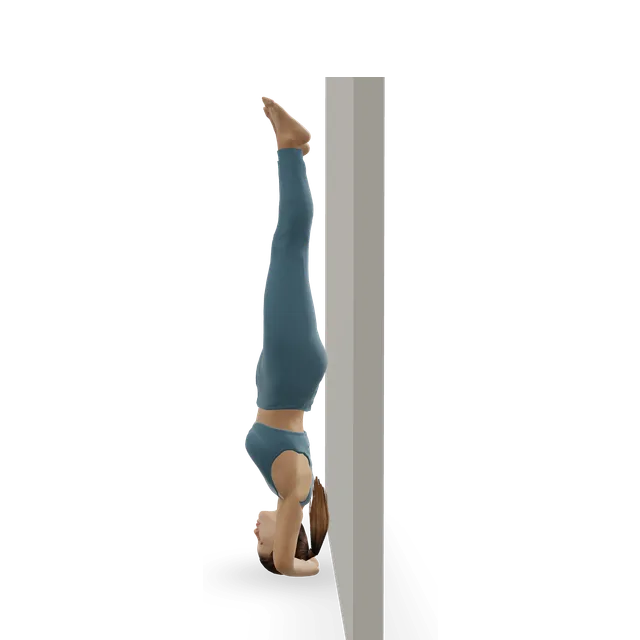
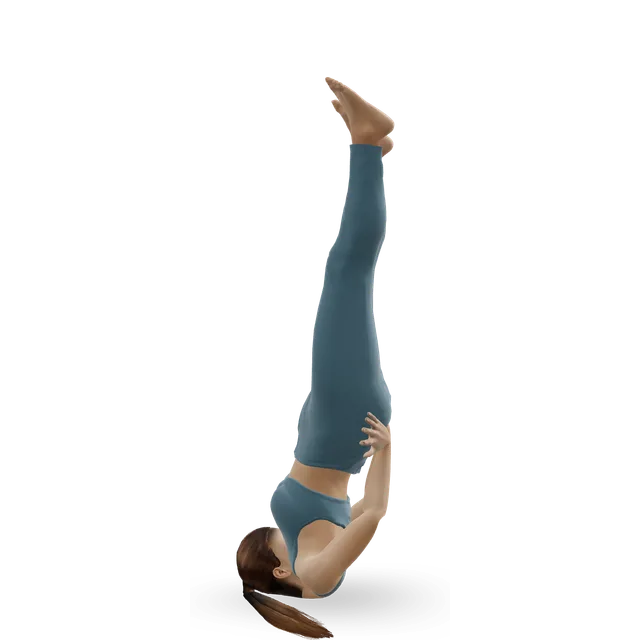
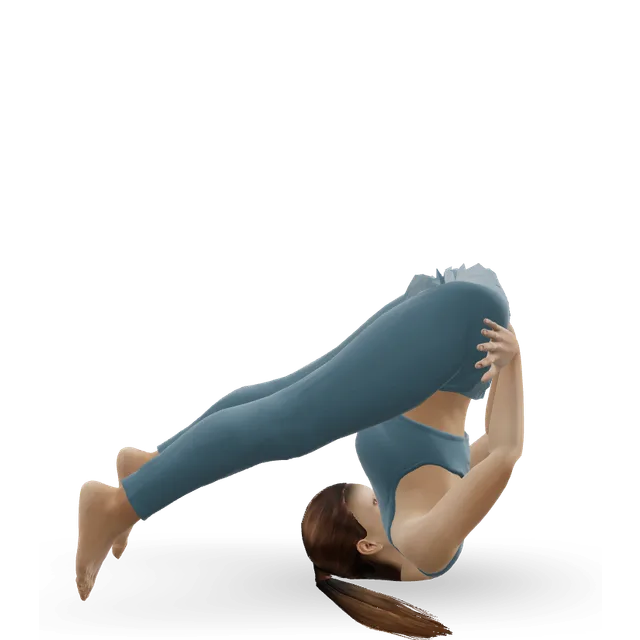
Headstands, shoulder stands, the plough and roll-overs, and in yoga also fish pose and rabbit pose (our suggestion). Neck instability shows on X-rays in 10% to 27% of people with Down syndrome but causes symptoms in 1% to 2%.
Neck pain or stiffness that doesn't settle, a tilted head, a change in walking, clumsier hands, trouble holding the head up, or new bladder or bowel problems: see a doctor and stop sport. "If symptoms come on suddenly, an urgent appointment is needed."
About half of children with Down syndrome are born with a heart condition. Ask the heart team what level of activity is safe, and use the talk test rather than heart rate zones.
Down syndrome, and what a yoga class asks of the body
What it is, and the words to use
The NHS (National Health Service): "Down's syndrome is when you're born with an extra chromosome. This can affect how your body and brain develops." The Down's Syndrome Association: "It is generally accepted that both Down's syndrome and Down syndrome can be used interchangeably." It asks for person-first words, such as "person who has Down's syndrome", not "Down's syndrome person".
The Down's Syndrome Association: "This is mainly due to low muscle tone (hypotonia) and loose ligaments (ligament laxity), leading to excessive flexibility in the joints." In 503 Irish children, "Joint laxity is almost universal in children with Down syndrome." and "Pes planus was almost universal, occurring in 91% of the cohort." (flat feet). So yoga's usual aim of more flexibility is the wrong aim here.
In children, the American Academy of Pediatrics (AAP) lists hearing problems in 75%, vision problems in 60% to 80%, obstructive sleep apnoea in 50% to 79% and thyroid disease in 50% by adulthood. In adults, about 70% are diagnosed with dementia by around age 54, and dementia checks start from about 40 under the US adult guideline.
Typical classes reward range (deep folds, splits, lotus), and some include poses that load the head and neck. Both are the wrong way round for loose ligaments and possible neck instability (our reading). Standing balance, slow strength holds, breathing and a calm finish fit what physiotherapy for Down syndrome aims at.
A PubMed search for yoga and Down syndrome found no records, and a broader search found none that tested yoga in Down syndrome. A conference abstract describes 24 children aged 3 to 5 randomly assigned to yoga or no yoga, twice a week for 10 weeks; walking speed rose within the yoga group, but the abstract doesn't compare the two groups. Another describes 22 adults aged 18 to 42 on the same plan, with no comparison group. A practice article suggests "yoga stories and songs, picture cards, yoga with technology, playing yoga games, and involving families" for young children.
The nearest evidence: intellectual disability, and other slow classesMixed evidence
A 2026 review of yoga in people with intellectual disabilities: "Ten studies involving 518 participants met inclusion criteria." and "Between-group differences favored yoga over no intervention, although benefits were often comparable to other exercise modalities." Most of the studies are small. A tai chi trial in 25 teenage boys with Down syndrome reported gains in strength and balance after 6 weeks, but the effects look too large to trust.
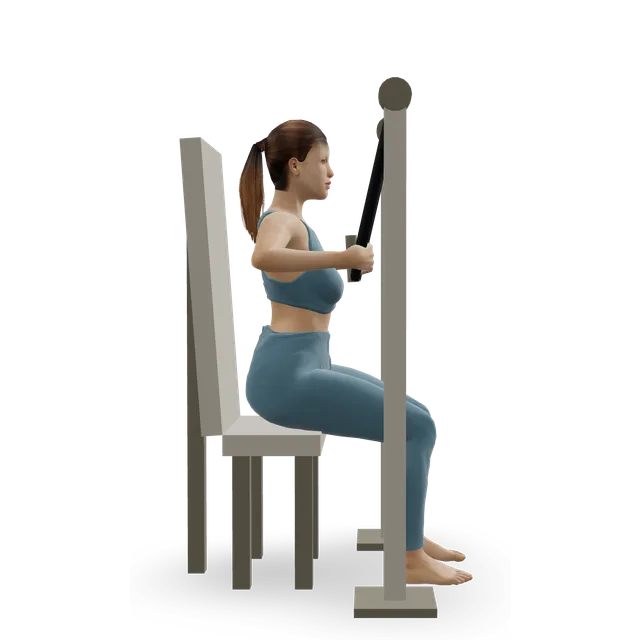
In Australian trials, machine training twice a week made adults and teenagers stronger: in 23 teenagers, "They demonstrated improvement in lower limb muscle strength compared to the control group (MD 36 kg, 95% CI 15 to 58)." Across 16 trials, strength rose by a large amount and physical function improved, and "There were no serious adverse effects." Our exercise for Down syndrome guide has the gym routine.
Balance improves, with low certaintyEmerging evidence
Across 11 studies, exercise improved balance in children and teenagers with Down syndrome, but "With a small number of studies and their high risk of bias, the present findings must be interpreted with caution." None of the balance reviews included a yoga trial.
An international summit in 2025 began creating "expert clinical guidelines on physical fitness in children and adults with Down syndrome using a Delphi approach". We couldn't read them yet (November 2026).
Loose ligaments and low tone mean joints need stronger muscles around them and better control, not more range. Keep poses in the middle of the range:
Do stretches and flexibility work with care, and favour moving through a comfortable range over long, deep stretches. Our editorial rule, as in our hypermobility guide: don't lock your knees or elbows or push into the end of a joint's range.
In the strength trials, each young person trained with a student who did the routine too, and attendance was high: in 23 teenagers, 90% of sessions. A buddy who does every pose with you makes yoga easier to keep up (our reading).
Loose ligaments and low tone can let the top two bones of the neck move more than usual. "Depending on the study 10 to 27% of all individuals with Down syndrome have radiological evidence of increased movement at the craniovertebral junction" (the UK's Down Syndrome Medical Interest Group, DSMIG), but symptoms are much rarer, 1% to 2% of children (the AAP), and about 1% need an operation.
DSMIG: "routine radiological screening for asymptomatic people with Down syndrome is not recommended". The AAP and the US adult guideline say the same for children and adults. The Down's Syndrome Association: "For people who do not have symptoms of neck instability, there should be no additional anxiety about them taking part in non-contact, low impact sporting activities."
Stop sport and see a doctor if any of these appear; get an urgent appointment if they come on suddenly (our neck pain in children guide covers the other causes of a child's neck pain):
Pain anywhere along the neck, or a stiff neck that doesn't get better quickly.
An unusual head position, such as a tilted head.
A change in walking, unsteadiness, or tiring more easily when walking.
Hands becoming clumsier.
Difficulty holding the head up, nodding or turning it.
Weakness in the arms or legs, or new bladder or bowel problems.
DSMIG: "It is important to recognise that the above symptomatology in adult life may be falsely attributed to Alzheimer disease or other progressive cerebral deterioration."
Our suggestion, from the advice on neck instability: leave out headstands, shoulderstands, the plough and Pilates roll-overs, which put body weight through the head and neck, unless a doctor has checked your neck. There's no direct evidence about these moves; Special Olympics Ireland restricts activities that put direct pressure on the neck or upper spine.
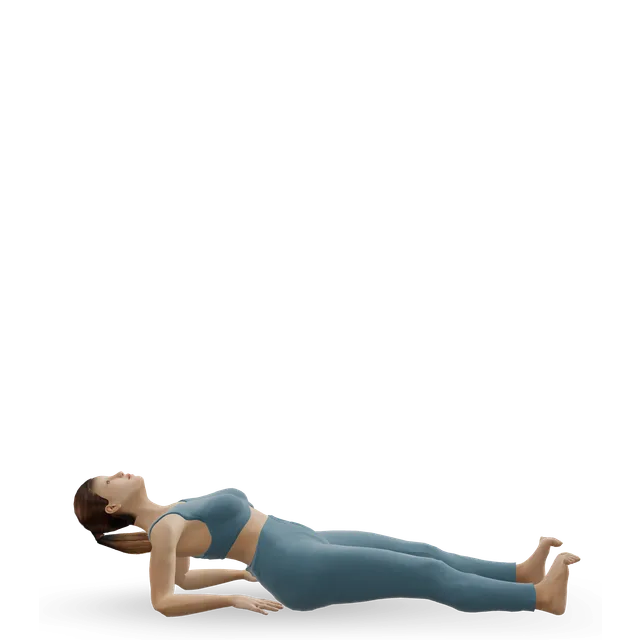
In yoga, fish pose and rabbit pose also put weight or strain through the head and neck: leave them out too (our suggestion). Special Olympics Ireland doesn't allow "any warm-up exercise placing undue stress on the head and neck" for athletes with neck instability.
About half are born with a heart conditionStrong evidence
The NHS: "about half of all children with Down's syndrome are born with a heart condition". An international consensus: "Regular physical activity should be encouraged in all those with DS to support weight management and to improve cardiovascular fitness and quality of life." The AAP adds that children with Down syndrome are at higher risk of high blood pressure in the lungs "even in the absence of intracardiac structural defects".
If there was a heart condition, ask the heart team what level of activity is safe, especially after surgery or with high blood pressure in the lungs. The Down's Syndrome Association: "Symptoms suggestive of a heart problem may include breathing difficulties, fatigue, dizziness or faints, or chest pain." Leave out breath holds with a heart condition (our suggestion).
Maximum heart rate is lower in Down syndrome, so heart rate zones from age-based formulas aim too high, as our exercise for Down syndrome guide explains. If you can talk but not sing, you're working at a moderate effort.
Hearing and vision problems are common, so face the person, show each pose or use the 3D figure, give one short instruction at a time, and keep the same order each time (our suggestion). For young children, picture cards, songs and games help.
Children without neck signs can join normal classes; our yoga for kids guide has a class for children. In adults, new clumsiness, falls or a change in walking can be the neck or dementia, so get them checked rather than putting them down to age.
Mountain pose: 3 slow breaths (our yoga for autism class). Balloon breaths: 1 minute, hands on your tummy, no holding your breath (our yoga for kids class).
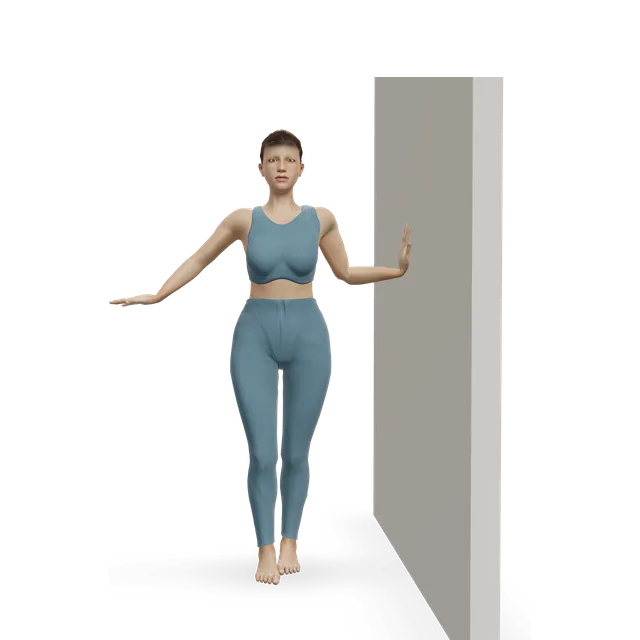
Sit to stand: 15, holding on at first; bridge: 10, holding each for 5 seconds (a physiotherapy programme for adults with Down syndrome, as our exercise guide gives it). Wall push-up: 8 slow (our yoga for autism class). Bird dog, one limb at a time: 5 each, with a 3-second hold, reaching long, not high (our yoga for hypermobility class). Side-lying leg raise: 10 each side (the physiotherapy programme).
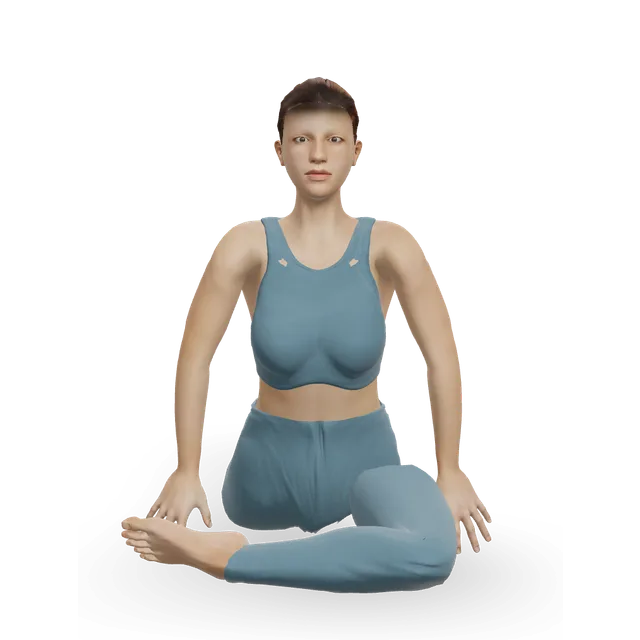
Tree pose: 3 to 5 breaths each side, fingertips on a wall, foot on the ankle or calf, never on the knee; warrior II: 3 breaths each side; chair pose: 3 breaths, twice (our yoga for autism class). Single-leg stand and semi-tandem stance: 3 holds of 10 seconds each side, next to a counter (our exercise for Down syndrome guide's editorial starting point).
Cat-cow: 6 slow rounds, small and smooth (our yoga for hypermobility class). Thoracic rotation: the move page's dose, "6 rotations per side, moving with the breath". Child's pose: 1 minute; corpse pose: 3 minutes with a folded blanket under the head, sitting up at any time (our yoga for autism class).
Headstands, shoulder stands and the plough put body weight through the head and neck, as our exercise guide says; fish and rabbit poses are our addition. The fish pose page says "the head should rest, never bear weight", and deep end-range poses such as lotus and long pigeon holds work against loose joints.
Our class with a buddy goes strength, balance, gentle movement, then rest, in the same order each time, with nothing on the head or neck; its structure is our editorial choice and hasn't been tested. The hypermobility class suits teenagers and adults; the kids and autism classes suit children and anyone who likes a fixed routine. For strength, the gym routine from the trials has the best evidence.
A teenager with new hip, thigh or knee pain and a limp, or who won't put weight on a leg: a slipped upper thigh bone at the hip (slipped upper femoral epiphysis) is more common in Down syndrome and needs treatment quickly.
If any neck warning signs appear (see the neck section above). The Down's Syndrome Association says any parent, carer or coach with concerns "must refer the person for medical assessment". In adults, these changes can be wrongly put down to dementia.
For chest pain, dizziness or unusual breathlessness, and don't start again that day (our suggestion). Support: the Down's Syndrome Association helpline is 0333 1212 300.
Chest pain or collapse
Call 999 if:
You get sudden pain or discomfort in your chest that doesn't go away; it can feel like squeezing or pressure, burning or indigestion.
The pain spreads to your left or right arm, or your neck, jaw, stomach or back.
You have chest pain and feel sweaty, sick, light-headed or short of breath.
Someone faints while exercising, can't be woken within 1 minute, or has chest pain or a pounding, fluttering or irregular heartbeat.
Call 999 or go to A&E (accident and emergency) straight away for severe difficulty breathing (gasping, choking or not able to get words out), a chest that feels tight or heavy, pain that spreads to your arms, back, neck and jaw, lips or skin turning very pale, blue or grey, or sudden confusion. If you're more short of breath than usual, or your heart is racing, fluttering or skipping beats, contact NHS 111.
A joint pain that is sharp, gets worse during a session, lingers into the next day or changes how you move is a reason to use an easier version, and to see a GP or physiotherapist if it keeps happening (the rule in our plans). Muscle soreness for a day or two after something new is normal. In a hot class, stop if you feel dizzy, sick or unwell; our hot yoga guide lists the signs of heat illness.
You can say no to any hands-on adjustment, and a teacher registered with Yoga Alliance must get your explicit consent each time.
With glaucoma, or high blood pressure that isn't under control, skip headstands, shoulder stands and long head-down holds. With osteoporosis, swap deep forward folds for a flat-back hinge from the hips, and twist smoothly. In pregnancy, our yoga in pregnancy guide covers the changes. NCCIH advises beginners to avoid headstands, shoulder stands, the lotus position and forceful breathing.
Myths
"Yoga can treat Down syndrome"Strong evidence
It's a genetic condition, not an illness to be treated; yoga is a way to be active.
"Headstands are fine for everyone with Down syndrome"
"For people who have Down's syndrome who have no symptoms (the majority), there are no reliable tests that can identify those at increased risk of neck instability." Headstands put body weight through the neck, so leave them out.
Strength training trials reported no serious side effects, and an international consensus says activity "should be encouraged in all those with DS". Know the neck and heart signs.
It can be a fun way to build strength, balance and calm. We found no peer-reviewed yoga trial in people with Down syndrome, but small reports found yoga classes were possible for young children and adults, and strength and balance training, which yoga can include, has good evidence.
Can children with Down syndrome do yoga?
Yes. Keep it playful and short, show each pose, use the same order each time, and leave out poses that put weight on the head or neck. Children without neck warning signs can join normal classes.
Is yoga good for adults with Down syndrome?
It can help with strength, balance and calm, alongside walking, swimming or the gym. In one small report, 22 adults did yoga twice a week for 10 weeks and their walking measures improved, but there was no comparison group.
Which yoga poses are good for Down syndrome?
Standing and balance poses with a hand on a wall, such as tree and warrior II, bridge, bird dog, wall push-ups and sitting down and standing up from a chair, plus slow breathing and a short rest. Keep joints in the middle of their range.
Which poses should people with Down syndrome avoid?
Headstands, shoulder stands, the plough and other poses that put weight on the head or neck, and deep end-range stretches such as full splits or lotus. Everything else can be adapted.
What is atlanto-axial instability, and is yoga safe with it?
It means the top two bones of the neck move more than usual. It shows on X-rays in 10% to 27% of people with Down syndrome but causes problems in very few. With no warning signs, take part and leave out the neck-loading poses; with any warning sign, stop and see a doctor first.
Does someone with Down syndrome need a neck X-ray before yoga?
Not if they have no symptoms. UK and US guidance doesn't recommend routine neck X-rays, because they don't predict who will have problems.
Can people with Down syndrome and a heart condition do yoga?
Usually, but ask the heart team what level of activity is safe first, especially after heart surgery or with high blood pressure in the lungs. Use the talk test rather than heart rate zones, and leave out breath holds.
Is yoga good for low muscle tone?
With low tone and loose joints, the aim is stronger muscles and better control, so choose standing, balance and strength poses held for a few breaths, not long stretches.
Can yoga help balance in Down syndrome?
Balance training has helped children and teenagers in small studies, and yoga balance poses at a wall are a safe way to practise. Flat feet are common, so supportive shoes or bare feet on a non-slip mat both work.
How do you teach yoga to someone with Down syndrome?
Show each pose, use short, clear instructions, face the person, keep the same order every time and practise with a buddy. Picture cards and songs help young children.
Is yoga safe for adults with Down syndrome who have dementia?
It can be, with a chair for support. New clumsiness or unsteady walking can be a neck problem rather than dementia, so get it checked.
Exercise education, not a personal prescription, and clinical review of these guides is pending. If you are pregnant, have a health condition such as glaucoma, high blood pressure or osteoporosis, or have had recent surgery, check with a doctor, midwife or physiotherapist before starting, and stop for sharp or increasing pain. Health disclaimer.