No yoga trial
Our searches found no trial of yoga for flat feet in a medical journal. The only reports are a student thesis and a conference abstract about knee alignment, neither peer reviewed, and neither measured the arch.
Yoga guide
No trial has tested yoga for flat feet, and no exercise has been shown to rebuild an arch. Most flat feet, or fallen arches, are normal and need nothing doing: the NHS says they usually cause no problems and shouldn't stop you doing sport. If your feet ache or tire, foot exercises, balance and strength for your hips and legs can help with comfort, and yoga is a good way to do them.
A flat foot that is new, painful, stiff or on one side only is different, and needs checking first. This guide covers flexible and rigid flat feet, the tiptoe check, children's feet, toe yoga and the short foot exercise, what the evidence says about the arch, the adult flat foot that changes, bare feet and diabetes, the warning signs, and the classes to follow.
Our searches found no trial of yoga for flat feet in a medical journal. The only reports are a student thesis and a conference abstract about knee alignment, neither peer reviewed, and neither measured the arch.
The NHS says flat feet "do not usually cause any problems" and "should not stop you doing any activities, including sports". Podiatrists say the height of the arch "does not have any bearing on how well a foot can function". Among Austrian children aged 3 to 6, 44% had flexible flat feet, falling from 54% at 3 to 24% at 6.
If the arch comes back when you stand on tiptoe, the flat foot is flexible, a normal variation. One that stays flat, is stiff, painful or on one side only needs checking.
The flattest feet went with slightly more knee pain and, in men, arch pain, in studies that can't show cause. Followed over time, a flat foot was a small risk factor for shin splints only, and novice runners with flatter feet had slightly fewer injuries.
The NHS says exercises and insoles "will not change the shape of your feet but can help with things like pain or stiffness". Foot muscle training improved balance and strength but not pain, and adding hip and whole-leg work lowered how far the arch drops by about 2 mm, at low certainty. Yoga's part is the foot work and the standing poses: expect stronger, steadier feet, not a new arch.
In adults, it's often the tibialis posterior tendon, more common in women over 40 and often missed. Insoles with strengthening for that tendon helped in small trials. Get it checked before you start.
The NHS describes flat feet, or fallen arches, as feet that "press flat on the ground", and says "They're common and usually nothing to worry about". Sometimes the ankle or lower leg hurts, the arch aches or shoes wear out quickly. There's often no obvious cause, and they sometimes run in families. "You do not need to do anything if you or your child have flat feet and they're not causing any problems."
The NHS says most children's arches develop between 3 and 10. NHS inform: "There is no evidence that special shoes, insoles or exercises will make a child's arch develop if it is not already going to do so", and children with painless flat feet should be encouraged to stay active. Children's orthopaedic surgeons: "The pain-free flexible flatfoot needs reassurance and NOT referral or treatment".
A flexible flat foot looks flat when you stand, but its arch comes back when you sit or stand on tiptoe; a rigid one stays flat either way. Children's orthopaedic surgeons say the arch reappearing on tiptoe tells the two apart, and that a flat foot on one side only is a red flag. A stiff, painful flat foot in a teenager can be two foot bones joined together (a tarsal coalition), which has its own guide.
When the tibialis posterior tendon, which runs behind the inner ankle bone into the arch, starts to fail, the arch drops, often on one side, with pain and swelling along the inside of the ankle and trouble rising onto tiptoe on that foot. US surgeons now call it progressive collapsing foot deformity; it's more common in women and over 40. In one English practice, 3.3% of women over 40 had it, and none had been diagnosed.
In older adults in the Framingham study, flatter feet went with slightly higher odds of knee pain (about 1.3 times) and, in men, arch pain, but these snapshots can't show cause. Across 21 studies that followed people, a flat (pronated) foot was a small risk factor for shin splints and wasn't linked with foot, ankle or general overuse injuries; in 927 novice runners, flatter feet had slightly fewer injuries.
As the foot work (toe yoga, the short foot exercise, towel curls and heel raises) and the hip, leg and balance work that reviews suggest adding to it. A painless flat foot needs no programme at all; yoga is for comfort and strength if your feet ache or tire (our reading).
The tiptoe check that children's orthopaedic surgeons and US surgeons describe, in our words. It isn't a diagnosis.
See the movement on the 3D figure: Slow calf raise
Foot and leg strength, insoles for a painful foot and time for children carry the evidence. Yoga has no trial.
PubMed, Europe PMC and Crossref searches found no trial of yoga for flat feet. A 2021 Czech student thesis tried yoga poses in individual volunteers, before and after, with no comparison group; a 2025 conference abstract in 45 women with flat feet measured knee alignment on landing, not the arch, and gave no numbers. A claim that 12 weeks of yoga raised the arch couldn't be traced to any study.
In 6 small trials (201 people with flat feet), the short foot exercise changed arch measures slightly, with no change in the size of the foot muscles; a 2024 review found no clear difference from control overall, with effects only after about 6 weeks or more. Four of 6 studies in another review found the arch improved with 5 weeks or more.
Across 13 trials, training the small foot muscles improved arch measures, balance, strength and how well people felt their feet worked, but didn't ease pain better than control.
Source 13
Across 11 trials (410 people) with flexible flat feet, programmes that added hip or whole-leg work lowered how far the arch drops by about 2 mm, at low certainty, with too little evidence on pain. A network of 11 trials ranked tendon strengthening with hip and core work best, though several of its estimates were uncertain. Yoga's standing poses train the hips and legs, but no study has tested them for this (our reading).
Across 10 trials in adults, both exercise and insoles reduced pain but didn't realign the foot.
Source 25
In healthy children with painless flat feet, insoles made little or no difference to pain at a year (a Cochrane review of 16 trials and 1,058 children, low certainty). In 129 children, corrective shoes and inserts for 3 years didn't change how the foot developed, and arches improved with growth whatever children wore.
In 36 adults with early tendon problems, everyone wore insoles and stretched for 12 weeks; adding resisted exercise helped, slow lowering most. In another trial of 39, a home programme added little. A review of the 3 trials (93 people) found moderate effects and very little good research.
Neither has a 3D demo, so they're given as written steps, the same as on our yoga for feet guide. The towel toe curl below is the nearest move with a demo.
Toe yoga trains control of the small foot muscles. No study has tested it by that name, for flat feet or anything else. Our editorial starting point: 5 to 10 slow repetitions of each part, once a day, sitting at first, then standing.
This draws your arch up without curling your toes. Our editorial starting point: 5 to 10 holds of 5 seconds, sitting first, then standing, then on one leg. In trials, changes in the arch took 5 weeks or more.
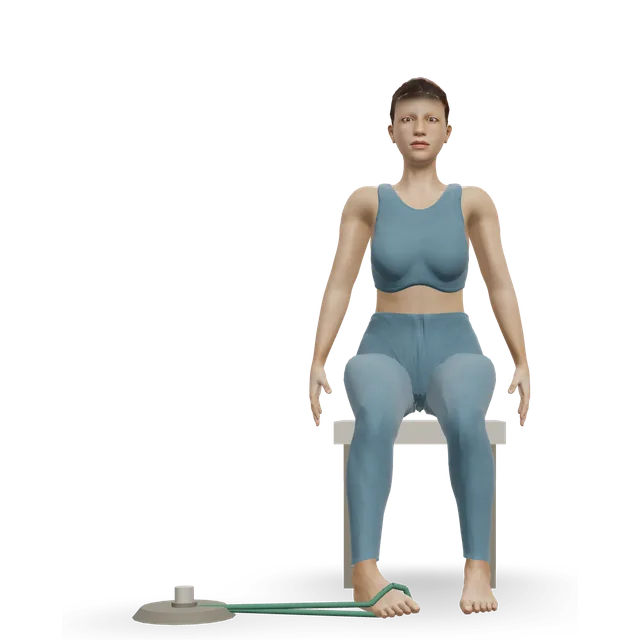
Barefoot or in thin socks. Towel toe curl: 2 sets of 12 each foot; band inversion, sweeping the foot in against a light band: 8 each side (our foot and ankle routine). Ankle circles: 10 slow circles each way with each foot (the move's page). Seated calf raise, pressing through the big-toe side of your foot: 15 (our Pilates for flat feet class). With pain on the inside of the ankle, get it checked first, then follow the tendon plan on our flat feet guide.
Next to a wall or counter. Mountain pose: 5 slow breaths, weight spread over your heels and the balls of your feet, lifting and spreading your toes, then letting them rest; tree pose with your fingertips on a wall and the lifted foot at your ankle: 2 holds of 20 to 30 seconds each side; warrior II: 3 to 5 breaths each side (our yoga for plantar fasciitis class). Slow calf raise, rising through the big toe so your ankles don't roll out: 2 sets of 10; one-leg stand: 2 holds of 30 seconds each leg (our Pilates for flat feet class). Tandem stance, then heel-to-toe walk: 30 seconds, then 10 steps (our foot and ankle routine). Keep the arch of the standing foot lifted without gripping with your toes (our suggestion).
 3D demoMountain pose (Tadasana)Beginner · No equipment
 3D demoTree pose (Vrksasana)Beginner · No equipment
 3D demoWarrior II (Virabhadrasana II)Intermediate · No equipment
 3D demoSlow calf raiseBeginner · A wall
 3D demoSingle-leg standBeginner · A wall
 3D demoTandem stance and heel-to-toe walkBeginner · A wall
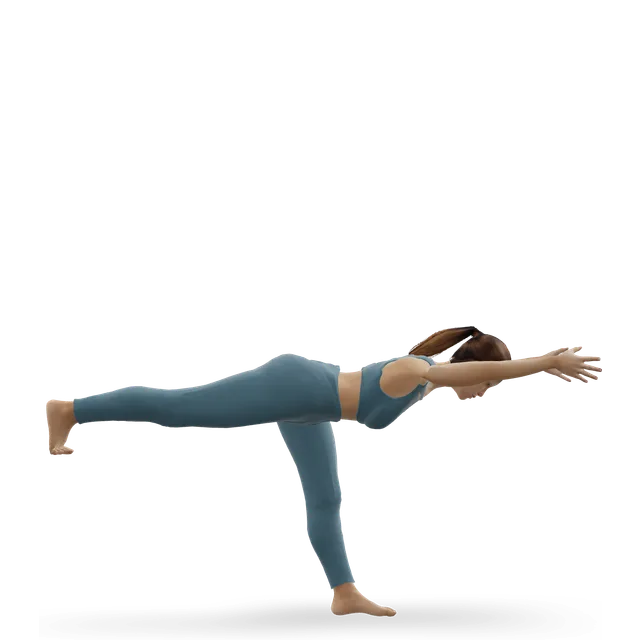
Clamshell, a small opening with your pelvis still: 2 sets of 10 each side (our yoga for sacroiliac joint pain class). Bridge, pressing evenly through the whole foot: 2 sets of 10 (our yoga for spinal stenosis class). Warrior III with your hands on a chair at hip height: 3 breaths each side, twice (our yoga for footballers class).
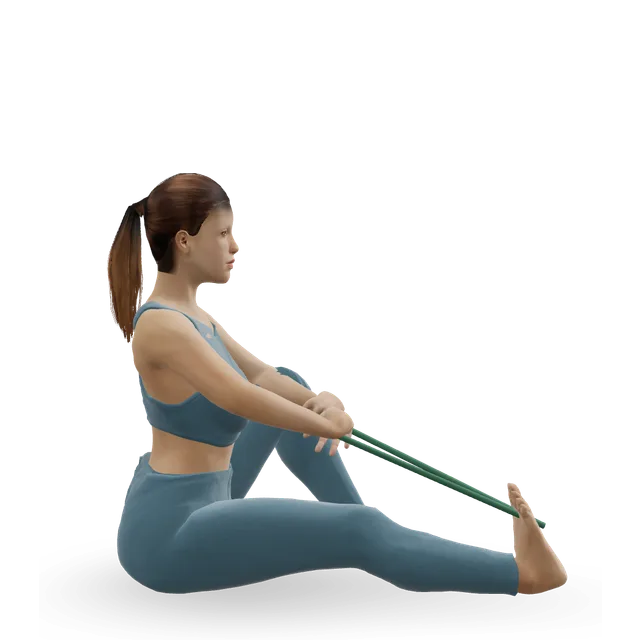
Wall calf stretch: 2 holds of 30 seconds each side, easing off if the inside of your ankle pinches (our Pilates for flat feet class); soleus wall stretch, back knee bent: 2 holds of 30 seconds each side (our yoga for basketball players class). With a sore inner ankle, a review of the tendon trials warns that stretching to the end of the range may work against the tendon, so keep them gentle and optional.
Our suggestions, agreeing with our flat feet and yoga for feet guides.
No study shows it does. Hero pose and sitting on your heels press on the knees and point the feet; sit on a block, and come up at once if your feet tingle or go numb, as our hero pose page says.
Source 1
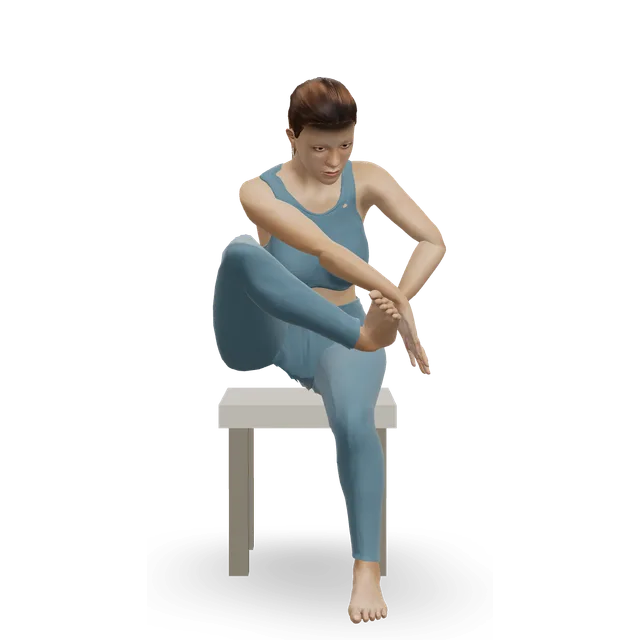
Leave it out: it adds strain on the knee and nothing for the foot. Rest the lifted foot at your ankle or calf instead.
Strengthen that tendon rather than stretching it, as the trials did, and keep calf stretches gentle.
Source 30
Keep holds short and sit between sides, as our yoga for plantar fasciitis class does.
Kneel with your toes tucked under only if it's comfortable, and skip it with a bunion, an arthritic big toe or pain under the ball of your foot, as our yoga for feet guide says.
Podiatrists list joint hypermobility among the causes of a flat foot.
If you're hypermobile, don't use mobility work to push further: the NHS says "do not overextend your joints just because you can". See a GP if you think you have joint hypermobility syndrome: for example, your joints keep dislocating, or you keep getting sprains, strains, pain or stiffness.
Most young children have flat feet, and arches usually develop between 3 and 10. A painless flexible flat foot needs no exercise programme, insoles or referral. Yoga is fine as play and exercise if your child enjoys it; our yoga for kids guide has ideas.
See a GP if your child's flat foot is painful, stiff or rigid, affects only one foot or looks very different from the other, is new, or stays flat when they stand on tiptoe; or if they often sprain an ankle, have problems with walking or balance, or struggle to keep up with activities because of their feet.
Source 7
A flat foot that is new, painful or on one side only in an adult is often the tibialis posterior tendon. US surgeons say easing off what hurts and switching to low-impact exercise is the first step, and that pain may last more than 3 months even with early treatment. Our flat feet guide has a 12-week plan built on the tendon trials, and gentle yoga for the hips and the rest of you can carry on alongside.
Yoga on a clean mat in bare feet suits most people. Surveys in India found more flat feet in children who wore shoes, but a survey in Nigeria found age, not footwear, explained it, so going barefoot isn't a proven fix.
The NHS says wide, comfortable shoes with a low heel are usually best for painful flat feet; standing poses in supportive shoes are fine (our suggestion).
Source 4
The international diabetic foot guideline asks people with diabetes who are at risk of foot ulcers to protect their feet "by not walking barefoot, not walking in socks without shoes, or not walking in thin-soled slippers, whether indoors or outdoors". With numb feet or diabetes, do standing poses in well-fitting shoes, or chair yoga, and check your feet after each session (our suggestion, as on our yoga for feet guide).
Do the foot and ankle routine, or toe yoga and the short foot exercise, before the yoga for balance class, 2 or 3 times a week (our editorial starting point). The Pilates class puts seated foot work, standing heel raises and hip work in one session. With heel pain, use the plantar fasciitis class; with numb feet, the neuropathy class, done in shoes.
A 15-minute barefoot routine for stronger toes, arches, calves and ankles, finishing with balance. You need only a towel, a wall and a resistance band.
15 minBeginner11 movesA wall, Other / check instructionsThirty minutes of standing yoga for balance: strong standing poses, one-leg poses at the wall, and side steps, backward steps, reaches and sit-to-stands.
30 minBeginner16 movesA wall, A bench or boxA 25-minute Pilates class for flat feet: seated foot and ankle work, standing heel raises and balance, then Pilates for the hips and a gentle calf stretch.
25 minBeginner14 movesOther / check instructions, A bench or boxA 25-minute yoga class for heel pain: sole and calf stretches before you stand, heavy heel raises every second day, short standing poses and a rest.
25 minBeginner14 movesA bench or box, Other / check instructionsA 25-minute yoga class for numb or tingling feet and hands: seated breathing, foot, ankle and hand work, standing poses at a counter in shoes, and a seated finish.
25 minBeginner17 movesA bench or box, Something with weightThese are the same warning signs as our flat feet and foot pain guides, word for word. This is general information, not a diagnosis. A&E means accident and emergency; in the US, call 911 for 999.
Source 7
A high arch that is new, getting higher or only in one foot, or high arches with weakness, tripping, numbness or ankles that keep giving way: see a GP. It can be the first sign of a nerve condition.
Some discomfort during exercise is fine. Aim for pain you would call mild to moderate, no more than about 5 out of 10, that settles within an hour, with no more swelling or stiffness the next morning. If it's worse the next day, do a little less (a smaller range, fewer reps, a lighter band), not nothing.
For tendon pain on the inner ankle, the 5 out of 10 figure borrows the pain-monitoring rule from an Achilles trial, in which carrying on with activity under the rule did no harm. It hasn't been tested in this tendon.
Call 999 if:
Call 999 or go to A&E (accident and emergency) straight away for severe difficulty breathing (gasping, choking or not able to get words out), a chest that feels tight or heavy, pain that spreads to your arms, back, neck and jaw, lips or skin turning very pale, blue or grey, or sudden confusion. If you're more short of breath than usual, or your heart is racing, fluttering or skipping beats, contact NHS 111.
Source 39
A joint pain that is sharp, gets worse during a session, lingers into the next day or changes how you move is a reason to use an easier version, and to see a GP or physiotherapist if it keeps happening (the rule in our plans). Muscle soreness for a day or two after something new is normal. In a hot class, stop if you feel dizzy, sick or unwell; our hot yoga guide lists the signs of heat illness.
The NHS advises getting advice from a healthcare professional first if you have a health problem, an injury or symptoms, or have recently had a heart attack or an operation.
Most flat feet cause no problems and need no treatment; the height of the arch doesn't affect how well a foot works, and children's orthopaedic surgeons say a painless flexible flat foot needs reassurance, not treatment.
No trial has tested yoga for flat feet, the NHS says exercises "will not change the shape of your feet", and short foot training changed arch measures only slightly, or not clearly.
No study supports it either way, and hero pose has knee and numb-foot cautions.
Source 1
Links with knee and arch pain are small and come from snapshots; followed over time, a flat foot was a small risk factor for shin splints only, and novice runners with flatter feet had slightly fewer injuries.
Insoles made little or no difference to pain in healthy children, and corrective shoes and inserts didn't change how the foot developed. Arches improve with growth.
Surveys disagree about shoes and flat feet, and no trial has tested going barefoot. Bare feet on a mat are fine for most people, but not with numb feet or diabetes.
It can be good exercise for achy or tired flat feet, but no trial has shown that yoga changes the arch or eases flat-foot pain. Its strengths are foot strength, balance, and the hip and leg work that reviews suggest adding to foot exercises.
Most flat feet don't need fixing: the NHS says they usually cause no problems. Exercise can help pain or stiffness, but the NHS says it won't change the shape of your feet, and foot exercises changed arch measures only slightly in trials.
Toe yoga and the short foot exercise sitting down, then mountain pose with your toes spread, calf raises rising through the big toe, tree and one-leg stands, warrior II, and hip work such as bridges and clamshells. Our foot and ankle routine and yoga for balance class put most of them together.
Stand on tiptoe: if an arch appears, they're flexible, which is a normal variation. If a foot stays flat on tiptoe, or is stiff, painful or affects only one side, see a GP.
Not as a rule. The flattest feet went with slightly more knee and arch pain in snapshot studies, and in studies that followed people, a flat foot was a small risk factor only for shin splints.
Arch measures changed after about 5 to 6 weeks in trials, and the tendon trials ran for 12 weeks. Expect stronger, steadier feet rather than a new arch shape.
Barefoot on a mat is fine for most people, and supportive shoes are fine if standing hurts. With numb feet or diabetes, wear well-fitting shoes for standing poses and check your feet afterwards, as an international diabetic foot guideline advises against going barefoot.
It trains control of the small foot muscles, but no study has tested toe yoga by that name or for flat feet. Foot muscle training in general improved strength and balance in trials, though not pain.
Only if they enjoy it: most children develop arches between 3 and 10, and a painless flexible flat foot needs reassurance, not treatment. See a GP if a child's flat foot is painful, stiff or on one side only.
Get it checked first: in adults this is often the tibialis posterior tendon, more common in women over 40. Insoles with strengthening for that tendon helped in small trials, and gentle yoga for the rest of you can carry on alongside.
Only if your flat feet hurt or cause problems, the NHS says. In adults, insoles and exercise both reduced pain without changing the shape of the foot; in healthy children with painless flat feet, insoles made little or no difference.
No study shows it lifts the arch. Sitting between your heels presses on the knees and the tops of the feet; sit on a block and come up at once if your feet go numb.
Exercise education, not a personal prescription, and clinical review of these guides is pending. If you are pregnant, have a health condition such as glaucoma, high blood pressure or osteoporosis, or have had recent surgery, check with a doctor, midwife or physiotherapist before starting, and stop for sharp or increasing pain. Health disclaimer.