Pain guide · Foot pain

High arches (pes cavus): foot pain, ankle sprains and when to get them checked

High arches (pes cavus) are feet whose inner arch stays high when you stand, often with the heel tipped slightly inwards. About 1 in 10 people have them. Often it's just the shape of your feet and needs no treatment, but high arches can concentrate pressure under the heel and the ball of the foot, come with clawed toes, and in some studies go with ankle sprains.

A high arch that is new, getting higher or only on one side, or that comes with weakness, numbness or tripping, needs a GP check, because it can be the first sign of a nerve condition such as Charcot-Marie-Tooth disease. For painful high arches, custom insoles are the one treatment tested in a trial, with a modest effect. This guide explains the checks, what the evidence shows for insoles and shoes, and a plan of stretches, ankle strength and balance with 3D demos.

When to get help first

Exercise is for pain that has been checked or is clearly mild and settling.

Get urgent medical help if

  • Call 999 or go to A&E: after an injury, you heard a crack, the foot or ankle has changed shape or points at an odd angle, a bone is sticking out, there is a bad cut over it, you're in severe pain, or the toes look blue or white, feel numb or are cold to touch. These can mean a broken bone. Don't drive yourself.
  • Same day (urgent GP appointment or NHS 111): after an injury, you can't put weight on it or walk more than a few steps, the pain is very bad or getting worse, there is a lot of swelling or bruising or it is getting worse, or it feels very stiff. If you think it's broken, don't treat it yourself.
  • Call 999 or go to A&E: a foot or leg that is suddenly cold, pale, numb, weak or very painful without an injury. A sudden loss of blood supply is a vascular emergency.
  • Same day: you have diabetes and a new foot problem, such as an ulcer or wound, signs of infection, or a hot, swollen foot with a change in colour, even if it doesn't hurt. Contact your diabetes foot team or GP: NICE asks for these to reach a specialist foot service within 1 working day, and a suspected Charcot foot is kept off weight until it has been checked.

See a doctor or physiotherapist if

  • A high arch that is new, getting higher or only in one foot, or high arches with weakness, tripping, numbness or ankles that keep giving way: see a GP. It can be the first sign of a nerve condition.
  • High arches with weakness in the feet, ankles or legs, a high-stepping walk, cold feet, thinning of the lower legs, curled toes, or a family history of Charcot-Marie-Tooth disease: see a GP.
  • Difficulty lifting the front of your foot and toes (foot drop).
  • A child who seems unusually clumsy and accident-prone for their age, has trouble lifting their feet, or whose arches are getting higher: see a GP.
  • An ankle that keeps giving way months after a sprain.
  • Pain that hasn't improved after at least 3 months of physiotherapy or podiatry: ask your GP about a referral.
  • Any foot pain if you have diabetes: foot problems can be more serious.

Understand it

What a high arch is

A high arch (pes cavus) is an inner arch that stays high when you stand, so a footprint shows little or none of the middle of the foot. The commonest type, the cavovarus foot, has the heel tipped inwards, the bone behind the big toe angled down, and often clawed toes.

One population study, a footprint survey of 1,846 people aged 16 to 65 in India, found high arches in about 10%. In 277 footballers aged 10 to 40, 30% had high arches, more often at higher levels of play.

Sources 1, 2

What causes it

The two main groups are high arches with no clear cause, called idiopathic, and high arches from a nerve or muscle condition. NHS clinicians describe a high arch as often just a normal variant of foot shape that doesn't normally need treatment.

  • Nerve and muscle conditions: Charcot-Marie-Tooth disease, an inherited nerve condition, is the commonest. Others include cerebral palsy, spina bifida and other spinal cord problems, polio and muscular dystrophy, and after a stroke it can affect one foot. In some people the arch increases as muscle weakness worsens; in others it stays the same.
  • Other causes: a club foot treated in childhood, an old injury, a cut tendon on the outside of the leg (peroneus longus), and a tight plantar fascia or Achilles tendon.

Sources 1, 3

When a nerve cause is likelyStrong evidence

NHS Lothian's orthopaedic guidance for GPs says a high arch may be the first sign of a developing nerve condition, so any developing high arch should be investigated, particularly if it's only on one side. It asks GPs to refer every one-sided high arch with no known cause.

The NHS lists the signs of Charcot-Marie-Tooth disease: very highly arched feet that can make the ankle unstable (or very flat feet), curled toes, weakness in the feet, ankles and legs, difficulty lifting the foot and a high-stepping walk, numbness, cold feet, thinning of the lower legs and tiredness. Symptoms usually start between 5 and 15, and young children may seem unusually clumsy.

In 148 children with high-arched, heel-in feet on both sides and no known diagnosis, 78% turned out to have Charcot-Marie-Tooth disease, rising to 91% with a family history. In 70 children referred to neurologists, weakness, an unsteady walk, a family history, loss of feeling, muscle thinning and absent ankle reflexes pointed to it. Nerve conduction tests, electromyography (EMG) and genetic tests confirm it.

Sources 3, 4, 5, 6, 7

Foot pain and pressureEmerging evidence

In one study, 60% of 40 people with high arches (with or without a nerve cause) had foot pain, against 23% of 30 people with normal arches. Pressure under the heel and the front of the foot was higher, and it went with the pain. The usual sore spots are under the ball of the foot, under the heel, and painful hard skin, and clawed toes and corns are common.

Sources 8, 1, 3

Ankle sprains: linked in some studies, not in othersMixed evidence

A heel-in high arch puts more load on the outside of the ankle. NHS clinicians say people with high arches may be more likely to have ankle sprains; a review found a heel-in high arch was one of the few foot shapes linked with outer ankle sprains; a study of 277 footballers found high arches among the risk factors for foot and ankle injury; and in a surgical series of 10 people with heel-in high arches and no nerve condition, all had long-standing ankle instability.

But in 116 people having surgery for an unstable ankle, a subtle high arch on X-ray was no commoner than in 105 people without ankle problems. So a high arch may add to the risk, but the evidence is mixed, and the ankle guides cover sprains themselves.

Sources 3, 9, 2, 10, 11

What X-rays can and can't tell youEmerging evidence

A high arch is diagnosed by looking at the foot standing and walking, and nerve tests look for a cause. X-ray judgements of a subtle high arch are unreliable: in the study above, two observers rated 18% and 29% of people without ankle problems as having one. An X-ray report of a cavus foot doesn't by itself mean a problem.

Sources 11, 7

How it usually goes

Without a nerve cause, NHS clinicians treat a high arch as a variant of normal foot shape. With a nerve condition, the arch can increase as muscle weakness worsens, though in some it stays stable. Charcot-Marie-Tooth disease is progressive, but most people keep walking, though older people may need a walking aid. In the Framingham population study, a high-arched foot posture wasn't linked with the foot disorders measured.

Sources 3, 4, 12

Injury risk: not settledMixed evidence

In 449 navy special forces trainees, high arches were one of several risk factors for overuse injuries, and in a survey of 20 high-arched and 20 low-arched runners, the high-arched group reported more ankle, bone and outer-side injuries. But in 927 novice runners in neutral shoes, very high-arched feet had no significant extra injury risk, and a review of 21 cohorts found the evidence on foot posture was mostly about flat feet.

Sources 13, 14, 15, 16

What helps, and how strong the evidence is

Custom insoles: the one tested treatment, with a modest effectEmerging evidence

In one trial, 154 adults with painful high arches on both sides (133 with no clear cause and 21 with a nerve or muscle condition, 16 of them Charcot-Marie-Tooth disease) wore custom-made foot orthoses or flat sham insoles for 3 months. On a 100-point foot pain scale, pain improved by 8.3 points more with the orthoses in the trial's own analysis (95% confidence interval 1.2 to 15.3), and by 10.9 points more (3.2 to 18.6) in the Cochrane review's analysis of the same data. Foot function improved by 9.5 points more in the trial's analysis and by 11.0 points more in the review's.

Pain scores improved by 74% with the orthoses but also by 43% with the sham insoles, and 27% against 15% reached normal pain levels, a difference that could have been chance. Side effects such as more foot pain, ankle instability and skin irritation were about as common: 9% against 15%. A second Cochrane review worked out that about 5 people need custom orthoses for 1 to benefit.

The improvement wasn't linked to changes in pressure under the foot, and people with the worst pain improved most, so the researchers raised the possibility of a strong placebo effect. The orthoses cost US$87 against US$2 for the shams. Off-the-shelf insoles haven't been tested for pain in high arches, and no trial has followed people beyond 3 months.

Sources 17, 1, 18, 19

Shoes: cushioning for comfort, not chosen by arch typeStrong evidence

Cushioned footwear with room for the foot is the usual advice to spread pressure, and NHS clinicians list footwear changes among the main treatments. In 22 adults with high arches, two cushioned running shoes lowered peak pressure under the foot while running, but nobody measured pain.

Choosing running shoes by arch type doesn't prevent injuries. US Army recruits given cushioned shoes for high arches had the same injury risk as recruits all given one stability shoe, and a Cochrane review of three military trials (7,203 people) found that prescribing running shoes by foot posture probably makes little or no difference (moderate certainty).

Sources 1, 3, 20, 21

Exercise: untested in high archesMixed evidence

The Cochrane review found no trials of stretching, strengthening, balance work or surgery for high arches, and lists them as treatments still needing testing. It describes the usual care without surgery as orthoses and cushioned shoes plus stretching tight muscles, strengthening weak ones, care of hard skin and balance work, and NHS clinicians include physiotherapy among the main treatments. The plan on this page follows that logic, with doses borrowed from ankle trials.

Sources 1, 3

Borrowed from ankle research: balance and ankle strengthStrong evidence

These trials were in people who had sprained an ankle, not specifically in people with high arches. After an ankle sprain, an 8-week home balance programme with a balance board, three sessions a week of up to 30 minutes, cut repeat sprains from 33% to 22% in 522 athletes. In 39 people with unstable ankles, 6 weeks of band and heel-raise strength training, or of hop and balance training, three times a week, improved strength, balance and hopping.

Sources 23, 24

With Charcot-Marie-Tooth diseaseEmerging evidence

In a trial of 60 children with Charcot-Marie-Tooth disease, 6 months of progressive strength training for the muscles that lift the foot (three times a week, at 50% to 70% of their maximum) was safe and slowed the loss of strength: they were stronger than a sham-training group 2 years later. A 2023 review of 6 trials rated this the only finding of moderate quality for exercise in the condition. The NHS calls physiotherapy one of the most important treatments, while warning that overdoing exercise can make symptoms worse.

Some things haven't helped. Night splints didn't improve ankle movement in two trials in 26 people with the condition, and botulinum toxin injections every 6 months didn't stop the arch increasing in 10 children over 2 years.

Sources 25, 26, 22, 27, 28

Surgery: for severe or progressing deformityMixed evidence

Most people with painful high arches are managed without surgery, with insoles, an ankle brace, footwear changes and physiotherapy. Surgery is for severe or progressing deformity: releasing tight tissue and moving tendons, cutting and realigning bones, or fusing joints. NHS Lothian asks GPs to refer one-sided high arches with no known cause, and people who haven't improved after at least 3 months of physiotherapy or podiatry. There are no trials of surgery for high arches, and recovery can be long: the NHS describes 12 weeks in plaster and up to 10 months to recover after a fusion for Charcot-Marie-Tooth disease.

Sources 1, 3, 22

How much pain is OK while you exercise?

The foot pain rule, with care if you have a nerve conditionEmerging evidence

This guide borrows the foot pain guide's rule: pain you would call mild to moderate, no more than about 5 out of 10, that settles within an hour, with no more swelling or stiffness the next morning. After a fresh ankle sprain, follow the ankle sprain guide's rule instead. The 5 out of 10 figure is an editorial starting point, not a tested rule.

With a nerve condition such as Charcot-Marie-Tooth disease, work at a moderate level, build up slowly and follow your physiotherapist's plan: the NHS warns that overdoing it can make symptoms worse, while a supervised programme at 50% to 70% of maximum was safe in children. Stop for new weakness, numbness or tripping, and get it checked (our suggestion).

Sources 22, 25

The exercise plan: 3 stages

Start at the first stage. Each move opens a full guide with a 3D demo.

Stage 1

Cushion and stretch (about weeks 0 to 2)

Ease pressure under the heel and the ball of the foot with cushioned shoes and, if your feet hurt, custom insoles from a podiatrist. Stretch the calf and the sole: a tight plantar fascia and Achilles tendon are among the things linked with high arches. If a nerve condition is suspected or known, get it assessed first and follow your physiotherapist's plan. Doses are editorial unless marked.

Wall calf stretch (gastrocnemius) demonstrated on the 3D figure3D demoWall calf stretch (gastrocnemius)Beginner · A wall

3 holds of 30 s each leg, daily · Editorial; no trial in high arches

Easier: Seated calf stretch with a towel · Harder: Toes-tucked kneeling (toe squat)

Soleus wall stretch demonstrated on the 3D figure3D demoSoleus wall stretchBeginner · A wall

3 holds of 30 s each leg, daily · The bent-knee calf stretch; editorial

Easier: Seated calf stretch with a towel · Harder: Toes-tucked kneeling (toe squat)

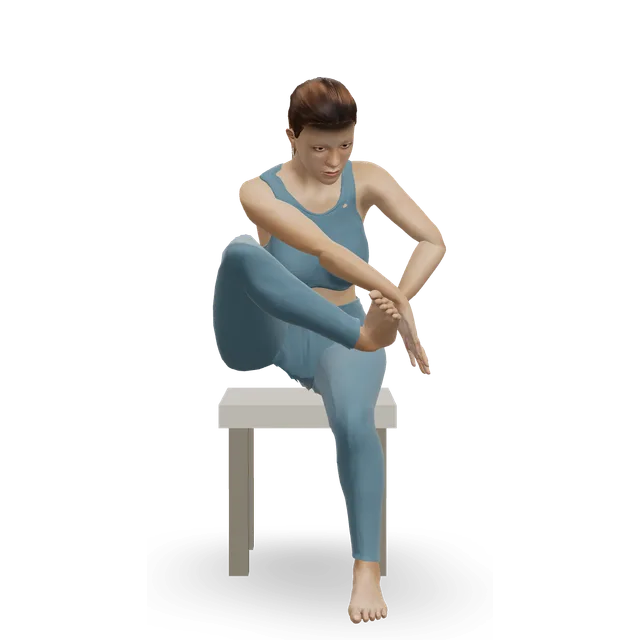
Plantar fascia stretch (seated) demonstrated on the 3D figure3D demoPlantar fascia stretch (seated)Beginner · A bench or box

3 to 5 holds of 10 to 30 s, 2 to 3 times a day · The move's dose, from heel pain trials. Ease off if the big toe joint is stiff or painful

Harder: Toes-tucked kneeling (toe squat)

Towel toe curl demonstrated on the 3D figure3D demoTowel toe curlBeginner · Other / check instructions + A bench or box

If your toes claw: until the toes tire, or for 1 minute, 5 times, 3 days a week · An NHS podiatry leaflet's dose for bent toes

Harder: Short foot + toe splay

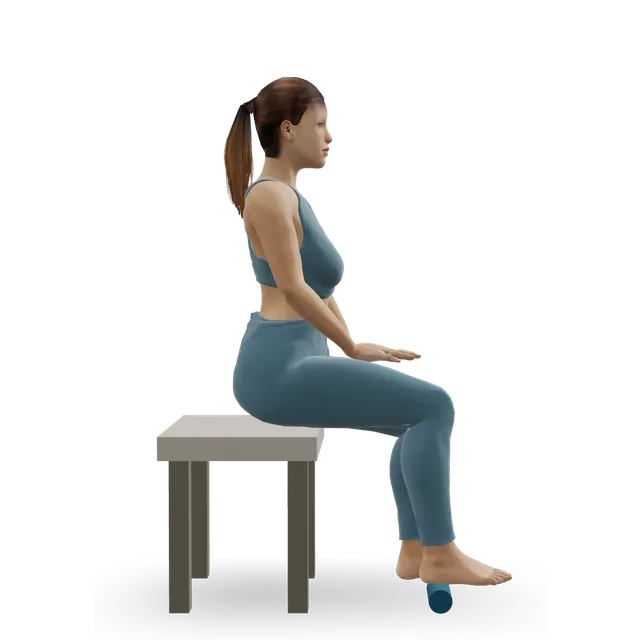
Foot roll (ball or roller) demonstrated on the 3D figure3D demoFoot roll (ball or roller)Beginner · A massage ball

1 to 2 min per foot · For comfort; the move's editorial dose. Use gentle pressure if your feet are numb, and check your skin afterwards

Harder: Calf foam rolling

Move on when: Walking is comfortable in your shoes and insoles.

Follow along: a timer, a cue and the next move, one step at a time.
Stage 2

Steady the ankle (about weeks 2 to 6, three times a week)

Strengthen the muscles on the outside of the ankle and the shin that resist rolling over, and train balance. The band and heel-raise doses come from an ankle instability trial; the others are editorial.

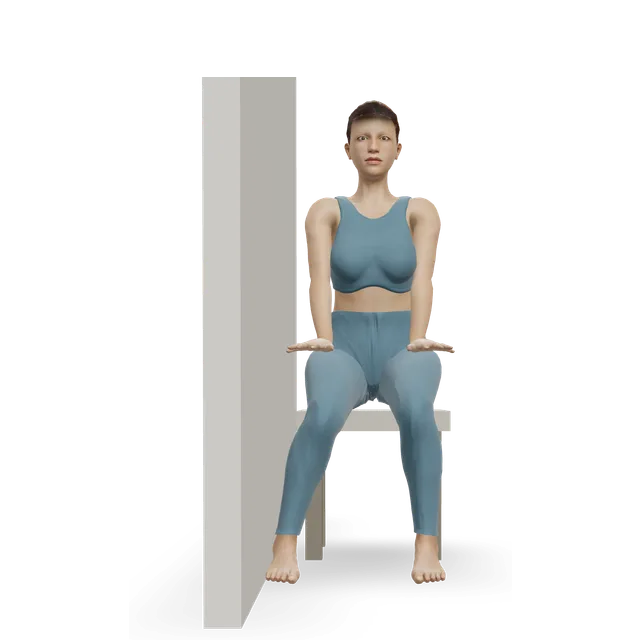
Isometric ankle eversion against a wall demonstrated on the 3D figure3D demoIsometric ankle eversion against a wallBeginner · A wall + A bench or box

8 to 12 holds of about 6 s each foot · An easier start, from the move's own instructions

Harder: Band ankle eversion

Band ankle eversion demonstrated on the 3D figure3D demoBand ankle eversionBeginner · A band + A bench or box

3 sets of 10, 3 to 5 s a repetition, rising to 4 sets of 10, with a heavier band every 2 weeks · The trial's progression

Easier: Isometric ankle eversion against a wall · Harder: Pogo hops

Tibialis raise demonstrated on the 3D figure3D demoTibialis raiseBeginner · No equipment

2 to 3 sets of 10 to 15 · Editorial. Strength training for the muscles that lift the foot was safe in children with Charcot-Marie-Tooth disease

Harder: Single-leg tibialis raise

Slow calf raise demonstrated on the 3D figure3D demoSlow calf raiseBeginner · A wall

2 sets of 10, building to 2 sets of 15 · The start of the trial's heel-raise progression, on both feet

Easier: Seated bent-knee calf raise (soleus raise) · Harder: Standing dumbbell calf raise

Single-leg stand demonstrated on the 3D figure3D demoSingle-leg standBeginner · A wall

Build to 30 s without support, then with the eyes closed · Standing on one leg with the eyes open, then closed, is in the trial's balance programme

Easier: Tandem stance and heel-to-toe walk · Harder: Single-leg reach matrix

Move on when: You can stand on one leg for 30 seconds with your eyes closed without touching down.

Follow along: a timer, a cue and the next move, one step at a time.
Stage 3

Balance, hops and sport (from about week 6)

Keep balance work going three times a week, as in the trial that cut repeat sprains, and consider an ankle brace for court and field sports if your ankle keeps rolling (the chronic ankle instability guide covers braces).

Single-leg calf raise from a step demonstrated on the 3D figure3D demoSingle-leg calf raise from a stepIntermediate · A step + A wall

3 sets of 10, building to 4 sets of 15 · The rest of the trial's heel-raise progression, on a step with a hand on a rail

Easier: Slow calf raise · Harder: Single-leg pogo hops

Single-leg reach matrix demonstrated on the 3D figure3D demoSingle-leg reach matrixIntermediate · No equipment

3 rounds of 5 reaches each direction · The move's dose; hop-and-reach work is in the trial's balance programme

Easier: Standing crossed-leg side reach · Harder: Single-leg Romanian deadlift

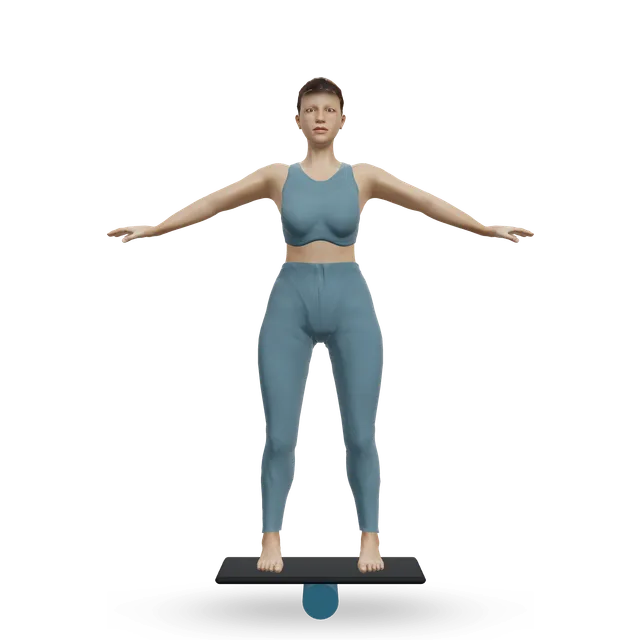
Balance board stand demonstrated on the 3D figure3D demoBalance board standBeginner · Other / check instructions

Several holds of 20 to 30 s · The move's editorial dose. The sprain-prevention trial used a balance board, three sessions a week of up to 30 min for 8 weeks

Easier: Single-leg stand

Single-leg hop and stick demonstrated on the 3D figure3D demoSingle-leg hop and stickIntermediate · No equipment

3 sets of 5 hops each direction, holding each landing for 2 s · The move's dose. Start with small hops in one direction

Easier: Standing broad jump with stuck landing · Harder: Alternate-leg bounding

Heel walk demonstrated on the 3D figure3D demoHeel walkBeginner · No equipment

2 to 3 lengths of a room · Editorial: endurance for the muscles that lift the foot

Easier: Tibialis raise · Harder: Eccentric heel drop

Move on when: This is maintenance: keep balance work going three times a week if your ankles roll, and see a GP if the arch or your strength changes.

Follow along: a timer, a cue and the next move, one step at a time.

What to change for now

Shoes and insoles

Choose cushioned shoes with enough depth and room for your foot, and go by comfort rather than buying a shoe sold for high arches. If your feet hurt, ask a podiatrist about custom insoles: they're the one treatment tested in a trial for painful high arches.

Sources 1, 3, 17

If your ankle keeps rolling

Keep up balance training three times a week, and consider an ankle brace for court and field sports; NHS clinicians list ankle braces among the treatments for high arches. The chronic ankle instability guide covers braces and the full sprain programme.

Sources 23, 3

With a nerve condition

Plan exercise with your physiotherapist and pace yourself. Check and clean your feet regularly, because there's a risk of injury and infection if they're numb. Insoles, shoes that support the ankle, and ankle or leg braces are among the aids the NHS lists for Charcot-Marie-Tooth disease.

Source 22

Positions to swap, and why

Habit or positionWhy it mattersInstead
Thin, flat, unpadded shoes for long days on your feetHigh arches concentrate pressure under the heel and the ball of the foot, and that pressure went with pain.Cushioned, roomy shoes, and custom insoles if your feet hurt.
Buying high-arch running shoes to prevent injuryChoosing running shoes by arch type didn't reduce injuries in large military trials.Comfortable shoes that fit, changed gradually.
Ignoring an ankle that keeps rollingHigh arches may add to the risk of sprains, and balance training cuts repeat sprains.Balance work three times a week, and a brace for sport.Try: Single-leg stand
Relying on night splints or casts to stretch the archNight splints didn't improve ankle movement in trials in Charcot-Marie-Tooth disease.Daytime calf stretches.Try: Wall calf stretch (gastrocnemius)
Exercising to exhaustion with a nerve conditionThe NHS warns that overexertion can make symptoms worse.A planned, moderate programme with a physiotherapist.
Waiting it out when one foot's arch is changingA developing or one-sided high arch needs investigating for a nerve cause.See a GP.

Routines to follow

More moves for this area

Questions people ask

What are high arches?

Feet whose inner arch stays high when you stand (pes cavus), often with the heel tipped slightly inwards. About 1 in 10 people have them.

Are high arches bad?

Often they're just your foot shape and need no treatment. But they can concentrate pressure under the heel and the ball of the foot: in one study, 60% of people with high arches had foot pain, against 23% with normal arches.

When should I see a GP about high arches?

If the arch is new, getting higher or only on one side, or if you have weakness, tripping, difficulty lifting the front of your foot, numbness, curled toes or a family history of Charcot-Marie-Tooth disease. NHS clinicians investigate any developing high arch, especially a one-sided one.

Can high arches be a sign of Charcot-Marie-Tooth disease?

Yes, it's the commonest nerve cause: in 148 children with high-arched, heel-in feet on both sides, 78% had it. Other signs are weakness, clumsiness, foot drop, numbness and curled toes, usually starting between the ages of 5 and 15.

Do insoles help high arches?

Custom foot orthoses are the one tested treatment. In a trial of 154 adults, they eased foot pain more than flat sham insoles over 3 months, though the sham insoles helped many people too and the difference was modest. Off-the-shelf insoles haven't been tested; a podiatrist can advise.

What shoes are best for high arches?

Cushioned, roomy shoes with enough depth for your foot are the usual advice. Choosing running shoes by arch type didn't reduce injuries in large military trials, so go by comfort.

Do high arches cause ankle sprains?

The evidence is mixed. A heel-in high arch has been linked with outer ankle sprains in some studies, but in another, subtle high arches were no commoner in people with unstable ankles. Either way, balance training cuts repeat sprains.

What exercises help high arches?

No exercise has been tested specifically in high arches. Calf and sole stretches, strengthening the muscles on the outside of the ankle and the shin, and balance work are sensible, low-risk choices. In children with Charcot-Marie-Tooth disease, strengthening the muscles that lift the foot was safe and slowed the loss of strength.

Can high arches be corrected without surgery?

The shape usually doesn't change, but the symptoms can: most people are managed with insoles, an ankle brace, footwear and physiotherapy. Surgery is for severe or progressing deformity.

Do high arches cause plantar fasciitis or ball of foot pain?

They can contribute: pain under the heel and the front of the foot is the commonest complaint, with higher pressure under both. The plantar fasciitis and ball of foot pain guides cover those.

My child has high arches. Is that normal?

Often it's just their family's foot shape. See a GP if the arch is new, getting higher or only in one foot, or if your child is unusually clumsy, trips a lot or has trouble lifting their feet.

Related exercise guides

Other pain guides

Sources

  1. Burns 2007, updated 2010 · Interventions for the prevention and treatment of pes cavus (Cochrane review)
  2. Ménard 2023 · High arches in footballers (study of 277 players, J Am Podiatr Med Assoc)
  3. NHS Lothian RefHelp · Pes cavus (high arched foot): orthopaedic referral guidance for GPs (2024)
  4. NHS · Charcot-Marie-Tooth disease: symptoms
  5. Nagai 2006 · Charcot-Marie-Tooth disease in children with high-arched, heel-in feet on both sides (case series of 148, J Pediatr Orthop)
  6. Karakis 2013 · Signs that point to Charcot-Marie-Tooth disease in children with high arches (case series of 70, Muscle Nerve)
  7. NHS · Charcot-Marie-Tooth disease: diagnosis
  8. Burns 2005 · Foot pain and pressure in high-arched feet (comparison study of 70 people, Clin Biomech)
  9. Morrison 2007 · Foot features linked with outer ankle sprains (literature review, J Athl Train)
  10. Fortin 2002 · Heel-in high arches, ankle instability and ankle arthritis (case series of 10, Foot Ankle Int)
  11. Lee 2020 · Subtle high arches on X-ray and chronic ankle instability (comparison of 116 patients and 105 controls, Foot Ankle Surg)
  12. Hagedorn 2013 · Foot disorders, foot posture and foot function (Framingham foot study, PLoS One)
  13. Kaufman 1999 · Foot structure and overuse injuries in 449 military trainees (cohort, AJSM)
  14. Williams 2001 · Arch structure and injury patterns in runners (survey of 40 runners, Clin Biomech)
  15. Nielsen 2014 · Foot posture and injury in 927 novice runners (1-year cohort, BJSM)
  16. Neal 2014 · Foot posture as a risk factor for overuse injury (systematic review and meta-analysis of 21 cohorts, J Foot Ankle Res)
  17. Burns 2006 · Custom foot orthoses for the painful high-arched foot (randomised trial of 154, J Am Podiatr Med Assoc)
  18. Hawke 2008 · Custom-made foot orthoses for foot pain (Cochrane review)
  19. Crosbie 2007 · Who does best with orthoses for painful high arches (analysis of trial data, Clin J Sport Med)
  20. Knapik 2009 · Choosing running shoes by foot shape in US Army recruits (trial of over 3,000 recruits, J Strength Cond Res)
  21. Relph 2022 · Running shoes for preventing running injuries in adults (Cochrane review)
  22. NHS · Charcot-Marie-Tooth disease: treatment
  23. Hupperets 2009 · Home balance training to prevent repeat ankle sprains (randomised trial of 522, BMJ)
  24. Hall 2018 · Balance and strength training for chronic ankle instability (randomised trial of 39, J Athl Train)
  25. Burns 2017 · Progressive strength training for children with Charcot-Marie-Tooth disease (randomised sham-controlled trial of 60, Lancet Child Adolesc Health)
  26. Conde 2023 · Exercise for Charcot-Marie-Tooth disease (systematic review of 6 randomised trials, J Peripher Nerv Syst)
  27. Rose 2010 · Increasing ankle movement in nerve and muscle conditions (Cochrane review)
  28. Burns 2010 · Botulinum toxin to stop high arches progressing in Charcot-Marie-Tooth disease (randomised trial of 10 children, Muscle Nerve)
  29. NHS · Sprains and strains
  30. NHS · Foot drop
  31. NICE · Diabetic foot problems: prevention and management (guideline NG19)

Exercise education, not a diagnosis or treatment plan. It is written from the guidelines and studies listed above; review by a clinician is pending. If your pain follows an injury, is severe, is getting worse, or comes with any warning sign listed on this page, get it assessed. Health disclaimer.