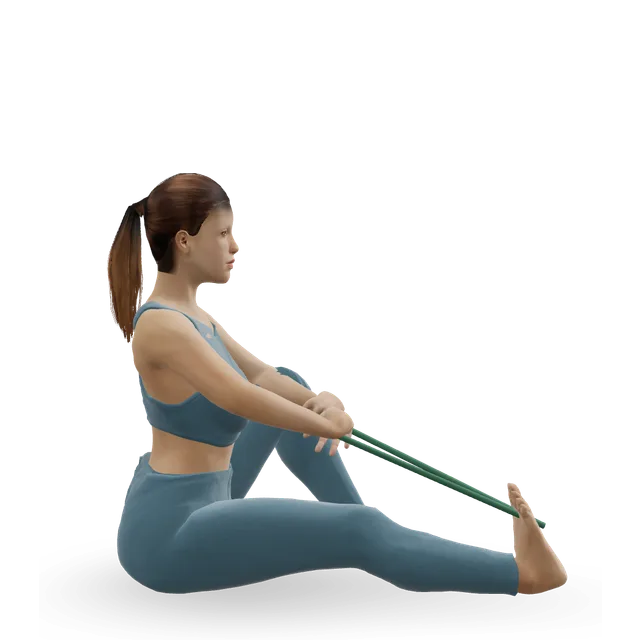
No trial shows Pilates changes the arch
No trial has tested whether Pilates changes the arch or eases flat-foot pain. Two small trials found better walking or balance in people with flat feet, with clear limits, and neither reported an arch change.
Pilates guide
No trial shows that Pilates changes the arch or eases flat-foot pain. Most flat feet, or fallen arches, are normal and need nothing doing: the NHS says they usually cause no problems and shouldn't stop you doing sport. If your feet ache or tire, foot exercises and strength for your hips and legs can help with comfort, though no exercise has been shown to rebuild an arch. Pilates fits as the hip, leg and balance part.
A flat foot that is new, painful, stiff or on one side only is different: check the warning signs below first. Pilates sits beside the care of a GP or podiatrist, never in place of it.
This guide covers flexible and rigid flat feet, children's feet, the arch muscles and the tibialis posterior tendon, what foot exercises and the small Pilates studies show, reformer footwork, bare feet and shoes, the warning signs including diabetes, and a 25-minute class for the arches, ankles, hips and balance.
No trial has tested whether Pilates changes the arch or eases flat-foot pain. Two small trials found better walking or balance in people with flat feet, with clear limits, and neither reported an arch change.
The NHS says flat feet usually cause no problems, "should not stop you doing any activities, including sports", and need nothing doing if they aren't causing problems. Podiatrists say "the height of the arch does not have any bearing on how well a foot can function".
The short foot exercise moved arch measures by fractions of a millimetre in 6 trials, and a 2024 review found no clear effect. The NHS says exercises and insoles "will not change the shape of your feet but can help with things like pain or stiffness".
Programmes that trained the hips and whole leg as well as the feet did a little better on arch measures, at low certainty. Pilates is a good way to do the hip and leg part.
A new, painful or one-sided flat foot in an adult is often the tibialis posterior tendon. Orthoses with slow strengthening for that tendon did best in a small trial. Check the warning signs below first.
See a GP for "Flat feet that are painful, stiff, weak or numb, that you didn't have before, or that affect only one foot". With diabetes, "Any foot pain if you have diabetes: foot problems can be more serious." The full list is below.
The NHS describes flat feet, or fallen arches, as feet that "press flat on the ground", and says "They're common and usually nothing to worry about". Sometimes there's pain around the ankle or lower leg, the arch aches, or shoes wear out quickly. There's often no obvious cause, and flat feet sometimes run in families.
Source 4
A flexible flat foot looks flat when you stand, but its arch comes back when you sit, stand on tiptoe or bend your big toe up; a rigid one stays flat either way. Children's orthopaedic surgeons say the arch reappearing on tiptoe "differentiates between flexible and stiff flatfeet". A rigid, painful flat foot in a teenager is often two foot bones joined together (a tarsal coalition), which our tarsal coalition guide covers.
In 835 children aged 3 to 6, 44% had flexible flat feet, falling from 54% at age 3 to 24% at age 6. The NHS says arches usually develop between 3 and 10. Children's orthopaedic surgeons: "The pain-free flexible flatfoot needs reassurance and NOT referral or treatment".
The tibialis posterior is the deep calf muscle whose tendon runs behind the inner ankle bone into the arch. When the tendon fails, the arch drops, often on one side. US surgeons now call this progressive collapsing foot deformity (it used to be called adult acquired flatfoot); it's more common in women and over 40. In one English practice, 3.3% of women over 40 had symptoms, none of them diagnosed. Our posterior tibial tendinopathy guide covers it.
Weakly, if at all. In 21 cohorts (6,228 people), a flat (pronated) foot was a small risk factor for shin splints, and not for foot, ankle or general overuse injuries. In 927 novice runners in neutral shoes, flatter feet weren't at higher risk, and in army trainees the flattest feet had the lowest injury risk. In older adults, the flattest feet went with slightly higher odds of knee and arch pain, in studies that can't show cause, and foot posture wasn't linked with low back pain.
Mat Pilates is mostly lying and side-lying, so your feet do little except in standing and wall work. Reformer footwork presses the carriage away with your feet on the footbar: a lying calf raise against springs. The force on the footbar has been measured in one volunteer only, and no study has measured what footwork does to the arch. Joseph Pilates also designed a "Foot Corrector"; no study has tested it.
As the hip, leg and balance work that reviews suggest adding to foot exercises, with the short foot exercise, heel raises and band work for the inside of the ankle added to the class. It won't change the shape of your feet, and a painless flat foot needs no programme at all.
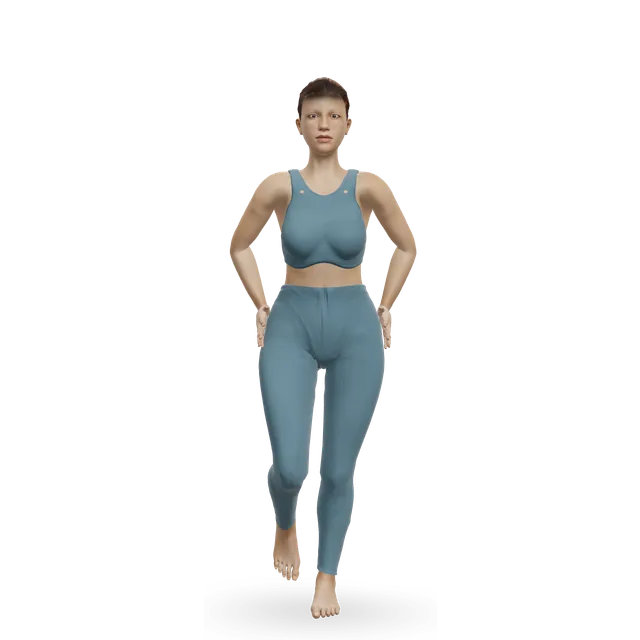
The tiptoe check children's orthopaedic surgeons and podiatrists describe, in our words. It isn't a diagnosis.
See the movement on the 3D figure: Slow calf raise
In 6 trials (201 people), the short foot exercise reduced the drop of the arch (navicular drop) by 0.23 mm and improved a foot posture score by 0.67 points, with no change in muscle size. A 2024 review found no significant difference from control overall, and effects appeared after about 5 to 8 weeks. Across 13 trials, training the small foot muscles improved arch measures, balance and strength, but not pain.
In a network meta-analysis of 11 trials in adults with flexible flat feet, strengthening the tibialis posterior with hip stretching and core exercise ranked best, and the authors highlight "hip muscle and lower limb overall muscle training". A 2026 review of 14 trials found programmes with hip or whole-leg work lowered navicular drop by about 2.3 mm, at low certainty, with too little evidence on pain.
In 22 women with flexible flat feet, 8 weeks of mat Pilates twice a week improved walking rhythm and side-to-side sway against no exercise. But the same researcher ran the classes and did the measuring, the trial was registered only after it had run, and the arch was measured only at the start.
In 44 students, adding Pilates twice a week to daily short foot exercise for 5 weeks improved a balance score and foot function more than the foot exercise alone. But the Pilates was added on top of the foot exercise, so that group exercised for longer, and no arch result was reported.
In 91 young women, 16 weeks of Pilates "did not improve postural control and proprioception in individuals with flatfeet", and the authors advise combining Pilates with other exercise. In 40 school children, mat Pilates twice a week didn't change balance or the arch. No trial has tested whether Pilates eases flat-foot pain.
In 36 adults with early tibialis posterior tendon problems, everyone wore orthoses and stretched for 12 weeks; adding resisted exercise helped, and slow lowering helped most. A review of the 3 tendon trials (93 people) found moderate effects for this combination and warned that calf stretches at full ankle bend "may be counterproductive" for the tendon. Arch-supporting orthoses may ease early pain, in trials at high risk of bias.
In healthy children with painless flat feet, orthoses made little or no difference to pain at a year (a Cochrane review of 16 trials and 1,058 children, very low to low certainty), and they didn't change the arch in the long term. No exercise trial in children has measured pain.
Fine for most people. Keep your ankles in line, don't let your arches collapse onto the bar, and use lighter springs with a sore inner ankle (our suggestion; the force on the footbar has been measured in one volunteer only).
Source 26
Barefoot or grip socks are fine on a mat for most people. If standing work hurts, supportive shoes are kinder: for painful flat feet, the NHS says "wide, comfortable shoes with a low heel are usually best". Grip socks stop slipping; they don't support the arch (our suggestion).
Source 4
With numb feet or diabetes, do standing work and footwork in shoes and check your feet before and after (our suggestion; our Pilates for diabetes guide covers foot care).
Source 12
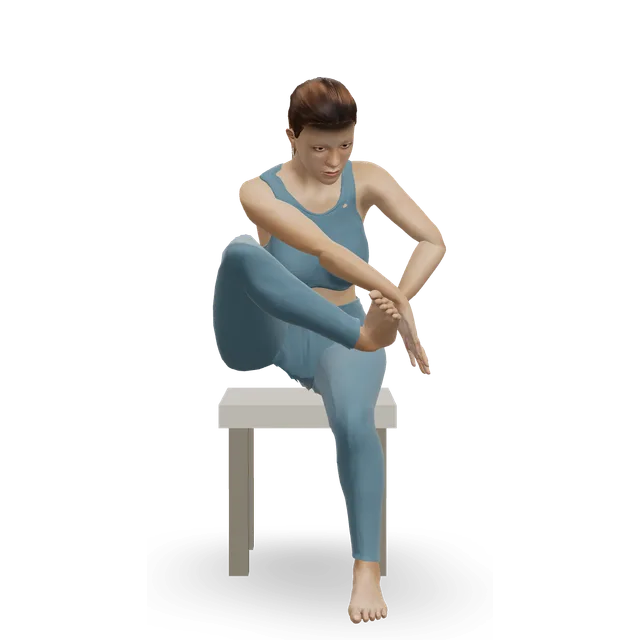
From the short foot and toe splay move's page, in our words; the 10 holds of 5 seconds are from our foot and ankle routine. It has no 3D demo yet, so it isn't in the moves grids or the class: add it on other days.
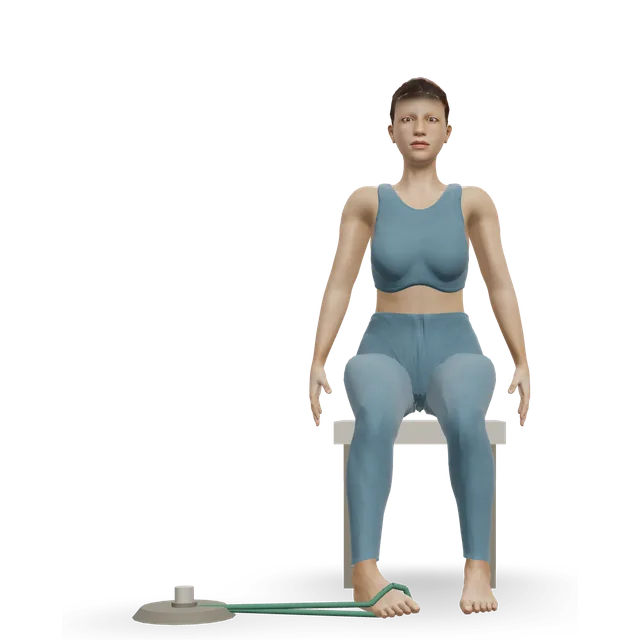
Barefoot or in thin socks. Towel scrunch, 2 sets of 12 each foot (our foot and ankle routine); ankle circles, 10 slow circles each way with each foot (the move's page); band inversion, sweeping the foot in against a band, 8 each side (our foot and ankle routine), or "For tibialis posterior tendon pain, 3 sets of 15 at a resistance you can only just complete, twice a day for 12 weeks, with a slow return" (the move's page); seated bent-knee calf raise, 3 sets of 15 (our flat feet guide's plan).
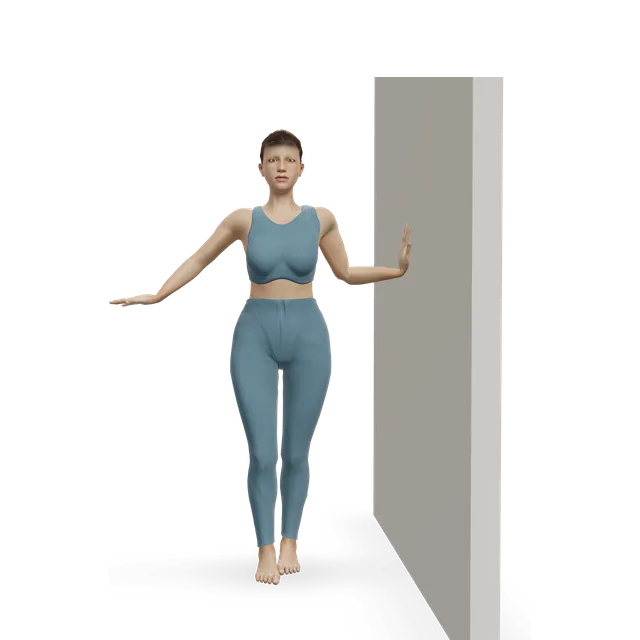
Next to a wall or counter. Slow calf raise, rising through the big toe so your ankles don't roll out: 2 sets of 10, building to 3 sets of 30 (the Houck 2015 trial's progression, as our flat feet guide gives it). Single-leg calf raise from a step, starting on flat ground: 2 to 3 sets of 10 each leg, building (our flat feet guide). Single-leg stand, 2 holds of 30 seconds each leg, and tandem stance then heel-to-toe walk, 30 seconds, then 10 steps (our foot and ankle routine). Single-leg reach: 3 rounds of 5 reaches in each direction, each leg (the move's page).
Press through the whole foot, big toe down, in the bridges, and point then flex your foot at the top of each leg circle (our suggestion). Clamshell, 2 to 3 sets of 12 each side (our flat feet guide). From the moves' pages: side kick, 8 to 10 each side; wall side leg lift, 10 to 12 each side; shoulder bridge, 3 to 5 kicks each leg; wall bridge, 8 to 10 reps; single-leg circle, 5 circles each direction, each leg.
 3D demoClamshellBeginner · No equipment
 3D demoSide kick (Pilates side kick series)Beginner · No equipment
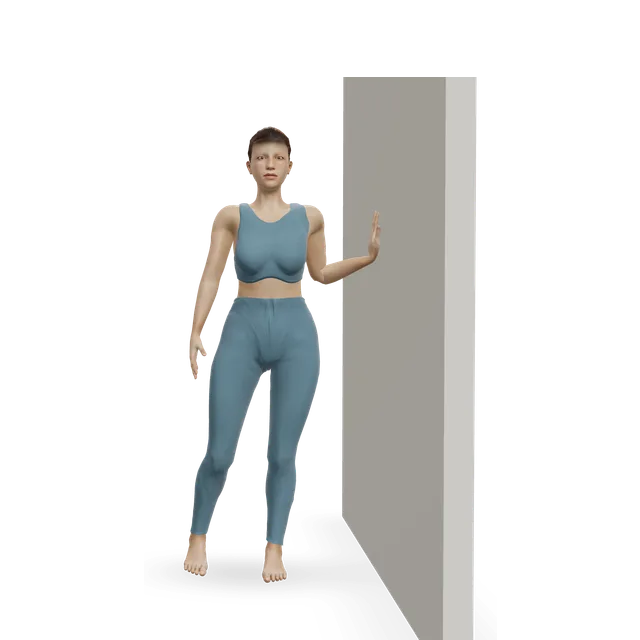 3D demoWall side leg lift (standing side kick at the wall)Beginner · A wall
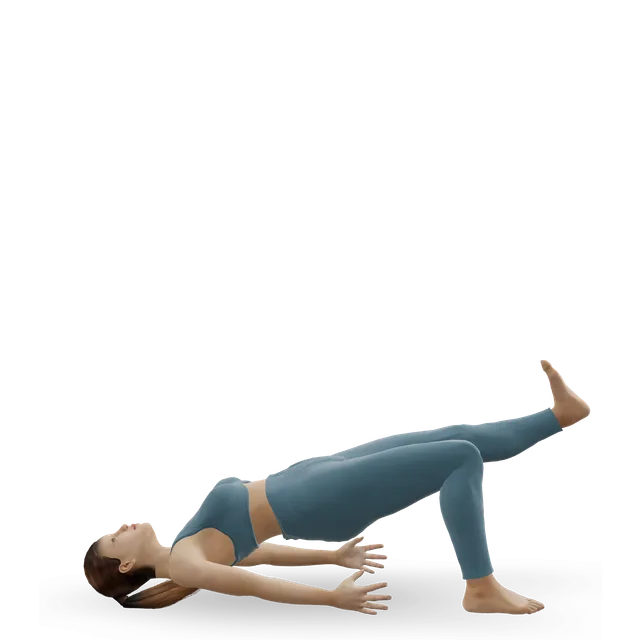 3D demoShoulder bridge (Pilates)Intermediate · No equipment
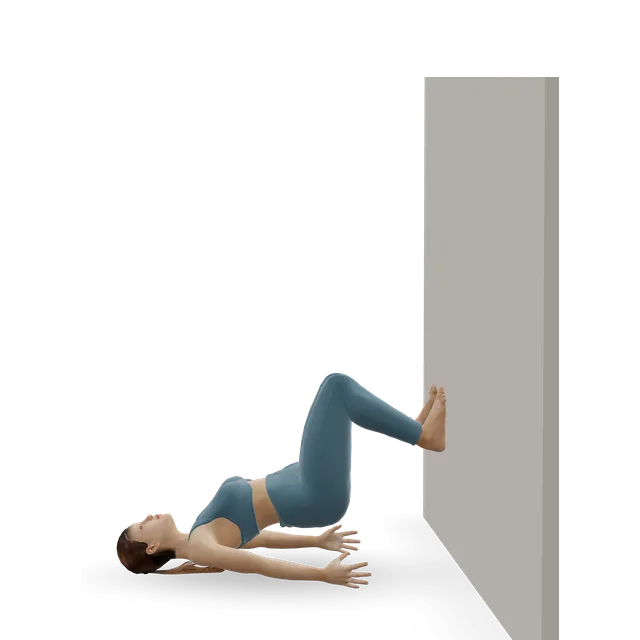 3D demoWall bridge (feet-on-wall bridge)Beginner · A wall
 3D demoSingle-leg circle (Pilates one leg circle)Beginner · No equipment
Knee straight, then knee bent: 3 holds of 30 seconds each side, twice a day (our Pilates for plantar fasciitis guide). Keep them gentle with a sore inner ankle: a review of the tendon trials warns that calf stretches at full ankle bend may work against the tendon.
Our suggestions, agreeing with our flat feet and Pilates for plantar fasciitis guides.
The posterior tibialis stretch's own caution: "With pain along the inner ankle (the tibialis posterior tendon), don't force this stretch; the trials strengthened that tendon rather than stretching it."
Source 33
Leave out the jumpboard and jumping, and keep standing blocks short, while your feet hurt. Our flat feet guide notes "Arthritis UK says the pain gets worse with activity, particularly running and jumping."
Kneel with your toes tucked under only if it's comfortable, and skip it with bunions, big toe arthritis or pain under the ball of your foot.
Keep foot and ankle work in the middle of the range rather than pushing to the end (our suggestion, from our Pilates for hypermobility guide).
Most young children have flat feet, and arches usually develop between 3 and 10. A painless flexible flat foot needs no exercise programme, insoles or referral, and orthoses don't change how the arch develops. Pilates is fine as exercise if your child enjoys it; our Pilates for kids guide has a class.
See a GP if your child's flat foot is painful, stiff or rigid, affects only one foot or looks very different from the other, is new, or stays flat when they stand on tiptoe; or if they often sprain an ankle, have problems with walking or balance, or struggle to keep up with activities because of their feet.
A flat foot that is new, painful or on one side only in an adult is often the tibialis posterior tendon. Check the warning signs below first. Our flat feet guide then has a 12-week plan built on the tendon trials, in which band inversion builds to 3 sets of 15 at a resistance you can only just complete, twice a day. Gentle Pilates for your hips and the rest of you can carry on alongside, with the calf stretches kept gentle.
Our class does seated foot work first, then standing heel raises and balance, then Pilates for the hips; its order and doses are editorial. The foot and ankle routine is the closest class without Pilates. With heel pain, use the Pilates for plantar fasciitis class instead.
A 25-minute Pilates class for flat feet: seated foot and ankle work, standing heel raises and balance, then Pilates for the hips and a gentle calf stretch.
25 minBeginner14 movesOther / check instructions, A bench or boxA 15-minute barefoot routine for stronger toes, arches, calves and ankles, finishing with balance. You need only a towel, a wall and a resistance band.
15 minBeginner11 movesA wall, Other / check instructionsA 25-minute Pilates class for dancers: feet and calves, turnout control from the hip, trunk endurance and back extension, all in the middle of your range.
25 minBeginner17 movesOther / check instructions, A bench or boxA 25-minute Pilates class for steadier balance: standing balance and leg strength at a kitchen counter, then mat work for your trunk and hips.
25 minBeginner17 movesA wall, A bench or boxA 25-minute Pilates class for heel pain: sole and calf stretches before you stand, mat Pilates lying down, heel raises every second day, and short standing work.
25 minBeginner15 movesA bench or box, Other / check instructionsThese are the same warning signs as our flat feet and foot pain guides, word for word. This is general information, not a diagnosis. A&E means accident and emergency; in the US, call 911 for 999, and use your doctor's urgent line or urgent care for NHS 111.
Source 12
Source 12
Source 4
Source 13
A high arch that is new, getting higher or only in one foot, or high arches with weakness, tripping, numbness or ankles that keep giving way: see a GP. It can be the first sign of a nerve condition.
Call 999 if:
Call 999 or go to A&E (accident and emergency) straight away for severe difficulty breathing (gasping, choking or not able to get words out), a chest that feels tight or heavy, pain that spreads to your arms, back, neck and jaw, lips or skin turning very pale, blue or grey, or sudden confusion. If you're more short of breath than usual, or your heart is racing, fluttering or skipping beats, contact NHS 111.
You feel any pain or become unwell, as the NHS advises for its Pilates videos, and especially for chest pain or pressure, unusual breathlessness, dizziness or fainting. If you have a health problem, an injury or any symptoms, get advice from a healthcare professional, such as a GP, before you start.
Source 40
The NHS advises getting advice from a healthcare professional first if you have a health problem, an injury or symptoms, or have recently had a heart attack or an operation.
Source 40
Most flat feet cause no problems and need no treatment, and children's orthopaedic surgeons say "The pain-free flexible flatfoot needs reassurance and NOT referral or treatment".
Short foot exercise moved arch measures by fractions of a millimetre on average, one review found no significant effect, and no Pilates trial has shown an arch change. Exercises "will not change the shape of your feet but can help with things like pain or stiffness", the NHS says.
Studies in older adults found small links with knee and arch pain that can't show cause, and none with back pain; cohorts found no general injury risk beyond a small one for shin splints.
Arches usually develop by themselves between 3 and 10, and orthoses don't change how the arch develops.
We found no trial of barefoot walking or minimalist shoes in flat feet. In general, foot exercises and minimalist shoes build foot strength, at low certainty. With diabetes or numb feet, don't go barefoot for standing work.
Source 41
Heel raises, towel curls and the short foot on a mat or standing do the same jobs, and no study has measured what reformer footwork does to the arch.
It can be part of the exercise that suits achy or tired flat feet, but no trial has shown it changes the arch. Its strengths are the hips, legs and balance, which reviews suggest adding to foot exercises. Add the short foot exercise, heel raises and band work for the inside of the ankle to your class.
No exercise reliably reshapes a foot: short foot exercise changed arch measures by fractions of a millimetre on average, and the NHS says exercises and insoles "will not change the shape of your feet but can help with things like pain or stiffness". Most flat feet don't need fixing at all.
Towel curls and the short foot exercise sitting down, band work for the inside of the ankle, slow heel raises keeping your ankles from rolling out, single-leg balance, and Pilates hip work (side kicks, clamshells and bridges). Our 25-minute class puts them in order.
Footwork is a lying calf raise against springs, and it's fine for most people: keep your ankles in line and don't let your arches collapse onto the bar. No study has measured what it does to the arch. With a sore inner ankle, use lighter springs (our suggestion).
Barefoot or grip socks are fine on a mat for most people, and if standing work hurts, supportive shoes are kinder. "With numb feet or diabetes, do standing work and footwork in shoes and check your feet before and after (our suggestion; our Pilates for diabetes guide covers foot care)." Grip socks stop slipping; they don't support the arch.
Stand on tiptoe: if your arch appears, they're flexible, which is a normal variation. If a foot stays flat on tiptoe, or is stiff or painful, get it checked: see a GP for "Flat feet that are painful, stiff, weak or numb, that you didn't have before, or that affect only one foot, or flat feet and you often get foot or ankle injuries or have problems with walking or balance."
Not as a rule. A review of 21 cohorts found a flat foot was a small risk factor for shin splints only, and in older adults the flattest feet went with slightly more knee pain but no more back pain, in studies that can't show cause.
Only if they enjoy it: most children develop arches between 3 and 10, and a painless flexible flat foot needs reassurance, not treatment. "See a GP if your child's flat foot is painful, stiff or rigid, affects only one foot or looks very different from the other, is new, or stays flat when they stand on tiptoe; or if they often sprain an ankle, have problems with walking or balance, or struggle to keep up with activities because of their feet."
Get it checked first: in adults this is often the tibialis posterior tendon. See a GP if "You can't do a single-leg heel raise on the painful side, or the foot is visibly flattening." Strength work for that tendon with orthoses helped most in trials; our flat feet guide has the plan, and gentle Pilates can carry on alongside.
Arch measures changed after about 5 to 8 weeks in trials, and the tendon trials ran for 12 weeks. Do the foot work most days and Pilates 2 to 3 times a week (our suggestion), and expect comfort and strength rather than a new arch shape.
Only if your flat feet hurt or cause problems, the NHS says. For early tendon pain, arch-supporting orthoses may ease pain, especially with exercise; in healthy children with painless flat feet, they made little or no difference.
Yes, with care for your feet: do standing work in shoes, check your feet before and after, and see our Pilates for diabetes guide. "Same day: you have diabetes and a new foot problem, such as an ulcer or wound, signs of infection, or a hot, swollen foot with a change in colour, even if it doesn't hurt."
Exercise education, not a personal prescription, and clinical review of these guides is pending. If you are pregnant, have a health condition or have had recent surgery, check with a doctor, midwife or physiotherapist before starting, and stop for sharp or increasing pain. Health disclaimer.