Your feet do quiet work in every pose
Stronger toe muscles went with better balance in people over 60, and in older adults, weak toe muscles, foot pain and reduced feeling in the feet each went with more falls.
Yoga guide
Every standing pose and balance in yoga relies on the small muscles of your feet, and in older adults, weaker toe muscles and sore feet go with more falls. Training those muscles, with toe yoga, towel curls and calf raises, improved foot strength and balance tests in small trials. No trial has tested yoga for the feet itself.
What yoga can't do is remove a bunion or rebuild an arch: the NHS says you can't get rid of bunions or stop them getting worse yourself, and flat feet usually need no fixing at all. Foot exercises may ease pain, and that's worth having.
This guide covers toe yoga and foot strength, balance and falls, bunions, flat feet, heel pain, bare feet, numb feet and diabetes, kneeling poses, and the signs that need a GP (general practitioner) or podiatrist, with 3D demos of each move.
Stronger toe muscles went with better balance in people over 60, and in older adults, weak toe muscles, foot pain and reduced feeling in the feet each went with more falls.
Training the small foot muscles improved arch measures, strength and balance tests in small trials, but not pain. No trial has tested toe yoga by that name, or yoga for the feet.
In people over 60, yoga improved balance tests by a small amount, though the gains weren't robust in the newest review. Our yoga for balance guide covers falls.
The NHS says surgery is the only way to get rid of a bunion. Foot exercises may ease bunion pain, on low-certainty evidence; wide shoes and a podiatrist's advice help more.
The NHS says flat feet don't usually cause problems, and podiatrists say the height of the arch doesn't affect how well a foot works. Exercises can ease pain but won't change the shape of your feet.
With numb feet or diabetes, wear shoes for standing poses and check your feet every day: an international guideline advises against going barefoot, even indoors.
Every standing pose balances your body over your feet. The small muscles inside the foot support the arch and steady it, the toe muscles press the toes into the floor, and the calf and shin muscles move the ankle. A sun salutation takes the ankle through about 40 degrees of upward bend.
Source 13
In 9 studies of people over 60, mostly snapshots, stronger toe muscles went with better balance. In 14 studies that followed older adults over time, foot pain (about twice the odds of falling), reduced feeling in the feet (about one and a half times) and weak toe muscles (about one and a half to two times) each went with more falls. The studies varied in quality, and few allowed for other causes.
The Royal College of Podiatry says "Painful and uncomfortable feet aren't a natural part of growing old", and that keeping active helps keep feet healthy. A podiatrist can help with most foot problems, and in many areas you can refer yourself.
Source 14
No trial has tested yoga for the feet, so this section draws on foot exercise research, and on yoga balance trials in older adults.
Our search found no study of yoga for flat feet, bunions, foot strength or toe control. Yoga can be one way to do the foot exercises below, before your standing poses.
Source 4
In 13 trials, training the muscles inside the foot improved arch measures, balance, strength and how well people felt their feet worked, but didn't ease pain. A second review of 16 studies agreed on arch shape and moving balance. A third rated the evidence low certainty for push-off and very low for balance, and found no change in how the arch moves when you walk.
In 9 studies of adults aged 65 and over, of fair quality, foot strengthening improved strength, balance and mobility, with little effect on walking. In 33 active older adults, 12 weeks of supervised foot training strengthened the feet and reduced concern about falling, but didn't change walking speed. In 123 older adults, short-foot training added to leg strength training improved standing balance more than leg training alone.
In 6 trials of people over 60 (307 people), yoga improved balance tests by a small amount and mobility by a medium amount. In a 2026 review of 21 studies, the gains in balance while moving and in leg strength weren't robust once missing small studies were allowed for, and standing balance didn't clearly improve.
In 305 older people with disabling foot pain, a podiatry programme of insoles, footwear advice and home foot and ankle exercises 3 times a week cut falls by 36% over a year. In a larger UK trial of 1,010 people, a similar programme reduced falls by 12%, which wasn't statistically significant, though fewer people fell twice or more. Across 8 trials, foot and ankle exercise improved balance and ankle flexibility, and only one counted fewer falls. Falls guidelines advise all older adults on falls prevention and activity; yoga hasn't been shown to prevent falls, as our yoga for balance guide explains.
Neither has a 3D demo, so they're given as written steps. The towel toe curl below is the nearest move with a demo.
Toe yoga trains control of the small foot muscles. No study has tested it by that name; it's part of what foot muscle programmes teach. Our editorial starting point: 5 to 10 slow repetitions of each part, once a day, sitting at first, then standing.
This draws your arch up without curling your toes, and works the main arch muscle more than towel curls do, but it takes practice. Our editorial starting point: 5 to 10 holds of 5 seconds, sitting first, then standing, then on one leg.
Towel toe curl: 2 sets of 12 each foot; calf raise: 2 sets of 10, rising through the big toe; tibialis raise: 15 reps (our foot and ankle strengthening routine). Ankle circles: 10 slow circles each way with each foot (the move's page, which calls it an editorial starting point). Knee-to-wall ankle rock: 10 slow rocks per side, daily (the move's page).
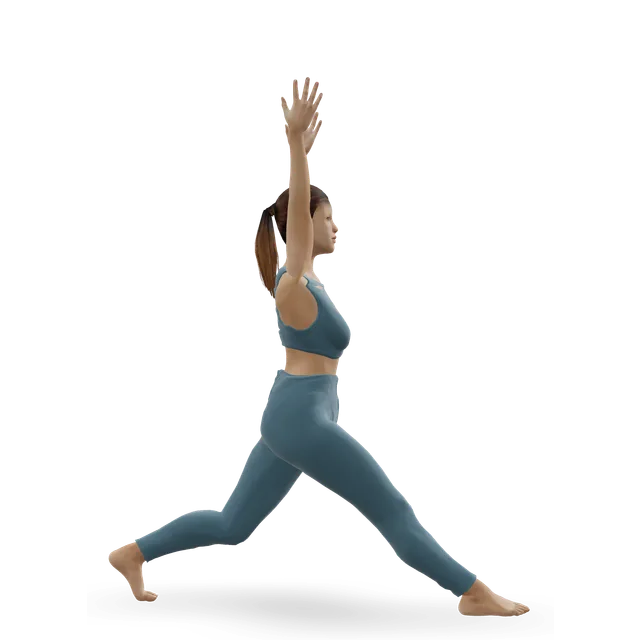
Mountain pose: 5 to 10 slow breaths, 2 or 3 times, lifting and spreading your toes then letting them rest (the move's page). Tree: 2 holds of 20 to 30 seconds each side, fingertips on a wall (our yoga for plantar fasciitis class). Single-leg stand: 2 holds of 30 seconds each leg; tandem stance: 30 seconds, then 10 heel-to-toe steps, next to a wall (our foot and ankle strengthening routine). High lunge: 5 breaths each side, hands on your hips (our yoga for balance class).
A few minutes of toe yoga, towel curls, ankle circles and calf raises before your standing poses, 3 or more times a week, as in the falls trial's home foot and ankle programme. Over 65, the NHS advises activities that improve strength, balance and flexibility on at least 2 days a week. Make balance poses harder slowly, near a wall.
A bunion (hallux valgus) is a big toe that angles towards the second toe, with a bony lump on the side of the foot. Podiatrists say it's mostly caused by an inherited foot shape, made worse by tight or narrow shoes, and more common in women: more than 15% of women in the UK have one.
The NHS says surgery is the only way to get rid of a bunion, and "You cannot get rid of bunions or stop them getting worse yourself". It suggests wide shoes with a low heel and soft sole, ice for up to 5 minutes, bunion pads and painkillers, and a GP or podiatrist can advise on insoles, toe spacers and splints. Surgery isn't done just to improve how feet look.
Across 18 studies of non-surgical treatments, the certainty was low, and less pain was more likely than a straighter toe. In 56 women, 3 months of foot mobilisation and exercises with a toe separator eased pain and improved function compared with a waiting list. In a 2023 pilot of shoes, insoles and foot exercises, too few women kept up the exercises for a full trial to work as planned.
A 2026 network analysis of 11 small trials (401 people) reported that exercise reduced the bunion angle by about 3 degrees, more with taping or insoles. We read it as an abstract only, and its methods have been disputed in letters to the journal, so treat it with caution.
Source 29
The NHS says flat feet "do not usually cause any problems", "should not stop you doing any activities, including sports" and need no treatment if they aren't causing problems; most children's arches develop between 3 and 10. The Royal College of Podiatry says "A flat or low arched foot is not considered abnormal and the height of the arch does not have any bearing on how well a foot can function."
A podiatrist or physiotherapist can advise on shoes, insoles, foot stretches, exercises and painkillers. The NHS says these "will not change the shape of your feet but can help with things like pain or stiffness".
Source 9
In 6 small trials (201 people with flat feet), the short foot exercise changed arch measures slightly, without making the foot muscles bigger. Four of 6 studies found the arch improved with 5 weeks or more, and in a network of 11 studies, programmes that also trained the hips and legs ranked best. A small change on an arch measure isn't the same as reshaping the foot.
In 101 people with heel pain for 10 months or more, a stretch of the sole before the first steps of the day beat a calf stretch at 8 weeks. In 48 people, heavy heel raises with a towel under the toes every second day gave better foot function at 3 months than stretching. A best practice guide puts stretching, taping and advice at the core of care. Our yoga for plantar fasciitis guide turns these into a class.
Plantar fascia stretch: 3 to 5 holds of 10 to 30 seconds, 2 to 3 times a day, starting before your first steps; heel raise with a towel under the toes: every second day, as in the trial (the moves' pages). Toes-tucked kneeling: 30 to 60 seconds, 1 to 3 times a day; foot roll: 1 to 2 minutes per foot (the moves' pages, which call them editorial starting points). Soleus wall stretch: 3 holds of 30 seconds each side (our yoga for plantar fasciitis class). Skip toes-tucked kneeling with a bunion, an arthritic big toe or pain in the ball of your foot.
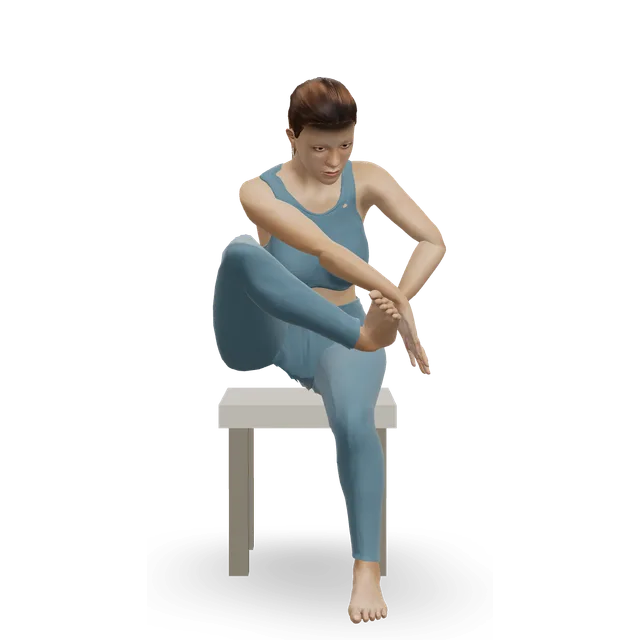 3D demoPlantar fascia stretch (seated)Beginner · A bench or box
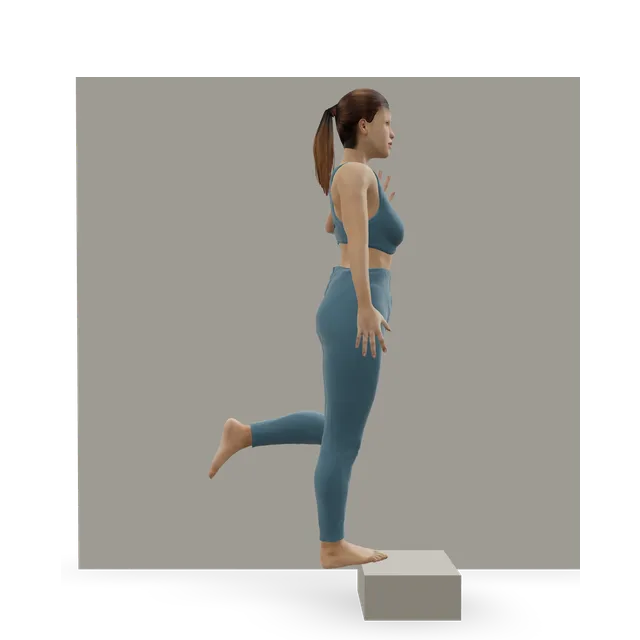 3D demoHeel raise with a towel under the toesIntermediate · A step + Other / check instructions
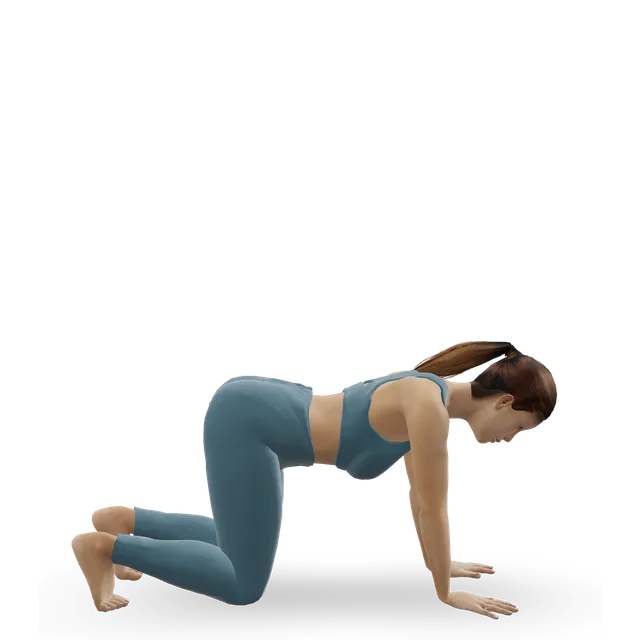 3D demoToes-tucked kneeling (toe squat)Intermediate · No equipment
 3D demoSoleus wall stretchBeginner · A wall
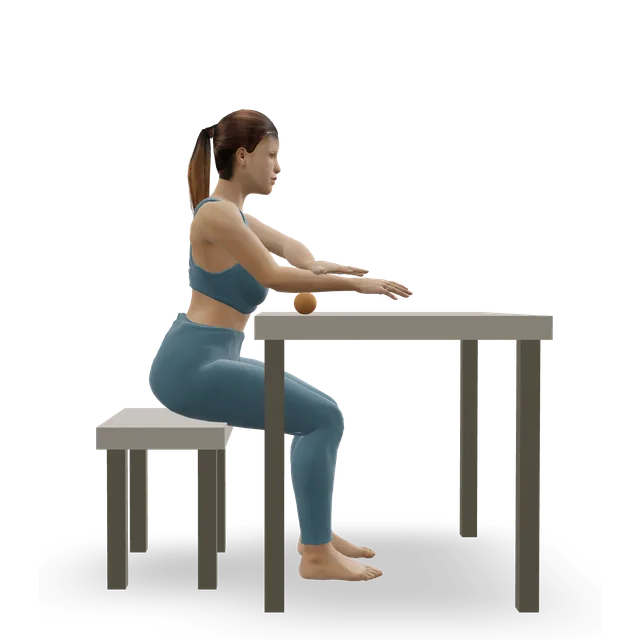
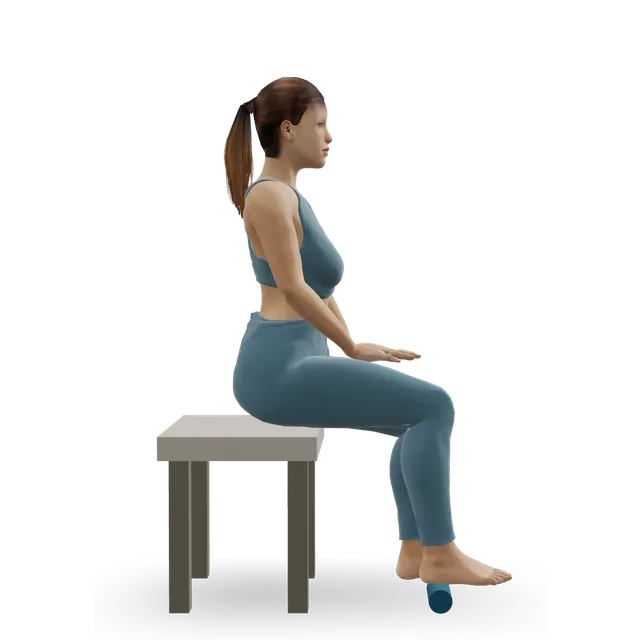 3D demoFoot roll (ball or roller)Beginner · A massage ball
Yoga is usually practised barefoot, and no study has tested whether that matters for the feet. For most people, bare feet on a clean mat are fine. Verrucae are a virus that thrives on damp floors such as changing rooms, so use your own mat and cover a verruca with a plaster.
The international diabetic foot guideline asks people with diabetes who are at risk of foot ulcers to protect their feet "by not walking barefoot, not walking in socks without shoes, or not walking in thin-soled slippers, whether indoors or outdoors". Diabetes UK says check your feet every day, "before you put your socks on in the morning and before you go to bed". Our suggestion: well-fitting shoes for standing poses, or chair yoga, and a foot check after each session. Our yoga for neuropathy guide has a class done in shoes.
The same guideline suggests an 8 to 12 week foot and ankle exercise programme, ideally supervised, for people at low to moderate risk of ulcers, on low-certainty evidence, and says limited barefoot work belongs only inside such a supervised programme. Ask your diabetes foot team before starting barefoot foot exercises.
Source 11
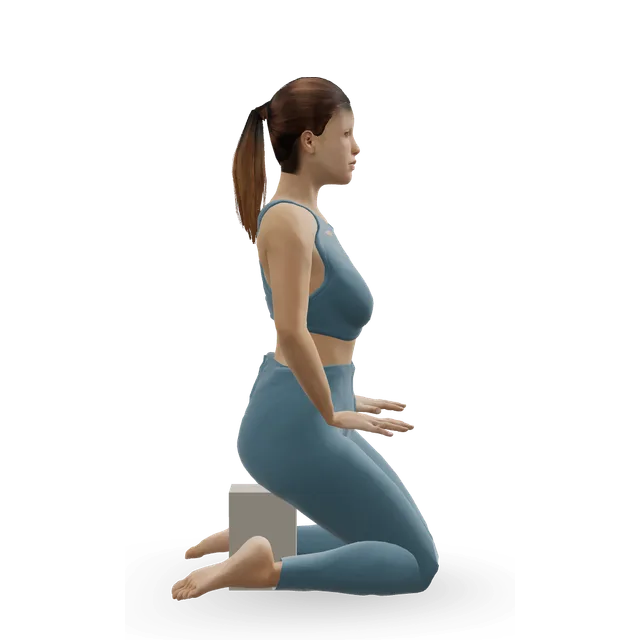
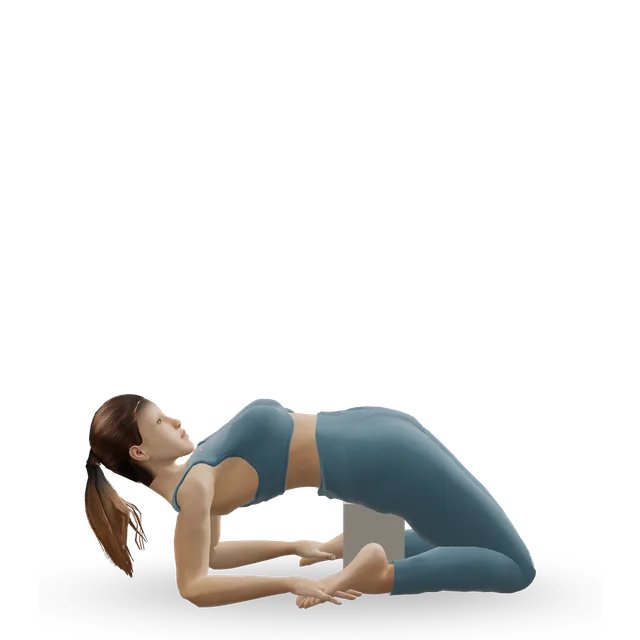
Thunderbolt pose (vajrasana, sitting on your heels) and hero pose (sitting between them) point the feet and press the shins into the floor. Published reports of harm from yoga include a case of damage to the nerves that lift both feet after kneeling in vajrasana. Sit high on a block, keep holds short, and come up at once if your feet tingle or go numb, as our hero pose page says.
Source 37
Sit high on a block, or recline on a bolster, and start with 30 seconds to 1 minute, building up gradually (the moves' pages, which call this an editorial starting point). Come up at once if your feet tingle or go numb (the hero pose page). With knee problems, sit on a chair instead (our suggestion).
Do the foot and ankle strengthening routine, or toe yoga, before the yoga for balance class, 3 or more times a week. With heel pain, use the plantar fasciitis class; with numb feet, the neuropathy class, done in shoes.
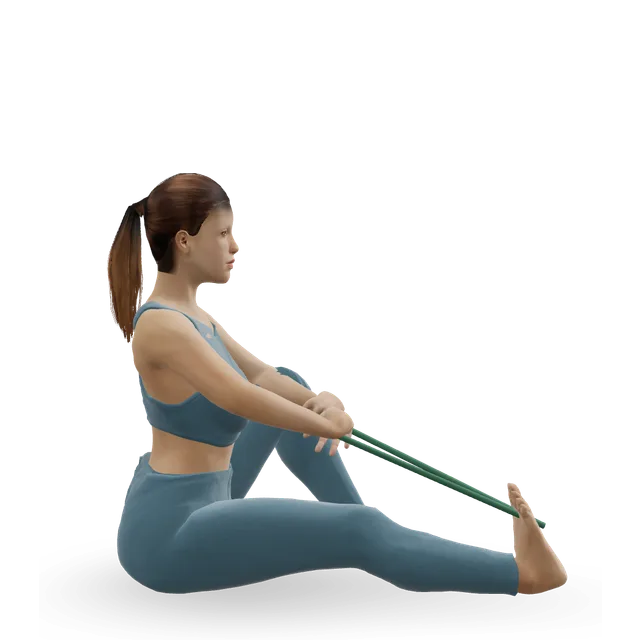
A 15-minute barefoot routine for stronger toes, arches, calves and ankles, finishing with balance. You need only a towel, a wall and a resistance band.
15 minBeginner11 movesA wall, Other / check instructionsThirty minutes of standing yoga for balance: strong standing poses, one-leg poses at the wall, and side steps, backward steps, reaches and sit-to-stands.
30 minBeginner16 movesA wall, A bench or boxA 25-minute yoga class for heel pain: sole and calf stretches before you stand, heavy heel raises every second day, short standing poses and a rest.
25 minBeginner14 movesA bench or box, Other / check instructionsPlantar fascia and calf stretches, a gentle foot roll and the towel heel raise: the exercises the 2023 heel pain guideline supports.
8 minBeginner7 movesA bench or box, A massage ballBalance practice in 10 minutes: tandem stance, single-leg stands, marches, heel walks, tree pose and floor transfers.
10 minBeginner7 movesA wall, A bench or boxA 25-minute yoga class for numb or tingling feet and hands: seated breathing, foot, ankle and hand work, standing poses at a counter in shoes, and a seated finish.
25 minBeginner17 movesA bench or box, Something with weightA 15-minute massage ball routine for desk-tired feet, forearms and chest: slow pressure on each, then the stretch that goes with it. No floor needed.
15 minBeginner8 movesA massage ball, A bench or boxStrength, balance and walking for older adults, over several weeks.
These follow our foot pain guides word for word, and the NHS. A&E means accident and emergency. In the US, call 911 for 999.
Source 38
Come out of kneeling poses at once if your feet go numb or tingle. Keep a wall or chair in reach for balance poses, and step out before you fall (our suggestion). Stop for chest pain, dizziness or unusual breathlessness. Call 999 (911 in the US) for chest pain that feels tight or like squeezing, or spreads to the arms, neck or jaw.
The NHS says you can't get rid of bunions or stop them getting worse yourself, and podiatrists say only surgery corrects the deformity. Foot exercises may ease pain, on low-certainty evidence, and no study has tested toe yoga.
Flat feet usually need no treatment, the arch height doesn't affect how well the foot works, and the NHS says exercises won't change the shape of your feet. Small trials found slight changes in arch measures, which isn't the same as reshaping the foot.
In the one positive trial, a toe separator was combined with 3 months of exercise and mobilisation. The NHS lists toe spacers among things a podiatrist may suggest to reduce bunion pain, not to cure it.
No study has tested barefoot yoga. Bare feet on a mat suit most people, but with numb feet or diabetes, an international guideline advises against going barefoot, even indoors.
Yoga improves balance tests a little, not robustly in the newest review, and no trial has shown it prevents falls. A podiatry programme with foot exercises cut falls in one trial and not significantly in a larger one.
The Royal College of Podiatry says painful feet aren't a natural part of growing old, and foot pain went with more falls in older adults. See a GP or podiatrist.
It can help: standing and balance poses work the small foot muscles, and training those muscles improved strength and balance tests in small trials. No trial has tested yoga for the feet directly, so add a few minutes of toe and ankle work before your standing poses.
Lifting your big toe while the other toes stay down, then lifting the other four while the big toe stays down, then spreading all ten. It trains control of the small foot muscles. No study has tested it by that name.
It won't remove or straighten a bunion: the NHS says you can't get rid of bunions or stop them getting worse yourself. Foot exercises may ease bunion pain a little, so see a GP or podiatrist if yours hurts.
Flat feet usually don't need fixing: the NHS says they don't usually cause problems, and the height of the arch doesn't affect how well a foot works. If they hurt, exercises and insoles can ease pain or stiffness, but they won't change the shape of your feet.
Mountain pose with your toes spread, tree pose, standing on one leg and high lunge all work the feet, with toe yoga, towel curls, calf raises and ankle circles beforehand. If your heels are sore, stretch your soles and calves too.
For heel pain, a stretch of the sole and heavy heel raises have the best evidence, and our yoga for plantar fasciitis guide turns them into a class. For other foot pain, find the cause first: our foot pain guide sorts it by where it hurts.
Most people can, on a clean mat. With numb feet or diabetes, wear well-fitting shoes for standing poses, because an international foot guideline advises against going barefoot, and check your feet every day.
Probably a little. Foot muscle exercises improved strength in small trials, and balance poses work the ankles. Add calf raises and shin raises for more.
Weak toe muscles and foot pain went with more falls in older adults, and a podiatry programme with foot exercises cut falls in one trial, though not significantly in a larger one. Yoga hasn't been shown to prevent falls; our yoga for balance guide covers what does.
Kneeling on your heels presses on the nerves at the front of the shin and ankle, and long spells have been linked with nerve damage that weakens the feet. Come up at once, sit higher on a block, and keep holds short.
No trial has tested them on their own. In one trial they were part of a 3-month exercise programme that eased bunion pain, and the NHS lists them among things a podiatrist may suggest to reduce pain.
Get help urgently for a foot that is suddenly cold, pale or numb, a red, hot, swollen foot, or any new foot problem if you have diabetes. See a GP or podiatrist for pain that lasts 2 weeks, flat feet that are new or only on one side, or a bunion that's getting worse.
Exercise education, not a personal prescription, and clinical review of these guides is pending. If you are pregnant, have a health condition such as glaucoma, high blood pressure or osteoporosis, or have had recent surgery, check with a doctor, midwife or physiotherapist before starting, and stop for sharp or increasing pain. Health disclaimer.