Yoga for ovarian cysts: what cysts are, what yoga can and can't do, pain, twisting and exercise, PMOS and endometriomas, and when to get help
An ovarian cyst is a fluid-filled sac on an ovary. Cysts are very common, most cause no symptoms, and most go away by themselves within a few months. No study shows that yoga can shrink, dissolve or remove one, and the one report people cite is a single case that used other treatments too.
What yoga can offer is gentler: a way to stay active, ease pelvic pain and stress, and wait for a follow-up scan without feeling you must stop exercising. No guideline tells people with a cyst to stop exercising, and twisting or bursting is rare. Yoga goes alongside the care your GP or gynaecology team gives, never in place of it.
This guide explains the kinds of cyst and how they usually behave, what's known about exercise, twisting and the rare emergencies of a twisted or burst cyst, which poses to keep gentle with a large or painful cyst, how a cyst differs from PMOS (formerly PCOS) and from an endometrioma, the classes to follow, and the signs that mean you need help straight away.
Most ovarian cysts happen naturally and go away in a few months without treatment, the NHS says. Before the menopause, simple cysts under 50 mm usually go within 2 to 3 periods; after it, about half to 70% of small simple cysts disappear on follow-up scans.
We found no trial of yoga for ovarian cysts, their size or their pain. The only report is one 2024 case of a cyst that went after 8 months of yoga plus naturopathy, which can't separate yoga from the other treatments or from a cyst going on its own. Even the combined pill doesn't make functional cysts go faster.
Exercise, including yoga, eased period pain in a Cochrane review, on low-quality evidence, and a small trial of yoga for long-term pelvic pain looked promising. Neither tested cysts.
In 1,919 people whose benign-looking cysts were watched for 2 years, 0.4% twisted and 0.2% burst. Twisting usually involves an ovary larger than 5 cm. We found no study linking it to yoga or ordinary exercise; the one exercise-linked case was in an ovary enlarged by fertility drugs.
No guideline advises stopping exercise or yoga with a cyst. Our suggestion: with a large, growing or dermoid cyst, or while one hurts, keep twists gentle and skip jumps until your gynaecology team says otherwise. No study shows harm either way.
Sudden, severe pain low in your tummy, especially with being sick, fainting or any chance of pregnancy, needs 999 or A&E. The warning signs below give the full lists.
Functional cysts develop as part of the menstrual cycle and are usually harmless and short-lived; they are the most common type. Pathological cysts come from abnormal cell growth and are much less common; they include dermoid cysts, which can grow over time, and cystadenomas. Endometriomas are cysts caused by endometriosis, and a haemorrhagic cyst is usually a functional cyst that has bled.
In one study, 4% of women with a median age of 26 had a cyst larger than 30 mm in the second half of their cycle. After the menopause, simple cysts are seen in 5% to 17% of women, and in a US screening trial 14% of women over 55 had one at their first scan. Up to 1 in 10 women have surgery for an ovarian mass at some point.
Before the menopause, simple cysts under 50 mm "usually resolve over 2 to 3 menstrual cycles without the need for intervention", the RCOG (Royal College of Obstetricians and Gynaecologists) says. After the menopause, in a 2-year study, small simple cysts disappeared in 53%, stayed the same in 28% and grew in 11%, and larger screening studies found 70% went; in 15,106 women aged 50 and over, 69.4% of single-chamber cysts went by themselves.
Before the menopause, a cyst that causes symptoms is cancer in about 1 in 1,000 women, rising to 3 in 1,000 at 50. Cancerous cysts are more common after the menopause, the NHS says, which is why follow-up scans matter then.
The NHS says a cyst usually only causes symptoms "if it splits (ruptures), is very large or twists and then blocks the blood supply to the ovaries". Pelvic pain can range from a dull, heavy feeling to a sudden, severe and sharp pain. Other symptoms include pain during sex, difficulty emptying your bowels, needing to pee often, changes to your periods, bloating and a swollen tummy, and feeling very full after eating a little.
In most cases, the NHS recommends watchful waiting. Large or persistent cysts, or cysts causing symptoms, usually need to be removed by surgery. After the menopause, you may be offered scans and blood tests for a year.
We searched PubMed (43 records for yoga and related practices with any kind of ovarian cyst, all checked; 3 with a strict search) and Europe PMC, and found no randomised or controlled trial of yoga for ovarian cysts, cyst size or cyst pain.
A 24-year-old with a bleeding cyst beside the ovary, who declined surgery, had 8 months of yoga and naturopathy at the authors' hospital, after which the cyst had gone on ultrasound. The authors say further studies are needed. It is one person with several treatments together, over a time in which such cysts often go anyway, so it can't show that yoga did anything.
Even hormone treatment doesn't speed things upStrong evidence
In 8 trials (686 women), the combined pill didn't make functional cysts go any faster, and the Cochrane authors say watchful waiting for two or three cycles is appropriate. French guidelines say hormone treatment is ineffective for simple cysts. If a hormone doesn't shrink them, there's no reason to expect a pose to.
In a Cochrane review of 12 trials (854 women), exercise, including yoga, may have reduced period pain a lot, by about 25 points on a 100-point scale, but the evidence was low quality. In 36 women with long-term pelvic pain, yoga by video for 2 months lowered worst pain by about 2 points out of 10, in a trial testing only whether a bigger study was feasible. The European endometriosis guideline makes no recommendation for or against exercise. None of this tested cysts.
Gentle movement, slow breathing and supported rest may ease pelvic pain and stress for some people, as they can for period pain, and keep you active while you wait for a scan (our reading). A cyst that hurts a lot, or suddenly, needs checking rather than yoga.
Twisting, bursting and exercise
How rareEmerging evidence
In the IOTA5 study (1,919 people at 36 centres whose benign-looking ovarian masses were watched rather than removed), 0.4% had a twisted ovary (torsion) and 0.2% a burst cyst over about 2 years.
In 87 women with torsion confirmed at surgery, 89% had an ovary larger than 5 cm. In 231 dermoid cysts removed by surgery, torsion was linked with younger age but not with the cyst's size, so smaller dermoids can twist too. A French review names a previous torsion as the main risk factor, and the RCOG says dermoid cysts grow over time, raising the risk of pain and twisting.
We found no study showing that exercise, yoga, twisting poses or upside-down poses make an ordinary cyst twist. The only exercise-linked report was one woman whose ovary, enlarged by fertility drugs, twisted during exercise; her doctors advised avoiding strenuous activity until the ovary was back to normal size. We read only the abstracts of the main torsion reviews, which don't name exercise as a trigger. So there's no evidence that yoga causes torsion, and no evidence that it's safe in every case either.
In 91 women with a burst corpus luteum cyst (the cyst left after ovulation), 57.1% had recently had sex. In a 408-woman hospital audit, 84.7% were managed without surgery. A review says the pain often begins during strenuous activity, such as exercise or sex, but gives no numbers.
Torsion doesn't always look the sameEmerging evidence
In the 87 women, 70% had nausea or vomiting, fever was rare, and the pain started suddenly in 59%. A normal ultrasound doesn't rule torsion out. Severe pain that builds over hours still needs help.
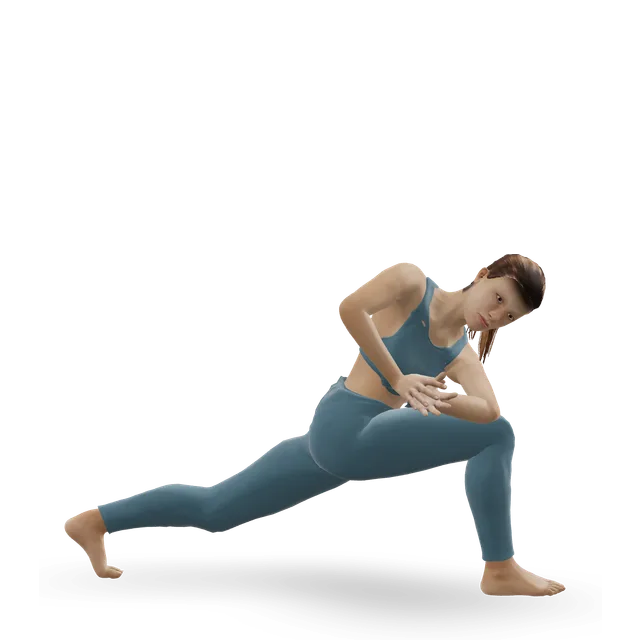
With a known large, growing or dermoid cyst, while a cyst hurts, or while fertility drugs have enlarged your ovaries: keep twists gentle and small, step rather than jump, and leave out strong tummy work and pressure on a sore tummy, until your gynaecology team says otherwise. This follows our IVF advice and the one exercise-linked case; no study shows harm from these poses, and none shows they're safe in every case.
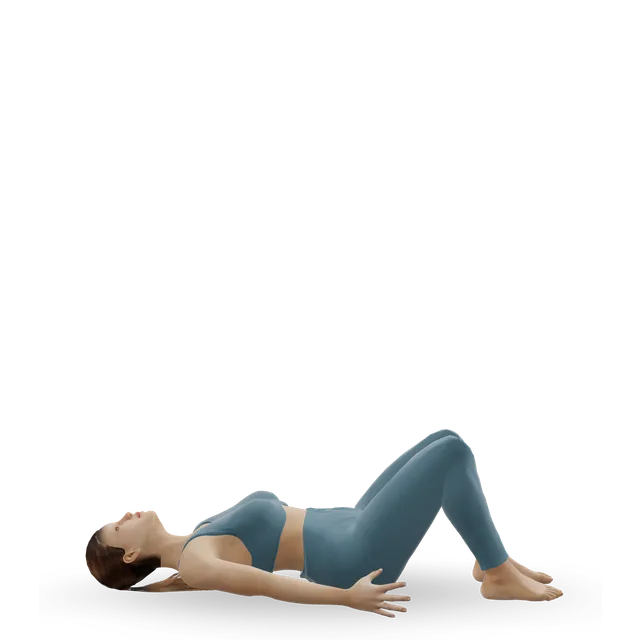
Slow breathing: 2 minutes, lying with your knees bent or sitting supported, about 4 seconds in and 6 out, letting your tummy soften on each breath in. Reclining bound angle: 2 minutes, a cushion under each thigh so your knees never hover (both our endometriosis routine). Supported bridge: rest 3 to 5 minutes on the block, the time Yoga Journal suggests, breathing slowly through your nose (the move page's dose). Pelvic floor relaxation: 5 to 10 slow breaths, 1 to 3 times a day (adapted from the move page's dose); its page says it doesn't diagnose or treat pelvic pain on its own. Child's pose: 60 seconds, knees wide, forehead on your hands or a cushion (our endometriosis routine); skip it if pressure on your tummy hurts.
Walking: 5 minutes, easy (our period pain routine). Cat-cow: 8 waves, slower than feels natural (the move page's dose). Glute bridge: 8 reps, breathing out as you lift and holding 2 seconds at the top, stopping short of any pelvic pain. Dead bug heel taps: 6 each side, back resting on the floor. Clamshell: 8 each side. Bird dog, one limb at a time: 4 each arm and leg with a 3-second hold. Supine spinal twist: 30 to 45 seconds each side, a cushion under the top knee to keep the twist gentle (all our endometriosis routine). With a large or painful cyst, keep the twist small or leave it out (our suggestion).
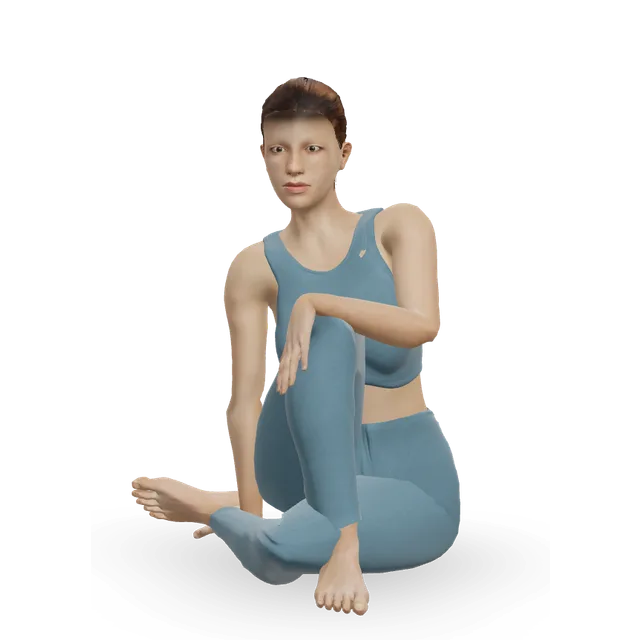
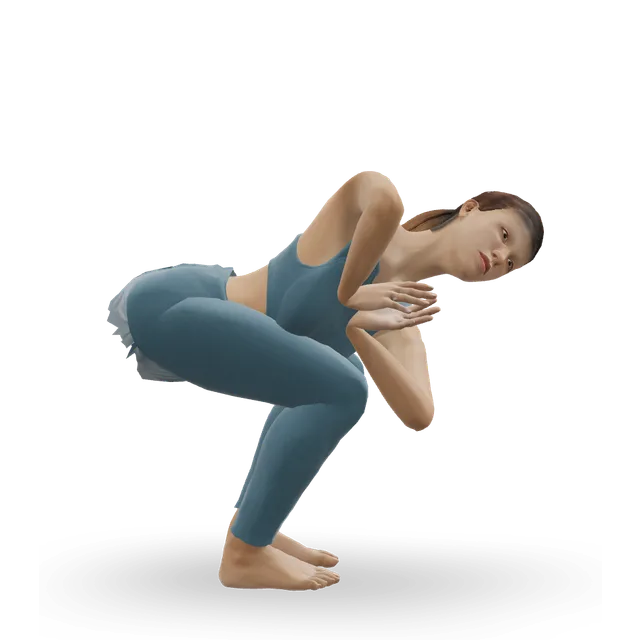
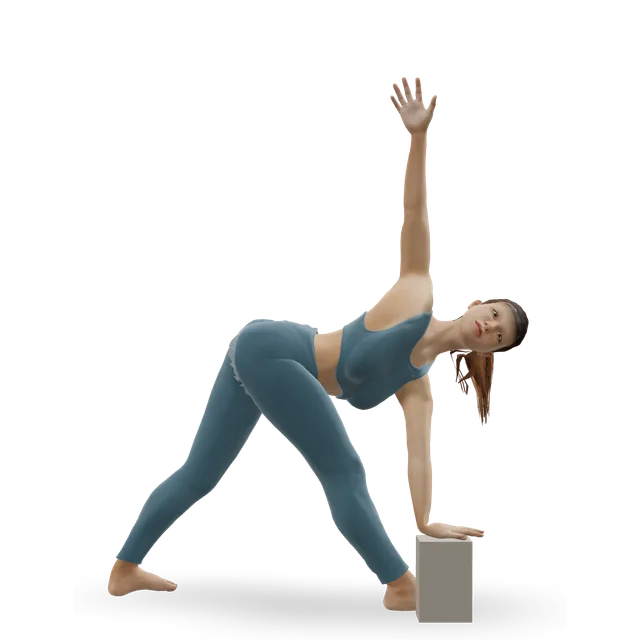
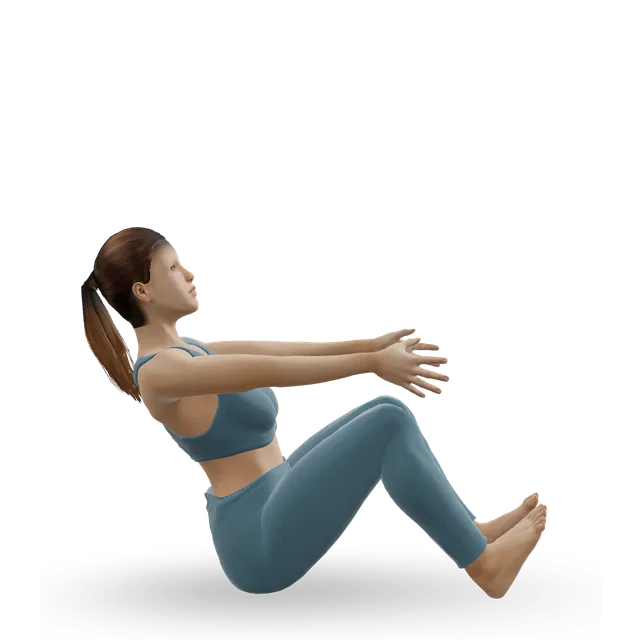
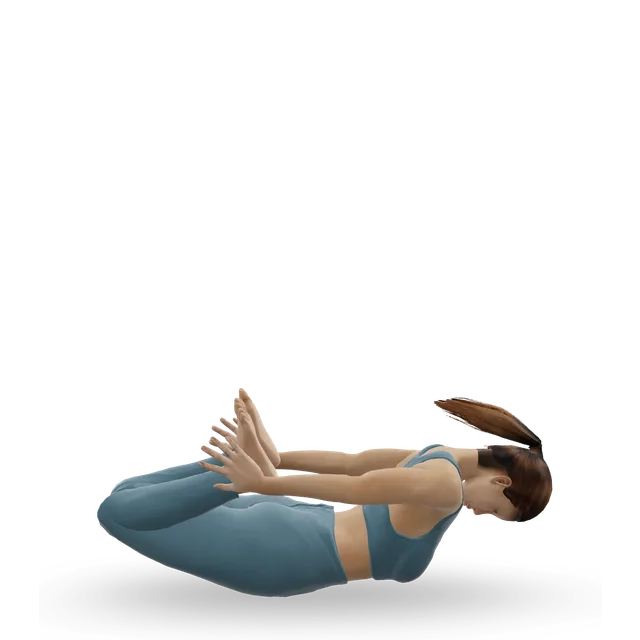
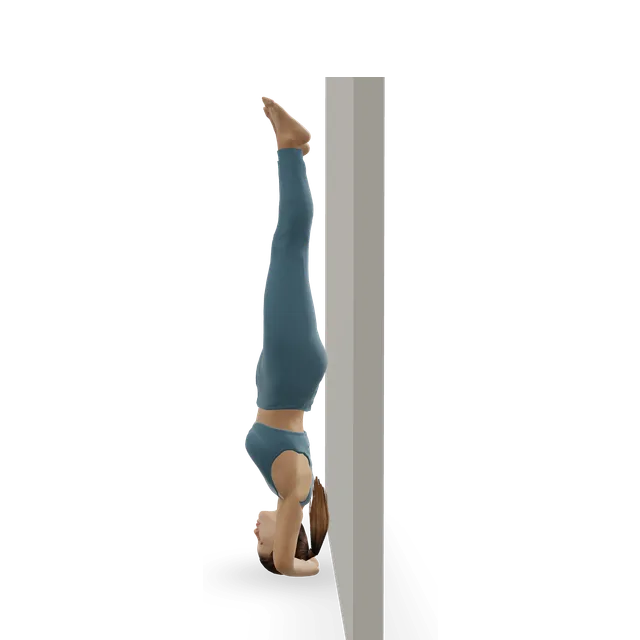
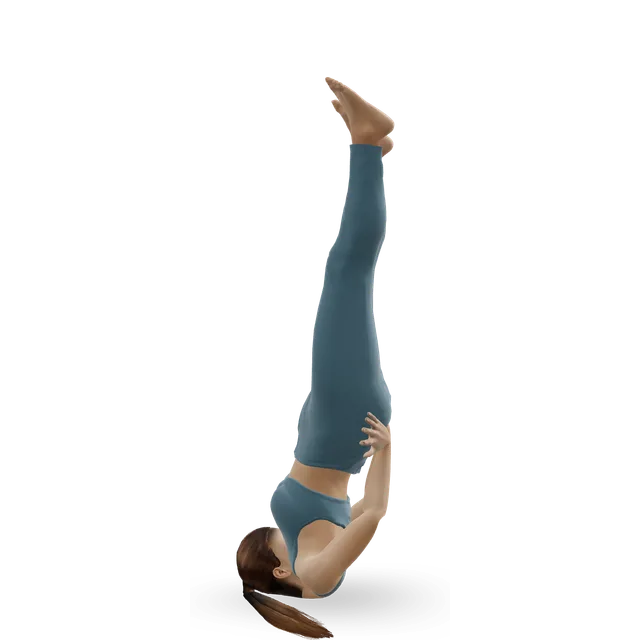
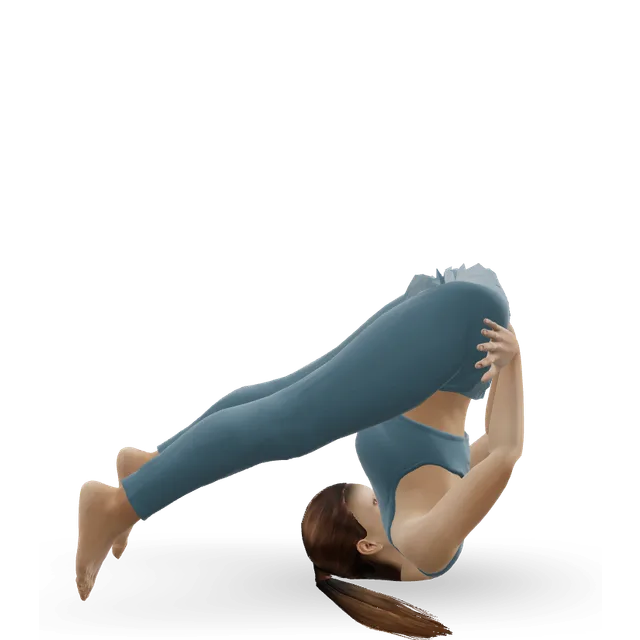
Our suggestion, for a known large, growing or dermoid cyst, while a cyst hurts, or after fertility treatment, until your team says otherwise; no study shows harm from these poses and no guideline restricts them. Deep or fast twists (half lord of the fishes, revolved chair, revolved triangle and revolved side angle): use the small, supported twist above instead; our yoga for fertility guide already says to leave out fast or deep twists while IVF injections have enlarged your ovaries. Jumps and jump-backs in sun salutations: step instead. Strong tummy work and pressure on a sore tummy: boat pose (its page says to avoid it after recent abdominal surgery), long plank holds, and lying face down in bow, locust or low cobra if it presses on the sore side. Headstands, shoulder stands and the plough: not needed, and the usual cautions apply.
PMOS isn't a condition of ovarian cystsStrong evidence
Polycystic ovary syndrome was renamed polyendocrine metabolic ovarian syndrome (PMOS) in 2026, partly because, in the consensus's words, "the term PCOS is inaccurate, implying pathological ovarian cysts". The "cysts" seen on a scan are many small egg follicles, counted as 20 or more in an ovary; ovarian cysts are listed separately. The NHS PMOS page no longer mentions cysts. Our yoga for PCOS guide covers PMOS.
An endometrioma is a cyst caused by endometriosis, one of its three forms, and NHS surgery for endometriosis can remove these fluid-filled sacs. The endometriosis advice applies; the European guideline makes no recommendation for or against exercise. Our yoga for endometriosis guide covers flare days and classes.
Dermoid cysts (mature cystic teratomas) don't come and go with the cycle, and they have been shown to grow over time, which raises the risk of pain and twisting. Yoga won't change that; whether and when to remove one is a decision to make with your gynaecologist.
These are usually functional cysts that have bled, often a corpus luteum cyst from the normal cycle. Most burst cysts are managed without surgery. Rest while it hurts, and use the warning signs below.
Simple cysts are often found on scans in pregnancy, and most disappear as the pregnancy goes on, the RCOG says. Follow our yoga in pregnancy guide and your midwife's advice.
The NHS says that after keyhole surgery (laparoscopy) or open surgery (laparotomy), "it may take as long as 12 weeks before you can resume normal activities". NHS inform says you'll probably need to take things easy for 2 weeks after keyhole surgery, and around 6 to 8 weeks after open surgery.
Start with breathing and short walks, then the gentle moves above, and leave out boat pose, planks and other strong tummy work until your team agrees (our suggestion).
Contact a GP after surgery for
The NHS lists "heavy bleeding", "severe pain or swelling in your abdomen", "a high temperature (fever)" and "dark or smelly vaginal discharge".
The endometriosis routine is the closest fit for a painful cyst on a better day, and the period pain routine for staying active; keep their twists small with a large or painful cyst, and skip low cobra if lying on your front hurts, as its own cue says. The pelvic floor relaxation routine and the restorative sequence suit a sore day. No sequence has been shown to help a cyst, so we haven't made a new class.
These are the warning signs from our women's pain, IVF, fertility and endometriosis guides and our yoga guides, word for word, apart from the lines marked as our suggestion or given as the NHS's words. This is general information, not a diagnosis. A&E means accident and emergency; in the US, call 911 for 999.
Sudden, severe pain is an emergency: call 999
Sudden, severe pain low in your tummy is an emergency. Call 999 or go to A&E (911 in the US):
Call 999 or go to A&E: you have pelvic pain (pain low in your tummy) and it's severe, getting worse or hurts when you move or touch the area, or you feel faint, dizzy or lightheaded or pass out, have pain in the tip of your shoulder, have difficulty breathing, have heavy bleeding from your vagina, or suddenly feel confused. Don't drive yourself.
Sudden, severe tummy pain, especially with vomiting and feeling unwell, can mean a twisted ovary, which needs urgent medical help. The NHS says to call 999 or go to A&E for a stomach ache that started suddenly and is severe.
Call 999 or go to A&E immediately: a combination of a sharp, sudden and intense pain in your tummy, feeling very dizzy or fainting, feeling sick, or looking very pale, if there's any chance you could be pregnant. It could be an ectopic pregnancy that has split open (ruptured).
Call 999 or go to A&E: if you are or could be pregnant, shoulder tip pain (where the shoulder ends and the arm begins) with sudden severe tummy pain, dizziness or fainting. It can mean bleeding from an ectopic pregnancy.
Contact your GP or call NHS 111 straight away: you might be pregnant, even without a positive pregnancy test, and you have a combination of tummy pain low down on one side, vaginal bleeding or a brown watery discharge, pain in the tip of your shoulder, or discomfort when peeing or pooing. It can be an ectopic pregnancy.
Get help from NHS 111: you have pelvic pain and you find it difficult to pee or poo, there's blood in your pee or poo, you have unusual discharge, fluid or bleeding from your vagina, pain when peeing or need to pee more than usual, a very high temperature or feel hot, cold or shivery, vomiting and diarrhoea or feel sick, or you are or may be pregnant. If you're 20 weeks pregnant or more, contact your midwife or maternity unit.
NICE asks GPs to test for ovarian cancer when bloating, feeling full, pelvic or tummy pain, or needing to pee more often keep happening, particularly more than 12 times a month, especially at 50 or over.
Our suggestion, from our fertility guide's IVF stop line: with a known cyst, come out of any pose that brings on sharp or one-sided pelvic pain, and if the pain is sudden and severe or doesn't settle, use the lines above.
During IVF, stop and contact your clinic if a pose brings on tummy or pelvic pain, a heavy, dragging or bloated feeling, or you feel sick or faint (our exercise during IVF guide's suggestion). That guide also covers a twisted ovary, a rare emergency.
Unusual breathlessness
Call 999 or go to A&E (accident and emergency) straight away for severe difficulty breathing (gasping, choking or not able to get words out), a chest that feels tight or heavy, pain that spreads to your arms, back, neck and jaw, lips or skin turning very pale, blue or grey, or sudden confusion. If you're more short of breath than usual, or your heart is racing, fluttering or skipping beats, contact NHS 111.
A joint pain that is sharp, gets worse during a session, lingers into the next day or changes how you move is a reason to use an easier version, and to see a GP or physiotherapist if it keeps happening (the rule in our plans). Muscle soreness for a day or two after something new is normal. In a hot class, stop if you feel dizzy, sick or unwell; our hot yoga guide lists the signs of heat illness.
You can say no to any hands-on adjustment, and a teacher registered with Yoga Alliance must get your explicit consent each time.
Before you start
The NHS advises getting advice from a healthcare professional first if you have a health problem, an injury or symptoms, or have recently had a heart attack or an operation.
"Yoga can shrink or dissolve ovarian cysts"Strong evidence
No trial exists. The only report is one case combined with naturopathy, over a time in which such cysts often go anyway. Most functional cysts go by themselves, and even the pill doesn't speed that up.
"Certain poses balance your hormones and prevent cysts"Strong evidence
No study has tested a pose for preventing cysts or for hormone effects on cysts. Our yoga for PCOS guide found no study testing claims that poses send blood to the ovaries.
"Twists cause ovarian torsion, so never twist with a cyst"Mixed evidence
No study shows yoga or twisting makes an ordinary cyst twist. Torsion is rare in watched cysts (0.4% over 2 years) and linked mainly to enlarged ovaries, dermoid cysts and a previous torsion. Keeping twists gentle with a large or dermoid cyst is a reasonable precaution (our suggestion), not a proven need.
Bursting is rare in watched cysts (0.2% over 2 years). Burst corpus luteum cysts followed sex more often than exercise in one series, and no study has measured exercise as a trigger.
No study shows that it can. Most cysts go away on their own within a few months, so a cyst that shrinks while you do yoga would probably have gone anyway; even the contraceptive pill doesn't speed that up. The one report of a cyst going after yoga is a single case that also used naturopathy.
Is yoga good for ovarian cyst pain?
It may help some people, the way gentle exercise helps period pain, but no study has tested it for cyst pain. Try slow breathing, supported reclining poses and gentle movement, and see a GP about pain that keeps coming back.
Can I do yoga with an ovarian cyst?
Usually, yes: most cysts cause no symptoms, and no guideline says to stop exercising. If your cyst is large, growing or a dermoid, or it hurts, keep twists gentle and skip jumps until your gynaecology team says otherwise (our suggestion).
Which yoga poses should I avoid with an ovarian cyst?
None has been shown to cause harm. As a precaution with a large or painful cyst: deep or fast twists, jump-backs, strong core work such as boat pose, and lying on your front if it presses on the sore side (our suggestion).
Can exercise make an ovarian cyst burst or twist?
It's rare: in people whose cysts were being watched, 0.4% twisted and 0.2% burst over 2 years, and no study has shown exercise or yoga as a cause. Twisting is linked mainly with a larger ovary, a dermoid cyst or a past twist.
What does a twisted or burst cyst feel like?
Usually sudden, severe pain low in the tummy, often with feeling or being sick, though it isn't always sudden. Sudden, severe pain is an emergency: call 999 or go to A&E.
Is an ovarian cyst the same as PCOS?
No. PMOS, previously called PCOS, is a hormone condition; the "cysts" on a scan are many small follicles, and the condition was renamed partly because "cysts" was wrong. See our yoga for PCOS guide.
What about an endometrioma (a "chocolate cyst")?
It's a cyst caused by endometriosis, and the endometriosis advice applies; guidelines make no recommendation for or against exercise. Our yoga for endometriosis guide covers flare days and classes.
Can a dermoid cyst shrink naturally?
Dermoid cysts aren't the kind that come and go with the cycle; they have been shown to grow over time, which raises the risk of pain and twisting. Yoga won't change that, and whether and when to remove one is a decision to make with your gynaecologist.
What about a haemorrhagic cyst?
These are usually cysts that have bled, often from the normal cycle, and most burst cysts are managed without surgery. Rest while it hurts, and know the warning signs on this page.
When can I do yoga after ovarian cyst surgery?
Follow your surgical team. The NHS says it may take as long as 12 weeks before you can resume normal activities after keyhole or open surgery, and NHS inform says to take things easy for about 2 weeks after keyhole surgery. Start with breathing and walking, and leave out tummy-strengthening poses until your team agrees.
Can I exercise with an ovarian cyst?
The same applies to exercise in general: keep active as usual, take care with a large or painful cyst, and stop for sudden pain. Walking, swimming and cycling are fine choices for most people with a cyst (our suggestion).
Exercise education, not a personal prescription, and clinical review of these guides is pending. If you are pregnant, have a health condition such as glaucoma, high blood pressure or osteoporosis, or have had recent surgery, check with a doctor, midwife or physiotherapist before starting, and stop for sharp or increasing pain. Health disclaimer.