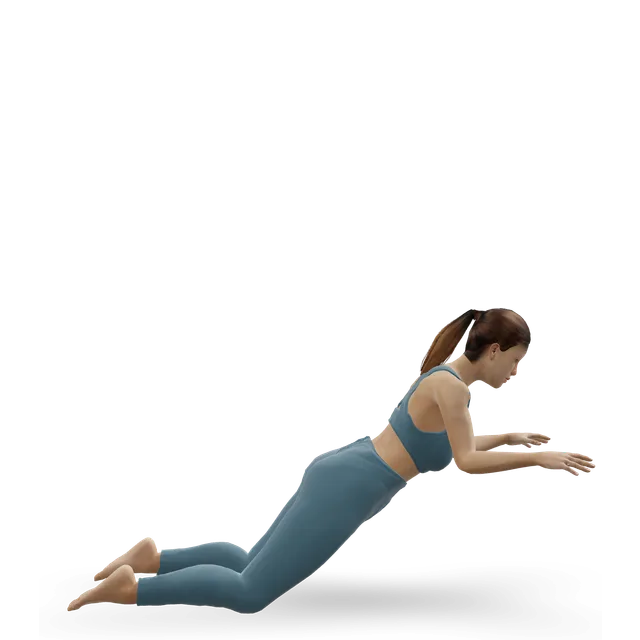
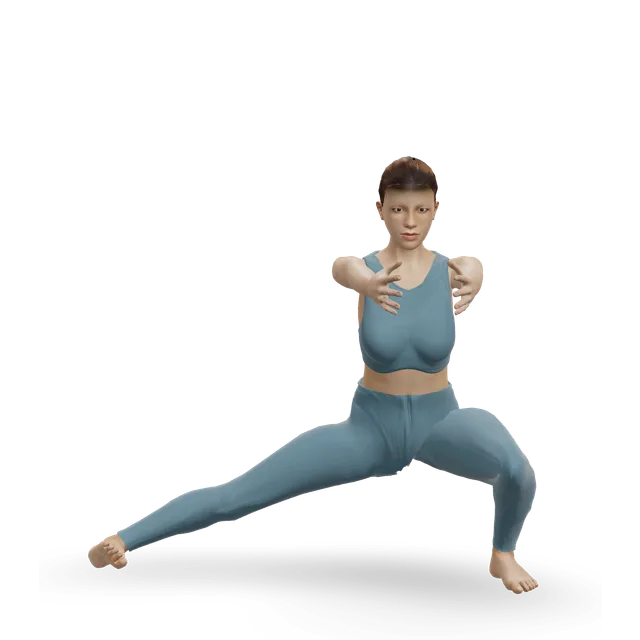
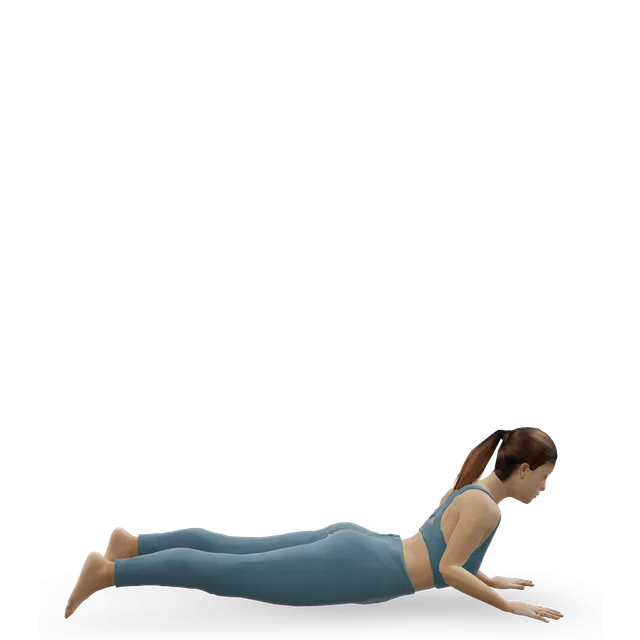
Pain guide · Hip pain

Groin pain in women: the hip, inner thigh strains, hernias, the pubic bone, gynae and urinary causes

Groin pain in women usually comes from the hip joint or the muscles and tendons around the hip and pelvis: arthritis from mid-life, a shallow hip socket or impingement in younger women, and strains in sport. Pregnancy adds pelvic girdle pain and round ligament pain, and the pelvic organs and the bladder can be felt in the groin too. Groin hernias are much less common in women than in men, but more of them are femoral hernias, which can be serious, so any lump needs a check.

A few signs need help quickly. Call 999 or go to accident and emergency (A&E) for severe or worsening pain low in your tummy, feeling faint, pain in the tip of your shoulder or heavy bleeding, for a femoral hernia with very bad tummy pain or sickness, and for severe groin pain after a fall. A fever with pain when you pee, or waves of pain from your side, needs a general practitioner (GP) or the National Health Service's 111 line (NHS 111) the same day. This guide sorts the causes by spot, side and age, and gives a three-stage plan with 3D demos.

When to get help first

Exercise is for pain that has been checked or is clearly mild and settling.

Get urgent medical help if

  • Call 999 or go to A&E now if you have a femoral hernia (a small lump at the top of your thigh, in your groin) and very bad tummy pain, you feel sick or you're being sick, you cannot fart or poo, you have a high temperature or you feel hot, cold or shivery, or you've suddenly become confused. Do not drive to A&E. With any other hernia and pain in or around it, a bloated tummy, feeling or being sick, vomiting blood or vomit that looks like coffee grounds, constipation, a high temperature or feeling hot, cold or shivery, or sudden confusion, get help from NHS 111.
  • Call 999 or go to A&E: you have pelvic pain (pain low in your tummy) and it's severe, getting worse or hurts when you move or touch the area, or you feel faint, dizzy or lightheaded or pass out, have pain in the tip of your shoulder, have difficulty breathing, have heavy bleeding from your vagina, or suddenly feel confused. Don't drive yourself.
  • Call 999 or go to A&E immediately: a combination of a sharp, sudden and intense pain in your tummy, feeling very dizzy or fainting, feeling sick, or looking very pale, if there's any chance you could be pregnant. It could be an ectopic pregnancy that has split open (ruptured).
  • Contact your GP or call NHS 111 straight away: you might be pregnant, even without a positive pregnancy test, and you have a combination of tummy pain low down on one side, vaginal bleeding or a brown watery discharge, pain in the tip of your shoulder, or discomfort when peeing or pooing. It can be an ectopic pregnancy.
  • Get help from NHS 111: you have pelvic pain and you find it difficult to pee or poo, there's blood in your pee or poo, you have unusual discharge, fluid or bleeding from your vagina, pain when peeing or need to pee more than usual, a very high temperature or feel hot, cold or shivery, vomiting and diarrhoea or feel sick, or you are or may be pregnant. If you're 20 weeks pregnant or more, contact your midwife or maternity unit.
  • Call 999 or go to A&E if you think you have pelvic inflammatory disease and you have pelvic pain that's severe, getting worse or hurts when you move or touch the area; pelvic pain and heavy bleeding from your vagina; a sharp, sudden and intense pain in your lower tummy; pain under your ribs on the right side and in your right shoulder; you feel dizzy or faint; a very high temperature, or you feel hot, cold or shivery; or you're feeling or being sick, or feeling very unwell. Don't drive yourself.
  • Same day (urgent GP appointment or NHS 111): sudden, severe pelvic pain, or pain in your tummy and you also feel sick or are being sick. It can be a problem with an ovarian cyst.
  • Ask for an urgent GP appointment or get help from NHS 111 if you think you have a urine infection and you have a very high or low temperature, feel hot or cold or are shivering, pain low in your tummy or in your back just under the ribs, or blood in your pee; your symptoms get worse quickly or don't improve within 48 hours; you keep getting them; you're pregnant or 65 or over; or you have diabetes or a weakened immune system. Call 999 or go to A&E if you're confused, drowsy or have difficulty speaking. If you're 16 to 64, not pregnant and have none of these, a pharmacist can help first.
  • Same day (urgent GP appointment or NHS 111): you think you may have a kidney infection (pain in your lower back or side, often with a high temperature, burning or stinging when you pee or needing to pee more often), and you have a very high temperature or feel hot, cold or shivery, a very low temperature (below 36C), pain in the lower tummy or in the back just under the ribs, or blood in your pee, or you're feeling or being sick, haven't had a pee all day or are pregnant. Call 999 or go to A&E if you're confused, drowsy or have difficulty speaking. Don't take ibuprofen for it unless a doctor advises you to.
  • Same day (urgent GP appointment or NHS 111): severe pain that usually starts in the side of your tummy or your lower back, may spread to the area at the top of your inner thigh (groin), your testicles or the area around the opening of your vagina, and may come and go, or this pain with a high temperature or feeling hot, cold or shivery. It can be a kidney stone.
  • Ask for an urgent GP appointment or get help from NHS 111 if you have blood in your pee, or think you may have. It may look bright pink, red or dark brown.
  • Call 999 or go to A&E: severe hip pain after a fall or injury, or you cannot stand, walk or put weight on the leg. In an older adult this can be a broken hip; the leg may be at an odd angle or look shorter. Don't drive yourself.
  • Call 999 or go to A&E: tingling or loss of feeling in the hip or leg after an injury.
  • Ask for an urgent GP appointment or get help from NHS 111 if you have severe hip pain that started suddenly but you've not had a fall or injured your hip, your hip is swollen and feels hot, the skin around your hip has changed colour, or you have hip pain, feel generally unwell and have a high temperature (or feel hot, cold or shivery). A hot, swollen hip with a high temperature can be a joint infection.
  • Groin or pubic pain with a high temperature, or feeling hot, cold, shivery or generally unwell; severe pain that started suddenly; or you can't move the leg or put weight on it: ask for an urgent GP appointment or get help from NHS 111. An infected pubic joint can look like osteitis pubis and needs treating quickly, usually in hospital. It's more likely after pelvic, bladder or incontinence surgery, with a weakened immune system, or if you inject drugs.
  • Same day, and stop running now: groin or front-of-hip pain in a runner, sometimes felt in the thigh or knee, that builds with running, hurts with every step or at night, or hurts when the hip is turned to the end of its range. Keep weight off the leg, using crutches if you have them, and get an urgent GP appointment or help from NHS 111 the same day: a stress fracture of the hip (femoral neck) needs urgent imaging.
  • Same day, and stop the long walks or runs now: groin or front-of-hip pain, sometimes felt in the thigh or knee, that builds with every step, hurts at rest or at night, or came on after much more walking, marching or running than usual, especially if you have thin bones, have had a stress fracture before, or your periods have stopped. Keep weight off the leg, using crutches if you have them, and get an urgent GP appointment or help from NHS 111 the same day: a stress fracture of the hip (femoral neck) needs urgent imaging (our extension of the hip hub's runner line to walkers).
  • Call 999 or go to A&E if you have sciatica on both sides, weakness or numbness in both legs that's severe or getting worse, or numbness around or under your genitals, or around your bottom (anus); if you find it hard to start peeing, cannot pee or cannot control when you pee; or if you do not notice when you need to poo or cannot control when you poo, and this is not normal for you. These could be symptoms of a serious back problem that needs to be treated in hospital as soon as possible.
  • Sudden, severe hip or groin pain, or being unable to put weight on a leg, especially late in pregnancy: get help the same day. A rare thinning of the hip bone in pregnancy (transient osteoporosis) or a fracture needs a scan.
  • Call your maternity unit immediately if you have tummy pain with lower back pain, regular cramping or tightenings, bleeding or spotting, unusual discharge or fluid leaking, pain when you pee or pee that looks cloudy, pink, red or brown, or tummy pain that is severe or doesn't go away after 30 to 60 minutes' rest. If your maternity unit isn't available, call 111.
  • After the birth: severe pain at the pubic bone that started during the birth or in the first days after it, especially if you can't walk or take weight, the pelvis feels as if it's giving way, or you have trouble peeing. Tell your midwife or maternity team the same day: rarely, the joint at the front separates.

See a doctor or physiotherapist if

  • A lump in the groin, upper thigh or tummy, especially one that appears when you cough or strain and goes when you lie down: see a GP, as it may be a true hernia. A femoral hernia (a small lump at the top of the thigh, mainly in women over 50, though it can happen to anyone) needs treating in hospital.
  • Groin pain that comes on when you cough, strain or lift, even with no lump you can feel: see a GP. In women a hernia can be hard to find, and an ultrasound scan may be needed (our suggestion).
  • Tender lumps in the groin that are getting bigger or haven't gone down within a week, feel hard or don't move when you press them, or come with night sweats, a very high temperature or no other sign of infection: see a GP. They may be swollen glands.
  • Hip pain that stops normal activities or disturbs sleep, keeps getting worse or keeps coming back, or has not improved after 2 weeks of looking after it at home.
  • Painful catching or locking deep in the groin, or a hip that gives way: get it assessed.
  • Call your midwife or GP if you have pelvic pain and it's hard for you to move around, it hurts to get out of a car or turn over in bed, or it's painful going up or down stairs.
  • Pain in your lower tummy and back (your pelvic area), severe period pain that stops you doing your normal activities, or pain when you poo or pee or during or after sex: see a GP if you think it could be endometriosis.
  • Pelvic or groin pain that comes and goes or doesn't go away, with bloating, losing weight without trying, feeling full quickly, or constipation or diarrhoea that doesn't go away: see a GP.
  • Pain in one spot on the pubic bone, or low back or buttock pain on one side, brought on by running in a distance runner, especially if your periods have stopped or become irregular, you've lost weight or you've had a stress fracture before: stop running and see a GP. It can be a stress fracture of the pelvis or the sacrum, and a magnetic resonance imaging (MRI) scan is the usual test.
  • Pain or numbness in the groin that lasts more than 3 months after a hernia repair: see your GP or your surgical team. The NHS lists it as a possible complication.
  • A soft lump in your groin in pregnancy: mention it to your midwife or GP (our suggestion). It is usually a swollen vein that goes after the birth, and rarely a hernia, which an ultrasound scan can tell apart, the international hernia guideline says.

Where does it hurt?

Location narrows the likely causes; it does not diagnose.

A deep groin ache, worse walking and stiff after rest, from about 45

Often hip osteoarthritis: putting on socks and getting out of a car get harder. Our hip arthritis guide covers it.

Read: Hip arthritis →
Deep groin pain with clicking, catching or a feeling the hip may give way, in a younger woman

Possibly a shallow hip socket (dysplasia), more common in women who have symptoms, often with very flexible joints. Our hip dysplasia guide covers it.

Read: Hip dysplasia →
A pinch deep in the groin when you bend deeply or sit low

Possibly hip impingement. Our hip impingement guide covers it.

Read: Hip impingement (FAI) →
Deep groin pain with catching or locking

Possibly a labral tear in the hip. Our hip labral tear guide covers it.

Read: Hip labral tear →
The front of the hip when you lift your knee, run or kick

Often the hip flexors, which mattered more than the inner thigh in small series of active women. Our hip flexor pain guide covers it.

Read: Hip flexor pain →
The inner thigh close to the groin, worse squeezing your knees together, kicking or changing direction

Usually an inner thigh (adductor) strain. Our groin strain guide covers it.

Read: Groin strain →
Right on the pubic bone at the front, in a sport with kicking or turning

Possibly pubic-related pain (osteitis pubis). Our osteitis pubis guide covers it.

Read: Osteitis pubis →
Just above the groin crease, worse sprinting, with sit-ups, coughing or sneezing, with no lump

Often called a sports hernia, which isn't a true hernia, but in women a hidden hernia can feel like this, so see a GP if it doesn't settle.

Read: Sports hernia →
A lump above the crease that gets bigger when you cough or strain and smaller when you lie down

Possibly an inguinal hernia, the commonest groin hernia in women too: see a GP, or get help from NHS 111 if it's painful, as the warning signs say.

A small, grape-sized lump at the top of the thigh, in the groin crease

Possibly a femoral hernia, mainly in women over 50, which needs treating in hospital: see a GP, and call 999 with very bad tummy pain, sickness or not being able to fart or poo.

In pregnancy or after the birth: the pubic bone, the groin or the back of the pelvis, worse walking, on stairs or turning in bed

Usually pelvic girdle pain, which affects up to 1 in 5 pregnant women and isn't harmful to the baby. Our pelvic girdle pain guide covers it.

Read: Pelvic girdle pain (SPD) →
A sharp stab low in the tummy or groin on standing up, rolling over, coughing or sneezing, in pregnancy

Often round ligament pain, common from the second trimester and not dangerous. Our hip pain in pregnancy guide covers the groin in pregnancy.

Read: Hip pain in pregnancy →
Pain low in the tummy with periods or sex, or bleeding between periods

Possibly endometriosis, an ovarian cyst or pelvic inflammatory disease: see a GP, and keep a symptom diary to take with you.

Sudden, severe pain low on one side, with sickness, fainting, a missed period or bleeding

Possibly a twisted or burst ovarian cyst or an ectopic pregnancy: get help urgently, as the warning signs say.

Burning when you pee, peeing often, or cloudy or bloody pee

Possibly a urine infection. A pharmacist can help first if you're 16 to 64 and not pregnant; a high temperature or pain in your back under the ribs needs a GP or NHS 111 the same day.

Severe waves of pain from the side or lower back into the groin or vagina

Possibly a kidney stone: get help the same day, as the warning signs say. Our lower back pain on one side guide covers the kidneys.

Read: Lower back pain on one side →
Groin pain that builds with every run or walk, then hurts at rest or at night

Possibly a stress fracture of the hip, more likely with missed periods or low energy intake: stop and get it checked the same day. Our stress fracture guide covers it.

Read: Stress fracture →
Tender lumps in the groin crease

Usually swollen glands from an infection, which settle in 1 to 2 weeks. Hard, growing or fixed lumps need a GP.

Burning or numbness near a bikini-line scar after a caesarean or hernia repair

Possibly an irritated nerve: see your GP or surgical team.

Groin pain with back pain, or pins and needles down the leg

The lower back can be felt in the groin. Our lower back and hip pain guide sorts it out.

Read: Lower back and hip pain →
Groin pain when you walk, or when you run

Our groin pain when walking and groin pain when running guides go further.

Read: Groin pain when walking →
Inner thigh pain further down from the groin

Our inner thigh pain guide sorts the causes.

Read: Inner thigh pain →

Understand it

No count for the general population; sorted by spot and patternStrong evidence

How often groin pain happens in the general population isn't known: "The incidences of groin injury and pain are unknown for the general population", a 2025 review says; in athletes, 2% to 20% depending on the sport. The NHS says pelvic pain is more common in women, often from period pain, an ovarian cyst, endometriosis or pregnancy, and also from constipation and urine infections.

For sport, an international consensus (the Doha agreement) sorts groin pain into inner thigh (adductor), hip flexor (iliopsoas), lower tummy wall (inguinal) and pubic bone patterns, says the hip joint "should always be considered", and lists urinary, gynaecological, hernia, nerve and bone causes that mustn't be missed. Most of the athletes behind it were men (our reading).

Sources 1, 2, 3

The hip jointMixed evidence

From about 45, groin pain that is worse walking, with stiffness that eases within half an hour, is often hip osteoarthritis, which NICE diagnoses without a scan. New cases of hip osteoarthritis are more common in women (men's rate was about two-thirds of women's in a meta-analysis), though how many people have it at any one time didn't clearly differ. Hip joint pain is often shown with a cupped hand above the side of the hip, and can make rising from a chair, stairs, getting in and out of a car, putting on socks and sometimes sex painful.

In younger women, a shallow socket (dysplasia) can first cause groin pain in adulthood, with clicking. On X-rays of 3,859 Danish adults it was about as common in men as women, but women were 72% of 57 people treated for it in one US series, after an average of 5 years with symptoms. A cam-shaped hip, linked with impingement, showed on scans in 24.7% of men without symptoms against 5.4% of women, so a scan finding has to fit the examination.

Sources 4, 5, 6, 7, 8, 9, 10, 11

Strains in sport: women get them tooMixed evidence

In football, men had about 2.4 times women's rate of groin injuries that stopped them playing (34 studies), but across 9 studies of 3,133 team-sport athletes, the odds of a hip or groin injury didn't clearly differ by sex. In one Dutch study, 40% of 434 female amateur footballers had a hip or groin injury in the previous season, mostly without missing play, and 49.3% of 337 female Gaelic games players had hip or groin pain in a year.

The cause may differ. In two small clinic series of active women (48 women in all), the hip flexors, the hip joint and the area above the groin crease mattered more than the inner thigh: in 11 women among 207 athletes, 7 were runners, 6 of them with hip flexor pain as the main source, and only 1 had inner thigh pain, and in 37 athletic women with long-standing pain, inner thigh tendon problems were 2.7%. That rests on very few women.

Sources 12, 13, 14, 15, 16, 17, 18

Hernias: less common in women, but more often femoralStrong evidence

About 3% to 6% of women have a groin hernia in their lifetime, against 27% to 43% of men, the international hernia guideline says, but femoral hernias are about 4 times more common in women than in men. Inguinal hernias are still the commonest type in women: at one UK centre, about 1 in 5 women's groin hernias were femoral and the rest inguinal. Having more babies raised the chance of both in a large Swedish study.

A femoral hernia is "a small lump at the top of your thigh, in your groin ... about the size of a grape", mainly in women over 50, though "They can happen to anyone", the NHS says, and "Surgery is recommended". They are more often found as emergencies: about 17% of women's groin hernia repairs were emergencies against 5% of men's, and 40.6% of women's femoral repairs in Sweden. That is why the guideline advises timely repair for women rather than waiting.

Sources 19, 20, 21, 22, 23, 24, 25

Hernias in women can hideEmerging evidence

"In female patients, the existence of a femoral hernia should be excluded in all cases of a hernia in the groin. No clinical or diagnostic test can reliably distinguish inguinal from femoral hernias in women", the international guideline says, and groin pain without a bulge can occasionally be a hernia.

In 87 women with groin pain and a normal examination, an ultrasound found hernias in 35, and at one US hernia centre, hidden hernias were more often in women. These are specialist-centre series, so they may overstate how often this happens.

Sources 19, 26, 27

Pregnancy and after the birthStrong evidence

Pelvic girdle pain affects up to 1 in 5 pregnant women to some degree: pain over the pubic bone, across the low back, between the vagina and anus, or into the thighs, worse walking, on stairs, standing on one leg, turning in bed and moving your legs apart. "PGP is not harmful to your baby", and most women with it can have a vaginal birth, the NHS says.

Round ligament pain is "very common and is not dangerous", usually from the second trimester: a sharp or stabbing pain low in the tummy or groin, often on the right, set off by sudden movement, coughing or sneezing (an NHS trust leaflet). A soft groin lump in pregnancy is usually a swollen vein that goes after the birth; hernias in pregnancy are rare. Rarely, the pubic joint separates during the birth, with severe pain at the front of the pelvis and trouble walking; most cases settle with care and support.

Sources 28, 29, 30, 19, 31

The pelvic organs and the bladderStrong evidence

Ovarian cysts "are very common and do not usually cause any symptoms", and most go away in a few months; they hurt if one bursts, is very large or twists. Endometriosis affects about 1 in 10 women of reproductive age (Endometriosis UK) and causes severe period pain, pelvic pain, pain during or after sex and pain pooing or peeing; NICE says don't rule it out on a normal examination or ultrasound, and the charity reports an average of 9 years and 4 months from first GP visit to diagnosis in the UK. Pelvic inflammatory disease is an infection that is easily treated with antibiotics if found early. About 1 in 90 UK pregnancies is ectopic, usually with symptoms between 4 and 12 weeks.

Almost half of women have a urine infection at some point. Kidney stone pain "usually starts in the side of your tummy (abdomen) or lower back" and may spread to the groin or the area around the opening of the vagina, coming and going; about 7 in 100 US women have had a stone. Pain tied to periods, sex, bleeding, discharge, peeing or a fever points away from the muscles, and a muscle or joint problem is usually tender to press and hurts with particular movements (our reading of these sources).

Sources 32, 33, 34, 35, 36, 37, 38, 39, 40, 41, 42

Other causesEmerging evidence

A stress fracture of the neck of the thighbone causes groin pain that builds with activity and eases with rest at first; it is a larger share of stress fractures in female athletes, linked with low energy intake, missed periods and low bone density, and needs an X-ray, then often an MRI. In 259 active girls and women, bone stress injuries rose with these risk factors.

Swollen glands in the groin usually settle within 1 to 2 weeks. A third of 690 women had some pain at a bikini-line scar 2 years after a caesarean or hysterectomy, moderate or severe in 7%, often from a trapped nerve; groin pain lasting over 3 months is a possible complication of hernia repair. And a back problem can be felt in the groin "even though you don't feel pain in your back", NHS inform says.

Sources 43, 44, 45, 46, 47, 48

Where to get help, and how fastStrong evidence

The NHS sorts these by urgency. Pelvic pain that is severe or getting worse, with feeling faint, shoulder tip pain or heavy bleeding, a femoral hernia with very bad tummy pain or sickness, and severe hip or groin pain after a fall, or not being able to put weight on the leg, are 999 calls. A painful hernia of any other kind, pelvic pain when you are or may be pregnant, blood in your pee, or a urine infection with a high temperature or back pain needs NHS 111 or an urgent GP appointment.

A groin lump, pain that keeps coming back, or hip pain that hasn't improved after 2 weeks of looking after it needs a GP. These serious causes are uncommon; the warning signs list them in full.

Sources 2, 22, 23, 49, 50, 51, 39

When a scan or test helpsStrong evidence

Hip osteoarthritis from 45 with the usual pattern needs no scan; dysplasia and impingement are confirmed on X-rays, with MRI when needed; a suspected stress fracture needs an X-ray, then an MRI. For hernias, the international guideline advises ultrasound for groin pain with no clear lump when the diagnosis is unclear, then a moving MRI or CT scan if that doesn't answer it.

A pregnancy test comes first for any pain low in the tummy if you could be pregnant, then an ultrasound. Ovarian cysts show on an ultrasound with a probe in the vagina; endometriosis may need an ultrasound, MRI or keyhole surgery, and a normal scan doesn't rule it out. A urine test checks for infection, and a CT scan, or an ultrasound in pregnancy, for a kidney stone. In pregnancy, ultrasound or MRI is considered before an X-ray of the pelvis.

Sources 5, 10, 43, 19, 37, 32, 34, 41, 52

How it usually goesEmerging evidence

New hip problems "should begin to settle within 6 weeks", NHS inform says; long-standing inner thigh pain took 8 to 12 weeks of active training in men, and hip-related pain needs at least 3 months of exercise. Ovarian cysts mostly go in a few months, swollen glands in 1 to 2 weeks and a kidney infection in about 2 weeks. Pelvic girdle pain tends not to settle fully until the baby is born. Femoral and painful groin hernias in women need repair rather than waiting, with about 4 to 6 weeks' recovery. No one can promise a timescale.

Sources 48, 53, 54, 32, 45, 55, 28, 19, 22
What helps, and how strong the evidence is

Strengthening, not stretching, for long-standing inner thigh pain (in men)Emerging evidence

No trial has tested treatment for groin pain in women. In 68 male athletes with long-standing inner thigh pain, 8 to 12 weeks of active training for the muscles around the pelvis, 3 times a week, got 23 back to sport without groin pain against 4 after passive physiotherapy. It started with ball squeezes (10 holds of 30 seconds) and allowed "No stretching of the adductors". The Doha consensus rates the evidence for active training as moderate, all of it in men.

Sources 53, 17, 3

The Copenhagen exercise builds strength; prevention is uncertainMixed evidence

In 652 male semi-professional footballers, a programme built on one exercise, the Copenhagen adduction, 3 times a week in pre-season and once a week in the season, cut groin problems from 21.3% to 13.5%. But across 15 studies the exercise built strength without clearly preventing groin injuries (very low certainty), and only one study was all women. So it suits women as strength work, without a promise that it prevents injury.

Sources 56, 57

Exercise for the hip joint, and surgery for selected impingementEmerging evidence

For hip-related pain in active adults, an international consensus recommends exercise for at least 3 months. For hip osteoarthritis, NICE makes exercise the core treatment and warns that "joint pain may increase when they start therapeutic exercise", but keeping going pays off.

For impingement, two UK trials in hospital-referred people (about 39% and 66% women) found both physiotherapy and keyhole surgery improved hip scores, surgery by a little more (6.8 and 10 points on 100-point scales). Neither reported results for women separately.

Sources 54, 5, 58, 59

Hernias in women: repair in good timeStrong evidence

"The higher incidence of femoral hernias in women and the associated strangulation risk argues strongly against a watchful waiting strategy in women with groin hernias", the international guideline says, and it advises keyhole repair with mesh covering both the inguinal and femoral openings. The NHS recommends surgery for a femoral hernia. The British Hernia Society says hernias "are usually not harmful", but surgery is the only way to repair one.

Sources 19, 22, 25, 60

Pelvic girdle pain and round ligament pain: advice and physiotherapyEmerging evidence

For pelvic girdle pain, the NHS advises staying active while avoiding what makes it worse, and physiotherapy that "may include: exercises to strengthen your pelvic floor, stomach, back and hip muscles", with crutches or a support belt if needed. For round ligament pain, an NHS trust leaflet suggests changing position slowly, supporting your bump when you cough or sneeze, resting on your side with a pillow between your knees, and a warm bath. None of these steps has been tested in a trial.

Sources 28, 29

Urine infections: a pharmacist first, unless there are warning signsStrong evidence

If you're a woman aged 16 to 64 and not pregnant, the NHS says see a pharmacist first. A very high or low temperature, pain in your back under the ribs, blood in your pee, pregnancy, or symptoms that get worse quickly or don't improve within 48 hours need an urgent GP appointment or NHS 111. Cranberry products may help prevent infections, but "there's no evidence they help ease symptoms or treat a UTI", and with a possible kidney infection, don't take ibuprofen unless a doctor advises it.

Sources 39, 55

How much pain is OK while you exercise?

3 out of 10 or less at first, then up to about 5, settling within an hour; bone pain must be pain-freeEmerging evidence

Borrowed from our groin pain guide (the hip hub's rule): during an exercise, pain up to about 5 out of 10 is acceptable if it settles within an hour or so and you're no worse that night or the next morning; if you are, do less next time, not nothing. In the first stage, keep pain at 3 out of 10 or less, as our groin strain guide does. NICE says joint pain may rise when you start exercising and that keeping going pays off. The active training trial allowed cycling, and later jogging, only if they were pain-free.

Possible bone pain must be pain-free during, after and the day after loading, and groin pain that builds with each run means stop and get checked. With pelvic girdle pain in pregnancy, follow our pelvic girdle pain guide's rule instead. Pain with periods, sex, peeing or a fever, a lump, bleeding, or pain when you could be pregnant are never pain-rule questions: see the warning signs. No study has tested a pain rule for groin pain in women.

Sources 5, 17, 43

The exercise plan: 3 stages

Start at the first stage. Each move opens a full guide with a 3D demo.

Stage 1

Settle: squeeze, support and keep moving

About the first 2 weeks: holds daily and walking most days. Drop kicking, sprinting, sudden turns, sit-ups and wide, deep squats while they hurt, and keep pain at 3 out of 10 or less. This plan is for the muscles, tendons, pubic bone and hip with no warning signs; in pregnancy, our pelvic girdle pain guide's plan replaces it, and with a hernia, a hip diagnosis or after surgery, that guide's or your team's plan comes first. No trial has tested this plan in women.

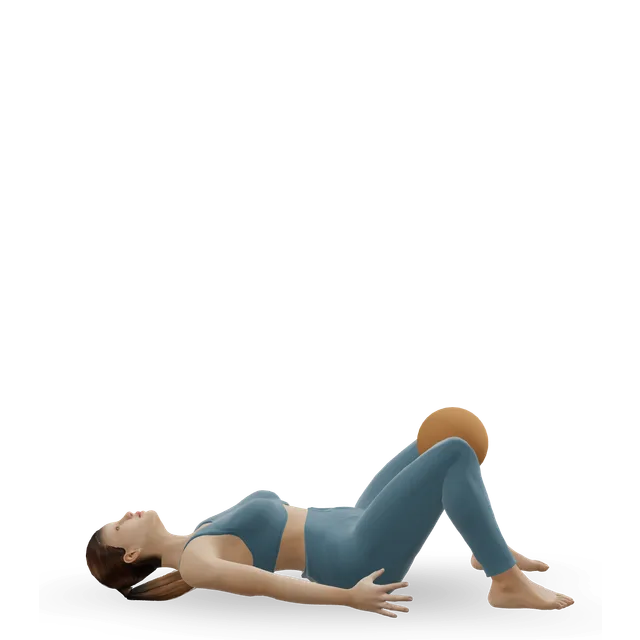
Lying adductor ball squeeze demonstrated on the 3D figure3D demoLying adductor ball squeezeBeginner · Other / check instructions

5 to 10 holds of 5 to 10 s, only as hard as you can without bringing on the pain · Editorial, as in our groin strain and groin pain guides; the active training trial in men began with 10 holds of 30 s. In pregnancy, after the first trimester, keep time on your back short, as the move page says

Harder: Copenhagen plank

Glute bridge demonstrated on the 3D figure3D demoGlute bridgeBeginner · No equipment

2 sets of 10 · Editorial, as in our groin strain guide

Easier: Pelvic tilt into bridge · Harder: Single-leg glute bridge

Knee side plank demonstrated on the 3D figure3D demoKnee side plankBeginner · No equipment

3 holds of 15 to 20 s each side · Editorial, as in our groin strain guide

Harder: Side plank

Dead bug heel taps demonstrated on the 3D figure3D demoDead bug heel tapsBeginner · No equipment

2 sets of 6 to 8 each side · Editorial, as in our groin pain guide: trunk control without curling up

Easier: Bent-knee fall-out · Harder: Forearm plank

Stationary cycling demonstrated on the 3D figure3D demoStationary cyclingBeginner · Cardio machine

20 to 30 minutes, easy, if it's pain-free · Editorial, as in our groin pain guide; the active training trial allowed pain-free cycling. Not with possible bone pain

Easier: Recumbent exercise bike · Harder: Air bike intervals

Treadmill walking demonstrated on the 3D figure3D demoTreadmill walkingBeginner · Cardio machine

Short walks, little and often, building within the pain rule · Editorial, as in our inner thigh pain guide; walking outdoors counts the same

Harder: Treadmill jogging

Move on when: A firm squeeze is pain-free and walking and stairs are comfortable; with pain above the groin crease, coughing, sneezing and sitting up in bed no longer hurt (our groin pain guide's checks).

Follow along: a timer, a cue and the next move, one step at a time.
Stage 2

Build: inner thigh, outer hip, trunk and pelvic floor

About weeks 2 to 6: strength 3 times a week, with walking or cycling on other days. Strength for the muscles around the pelvis, the focus of the active training trial, with the pelvic floor added, as our women's exercise page does for leaking with running and jumping.

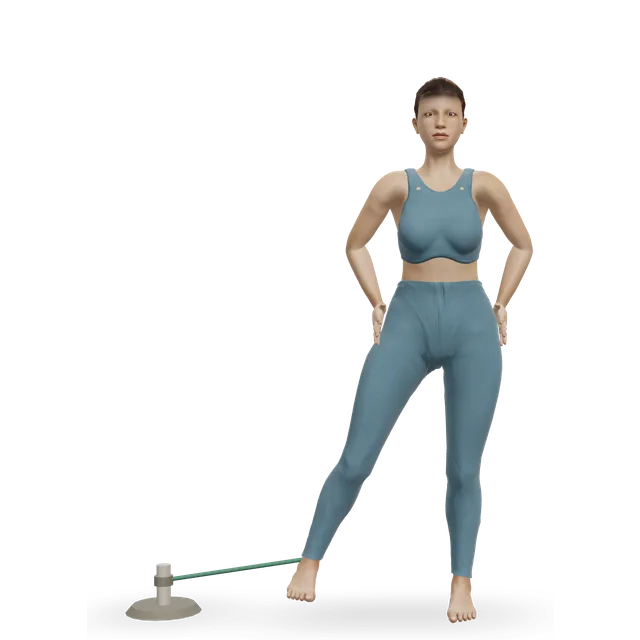
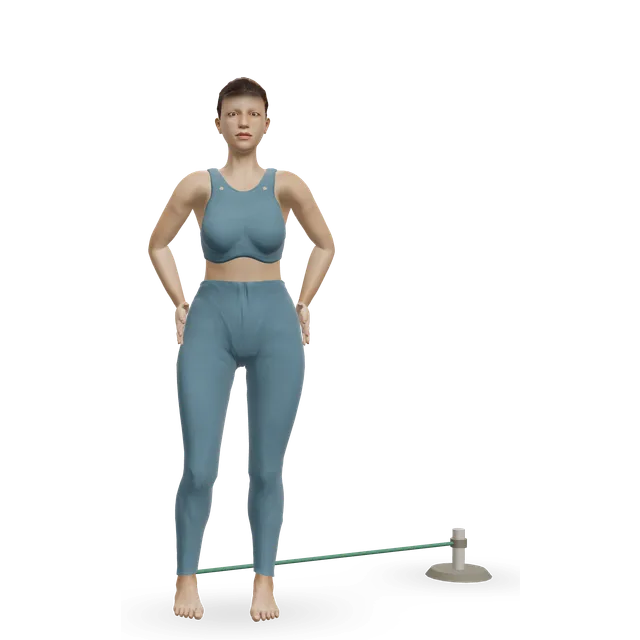
Standing band hip adduction demonstrated on the 3D figure3D demoStanding band hip adductionBeginner · A band + An anchor point

3 sets of 10 to 12 each side · Editorial, as in our groin strain and groin pain guides; standing adduction against a load was in the active training trial

Easier: Lying adductor ball squeeze · Harder: Copenhagen plank

Standing band hip abduction demonstrated on the 3D figure3D demoStanding band hip abductionBeginner · A band + An anchor point

3 sets of 10 to 12 each side · Editorial, as in our groin strain guide: a standing band hip abduction, for balance

Easier: Hip abduction machine · Harder: Lateral band walk, band at the feet

Sit to stand from a chair demonstrated on the 3D figure3D demoSit to stand from a chairBeginner · A bench or box

2 to 3 at a time, building to sets of 8, 2 to 3 times a day, up to 2 sets of 15 · NHS inform's sit-to-stand pacing, as our groin pain guide uses it

Easier: Sit to stand, pushing on the thighs · Harder: Bodyweight squat

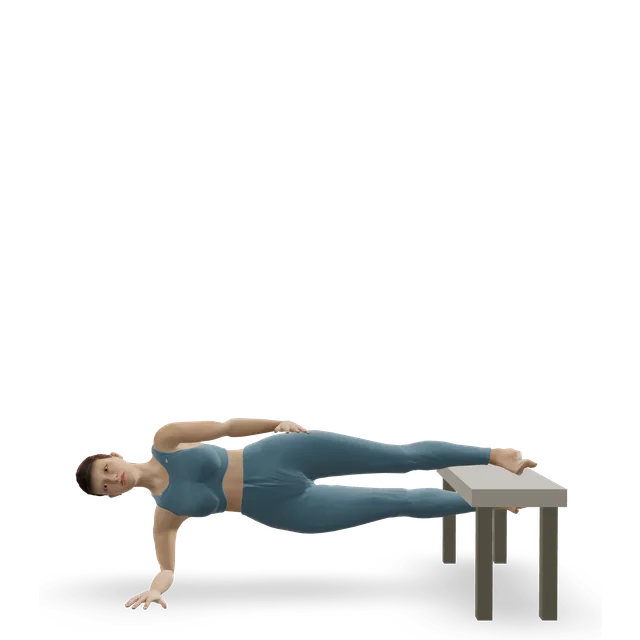
Side plank demonstrated on the 3D figure3D demoSide plankIntermediate · No equipment

3 holds of 20 to 30 s each side · Editorial, as in our groin pain guide

Easier: Knee side plank · Harder: Side plank with leg lift

Dead bug demonstrated on the 3D figure3D demoDead bugBeginner · No equipment

3 sets of 8 each side · Editorial, as in our sports hernia guide

Easier: Dead bug heel taps · Harder: Forearm plank

Pelvic floor exercise (Kegel) demonstrated on the 3D figure3D demoPelvic floor exercise (Kegel)Beginner · No equipment

8 slow holds of up to 10 s and 8 quick squeezes, 3 times a day, building towards 10 of each · The move page's dose. Not with pelvic pain, pain with sex or trouble emptying your bladder: the muscles may need to relax instead, as the move page says

Move on when: Side-to-side moves and squeezing your knees together are pain-free, a resisted sit-up no longer hurts if your pain was above the crease, and 30 minutes of fast walking is pain-free (our groin pain guide's checks).

Follow along: a timer, a cue and the next move, one step at a time.
Stage 3

Copenhagen, then running, turning and your sport

From about week 6: strength 2 or 3 times a week, the Copenhagen plank 3 times a week then weekly, and running through walk-jog weeks, with speed, turning and kicking last. With hip-related pain, keep the exercise going for at least 3 months, as the hip consensus advises. Walking, stairs, the car and your sport come back by the written steps below.

Copenhagen plank demonstrated on the 3D figure3D demoCopenhagen plankAdvanced · A bench or box

Short lever (the top knee on the bench) first: 1 set of 3 to 15 each side, starting with 3 to 5 slow reps and building over the weeks; 3 times a week, then once a week · Editorial, as in our groin pain guide, at the football trial's frequency (in men); prevention is uncertain. Avoid it during acute groin pain, as the move page says

Easier: Hip adduction machine

Single-leg Romanian deadlift demonstrated on the 3D figure3D demoSingle-leg Romanian deadliftAdvanced · A dumbbell

3 sets of 8 each leg · Editorial, as in our groin pain guide. Learn it with your fingertips on a wall or rail, as the move page says

Easier: Dumbbell Romanian deadlift

Dumbbell goblet squat demonstrated on the 3D figure3D demoDumbbell goblet squatIntermediate · A dumbbell

3 sets of 8 to 10, to a box or chair at first · Editorial, as in our hip pain guide: hip strength for the long term

Easier: Bodyweight squat · Harder: Barbell front squat

Treadmill jogging demonstrated on the 3D figure3D demoTreadmill joggingIntermediate · Cardio machine

Every other day for 30 minutes: jog 1 and walk 1 minute in week 1, then 2, 4, 9 and 15 minutes' jogging with a minute's walk, and 30 minutes' jogging in week 6 · The NHS sports medicine service's walk-jog programme, as our groin pain guide uses it: up a level after a pain-free week, down a level with pain. After a birth, wait until walking, hopping and jogging on the spot cause no leaking, heaviness or pain, as the move page says

Easier: Treadmill walking · Harder: Sprint intervals

Skipping demonstrated on the 3D figure3D demoSkippingBeginner · No equipment

3 runs of 20 m, then strides · Editorial, as in our groin pain guide. Leave it out with a suspected stress fracture, or if you leak when you land, as the move page says

Easier: Ankle bounces (mini pogo) · Harder: Alternate-leg bounding

Move on when: Our suggestion: running, turning and your sport are pain-free at full effort, on the day and the next morning. Keep the Copenhagen plank weekly through a playing season and two strength days a week; for hip-related pain, keep exercising for at least 3 months.

Follow along: a timer, a cue and the next move, one step at a time.

What to change for now

Sport, walking and daily life (written steps)

Our 3D figure can't show these. Each step names its source or is our suggestion.

  • 1. Keep walking, and cycle if it's pain-free (the active training trial allowed both). Drop kicking, sprinting, sudden turns, sit-ups and deep side lunges while they hurt (our suggestion, as in our groin pain guide).
  • 2. Come back to sport in steps: running first, then speed and turning, then kicking last, each pain-free on the day and the next morning (our suggestion).
  • 3. With pelvic girdle pain in pregnancy: put equal weight on each leg when standing, sit down to get dressed, put a pillow between your legs in bed, keep your knees together getting in and out of the car, and avoid long sitting or standing, unnecessary stairs and heavy lifting (the NHS).
  • 4. With hip joint pain, keep exercising for at least 3 months (the hip consensus), and pace long walks and stairs rather than stopping them (our suggestion).

Sources 17, 28, 54

Round ligament pain in pregnancy (written steps)

These come from an NHS trust physiotherapy leaflet.

  • 1. Change position slowly, and don't rush.
  • 2. Lean forward when you're about to cough or sneeze, and support under your bump with your hands.
  • 3. Rest on your side with a pillow between your knees.
  • 4. A warm bath can help, and paracetamol if you're allowed it; check with your doctor.
  • 5. Mild pain that goes when you change position, rest, do a poo or pass wind is probably nothing to worry about (the NHS); severe pain, bleeding or a fever needs your maternity unit.

Sources 29, 30

Hernias, the bladder and getting checked (written steps)

These come from the NHS, the British Hernia Society and NICE.

  • 1. See a GP about any lump in the groin, and get help from NHS 111 if a hernia becomes painful (the NHS). If a hernia that usually goes back in won't, with more pain, a fever, or no wind or poo, seek medical attention immediately (the British Hernia Society).
  • 2. After a hernia repair: walk from the start, avoid heavy lifting and strenuous activity for 4 to 6 weeks, hold your hand over the wound when you cough or sneeze, and don't bath or swim until the wound has healed (the NHS).
  • 3. With a urine infection: paracetamol up to 4 times a day, rest, and drink enough to pass pale urine regularly; avoid drinks that may irritate your bladder, such as fruit juice, coffee and alcohol; wipe from front to back (the NHS).
  • 4. With a possible kidney infection, don't take ibuprofen unless a doctor advises it (the NHS).
  • 5. If your pain follows your periods or comes with sex, keep a pain and symptom diary to take to your GP (NICE).
  • 6. At an examination, you can ask for a female doctor and for someone else to be in the room, and you can ask them to stop at any time (the NHS).

Sources 23, 60, 47, 39, 55, 34, 36

Positions to swap, and why

Habit or positionWhy it mattersInstead
Hard inner-thigh stretching as the fixThe programme that worked in the trial banned adductor stretching.Ball squeezes and band work.Try: Lying adductor ball squeeze
Deep side lunges and Cossack squats while the inner thigh is soreThe move page says leave it out while a groin strain is painful.Sit-to-stands and the standing band adduction.Try: Standing band hip adduction
Long-lever Copenhagen planks during acute groin painThe move page says avoid it during acute groin pain.The ball squeeze now, and the short lever later.Try: Lying adductor ball squeeze
Running through groin pain that builds with every step or hurts at nightIt can be a stress fracture of the hip.Stop, and get it checked the same day.
Split squats or wide stances with pelvic girdle pain in pregnancyThe NHS says avoid what makes it worse, and the move page says skip it or keep the stance narrow.Sit-to-stands with your feet hip-width apart.Try: Sit to stand from a chair
Extra pelvic floor squeezes with pelvic pain or pain with sexThe move page says the muscles may need to relax instead.Relaxation breathing, with a pelvic health physiotherapist's advice.Try: Pelvic floor relaxation (reverse Kegel)
Waiting to see whether a groin lump goes awayFemoral hernias are more common in women and more often found as emergencies.See a GP, and call 999 for the femoral hernia emergency signs.
Assuming groin pain with coughing or straining is just a strainIn women a hernia can hide without a lump you can feel.See a GP, who may arrange an ultrasound scan.
Ibuprofen with a possible kidney infection, or in pregnancyThe NHS says don't take it unless a doctor advises it.Paracetamol, and the right appointment.
Cranberry juice to treat a urine infectionThe NHS says there's no evidence it treats one.A pharmacist, or the warning signs above.
Putting severe one-sided pain with a missed period down to a strainIt can be an ectopic pregnancy.A pregnancy test, and the warning signs.

Routines to follow

Hamstring and groin injury prevention

The Nordic hamstring and Copenhagen adduction programmes from the football trials: a 10-week build, three adductor levels, then once a week in season.

15 minIntermediate6 movesA wall, An anchor point

Hip mobility routine

A 15-minute hip opener: 90/90 switches, windshield wipers, CARs, Cossack squats, frog and pigeon.

15 minIntermediate8 movesA wall

Glute workout at home

A 25-minute glute workout with bodyweight and a mini band: bridges, clamshells, band walks, kickbacks and lunges.

25 minBeginner9 movesA wall, A band

Daily pelvic floor workout

A 5-minute daily pelvic floor workout for women and men: slow holds and quick squeezes, three times a day, with how to find the right muscles.

5 minBeginner2 movesNo equipment

Pelvic floor relaxation exercises

An 8-minute routine for a tight pelvic floor: slow breathing and comfortable positions to help the muscles let go, with no strengthening squeezes.

8 minBeginner5 movesFirm cushion

Gentle exercises for period pain

A gentle 20-minute routine for period pain: an easy walk, then cat-cow, cobra, supported fish, child's pose, bound angle, a twist and bridges.

20 minBeginner9 movesCardio machine

Gentle exercises for endometriosis: breathe, steady and stretch

A gentle 20-minute routine for endometriosis: slow breathing and letting the pelvic floor go, then trunk and hip control, then stretches for back and hips.

20 minBeginner10 movesFirm cushion

Run-walk intervals for beginners

A 30-minute beginner run-walk session: a brisk walk, then 1-minute jogs with 1-minute walks, building to 3-minute runs over your first three weeks.

30 minBeginner5 movesCardio machine, A wall

More moves for this area

Questions people ask

What causes groin pain in women?

Most often the hip joint or the muscles and tendons around the hip and pelvis. A hernia, pregnancy, the pelvic organs (periods, ovarian cysts, endometriosis) and the bladder or kidneys can be felt there too. Where it hurts and what comes with it are the best clues.

Is groin pain in women serious?

Usually not. Call 999 for severe or worsening pain low in your tummy, feeling faint, pain in the tip of your shoulder or heavy bleeding, for a femoral hernia with very bad tummy pain or sickness, and for severe groin pain after a fall.

Why do I have groin pain on the right side?

The side rarely names the cause: the hip, a strain and a hernia happen on either side. In pregnancy, round ligament pain is often felt on the right. Severe one-sided pain with a missed period needs a pregnancy test and urgent advice.

And on the left side?

The same causes, plus a kidney stone if the pain comes in waves from the side or back. An ovarian cyst or endometriosis can cause pain on either side.

Why does my groin hurt when I walk?

Often the hip joint, especially from about 45, or a strain or the hip flexors in active women; pelvic girdle pain in pregnancy hurts walking and on stairs. Pain that builds with every step, then at rest or at night, can be a stress fracture and needs checking the same day. Our groin pain when walking guide goes further.

Could my groin pain be a hernia?

A lump that gets bigger when you cough or strain and smaller when you lie down, or a grape-sized lump at the top of the thigh, can be. In women a hernia can also cause pain without a lump you can feel. See a GP: femoral hernias need treating in hospital.

I have a lump in my groin. What could it be?

Usually swollen glands from an infection, which settle in 1 to 2 weeks, or a hernia. See a GP for a lump that is growing, hard or fixed, or hasn't gone down within a week, and call 999 for a femoral hernia with very bad tummy pain, sickness or not being able to fart or poo.

Can periods, ovaries or endometriosis cause groin pain?

Yes: period pain, ovarian cysts and endometriosis can be felt low in the tummy and in the groin. Pain tied to your cycle, sex or bleeding points that way. Keep a symptom diary and see a GP.

Can a urine infection cause groin pain?

It can cause pain low in the tummy; a kidney infection causes back or side pain with a fever, and a stone causes waves of pain into the groin. A pharmacist can help with a simple urine infection if you're 16 to 64 and not pregnant. A high temperature, back pain under the ribs or blood in your pee needs a GP or NHS 111 the same day.

Is groin pain normal in pregnancy?

Often it is: pelvic girdle pain affects up to 1 in 5 pregnant women, and round ligament pain is common from the second trimester. Sudden, severe groin pain or not being able to take weight, especially late in pregnancy, needs help the same day. Our hip pain in pregnancy and pelvic girdle pain guides go further.

What exercises help groin pain in women?

Strengthening: ball squeezes and bridges, then band work for the inner and outer hip and side planks, then the Copenhagen plank, from programmes tested in men. For the hip joint, keep exercising for at least 3 months. Hard stretching isn't the answer.

Groin pain in women over 50 or 60: what is it likely to be?

Hip osteoarthritis is the commonest cause, and femoral hernias mainly affect women over 50. Severe hip or groin pain after a fall, or not being able to stand or put weight on the leg, is a 999 call.

Other pain guides

Sources

  1. Maloy 2025 · Groin pain and injuries: evaluation and management (clinical review, American Family Physician)
  2. NHS · Pelvic pain
  3. Weir 2015 · Doha agreement on terms and definitions in groin pain in athletes (consensus, BJSM)
  4. Srikanth 2005 · Sex differences in osteoarthritis (meta-analysis, Osteoarthritis Cartilage)
  5. NICE NG226 · Osteoarthritis in over 16s: diagnosis and management (2022)
  6. NHS · Osteoarthritis (past its review date: reviewed March 2023, review due March 2026)
  7. Byrd 2007 · Evaluation of the hip: history and physical examination (clinical commentary, N Am J Sports Phys Ther)
  8. NHS · Developmental dysplasia of the hip
  9. Jacobsen 2005 · Hip dysplasia on X-rays of 3,859 adults: the Copenhagen City Heart Study (population survey, Acta Orthop)
  10. Nunley 2011 · How hip dysplasia shows up in young adults (case series of 65 hips, J Bone Joint Surg Am)
  11. Hack 2010 · Cam-type hip shape on scans of 200 volunteers without symptoms (cross-sectional study, J Bone Joint Surg Am)
  12. Waldén 2015 · How common groin injuries are in men's and women's football: 34 studies (systematic review, Br J Sports Med)
  13. Bailén-García 2026 · Hip and groin injuries in men and women in team sports: 9 studies, 3,133 athletes (systematic review and meta-analysis, Biol Sport; read as an abstract)
  14. Langhout 2019 · Hip and groin injuries in 434 female amateur footballers in the Netherlands (cohort study, Knee Surg Sports Traumatol Arthrosc; read as an abstract)
  15. Jordan 2024 · Hip and groin pain in 775 male and female Gaelic games players (survey, PLoS One)
  16. Hölmich 2007 · Long-standing groin pain in 207 athletes falls into three main patterns (prospective study, Br J Sports Med)
  17. Hölmich 2015 · Groin injuries in athletes: clinical entities, treatment and prevention, with the methods of the active training trial in men aged 18 to 50 (doctoral thesis summary, Dan Med J)
  18. Bisciotti 2022 · Long-standing groin pain in 37 athletic women (clinic series, J Sports Med Phys Fitness; read as an abstract)
  19. HerniaSurge Group 2018 · International guidelines for groin hernia management (guideline, Hernia)
  20. Kark 2008 · Groin hernias in 255 women at one UK centre (case series, Hernia; read as an abstract)
  21. Matovu 2024 · Groin hernia repairs and the number of births in Swedish women born 1956 to 1983 (cohort study, Hernia; read as an abstract)
  22. NHS · Femoral hernia
  23. NHS · Hernia
  24. Dahlstrand 2009 · Femoral hernia repairs, and how many were emergencies, in the Swedish Hernia Register, 1992 to 2006 (register study, Ann Surg)
  25. Koch 2005 · 6,895 groin hernia repairs in women in the Swedish Hernia Register (register study, Br J Surg; read as an abstract)
  26. Grant 2011 · Ultrasound for hidden hernias in 87 women with groin pain and a normal examination (case series, J Ultrasound Med; read as an abstract)
  27. Wong 2024 · Hidden (occult) inguinal hernias in 485 repairs at one US centre (case series, Surg Endosc; read as an abstract)
  28. NHS · Pelvic pain in pregnancy (past its review date: reviewed December 2022, review due December 2025)
  29. Royal Berkshire NHS Foundation Trust · Round ligament pain in pregnancy (physiotherapy leaflet, reviewed March 2026)
  30. NHS · Stomach pain in pregnancy
  31. Carlson 2026 · Separation of the pubic joint after birth (StatPearls chapter, read as its indexed summary)
  32. NHS · Ovarian cyst (past its review date: reviewed June 2023, review due June 2026)
  33. NHS · Endometriosis
  34. NICE NG73 · Endometriosis: diagnosis and management (last updated November 2024)
  35. Endometriosis UK · Endometriosis facts and figures (no date shown)
  36. NHS · Pelvic inflammatory disease
  37. NHS · Ectopic pregnancy (past its review date: reviewed August 2022, review due August 2025)
  38. Frasca 2023 · Evaluation of acute pelvic pain in women (clinical review, American Family Physician)
  39. NHS · Urinary tract infections (UTIs)
  40. Foxman 2003 · How common urine infections are (review, Dis Mon; read as an abstract)
  41. NHS · Kidney stones
  42. Scales 2012 · How common kidney stones are in the United States (national survey, Eur Urol)
  43. Robertson 2017 · Femoral neck stress fractures in sport (current concepts review, Sports Med Int Open)
  44. Barrack 2014 · Female athlete triad risk factors and bone stress injuries in 259 girls and women (cohort, AJSM)
  45. NHS · Swollen glands (past its review date: reviewed September 2023, review due September 2026)
  46. Loos 2008 · Long-term pain after a bikini-line (Pfannenstiel) incision in 690 women (cohort study, Obstet Gynecol; read as an abstract)
  47. NHS · Inguinal hernia repair
  48. NHS inform · Hip problems
  49. NHS · Hip pain in adults
  50. NHS · Broken hip
  51. NHS · Blood in urine
  52. Health Protection Agency, the Royal College of Radiologists and the College of Radiographers 2009 · Protection of pregnant patients during diagnostic medical exposures to ionising radiation (RCE-9)
  53. Hölmich 1999 · Active training for long-standing adductor-related groin pain in athletes (RCT of 68, Lancet)
  54. Kemp 2020 · Zurich 2018 consensus on physiotherapist-led treatment of hip-related pain (BJSM)
  55. NHS · Kidney infection
  56. Harøy 2019 · The Adductor Strengthening Programme prevents groin problems in male footballers (cluster RCT, BJSM)
  57. Quintana-Cepedal 2025 · The Copenhagen adduction exercise for performance and injury prevention: 15 studies (systematic review and meta-analysis, Scand J Med Sci Sports)
  58. Griffin 2018 · Hip arthroscopy vs best conservative care for FAI syndrome: UK FASHIoN (RCT, Lancet)
  59. Palmer 2019 · Arthroscopic hip surgery vs physiotherapy and activity modification for FAI: FAIT (RCT, BMJ)
  60. British Hernia Society 2025 · Living with a hernia: frequently asked questions for patients

Exercise education, not a diagnosis or treatment plan. It is written from the guidelines and studies listed above; review by a clinician is pending. If your pain follows an injury, is severe, is getting worse, or comes with any warning sign listed on this page, get it assessed. Health disclaimer.