A normal part of ageing
The NHS: "Cervical spondylosis is a normal part of ageing and many people do not have any symptoms." On MRI scans, 87.6% of 1,211 symptom-free volunteers aged 20 to 70 had bulging discs, including most people in their 20s.
Yoga guide
Cervical spondylosis means age-related changes in the discs and joints of the neck, often called neck arthritis. The NHS calls it a normal part of ageing that many people never notice; when it hurts, the pain and stiffness come and go, sometimes with headaches that start at the back of the neck. Gentle exercise and keeping up your usual activities are the first advice, and yoga can deliver both, if it leaves out the poses that load the neck or drop the head back.
The evidence is borrowed: yoga has been tested for long-lasting neck pain in general, where it helped in the short term, but no published randomised trial has tested it in cervical spondylosis itself. The part that matters most for safety is knowing the nerve and spinal cord signs, which need a doctor, not a class.
This guide covers what the diagnosis means, those signs, the poses to start with and to change, what the evidence shows, the classes to follow and the warning signs.
The NHS: "Cervical spondylosis is a normal part of ageing and many people do not have any symptoms." On MRI scans, 87.6% of 1,211 symptom-free volunteers aged 20 to 70 had bulging discs, including most people in their 20s.
The only published yoga study we found is an uncontrolled Indian study of 30 people, with no comparison group. Two Indian randomised trials (117 and 62 people) are registered as completed, but we found no published results; we didn't search the Indian trial registry or Indian databases.
In trials of long-lasting neck pain without a specific cause, yoga eased pain and disability more than usual care in the short term, and about as much as other exercise. Those trials weren't in neck arthritis, so the evidence is borrowed.
A Cochrane review found that neck, shoulder-blade and arm strengthening eases long-lasting neck pain, and that stretching on its own may not. In a small trial in neck arthritis, isometric neck exercises lowered disability more than care without exercise.
A pinched nerve root (pain, tingling or numbness in one arm) usually improves over weeks to months. Pressure on the spinal cord (degenerative cervical myelopathy) shows as clumsy hands, numbness, unsteadiness, falls or bladder changes, mostly over 50, and needs a doctor before any class.
In headstand the head carries up to 40 to 48% of body weight, and headstand is the pose most often named in case reports of yoga harm. Scans show the spinal canal narrowing when the neck bends back, and a man with neck arthritis had spinal cord and artery injuries after a yoga session. That evidence is from scans and case reports, not trials.
The NHS: "Many people over 40 get cervical spondylosis as part of getting older." When it causes symptoms, they are neck and shoulder pain or stiffness that can come and go, and headaches that often start at the back of the neck. A previous neck injury or a family history makes it more likely. Physiotherapists' professional body notes that wear and tear, arthritis and disc degeneration are found in people without neck pain too.
In 1,211 volunteers with no neck symptoms, 87.6% had bulging discs and 5.3% had some pressure on the spinal cord, more often after 50. Across 19 studies, cord compression without symptoms was found in about a quarter of healthy people, more often with age.
The NHS: "It usually takes a few weeks for treatment to work, although the pain and stiffness can come back." NHS inform says most new or flare-up neck problems begin to settle within 8 weeks.
Headstand puts a large share of your body weight through your head. Shoulder stand and plough put weight through a neck bent forward at the end of its range (no study has measured those loads). Poses that drop the head back, such as fish, camel, wheel and a deep upward-facing dog, take the neck to the end of its backward range, where scans show the spinal canal narrowing.
"Cervical spondylitis" is often used, especially in India, to mean spondylosis. Strictly, spondylitis means inflammation, as in ankylosing spondylitis, which has its own yoga guide.
Pressure on the spinal cord from neck arthritis (degenerative cervical myelopathy) shows as neck or limb pain and stiffness, clumsy hands (buttons, handwriting, dropping things), numbness, imbalance, frequent falls or incontinence, mostly in people over 50. Early signs are subtle: in one study the average delay to diagnosis was 2.2 years, and 43% were first diagnosed with carpal tunnel syndrome.
Evidence summarised in the US guideline found only 18% of people with myelopathy reported improvement and 67% got worse over time, and those treated with surgery did better. Arm pain with tingling in one arm is more likely a pinched nerve; both hands, or your balance, is the urgent pattern.
In 205 people with arm pain from a pinched nerve for under a month, arm pain eased over 6 weeks with wait and see, and a collar or physiotherapy speeded the first 6 weeks a little. Across trials, people improved over time whatever the treatment; one review found most recovered fully within 2 to 3 years, with the biggest improvements in the first 4 to 6 months. Exercise eased pain on low-certainty evidence, and in a review, nerve glides eased long-lasting neck and arm pain by about 2 points out of 10.
A spine guideline suggests surgery or a supervised trial of structured rehabilitation for mild myelopathy, and surgery if it gets worse. Neck manipulation should never be used with it, a clinical review says. A neurosurgical consensus warns that someone with severe compression can get suddenly worse after a minor fall, so balances and inversions that risk a fall onto the head are poses to leave out (our reading).
When the neck bends back, the spinal canal narrows, and scans taken in that position can show compression that standard scans miss. Case reports describe reduced blood flow to the back of the brain during head-back poses, and spinal cord and artery injuries after a yoga session in a man with neck arthritis. This comes from scans and case reports, not trials, but it is why this guide leaves those poses out.
No published randomised trial has tested yoga in cervical spondylosis, so this section draws on the neck pain trials, and says where it does.
In an Indian study of 30 people with mild to moderate spondylosis and no nerve signs, six short yoga practices a day for 8 weeks, alongside usual medicines, went with neck disability falling from about 18 to about 7 on a 0 to 50 scale, but there was no comparison group. Two randomised trials in Jaipur, of 117 and 62 people, are registered as completed, with no results posted, and we found no published results.
Across 3 trials (188 people), yoga eased pain and disability more than usual care in the short term; a review of 10 trials (686 people) agreed, but most had only short-term results and none could blind people to their group. In the two main German trials, 9 weekly Iyengar classes eased pain more than self-care or a home exercise manual. A year later, people who kept practising did best, but there was no comparison group by then.
An overview of 25 reviews rated the benefit of yoga against no exercise as low certainty for pain and moderate for disability, in the short term only, with no difference from other exercise. An analysis of 40 trials found no single best type of exercise for long-lasting neck pain.
A Cochrane review of 27 trials found moderate-quality evidence that strengthening the neck, shoulder blades and arms eases long-lasting neck pain, and that stretching on its own may not help. It found no high-quality evidence for any exercise.
Source 9
In 24 people with neck arthritis, 4 weeks of isometric neck exercises lowered disability more than care without exercise. In 60 people, the two groups doing exercise improved more than the group given medicines alone. Both trials were small and short, and neither tested yoga.
A Canadian guideline for neck pain lasting more than 3 months says clinicians may consider education with range of motion and strengthening exercises, qigong or yoga, among other options; its review found supervised Iyengar yoga more effective than home exercise, with small effects. The US physiotherapy guideline recommends mixed exercise for long-lasting neck pain and doesn't put yoga above it.
In 94 trials, yoga was about as safe as usual care and other exercise. In surveys, about 5% of people who practise yoga had a side effect in a year, mostly sprains and strains. In case reports, headstand, shoulder stand and forceful breathing were the practices most often named, and over half the people had a problem beforehand.
NHS inform's neck exercise advice: rate your pain from 0 to 10. During exercise, 0 to 3 is minimal and 4 to 5 is acceptable; 6 or more is too much. If it goes higher, do fewer repetitions, move more slowly or rest longer between movements.
Exercise should not make your neck worse overall. Soreness from a new exercise should ease quickly, and your neck should be no worse the next morning. Stop any exercise that makes your symptoms worse or causes new pain.
Arm symptoms are the exception, as in our neck pain guides. If a pose sends pain, tingling or numbness further down your arm, or the extra symptoms last more than an hour afterwards, make the movement smaller or leave it out.
Stop and get checked for dizziness, double vision, slurred speech, trouble swallowing or any of the warning signs above.
Source 39
If a pose that tips your head back or turns it hard brings on dizziness, blurred vision or a sudden headache, come out slowly and sit down. If it doesn't settle within a few minutes, treat it as one of the urgent signs above, and don't repeat that pose (our suggestion, from case reports).
Tell the teacher about your neck, any arm or hand symptoms and any past neck injury or operation, and that you'll skip the poses below (our suggestion).
You can say no to any hands-on adjustment, and a teacher registered with Yoga Alliance must get your explicit consent each time.
Move slowly, within comfort, one direction at a time rather than full circles. Corpse pose and slow breathing: 2 minutes each, a folded towel under your head (our yoga for neck pain class). Neck movements: 2 to 3 reps each way, several times a day, building to about 10, as small arcs stopping short of the stiff point (our neck arthritis guide, from NHS inform's advice). Chin tucks: 10 holds of 5 seconds, twice a day; lying chin tucks: 5 to 10 gentle holds (our neck arthritis guide). Side neck stretch, the move page's dose: Hold 5 to 10 seconds, 2 to 4 times each side (ACE's lateral neck flexion). Upper trap release: 2 slow holds of 30 seconds per side (the move page's dose).
 3D demoCorpse pose (Savasana)Beginner · No equipment
 3D demoSlow breathing (6 breaths a minute)Beginner · No equipment
 3D demoNeck CARs (controlled articular rotations)Beginner · No equipment
 3D demoChin tuckBeginner · No equipment
 3D demoLying chin tuckBeginner · No equipment
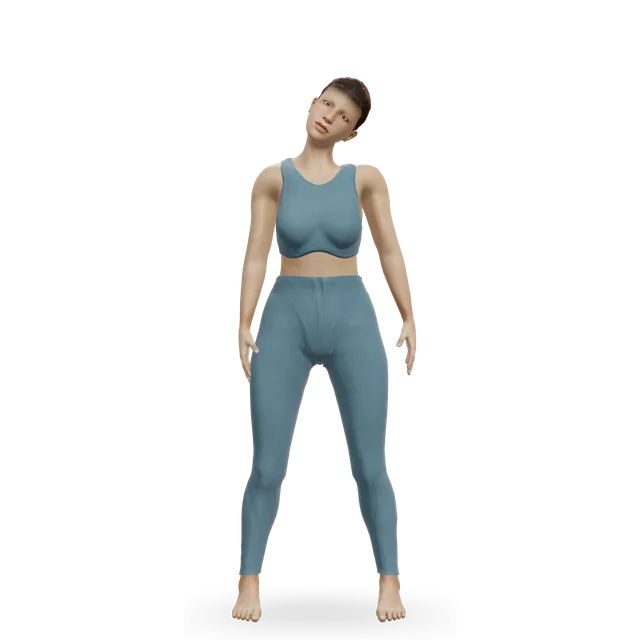 3D demoSide neck stretchBeginner · No equipment
 3D demoUpper trap releaseBeginner · No equipment
Shoulder rolls: 10 each way (our neck arthritis guide). Breath reach: 5 breaths, exhale longer than inhale (the move page's dose). Thoracic rotation: 6 rotations per side, moving with the breath (the move page's dose). Side-lying open book: 8 each side, a cushion under your head (our neck arthritis guide). Thread the needle: 30 seconds each side, head resting on a folded towel (our yoga for neck pain class). Cat-cow: 8 waves, slower than feels natural (the move page's dose), head in line with your spine. Child's pose: 1 minute, forehead on a block or stacked fists (our yoga for neck pain class).
 3D demoShoulder rollsBeginner · No equipment
 3D demoBreath reachBeginner · No equipment
 3D demoThoracic rotationBeginner · No equipment
 3D demoSide-lying open bookBeginner · No equipment
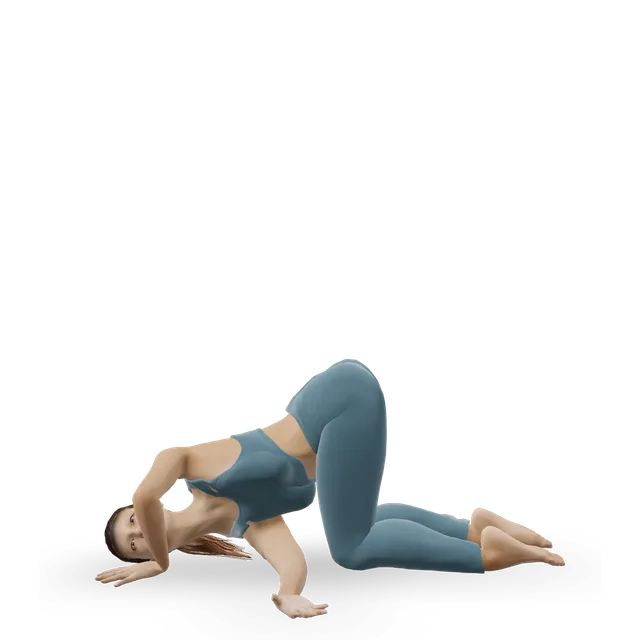 3D demoThread the needle (Parivrtta Balasana)Beginner · No equipment
 3D demoCat-cowBeginner · No equipment
 3D demoChild's Pose (Balasana)Beginner · No equipment
Two or three days a week, with the doses in our neck arthritis guide: isometric neck holds 3 to 5 holds of 5 to 10 seconds each direction, light effort; chin tuck with head lift 3 to 5 holds of 5 seconds; band row 2 to 3 sets of 10 to 15; face-down Y-T-W raises 5 of each shape, 2 rounds; wall angels 8 slow slides. Seated upper-back lift: 3 holds of 5 seconds (our seated chair yoga class). Locust: 3 holds of 3 breaths, eyes on the floor so the back of your neck stays long (our yoga for neck pain class).
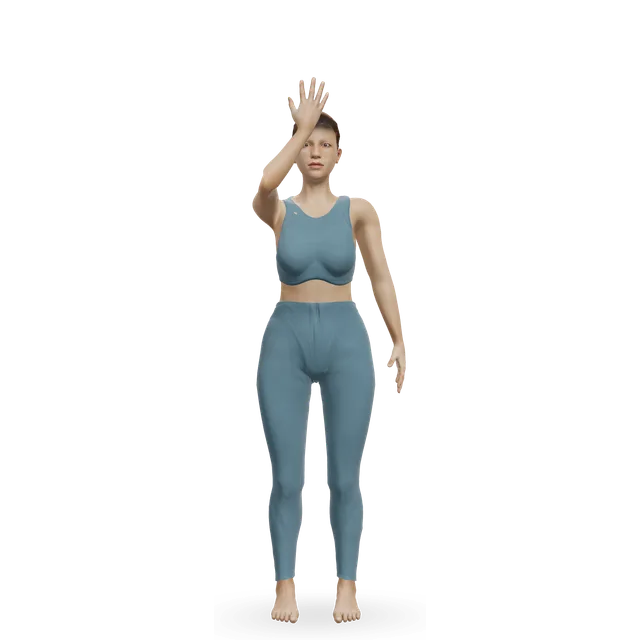 3D demoIsometric neck holds (four-way)Beginner · No equipment
 3D demoChin tuck with head liftIntermediate · No equipment
 3D demoBand rowBeginner · A band + An anchor point
 3D demoProne Y-T-W raisesBeginner · No equipment
 3D demoWall angelBeginner · A wall
 3D demoSeated upper-back lift (sit tall, shoulders back)Beginner · A bench or box
 3D demoLocust pose (Salabhasana)Beginner · No equipment
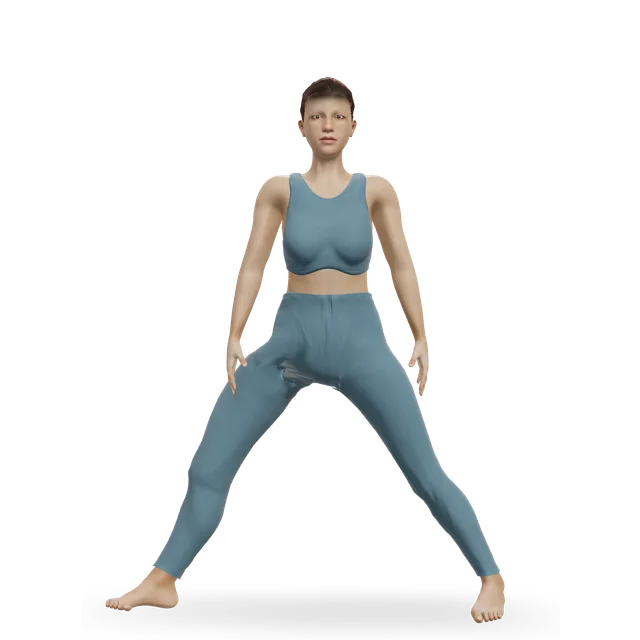
From our yoga for neck pain class: mountain pose 5 slow breaths, chin level; warrior II 3 breaths each side, looking ahead, arms lower if your neck complains; triangle 3 breaths each side, looking down or ahead, not up. Keep a wall or chair near for balance poses (our suggestion).
Only with pins and needles or pain down an arm, and not in the first, most painful days: 10 slow reps, 2 to 3 times a day, any extra tingling fading within an hour (our pinched nerve guide). In a review, nerve glides eased long-lasting neck and arm pain a little.
Leave out headstand, shoulder stand and plough, which put weight through your neck, and poses that drop your head back, such as fish, camel, wheel, bow and a deep upward-facing dog. The fish's own page says to skip it with cervical spondylosis. This rests on load measurements, scans and case reports, not trials.
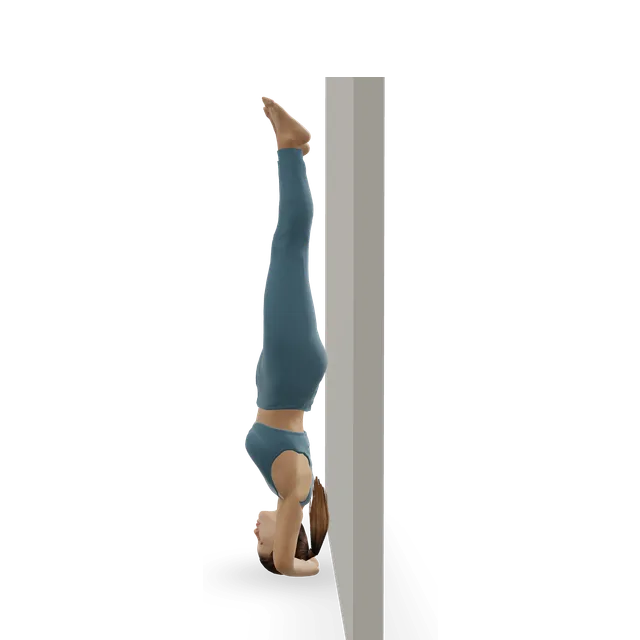 3D demoSupported headstand (Salamba Sirsasana)Expert · A wall
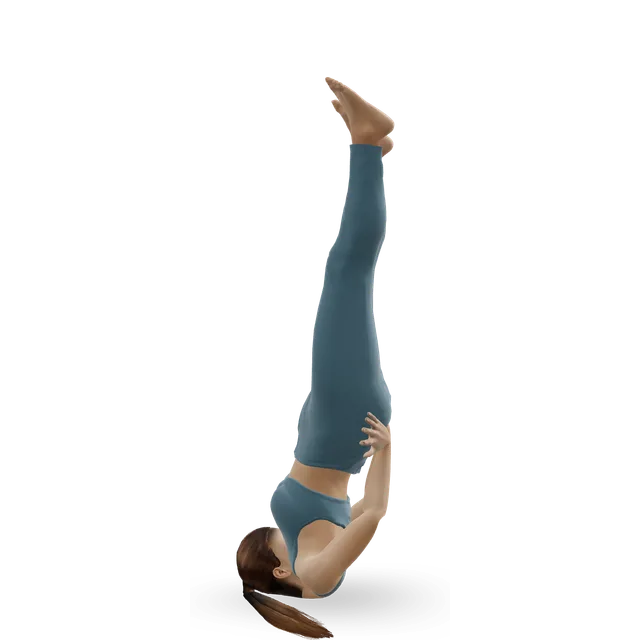 3D demoSupported shoulderstand (Salamba Sarvangasana)Advanced · No equipment
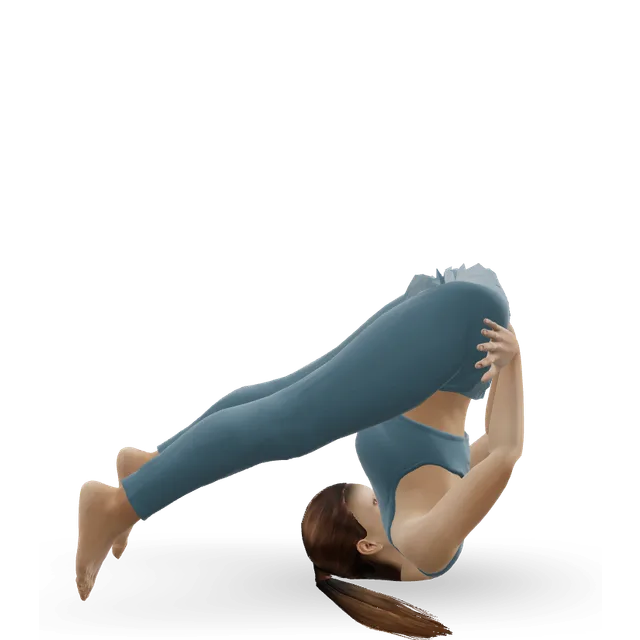 3D demoPlow pose (Halasana)Advanced · No equipment
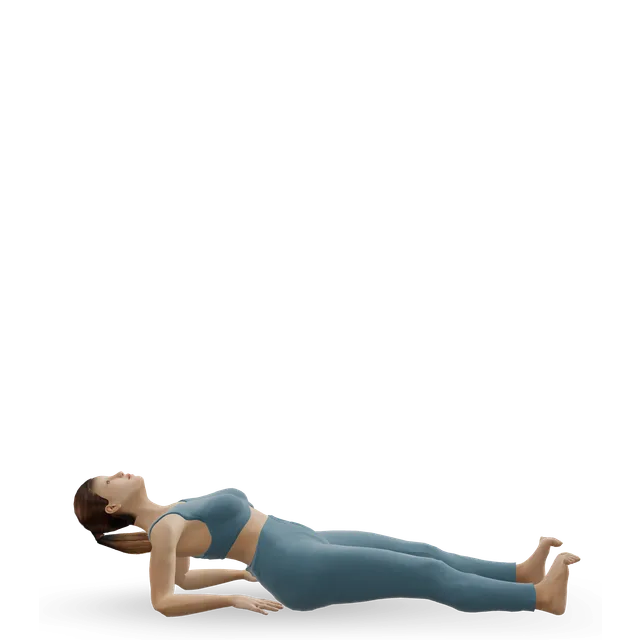 3D demoFish pose (Matsyasana)Intermediate · No equipment
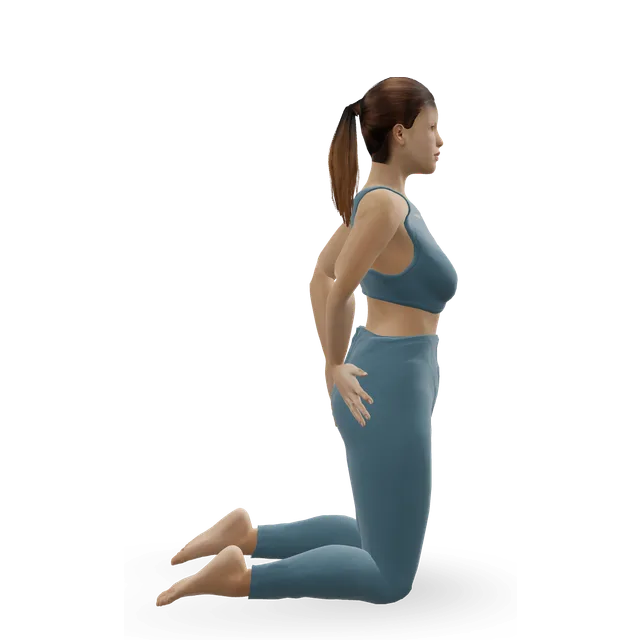 3D demoCamel pose (Ustrasana)Intermediate · No equipment
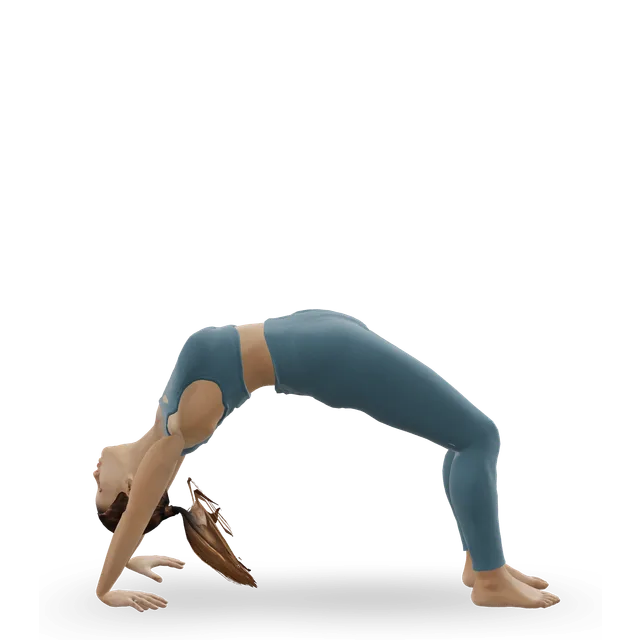 3D demoWheel pose (Urdhva Dhanurasana)Advanced · No equipment
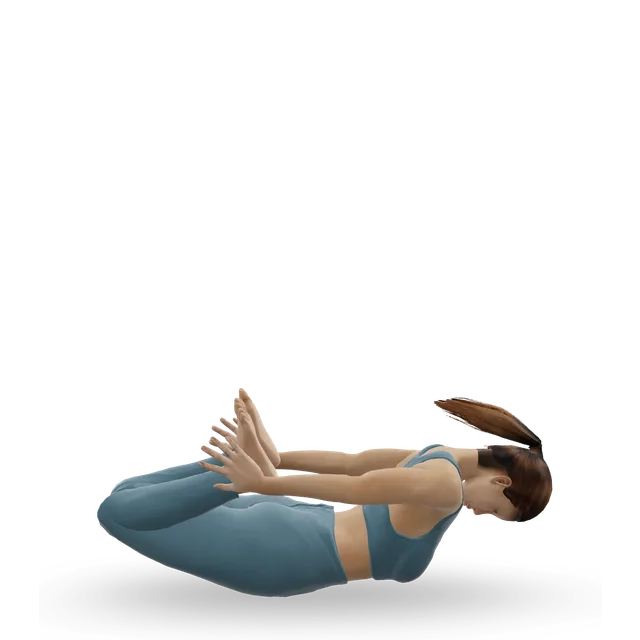 3D demoBow pose (Dhanurasana)Intermediate · No equipment
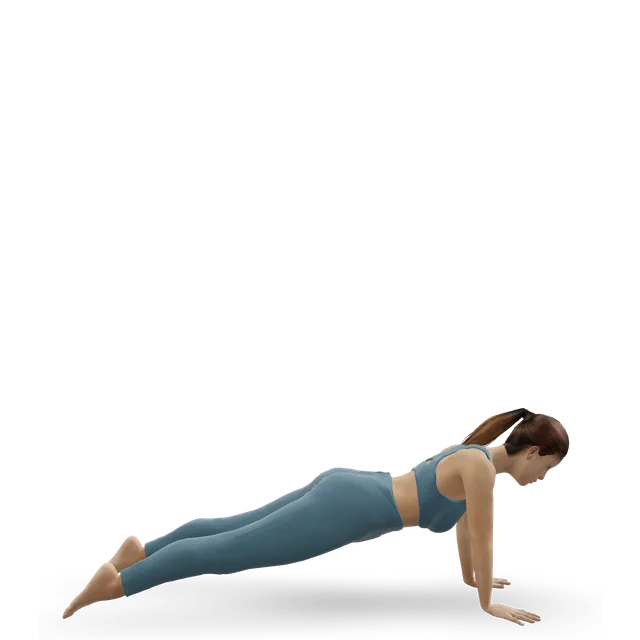 3D demoUpward-facing dog (Urdhva Mukha Svanasana)Intermediate · No equipment
Start with the 20-minute yoga for neck pain class 2 or 3 times a week, and add the neck and shoulder strength routine on 2 or 3 days. Seated chair yoga suits older adults and anyone unsteady on their feet.
Twenty minutes of slow breathing, small neck movements, poses that keep your head supported or level, and upper-back strength, with nothing that loads the neck.
20 minBeginner14 movesA stepDeep neck holds and shoulder-blade strength in under 20 minutes: one of the best-supported kinds of exercise for a stiff, sore neck.
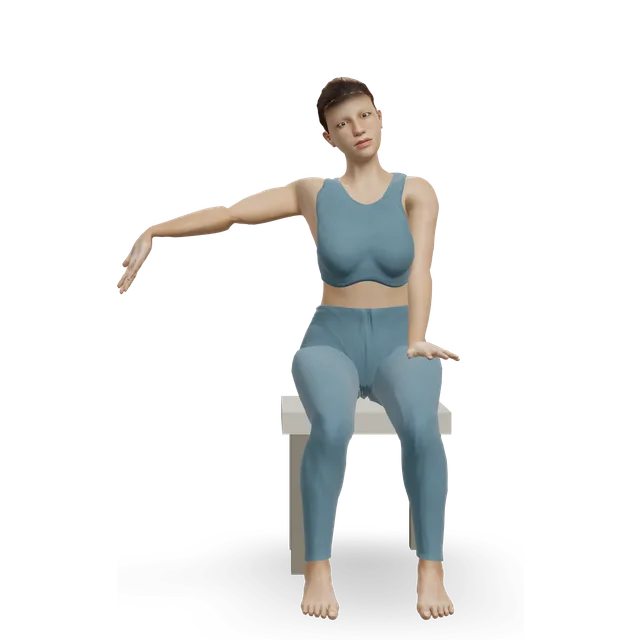
18 minBeginner11 movesA band, An anchor pointA 15-minute chair yoga routine done entirely sitting: slow breathing, neck, shoulder and wrist stretches, seated twists and side bends, and a calm finish.
15 minBeginner16 movesA bench or boxA free 20-minute chair yoga class for older adults: slow breathing, gentle seated stretches and twists, standing poses holding the chair, and a calm finish.
20 minBeginner18 movesA bench or box, Something with weightA 20-minute Pilates class for neck pain: head-supported core work, upper-back and shoulder-blade strength, gentle neck movement and slow breathing.
20 minBeginner15 movesA wallA calm 20-minute practice for between headaches: slow breathing, gentle neck and shoulder movement, a few easy poses and a long rest, with no heat and no breath holds.
20 minBeginner14 movesFirm cushionThese are the warning signs from our neck pain, neck arthritis and pinched nerve guides, word for word. This is general information, not a diagnosis. A&E means accident and emergency; in the US, call 911 for 999.
These are the same warning signs as our neck pain guides. In the US, call 911 for 999, and use your doctor's urgent line or urgent care for NHS 111. A fall from a headstand or shoulder stand counts as a neck injury.
Same day (urgent GP appointment or NHS 111): severe neck pain that starts suddenly or gets worse quickly; heaviness or weakness in the arms or legs; pins and needles in an arm along with neck or arm pain; or pain between the shoulder blades.
Same day: clumsiness in your hands, or numbness, pins and needles or weakness in one or both arms, that is getting worse; problems with balance or walking since the neck pain started; or neck pain with a severe headache.
Arm weakness or numbness that keeps getting worse, severe pain that painkillers and rest do not touch, or an unexplained fever.
Neck pain or stiffness that has not eased after a few weeks, or after 8 weeks of looking after it yourself; painkillers are not helping; or you are worried. In many areas you can refer yourself to NHS physiotherapy.
Neck pain with feeling generally unwell, or that started while you were ill with another condition such as rheumatoid arthritis or cancer; or neck pain with blurred vision, ringing in the ears or dizziness.
Severe pain that is constant or disturbs your sleep, a fever or unexplained weight loss, or a history of cancer, inflammatory arthritis, tuberculosis (TB), a weakened immune system, neck surgery or a violent injury. Serious causes are very rare, but these need checking.
See a GP if you have pain and stiffness for more than a week, especially if you're over 50, it's in both shoulders (often the neck and hips too) and the stiffness lasts longer than 45 minutes in the morning. It can be polymyalgia rheumatica.
No improvement after 6 weeks of exercise, or arm symptoms still there beyond 6 to 12 weeks.
Nerve symptoms and trouble with daily life more than 3 months after an injury: a guideline advises referral for medical investigation.
With glaucoma, or high blood pressure that isn't under control, skip headstands, shoulder stands and long head-down holds. With osteoporosis, swap deep forward folds for a flat-back hinge from the hips, and twist smoothly. In pregnancy, our yoga in pregnancy guide covers the changes. NCCIH advises beginners to avoid headstands, shoulder stands, the lotus position and forceful breathing.
If you're hypermobile, don't use mobility work to push further: the NHS says "do not overextend your joints just because you can". See a GP if you think you have joint hypermobility syndrome: for example, your joints keep dislocating, or you keep getting sprains, strains, pain or stiffness.
A joint pain that is sharp, gets worse during a session, lingers into the next day or changes how you move is a reason to use an easier version, and to see a GP or physiotherapist if it keeps happening (the rule in our plans). Muscle soreness for a day or two after something new is normal. In a hot class, stop if you feel dizzy, sick or unwell; our hot yoga guide lists the signs of heat illness.
Source 42
Call 999 if:
Call 999 or go to A&E (accident and emergency) straight away for severe difficulty breathing (gasping, choking or not able to get words out), a chest that feels tight or heavy, pain that spreads to your arms, back, neck and jaw, lips or skin turning very pale, blue or grey, or sudden confusion. If you're more short of breath than usual, or your heart is racing, fluttering or skipping beats, contact NHS 111.
Source 45
The NHS advises getting advice from a healthcare professional first if you have a health problem, an injury or symptoms, or have recently had a heart attack or an operation.
No study shows the scan changes reversing with yoga or exercise, and they are common without pain. A study finding healthier-looking neck discs in yoga teachers compared 36 people at one time point. Exercise can change pain and function.
Most symptom-free adults have bulging discs on MRI, and the NHS calls spondylosis a normal part of ageing.
Stretching alone may not help long-lasting neck pain, and NHS inform's neck exercises are small, separate movements built up little and often. Work up to the stiff point, not through it.
These are often recommended, but bending the neck back narrows the spinal canal on scans, and case reports link head-back poses with reduced blood flow to the back of the brain. A low cobra with your eyes on the floor is a different, gentler pose.
No trial shows it. The head carries up to 40 to 48% of body weight in headstand, and it is the pose most often named in case reports of yoga harm.
It can be, if it's gentle and leaves out the poses that load the neck. No published randomised trial has tested yoga in cervical spondylosis itself, but yoga eased long-lasting neck pain in short-term trials, about as much as other exercise.
Usually yes. Choose a gentle class, tell the teacher, keep your head supported or level, and make a pose smaller if it sends symptoms down an arm. If you have any of the spinal cord signs on this page, such as clumsy hands or trouble with balance, see a doctor before any class.
Headstand, shoulder stand and plough, which put weight through your neck, and poses that drop your head back, such as fish, camel, wheel and a deep upward-facing dog. Do neck movements one direction at a time rather than in full circles.
No pose is proven best. Start with slow breathing, small nods, turns and tilts, shoulder rolls, thread the needle with your head supported, child's pose with your forehead on a block, and upper-back strength such as a low locust with your eyes on the floor.
It can be, often in a chair: seated neck movements, shoulder rolls, seated twists and an upright-back lift. Keep balance poses near a wall or chair, because a fall onto the head matters more if there is any pressure on the spinal cord. No trial has tested chair yoga for neck arthritis.
There are no yoga trials for it. A pinched nerve usually improves over weeks to months; gentle movement that doesn't spread arm symptoms is fine, and a nerve glide can help once the first, most painful days have passed.
Not as a treatment: narrowing that presses on the spinal cord needs a specialist, and for mild cases a guideline offers surgery or a supervised rehabilitation programme. Leave out head-back poses, which narrow the canal, and inversions and balances that risk a fall.
Spondylosis is age-related wear in the discs and joints; spondylitis means inflammation, as in ankylosing spondylitis, though "cervical spondylitis" is often used to mean spondylosis. Our yoga for ankylosing spondylitis guide covers the inflammatory kind.
No study shows that. Neck and shoulder-blade strengthening has the best evidence for neck pain that lasts, so yoga works best alongside it, and a physiotherapist should check arm or hand symptoms.
Rarely, but it can: a 63-year-old man with neck arthritis had spinal cord injury and torn neck arteries after a yoga session. In trials, yoga's side effects were no more common than with other exercise, so the risk sits in forced, neck-loaded or head-back poses.
The NHS lists headaches that start at the back of the neck as a symptom, and gentle neck movement and upper-back strength suit them; our yoga for headaches guide has a calm 20-minute practice. Call 999 for a sudden, extremely painful headache, a drooping face, slurred speech, double vision, or a stiff neck with a fever.
See a GP or physiotherapist if neck pain hasn't eased after a few weeks. Get same-day help for severe neck pain that starts suddenly or gets worse quickly, heaviness or weakness in the arms or legs, pins and needles in an arm along with neck or arm pain, or pain between the shoulder blades. Call 999 for new problems walking, loss of bladder or bowel control, or a sudden loss of coordination, such as difficulty doing up buttons.
Exercise education, not a personal prescription, and clinical review of these guides is pending. If you are pregnant, have a health condition such as glaucoma, high blood pressure or osteoporosis, or have had recent surgery, check with a doctor, midwife or physiotherapist before starting, and stop for sharp or increasing pain. Health disclaimer.