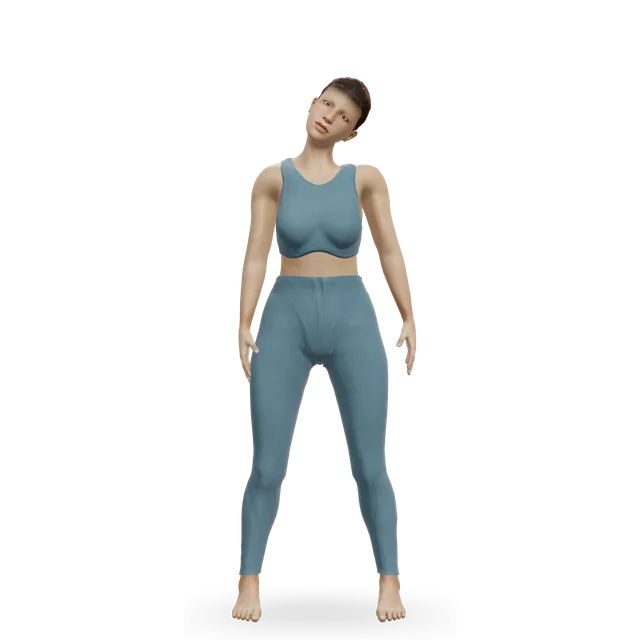
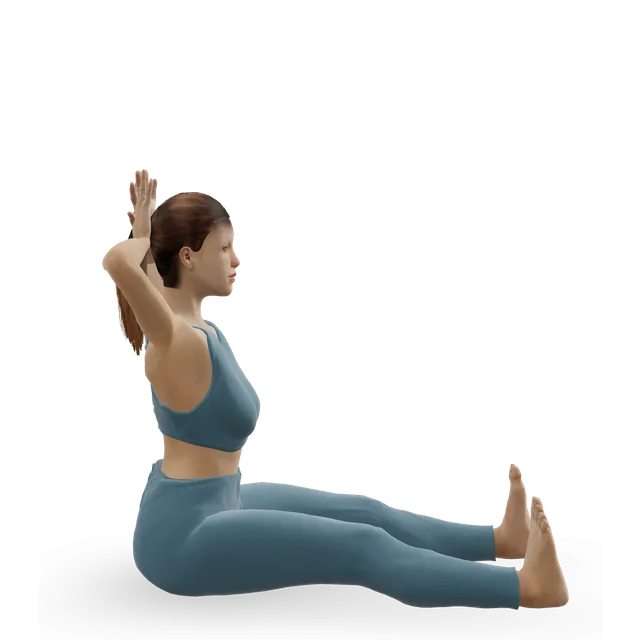
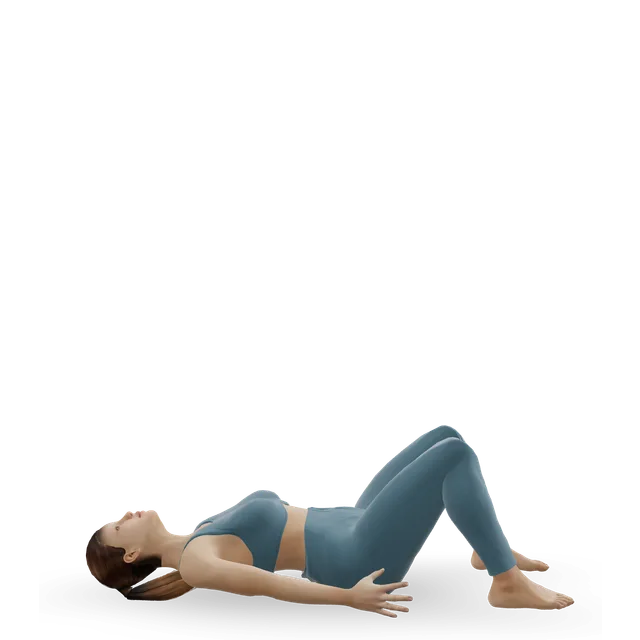
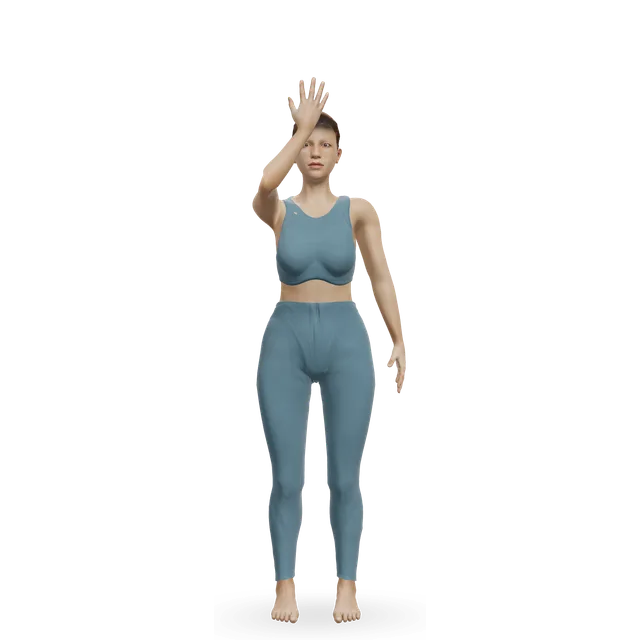
Turning, tilting and nodding
Young adults turn the head about 75 to 80 degrees each way, nod through about 130 degrees and tilt each ear towards the shoulder about 38 to 45 degrees. Range falls gradually with age, more after 50.
Training guide
Your neck turns, tilts and nods: young adults turn about 75 to 80 degrees each way, and range falls gradually with age. Daily life uses little of it, except looking over your shoulder to reverse or cycle. Gentle movement little and often, upper back work and neck strength keep it moving; cracking it doesn't help, and the trials that measured range are small.
This guide covers how far a neck should move, a simple check, what the trials show, how often, the moves with doses and a step-by-step session, desk work, phones, driving and sport, and the warning signs, from dizziness when you turn your head to a stiff neck with a fever, that mean our neck pain guides or a doctor come first.
Young adults turn the head about 75 to 80 degrees each way, nod through about 130 degrees and tilt each ear towards the shoulder about 38 to 45 degrees. Range falls gradually with age, more after 50.
Fifteen everyday tasks used a median of about 20 degrees of nodding forward and back and 18 of turning, but reversing a car used 92% of full turning. The oldest drivers in one study had lost about a third of their head turn.
Separate turns, tilts and nods, slowly and as far as is comfortable: 2 or 3 at a time, every hour or so at a desk, building to about 10, as NHS inform's neck exercises suggest. The NHS's neck rotation holds each turn for 5 seconds, 3 times each side.
A year of neck strength training improved neck range in 180 women office workers, and tai chi or qigong improved bending forward and back a little across 4 trials. In one trial of 100 office workers, a twice-daily neck movement game raised range and cut new neck pain over 6 months. But a 12-week stretching class didn't change neck range in 48 older women, and stretching alone made little difference to neck pain in a Cochrane review.
Forward head posture was slightly greater in adults with neck pain, but not in teenagers, and texting posture didn't predict neck pain over a year, while poor sleep and inactivity did. Move often rather than chasing a perfect posture.
Manipulation gives small, short-lived and inconsistent gains in range, and in 24 published cases of harm after people cracked their own necks, half were torn neck arteries and 2 people died. Dizziness, double vision, slurred speech, trouble swallowing or tingling down an arm are stop signs, and a stiff neck with a fever is a 999 call: see the warning signs.
The neck is the seven smallest and most mobile vertebrae. Most nodding happens where the skull meets the top vertebra and most turning between the top two, as our spine page explains. Neck mobility means turning (rotation), tilting each ear towards the shoulder (side bending) and nodding forward and back (flexion and extension).
Young adults turn about 75 to 80 degrees each way, nod through about 130 degrees from chin on chest to looking at the ceiling, and tilt about 38 to 45 degrees each way. Range falls with age, more after 50, and on X-rays of 1,230 people the lower neck's bending forward and back fell from 68 degrees in their 20s to 45 in their 70s. Women usually have more range, except in side bending. In healthy people, the same person's range varied by about 14 to 20 degrees from day to day, so compare yourself over weeks, not sessions.
Little, except looking behind you: in 60 adults, 15 everyday tasks used a median of about 20 degrees of nodding forward and back, 14 of tilting and 18 of turning, while reversing a car used 92% of full turning. Shoulder checks when cycling or changing lanes need the same; our neck pain when turning your head guide covers driving.
The small joints at the back and sides of the neck; the muscles (the upper trapezius and levator scapulae at the back and sides, the sternocleidomastoid at the front); how much stretch you tolerate; and age-related changes in the joints, which are common and often painless, as our strengthen your neck guide says. A stiff upper back limits looking up and turning too. Pain is the biggest limiter: across 27 studies, people with neck pain had less range in every direction.
Source 21
A link with neck pain, not a proven cause of lost range: posture types and texting posture didn't predict neck pain, and in 60 students, heavy phone users didn't have less neck range. Moving often matters more than holding a perfect position.
Range falls with age, women usually move a little more, and very flexible people need control more than stretch. Rheumatoid arthritis in the neck, a past neck operation, osteoporosis or a recent injury change what's safe: see who should change the plan.
Our suggestion. These guide your practice; they don't diagnose anything. Range varies from day to day, so compare over weeks.
Sit tall and turn your head each way as far as is comfortable, without your shoulders turning. Note where your chin gets to over each shoulder, and whether one side is tighter.
Tilt each ear towards its shoulder without lifting the shoulder, then nod your chin towards your chest and look up towards the ceiling. Compare sides rather than chasing a number.
A stretch or a mild ache is fine. Dizziness, blurred or double vision, or tingling down an arm when you turn or look up is not: stop, and see the warning signs.
Most neck exercise trials measured pain, not range, and most are small and in office workers or people with neck pain.
In 60 young adults, head and neck range in total was about 130 to 136 degrees of nodding, 77 to 91 of side bending and 155 to 162 of turning, with women moving more. In 70 men, nodding fell from about 130 to 117 degrees and turning from 160 to 153 between the teens and the late 30s. Range fell with age in 337 people aged 11 to 97, across 34 studies and in 400 adults, more after 50. Only norms measured with a CROM device (a frame worn on the head that measures neck angles) are judged usable across 55 studies, so treat exact numbers as rough.
The CROM device is the best-tested way to measure neck range, and phone apps are reliable on low-certainty evidence. In healthy people, range varied by about 14 to 20 degrees from day to day, so small changes may not be real.
Across 27 studies of 2,366 people, people with neck pain had less range in every direction, from about 7 degrees less side bending to about 90 degrees less in total, and less again after whiplash. Office workers with neck pain turned less.
In 60 adults, 15 everyday tasks used a median of about 20 degrees of nodding forward and back, 14 of side bending and 18 of turning, while reversing a car used 92% of full turning. In 28 students, backing up a car used about 68 degrees of turning.
The oldest of 80 drivers had lost about a third of their head turn. In 270 drivers aged 70 to 88, less neck range went with unsafe driving only before other factors were taken into account, and a 12-week physiotherapy programme that included neck and trunk turning raised road-test scores a little in 178 drivers over 70, without reporting neck range.
Across 15 studies, forward head posture was slightly greater in adults with neck pain but not in teenagers. Posture types didn't predict neck pain in 1,108 17-year-olds, and young women who slumped had less lasting neck pain at 22 (686 people). Texting posture didn't predict neck pain over a year in 396 adults, while poor sleep and inactivity did, and heavy phone users had no less neck range in 60 students.
Across 23 studies, stretching didn't change posture, while strengthening helped the upper back and neck a little. In people with neck pain, exercise improved the head's forward angle by about 3.4 degrees across 10 trials.
Strengthening the neck, shoulder blades and arms helps neck pain, while stretching and range of motion exercise alone made little or no difference across 27 trials in a Cochrane review (low-quality evidence). Strengthening, motor control and yoga-type exercise helped by similar amounts across 40 trials. Specific strength training cut the worst neck muscle pain by about 79% in 48 women, and neck and shoulder stretches twice a day eased office workers' pain by 1.4 points out of 10 in 96 people. Neither measured range, and most office-worker reviews didn't either.
A year of neck strength training improved turning, side bending and nodding in 180 women office workers. Tai chi, qigong or Baduanjin improved bending forward and back a little across 4 trials of 208 people. Adding stretching to usual care improved bending back, turning one way and side bending in 38 people, and posture re-education or static stretching each added about 10 degrees of bending forward in 31 women. Deep neck flexor (chin tuck) training gave very small gains in the 2 of 12 trials that measured range. After whiplash, neck-specific exercise improved range within groups at 3 and 15 months in 140 people, with no untreated group, while a 20-session exercise programme eased pain no more than advice in 172 people.
In one trial of 100 office workers, a smartphone game that prompted active neck movements twice a day raised range and cut new neck pain over 6 months (20% against 44%). But in 48 women aged about 75, supervised stretching twice a week for 12 weeks didn't change neck range, though it raised shoulder range by a third. One trial each, pointing different ways.
Thrust manipulation of the upper back had large short-term effects on neck range in 6 weak trials. Self-mobilisation over taped tennis balls raised neck bending straight away in 52 people, and upper back exercise or manipulation added to neck exercise raised bending forward about 8 degrees and back 9 to 12 in 26 office workers. The larger reviews and trials of upper back work measured pain, disability and posture, not neck range.
Manipulation raises neck range a little and only straight away, inconsistently across studies. In 24 published cases of harm after people cracked their own necks, half were torn neck arteries (cervical artery dissection), half were strokes, and 2 people died; how often it happens is unknown. Chiropractic care had a small link with artery tears that may reflect the neck pain itself (very low certainty), and professional statements advise warning patients and checking for artery problems first.
We found no trial of neck circles or head rolls as an exercise. Neck circling has been studied only as a way to measure movement, in 39 adults, and the only trial of CARs (controlled articular rotations: slow circles at the edge of your range) is at the hip, in one session.
NHS inform's neck exercises use 2 to 3 repetitions at a time, practised every hour, building to about 10; the NHS's neck rotation holds 5 seconds, 3 times each side, at least twice a week; and an NHS emergency department leaflet holds each movement for 5 seconds, 5 times. These are guideline doses: no trial has compared them.
Stretching programmes didn't cut sports injuries across 25 trials, the extra range from one session fades within about 30 minutes, and range slips back over weeks when people stop.
Separate turns, tilts and nods, slowly and as far as is comfortable: 2 or 3 at a time, every hour or so on desk days, building to about 10, as NHS inform suggests; or holds of 5 seconds, 3 to 5 each way, once or twice a day, as the NHS and an NHS emergency department leaflet do.
8 to 10 slow chin tucks, eyes level, sliding the head back rather than tipping it down (our spine mobility routine and neck and shoulder stretches).
Neck circles in small, slow arcs with the shoulders still. The move page's dose is "3 slow circles each way, once or twice a day (our editorial starting point). With a sore neck, use separate nods, tilts and turns instead: the NHS leaflet holds each for 5 seconds, 5 times." Skip tipping the head back if it makes you dizzy.
Let the hand's weight do the work rather than pulling: the upper trap release at 2 slow holds of 30 seconds per side (the move page's dose), and the levator stretch for 20 to 30 seconds, 2 to 4 times each side (our editorial starting point). Then thoracic rotations at 6 rotations per side, moving with the breath (the move page's dose); our thoracic mobility guide has more.
Lying chin tucks, head lifts and light holds against your hand, plus rows, 2 or 3 times a week, light and slow (our neck and shoulder strength routine and strengthen your neck guide). In a year-long trial, neck strength training improved range as well as pain.
Range trials ran from 4 weeks to a year. Expect change over weeks, and judge it over weeks too, since range varies from day to day. Keep moving daily: movement breaks are the habit that matters at a desk.
Pulling the head with the hand; dropping the head back heavily at the top of a circle; shrugging the shoulders while turning; turning fast to "crack" the neck; pushing through dizziness, tingling or a headache (our editorial list). Each move's page teaches its technique.
Our editorial session, from NHS inform's neck exercises (2 to 3 repetitions at a time, practised every hour, building to about 10), the NHS flexibility exercises, our neck and shoulder stretches and our spine mobility routine. Stop for dizziness, double vision, slurred speech, trouble swallowing, or tingling down an arm.
Loading the 3D figure…
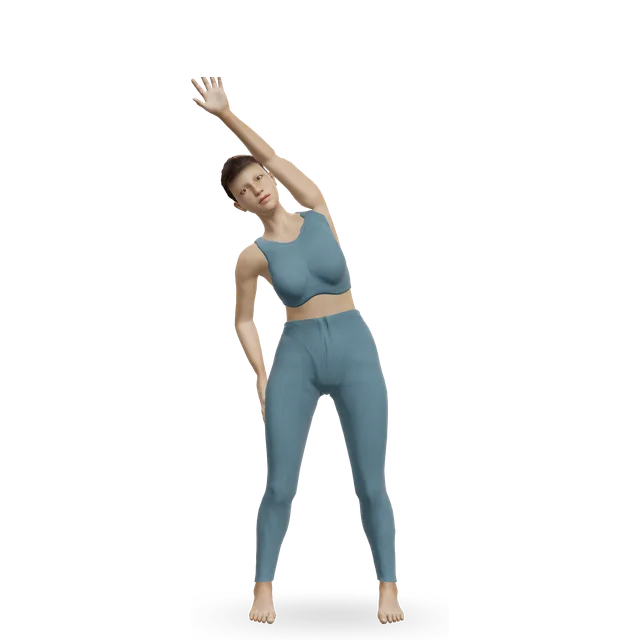
The movement on the figure: Neck CARs (controlled articular rotations)
Slow and within comfort, separate movements first. Turn as far as is comfortable and hold 5 seconds, 3 times each side (the NHS's flexibility exercises), and nod and tilt the same way; the neck circles demo shows the directions. Chin tucks at 8 slow reps, eyes level (our spine mobility routine). Neck circles once separate moves are comfortable, at the dose on their move page. For the side neck stretch, the move page's dose is "Hold 5 to 10 seconds, 2 to 4 times each side (ACE's lateral neck flexion)." For the chin-to-chest stretch, it is "Hold 15 to 30 seconds, 2 to 4 times (ACE's neck flexion stretch)." Leave the chin-to-chest stretch out with early whiplash, a pinched nerve or an arthritis flare, and don't pull with both hands.
Let the hand's weight do the work; don't pull. The upper trap release at 2 slow holds of 30 seconds per side (the move page's dose); the levator stretch for 20 to 30 seconds, 2 to 4 times each side (our editorial starting point; the office-worker trial stretched twice a day, 5 days a week). The upper back turns too, so a stiff neck often needs it: thoracic rotations at 6 rotations per side, moving with the breath (the move page's dose), and open books at 8 to 10 slow openings each side, pausing 2 seconds at the end (our editorial starting point).
Two or three times a week, light and slow (our neck and shoulder strength routine): lying chin tucks at 5 gentle holds of up to 10 seconds; head lifts at 3 to 5 holds of 5 seconds, building towards 10 holds of 10 seconds; holds against your hand at 3 to 5 holds of 5 to 10 seconds each direction, light effort. Band rows at 3 sets of 10 to 15, stopping 2 to 3 reps short of failure, with 60 to 90 seconds' rest (our editorial starting point), and wall angels at 8 slow reps (our neck and shoulder stretches).
Posture and phone use are weak causes of neck pain and didn't go with less range, so move often rather than chasing a perfect position: a few turns, tilts, nods and chin tucks every hour or so, as NHS inform suggests, or our 3-minute desk movement break.
Reversing used 92% of full turning, and the oldest drivers in one study had lost about a third of their head turn. A physiotherapy programme with neck and trunk turning improved road-test scores a little in drivers over 70. The NHS says not to do anything that could be dangerous, such as driving or cycling, while you can't move your neck; our neck pain when turning your head guide covers driving.
In a year-long trial, neck strength training improved range as well as pain, so neck strength work is no reason to expect a stiffer neck. Before contact sport or heavy lifting, a few slow turns, tilts and nods prepare it; our strengthen your neck guide covers neck strength for contact sport.
Range falls gradually with age, and one 12-week stretching class didn't change neck range in women around 75, so move little and often, include the upper back, and keep turning your head in daily life. The NHS asks adults over 65 for activities that improve strength, balance and flexibility on at least 2 days a week.
Neck-specific exercise improved range within groups at 3 and 15 months in 140 people, with no untreated group, while a 20-session exercise programme eased pain no more than advice in 172 people. The NHS advises trying to carry on with everyday activities, not using a neck collar and not resting your neck for long periods; our whiplash guide has the plan.
Our neck and shoulder stretches take 10 minutes; at a desk, the 3-minute desk movement break adds chin tucks and rotations every hour or so. Add the neck and shoulder strength routine 2 or 3 times a week.
Eight gentle neck and shoulder stretches for desk stiffness, done standing or seated in ten minutes.
10 minBeginner8 movesA wallA 15-minute routine that moves your neck, upper back and lower back through bending, arching, side bending and twisting, then holds the spine steady.
15 minBeginner12 movesNo equipmentA 3-minute standing break to repeat every 30 to 60 minutes at your desk: sit-to-stands, calf raises, marching, an upper-back turn and chin tucks.
3 minBeginner5 movesA bench or box, A wallA quick stretch break you can do beside your desk: neck, back, chest, wrists, hips and quads.
5 minBeginner7 movesA wallDeep neck holds and shoulder-blade strength in under 20 minutes: one of the best-supported kinds of exercise for a stiff, sore neck.
18 minBeginner11 movesA band, An anchor pointA 12-minute routine for a stiff upper back and rounded shoulders: chin tucks, wall angels, Y-T-W raises and open books.
12 minBeginner8 movesA foam roller, A wallTwenty minutes of slow breathing, small neck movements, poses that keep your head supported or level, and upper-back strength, with nothing that loads the neck.
20 minBeginner14 movesA stepA 20-minute Pilates class for neck pain: head-supported core work, upper-back and shoulder-blade strength, gentle neck movement and slow breathing.
20 minBeginner15 movesA wallTen minutes of yoga at your desk, no mat needed: slow breathing, neck, shoulder, wrist and spine moves in your chair, then standing poses with a hand on the desk.
10 minBeginner13 movesA bench or box, A wallNo plan is built around the neck. The 6-week and 12-week plans have a mobility day that starts with neck circles, and our strengthen your neck guide adds neck blocks to the 3-day plan, the 4-day split and the plan for men over 40.
A 6-week workout plan for strength and fitness: two strength days, a circuit and two cardio sessions a week, with simple fitness tests in weeks 1 and 6.
3 training days45 minBeginner3 days a weekA 12-week workout plan in three phases for strength, muscle and fitness: three full-body days and two cardio sessions a week, with tests in weeks 1 and 12.
3 training days45 minBeginner3 days a weekA 3-day workout plan: three full-body gym sessions a week, alternating workouts A and B, with sets, reps, rest and an 8-week progression.
3 training days45 minBeginner4 days a weekA 4-day upper/lower split: two upper body and two lower body gym days, each muscle trained twice a week, with sets, reps and progression.
4 training days50 minIntermediate3 days a weekA 3-day strength plan for men over 40 with power and bone work, two cardio days and mobility, built on research on ageing muscle.
3 training days45 minBeginnerA neck that is painful or stiff right now, after sleeping awkwardly or for no clear reason, belongs first with our stiff neck guide, and pain when you turn your head with our neck pain when turning your head guide; come back to this plan as it settles (our suggestion).
Turning in daily life (our suggestion): turning towards the stiff side can feel tight and achy, up to about 5 out of 10. Turn to the edge of the comfortable range and back, little and often, rather than into a sharp catch. Pain that changes from day to day "is not a sign that you're doing damage", an NHS trust says, and the next morning is the test. In long-lasting muscle and joint pain, exercise that allowed some pain did no worse than pain-free exercise.
Use your arm, not your neck, as the main guide. An exercise is fine if it does not send pain, tingling or numbness further down your arm, and any increase settles within an hour. A hospital leaflet on nerve glides allows some increase in symptoms but not one lasting over an hour; applying that to every exercise is this site's suggestion.
Stop and get checked if the arm feels weaker or numbness spreads.
After whiplash, keep your neck moving gently within comfort and follow our whiplash guide: the NHS advises against a neck collar and against resting your neck for long periods. After neck surgery, follow your surgical team's limits first (our suggestion).
Source 62
With rheumatoid arthritis that affects your neck, leave this out: the NHS says long-standing rheumatoid arthritis raises the risk of an uncommon but serious problem at the top of the spine (cervical myelopathy).
Painless cracking that happens as you move needs no treatment. You don't need to force it: if you feel the urge many times a day, move your back through its range and strengthen it instead. Don't force your neck, and don't self-manipulate with osteoporosis or after an injury.
Often an inner-ear problem rather than the neck: see a GP. With numbness, weakness, a drooping face, double vision, or trouble speaking or balancing, call 999.
Dizziness, light-headedness or tingling into an arm during the neck moves are stop signs, not sensations to push through.
If you're already very flexible, put your time into strength and control through the range you have. Stretch only areas that feel genuinely tight, and only to a mild pull, and avoid hanging at the end of your range or pushing joints back past straight. The strength and control moves below are a place to start, and our hypermobility guide has a full routine, the evidence and the warning signs. If you do Pilates, our Pilates for hypermobility guide covers which moves to adapt.
Source 63
If you get chest pain or pressure, feel faint or dizzy, are unusually breathless, or your heart races or beats irregularly during exercise, as our plans advise.
For chest pain that comes on suddenly and doesn't go away, feels tight or like squeezing, spreads to your arms, neck, jaw, stomach or back, or comes with sweating, feeling sick, light-headedness or breathlessness; severe difficulty breathing; someone who faints while exercising; palpitations that don't go away, or come with chest pain, shortness of breath or feeling faint; or a headache that starts suddenly and is extremely painful, especially while lifting or straining, or comes with numbness or weakness, difficulty speaking or loss of vision. The NHS says a bleed on the brain may be more likely when lifting something heavy. Don't drive yourself to A&E.
Call 999 or go to A&E: a stiff neck and you can't look at bright lights; a very painful headache; a very high or very low temperature, feeling hot or cold to the touch, or shivering; confusion, slurred speech or not making sense; a rash that does not fade when you press a glass on it; or a first seizure (fit). These can be signs of meningitis. Call too for any other symptoms you're worried might be meningitis.
Source 67
Call 999 or go to A&E after a neck injury if the person is unresponsive, has severe neck pain or cannot move their head, has fallen from a height such as 5 or more stairs, or is drunk or has taken recreational drugs. Do not drive yourself. Being 65 or over, a dangerous fall or crash (from more than 1 metre or 5 stairs, diving, a high-speed or rollover crash, being thrown from a vehicle, a bicycle collision or an accident on a motorised recreational vehicle), or tingling in the arms or legs after an injury puts you at high risk of a broken neck: get checked.
Call 999 or go to A&E: a headache that came on suddenly and is extremely painful; numbness or weakness in the face or body; a drooping face, or being unable to lift both arms and keep them up; difficulty speaking, swallowing, balancing, walking or remembering; double vision or loss of vision; drowsiness or confusion. A torn neck artery often starts with headache and neck pain, sometimes with dizziness or tingling, so head or neck pain unlike any you have had before needs checking.
Call 999 or go to A&E: new problems walking, loss of bladder or bowel control, or a sudden loss of coordination, such as difficulty doing up buttons. These can be signs of pressure on the spinal cord.
Call 999: chest pain that spreads to your arm, neck or jaw, especially with breathlessness, sweating or feeling sick. It could be a heart attack.
Get help from NHS 111: pain or tightness in your chest, neck, shoulders, jaw or arms that comes and goes, often brought on by exercise, stress, emotion or cold and easing after a few minutes' rest. It can be angina, a sign of a heart problem. If you've been diagnosed with angina, get help from NHS 111 too if it feels worse than before, is happening more often, lasts longer or happens when you're resting.
Source 64
Same day (urgent GP appointment or NHS 111): severe neck pain that starts suddenly or gets worse quickly; heaviness or weakness in the arms or legs; pins and needles in an arm along with neck or arm pain; or pain between the shoulder blades.
Same day: clumsiness in your hands, or numbness, pins and needles or weakness in one or both arms, that is getting worse; problems with balance or walking since the neck pain started; or neck pain with a severe headache.
Same day after whiplash (urgent GP appointment or NHS 111): severe pain despite taking paracetamol or ibuprofen; tingling or pins and needles on one or both sides of the body; problems walking or sitting upright; a sudden "electric shock" feeling in the neck and back, which may also go into the arms and legs; or weak hands, arms or legs. Don't drive or cycle until you've spoken to a GP or NHS 111.
Source 62
Often an inner-ear problem rather than the neck: see a GP. With numbness, weakness, a drooping face, double vision, or trouble speaking or balancing, call 999.
Neck pain with feeling generally unwell, or that started while you were ill with another condition such as rheumatoid arthritis or cancer; or neck pain with blurred vision, ringing in the ears or dizziness.
Stop and get checked for dizziness, double vision, slurred speech, trouble swallowing or any of the warning signs above.
Dizziness, light-headedness or tingling into an arm during the neck moves are stop signs, not sensations to push through.
Stop for dizziness, vision or speech symptoms. With a pinched nerve, skip looking up and turning toward the sore side if they bring on arm symptoms
No trial shows harm or benefit from neck rolls. An international framework advises clinicians to avoid end-of-range turning and tipping the head back when an artery problem is suspected.
You can't turn your head far enough to look round when you drive: don't drive until you can (the NHS says not to drive or cycle while you can't move your neck), and see a general practitioner (GP) if it doesn't ease within a few weeks.
Source 60
Arm weakness or numbness that keeps getting worse, severe pain that painkillers and rest do not touch, or an unexplained fever.
No improvement after 6 weeks of exercise, or arm symptoms still there beyond 6 to 12 weeks.
Neck pain or stiffness that has not eased after a few weeks, or after 8 weeks of looking after it yourself; painkillers are not helping; or you are worried. In many areas you can refer yourself to NHS physiotherapy.
Severe pain that is constant or disturbs your sleep, a fever or unexplained weight loss, or a history of cancer, inflammatory arthritis, tuberculosis (TB), a weakened immune system, neck surgery or a violent injury. Serious causes are very rare, but these need checking.
Source 60
Stop straight away if you feel any pain or become unwell, the NHS says, and contact 111 if your symptoms worry you or don't go away.
NHS inform's neck exercise advice: rate your pain from 0 to 10. During exercise, 0 to 3 is minimal and 4 to 5 is acceptable; 6 or more is too much. If it goes higher, do fewer repetitions, move more slowly or rest longer between movements.
Exercise should not make your neck worse overall. Soreness from a new exercise should ease quickly, and your neck should be no worse the next morning. Stop any exercise that makes your symptoms worse or causes new pain.
Arm symptoms are the exception. If an exercise sends pain, tingling or numbness further down your arm, or the extra symptoms last more than an hour afterwards, make the movement smaller or leave it out. (A hospital leaflet on nerve glides allows a short-lived rise in symptoms but not one lasting over an hour; the rest of this rule is this site's suggestion.)
See a GP if you think you or your child have joint hypermobility syndrome, for example joints that keep dislocating, ongoing joint or muscle pain and stiffness, frequent sprains, tiredness even after rest, poor balance or thin, stretchy skin. A GP may check your Beighton score, arrange tests to rule out other conditions and refer you to a physiotherapist.
Slowly and with control, in the middle of your range, stopping short of locking your knees or elbows or hanging at the end of a joint's range. If a joint feels about to slip, stop or make the movement smaller (our editorial rule, the same as in our shoulder dislocation guide).
Source 63
Ask for an urgent GP appointment or get help from NHS 111 for a headache that's triggered or made worse by coughing, sneezing, bending down or exercising. In the US, contact your doctor or urgent care.
Speak to your GP first if you haven't exercised for some time or have medical conditions or concerns, as the NHS advises. Get advice before heavy lifting or hard straining work if your blood pressure is uncontrolled, or you have heart disease or chest pain when you're active, a pacemaker or defibrillator, diabetic eye disease, glaucoma, a hernia, recent eye or tummy surgery, or you're pregnant, as our breathing guide lists. After a recent shoulder dislocation or shoulder surgery, follow our shoulder dislocation guide or your surgical team first.
Speak to a GP first if you haven't exercised for some time, or if you have a medical condition or concerns. Get advice first, too, if you have a health problem, an injury or symptoms, have recently had a heart attack or an operation, or are pregnant or have recently given birth.
Source 70
If you have a heart condition, follow your cardiac team's advice on how hard to work, and stop for the warning signs above. People with long-term conditions may wish to ask their specialist before starting. With uncontrolled high blood pressure, avoid straining against a held breath; the high blood pressure guide has more.
Manipulation's range gains are small and short-lived, and cracking your own neck has caused rare but serious harm, including torn neck arteries and strokes.
Texting posture didn't predict neck pain, heavy phone users had no less range, and posture is a weak cause of neck pain. Moving often matters more than any one position.
Stretching alone made little difference to neck pain in a Cochrane review, while strengthening has better support and improved range over a year in one trial.
No trial has tested them either way. Our neck pain guide suggests separate moves when your neck is sore, and avoiding turning and tipping the head back to the end of the range when an artery problem is possible.
Source 54
Exercise changes head posture a little, about 3 degrees, but posture barely predicts neck pain.
Range does fall gradually with age, but a big or sudden loss, or pain, numbness or dizziness with it, needs checking: see the warning signs.
Source 2
Range you can't control isn't an advantage. One review argues flexibility shouldn't count as a major part of fitness at all, and very flexible people need strength and control rather than more stretch.
Turn, tilt and nod your head slowly, a few times at a time, through the day, add chin tucks and gentle side stretches, and strengthen your neck and upper back 2 or 3 times a week. Range trials are small, but strength training, tai chi and regular movement breaks have improved neck range. Our neck and shoulder stretches put the moves together in 10 minutes.
Young adults turn about 75 to 80 degrees each way, and range falls gradually with age. It also varies from day to day, so compare your two sides, and yourself over weeks, rather than a chart.
Turn your head as far as is comfortable and hold for 5 seconds, 3 to 5 times each way, once or twice a day, and free up your upper back with thoracic rotations. If turning one way hurts, see our neck pain when turning your head guide.
Little and often: NHS inform suggests 2 or 3 repetitions every hour, building to about 10. Add strength work 2 or 3 times a week.
For most people, done slowly and within comfort. No trial has tested them either way; with a sore neck, use separate turns, tilts and nods instead, and stop for dizziness or changes in your vision.
Don't force it. Gains from manipulation are small and short-lived, and rare but serious injuries have followed people cracking their own necks, including torn neck arteries.
Probably not much: texting posture didn't predict neck pain over a year, and heavy phone users had no less neck range. Moving often matters more than any one position.
Don't drive until you can look round, as the NHS advises, and see a GP if it doesn't ease within a few weeks. Our neck pain when turning your head guide covers driving.
No: in a year-long trial, neck strength training improved neck range as well as pain. Strength and mobility work go well together, with the strength work 2 or 3 times a week.
A stiff neck with a fever, a rash or a severe headache needs urgent help, and so does a stiff neck after an injury. So does one with dizziness, double vision, slurred speech, weakness or numbness: see the warning signs.
Range falls with age, but gentle daily movement suits most people. One stretching class didn't change neck range in women around 75, so move little and often, keep turning your head in daily life, and include the upper back.
Exercise education, not a personal prescription, and clinical review of these guides is pending. Check with a GP before starting hard training if you have a heart condition, chest pain, dizziness or breathlessness when active, and stop for sharp or increasing pain. Health disclaimer.