A picture, not a diagnosis
Military neck means your neck looks straight, or curves slightly the wrong way, on a side-on X-ray. It describes a picture, not a disease, and despite the name it has nothing to do with military service.
Posture guide
Military neck is an informal name for a neck that looks straight on a side-on X-ray, or curves slightly the other way, instead of curving gently inward. X-ray reports call it loss or straightening of the cervical lordosis (the neck's inward curve), and some people call it straight neck syndrome. It's common: in studies of people without any neck pain, about a third had a straight or reversed neck.
Large studies find the same neck curves in people with and without neck pain, so a straight neck on its own isn't a diagnosis or a cause for alarm. If your neck hurts, strength work for the neck, shoulders and upper back has the best evidence, and it helps whatever your curve.
This guide covers how the curve is measured, what's normal, whiplash, phones, pillows and traction devices, the moves with 3D demos, and when to get your neck checked.
Military neck means your neck looks straight, or curves slightly the wrong way, on a side-on X-ray. It describes a picture, not a disease, and despite the name it has nothing to do with military service.
In 21 studies of 15,364 people without symptoms, about two in three had an inward neck curve, so roughly a third didn't. In 468 healthy volunteers, the average neck was close to straight.
Large studies found the same neck curves in people with and without neck pain, and a review concluded that most studies show no link. A few small clinic studies did find differences.
Strength training for the neck, shoulders and upper back, motor control exercise, yoga and Pilates all eased chronic neck pain in trials. Train for strength and comfort, not to change an X-ray.
Trials of extension traction devices report bigger curves, but almost all come from one research group whose authors declare commercial ties, and in its own trials pain improved just as much without traction by the end of treatment.
Seen from the side, a typical neck curves gently inward (a lordosis), like the lower back, while the upper back curves outward. In military neck the neck looks straight, or curves slightly outward, which doctors call cervical kyphosis, and some necks curve one way at the top and the other way lower down. X-ray reports describe it as 'loss', 'straightening' or 'reversal' of the cervical lordosis.
On a side-on X-ray taken standing, the angle between the second and seventh neck bones (C2 to C7) is measured either from their flat top and bottom surfaces (the Cobb method) or along their backs (the posterior tangent method). The two give different numbers: in people without symptoms, about 13 degrees by one and 19 by the other. Examiners measuring the same X-ray agree well.
Standing or sitting, and where you hold your arms, changed neck readings by 1 to 16.6 degrees across 8 studies. In one study, a person's curve could differ by up to 13.5 degrees between X-rays taken 4 weeks apart, and in 26 people the curve was smallest standing and about 17 degrees bigger sitting slumped.
MRI (magnetic resonance imaging) is done lying down, and on lying MRI a straight neck is the most common appearance. A report of 'straightening' on an MRI says little about how your neck sits when you're upright.
Source 18
Forward head posture, measured from a side-on photo, is about where your head sits in front of your shoulders, not the curve itself. In 120 people the two were only weakly related, so a photo can't tell you your neck's curve.
The neck's inward curve begins before birth: an X-ray study of fetal spines found it much earlier in development than had been thought.
Mostly normal variation: the tilt at the top of your chest, whether you sat or stood for the X-ray, and whether you're a man or a woman all shift it. Wear in the neck is common with or without symptoms, and in one study the curve was smaller only in people over 50 with marked disc narrowing. Rarely, a fixed reversed curve follows neck surgery, an injury or another condition, and a spinal specialist assesses it.
In 21 studies of 15,364 people without symptoms, 64% had an inward curve. A reversed curve was found in 26% of 958 adults without symptoms and in 32% of 84 healthy volunteers, and in a small study of 26 people standing, 73% had no inward curve.
In 468 healthy volunteers from 5 countries, the average C2 to C7 angle was minus 0.4 degrees, give or take 12.7: straight on average, with a wide spread either way.
Source 5
In 84 healthy volunteers, necks fell into three groups: a reversed curve (32%), a medium curve (51%) and a large curve (17%). The group tracked the tilt at the top of the chest, and the authors call this 'the broad definition of normal'.
Source 4
Men average more curve than women, and women were more likely to have a straight neck in an older study. With age the results differ: the meta-analysis found no link, the MEANS study found more neck curve in older people as the upper back rounded, and in 958 adults a reversed curve was more common with age.
A chiropractic X-ray study proposed 31 to 40 degrees as 'clinically normal' and linked under 20 degrees with neck complaints. But most groups without symptoms, measured the same way, average under 20 degrees, so there's no agreed normal number.
In the meta-analysis, the curve didn't differ between people with and without symptoms. There was no link with neck pain in 762 community adults, in 107 adults over 45, or between 29 patients and 30 matched volunteers, and a review concluded that most studies show no correlation.
Some small clinic studies found weaker neck extensors (32 people against 31), smaller or less active muscles at the back of the neck and shoulders, longer headache attacks but not more frequent or severe ones (38 people against 38), straight necks more often in fibromyalgia, and different overall alignment in non-specific neck pain (25 against 25). Each looked at one point in time, so they can't show which came first.
In an older study, straight necks were as common on X-rays from a healthy population survey (42%) as in people with acute (19%) or chronic (26%) neck pain, though the survey's X-rays were taken differently. The idea that a straight neck means muscle spasm wasn't supported.
Source 23
In 488 people just after whiplash and 495 volunteers, straight and angled necks were equally common, which suggests they're normal variants rather than injuries. A reversed curve on MRI 10 days after the accident went with worse headache at first, but not with neck pain or headache a year later. One CT (computed tomography) study of 46 people linked two other neck angles with not recovering at 6 months.
Texting bends the top of the neck while you do it, without changing the overall curve on X-ray. In 396 adults followed for a year, how far they bent their neck while texting didn't predict neck pain, while poor sleep and too little activity did, and in 150 young adults text-neck posture wasn't linked with neck pain. A review of office workers didn't find posture among the confirmed risk factors.
Two studies found flatter neck curves in people X-rayed recently than in people X-rayed years before: in China, from about 24 to 19 degrees in men and 20 to 13 in women between 2016 and 2024, and in Korea, inward curves fell from 20% to 9% of young women. These compare different groups of people, not the same people over time. Neither study recorded screen time, and the Chinese group were people who had asked for neck checks, so the cause is unknown.
A review of 9 controlled trials reports curve gains of 12 to 18 degrees after 15 to 60 sessions of extension traction, in which a device such as the Denneroll holds the neck bent backwards. Almost all the trials come from one research group: the review's authors include a paid consultant to a chiropractic technique organisation and someone who sells rehabilitation products, and the senior author of the device trials heads a company that distributes it.
In those trials, pain and disability improved just as much without traction at the end of 10 weeks, and differed only a year later. A neutral review describes this group as the only one pursuing curve restoration, and no independent trial has confirmed it.
In one trial of 65 people with a straight neck, both groups took anti-inflammatory medicine for 10 days, and the curve 'returned to physiological' more often in the group who also did isometric neck extension at home for 3 months: 85% against 23%. We could read only the trial's summary, which doesn't say how 'physiological' was defined, so this is one small trial's result, not what to expect.
In 70 young adults, 12 months of neck-extensor training beat stretching for pain, disability and movement, but a normal curve was reached by 28% against 9%, which wasn't statistically significant. An uncontrolled study found a change of about 4 degrees, less than one person's curve varies between X-rays.
Four weeks of manipulation for neck pain didn't change the curve. In one trial, adding manipulation to neck retraction exercise eased pain faster and changed alignment angles more than exercise alone.
In a Cochrane review of 27 trials, strength training for the neck, shoulders and upper back reduced chronic neck pain by a moderate to large amount at the end of treatment, on moderate-quality evidence, while stretching alone may not help. A network analysis of 40 trials found motor control exercise, yoga, Pilates, tai chi or qigong, and strengthening about equally effective, though the certainty was very low.
In 23 studies of healthy people, strengthening improved posture, most in the neck and upper back, while stretching didn't. In people with neck pain and forward head posture, exercise improved the head angle by about 3 degrees and pain by about 1.4 points out of 10.
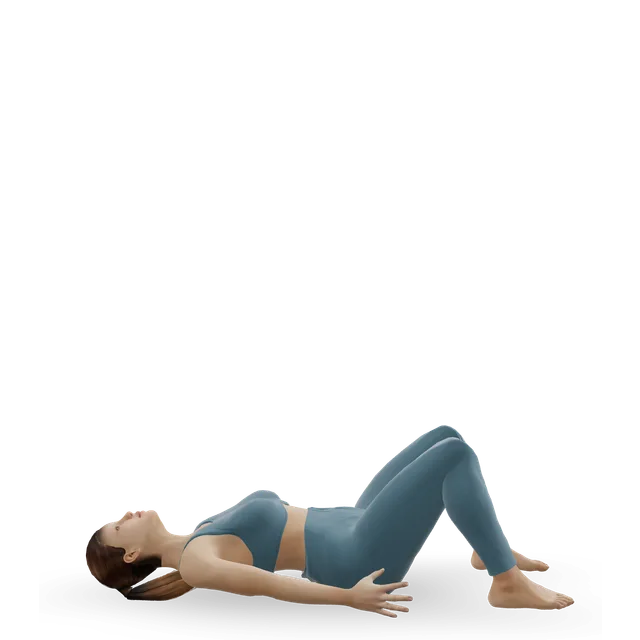
In 36 healthy adults, a larger longus colli, one of the deep neck flexors that chin tucks train, went with a less curved neck. Chin tucks are for control and strength; they aren't expected to restore a curve.
Source 45
Neck X-rays often show wear that may not explain symptoms: by 60 to 65, 95% of men and 70% of women without symptoms had at least one sign of it. American radiology guidance warns that these common findings can mislead, so a report needs reading alongside your symptoms.
Looking down is a normal movement, and studies so far don't show that phones straighten the neck or cause neck pain. If long spells looking down feel uncomfortable, change position and take breaks (our editorial advice).
The often-quoted load on the neck when you look down comes from a calculation of forces, not from measuring anyone's pain or neck shape.
Source 47
No pillow type has been shown to be clearly best for neck pain. Rubber or spring pillows eased pain slightly in one review, and pillow height and shape changed how the neck lined up lying on your side. For a sore neck, the NHS suggests a low, firm pillow, your head level with the rest of your body, and not sleeping on your front. We found no trial showing that a special pillow or a neck roll changes the curve.
The NHS says not to wear a neck collar for neck pain, or after whiplash: it's better to keep your neck moving.
Nothing is needed. A straight neck on an X-ray done for something else is a common finding in people without symptoms.
Two or three sessions a week of neck, shoulder and upper-back strength work for at least 8 weeks, which is our editorial starting point; the trials ran for weeks to months. The neck and shoulder strength routine below puts it together, and yoga or Pilates are reasonable alternatives.
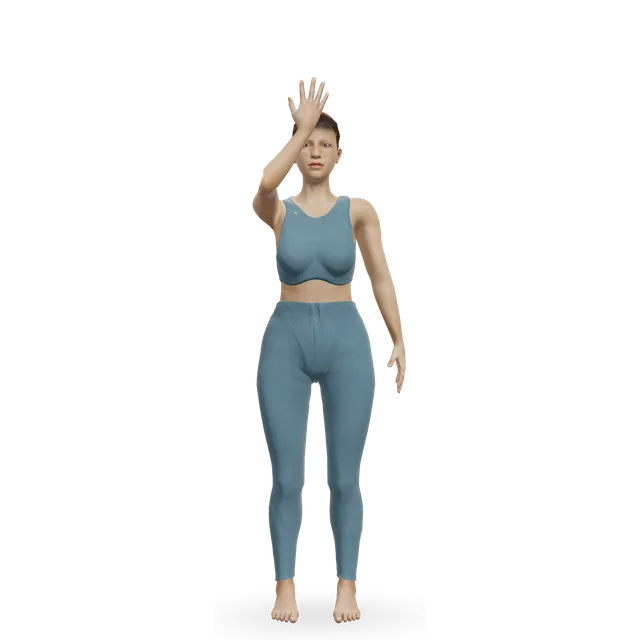
The front and back neck press at the move page's dose: build to a 10-second press, 3 times each way, for 3 rounds, starting with light pressure. Four-way neck holds, 3 to 5 holds of 5 to 10 seconds each way at a light effort; lying chin tucks, up to 10 holds of up to 10 seconds once or twice a day at a very light effort; upright chin tucks, 10 holds of 5 seconds twice a day; then chin tucks with a head lift, 3 to 5 holds of 5 seconds building to 10 holds of 10 seconds (our editorial starting points, as on the forward head posture guide).
Band rows at the move page's dose, 3 sets of 10 to 15. Y-T-W raises, 5 to 8 of each letter for 2 rounds; band pull-aparts and face pulls, 2 to 3 sets of 12 to 15; wall angels, 8 slow slides (our editorial starting points).
Some discomfort is fine if it settles by the next morning. Ease off any move that brings on a headache, dizziness, or pins and needles in an arm (our editorial advice).
The NHS also suggests paracetamol or ibuprofen, heat or cold packs and gentle neck movement, and seeing a GP if the pain doesn't go away after a few weeks. In many areas you can refer yourself to NHS physiotherapy.
Source 50
Judge progress by pain, movement and strength. An X-ray isn't a good way to check: one person's curve can vary by up to 13.5 degrees between X-rays a month apart.
Source 16
The move page's dose, from an NHS physiotherapy leaflet: build to a 10-second press, 3 times in each direction, for 3 rounds. Ease off if a press brings on a headache.
See the movement on the 3D figure: Isometric neck press, front and back
Chin tucks and holds at the editorial doses above, 2 or 3 days a week, and the neck press at its move page's dose. Stop a move that brings on dizziness or pins and needles in an arm.
Band rows at the move page's dose; Y-T-W raises, pull-aparts, face pulls and wall angels at the editorial doses above. The seated upper-back lift suits anyone who'd rather not get down on the floor.
Neck circles, upper-back rotations, open books and the upper trap release at their move pages' doses, as breaks from sitting. They feel good, but stretching and mobility work haven't changed posture in trials.
The neck and shoulder strength routine is the best fit: 2 or 3 times a week for at least 8 weeks (editorial). The Pilates and yoga classes are gentler alternatives, and the desk break is for long days sitting.
Deep neck holds and shoulder-blade strength in under 20 minutes: one of the best-supported kinds of exercise for a stiff, sore neck.
18 minBeginner11 movesA band, An anchor pointA 20-minute Pilates class for neck pain: head-supported core work, upper-back and shoulder-blade strength, gentle neck movement and slow breathing.
20 minBeginner15 movesA wallTwenty minutes of slow breathing, small neck movements, poses that keep your head supported or level, and upper-back strength, with nothing that loads the neck.
20 minBeginner14 movesA stepA 12-minute routine for a stiff upper back and rounded shoulders: chin tucks, wall angels, Y-T-W raises and open books.
12 minBeginner8 movesA foam roller, A wallA 3-minute standing break to repeat every 30 to 60 minutes at your desk: sit-to-stands, calf raises, marching, an upper-back turn and chin tucks.
3 minBeginner5 movesA bench or box, A wallA straight or reversed neck reported on an X-ray or scan done for something else isn't a warning sign by itself.
Source 1
Get emergency help for any of these:
Source 52
Get advice soon (in the US, your doctor or urgent care) for any of these:
Source 52
Ask for an urgent GP appointment or call NHS 111 if you've injured your neck and have:
Source 51
See a GP if neck pain or stiffness hasn't gone after a few weeks, painkillers aren't helping, you have pins and needles or a cold arm, or you're worried. After whiplash, see a GP if your symptoms haven't improved after a week.
See a GP about a neck curve that's getting worse, a head that drops forward and can't be lifted upright, or new symptoms after neck surgery. A GP can refer you to a spinal specialist (our editorial advice).
About a third of people without symptoms have one, the average healthy neck in one large study was close to straight, and large studies find the same curves with and without neck pain.
Texting bends the top of the neck only while you text, and neck bending on a phone didn't predict neck pain. Newer groups of X-rays do look flatter, but without screen-time data nobody knows why.
No pillow type is clearly best even for neck pain, and no trial shows a pillow changes your neck's curve when you're upright.
Straight necks were as common in healthy people as in acute neck pain, and on lying-down MRI a straight neck is the most common appearance.
The traction trials come from one group with declared commercial ties, and pain improved as much without traction by the end of treatment. Manipulation didn't change the curve in 4 weeks.
Chin tucks train the deep neck flexors, which in one study went with a less curved neck, not a more curved one. They're worth doing for control and strength.
A chiropractic X-ray study proposed it, but people without symptoms average about 13 to 19 degrees depending on the method, about a third have a straight or reversed curve, and the average in one large study was straight.
The NHS considers neck surgery only for a trapped nerve or a problem with the spinal cord, and a straight neck is usually a normal finding.
It's an informal name for a neck that looks straight on a side-on X-ray, or curves slightly the wrong way, instead of curving gently inward. X-ray reports call it loss or straightening of the cervical lordosis, or cervical kyphosis if the curve reverses. It describes a picture, not a diagnosis, and despite the name it has nothing to do with the army.
Usually not. About a third of people without any neck pain have a straight or reversed neck on X-ray, and in one large study the average healthy neck was close to straight. Large studies find the same neck curves in people with and without neck pain.
Mostly normal variation: the tilt at the top of your chest, whether you sat or stood for the X-ray, and whether you're a man or a woman all shift it. Wear in the neck is common with or without symptoms. Rarely, a fixed reversed curve follows surgery or an injury, and a specialist assesses it.
There isn't one number. In people without symptoms the curve averages about 13 or 19 degrees depending on how it's measured, with a wide spread, and about 1 in 3 are straight or reversed. The '30 to 40 degrees' you may read online matches a range proposed in a chiropractic study and doesn't fit the larger data.
One small study found headache attacks lasted longer in people with a straight neck, though they weren't more frequent or severe. The evidence on dizziness comes from one research group's traction trials. Headaches and dizziness have many causes, so see a GP rather than putting them down to the shape of your neck.
No. Forward head posture is how far your head sits in front of your shoulders, and it's only weakly related to the curve on an X-ray. Text neck is neck pain blamed on phones, and studies so far don't show phone posture causes neck pain; our tech neck guide covers it.
Small trials of neck-extensor exercise report the curve looking more normal in some people, and traction trials from one group report bigger changes. But one person's X-ray reading can vary by up to 13.5 degrees from month to month, and a curved-looking neck isn't needed for a comfortable one. Exercise is worth doing for strength and pain, not to change an X-ray.
Strength work for the neck, shoulders and upper back has the best evidence for neck pain: neck presses, chin tucks, rows and Y-T-W raises, 2 or 3 times a week. Yoga and Pilates helped too. The 3D demos and a follow-along routine are on this page.
No pillow type has been shown to be best, and none has been shown to change the neck's curve. For a sore neck, the NHS suggests a low, firm pillow that keeps your head level with your body, and not sleeping on your front. Choose the one you sleep best on.
It means your neck looked straighter than average on that image. Straight necks are as common in healthy people as in people with neck pain, and MRI scans are done lying down, when a straight neck is the most common appearance. Ask your GP what it means for you; on its own it isn't a cause for concern.
Straight and angled necks were equally common in people just after whiplash and in healthy volunteers, so the shape usually isn't caused by the accident. A reversed curve after whiplash didn't predict lasting pain. See a GP urgently for weakness, pins and needles or trouble walking after a neck injury.
The trials come almost entirely from one research group whose authors declare commercial ties, including to a company that distributes the device. In its own trials, pain improved just as much without traction by the end of treatment. No independent trial has confirmed it.
Exercise education, not a diagnosis or treatment plan, and clinical review of these guides is pending. Get a curve or hunch that is new or getting worse checked, above all in a growing child or after a fall, and get urgent help for numbness or weakness in the legs or a change in bladder or bowel control. Health disclaimer.