Yoga flows
10-minute desk yoga routine: seated and standing
A 10-minute yoga routine for a working day: start in your chair with slow breathing and gentle neck, shoulder, wrist and spine moves, then stand up for chair pose, a hip hinge at the desk and a hip stretch. It differs from our 5-minute desk stretches, a standing stretch break with no breathing or yoga poses, and our 3-minute desk movement break, which is activity only: use those in between. Use a chair that can't roll. In small trials, short desk yoga sessions eased work stress and some aches about as much as stretching, and standing up and moving is the part the UK guidelines ask for, so don't skip the second half.
Arrive (sitting)
- Beginner · 3D demoSit tall on a chair that can't roll, feet flat. In for about 4, out for about 6, with no holdsEasier: Breath reachHarder: Crocodile breathing (prone diaphragmatic breathing)

Neck and shoulders (sitting)
- Chin tuck5 slow reps, holding each for a couple of secondsBeginner · Neck · 3D demoSlide your head straight back, eyes level. Skip it if it sends symptoms down an armEasier: Lying chin tuckHarder: Isometric neck holds (four-way)
- Side neck stretch2 holds of 10 s each sideBeginner · Neck, Shoulders · 3D demoEar towards your shoulder; let the weight of your head do it. Stop if it brings on dizziness or tinglingHarder: Upper trap release
- Shoulder rolls10 each wayBeginner · Shoulders, Back, Neck · 3D demoSlow and smooth, arms relaxedHarder: Shoulder CARs (controlled articular rotations)



Wrists (sitting)
- Beginner · Forearms · 3D demoCircles and gentle bends; ease off at any tinglingEasier: Wrist circlesHarder: Wrist flexor stretch

Spine (sitting)
- Cat-cow8 slow wavesBeginner · Back, Abs · 3D demoSitting, hands on your knees (the demo is on all fours): round your back gently, then lift your chest. Keep it small with osteoporosisHarder: Half lord of the fishes (Ardha Matsyendrasana)
- Thoracic rotation6 each sideBeginner · 3D demoSitting, arms crossed on your chest, hips facing forward; turn with the breathEasier: Side-lying open bookHarder: World's greatest stretch


Stand up (at the desk)
- Sit to stand from a chair8 slow repsBeginner · Quads, Glutes, Hamstrings · 3D demoUse a firm chair that can't roll, not a wheeled office chair. Breathe out as you standEasier: Sit to stand, pushing on the thighsHarder: Bodyweight squat
- Chair pose (Utkatasana)2 holds of 5 breathsBeginner · Quads, Glutes, Shoulders · 3D demoFingertips on the desk if you need them; sit back as if onto a tall stool. Stay shallow if your knees complainHarder: Revolved chair pose (Parivrtta Utkatasana)
- Hip hinge fold3 slow folds, 3 breaths at the bottomBeginner · 3D demoSoft knees, hands sliding down your thighs or resting on the desk, hips back, back long. With glaucoma, or high blood pressure that isn't under control, hinge only part way so your head stays above your heartHarder: Seated forward fold (Paschimottanasana)
- Standing figure four (chair pigeon, Eka Pada Utkatasana)30 s each sideIntermediate · Glutes, Quads, Hip abductors · 3D demoA hand on the desk; ankle across the opposite knee, then sit back a little. After a hip replacement, check with your surgical team firstEasier: Chair pose (Utkatasana)Harder: Pigeon preparation (Eka Pada Rajakapotasana prep)
- Slow calf raise12 slow repsBeginner · Calves · 3D demoA hand on the desk for balanceEasier: Seated bent-knee calf raise (soleus raise)Harder: Standing dumbbell calf raise




Finish (standing)
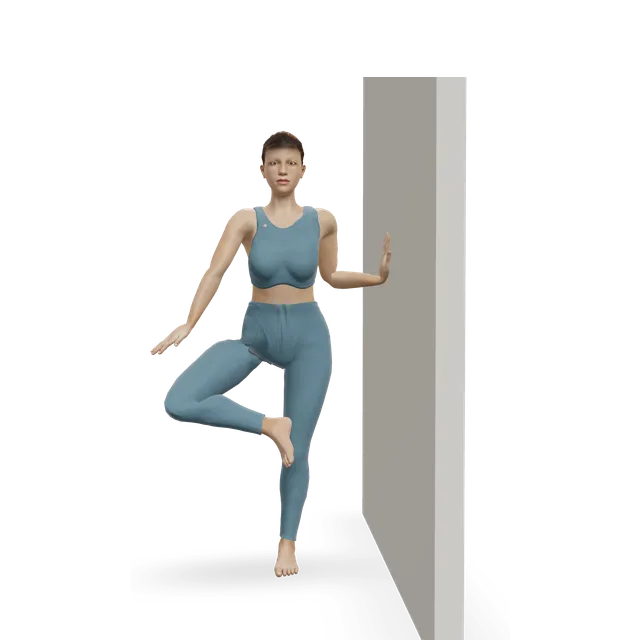
- Mountain pose (Tadasana)5 to 10 slow breathsBeginner · Calves, Back, Abs · 3D demoStand tall, weight even on both feet. Then rest your eyes: look at something at least 6 metres away for about 20 seconds before you sit downHarder: Tree pose (Vrksasana)

Tips
- Do it once or twice a working day, and in between take a 2 to 3-minute break every 30 to 60 minutes you sit: the 3-minute desk movement break is one.
- Do the standing half: in small trials, 3-minute breaks of walking, standing exercises or yoga every 30 minutes lowered blood sugar after meals.
- Slow breathing only: leave out fast breathing and breath holds.
- Ease off any wrist or neck position that brings on tingling, and stop neck moves that make you dizzy.
- With osteoporosis, keep the rounding small and bend from your hips with a long back. With glaucoma, or high blood pressure that isn't under control, keep your head above your heart.
- It can ease stress and some desk aches, but it doesn't undo a day of sitting: aim for at least 150 minutes of moderate activity a week as well, and for neck and shoulder aches add the 2-minute band routine in our sitting guide.
- Short of time? The breathing, the turns, the sit-to-stands and the calf raises make a 3-minute break.
The doses are suggested starting points, not a prescription. Choose a range you can control and stop for sharp or increasing pain, numbness or tingling. Get individual advice after an injury or surgery, or if you are pregnant or managing a health condition.
Guides that recommend it
Find more moves like these
More yoga flows
Beginner yoga flow
A 20-minute beginner yoga sequence: mountain, chair, warrior II, triangle, tree, down dog, cobra and child's pose.
20 minBeginner11 movesA step


Sun salutation flow
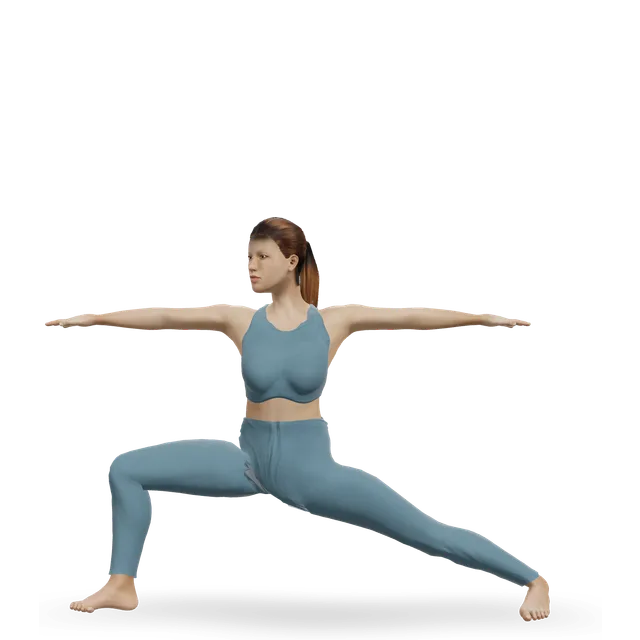
A 20-minute flow built on sun salutations A and B, with warrior poses and a short cool-down.
20 minIntermediate8 movesNo equipment



Yoga for tight hips
A hip-opening yoga sequence: low lunge, lizard, goddess, pigeon, bound angle and happy baby.
25 minBeginner10 movesA wallQuestions people ask
How long does the 10-minute desk yoga routine: seated and standing take?
About 10 minutes, including any warm-up and cool-down listed. Shorten it by doing fewer rounds; lengthen it by adding one.
What equipment do I need?
You need: A bench or box, A wall. Each move links to its guide, where you can find an alternative if you are missing something.
Is it suitable for beginners?
It is written for beginners. 7 of its 13 moves have an easier option listed beside them if you need one.
How do I make it easier or harder?
Use the easier or harder option listed under each move, change the number of rounds, or adjust the rest. Progress one change at a time.