Common, and usually short-lived
Most neck pain lasts a few weeks, and neck problems are rarely caused by serious disease or damage. New neck problems usually begin to settle within 8 weeks.
Fascia guide
Most neck and shoulder tension comes from muscles that are tired, tender and sensitive, often after long spells at a desk or under stress. Pressing on a knot, rolling your upper back or having a massage can ease it for a while. The rule is to press on muscle, never on the neck itself.
The honest headline: release eases tenderness for minutes to weeks, and massage helps a little, but regular strength training of the shoulder and neck muscles is what reduced neck and shoulder pain in trials, even 2 minutes a day.
This guide shows how to release the upper back and the tops of the shoulders safely, what release does (it calms tender muscles; it doesn't break up fascia), what trials found for pressure, massage, stretching and strengthening, a routine to follow and the warning signs.
Most neck pain lasts a few weeks, and neck problems are rarely caused by serious disease or damage. New neck problems usually begin to settle within 8 weeks.
Holding pressure on a tender spot for 30 to 90 seconds made it less tender straight away in a trial of 119 people. Across trials, tenderness eased more reliably than pain did, and the change runs through the nervous system rather than freeing fascia.
A Cochrane review of 33 studies found little or no difference from a placebo, mostly after single sessions. Longer courses helped more (60-minute massages 2 or 3 times a week in one trial), and in another the benefit had gone by about 6 months.
In 48 women with aching shoulder muscles, 10 weeks of strength training cut their worst pain by about 79%, and 2 minutes a day with an exercise band eased pain in 198 workers. A Cochrane review rates the evidence for strengthening as moderate, while stretching alone may not change long-term neck pain.
Massage balls and finger self-massage on the neck have been followed by torn neck arteries in rare case reports. Release the upper back and the tops of the shoulders instead; our neck pain guide also says to skip rolling the neck.
The upper trapezius is the ridge of muscle from the neck to the tip of the shoulder. The levator scapulae runs from the side of the neck to the top corner of the shoulder blade, the small suboccipital muscles sit under the base of the skull, and the rhomboids and middle trapezius sit between the shoulder blades. The sternocleidomastoid runs down the front and side of the neck, beside the main neck arteries. Our muscle guides cover each one.
Knots are tender spots that you and therapists can feel, often called trigger points. Our trigger points guide covers the debate about what they are: examiners don't reliably agree where they are. Most of the evidence comes from trials in people with aching neck and shoulder muscles, often office workers.
Pressure on a tender spot lowers its tenderness straight away. The likely route is the nervous system: how sensitive the area is, and how tense the muscle is. Dense fascia needs far more force than hands apply to change shape, so nothing is being broken up.
The front and sides of the neck carry major arteries and nerves close to the surface. A man who used massage balls on his neck for a week had a torn neck artery and a stroke, and another had a torn neck artery and a weak tongue a week after massaging his own neck with his fingers. Case reports show this can happen, not how often.
In 119 people with trigger points in the upper trapezius, holding pressure reduced tenderness at once: gentle pressure, where it first turns uncomfortable, for 90 seconds, or firmer pressure for 30 seconds. Across 11 studies (427 people), sustained pressure made spots less tender, but in the 7 studies that measured pain (251 people), pain didn't differ significantly from comparison treatments.
A Cochrane review of 33 studies found massage made little or no difference against a placebo up to 12 weeks, on low certainty evidence, mostly after single sessions; a course of 8 or more sessions over 4 weeks looked more useful. In 228 people, 60-minute massages 2 or 3 times a week for 4 weeks eased pain and helped function, while 30-minute ones did no better than a waiting list. In 64 people, a course of massages beat a self-care book at 10 weeks, but the difference had gone by 26 weeks. Against no treatment at all, massage helped shoulder pain in the short term but not neck pain.
Across 10 trials (549 people) with long-lasting neck pain, myofascial release eased pain a little more than other treatments and improved turning and side-bending, with no effect on how much pressure people could bear. The authors call the effect modest.
Source 16
In 50 young adults, neck stabilising exercise plus Thai self-massage 3 times a week for 4 weeks eased pain more than stretching alone. In 58 people, a release tool under the base of the skull did as well as a therapist's hands for one 5-minute session, measured for 45 minutes. We don't recommend pressure under the skull: see safety below.
In 48 women with aching trapezius muscles, 10 weeks of strength training for the sore muscles cut their worst pain by 35 points out of 100 (about 79%), while cycling helped only briefly. In 198 workers, elastic band training for 2 or 12 minutes a day, 5 days a week, eased pain by 1.4 and 1.9 points out of 10 more than health advice after 10 weeks. In 180 women office workers, a year of neck training eased pain and disability more than advice to stretch and do aerobic exercise.
A Cochrane review of 27 trials rates the evidence for strengthening the neck, shoulders and upper back as moderate, and two reviews of office workers agree, one rating all its trials at high risk of bias.
In 96 office workers, stretching twice a day, 5 days a week, for 4 weeks eased pain by 1.4 points out of 10 more than a leaflet alone. In 101 people over a year, adding strength work to stretching didn't beat stretching alone, but most people were exercising only about once a week by the end. On its own, stretching may not change long-term neck pain.
A network meta-analysis of 40 trials found that strengthening, exercises for control of the deep neck muscles, and yoga, Pilates or tai chi all eased long-lasting neck pain against no treatment, with no clear winner, on very low certainty evidence. The best exercise is the one you'll keep doing.
Source 24
Steps 1 to 3 follow the move's page, which gives about 90 seconds for each muscle you roll, for example 2 or 3 slow rounds of 30 to 45 seconds. The pressure times come from a trial of 119 people (Hou 2002), and the 2 minutes a day of band work from a trial of 198 workers (Andersen 2011). Using a ball against a wall, and one or two spots, are our editorial starting points.
Loading the 3D figure…
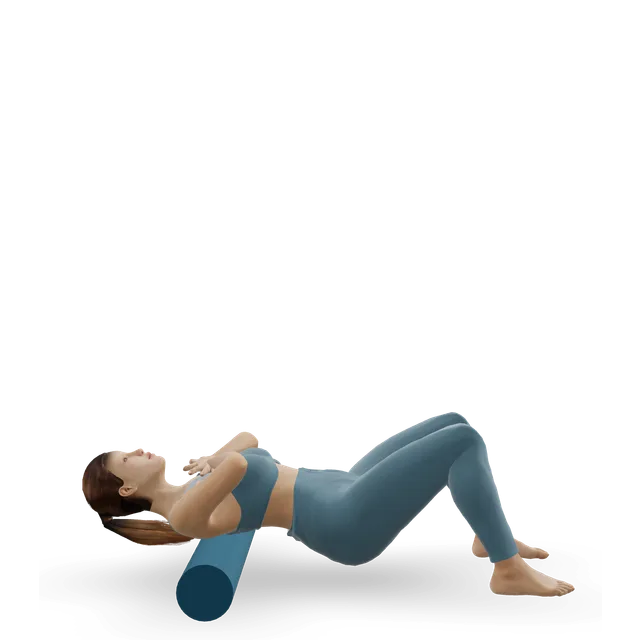
The movement on the figure: Upper back foam rolling
Each dose names its trial, guideline or move page, or is our editorial starting point. Doses are starting points, not prescriptions.
Roll the upper back for about 90 seconds, the move page's dose, and hold a tender spot for 30 to 90 seconds, the times from the pressure trial. Once a day, or before your strength work, is our editorial starting point.
Source 3
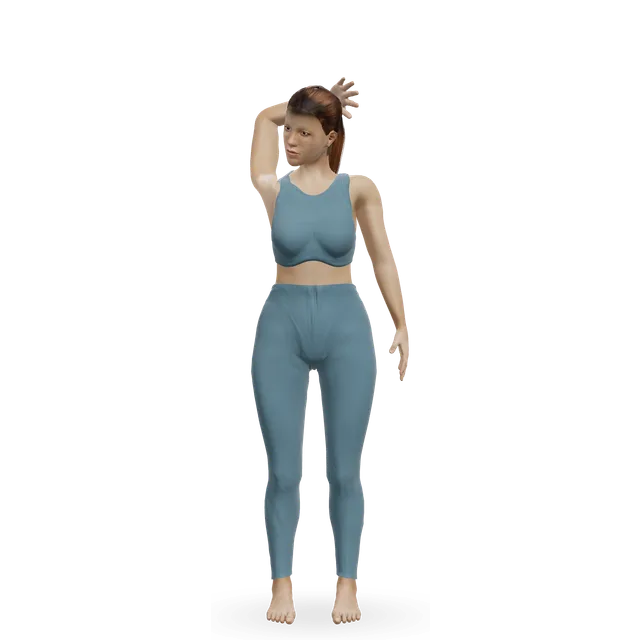
The upper trap release: 2 slow holds of 30 seconds per side, the move page's dose. The levator scapulae stretch: 20 to 30 seconds, 2 to 4 times each side, the move page's dose, which it labels our editorial starting point. The office workers' trial stretched twice a day, 5 days a week.
Source 22
The NHS suggests a bag of frozen peas wrapped in a tea towel for 5 minutes, 3 times a day, or a hot water bottle wrapped in a tea towel for 20 minutes, 2 to 3 times a day. It also suggests a low, firm pillow, and not keeping your neck in one position for a long time.
Source 1
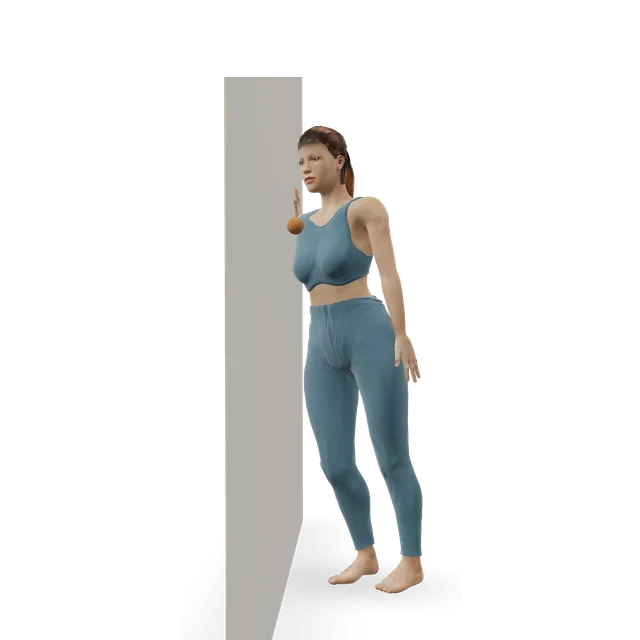
Roll the upper back and press the chest against a wall, using the dose on each move's page; never roll or press the neck itself.
Gentle stretches for the top of the shoulders, the side of the neck and the upper back; let gravity do the work rather than pulling.
The kind of shoulder and neck strength work that eased pain in trials; start light, use each move page's dose where it gives one, and build up over weeks.
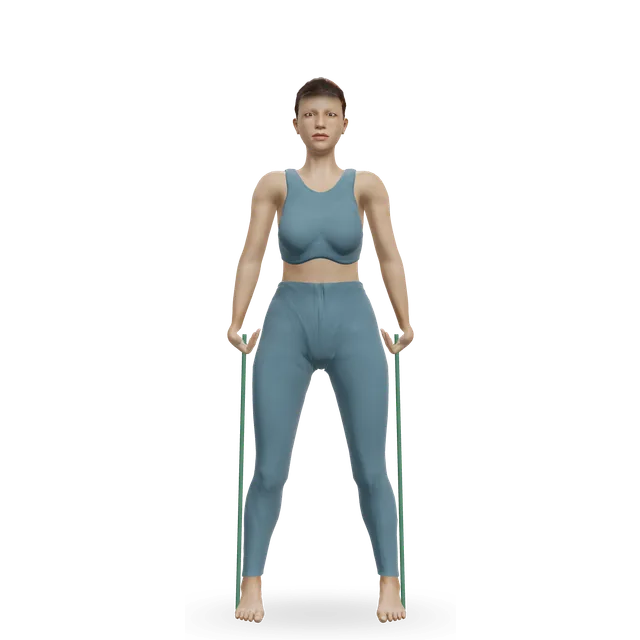 3D demoBand lateral raiseBeginner · A band
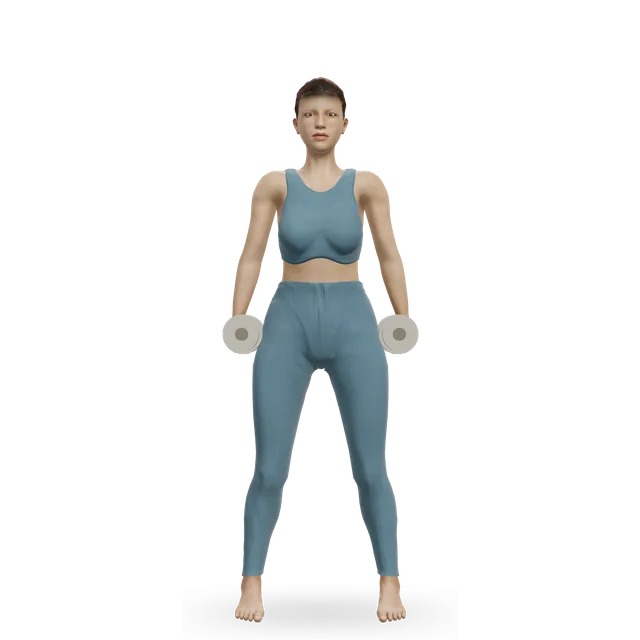 3D demoDumbbell shrugBeginner · A dumbbell
 3D demoSupported single-arm dumbbell rowIntermediate · A dumbbell + A bench or box
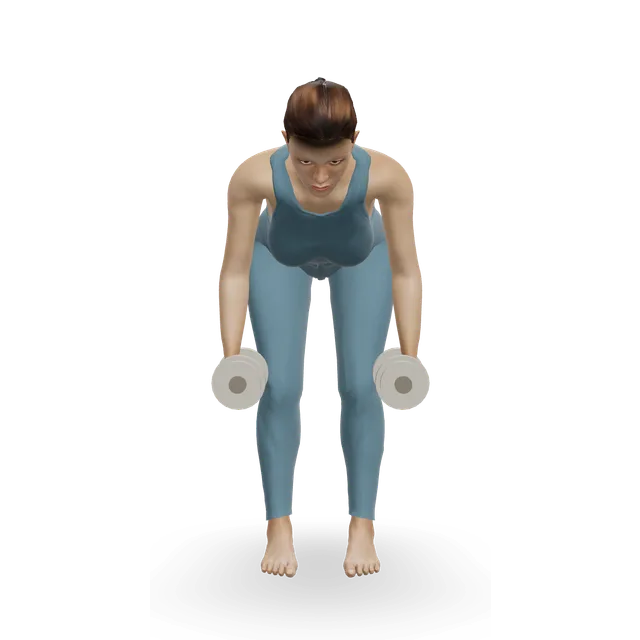 3D demoBent-over reverse flyIntermediate · A dumbbell
 3D demoBand pull-apartIntermediate · A band
 3D demoChin tuckBeginner · No equipment
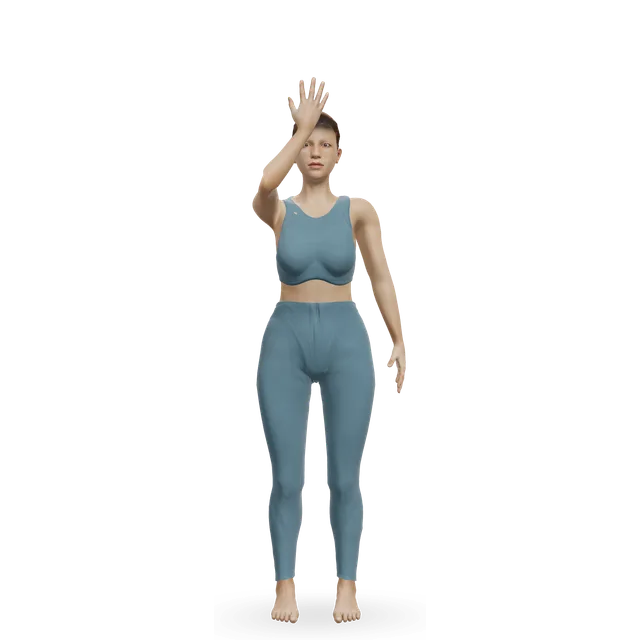 3D demoIsometric neck holds (four-way)Beginner · No equipment
Start with the knots routine: a minute of optional self-pressure, two gentle stretches, then the shoulder strength work from the trials.
Knotted neck and shoulders: a minute of self-pressure, two gentle stretches, then the shoulder-blade strength work that eased neck pain in trials.
15 minBeginner8 movesA foam roller, A bandDeep neck holds and shoulder-blade strength in under 20 minutes: one of the best-supported kinds of exercise for a stiff, sore neck.
18 minBeginner11 movesA band, An anchor pointEight gentle neck and shoulder stretches for desk stiffness, done standing or seated in ten minutes.
10 minBeginner8 movesA wallA 12-minute routine for a stiff upper back and rounded shoulders: chin tucks, wall angels, Y-T-W raises and open books.
12 minBeginner8 movesA foam roller, A wallA quick stretch break you can do beside your desk: neck, back, chest, wrists, hips and quads.
5 minBeginner7 movesA wallUse them on the upper back, across the shoulder blades and on the tops of the shoulders, never on the front or sides of the neck or under the skull. Our massage balls guide shows how.
Use one gently on the tops of the shoulders and the upper back, and keep it off the neck. Our massage guns guide covers who should avoid them.
One trial found a release tool under the base of the skull worked as well as a therapist for a single session, measured for 45 minutes. There's no longer-term evidence, and with the case reports of neck artery tears, we don't recommend pressing under the skull or into the neck.
The front and sides of the neck, the base of the skull and the bony middle of the spine. Stop at once and call 999 for dizziness, a severe headache, blurred vision, slurred speech, a drooping face, or weakness or numbness in an arm, even if it passes.
The NHS says hands-on treatments such as osteopathy and chiropractic may not be safe if you take blood thinners or are at increased risk of bleeding or stroke, have very weak or damaged bones, or have a nerve condition such as peripheral neuropathy. We apply the same cautions to firm pressure and rolling: keep it light on blood thinners, which make bruising more likely, and ask before rolling over the spine or ribs with osteoporosis, when even a cough can break a rib.
Leave release out after a neck injury until it's been checked, and stop for tingling, numbness or pain spreading down the arm. NHS inform has separate advice for a neck injury from a fall from a height or a blow to the head or neck.
Source 2
Skip it over breast implants, a pacemaker or port, after recent chest or shoulder surgery, or with a rib injury, as its move page says.
Source 2
Source 31
Pressure eases a spot's tenderness straight away, through the nervous system, not by changing fascia, which needs far more force than hands apply to change shape. Our trigger points guide explains why examiners don't reliably agree where knots are.
Gentle pressure held for 90 seconds eased tenderness as well as firmer pressure for 30 seconds, and deep pressure on the neck has been followed by artery tears.
One trial of 58 people found it eased pain as well as a therapist for one session, measured for 45 minutes. There's no longer-term evidence, and pressing into the neck carries rare but serious risks, so we don't recommend it.
Stretching helps a little in the short term, but on its own it may not change long-term neck pain. Strength training is what eased neck and shoulder pain in trials.
We found no study showing it. A neck hump can be a pad of fat, a rounded upper back or normal bone, and exercise doesn't melt a fat pad. Our neck hump guide explains the causes and what helps.
Press on muscle, not on your neck: roll your upper back slowly, press the muscle on top of your shoulder for 30 to 90 seconds, then stretch. Then strengthen, because that is what eased neck and shoulder pain in trials.
Tender spots in the muscle that you can feel, often called trigger points. They're real sensations, but examiners don't reliably agree where they are, and they aren't adhesions you can break up. Our trigger points guide covers the debate.
Keep pressure off the front and sides of your neck and the base of your skull: rare case reports describe torn neck arteries after massage balls or finger self-massage there. Gentle pressure on the tops of the shoulders and the upper back is fine.
In a trial of 119 people, gentle pressure held for 90 seconds, or firmer pressure for about 30 seconds, made trigger points less tender straight away. Across trials, tenderness eased more reliably than pain did.
A little, for a while. A Cochrane review found little or no difference from a placebo, mostly after single sessions. Longer courses helped more in one trial, with 60-minute massages 2 or 3 times a week, and in another the benefit had gone by about 6 months.
Strength training. In 48 women with aching shoulder muscles, 10 weeks of strength work cut their worst pain by about 79%, and 2 minutes a day with an exercise band helped in a trial of 198 workers.
Both, but strengthening has the better evidence. Stretching twice a day eased office workers' neck pain a little over 4 weeks, while stretching alone may not change long-term pain.
Not on the neck itself. Use them gently on the tops of your shoulders and your upper back, or lean against a ball on a wall.
We found no study showing it. A neck hump can be a pad of fat, a rounded upper back or normal bone, and our neck hump guide explains which exercise can help.
Holding the same position for long spells, desk work and stress all play a part, and it's very common. The NHS suggests not keeping your neck in one position for a long time, and strength work helped office workers in trials.
Call 999 for a stiff neck with a fever, a sudden severe headache, weakness, numbness or a drooping face, or chest pain spreading to the arm. Get urgent help after a bad fall or crash, or for arm numbness, tingling or weakness that's getting worse, or new problems with balance or walking.
Movement education, not medical advice. Stop for sharp or increasing pain, numbness or tingling, and get individual advice if you are pregnant, after an injury or surgery, or managing a health condition. Health disclaimer.