A few minutes can loosen a muscle, briefly
In small trials, 2 to 5 minutes on the calves increased ankle range without costing strength, and a review found short-term gains in flexibility. The effect lasts minutes, as with a foam roller.
Fascia guide
A massage gun, also sold as a percussion massager or fascia gun, is a battery-powered hammer: its head moves back and forth 5 to 16 mm, up to about 3,200 times a minute. In small trials, a few minutes on a muscle gives a short-term gain in how far it moves, without costing strength. Pooled trials haven't shown that it eases muscle soreness, and it hasn't beaten a foam roller.
It also carries risks that rollers don't: rare case reports of injuries to the neck arteries and the eyes, muscle breakdown after heavy use, serious bleeding in someone on blood thinners, and battery recalls.
This guide covers what the vibration does, the evidence with numbers, how to use one, the places to avoid, and who should skip it.
In small trials, 2 to 5 minutes on the calves increased ankle range without costing strength, and a review found short-term gains in flexibility. The effect lasts minutes, as with a foam roller.
Pooled trials found no clear drop in muscle soreness after hard exercise, on very low certainty evidence, and in one trial using one straight after hard calf work made soreness slightly worse for a few hours.
Adding vibration to rolling gave no extra range, and hands-on massage has much better evidence for soreness.
Our editorial starting point is 30 seconds to 2 minutes per muscle, on a low or medium setting with light pressure, keeping the head moving. That's in line with what professionals report and with a review's 2-minute guide.
As a precaution, keep it off the neck, especially the front and sides. One manufacturer's own safety list counts direct use on the face, head, throat or neck among the times when the risks may outweigh the benefits, and there are rare case reports of neck artery tears after neck use, though they don't prove the gun caused them. Never use one on a leg that could have a clot.
A motor drives the head back and forth. Modern guns move it 5 to 16 mm, up to about 3,200 times a minute, and push with a force equal to 16 to 36 kg before the motor stalls. Professionals mostly use the ball head, and speed settings run from about 17 to 53 strikes a second (hertz).
In the US, a powered massager is a low-risk (Class I) medical device that needs no review before it's sold. We found no NHS or UK regulator guidance on massage guns.
Source 13
Percussion stimulates pressure and vibration sensors in the skin and muscle. In 45 adults, a vibrating roller raised pain thresholds more than a plain roller but added no extra range. A higher pain threshold is a likely reason a muscle feels looser.
Two minutes on the calves lowered passive stiffness and raised stretch tolerance in 15 men. Three rounds of 30 seconds on the hamstrings changed neither range nor stiffness in 17 people, and strength dropped a little.
After 2 or 4 minutes on the thigh, blood flow in the small vessels of the muscle rose for 5 to 15 minutes in 22 people, in a study without a comparison group. That's a small, short-lived change.
Source 16
In a lab study of 12 people, hand massage after hard exercise slowed blood flow and the clearance of lactate compared with resting. A massage gun trial found no difference in lactate.
No study shows a massage gun changes the structure of fascia. The measured effects are short-lived changes in feel, range and stiffness.
Five minutes on the calves increased ankle range by 5.4 degrees (18%) in 16 men, with no loss of strength, and 2 minutes increased range in another small trial. A review of 11 studies (281 people, mostly young men) found short-term gains in flexibility. But 3 rounds of 30 seconds on the hamstrings did nothing.
A 2026 meta-analysis of 12 trials (393 people) found no clear drop in delayed-onset muscle soreness (DOMS) after hard exercise, on very low certainty evidence. In 65 adults, 5 minutes on one calf straight after hard exercise slightly increased soreness for 4 hours. Over 3 days, neither percussion nor foam rolling eased pain more than rest. A 2023 review of 13 studies was more positive, but every study had quality problems.
Across 99 studies of recovery methods, hands-on massage had the largest effect on soreness and fatigue. Massage guns haven't matched it.
A review found no gains in strength, balance, speed or jumping, and in one study jump height dropped by 3.1%, though not significantly. After hard exercise, percussion may help jump performance recover, on low certainty evidence, but not maximal strength.
A meta-analysis found adding vibration to rolling gave no extra range. On the hamstrings, percussion and a vibrating foam roller both left range unchanged. Over 3 days of soreness, rolling lowered muscle tone and stiffness where percussion didn't.
In 50 people with neck pain and trigger points, six 5-minute sessions over 3 weeks helped about as much as neck and shoulder stretching. Added to 8 weeks of physiotherapy for chronic low back pain in 50 people, 10 minutes of percussion eased pain by 1.15 points out of 10 more, below the change people usually notice, while disability came out slightly worse.
We found no published trials of massage guns for sciatica, plantar heel pain, lymphatic drainage or cellulite.
30 to 60 seconds per muscle, moving (our editorial starting point). A review advises against using one in the 5 minutes before sprinting, jumping or heavy lifting, when it may lower performance.
Source 3
Up to 2 minutes per muscle, the review's guide. Trials gained range with 2 to 5 minutes.
Optional: 1 to 2 minutes per muscle (our editorial starting point). The soreness benefit is unproven, and 5 minutes straight after hard calf work slightly increased soreness in one trial.
In an exploratory analysis of pooled trials, sessions of more than 5 minutes per muscle went with more soreness. Keep a whole session under 10 to 15 minutes (our editorial limit).
Source 4
Gentle pressure, about 4 to 6 out of 10, as a review suggests. Professionals report using the ball head and the low or medium settings (about 17 to 40 strikes a second) most, so start there, and keep the gun moving (our editorial advice). The review's split, brief faster use for range and longer slower use after exercise, is preliminary.
There are no trials of daily use. Use it when it helps, keep sessions short and light, and don't work the same small spot hard day after day (our editorial advice).
Our editorial method, in line with what professionals report (Cheatham 2021) and a 2023 review's guidance (Ferreira 2023). There's no massage gun on the 3D figure.
From one manufacturer's own safety list, case reports and NHS advice. The neck advice is a precaution: the case reports are rare and can't prove the gun caused the injury.
A foam roller does the same short-term job for less, and the calf also responds to stretching and strength.
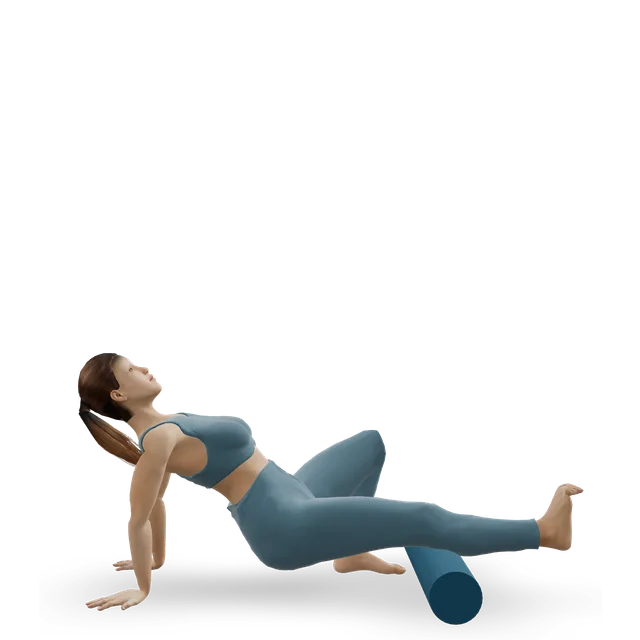 3D demoCalf foam rollingIntermediate · A foam roller
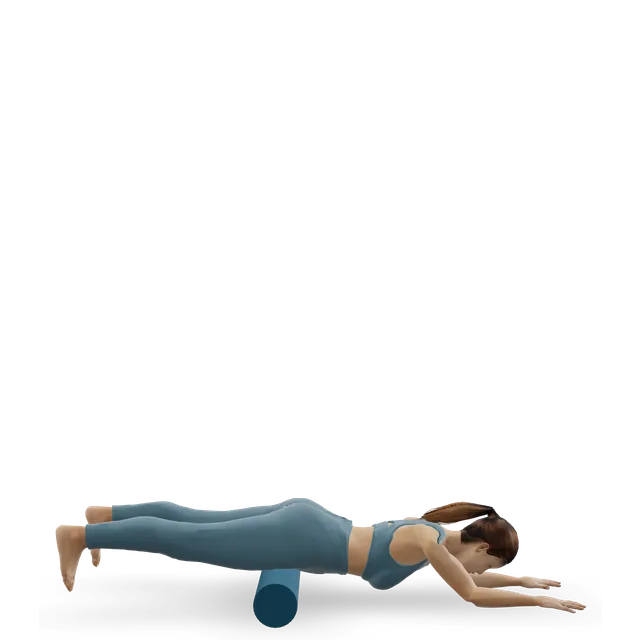 3D demoQuad foam rollingIntermediate · A foam roller
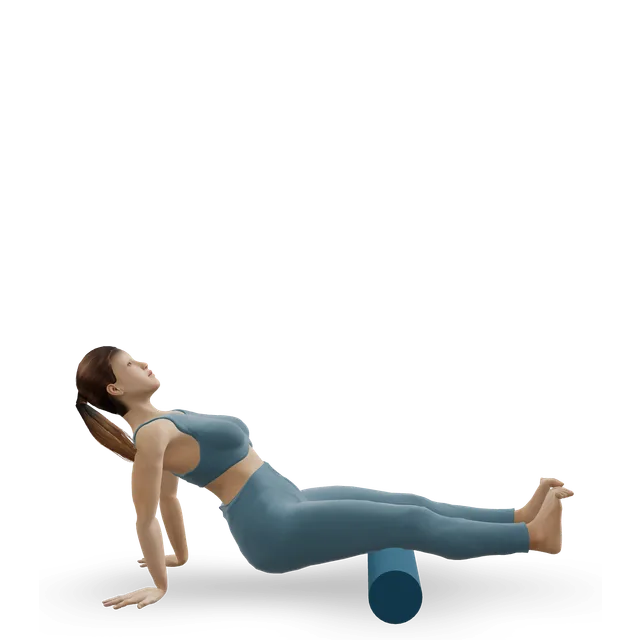 3D demoHamstring foam rollingBeginner · A foam roller
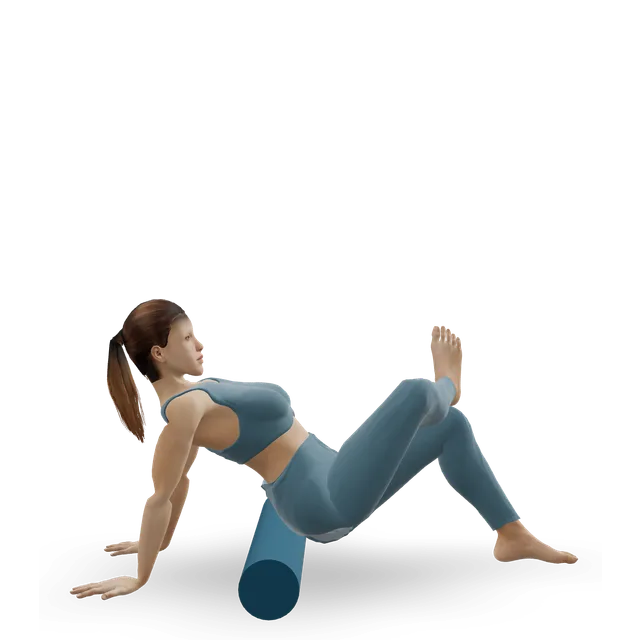 3D demoGlute and piriformis foam rollingIntermediate · A foam roller
 3D demoWall calf stretch (gastrocnemius)Beginner · A wall
 3D demoSoleus wall stretchBeginner · A wall
 3D demoSupine hamstring stretch with a strapBeginner · No equipment
 3D demoSlow calf raiseBeginner · A wall
A warm-up that gets you moving does more for a session than any gadget.
A 10-minute foam roller routine for calves, thighs, glutes and upper back: about a minute per area, moderate pressure, slow rolls.
10 minBeginner6 movesA foam rollerA 25-minute easy session for rest days and sore muscles: easy cardio, a gentle mobility flow, optional rolling for sore spots, and slow breathing to finish.
25 minBeginner11 movesCardio machine, A wallSeven stretches for after a run: calves, soleus, quads, hip flexors, hamstrings and glutes.
10 minBeginner7 movesA wallA 10-minute warm-up for any workout: raise your heart rate, move each joint through its range, rehearse the main movements, then ramp up to your first lift.
10 minBeginner12 movesA wall, A bandOne manufacturer's safety list advises seeking medical advice before use if you have a deep vein thrombosis, a bleeding disorder, medicines that thin the blood or alter sensation, a fracture, a pacemaker or implanted defibrillator, a nerve condition that dulls sensation, uncontrolled high blood pressure, or serious heart, liver or kidney disease. It lists pregnancy, osteoporosis, varicose veins and bony areas as needing extra care.
A 2023 review adds recent scars, wounds or skin infection, rheumatoid arthritis, epilepsy, cancer and implanted devices. On blood thinners you bleed and bruise more easily, and with osteoporosis bones break more easily.
These are rare case reports. They show what can happen, not how often it does:
A review of case reports found massage is not entirely risk-free, but serious harms are probably very rare.
Source 30
In the US, about 12,360 massage guns were recalled in 2021 because the battery could overheat (3 fires), and about 46,000 massagers in 2024 because they could overheat while charging (17 reports, including one burned thumb). Use the charger that came with it, and stop using a recalled model.
These need help now:
Hand massage slowed lactate clearance compared with resting, and a massage gun trial found no difference in lactate. Nothing shows toxins being flushed out.
No study shows a massage gun changes tissue structure. The measured effects are short-lived changes in feel, range and stiffness.
Pooled trials found no clear drop in soreness, on very low certainty evidence, and one trial found slightly more soreness straight after hard exercise.
We found no trials of either. For lymphoedema, even specialist light-touch drainage massage added nothing worthwhile in a trial; the lymphoedema guide explains. For cellulite, see the fascia blasting verdict.
Heavy use has caused muscle breakdown, and with rollers, near-painful pressure added nothing over moderate pressure.
Studies found no gains in strength or power, and sometimes a drop.
As a precaution, no. One manufacturer's own safety list says the risks of direct use on the neck may outweigh the benefits, and there are rare case reports of neck artery tears after use there.
For a few minutes of extra range, yes, in small trials. For sore muscles, pooled trials show no clear benefit, on very low certainty evidence. They haven't been shown to beat a foam roller or hands-on massage.
Our starting point is 30 seconds to 2 minutes per muscle, keeping it moving. Trials that gained range used 2 to 5 minutes. Keep a whole session under 10 to 15 minutes.
There are no trials of daily use, so use it when it helps and keep sessions short and light. Don't work the same small spot hard day after day.
Before, use it briefly as part of a warm-up, but not in the 5 minutes before jumping, sprinting or heavy lifts, when it may lower performance. After, it's optional: the evidence for less soreness is weak, and in one trial it made soreness slightly worse for a few hours.
Keep it off your neck, head, face and eyes, the bony middle of your spine and other bony points, your tummy and your groin. Don't use it on bruises, wounds, rashes, varicose veins, numb skin or a leg that could have a clot.
It's not known to cause clots, but massaging a leg that already has one can move it to the lungs, and one manufacturer's safety list advises medical advice before use if you have a deep vein thrombosis. A calf that is swollen, throbbing or discoloured needs 111, or 999 if you're also breathless or have chest pain.
As a precaution, no. One manufacturer's own safety list says the risks of direct use on the neck may outweigh the benefits, and there are rare case reports of tears in the neck arteries after use there, though they don't prove the gun caused them. Use it gently on the top of your shoulders and upper back instead, including for a neck hump.
Neither has shown an advantage for range. Over 3 days of soreness, rolling lowered muscle stiffness where percussion didn't, and neither eased pain more than rest. A roller is cheaper; a gun reaches small spots and suits people who can't get down to the floor.
Start with the ball head on a low or medium setting, the settings professionals report using most. Use light pressure and keep it moving. Other heads concentrate the force, so keep them away from bone and nerves.
We found no published trials for sciatica or heel pain. Added to physiotherapy for chronic low back pain, it eased pain a little but didn't help disability. The pain guides set out the treatments with evidence.
We found no trials of either. For lymphoedema, even specialist light-touch drainage massage added nothing worthwhile in a trial. For cellulite, see the fascia blasting verdict.
Avoid it, or ask a doctor first, if you have a clot or a bleeding disorder, take blood thinners, have a pacemaker, severe numbness from neuropathy, a recent fracture or osteoporosis, or are pregnant. Some models have also been recalled because the battery could overheat.
Movement education, not medical advice. Stop for sharp or increasing pain, numbness or tingling, and get individual advice if you are pregnant, after an injury or surgery, or managing a health condition. Health disclaimer.









