Yoga guide

Yoga for degenerative disc disease: what the label means, the lower back and the neck, and what helps

"Degenerative disc disease" is a name for the changes that show on spine scans as discs age: drying, flattening and bulging. It sounds alarming, but these changes are found in most people over 40 who have no pain at all, and on their own they don't explain pain or predict how your back or neck will feel. Yoga can help a little, about as much as other exercise, but only one small trial has tested it in people selected for degenerated discs, and it found the discs looked the same on scans afterwards.

So the aim is less pain and more confidence, not a different scan. If pain down a leg is your main problem, our yoga for a herniated disc and yoga for sciatica guides fit better; yoga sits beside care from your GP or physiotherapist, never in place of it.

This guide explains what the label does and doesn't mean, how to choose poses for the lower back and the neck, why bending is allowed, what the evidence shows, the classes to follow and the warning signs.

The short version

It's a name for age changes, not a disease that keeps getting worse

In people with no back pain, scans show disc degeneration in 37% at age 20 and 96% at 80, and most symptom-free adults have bulging discs in the neck. A review of 402 papers found the term used with no agreed meaning.

Sources 1, 2, 3

The scan barely predicts how you'll feel

Disc changes are a little more common in people with back pain, but in 3,369 adults followed for 6 years most scan findings didn't predict future pain. NICE advises against routine scans for back pain.

Sources 4, 5, 6

The words can do harm

In an experiment with 1,375 people, labels such as "degeneration" made people think scans and surgery were more needed and recovery less likely than "episode of back pain" did. "Age-related disc changes" describes the same thing.

Source 7

Yoga helps a little, like other exercise

For back pain in general, yoga eased pain and improved function slightly in trials, about as much as other back exercise. The NHS lists yoga among activities that may help ease back pain. Choose the exercise you'll keep doing.

Sources 8, 9, 10

No exercise has been shown to rebuild a disc

In the one small yoga trial with scans, discs looked the same after 12 weeks, and 6 months of exercise didn't change the discs in another trial. A study finding healthier-looking discs in yoga teachers compared 36 people at a single time point, so it can't show yoga protects discs.

Sources 11, 12, 13

Bending is allowed

A programme that taught people their discs wouldn't be harmed by ordinary activity, and to use their backs and bend them, did as well as spinal fusion. For the neck, gentle movement and neck and shoulder-blade strength are the core; the poses that load the neck are the ones to leave out.

Sources 14, 15

What the label means

A name with no agreed meaning

Discs are the cushions between the bones of the spine. With age they lose water and height and can bulge. Scan reports call this degeneration, desiccation (drying), height loss or wear and tear. A review of 402 papers using "degenerative disc disease" found that the term was most often used with no definition at all, and that the rest used it for anything from scan changes to nerve pain.

Source 3

What scans show in people with no back painStrong evidence

A review of 33 studies pooled the scans of 3,110 people with no back pain. The authors concluded that changes such as disc degeneration and height loss are generally part of normal ageing rather than a disease needing treatment. In the neck, 87.6% of 1,211 symptom-free volunteers aged 20 to 70 had bulging discs, including most people in their 20s.

  • Disc degeneration: 37% at age 20, 68% at 40, 88% at 60 and 96% at 80.
  • Disc bulges: 30% at 20, rising to 84% at 80.
  • Disc height loss: 24% at 20, rising to 84% at 80.

Sources 1, 2

Weakly linked with pain, and a poor guide to the futureEmerging evidence

In adults 50 or younger, disc degeneration was more common in people with back pain (odds about 2 times higher), but it was found in more than 30% of people without any. In a German population study of 3,369 adults, almost all the links between scan findings and pain were less than 1 point on a 0 to 10 scale, and most findings didn't predict pain 6 years later. In 148 people followed for 3 years, low mood predicted new back pain, and disc findings didn't.

Sources 4, 5, 16, 17

Why the words matterEmerging evidence

In the randomised experiment with 1,375 people, "degeneration", "disc bulge" and "arthritis" raised the sense that scans, surgery and a second opinion were needed, and lowered expectations of recovery, compared with "episode of back pain" or "lumbar sprain". The effect was biggest in people with back pain who had sought care.

Source 7

Discs and exerciseMixed evidence

Young runners had discs with more water than people who didn't do sport, and fast walking and slow running went with healthier-looking discs; but it was one comparison at a single time point, and the authors say other explanations can't be ruled out. In 40 people with long-lasting back pain, 6 months of exercise didn't change their discs on MRI. Exercise is for pain, function and fitness.

Sources 18, 12

How yoga loads the discs

No study has measured disc loads in yoga poses in people with disc changes. Disc pressure studies in a single volunteer and in spine specimens don't show that any pose harms or heals a disc, as our yoga for a herniated disc guide explains. What matters in practice is how your back responds: keep what feels fine by the next morning (our reading).

Lumbar spondylosis

Lumbar spondylosis is another name for the same age changes in the discs and small joints of the lower back, a label common in Indian yoga research. In one Indian trial most participants carried that label or a disc prolapse label, but the results weren't reported by label.

Source 19

What the evidence says

Few yoga studies have selected people with disc changes, so this section also draws on the exercise and yoga trials in back pain in general, and says where it does.

One small yoga trial in degenerated discsMixed evidence

In north India, 62 adults aged 20 to 45 with long-lasting back pain and degenerated discs on MRI were randomised to an hour of yoga a day for 12 weeks or to a waiting list, but only 40 were tested and many dropped out. Pain eased in the yoga group and didn't change in the waiting-list group, which did nothing, and the discs looked the same on MRI afterwards. With those limits, it is a hint, not proof.

Source 11

Two related studiesMixed evidence

Our searches found no other trial selected for disc degeneration. A trial of the same yoga programme in 61 adults with disc bulges or extrusions found a small improvement in back-related disability; our yoga for a herniated disc guide covers it. In an Indian trial of 80 people with long-lasting back pain, mostly labelled lumbar spondylosis or disc prolapse, a week of residential yoga eased pain and disability more than physiotherapy exercise, but it lasted one week and didn't report results by label.

Sources 20, 21, 19

The yoga teacher studyMixed evidence

In Taiwan, 18 yoga teachers with more than 10 years of teaching had healthier-looking neck discs than 18 people who had never done yoga, and possibly lower back discs, though that difference wasn't clear. Nobody had back pain, the comparison group was about 5 years older, and it was a single look at one time. The authors called it a pilot needing a larger study; it can't show yoga prevents or reverses disc changes.

Source 13

Exercise eases long-lasting back painStrong evidence

In a Cochrane review of 249 trials, exercise reduced long-lasting back pain by about 15 points out of 100 compared with no treatment, usual care or a placebo (moderate certainty), and improved function by less. NICE suggests considering a group exercise programme. These trials weren't in people selected for disc changes, but the label doesn't change the treatment.

Sources 9, 6

Yoga for back pain: small benefits, like other exerciseEmerging evidence

Across 21 trials (2,223 people), yoga improved back function by 1.69 points on a 0 to 24 scale and pain by about 4.5 points out of 100 at 3 months against no exercise, both less than the amounts counted as important, and did about as well as other back exercise. Reviews to 2026 find no mind-body exercise, yoga included, clearly better than another.

Sources 8, 22, 23

Surgery did little better than rehabilitationStrong evidence

In 64 people with disc degeneration and a year or more of pain, an education and exercise programme did as well as spinal fusion on disability, and 18% of the surgery group had early complications. A disc replacement beat rehabilitation by a margin smaller than the trial counted as important, and 11 years after three trials, fusion and rehabilitation came out the same. NICE says not to offer fusion except in a trial, and not to offer disc replacement.

Sources 14, 24, 25, 6

Walking helps keep it from coming backEmerging evidence

In 701 adults who had recovered from back pain, a progressive walking and education programme delayed the next episode that limited their activities (a median of 208 days against 112). The trial was in back pain in general.

Source 26

The neckEmerging evidence

No yoga or exercise trial has selected people for neck disc changes. For long-lasting neck pain, neck, shoulder-blade and arm strengthening has the best support, and yoga eased pain and disability in the short term, no more than other exercise. Our yoga for cervical spondylosis guide has the detail.

Sources 15, 27, 28

The pain rules, and bending is allowed

Lower back

Some discomfort during exercise is fine, and it does not mean you are doing damage: the WHO counts "hurt does not necessarily mean harm" among the messages people with back pain need. Aim for pain you would call mild to moderate, no more than about 5 out of 10. It should settle within an hour or so, and your back should be no worse the next morning. If it is worse, do less next time (fewer reps, a smaller range, a lighter load), not nothing.

Leg symptoms are the exception: stop or shrink any movement that sends pain, pins and needles or numbness further down your leg. If leg symptoms move back towards your spine, that is a good sign, even if your back aches a little more for a while.

Bending practice may ache a little at first. That is expected and isn't damage, as long as it settles by the next morning; the rehabilitation that matched surgery taught people to use their backs and bend them. The label on your scan doesn't change this rule.

Source 10

Neck

NHS inform's neck exercise advice: rate your pain from 0 to 10. During exercise, 0 to 3 is minimal and 4 to 5 is acceptable; 6 or more is too much. If it goes higher, do fewer repetitions, move more slowly or rest longer between movements.

Exercise should not make your neck worse overall. Soreness from a new exercise should ease quickly, and your neck should be no worse the next morning. Stop any exercise that makes your symptoms worse or causes new pain.

Arm symptoms are the exception, as in our neck pain guides. If a pose sends pain, tingling or numbness further down your arm, or the extra symptoms last more than an hour afterwards, make the movement smaller or leave it out.

Source 29

During a flare

Keep moving, little and often: the NHS advises staying active, and NICE recommends encouragement to carry on with normal activities. Favour whichever direction eases you for now, and go back to the gentle poses below for a few days.

Sources 10, 6

Lower back: settle in whichever direction eases it

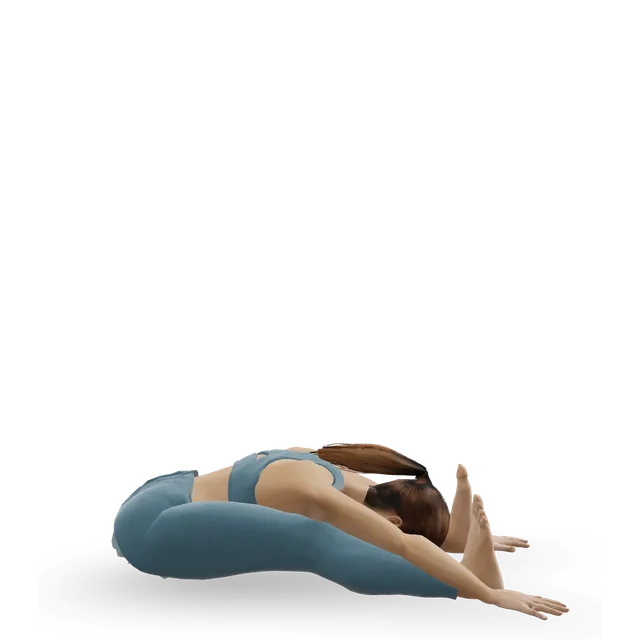
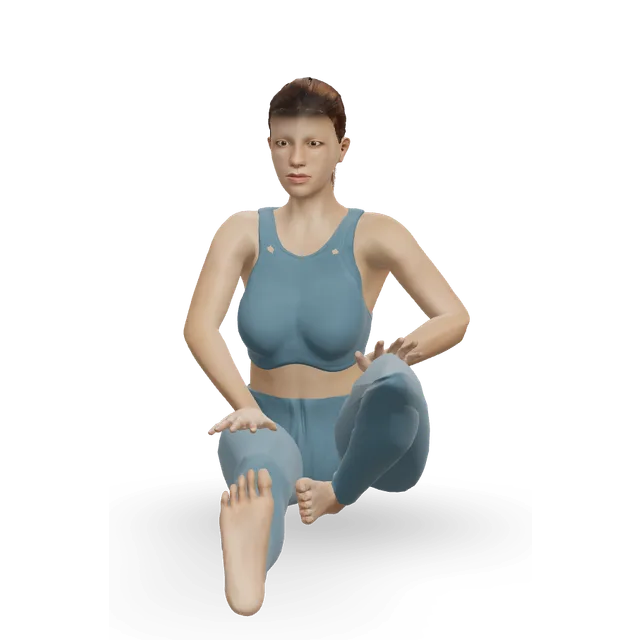
You don't need both directions: use knees to chest if bending forward eases your back, the sphinx if arching does (our degenerative disc disease guide). Corpse pose and slow breathing: 2 minutes each, knees bent (our yoga for back pain class). Pelvic tilts: 8 to 10 slow reps (our degenerative disc disease guide). Knees to chest: hold 20 to 30 seconds, 2 to 4 times (adapted from the move page's dose). Sphinx: 3 holds of 20 to 30 seconds (our degenerative disc disease guide). Cat-cow: 8 waves, slower than feels natural (the move page's dose), in a small range at first. Hip windscreen wipers: 10 slow passes (our yoga for back pain class). Child's pose: 60 seconds, knees wide (our yoga for back pain class).

Lower back: strength

Two or three days a week, with the doses from our degenerative disc disease guide: bird dog 3 sets of 8 each side; dead bug 3 sets of 8 each side, heel taps first if you need an easier start; bridge 3 sets of 10; side plank from the knees, then full, 3 holds of 20 to 30 seconds each side. Locust: 3 holds of 3 breaths, eyes on the floor (our yoga for neck pain class).

Lower back: bending practice and standing poses

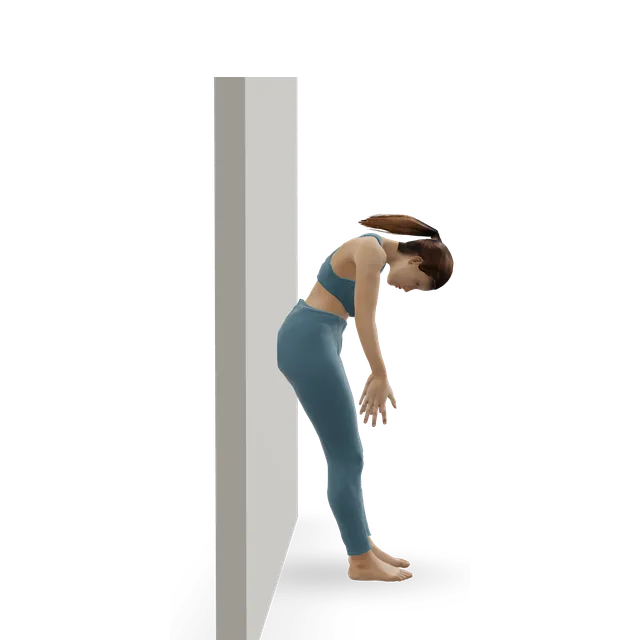
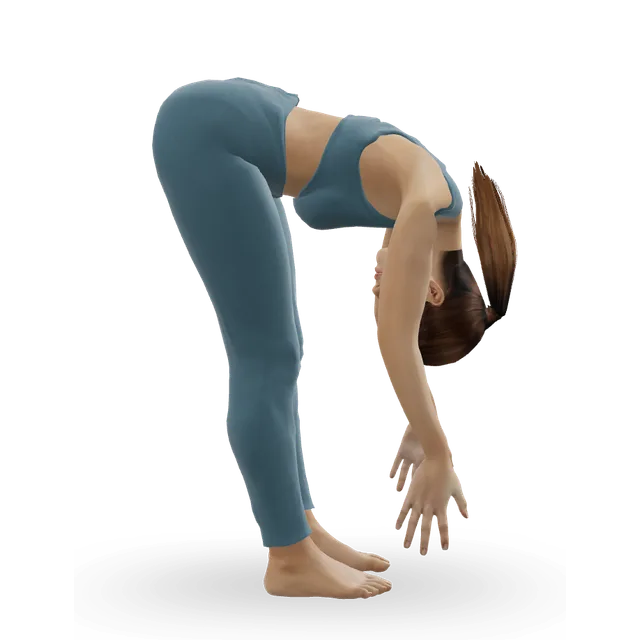
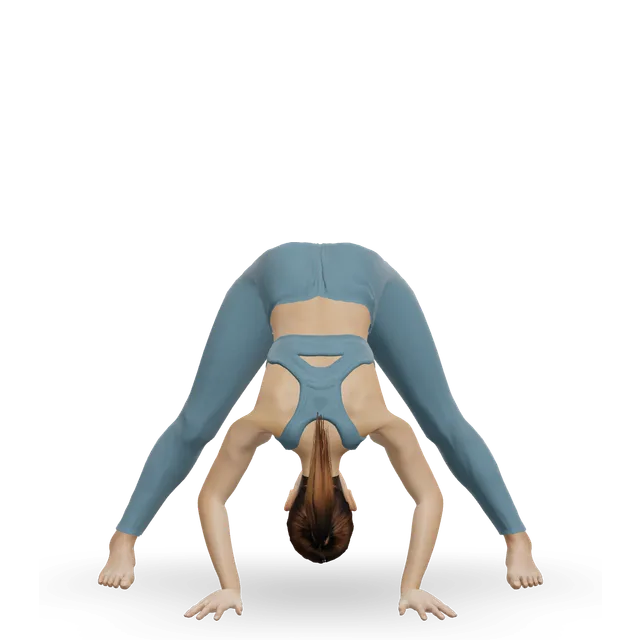
Hip hinge fold: 5 slow folds, 3 breaths at the bottom (the move page's dose). Hip hinge: 3 sets of 8 to 10 (our degenerative disc disease guide). Wall roll-down, the move page's dose: 3 to 5 slow reps. A suggested starting point. No trial has tested this move on its own. Segmental roll-down, later, the move page's dose: 5 or 6 slow roll-downs, about 20 seconds each way (our editorial starting point); skip it if bending forward brings on leg pain. Mountain pose: 5 slow breaths; chair pose: 3 holds of 15 seconds (our yoga for back pain class). Warrior II and tree pose: 3 breaths each side (our yoga for sciatica class).

The neck: gentle movement and upper-back strength

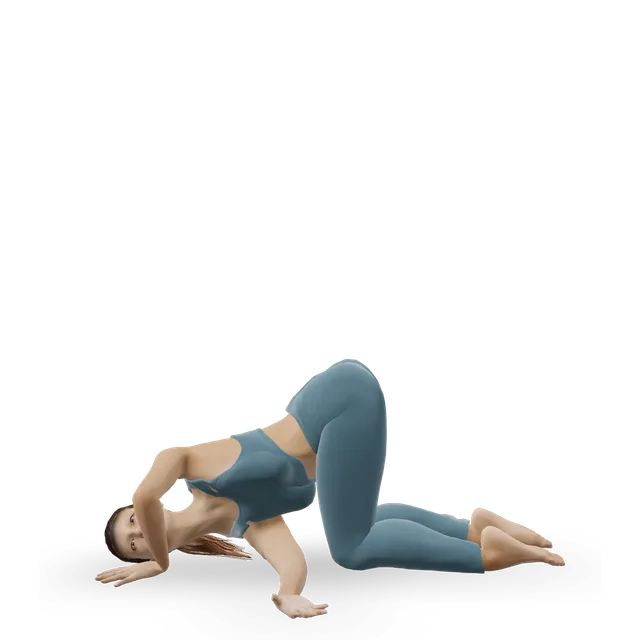
Neck movements: 2 to 3 reps each way, several times a day, building to about 10, as small arcs stopping short of the stiff point (our neck arthritis guide, from NHS inform's advice). Chin tucks: 10 holds of 5 seconds, twice a day; lying chin tucks: 5 to 10 gentle holds (our neck arthritis guide). Thread the needle: 30 seconds each side, head resting on a folded towel (our yoga for neck pain class). Upper trap release: 2 slow holds of 30 seconds per side (the move page's dose). Thoracic rotation: 6 rotations per side, moving with the breath (the move page's dose). Face-down Y-T-W raises: 5 of each shape, 2 rounds; band row: 2 to 3 sets of 10 to 15 (our neck arthritis guide).

Poses to change, not ban

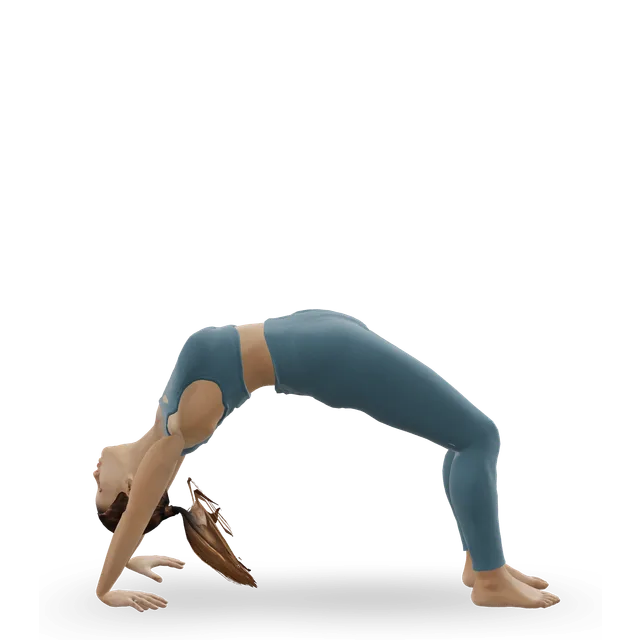
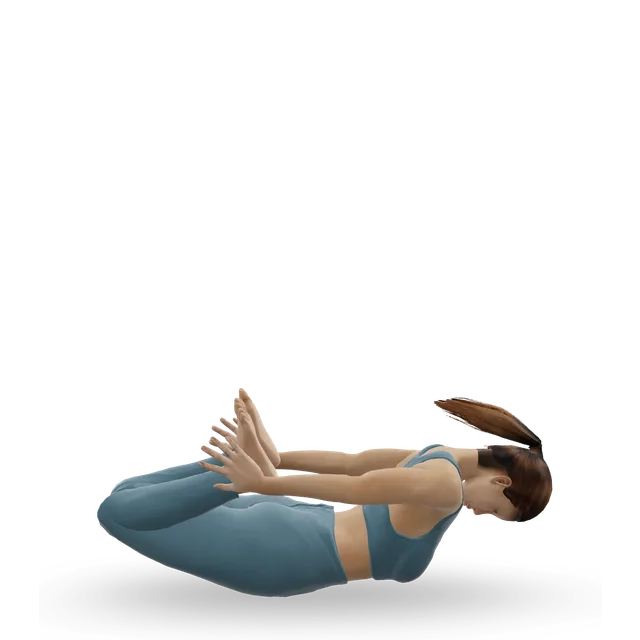
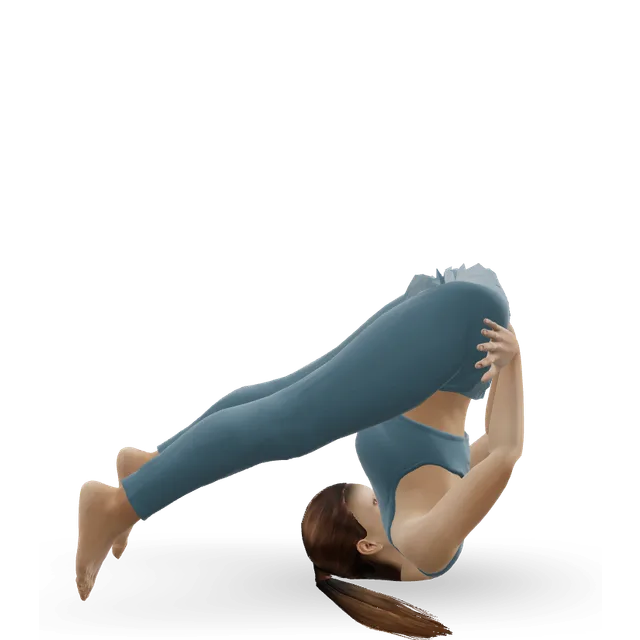
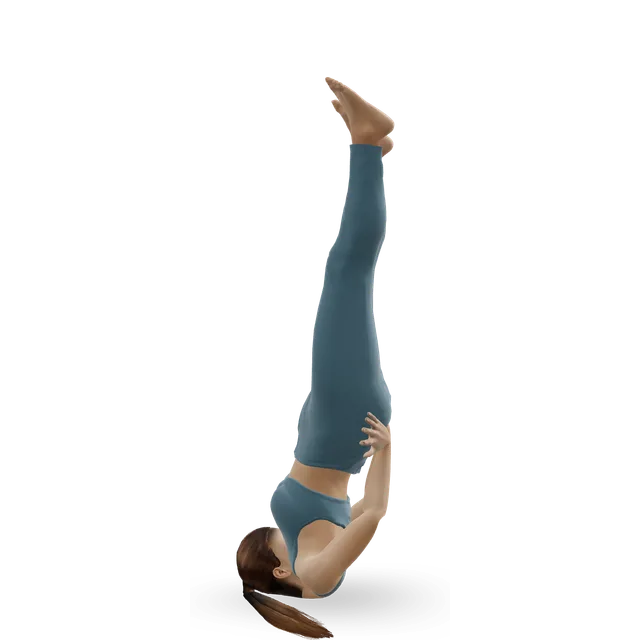
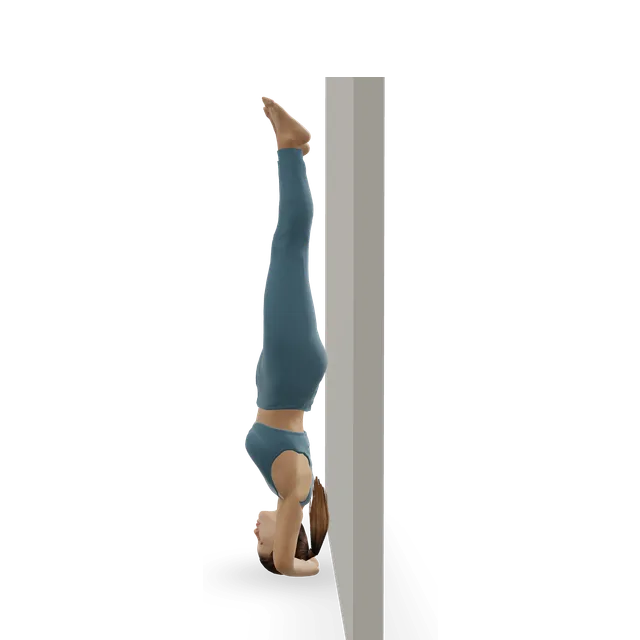
None of these is banned for good (our degenerative disc disease guide says none is). While leg pain is bad, bend your knees in folds over straight legs; save deep backbends such as camel, wheel and bow until arching feels fine; leave out plough, shoulder stand and headstand if your neck has disc changes, as their own pages advise for neck or disc problems; and shorten long passive holds (our suggestion, as on our yoga for a herniated disc guide).

Classes to follow

For the lower back, the 20-minute yoga for back pain class has both directions; keep whichever eases you. For the neck, the yoga for neck pain class keeps your head supported or level. Chair yoga suits days when the floor is hard, and the restorative sequence a flare.

Walking alongside

The walking trial built up gradually over months; start where you are and add a few minutes at a time.

When to get help

These are the warning signs from our back pain, sciatica, degenerative disc disease and neck pain guides, word for word. This is general information, not a diagnosis. A&E means accident and emergency; in the US, call 911 for 999.

Lower back: call 999 or go to A&E

Call 999 or go to A&E: loss of feeling or numbness around the genitals or bottom, new trouble peeing or controlling your bladder or bowels, changes in genital sensation during sex or problems with erections or orgasm, or pain, tingling, weakness or numbness in both legs. These are signs of cauda equina syndrome, which needs treating in hospital urgently. Don't drive yourself.

Call 999 or go to A&E: back pain with chest pain, or back pain that started after a serious accident, such as a car crash.

Sources 10, 30

Lower back: get help the same day

Same day: leg weakness that is getting worse.

Same day (urgent GP appointment or NHS 111): new difficulty lifting the front of your foot or toes (foot drop), or a foot that slaps down or catches as you walk, especially if it is getting worse. Weakness in both legs, or with numbness around the genitals or bottom or bladder or bowel changes, is the 999 emergency above.

Same day (GP or NHS 111): back pain and you feel hot, cold, shivery or generally unwell, or severe pain that starts suddenly or is getting worse quickly.

Same day: you have or have had cancer, and new back pain that is severe and doesn't let up, is getting steadily worse, is worse at night and disturbs your sleep, is worse when you cough, sneeze or strain, or comes with tenderness over the spine. Contact your cancer team or GP urgently. With cancer, new weakness, difficulty walking, numbness or bladder or bowel problems are an emergency.

Source 10

Lower back: see a GP

Back pain that hasn't improved after a few weeks of looking after it at home, stops you doing day-to-day activities, worries you, or you're struggling to cope.

Unexplained weight loss, or a lump, swelling or change in the shape of your back.

Pain that doesn't improve with rest or is worse at night, or pain that is worse when you sneeze, cough or poo.

Pain spreading below the knee, with tingling, numbness or weakness: this points to an irritated nerve (sciatica), which has its own guide.

If your sciatica hasn't improved after a few weeks of looking after it at home, is getting worse, or is stopping you doing your normal activities. In many areas you can refer yourself to NHS physiotherapy for back problems.

Unexplained back pain with muscle spasms, loss of height, or a curved spine or change in posture: a possible osteoporotic spinal fracture, more likely with older age or long-term steroid tablets.

Sources 10, 30

After a fall

Sudden mid or lower back pain after a minor fall, lift, cough or sneeze, especially from 50 or with long-term steroid tablets.

Often worse moving or changing position and eased by lying down. It can be an osteoporotic spinal fracture, so see a GP; height loss or a new curve in the upper back are other signs.

Neck: call 999 or go to A&E

Call 999 or go to A&E: new problems walking, loss of bladder or bowel control, or a sudden loss of coordination, such as difficulty doing up buttons. These can be signs of pressure on the spinal cord.

Sources 31, 32

Neck: get help the same day

Same day (urgent GP appointment or NHS 111): severe neck pain that starts suddenly or gets worse quickly; heaviness or weakness in the arms or legs; pins and needles in an arm along with neck or arm pain; or pain between the shoulder blades.

Same day: clumsiness in your hands, or numbness, pins and needles or weakness in one or both arms, that is getting worse; problems with balance or walking since the neck pain started; or neck pain with a severe headache.

Sources 31, 32

With osteoporosis

Modify or avoid exercises that round your back deeply or repeatedly, especially with a weight: sit-ups, toe touches, Pilates roll-downs and curl-ups, and extreme yoga forward folds. Bend from the hips instead. You do not need to avoid bending, twisting or lifting altogether: move smoothly and keep your upper back straight.

Twisting should be safe if you do it smoothly and comfortably. Slow down and shorten fast or forceful twists, and leave out the added weight.

During yoga

A joint pain that is sharp, gets worse during a session, lingers into the next day or changes how you move is a reason to use an easier version, and to see a GP or physiotherapist if it keeps happening (the rule in our plans). Muscle soreness for a day or two after something new is normal. In a hot class, stop if you feel dizzy, sick or unwell; our hot yoga guide lists the signs of heat illness.

Chest pain or fainting while exercising: call 999

Call 999 if:

  • You get sudden pain or discomfort in your chest that doesn't go away; it can feel like squeezing or pressure, burning or indigestion.
  • The pain spreads to your left or right arm, or your neck, jaw, stomach or back.
  • You have chest pain and feel sweaty, sick, light-headed or short of breath.
  • Someone faints while exercising, can't be woken within 1 minute, or has chest pain or a pounding, fluttering or irregular heartbeat.

Sources 33, 34

Breathlessness

Call 999 or go to A&E (accident and emergency) straight away for severe difficulty breathing (gasping, choking or not able to get words out), a chest that feels tight or heavy, pain that spreads to your arms, back, neck and jaw, lips or skin turning very pale, blue or grey, or sudden confusion. If you're more short of breath than usual, or your heart is racing, fluttering or skipping beats, contact NHS 111.

Source 35

Before you start

The NHS advises getting advice from a healthcare professional first if you have a health problem, an injury or symptoms, or have recently had a heart attack or an operation.


Myths

"Degenerative disc disease means your spine is wearing out"Strong evidence

The changes are found in 37% of pain-free 20-year-olds and 96% of pain-free 80-year-olds, they barely predict future pain, and the term has no agreed meaning.

Sources 1, 5, 3

"Yoga can reverse disc degeneration"Emerging evidence

In the one yoga trial with scans, the discs looked the same after 12 weeks, and 6 months of exercise didn't change discs in another trial. The yoga teacher study compared 36 people at a single time point.

Sources 11, 12, 13

"Protect a bad disc: don't bend or lift"Emerging evidence

Rehabilitation that told people ordinary activity wouldn't harm the disc, and to use their backs and bend them, did as well as spinal fusion.

Source 14

"You need regular scans to track it"Strong evidence

NICE advises against routine imaging for back pain, and the findings don't tell you how your back will feel. A scan matters if there are warning signs or surgery is being planned.

Sources 6, 5

"Long stretches and inversions rehydrate your discs"Mixed evidence

No human study shows it. The idea rests on laboratory work and a single comparison of runners, and exercise didn't change discs in a trial.

Sources 18, 12

Questions people ask

Is yoga good for degenerative disc disease?

It can help a little, like other exercise. Only one small yoga trial has selected people with degenerated discs, and it had big limits; for back pain in general, the Cochrane review found small benefits, about the same as other back exercise.

Can yoga cure or reverse degenerative disc disease?

No: the scan changes don't reverse, and after 12 weeks of yoga the discs looked the same on MRI even though pain eased. The changes are common in people without pain, so the aim is less pain and more confidence, not a different scan.

Which yoga poses should I avoid with degenerative disc disease?

None is banned for good. During a flare, favour the direction that eases you, bend your knees in folds if your leg is involved, and leave headstand, shoulder stand and plough out if your neck has disc changes. Deep backbends can wait until arching feels fine.

What are the best yoga poses for degenerative disc disease?

No pose is proven best. A mix works: gentle movement such as cat-cow and knees to chest or sphinx, whichever eases you; strength with a steady spine such as bird dog, bridge, side plank and locust; bending practice such as a hip hinge fold; and standing poses.

Is yoga good for degenerative disc disease in the neck?

No trial has tested it for neck disc changes, but gentle neck movement and neck and shoulder-blade strength help neck pain in general, and yoga eased long-lasting neck pain in short-term trials. Leave out poses that put weight on your head or drop it back.

Is chair yoga good for degenerative disc disease?

It can be, if the floor is hard to get to or a flare makes lying down uncomfortable: seated cat-cow, twists, side bends and forward bends from the hips work the same way. No trial has tested chair yoga for disc changes, so this is our suggestion.
Is yin yoga good for degenerative disc disease?

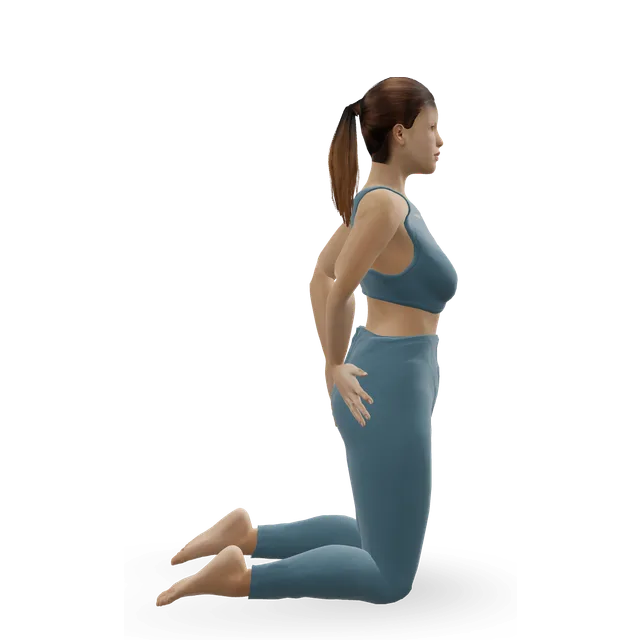
It hasn't been tested. Long, deep, passive holds aren't needed; if you enjoy yin, shorten the holds, bend your knees in folds, and come out of anything that sends symptoms down a leg.

Is Pilates or yoga better for degenerative disc disease?

Neither has been shown better: mind-body exercises, yoga and Pilates included, ease back pain by similar amounts in trials. Choose the one you'll keep doing.

Is yoga bad for degenerative disc disease?

Not in general. In back pain trials, yoga caused more brief flares of back pain than no exercise, about as many as other exercise, and serious problems were rare. Avoid forcing poses to the end of your range.

Is yoga good for lumbar spondylosis?

Lumbar spondylosis is another name for the same age changes in the discs and joints of the lower back, so the same advice applies. Indian yoga trials included many people with that label but didn't report their results separately.

Do I need another scan?

Usually not: NICE advises against routine imaging for back pain, and the findings don't tell you how your back will feel. A scan matters if there are warning signs or surgery is being planned.

When should I see a doctor about degenerative disc disease?

See a GP if your back pain hasn't improved after a few weeks of looking after it at home, stops you doing day-to-day activities, worries you, or you're struggling to cope. Call 999 or go to A&E for numbness around your genitals or bottom, new trouble peeing or controlling your bladder or bowels, changes in genital sensation during sex, or pain, tingling, weakness or numbness in both legs: these can be cauda equina syndrome.

Sources

  1. Brinjikji 2015 · Spine degeneration on scans of 3,110 people without back pain: 33 studies (systematic review, AJNR; read in full)
  2. Nakashima 2015 · Neck MRI findings in 1,211 people without symptoms (cross-sectional study, Spine)
  3. Battié 2019 · "Degenerative disc disease": how 402 papers used the term (systematic review, Spine)
  4. Brinjikji 2015 · MRI findings in 3,097 adults aged 50 or under with and without back pain (meta-analysis, AJNR; read in full)
  5. Kasch 2022 · Lumbar MRI findings and current and future back pain in 3,369 adults (population cohort, Spine)
  6. NICE NG59 · Low back pain and sciatica in over 16s: assessment and management (recommendations, last updated July 2026)
  7. O'Keeffe 2022 · How labels for back pain change what people think they need (randomised experiment in 1,375 people, Eur J Pain)
  8. Wieland 2022 · Yoga for chronic non-specific low back pain: 21 trials, 2,223 people (Cochrane review; read in full)
  9. Hayden 2021 · Exercise therapy for chronic low back pain: 249 trials (Cochrane review; read in full)
  10. NHS · Back pain
  11. Telles 2016 · Pain and MRI disc changes after 12 weeks of yoga in people with degenerated discs (randomised trial, Med Sci Monit; read in full)
  12. Owen 2020 · Exercise for the intervertebral disc: 40 people over 6 months (randomised trial, Eur Spine J)
  13. Jeng 2011 · Disc degeneration on MRI in 18 long-time yoga teachers and 18 non-practitioners (cross-sectional comparison, Eur Spine J; read in full)
  14. Brox 2003 · Fusion against a cognitive and exercise programme for back pain with disc degeneration: 64 people (randomised trial, Spine)
  15. Gross 2015 · Exercises for mechanical neck disorders: 27 trials (Cochrane review)
  16. Han 2023 · Do MRI findings predict future back pain? (systematic review, J Physiother)
  17. Jarvik 2005 · New back pain over 3 years in 148 people without pain at the start (cohort study, Spine)
  18. Belavý 2017 · Running and the lumbar discs in 79 young adults (cross-sectional MRI study, Sci Rep; read in full)
  19. Tekur 2008 · One week of residential yoga against physiotherapy exercise in 80 people with chronic back pain (randomised trial, J Altern Complement Med)
  20. PubMed and Europe PMC · Our searches for yoga studies in disc degeneration: one cross-sectional study, plus one trial found through earlier leads (31 October 2026)
  21. Monro 2015 · Yoga therapy for disc bulges and extrusions: 61 adults (exploratory randomised trial, J Back Musculoskelet Rehabil)
  22. Li 2026 · Yoga against other exercise for chronic low back pain: 7 trials (systematic review and meta-analysis, Front Med)
  23. Xiang 2026 · Mind-body exercise for chronic low back pain: 25 trials (network meta-analysis, J Pain Res)
  24. Hellum 2011 · Disc replacement against rehabilitation for back pain with degenerative discs: 173 people (randomised trial, BMJ)
  25. Mannion 2013 · Fusion against non-surgical treatment about 11 years after three randomised trials: 473 people (follow-up, Spine J)
  26. Pocovi 2024 · WalkBack: walking and education to prevent back pain coming back in 701 adults (randomised trial, Lancet)
  27. Cramer 2017 · Yoga for chronic neck pain: 3 trials, 188 people (systematic review and meta-analysis, Clin Rehabil)
  28. Rasmussen-Barr 2023 · Exercise types for chronic neck pain: an overview of 25 systematic reviews, with certainty ratings (BMC Musculoskelet Disord; read in full)
  29. NHS inform · Exercises for neck problems
  30. NHS · Sciatica
  31. NHS · Cervical spondylosis (past its review date: reviewed August 2023, review due August 2026)
  32. NHS inform · Neck problems
  33. NHS · Chest pain (past its review date: reviewed August 2023, review due August 2026)
  34. NHS · Fainting
  35. NHS · Shortness of breath

Exercise education, not a personal prescription, and clinical review of these guides is pending. If you are pregnant, have a health condition such as glaucoma, high blood pressure or osteoporosis, or have had recent surgery, check with a doctor, midwife or physiotherapist before starting, and stop for sharp or increasing pain. Health disclaimer.