Pain guide · Neck pain

Exercises after neck surgery: recovery after ACDF or a disc replacement, stage by stage

An anterior cervical discectomy and fusion (ACDF) and a cervical disc replacement both go in through a small cut at the front of the neck to take pressure off a trapped nerve or the spinal cord. In an ACDF the two bones are joined so they grow together over the following months; a disc replacement keeps that level moving. Most people are up and walking the day after surgery. A sore throat and some difficulty swallowing are common for the first days or weeks, and arm pain often eases first, while numbness and weakness take longer.

Your surgical team's plan comes first: hospitals differ on the collar, lifting, driving and when exercise starts. This guide sets out the usual stages from NHS hospital plans, with a 3D demo of each exercise, what trials found about collars and physiotherapy, typical timings for work, driving and sport, and the warning signs that need help straight away.

When to get help first

Exercise is for pain that has been checked or is clearly mild and settling.

Get urgent medical help if

  • Call 999: severe difficulty breathing (you're gasping, choking or not able to get words out), or breathing or swallowing that is quickly getting worse in the days after an operation on the front of the neck, especially with swelling in the neck. Rarely, bleeding or swelling presses on the windpipe, and that needs help straight away.
  • Call 999 or go to A&E: new problems walking, loss of bladder or bowel control, or a sudden loss of coordination, such as difficulty doing up buttons. These can be signs of pressure on the spinal cord.
  • After the operation: new weakness or numbness in your arms or legs, or new problems with your bladder or bowels. Go to A&E urgently.
  • Go to A&E: swallowing problems or changes to your voice that keep getting worse after the first few days, or that come with any difficulty breathing.
  • Go to A&E urgently: clear, watery fluid leaking from the wound with a headache or a high temperature.
  • Call 999: calf or leg pain or swelling with breathlessness or chest pain. It could be a clot that has reached the lungs. Do not drive yourself to A&E.
  • Call 999: chest pain that spreads to your arm, neck or jaw, especially with breathlessness, sweating or feeling sick. It could be a heart attack.
  • A high temperature, or feeling hot, cold or shivery; or a wound that is red, hot, swollen or oozing: contact your surgical team, ask for an urgent GP appointment or get help from NHS 111. These can be signs of an infection. If you feel unwell and the wound looks infected, go to A&E.
  • Severe difficulty swallowing, or coughing when you eat or drink: contact your surgical team or spinal nurse, your GP or NHS 111 the same day.
  • Same day (your surgical team or spinal nurse, your GP or NHS 111): pain that is constant and getting worse, or severe new neck pain.
  • In a hard collar: it rubs and makes the skin sore, or it feels so tight that it's hard to swallow. Contact your surgical team the same day.
  • Same day (GP or NHS 111): throbbing pain and swelling in one leg, usually the calf or thigh, with red, blue or darker skin or swollen veins. It could be a blood clot (deep vein thrombosis, DVT), which is more likely while you're moving about much less than usual or after a hospital stay.

See a doctor or physiotherapist if

  • Swallowing problems or a hoarse voice that haven't settled by about 6 to 8 weeks, or weight loss or chest infections alongside them: ask your GP or surgical team about a referral to a speech and language therapist.
  • Arm pain that isn't easing by about 6 to 12 weeks, or numbness or weakness that isn't improving: tell your team. If weakness or numbness is new or getting worse, go to A&E (see above).
  • Neck pain that is still troubling you 3 months after the operation: ask your GP about a physiotherapy review.
  • A flight or a long journey in the first weeks: ask your team about your risk of a blood clot first. One NHS trust advises not flying for at least 4 weeks.
  • You're not sure what your limits are, or you're not reaching the stage your team expected: ask them rather than guess.

Understand it

What the operations are

In an anterior cervical discectomy and fusion (ACDF), the surgeon makes a small cut at the front of the neck, moves the windpipe and gullet gently aside, and removes the worn or bulging disc and any bone spurs pressing on a nerve root or the spinal cord. The space is filled with a cage or a bone graft, often held with a small plate and screws, so that the two vertebrae grow together (fuse). The American Academy of Orthopaedic Surgeons (AAOS) says it is the most common operation for a trapped nerve in the neck.

A cervical disc replacement uses the same approach but puts an artificial disc into the space, so the level keeps moving. The National Institute for Health and Care Excellence (NICE) says it is at least as effective as a fusion in the short term, may mean less need for further surgery in the long term, and should be done in specialist units.

Most people go home after 1 to 2 days, and people operated on for arm pain alone often within 24 hours; one NHS hospital says 2 to 5 days. This guide is about operations from the front of the neck. Operations from the back, such as a laminectomy or laminoplasty, come with different limits, so follow your own team's plan.

Sources 1, 2, 3, 4, 5

Why it's done, and what it can and can't doEmerging evidence

The NHS says surgery for wear in the neck is considered only when a nerve or the spinal cord is being squeezed, and that it "is not always a cure but it may stop your symptoms getting worse".

For a trapped nerve with arm pain, a Swedish trial of 63 people compared an ACDF plus physiotherapy with physiotherapy alone. Surgery eased neck pain more, but neck disability scores and physical function weren't clearly different at 2 years. At 5 to 8 years, disability had fallen by 21% against 11%, neck pain was lower after surgery, and arm pain wasn't significantly different; 93% against 62% said they were better. Our pinched nerve guide covers that decision.

For pressure on the spinal cord (myelopathy), a guideline recommends surgery when it is moderate or severe, and surgery or a supervised, structured rehab programme when it is mild. The aim is to stop it getting worse: recovery is slower, and symptoms don't always fully go. Our neck arthritis guide covers it.

Sources 6, 7, 8, 9, 10, 11, 5

What recovery usually looks like

NHS leaflets agree on the shape of recovery, with different timings. Your own team's plan comes first.

  • Arm pain usually eases first. One NHS trust reports good relief of arm pain in about 90 to 95 in 100 people; another says that if arm pain from the disc is going to get better, it will do so in about 6 to 12 weeks.
  • Neck pain from the operation is usually mild to moderate. It can get worse at first, eases over 6 to 8 weeks, and is much better by 12 weeks, one NHS hospital says.
  • Numbness, pins and needles and weakness settle more slowly and variably. In a Swedish trial, these signs had improved by 2 years, but some lasting change in feeling or reflexes was common.
  • After surgery for pressure on the spinal cord, about 65 in 100 people report a better quality of life, but the change can be subtle and take time to show.
  • The soft tissues heal over about 4 to 6 weeks, and healing is complete by about 3 to 6 months. A fusion becomes solid over 6 to 12 months.
  • Over the long term, in a group followed for more than 20 years, pain and disability had improved a great deal, but most people had some remaining disability.

Sources 3, 2, 11, 12, 1, 13, 14

Swallowing and voice changesEmerging evidence

Because the windpipe and gullet are moved aside during the operation, bruising and swelling in the throat are common, and the nerves to the voice box can be stretched. A sore throat, a lump-in-the-throat feeling, mild trouble swallowing and a hoarse or breathy voice are usual in the first days, and most people improve within a few days to weeks.

In a study of 249 people, about half had some difficulty swallowing at 1 month, 18% at 6 months and 12.5% at a year, but only about 5% had moderate or severe difficulty at 6 months; it was more common in women and after surgery at more than one level. One NHS service says swallowing problems lasting beyond 6 to 8 weeks are unusual. A review of reviews put the rate at a year or more at 12% to 14%, from low-quality evidence.

Sources 15, 16, 17, 18, 2

The risks, as one NHS hospital gives them

Figures differ between hospitals, so ask your own team for theirs.

  • Difficulty swallowing and hoarseness: very common, lasting days to weeks. About 5 in 100 feel something sticking in the throat.
  • Wound infection: about 1 to 2 in 100 (about 1 in 100 at another hospital).
  • Bleeding or swelling around the windpipe, causing difficulty breathing or swallowing: rare, and urgent.
  • A problem with a nerve root: 3 to 4 in 100, usually recovering over months (another hospital gives under 1 in 100 for nerve damage).
  • Injury to the spinal cord: about 1 in 500.
  • A leak of the fluid around the spinal cord: 3 to 4 in 100.
  • The bones not fusing: about 5 in 100, more often in smokers.
  • Problems at the levels above or below, in later years.

Sources 2, 3

Disc replacement or fusionMixed evidence

Across 25 randomised trials (4,530 people), a disc replacement gave similar or better results than a fusion, with less disease at the next level and fewer repeat operations, though bone formed around the new disc more often. A 10-year review found fewer second operations after a disc replacement, with differences in pain and disability too small to notice. People went back to work about 10 days sooner, and in one trial of surgery at 2 levels, they had less trouble driving 5 and 10 years later.

An independent Swedish trial of 153 people found no difference in disability at 10 years, and more second operations after disc replacement (24% against 14%). So the evidence is mixed, and your surgeon recommends one or the other from your scans and symptoms.

Sources 4, 19, 20, 21, 22, 23

What an X-ray after surgery does and doesn't meanEmerging evidence

One NHS hospital takes an X-ray at a clinic about 12 weeks after surgery. The bone takes time to fuse: in a follow-up of a Dutch trial, the level looked fused on X-ray in 57% at 1 year, 75% at 2 years and 83% at 5 years, and disability scores didn't differ between people whose level had fused and those whose hadn't. So an X-ray that doesn't show a fusion yet is common, and on its own it doesn't mean the operation has failed: your surgeon reads it alongside how you are.

Wear at the levels next to a fusion is common on later scans. In one long-term study, new symptoms from those levels appeared in about 2.9% of people a year, an estimated 25.6% within 10 years. Disc replacement lowered this in a large review of trials, but not in the Swedish trial.

Sources 2, 24, 1, 25, 19, 21

What helps, and how strong the evidence is

A structured physiotherapy programme added little over standard careEmerging evidence

A Swedish trial of 202 people compared a structured programme with standard care. The programme started 6 weeks after surgery and ran for 20 weeks: weekly supervised sessions and daily home exercises, adding twice-weekly neck strength and endurance training from week 12. Standard care gave advice on what to avoid in the first weeks and a check at 6 weeks.

At 6 months both groups had improved, and the structured programme added only small benefits: people's expectations were met more often, and those who went to most sessions had neck pain less often. 61% of the standard group had sought extra physiotherapy anyway. At 2 years there was no added benefit, and work ability improved equally. The neck exercises were tolerated without harm. A review of 9 studies (895 people) also found no clear difference between standard and more intensive rehab.

Sources 26, 27, 28, 29, 30

Moving early looked safe in a small trial, and no one has tested the limitsEmerging evidence

In a pilot trial of 30 people, an early home exercise programme in the first 6 weeks after an ACDF, with weekly phone calls, was safe and didn't affect fusion. Neck pain at 6 weeks was 1.7 points lower on a 0 to 10 scale, and fewer people were still taking opioid painkillers a year later (13% against 47%). The programme kept neck movement within about 30° each way. It's one small trial.

No study has tested activity limits such as lifting, bending or driving after neck surgery: a 2025 review found none. Surgeons' advice varies widely. In a survey of spine surgeons, 62% of those answering about ACDF allowed driving at 2 weeks, 24% at 6 weeks and 14% at 3 months. So follow your own team's limits.

Sources 31, 32, 33, 34

The collar: little evidence that it helpsEmerging evidence

Practice varies. One NHS trust doesn't routinely use a collar after neck surgery, and another fits one to be worn at all times for the first 4 to 6 weeks. A survey of 340 surgeons in 41 countries found the same variation.

In a review of 4 studies (406 people), a collar after an ACDF made no difference to disability, neck movement or fusion at 6 weeks; quality-of-life scores were slightly better with one, and final disability scores slightly worse. The studies were small and of low quality. A randomised trial of 50 people found no difference at a year, while a pilot trial of 33 people found less neck pain and disability at 6 weeks with a rigid collar. Two more reviews found no difference in fusion. So wear a collar exactly as your surgeon prescribes, and don't add one you weren't given.

Sources 3, 5, 35, 36, 37, 38, 39, 40, 41

Getting back to workEmerging evidence

In Sweden, 85% of 3,929 people operated on for a trapped nerve were back at work a year later (67% full-time). An older age, heavier work, long sick leave or long-lasting arm pain before surgery, and worse disability scores made a return less likely. In Norway, among people on sick leave before surgery, half were back by 4 months and 72% by 3 years. After a disc replacement, people went back about 10 days sooner than after a fusion.

Sources 42, 43, 22

Sport after neck surgery: the timing is your surgeon's decisionMixed evidence

A panel of 34 sports spine surgeons agreed on recommending a return to high-impact sport after a healed ACDF at one level, but couldn't agree for operations at more than one level. Across 13 studies of 349 elite athletes, most of them American footballers, a return to play after ACDF appeared safe once they had no symptoms. A 2026 review found no agreed return-to-play plan for rugby union after neck surgery.

One NHS trust takes a more cautious view and advises avoiding contact sports and twisting sports, such as golf, mountain biking and skiing, for at least 12 months after a fusion. The evidence is low quality and partly expert opinion, so when you go back to contact sport is for your surgeon to decide with you.

Sources 44, 45, 46, 47, 34

Blood clots: stockings or pumps for mostStrong evidence

NICE recommends anti-embolism stockings or calf pumps for planned spinal surgery, from admission until you're moving about, and medicine for some people with a higher risk. NHS leaflets keep the stockings on for about 2 weeks, or until you're up and about for more than 3 to 4 hours a day.

Sources 48, 49, 11

How much pain is OK while you exercise?

Some soreness and pulling is normal; new or spreading arm symptoms are notEmerging evidence

One NHS trust's leaflet says the exercises should not increase your pain or bring on numbness or pins and needles, and that a little discomfort, stiffness, pulling or twinges of pain are normal straight after the operation. Another says to stop any exercise that increases your pain until it settles, then start it again; a third says to rest after a sudden increase in pain and build back up over a couple of days.

So, in the first weeks: stop an exercise that increases your neck pain, and leave out any movement that brings on or spreads pain, pins and needles or numbness into the arm. Tell your team if that keeps happening. Dizziness, new weakness or trouble swallowing are warning signs, not things to push through.

From about 12 weeks, when strength training starts, our neck pain guide's rule applies (borrowed from NHS inform's advice): pain up to about 5 out of 10 during exercise and back to your usual level by the next morning, with arm symptoms the exception. It hasn't been tested after neck surgery.

Sources 47, 49, 50, 12

The exercise plan: 3 stages

Start at the first stage. Each move opens a full guide with a 3D demo.

Stage 1

Hospital and the first 6 weeks: walk, and keep the neck and shoulders gently moving (as your team allows)

As your team allows, from the day after surgery. Walk little and often, a little further each day. Wear a collar only if you were given one, exactly as told. For about 6 weeks lift nothing heavier than a full kettle, and avoid pushing, pulling and twisting. Keep your shoulders relaxed rather than hunched. Do the exercises your team gives about 3 times a day, starting with 2 to 3 of each and building to 10, and keep your ankles moving. A little discomfort or pulling is normal; stop any exercise that increases your pain or brings on arm symptoms.

Treadmill walking demonstrated on the 3D figure3D demoTreadmill walkingBeginner · Cardio machine

Short walks on the flat several times a day, a little further each day · NHS leaflets set no distance. Walking outdoors is fine: you don't need a treadmill

Harder: Treadmill jogging

Chin tuck demonstrated on the 3D figure3D demoChin tuckBeginner · No equipment

Draw the chin gently in, then add a small nod; 10 times, twice a day, building to 3 to 4 times a day · An NHS trust's dose. You can do it in a collar

Easier: Lying chin tuck · Harder: Isometric neck holds (four-way)

Seated upper-back lift (sit tall, shoulders back) demonstrated on the 3D figure3D demoSeated upper-back lift (sit tall, shoulders back)Beginner · A bench or box

Draw the shoulder blades gently back and down and hold 3 to 5 s; start with 2 to 3 and build to 10, about 3 times a day · An NHS trust's build-up; the hold is the move page's

Easier: Elbows back · Harder: Prone Y-T-W raises

Shoulder rolls demonstrated on the 3D figure3D demoShoulder rollsBeginner · No equipment

Small, slow rolls; start with 2 to 3 and build to 10, about 3 times a day · An NHS trust's build-up, gentler than the move page's warm-up dose

Harder: Shoulder CARs (controlled articular rotations)

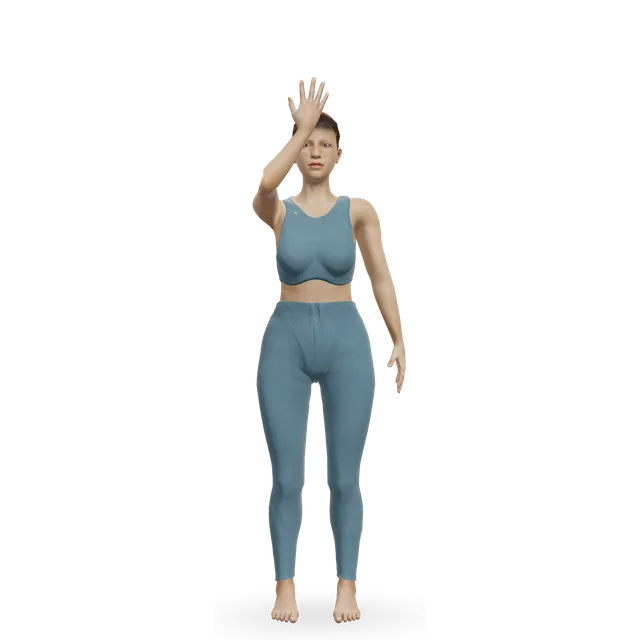
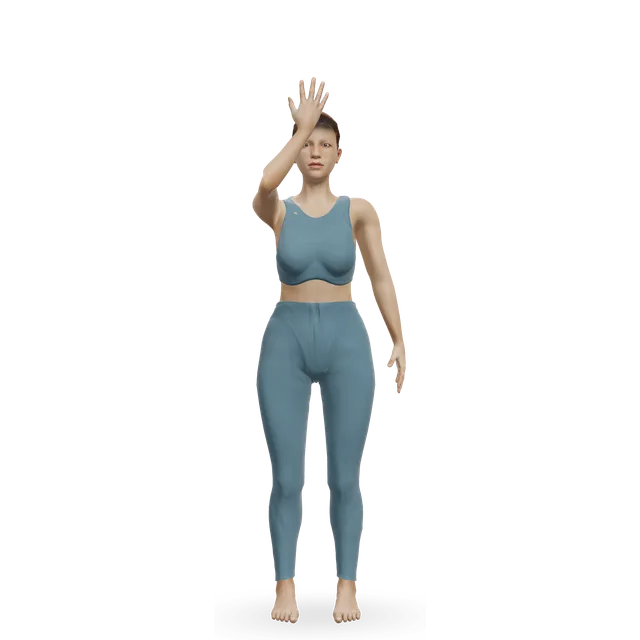
Neck CARs (controlled articular rotations) demonstrated on the 3D figure3D demoNeck CARs (controlled articular rotations)Beginner · No equipment

Only if your team includes neck movement: small, separate nods and turns, never forced, 5 each way, building to 10. No tipping the head back and no full circles · An NHS trust's movements; one early programme kept the neck within about 30° each way

Harder: Rabbit pose (Sasangasana)

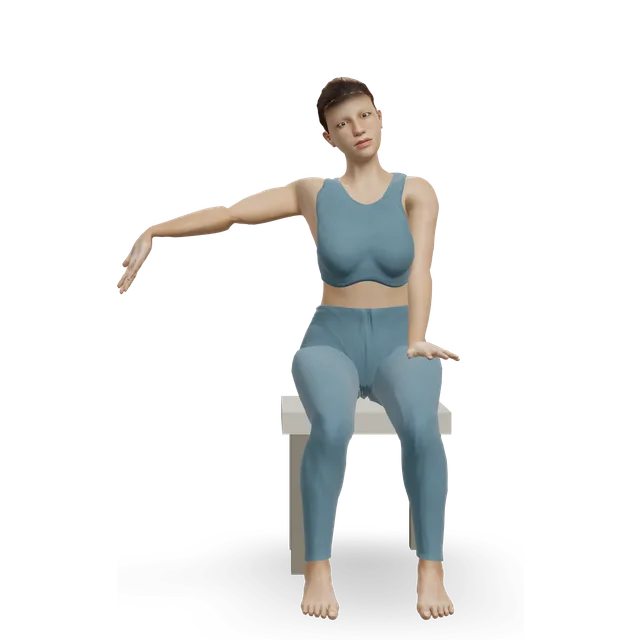
Median nerve slider (neck-to-arm nerve glide) demonstrated on the 3D figure3D demoMedian nerve slider (neck-to-arm nerve glide)Beginner · A bench or box

Only if your team gives nerve glides: move the arm only and keep your head still; hold 5 s, 5 times, twice a day, building to 3 to 4 times · An NHS trust's dose, which differs from the move page's

Harder: Median nerve glide (six hand positions, for carpal tunnel)

Move on when: The wound has healed, any collar is off, you can walk for 20 to 30 minutes comfortably, and your team is happy for you to start strengthening, often at a review 6 to 12 weeks after surgery.

Follow along: a timer, a cue and the next move, one step at a time.
Stage 2

About 6 to 12 weeks: gentle neck strength and everyday activity (as your team allows)

As your team allows. This is when NHS physiotherapy often starts, and when the Swedish trial's structured programme began. Walk further, start a bike, and add gentle neck presses and shoulder-blade work. Lifting limits ease from about 6 weeks in some NHS plans, and stay until 12 weeks after a fusion in others. Doses are editorial unless named.

Lying chin tuck demonstrated on the 3D figure3D demoLying chin tuckBeginner · No equipment

10 small nods, each held for up to 10 s, once or twice a day · Editorial dose

Harder: Chin tuck

Isometric neck press, front and back demonstrated on the 3D figure3D demoIsometric neck press, front and backBeginner · No equipment

Light pressure: build to a 10 s press, 3 times each way, for 3 rounds · The move page's dose, once your team allows neck exercises

Easier: Chin tuck · Harder: Chin tuck with head lift

Isometric neck press, sides demonstrated on the 3D figure3D demoIsometric neck press, sidesBeginner · No equipment

Light pressure: build to a 10 s press, 3 times each way, for 3 rounds · The move page's dose

Easier: Chin tuck · Harder: Chin tuck with head lift

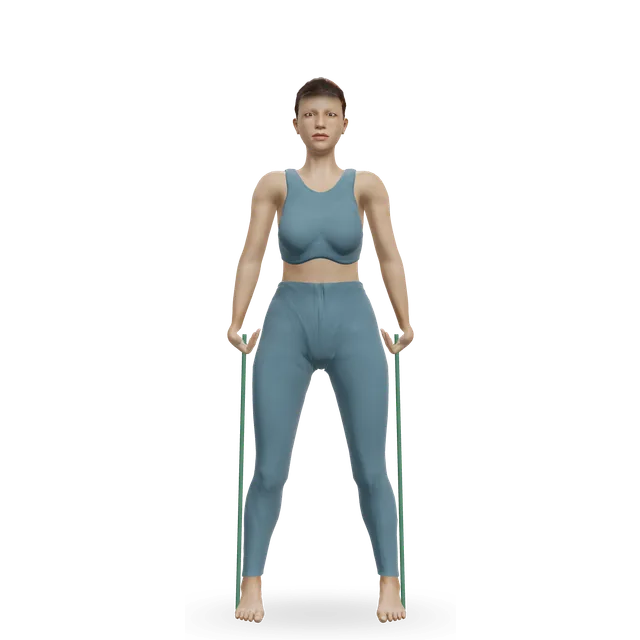
Band row demonstrated on the 3D figure3D demoBand rowBeginner · A band + An anchor point

Light band, 2 sets of 10 to 15, the elbows stopping by your sides · Editorial dose, lighter than the move page's

Harder: Supported single-arm dumbbell row

Sit to stand from a chair demonstrated on the 3D figure3D demoSit to stand from a chairBeginner · A bench or box

2 sets of 10 at a steady pace · Editorial dose; one NHS hospital's programme includes sit-to-stands

Easier: Sit to stand, pushing on the thighs · Harder: Bodyweight squat

Stationary cycling demonstrated on the 3D figure3D demoStationary cyclingBeginner · Cardio machine

10 to 20 minutes, easy, sitting upright with the handlebars high · Editorial dose

Easier: Recumbent exercise bike · Harder: Air bike intervals

Move on when: Your team clears you for heavier lifting and fuller neck movement (about 12 weeks after a fusion in one NHS plan), neck pain is settling, and arm symptoms are no worse.

Follow along: a timer, a cue and the next move, one step at a time.
Stage 3

From about 12 weeks: strength, lifting and the road back to sport (as your team allows)

As your team allows. The Swedish programme added twice-weekly neck strength and endurance training from week 12. Train 2 to 3 times a week, adding repetitions before weight. Heavier lifting and manual work usually come back from about 3 months. The timing of contact sport is your surgeon's decision: one NHS trust advises at least 12 months after a fusion, while a panel of spine surgeons supports a return to high-impact sport after a healed ACDF at one level. Doses are editorial.

Chin tuck with head lift demonstrated on the 3D figure3D demoChin tuck with head liftIntermediate · No equipment

Lift the head just clear of the floor and hold 5 s, 3 to 5 times, building towards 10 holds of 10 s · Editorial dose

Easier: Chin tuck

Supported single-arm dumbbell row demonstrated on the 3D figure3D demoSupported single-arm dumbbell rowIntermediate · A dumbbell + A bench or box

3 sets of 8 to 12 on each side, light at first · Editorial dose

Easier: Incline ring row · Harder: Bent-over barbell row

Band lateral raise demonstrated on the 3D figure3D demoBand lateral raiseBeginner · A band

2 sets of 10 to 15, to shoulder height · Editorial dose

Harder: Dumbbell lateral raise

Prone Y-T-W raises demonstrated on the 3D figure3D demoProne Y-T-W raisesBeginner · No equipment

Forehead resting on a folded towel; 5 to 8 of each shape, 2 rounds · Editorial dose

Easier: Wall angel · Harder: Bent-over reverse fly

Wall push-up demonstrated on the 3D figure3D demoWall push-upBeginner · A wall

2 to 3 sets of 8 to 12 · Editorial dose

Harder: Push-up

Farmer's carry demonstrated on the 3D figure3D demoFarmer's carryBeginner · A dumbbell + A kettlebell

3 walks of 20 to 30 m with light weights, standing tall · Editorial dose, once your team allows heavier lifting

Harder: Suitcase carry

Move on when: This is the long-term programme. Add sports in the order your team agrees; turning your head fully and comfortably comes before contact sport.

Follow along: a timer, a cue and the next move, one step at a time.

What to change for now

Typical timings, which your team may change

These come from NHS hospital leaflets and the DVLA, and they differ. Your own team's timings come first.

  • Driving: from about 2 weeks in some NHS hospitals to 6 to 12 weeks in others, especially after a fusion. You need to be out of any hard collar, able to turn your head to check your blind spots, and able to do an emergency stop. Tell your insurer; the Driver and Vehicle Licensing Agency (DVLA) only needs to know if your driving will be affected for more than 3 months.
  • Desk work: from about 2 to 4 weeks in some hospitals, and 4 to 8 weeks in others.
  • Heavy manual work: from about 6 to 8 weeks to 3 months.
  • Lifting: nothing heavier than a full kettle for about 6 weeks. After a fusion, one trust adds no heavy lifting, and no repetitive bending, reaching or twisting, for 12 weeks.
  • Housework: light housework from about 4 weeks; vacuuming, mopping, heavy bins and heavy gardening at about 12 weeks, in one trust's plan.
  • Swimming: after about 6 weeks, once the wound has healed.
  • Flying: not for at least 4 weeks in one trust's plan, because of the risk of blood clots.

Sources 51, 3, 12, 50, 47, 2, 5, 11

The collar, if you were given one (written steps)

From the Hull, North Bristol and Royal Berkshire NHS leaflets, with our suggestion marked. Your team's instructions come first.

  • 1. Wear it exactly as your team says. A hard collar usually stays on day and night, even for washing, until your consultant says otherwise, and isn't taken off for exercises.
  • 2. It should be firm, but not so tight that it's hard to swallow.
  • 3. Change and clean the pads as the collar's own leaflet explains, and check the skin under your chin and at the back of your head each day (our suggestion).
  • 4. A soft collar is for comfort, so don't come to rely on it: take it off for longer spells each day, stop by about 6 to 8 weeks, and take it off for your exercises.
  • 5. Never drive in a collar.

Sources 49, 3, 5

Getting in and out of bed (written steps)

From the Hull NHS leaflet, with NHS Lothian's pillow advice and our wording marked.

  • 1. To get up, roll onto your side with your knees bent.
  • 2. Let your legs go over the edge of the bed.
  • 3. Push yourself up to sitting with your arms, letting your head come up with your body (our wording).
  • 4. To lie down, do the same in reverse: sit on the edge of the bed, lower yourself onto your side with your arms as your legs come up, then roll onto your back if you want to (our wording).
  • 5. Sleep in whatever position is comfortable, with one pillow that fills the gap between your ear and shoulder.

Sources 49, 12

Eating, drinking and your voice (written steps)

From King's College Hospital's and University Hospitals Sussex's speech and language therapy advice, with Cambridge's and the NHS's warning signs.

  • 1. Sit upright to eat, drink and take tablets, and cut out distractions.
  • 2. Eat and drink slowly: small sips (no straws unless you're advised to use one) and small mouthfuls. Chew well, and don't talk while eating.
  • 3. Choose soft, moist food at first, such as porridge, yoghurt, scrambled eggs or soft pasta with a smooth sauce. Add extra sauce or gravy, and leave dry, crumbly food and mixed textures (soup with bits in it, for example) for later.
  • 4. If swallowing hurts, take your painkillers about 20 minutes before eating.
  • 5. Rest your voice. Don't whisper or shout, try not to clear your throat harshly, and keep drinking water.
  • 6. Swallowing or your voice getting worse after the first few days, or any difficulty breathing: go to A&E, or call 999 if you're struggling to breathe.

Sources 15, 16, 11, 52

Routines that fit, and what to leave out

Easy cardio (walking) fits from the first weeks. The 10-minute walk after meals and the balance routine fit from about 6 weeks; leave the balance routine's getting down to the floor until that's comfortable. The upper back mobility routine fits from about 12 weeks, leaving out its foam roller back extension, where the head hangs back, and the side-lying open-book twist until your team allows full neck movement.

Positions to swap, and why

Habit or positionWhy it mattersInstead
Lifting anything heavier than a full kettle, or pushing, pulling and twisting, in the first 6 weeksNHS leaflets limit these while the tissues heal. No trial has tested the limits, so follow your team's.Two light bags rather than one heavy one, and help with the shopping for the first weeks.
Full neck circles, tipping the head back, or forcing a stretch in the first 6 to 12 weeksNHS leaflets say neck movements should never be forced, and one says no over-stretching before the physiotherapy appointment.The small, separate nods and turns your team gives, and chin tucks.Try: Chin tuck
Hunching your shoulders to guard the neckNHS Lothian says tensing the shoulders leads to muscle spasm and more pain.Let the shoulders drop, with gentle shoulder rolls.Try: Shoulder rolls
Long spells sitting or lying stillMoving little raises the risk of a blood clot, and stiffness and pain build when you stay still too long.Walk little and often, a little further each day.Try: Treadmill walking
Buying a special pillow, or sleeping propped on a stack of pillowsWe found no study of pillows after neck surgery. NHS Lothian advises one pillow that fills the gap between your ear and shoulder.One supportive pillow.
Holding heavy things at arm's length, or working overhead, early onOne NHS trust advises avoiding both after neck surgery.Keep loads light and close to your body.
Driving in a collar, or before you can turn your head and brake hardYou can't check your blind spots or stop safely, and your insurance may not cover you.Lifts from others, then a short first drive somewhere quiet once your team agrees.
Contact and twisting sports (golf, mountain biking, skiing) early after a fusionOne NHS trust advises waiting at least 12 months after a fusion; surgeons' views differ, so your surgeon decides.Walking, cycling, and swimming once the wound has healed and your team agrees.Try: Stationary cycling
The foam roller back extension, with the head hanging back, before your team allowsIt takes the neck into a backward bend (our reasoning).Face-down shoulder-blade raises with the forehead resting on a towel.Try: Prone Y-T-W raises
SmokingOne NHS hospital says the bones fail to fuse in about 5 in 100 people, more often in smokers.Stop smoking, with help from NHS stop-smoking services.

Routines to follow

More moves for this area

Questions people ask

How long does it take to recover from ACDF?

Most people are up and walking the day after surgery and home within 1 to 5 days, depending on the hospital. The soft tissues heal over about 4 to 6 weeks, and neck pain from the operation is usually much better by 12 weeks. The bone takes 6 to 12 months to fuse fully, and numbness or weakness can take longer to recover than arm pain.

Do I need to wear a collar after neck surgery?

Only if your surgeon gives you one. Some NHS teams don't routinely use them, and others fit one for 4 to 6 weeks. In studies, a collar made little or no difference to fusion or disability, so wear yours exactly as told and don't add one you weren't given.

Why is it hard to swallow after neck surgery, and how long will it last?

The windpipe and gullet are moved aside during the operation, so bruising and swelling in the throat are common, and the nerves to the voice box can be stretched. It's usually worst in the first few days and settles within days to weeks; lasting beyond 6 to 8 weeks is unusual. Swallowing that gets worse after the first few days, or any difficulty breathing, needs urgent help.

What shouldn't I do after ACDF?

For about 6 weeks, NHS leaflets say don't lift anything heavier than a full kettle, and avoid pushing, pulling and twisting. After a fusion, one trust adds no heavy lifting or repetitive bending, reaching or twisting for 12 weeks. Don't force your neck into stretches or drive in a collar. No trial has tested these limits, so follow your own team's.

When can I drive after neck surgery?

NHS advice ranges from about 2 weeks to 6 to 12 weeks, depending on the hospital and the operation. You need to be out of any hard collar, able to turn your head to check your blind spots, and able to do an emergency stop. Tell your insurer; the DVLA only needs to know if your driving will be affected for more than 3 months.

When can I go back to work?

Desk work is often possible from about 2 to 4 weeks, and heavy manual work from about 6 weeks to 3 months. In Sweden, 85% of people were back at work within a year of surgery for a trapped nerve. A phased return helps, and your team can advise on your job.

How should I sleep after neck surgery?

Use one pillow that fills the gap between your ear and shoulder, and lie however is comfortable. Get out of bed by rolling onto your side, letting your legs go over the edge and pushing up with your arms. No special pillow has been shown to help.

When can I exercise or go back to the gym?

Walking starts on the first day, and gentle neck and shoulder exercises in hospital or soon after. Physiotherapy often starts at about 6 to 12 weeks, and strength training usually builds from about 12 weeks, as your team allows. In a trial, neck-strengthening exercise was tolerated without harm after surgery.

Can I play sport after a neck fusion?

Many people do. Expert spine surgeons agree that a return to high-impact sport is reasonable after a healed ACDF at one level, and most elite athletes in studies went back. One NHS trust advises waiting at least 12 months before contact sport after a fusion, so the timing is your surgeon's decision.

Is a disc replacement better than a fusion?

NICE says it's at least as effective as a fusion in the short term. Trials disagree about the long term: a large review found fewer repeat operations after a disc replacement, while an independent Swedish trial found no benefit and more repeat operations at 10 years. Your surgeon recommends one based on your scans and symptoms.

Will my arm pain and numbness go away?

Arm pain usually improves first: one NHS trust reports good relief in about 90 to 95 in 100 people, and another says that if it's going to get better, it usually does within about 6 to 12 weeks. Numbness and weakness recover more slowly and not always fully, especially after pressure on the spinal cord. New or worsening weakness after surgery needs A&E.

Can I fly after neck surgery?

One NHS trust advises not flying for at least 4 weeks after the operation, because of the risk of blood clots. Long journeys of more than 4 hours raise the risk too. Ask your team first, especially if you've had a clot before.

Related exercise guides

Other pain guides

Sources

  1. AAOS OrthoInfo · Surgical treatment for cervical radiculopathy
  2. The Robert Jones and Agnes Hunt Orthopaedic Hospital NHS Foundation Trust · Anterior cervical discectomy and fusion (leaflet, 2024)
  3. North Bristol NHS Trust · Information for patients undergoing cervical (neck) surgery (2023)
  4. NICE HTG217 · Prosthetic intervertebral disc replacement in the cervical spine (2010)
  5. Royal Berkshire NHS Foundation Trust · Cervical spinal fusion: information and exercises (leaflet, 2024)
  6. NHS · Cervical spondylosis: treatment
  7. Engquist 2013 · Surgery plus physiotherapy against physiotherapy alone for cervical radiculopathy: 2 years (randomised trial, Spine)
  8. Engquist 2017 · Surgery plus physiotherapy against physiotherapy alone for cervical radiculopathy: 5 to 8 years (randomised trial, J Neurosurg Spine)
  9. Peolsson 2013 · Physical function after physiotherapy alone or surgery plus physiotherapy for cervical radiculopathy (randomised trial, Spine)
  10. Fehlings 2017 · Guideline for managing degenerative cervical myelopathy (clinical practice guideline, Global Spine J)
  11. Cambridge University Hospitals NHS Foundation Trust · Post-operative recovery following cervical decompression surgery (2024)
  12. NHS Lothian · Cervical spine surgery physiotherapy advice (leaflet, 2021)
  13. Peolsson 2023 · Neurological outcomes 2 years after surgery and rehabilitation for cervical radiculopathy (randomised trial, Sci Rep)
  14. Hermansen 2023 · Pain and disability more than 20 years after anterior cervical fusion (randomised trial follow-up, BMC Musculoskelet Disord)
  15. King's College Hospital NHS Foundation Trust · Swallowing and voice changes after anterior cervical discectomy and fusion (speech and language therapy leaflet, 2026)
  16. University Hospitals Sussex NHS Foundation Trust · Information about swallowing after anterior cervical spine surgery (2026)
  17. Bazaz 2002 · How often swallowing difficulty follows anterior cervical spine surgery (prospective study, Spine)
  18. Muthu 2026 · Swallowing difficulty after anterior cervical spine surgery (umbrella review, Global Spine J)
  19. Yakdan 2025 · Cervical disc replacement against anterior fusion (meta-analysis of 25 randomised trials, J Neurosurg Spine)
  20. Quinto 2024 · Ten-year outcomes of cervical disc replacement against anterior fusion (meta-analysis, Spine)
  21. Kontakis 2022 · Artificial disc replacement and the neighbouring levels: 10 years (randomised trial, J Neurosurg Spine)
  22. Perez-Albela 2025 · Return to work after cervical disc replacement against fusion (meta-analysis of randomised trials, Spine)
  23. Jain 2022 · Driving 10 years after cervical disc replacement or anterior fusion (trial analysis, Int J Spine Surg)
  24. de Vries 2025 · Fusion and outcomes 1, 2 and 5 years after anterior cervical discectomy (trial follow-up, PLoS One)
  25. Hilibrand 1999 · Nerve and cord problems at the levels next to an anterior cervical fusion (cohort study, J Bone Joint Surg Am)
  26. Peolsson 2014 · Physiotherapy after surgery for cervical disc disease: the trial protocol (BMC Musculoskelet Disord)
  27. Wibault 2018 · Structured physiotherapy after surgery for cervical radiculopathy: 6 months (randomised trial, J Neurosurg Spine)
  28. Peolsson 2019 · Structured rehabilitation after surgery for cervical radiculopathy: 2 years (randomised trial, J Neurosurg Spine)
  29. Peolsson 2022 · Work ability after anterior cervical surgery and structured rehabilitation (randomised trial, J Occup Rehabil)
  30. Ling 2023 · Rehabilitation after cervical spine fusion (systematic review, Cureus)
  31. Coronado 2020 · An early home exercise programme after anterior cervical discectomy and fusion (pilot randomised trial, Spine)
  32. Coronado 2021 · Safety of an early phone-supported home exercise programme after anterior cervical surgery (case series, Physiother Theory Pract)
  33. Mathew 2025 · Activity restrictions after spine surgery (systematic review, J Spine Surg)
  34. Camino-Willhuber 2024 · Surgeons' advice on returning to activities after cervical spine surgery (survey, N Am Spine Soc J)
  35. Fernández de-Thomas 2026 · Collar use after cervical spine surgery around the world (survey of 340 surgeons, Clin Spine Surg)
  36. Zhang 2024 · Anterior cervical discectomy and fusion with and without a collar (systematic review and meta-analysis, J Orthop Surg Res)
  37. Overley 2018 · Is bracing needed after one- and two-level anterior cervical fusion? (randomised trial, Global Spine J)
  38. Abbott 2013 · A cervical collar after anterior cervical fusion with cages (pilot randomised trial, Physiother Theory Pract)
  39. Campbell 2009 · Is a collar needed after single-level anterior cervical fusion with a plate? (comparison within a trial, Spine)
  40. Hasan 2023 · Bracing after cervical spine surgery (systematic review, Global Spine J)
  41. McKeon 2024 · Cervical collar use after cervical spine surgery (systematic review, JBJS Rev)
  42. El-Hajj 2026 · Return to work after surgery for cervical radiculopathy in 3,929 people (Swedish national cohort, Neurosurgery)
  43. Hara 2023 · Return to work after surgery for cervical radiculopathy (Norwegian national registry study, Spine)
  44. Zuckerman 2026 · Return to sport after cervical spine surgery (expert consensus, Spine)
  45. Leider 2021 · Return to play in elite athletes after cervical spine surgery (systematic review, Sports Health)
  46. McCartney 2026 · No agreed return-to-play guidelines for rugby union players after cervical spine surgery (review, Bone Joint J)
  47. Lancashire Teaching Hospitals NHS Foundation Trust · Recovering from cervical spine surgery (leaflet, 2023)
  48. NICE NG89 · Venous thromboembolism in over 16s: reducing the risk of hospital-acquired DVT or pulmonary embolism (2018, updated 2019)
  49. Hull University Teaching Hospitals NHS Trust · Care of your neck following cervical spine surgery (leaflet, 2025)
  50. Cambridge University Hospitals NHS Foundation Trust · Exercise programme following cervical spine surgery (2026)
  51. DVLA · Assessing fitness to drive: driving after surgery (GOV.UK guidance)
  52. NHS · Shortness of breath
  53. NHS · Cervical spondylosis
  54. NHS · DVT (deep vein thrombosis)

Exercise education, not a diagnosis or treatment plan. It is written from the guidelines and studies listed above; review by a clinician is pending. If your pain follows an injury, is severe, is getting worse, or comes with any warning sign listed on this page, get it assessed. Health disclaimer.