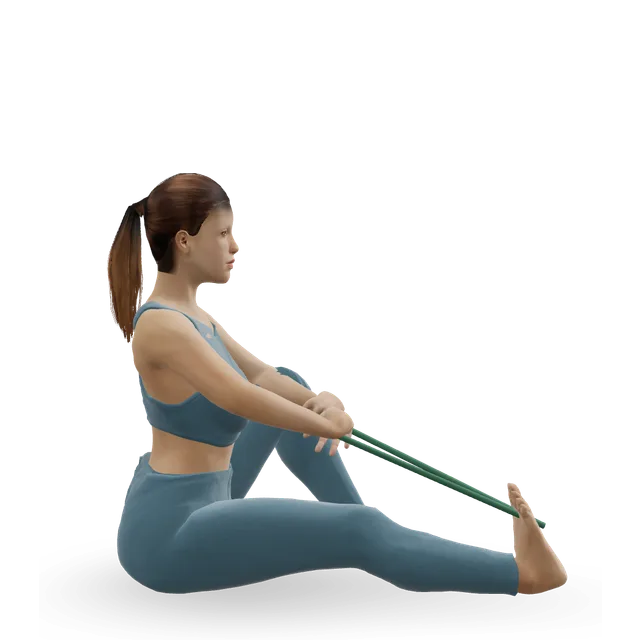
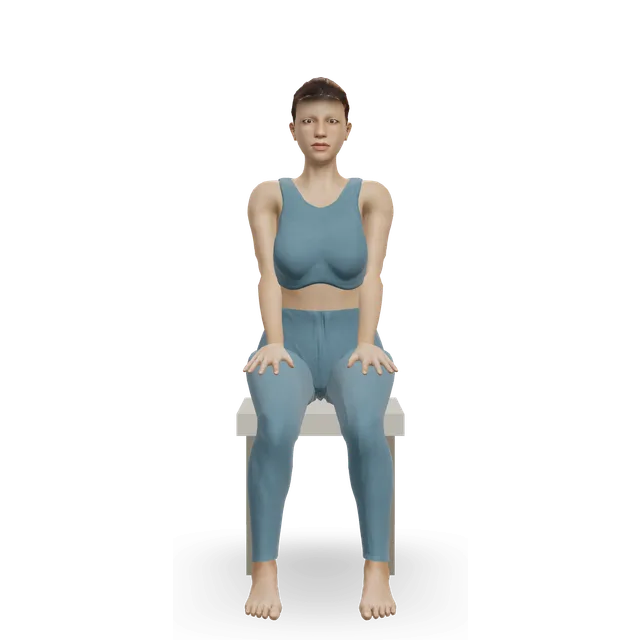
Yoga doesn't slow or reverse muscular dystrophy
The NHS: "There is currently no cure, but treatment can help with symptoms." Yoga is one gentle way to stay active, with your neuromuscular team's agreement, never instead of their care.
Source 1
Yoga guide
Gentle yoga can be a safe way to stay active with muscular dystrophy, and Muscular Dystrophy UK suggests it. The research is small: in boys with Duchenne, yoga added to physiotherapy didn't improve breathing, the heart or movement more than physiotherapy alone, though it didn't cause harm, and there are no studies in other types yet.
This guide covers holds that strengthen without lowering, stretches that keep the range you have, slow breathing, the heart checks to have first, the signs you've done too much, and when to get help, with chair-based classes to follow. Yoga doesn't slow muscular dystrophy, and your neuromuscular team's advice comes first.
The NHS: "There is currently no cure, but treatment can help with symptoms." Yoga is one gentle way to stay active, with your neuromuscular team's agreement, never instead of their care.
Source 1
For adults: "Activities such as gentle yoga and Pilates can be effective. These exercises and any stretches can be adapted so you do them in the best position for you." For children who move less easily, it lists "Chair-based or mat-based yoga or Pilates".
All the yoga studies are in Duchenne, and most come from one Indian trial. A 2026 review: "yoga does not provide a significant added benefit over standard care alone", but "None of the six reviewed studies indicated that yoga had a detrimental effect". In the trial, lung function rose as much with physiotherapy alone.
"Avoid excessive 'eccentric' activity. This means repetitive tasks or exercises where the muscle is being lengthened, for example squats." Yoga's held poses are holds, and in Duchenne "moderate isometric protocols can increase strength without evidence of injury". Hold briefly, and don't repeat squat-like dips.
"Please take care that you do not over-stretch weak muscles or joints that are already very mobile." "Do not exercise to exhaustion. Stop and rest when you need to."
Source 2
"Heart problems do not often cause symptoms at first." Get your team's clearance, including a heart check, before a new programme, and keep breathing through every hold: a US booklet says "Remember to breathe throughout all exercises; do not hold your breath."
"Muscular dystrophy is a rare genetic condition that causes muscle weakness that gets worse over time." The types differ in when they start, which muscles they affect, and whether they involve the heart and breathing. NHS inform: "Your heart muscles, and the muscles you use to breathe, might be affected by MD, depending on which type of MD you have." Our exercise guide sets out Duchenne, Becker, myotonic, facioscapulohumeral (FSHD) and limb-girdle muscular dystrophy.
The worry grew from "initial findings that eccentric downhill treadmill running in the dystrophin-deficient mice resulted in muscle damage, leading to broad generalizations that all exercise was harmful in human dystrophinopathies". Muscular Dystrophy UK: "Eccentric exercises put much greater force through the muscle and can lead to muscle soreness and potentially some damage."
In Duchenne, "Areas typically at risk of contracture and deformity include hip flexors, iliotibial bands, hamstrings, plantar flexors", among others (a contracture is a joint that stiffens in one position).
Source 7
Classes often ask for weight through the arms (downward dog, plank), lowering into and rising from poses (chair pose dips, lunges, sun salutations), getting down to and up from the floor, long deep stretches, fast breathing and sometimes a hot room (our reading). A seated or chair-supported class with short holds, gentle stretches, slow breathing and a normal room fits Muscular Dystrophy UK's advice better. The Duchenne yoga trials didn't describe how poses were adapted, which the 2026 review calls a limitation.
A 2026 review found 6 studies; four were reports from one trial at one centre in India, where 124 boys aged 5 to 10 did home physiotherapy, or yoga plus physiotherapy, daily for a year, and "Thirty-six (30%) individuals dropped out from the study". Lung function improved "irrespective of the intervention provided", and heart rate variability didn't differ between the groups. "This study was not blinded for assessments and interventions."
In Brazil, boys practised fast breathing (kapalabhati, "three series of 120 repetitions") three times a day for 10 months, with no comparison group: "Of the 76 patients who entered the study, 35 dropped out and 15 were unable to perform the breathing exercises, 26 having therefore completed the study". In the controlled Indian trial, lung function rose as much with physiotherapy alone.
Our PubMed search found no yoga study in Becker, FSHD, myotonic or limb-girdle muscular dystrophy.
Source 6
A Cochrane review of 14 trials (428 people): "The evidence regarding strength training and aerobic exercise interventions remains uncertain." Aerobic training may improve fitness in FSHD, and trials reported little harm beyond soreness. Guidance encourages low-intensity aerobic exercise in FSHD and "moderate intensity (aerobic and resistance training) exercise" in myotonic dystrophy type 1. In children with neuromuscular diseases, "Aerobic exercise is safe and may improve functional capacity but not motor function".
"In DMD, assisted low-intensity cycling can stabilize function and moderate isometric protocols can increase strength without evidence of injury." (DMD means Duchenne muscular dystrophy.) The Duchenne care standards: "Eccentric muscle activity or exercise and high-resistance exercise or strength training should be avoided."
It is "defined as an irreversible loss of muscle strength resulting from excessive loading of already compromised muscle". In FSHD exercise studies, "no study has reported overwork weakness", but they mostly enrolled people who walk, so "Clinical surveillance is therefore essential."
Source 19
Starting points to discuss with your neuromuscular team or physiotherapist, for someone without warning signs.
Hold for 5 to 10 seconds, rest, and repeat, as in our muscular dystrophy home routine. A US Becker booklet: "For all exercises, stay at or below 4-6 on the RPE scale." (RPE is a 0 to 10 effort scale), and you should "Recover quickly (in 1-2 hours)".
Moderate only: "take deeper breaths, but still be able to talk comfortably in full sentences". Muscular Dystrophy UK: "Remember that maintaining your current level of physical ability is a good outcome".
Source 2
A gentle or chair class 2 or 3 times a week, not on consecutive days for the holds, alongside low-impact cardio such as swimming or cycling, is our editorial starting point. The Duchenne care standards say "Swimming is highly recommended from the early ambulatory stage" (while children still walk).
Seated march: 2 minutes, easy pace; shoulder rolls: 5 each way; ankle circles: 10 each way, each foot (our muscular dystrophy home routine). Slow breathing: 2 minutes, no holds (our seated chair yoga class).
Seated upper-back lift: 3 to 5, holding 3 to 5 seconds (our muscular dystrophy home routine). Thoracic rotation: 5 each side with 5-second holds (our seated chair yoga class). Cat-cow, sitting: 6 slow rounds (our chair yoga class for older adults).
Bridge: 6 holds of 5 to 10 seconds, or just squeeze your buttocks if you can't lift; quad set: 6 holds of 5 to 10 seconds each leg; ball squeeze between the knees: 6 holds of 5 to 10 seconds (our muscular dystrophy home routine). Belt press: the move page's dose, "3 to 5 holds of 5 to 10 seconds". Mountain pose: 5 breaths, one hand on a chair (our chair yoga class). Warrior II: one hold of 3 breaths each side, short stance, hand on a chair, only if you walk steadily (adapted from our chair yoga class).
 3D demoGlute bridgeBeginner · No equipment
 3D demoQuad set (static quads)Beginner · No equipment
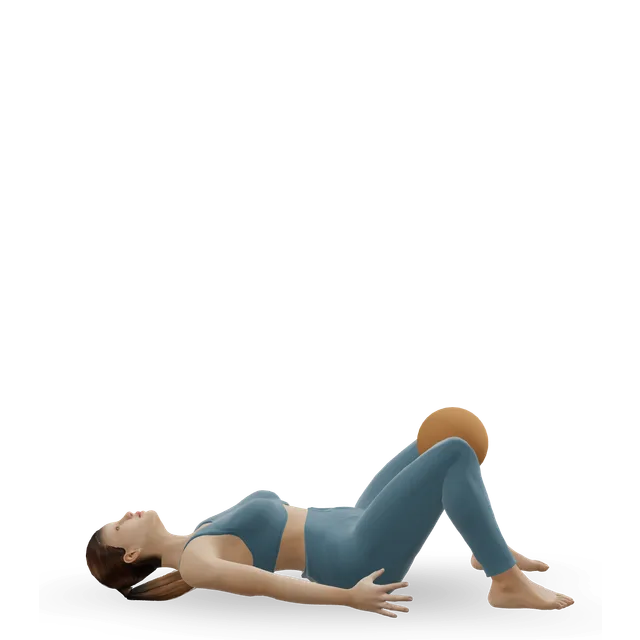 3D demoLying adductor ball squeezeBeginner · Other / check instructions
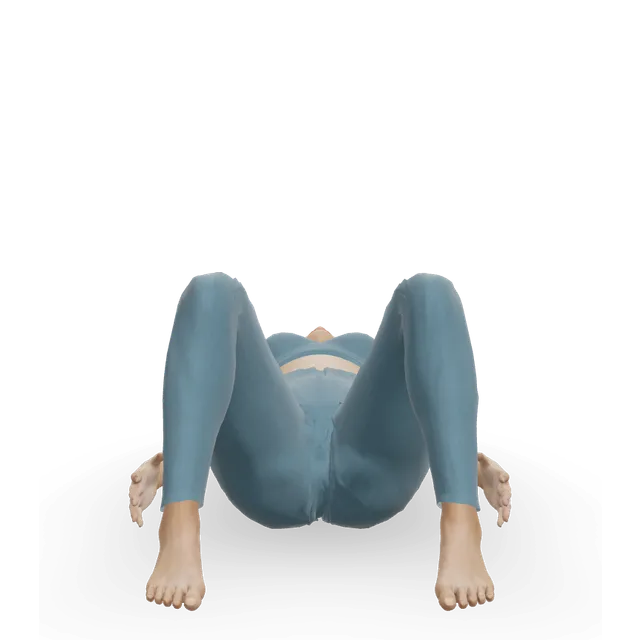 3D demoSupine isometric hip abduction (belt press)Beginner · A band
 3D demoMountain pose (Tadasana)Beginner · No equipment
 3D demoWarrior II (Virabhadrasana II)Intermediate · No equipment
"Try to hold each stretch for 30-40 seconds." "The stretch should be slow and sustained, with no bouncing." Where joints are already tight, the goal is "to keep the flexibility you have, rather than gain more".
Source 2
Stretching made no meaningful difference to joint range in neurological conditions across 49 studies, and "There is no evidence of significant benefit from any intervention for increasing ankle range of motion in Charcot-Marie-Tooth disease type 1A or Duchenne muscular dystrophy."
The care standards: "Regular stretching of ankle, knee, and hip should begin soon after diagnosis and continue into adulthood. Stretching of the upper extremities is especially important after loss of ambulation." Experts now add that programmes "must move beyond traditional passive stretching" to active exercise.
"Only do stretches recommended by your physiotherapy team. Stretches need to be done regularly to work well."
Source 3
Wall calf and soleus stretches, the hamstring stretch with a strap and the wrist flexor stretch: 30 to 40 seconds each side, no bouncing (our muscular dystrophy home routine). If standing is hard, use the towel calf stretch sitting, for the same time.
"Clearance from a physician is essential before initiating any program, to confirm cardiac safety." Muscular Dystrophy UK: "Talk to your doctor or physiotherapist about exercise before you start, especially if you are still undergoing diagnosis or having heart investigations." Some carriers of Duchenne or Becker "may also need regular heart tests".
Chest pain, a racing or pounding heart, dizziness or fainting: "If you notice any of these, tell your GP or neuromuscular team." In myotonic dystrophy type 1, "Significant cardiac involvement that subsequently leads to adverse cardiac events is often asymptomatic."
In Duchenne, "Deteriorating FVC can occur in the absence of dyspnoea and remain unrecognised unless pulmonary function is measured regularly." (FVC is how much you can breathe out; dyspnoea means breathlessness.) Muscular Dystrophy UK: "Breathing support and exercises can help keep the lungs clear and make breathing easier. Your healthcare team will help you choose a treatment that works for you." Even routine bag-assisted breathing didn't slow lung decline in boys with near-normal lungs.
Slow, comfortable breathing is fine. Leave out fast, forceful breathing, which added nothing in the Duchenne trial and which NCCIH tells beginners to avoid, and breath holds (our suggestion, with the Becker booklet's "do not hold your breath").
Slow breathing: 1 to 2 minutes, no holds (adapted from our seated chair yoga class). Breath stacking: only if your team has taught it, the move page's dose, "Repeat up to 5 times, resting between each round (Leeds Teaching Hospitals)." Corpse pose: 3 to 5 minutes, propped up if lying flat makes you breathless (adapted from the move page's dose).
Repeated lowering (lunges, chair pose dips, sun salutations), weight through weak arms and shoulders (downward dog, four-limbed staff), deep stretches pulled further, and headstands, shoulder stands and the plough, which put body weight on the neck.
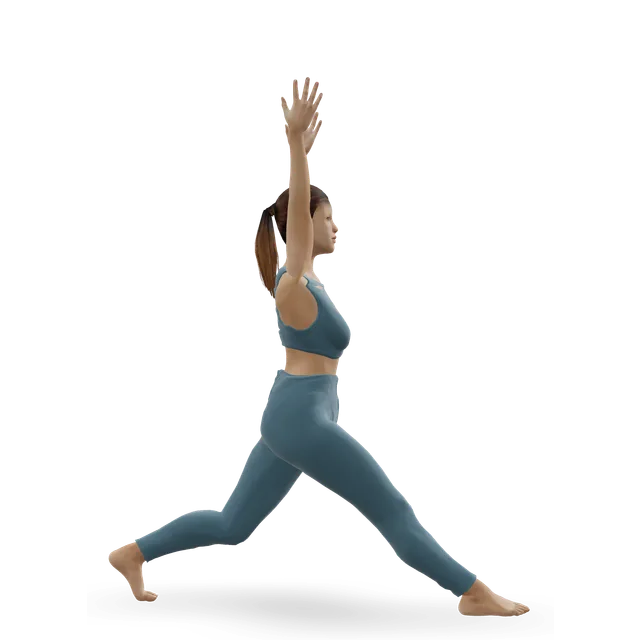 3D demoHigh lunge (crescent lunge, Ashta Chandrasana)Intermediate · No equipment
 3D demoSun salutation A (Surya Namaskar A)Intermediate · No equipment
 3D demoDownward-facing dog (Adho Mukha Svanasana)Beginner · No equipment
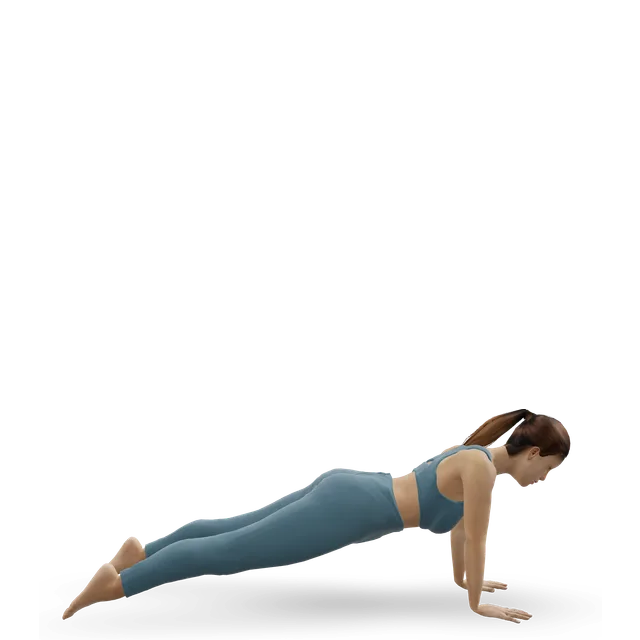 3D demoFour-limbed staff pose (Chaturanga Dandasana)Advanced · No equipment
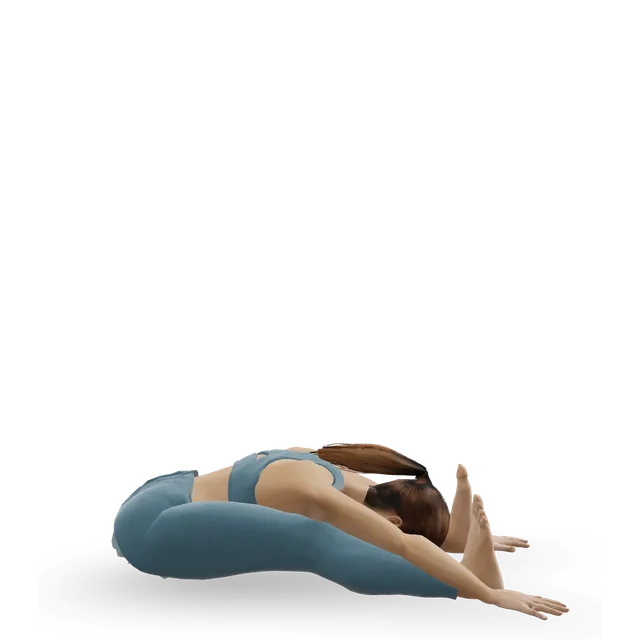 3D demoSeated forward fold (Paschimottanasana)Intermediate · No equipment
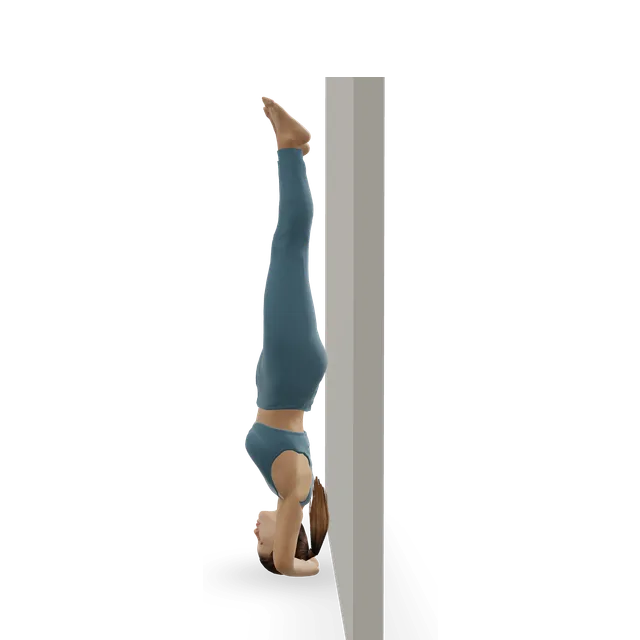 3D demoSupported headstand (Salamba Sirsasana)Expert · A wall
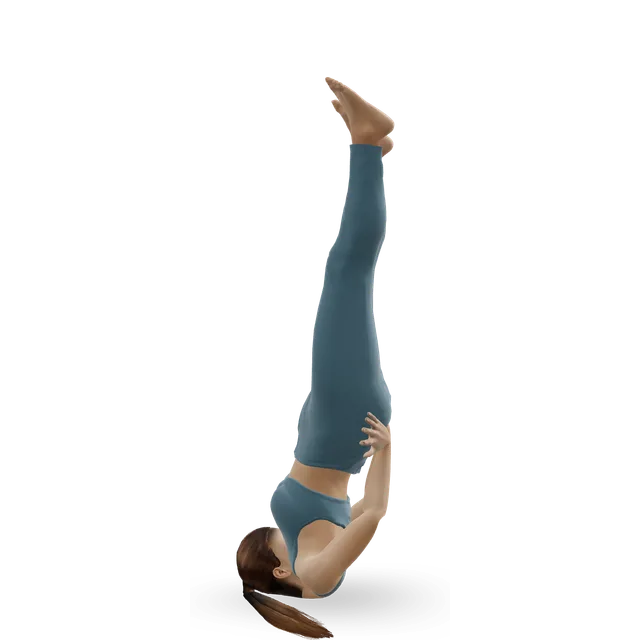 3D demoSupported shoulderstand (Salamba Sarvangasana)Advanced · No equipment
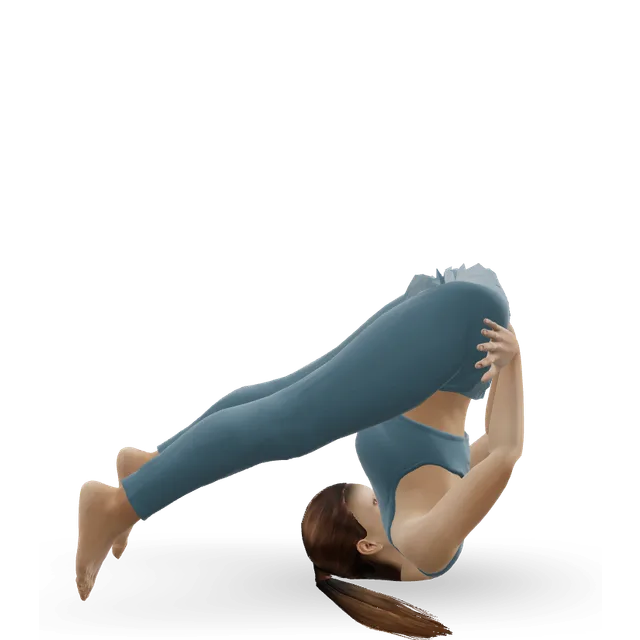 3D demoPlow pose (Halasana)Advanced · No equipment
"It's important to speak to your child's physiotherapy team about which exercises they recommend." "Stop if they feel pain, shortness of breath, or excessive fatigue". "Avoid certain high-impact activities, like trampolining, which work the muscles in a way that cause muscle damage". Our yoga for kids class has star jumps and crawls, so choose chair-based poses instead (our suggestion).
Source 3
"Aerobic exercise in FSHD appears to be safe and potentially beneficial." FSHD weakens the muscles around the shoulder blades, so leave out weight through your hands and keep your arms low in long holds (our suggestion).
Source 15
"Encourage moderate intensity (aerobic and resistance training) exercise." Heart rhythm problems are often silent, so do balance poses next to a wall or chair, eyes open (our suggestion).
The arrive, spine, stretch and rest groups can all be done sitting; put your brakes on. For children with limited mobility, Muscular Dystrophy UK lists "Chair-based or mat-based yoga or Pilates" and "Self-propelling a manual wheelchair".
Source 3
The seated chair yoga class is the main yoga class: keep the breath reach at shoulder height or below with weak shoulders, and cat-cow small. The muscular dystrophy home routine has the holds, light bands and stretches, on alternate days. The chair yoga for MS class suits people who stand with support; skip its sit-to-stand block if repeated lowering leaves you sore (our suggestion).
A 15-minute chair yoga routine done entirely sitting: slow breathing, neck, shoulder and wrist stretches, seated twists and side bends, and a calm finish.
15 minBeginner16 movesA bench or boxA gentle home session for adults with muscular dystrophy: easy cardio, strength holds that avoid heavy lifting and lowering, light band work and daily stretches.
35 minBeginner19 movesA bench or box, Cardio machineA 25-minute chair yoga class for MS: seated breathing and loosening, longer leg stretches, an optional standing balance block at the chair, and a calm finish.
25 minBeginner18 movesA bench or box, Something with weightA free 20-minute chair yoga class for older adults: slow breathing, gentle seated stretches and twists, standing poses holding the chair, and a calm finish.
20 minBeginner18 movesA bench or box, Something with weightThis is general information, not a diagnosis: your neuromuscular team knows your condition, so use the contact numbers they gave you. In the US, call 911 where this page says 999.
Call 999, and don't drive yourself to A&E, for:
If your urine looks like black tea or cola after exercise. Duchenne and Becker experts also list red or reddish-brown urine, or severe pain in one area, as a reason to stop and get urgent care.
If a child on steroids is unwell, vomiting or injured, follow the emergency plan on their steroid card. Never stop steroids suddenly.
Source 7
Muscle tiredness can be mistaken for weakness, but tiredness should improve after you rest. When you're tired, your balance isn't as good, so take care not to fall.
Call 999 if:
A joint pain that is sharp, gets worse during a session, lingers into the next day or changes how you move is a reason to use an easier version, and to see a GP or physiotherapist if it keeps happening (the rule in our plans). Muscle soreness for a day or two after something new is normal. In a hot class, stop if you feel dizzy, sick or unwell; our hot yoga guide lists the signs of heat illness.
You can say no to any hands-on adjustment, and a teacher registered with Yoga Alliance must get your explicit consent each time.
With glaucoma, or high blood pressure that isn't under control, skip headstands, shoulder stands and long head-down holds. With osteoporosis, swap deep forward folds for a flat-back hinge from the hips, and twist smoothly. In pregnancy, our yoga in pregnancy guide covers the changes. NCCIH advises beginners to avoid headstands, shoulder stands, the lotus position and forceful breathing.
The worry came from mouse studies of downhill running. Trials report little harm beyond soreness, and in children, "try to avoid long periods of inactivity. This can lead to increased muscle weakness and heart problems, which make it harder to exercise."
There is no cure, and yoga added nothing to physiotherapy in the Duchenne trial.
In the only controlled trial, lung function rose as much with physiotherapy alone, and the study without a control group lost two thirds of its boys.
Keep the flexibility you have, and don't over-stretch weak muscles or loose joints; stretching alone changes range little.
"Stop the exercise if your muscles shake too much or the movements become jerky." Soreness after something new should be gone within 48 hours.
Source 2
Muscular Dystrophy UK warns against over-stretching "joints that are already very mobile".
Source 2
Gentle yoga can be a safe way to stay active, and Muscular Dystrophy UK suggests it. In the only trials, in boys with Duchenne, yoga didn't add benefit over physiotherapy, but it didn't cause harm.
No. There's no cure, and no study shows yoga slows the condition. Yoga can help with comfort, keeping the flexibility you have, and relaxation.
Seated stretches and twists, short holds such as bridge holds and thigh squeezes, mountain pose with a chair, and calf and hamstring stretches held 30 to 40 seconds. Choose positions that suit your body, sitting or lying if that's easier.
Repeated lowering such as chair pose dips, lunges and sun salutations, weight on weak arms such as plank and downward dog, and any forced or bouncing stretch.
Yes, especially if standing or getting off the floor is hard. Muscular Dystrophy UK lists chair-based yoga for children who are less mobile, and our seated chair yoga class works for adults too.
Yes, gently, with the physiotherapy team's agreement and only the stretches they recommend. Avoid high-impact play such as trampolining and repeated jumping.
In the one controlled trial in Duchenne, yoga breathing added nothing to physiotherapy for lung function. Slow breathing is fine; breathing treatments such as breath stacking come from your team.
Muscles that shake or move jerkily, soreness that hasn't gone after 48 hours, or tiredness that limits the next day. Go to A&E if your urine turns the colour of black tea or cola after exercise.
Yes, if your type can affect the heart: experts advise a doctor's clearance, including a heart check, before a new exercise programme. Heart problems often cause no symptoms at first.
It can help keep the range you have, and daily stretching is part of Duchenne care. On its own it makes only a small difference to joints that are already tight.
No yoga study exists for either. Low-intensity aerobic exercise is safe in FSHD, and moderate exercise is encouraged in myotonic dystrophy type 1; gentle yoga can sit alongside, with arms kept low in FSHD.
Two or three times a week, in short sessions, never to exhaustion. Keeping what you can do is a good result.
Exercise education, not a personal prescription, and clinical review of these guides is pending. If you are pregnant, have a health condition such as glaucoma, high blood pressure or osteoporosis, or have had recent surgery, check with a doctor, midwife or physiotherapist before starting, and stop for sharp or increasing pain. Health disclaimer.