Yoga flows
Chair yoga for MS: a 25-minute class you can do sitting, with an optional standing block
A 25-minute yoga class for multiple sclerosis (MS) that you can do from a firm chair or a wheelchair, with an optional standing block if you can stand holding the chair. Keep the room cool and water to hand, and stop before you're tired. It adds to the aerobic and strength exercise in our exercise and MS guide.
Settle (3 minutes)
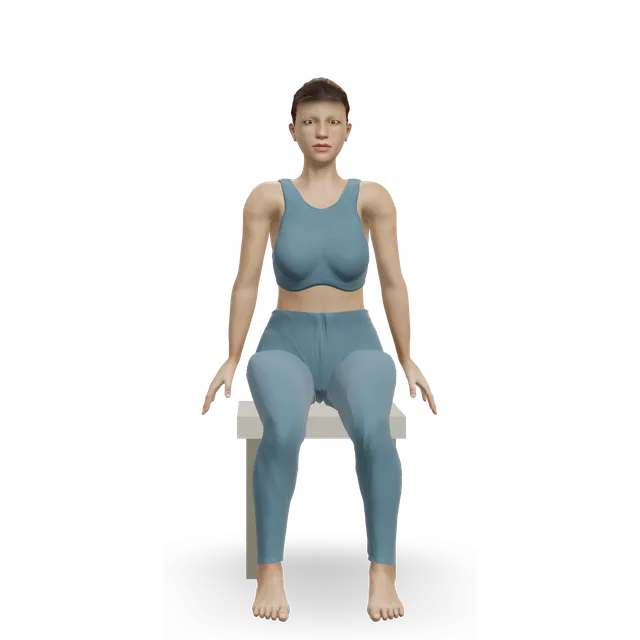
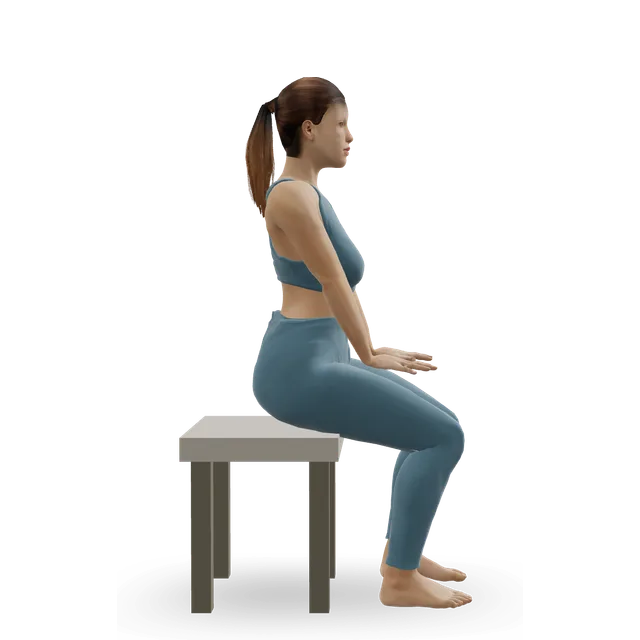
- Seated upper-back lift (sit tall, shoulders back)3 holds of 5 sBeginner · Back, Shoulders, Neck · 3D demoSit tall on a firm chair with a solid back, or in your wheelchair with the brakes onEasier: Elbows backHarder: Prone Y-T-W raises
- Beginner · 3D demoHands on your belly; in for about 4, out for about 6, with no holdsEasier: Breath reachHarder: Crocodile breathing (prone diaphragmatic breathing)


Loosen, sitting (8 minutes)
- Breath reach5 breathsBeginner · 3D demoSeated (the demo shows it standing): arms rise as you breathe in, as high as is comfortableHarder: Slow breathing (6 breaths a minute)
- Shoulder rolls10 each wayBeginner · Shoulders, Back, Neck · 3D demoSlow and smoothHarder: Shoulder CARs (controlled articular rotations)
- Cat-cow8 slow wavesBeginner · Back, Abs · 3D demoSeated (the demo shows all fours): hands on your kneesHarder: Half lord of the fishes (Ardha Matsyendrasana)
- Seated overhead side bend2 each side, 10 to 20 s holdsBeginner · Back, Abs · 3D demoReach up and over, both sitting bones on the seatHarder: Overhead lat stretch at a bench (elbows on the bench)
- Thoracic rotation5 each side, 5 s holdsBeginner · 3D demoSeated (the demo shows it standing): arms crossed; hold the armrest or wheel if you need toEasier: Side-lying open bookHarder: World's greatest stretch
- Seated march1 minBeginner · Hip flexors, Quads, Abs · 3D demoLift each knee in turn; move your arms instead if your legs don't moveHarder: Standing march






Legs, sitting (6 minutes)
- Chair leg extension and sweep5 each legBeginner · Hamstrings, Calves, Adductors · 3D demoStraighten the leg, sweep it out to the side and backHarder: Contract-relax hamstring stretch (PNF)
- Seated knee extension (chair)Up to 10 each legBeginner · Quads · 3D demoUp for a slow count of 3, down for 5Easier: Quad set (static quads)Harder: Leg extension
- Ankle circles10 each way, each footBeginner · Calves, Shins · 3D demoLift the foot a little, or circle the ankle with your handHarder: Ankle CARs (controlled articular rotations)
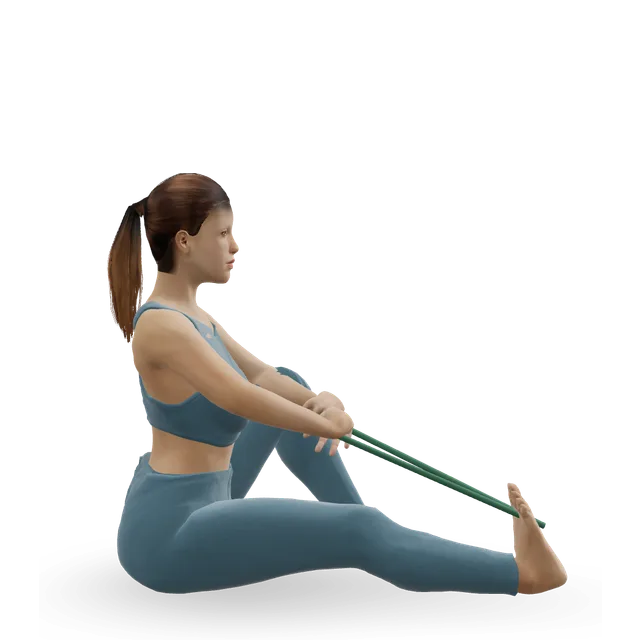
- Seated calf stretch with a towel30 to 60 s each legBeginner · Calves · 3D demoA towel round the ball of your foot; ease your toes towards you, with no bouncingHarder: Wall calf stretch (gastrocnemius)


Optional: standing at the chair (6 minutes)
- Sit to stand, pushing on the thighs5 to 8 repsBeginner · Quads, Glutes, Triceps · 3D demoA sturdy chair against a wall; push on your thighs. Skip this block on a dizzy or high-fatigue dayHarder: Bodyweight squat
- Mountain pose (Tadasana)5 breathsBeginner · Calves, Back, Abs · 3D demoOne hand on the back of the chair; come up slowlyHarder: Tree pose (Vrksasana)
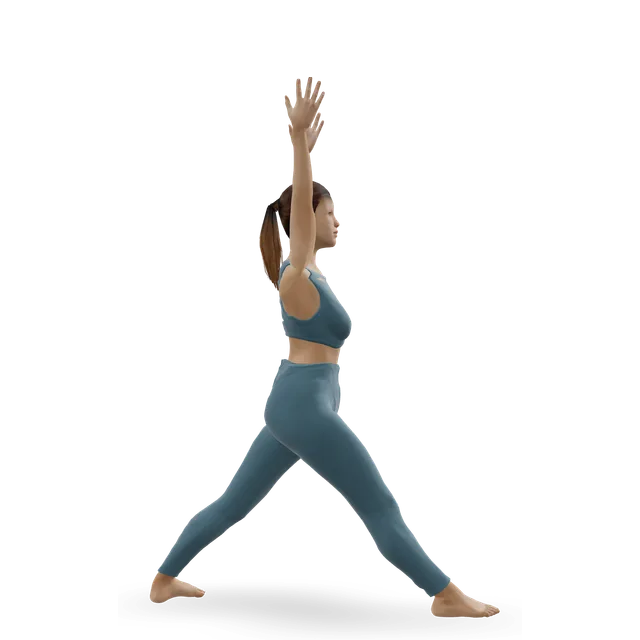
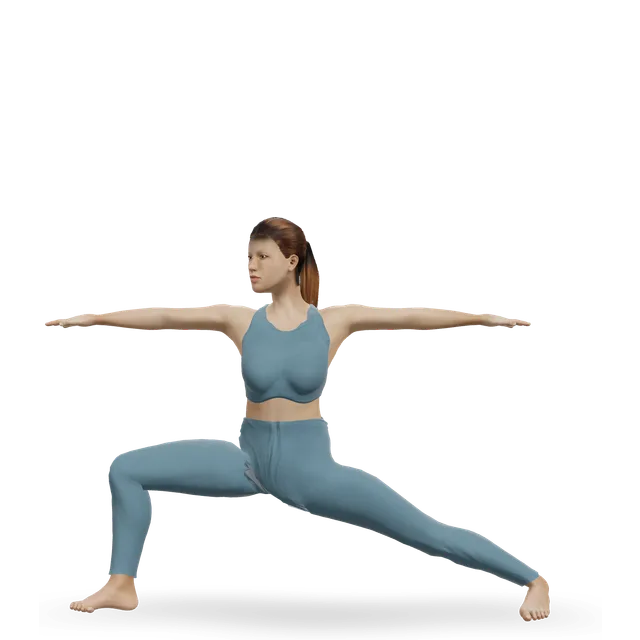
- Warrior II (Virabhadrasana II)3 breaths each sideIntermediate · Quads, Glutes, Adductors · 3D demoSide-on to the chair, one hand on its back, with a short stanceEasier: Chair pose (Utkatasana)Harder: Extended side angle (Utthita Parsvakonasana)
- Tree pose (Vrksasana)3 breaths each sideBeginner · Glutes, Hip abductors, Calves · 3D demoFingertips on the chair; heel against your ankle with your toes on the floorEasier: Mountain pose (Tadasana)Harder: Standing hand-to-big-toe pose (Utthita Hasta Padangusthasana)
- Semi-tandem stance2 or 3 holds of 10 to 30 s, each foot forwardBeginner · Calves, Hip abductors · 3D demoFingertips on the chair or a worktop; touch down whenever you need toHarder: Tandem stance and heel-to-toe walk




Finish, sitting (3 minutes)
- Beginner · 3D demoSlow rounds with no holds; with a blocked nose, just breathe slowlyEasier: Slow breathing (6 breaths a minute)
- Beginner · 3D demoEyes closed or resting on one spot; have a cold drink before you get upEasier: Breath reachHarder: Crocodile breathing (prone diaphragmatic breathing)

Tips
- Keep cool: a cool, ventilated room or a fan, loose clothes and cold water to hand. You can pre-cool with a cool shower or cold water on your face and wrists. If heat brings on blurred vision, numbness, weakness or extra tiredness, stop, rest and cool down: symptoms should settle within a few hours.
- With MS, we'd avoid hot yoga and other heated classes (our suggestion), because heat can bring on your symptoms for a while; if you want to try one, ask your MS team first.
- Pace yourself: stop before you're tired, and on a high-fatigue day do only the seated blocks. If your symptoms rise, don't push through.
- Practise often: the MS Society says yoga helps most when you practise often and over a longer time. Aim for 2 or 3 times a week, alongside the aerobic and strength exercise in our exercise and MS guide.
- Do the standing block only with a sturdy chair or worktop to hold, and skip it on dizzy days: falls are common with MS.
- With stiffness or spasms, move into stretches slowly and never bounce, and ask your physiotherapist which stretches suit you.
- In a wheelchair, put the brakes on, and ask for help if you can't move into a pose on your own.
- New symptoms, or old ones getting clearly worse, that last more than 24 hours could be a relapse: contact your MS team, rest at first, and ask when to restart.
- Call 999 (911 in the US) for sudden weakness or numbness in one arm, sudden loss or blurring of vision, or sudden problems with balance and coordination.
The doses are suggested starting points, not a prescription. Choose a range you can control and stop for sharp or increasing pain, numbness or tingling. Get individual advice after an injury or surgery, or if you are pregnant or managing a health condition.
Guides that recommend it
Find more moves like these
More yoga flows

Beginner yoga flow
A 20-minute beginner yoga sequence: mountain, chair, warrior II, triangle, tree, down dog, cobra and child's pose.
20 minBeginner11 movesA step
Sun salutation flow
A 20-minute flow built on sun salutations A and B, with warrior poses and a short cool-down.
20 minIntermediate8 movesNo equipment



Yoga for tight hips
A hip-opening yoga sequence: low lunge, lizard, goddess, pigeon, bound angle and happy baby.
25 minBeginner10 movesA wallQuestions people ask
How long does the chair yoga for ms: a 25-minute class you can do sitting, with an optional standing block take?
About 25 minutes, including any warm-up and cool-down listed. Shorten it by doing fewer rounds; lengthen it by adding one.
What equipment do I need?
You need: A bench or box, Something with weight, Other / check instructions, A wall. Each move links to its guide, where you can find an alternative if you are missing something.
Is it suitable for beginners?
It is written for beginners. 7 of its 18 moves have an easier option listed beside them if you need one.
How do I make it easier or harder?
Use the easier or harder option listed under each move, change the number of rounds, or adjust the rest. Progress one change at a time.