Moving is good for most aching joints
The NHS says "do not completely stop moving the affected joint", and NICE (the National Institute for Health and Care Excellence) makes exercise tailored to you a core treatment for osteoarthritis.
Yoga guide
Gentle, regular movement is one of the best things for most aching, stiff joints, and yoga is one way to do it. For osteoarthritis, the commonest cause of joint pain as people get older, exercise is a core treatment, and in trials yoga eased knee pain and stiffness a little, about as much as strengthening exercise in one single-centre trial. Exercise doesn't wear out your joints.
Yoga doesn't cure arthritis or replace your GP, medicines or physiotherapist, and some joint pain needs a doctor first: a hot, swollen joint, or stiffness in several joints that lasts more than 30 minutes every morning.
This guide covers the common causes and how to tell which kind of joint pain you have, what yoga can and can't do, the evidence for each condition, flares, practising safely, and a gentle class with a chair for every standing pose. Each condition has its own guide, linked below.
The NHS says "do not completely stop moving the affected joint", and NICE (the National Institute for Health and Care Excellence) makes exercise tailored to you a core treatment for osteoarthritis.
NICE's committee wanted to reassure people "that exercise is not harmful to osteoarthritic joints". In observational studies, recreational runners had less hip and knee osteoarthritis than people who didn't run.
Across 14 studies (1,183 people), yoga eased knee pain and improved function a little, on low-certainty evidence. In the best trial, at one centre with 117 people, it was as good as strengthening for knee pain over 12 weeks, but not better. Online videos on their own helped function a little, briefly.
No trial has tested yoga in hip osteoarthritis alone, and hand osteoarthritis has one small trial from 1994. In rheumatoid arthritis, small, low-quality trials found small gains in disease activity and everyday function, but not in pain or joint swelling. Yoga goes beside your medicines, never instead of them.
A hot, swollen joint needs help the same day. Stiffness for more than 30 minutes after waking, or several swollen joints, needs a GP, because early treatment of inflammatory arthritis matters. A sudden, very painful big toe may be gout.
Gentle range-of-movement exercise or a walk may still be possible in a flare. Stop and rest if a pose makes a joint warm and swollen or causes severe pain. A gout attack is the exception: rest and raise the joint.
This sorts patterns to help you find the right guide; it isn't a diagnosis. If you're unsure, see a GP.
The NHS: "Joint pain is common, especially as you get older." It can affect one joint or several, and "Perimenopause and menopause can also cause aching and painful joints due to lowered levels of oestrogen." Its advice: "Do not self-diagnose, see a GP if you're worried."
Source 1
Pain, swelling or bruising after intense or repetitive exercise is often a sprain or strain. Our pain guides for the knee, hip and shoulder cover it.
Source 1
This is the pattern of osteoarthritis. NICE says it can be diagnosed without a scan in people who "are 45 or over", have joint pain with activity, and have no morning stiffness or stiffness that lasts no longer than 30 minutes. Our yoga for arthritis, knee arthritis, hip arthritis and hands guides cover it.
Pain and stiffness on both sides of the body that's worse after not moving, especially when you wake up, is the pattern of rheumatoid arthritis. The NHS says morning stiffness in rheumatoid arthritis often lasts longer than 30 minutes. NICE asks GPs to refer quickly when the small joints of the hands or feet, or more than one joint, are swollen. Our yoga for rheumatoid arthritis, psoriatic arthritis and ankylosing spondylitis guides cover the inflammatory kinds.
Sudden, very bad pain in a hot, swollen toe joint, usually the big toe, often overnight, is the pattern of gout. NICE says a painful, red, swollen joint should be checked for infection too. Our yoga for gout guide covers what to do.
A hot, swollen joint that's hard to move, with a high temperature or feeling hot, cold and shivery, can be a joint infection, which needs treating urgently. See the warning signs below.
In 12,853 UK adults, very flexible people reported widespread pain a little more often (18.5% against 15.8%), a modest link. The NHS says the main treatment for joint hypermobility syndrome is "improving muscle strength and fitness so your joints are better protected". Our yoga for hypermobility guide covers it.
Among people with knee pain, 15% to 76% had osteoarthritis on X-ray, and among people with X-ray osteoarthritis, 15% to 81% had pain, depending on the study. Arthritis UK: "Joints can sometimes still work well even though the structure is altered." NICE says not to use scans routinely to diagnose osteoarthritis, so a scan finding isn't a reason to stop moving.
NICE: "For all people with osteoarthritis, offer therapeutic exercise tailored to their needs (for example, local muscle strengthening, general aerobic fitness)." It suggests considering supervised sessions, and says joint pain may increase when people start, but regular exercise will still help. NICE doesn't name yoga or tai chi.
NICE's committee wanted "to reassure people with osteoarthritis and healthcare professionals that exercise is not harmful to osteoarthritic joints". Across 17 observational studies, hip or knee osteoarthritis was found in 3.5% of recreational runners, 10.2% of non-runners and 13.3% of competitive runners, though these studies can't show cause.
The NHS osteoarthritis pages, which are past their review date, warn that too much exercise too quickly, or the wrong sort, "may damage your joints". We follow NICE's newer guideline, which says exercise isn't harmful; the practical answer is the same: build up gradually.
The NHS says "There’s currently no cure for arthritis". Yoga trials measured pain, stiffness and everyday function, not repaired joints, and in rheumatoid arthritis they found no change in joint swelling or blood markers of inflammation. NICE says complementary therapies "should not replace conventional treatment".
In the 2024 Cochrane review (139 trials, 12,468 people), exercise eased knee pain by about 9 to 13 points out of 100 and improved function by about 11 to 13, on low to moderate certainty evidence, and no type of exercise beat another. The benefits were "of uncertain clinical importance", and most participants knew which group they were in. The 2015 version had called the evidence high quality.
In the 2026 Cochrane review (18 studies, 1,368 people, most small and unblinded), exercise eased hip pain by about 7 points out of 100 and helped function by about 9 compared with no exercise, gains the authors judged unlikely to matter much on average.
Source 27
In the Cochrane review, hand exercises eased pain by about half a point out of 10 and finger stiffness a little, on low-quality evidence, and the gains had gone by 6 to 12 months. A 2024 review of 14 trials found the same pattern.
In 217 trials of knee osteoarthritis, aerobic exercise such as walking was most likely to be best, and mind-body exercise, the group that includes yoga, may reduce pain (low certainty). In 38 trials of mind-body exercise, only 4 were yoga. US guidance says "A specific hierarchy of these various forms of exercise could not be discerned from the literature.", and international guidance makes education and structured exercise the core.
Most yoga trials here are small, at one centre and unblinded; we say where the evidence is thin.
Across 14 studies (1,183 people), "Low-certainty evidence showed that yoga improved pain" and function, and programmes of at least 8 weeks were needed for consistent pain relief. Another review of 8 trials (756 people) found less pain and stiffness, but the trials varied hugely, and a 2019 review rated the evidence very low quality and its effects "not robust against potential methodological bias".
In 117 adults at one centre in Tasmania, 12 weeks of yoga classes eased knee pain about as much as a physiotherapist-led strengthening programme (a difference of about 1 point on a 100-point scale): not better, but not worse. Side effects possibly linked to the programme were more common with yoga (15.5% against 6.8%), none serious. The authors note the programme was designed for arthritis and "does not reflect the safety or effectiveness of general community-based yoga classes".
Source 6
In 212 adults, 12 weeks of unsupervised online yoga videos "improved physical function but not knee pain at 12 weeks", the gain was smaller than people would usually notice, and it had gone by 24 weeks.
Source 7
In 131 older adults with osteoarthritis in the legs who couldn't do standing exercise, chair yoga twice a week for 8 weeks reduced how much pain got in the way of life, and that lasted 3 months; pain, walking speed and tiredness improved only during the programme. It was a pilot trial at two sites.
Source 37
A single-centre trial of 250 people reported very large improvements without the comparisons between groups that would let you judge them, and a small pilot that found yoga better than strengthening wasn't confirmed by the larger trial above. Trials like these can make pooled results look better than they are.
The American College of Rheumatology: "Exercise is strongly recommended for patients with knee, hip, and/or hand OA." and "Yoga is conditionally recommended for patients with knee OA." (OA means osteoarthritis). It makes no recommendation for the hip "Due to lack of data".
Our searches found 17, 6 and 7 records in three databases, none a trial of yoga in hip osteoarthritis on its own. Our yoga for hip arthritis guide covers how to practise with it.
Source 8
In a small 1994 trial, weekly yoga for 8 weeks eased pain during activity and tenderness and improved finger movement more than no treatment; the summary doesn't say how many people took part. A 2019 review found no effect of yoga on hand osteoarthritis. Our yoga for the hands guide covers hand exercises.
Across 10 trials (840 people), yoga added to treatment gave small gains in function and disease activity, and "No effects were found for pain, tender joints, swollen joints count or inflammatory cytokines"; the authors draw "a very cautious conclusion". A 2025 review of 5 trials agreed. Several positive trials come from one centre, with people who knew they were doing yoga and no comparison class.
In 75 inactive adults with rheumatoid arthritis or knee osteoarthritis, 8 weeks of yoga improved physical health and walking against a waiting list, and swollen and tender joint counts didn't differ between groups: "these results suggest that yoga is unlikely to worsen disease activity." Balance, grip and flexibility didn't change more than with waiting.
Source 44
The American College of Rheumatology strongly recommends regular exercise and conditionally recommends mind-body exercise such as yoga, on very low to low certainty evidence for function and no difference in pain. NICE asks for physiotherapy to encourage regular exercise and doesn't name yoga. European guidance makes physical activity part of standard care for inflammatory arthritis and osteoarthritis, adapted to how active the disease is.
A flare is a temporary worsening of pain, swelling and stiffness, worse than your normal, that can disturb sleep and activity. The NHS says flares can last several days.
European guidance says that when a flare stops harder activity, "activities of lower intensity such as going for a walk or range of motion exercises might still be possible". The NHS: "Rest will make inflamed joints feel more comfortable, but without movement your joints will stiffen and your muscles will become weaker." Arthritis UK suggests stretching rather than strengthening while joints are hot or swollen.
In people exercising for knee or hip pain, the small rise in pain after each session shrank over 8 weeks, and gentler rescue exercises used on bad days eased pain in 63% of sessions, in studies with no comparison group. NICE's committee said more evidence is needed on managing flares.
Our search found 10 records and no trial of exercise or yoga during a flare of rheumatoid or other inflammatory arthritis, so flare advice comes from experts, not trials.
Source 50
During an attack, the NHS says "rest and raise the limb" and "do not put pressure on the joint". Our yoga for gout guide covers getting going again between attacks.
Source 16
From our chronic pain flare-up routine, which follows Arthritis UK's advice on slow, gentle movement during a flare; flare strategies haven't been tested in trials. With a gout attack, rest and raise the joint instead.
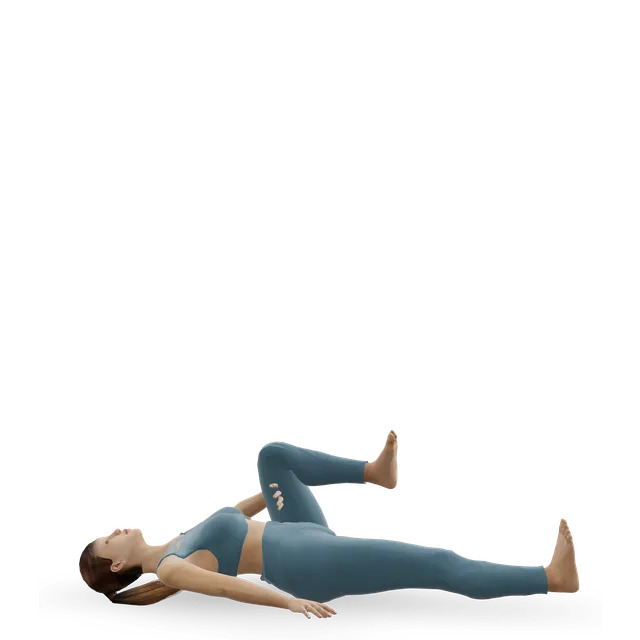
See the movement on the 3D figure: Supine heel slide
NICE says to warn people "that joint pain may increase when they start therapeutic exercise". Arthritis UK: "It’s normal to feel mild discomfort whilst exercising and some soreness or in your muscles after exercise, especially if you’re just getting started." European guidance adds that muscle soreness for a day or two can be normal.
Across 94 trials, yoga was as safe as usual care or other exercise. In knee osteoarthritis trials, people who exercised had more mostly minor side effects than people who didn't, and in the best yoga trial they were more common with yoga than with strengthening, none serious.
Arthritis UK: "It’s a good idea to find an instructor who can help you adjust some movements for your condition, especially if you have had any joint replacements in the past." The trial classes were slow, used props, and mixed sitting, standing and lying poses with breathing and relaxation.
Pad or skip kneeling while your knees are sore; keep weight off bent-back wrists with hand or wrist arthritis (fists, forearms or a chair); sit on a chair rather than forcing cross-legged positions; and use a chair for balance in standing poses. After a joint replacement, follow your team's precautions (our suggestion, from the move pages and our yoga for arthritis guide).
Doses are starting points, not prescriptions.
Effective programmes ran a median of 8 weeks of centre-based sessions of about 53 minutes, mostly once a week, often with home practice. The best knee trial used two 1-hour classes and one home session a week for 12 weeks. Pain relief was more consistent with programmes of 8 weeks or more.
The UK guidelines ask adults to strengthen the major muscle groups on at least 2 days a week, and Arthritis UK says to "aim to do some strengthening exercises on at least two days a week". Walking or cycling on other days adds the aerobic exercise that ranked best for knee osteoarthritis.
Our gentle yoga for arthritis class once or twice a week, with short home sessions, alongside walking and strength work, judged after 8 to 12 weeks. Build up gradually, and on flare days use the gentle flare routine instead.
Slow breathing 3 minutes, in for about 4 and out for about 6; tendon glides 5 of each position; wrist and forearm flow 60 seconds; shoulder rolls 10 slow circles each way; ankle circles 5 slow circles each way, each ankle (all as in our yoga for arthritis class). Seated march: "1 to 2 minutes as a warm-up" (from the move page's dose).
 3D demoSlow breathing (6 breaths a minute)Beginner · No equipment
 3D demoTendon glides (hand tendon gliding exercises)Beginner · No equipment
 3D demoWrist & forearm flowBeginner · No equipment
 3D demoShoulder rollsBeginner · No equipment
 3D demoSeated marchBeginner · A bench or box
 3D demoAnkle CARs (controlled articular rotations)Beginner · No equipment
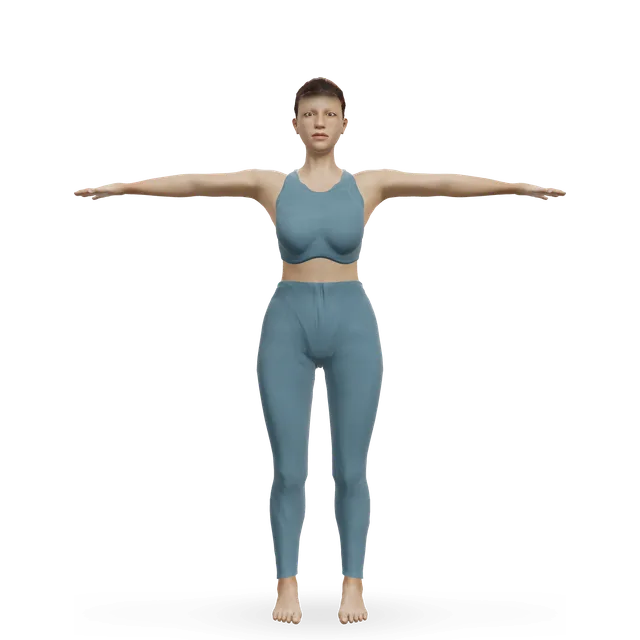
Mountain pose 5 breaths with one hand on the chair; chair pose 3 holds of 10 to 15 seconds, knees bent only a little; sit to stand 8 to 10 slow reps, a higher seat and your hands at first; warrior II 3 breaths each side with a short stance; tree pose 3 breaths each side, heel at the ankle, never pressing on the knee (all as in our yoga for arthritis class). Side-stepping: "10 steps each way, next to a counter" (from the move page's dose).
 3D demoMountain pose (Tadasana)Beginner · No equipment
 3D demoChair pose (Utkatasana)Beginner · No equipment
 3D demoSit to stand from a chairBeginner · A bench or box
 3D demoWarrior II (Virabhadrasana II)Intermediate · No equipment
 3D demoTree pose (Vrksasana)Beginner · No equipment
 3D demoSide-stepping (sideways walking)Beginner · A wall
Heel slides: "10 slow repetitions each side" (from the move page's dose). Glute bridge 8 to 10 slow lifts; supine twist 3 to 5 breaths each side, small range, with a cushion under your knees (as in our yoga for arthritis class). Reclining bound angle: "Rest 2 to 5 minutes with a support under each thigh" (from the move page's dose). Corpse pose: "Lie still for at least 5 minutes, up to 10" (from the move page's dose).
Wall push-up 10 to 15 reps, stepping closer if your wrists or shoulders complain (our joint care workout); band row 10 to 15 reps with a light band, anchored securely, wrapped round your palm if gripping hurts (our arthritis exercise routine).
Pad or skip deep kneeling poses while your knees are sore; keep weight off bent-back wrists in downward dog and plank with hand or wrist arthritis; leave out headstand, shoulder stand and plough with long-standing rheumatoid arthritis, glaucoma or high blood pressure that isn't under control, as our yoga for arthritis guide advises; and don't force lotus.
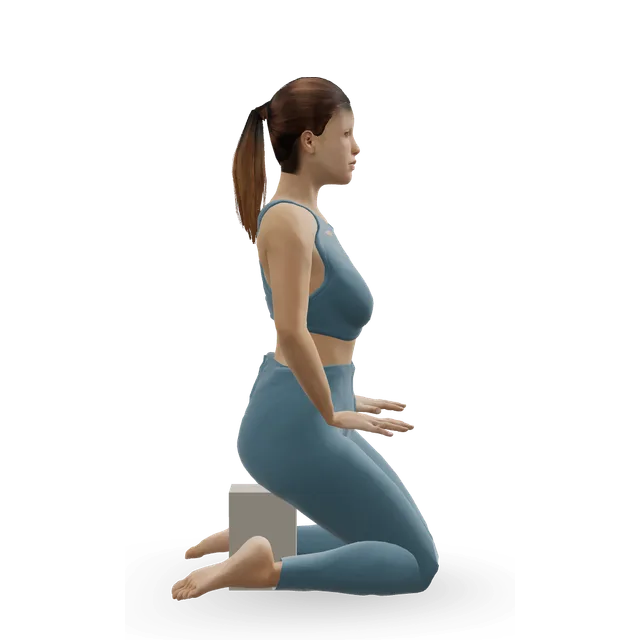 3D demoHero pose (Virasana)Intermediate · Firm cushion
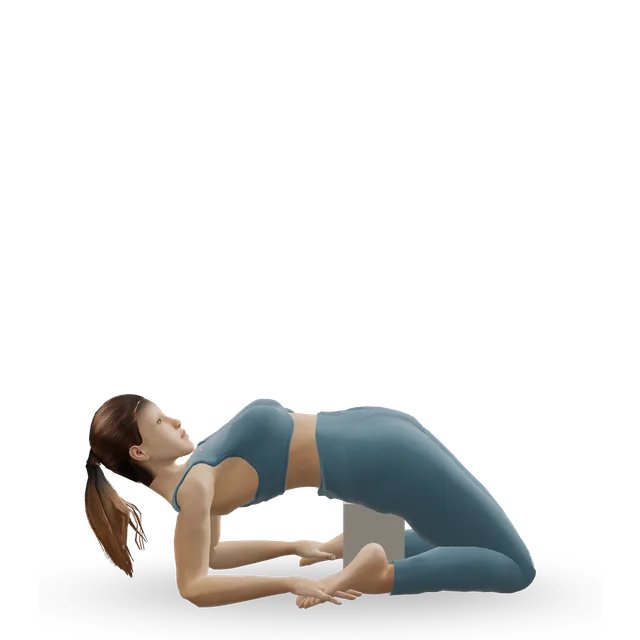 3D demoReclining hero pose (Supta Virasana)Advanced · Firm cushion
 3D demoDownward-facing dog (Adho Mukha Svanasana)Beginner · No equipment
 3D demoStraight-arm plank (high plank)Intermediate · No equipment
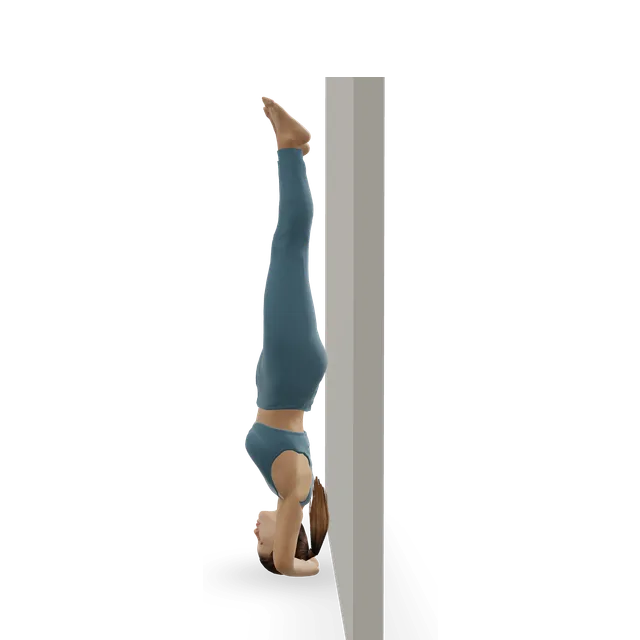 3D demoSupported headstand (Salamba Sirsasana)Expert · A wall
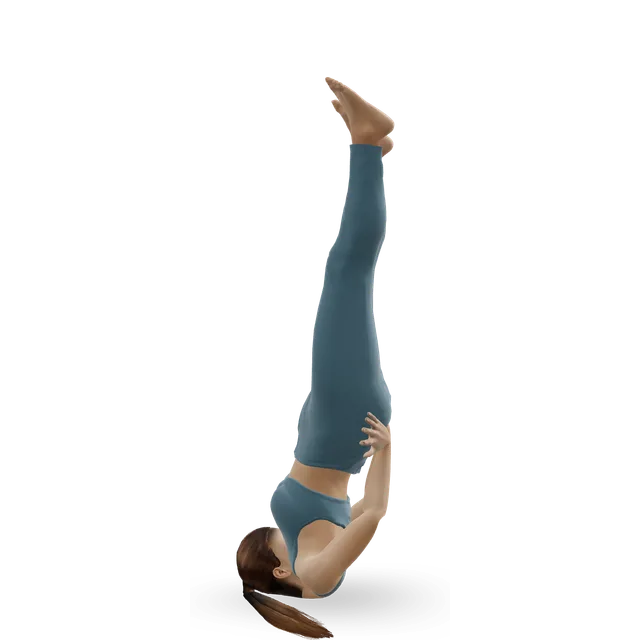 3D demoSupported shoulderstand (Salamba Sarvangasana)Advanced · No equipment
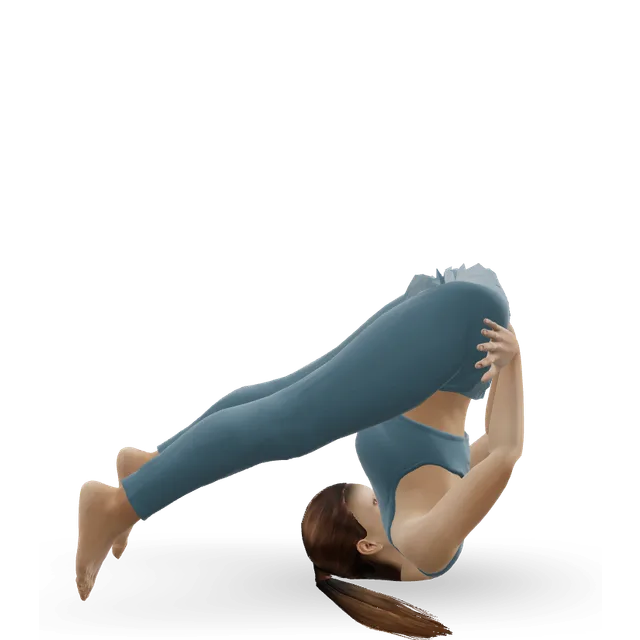 3D demoPlow pose (Halasana)Advanced · No equipment
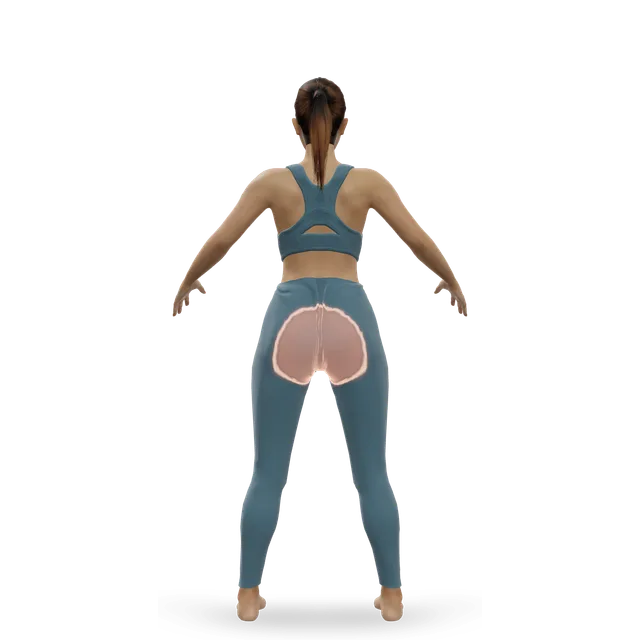 Lotus pose (Padmasana)Advanced · No equipment
Start with the yoga for arthritis class, with a chair for every standing pose and a bed option, once or twice a week (our editorial starting point). The chair classes avoid the floor, the flare-up routine suits bad days, the joint care and arthritis routines add strength, and the knee, hip, rheumatoid arthritis and hand classes are written for those joints.
A 30-minute joint-friendly yoga class for arthritis: seated breathing and joint warm-ups, standing poses with a chair, gentle lying poses and a long relaxation.
30 minBeginner17 movesBench or box, wallA free 20-minute chair yoga class for older adults: slow breathing, gentle seated stretches and twists, standing poses holding the chair, and a calm finish.
20 minBeginner18 movesBench or box, something with weightA 15-minute chair yoga routine done entirely sitting: slow breathing, neck, shoulder and wrist stretches, seated twists and side bends, and a calm finish.
15 minBeginner16 movesBench or boxA 10-minute routine for a pain flare-up: slow breathing, small gentle moves lying and sitting, a short stroll if you can, then rest. Repeat later in the day.
10 minBeginner10 movesBand, bench or boxA 25-minute session for healthy joints: slow circles to take every joint through its range, then a strength circuit for hips, knees, ankles, shoulders and grip.
25 minBeginner13 movesWall, bench or boxA 30-minute joint-friendly circuit built like the GLA:D and ESCAPE-pain programmes: a gentle warm-up, chair, step and band strength moves, balance, then stretches.
30 minBeginner14 movesBench or box, stepA 25-minute gentle yoga class for complete beginners and over-50s: slow breathing, a warm-up, supported standing poses, floor poses and a closing rest.
25 minBeginner14 movesNo equipmentA 30-minute chair yoga class for knee arthritis: breathing, seated knee warm-ups and strength, standing poses holding a chair with a small knee bend, and a seated rest.
30 minBeginner17 movesBench or box, something with weightA 30-minute yoga class for hip osteoarthritis: seated warm-ups, standing strength at a counter, optional lying hip work and a supported rest, with no kneeling.
30 minBeginner20 movesBench or box, wallA gentle 30-minute yoga class for rheumatoid arthritis: slow breathing, hand, foot and spine moves in a chair, standing poses with a chair, then supported rest.
30 minBeginner19 movesBench or box, other / check instructionsA 20-minute yoga class for stiff, achy or weak hands: finger and thumb movements, a gentle squeeze, poses that keep your hands free, and rest.
20 minBeginner15 movesWall, other / check instructionsThese are the site's lines from our yoga for chronic pain, hip arthritis, arthritis, hands, gout, ankles and neck and shoulders guides and our joint pain and the menopause guide, word for word. This is general information, not a diagnosis. A&E means accident and emergency; in the US, call 911 for 999, and use your doctor's urgent line or urgent care for NHS 111.
Very bad joint pain after a fall or injury, not being able to walk or put weight on a joint, a joint that looks out of place, or tingling or no feeling around a joint after an injury.
Ask for an urgent GP appointment or get help from NHS 111 if a joint is swollen and the skin around it feels hot or has changed colour, you have severe pain in one joint that started suddenly, you find it hard to move a joint, or you have joint pain and feel generally unwell, with a high temperature (although not everyone has one) or feeling hot, cold or shivery. It can be a joint infection or gout, which need treating quickly.
Source 1
Ask for an urgent GP appointment or get help from NHS 111 if:
Source 19
You have sore joints with sore eyes or vision problems, or with pain when you pee or a rash or sores on your genitals.
Get help the same day for a hot, swollen joint with a fever, or severe pain and swelling that came on suddenly in one joint.
Some pain when you start is common and isn't a sign of harm if it settles. A hot, swollen joint is different: rest it from strengthening.
Source 14
Same day: a sudden, very painful, hot, swollen, red joint, often the big toe but sometimes the middle of the foot (the midfoot) or the ankle, especially with a high temperature, feeling shivery or being unable to eat. It may be gout, but it could be a joint infection (septic arthritis), which is urgent.
See a GP if joint pain is stopping you doing normal activities or affecting your sleep, the pain or swelling is getting worse or keeps coming back, it hasn't improved after 2 weeks of treating it at home, or your joints are stiff for more than 30 minutes after waking up. In many areas you can refer yourself to NHS musculoskeletal services.
Source 1
Source 19
In a flare, rest the inflamed joints but keep them moving gently, then build back up.
NICE says everyone with RA should have rapid access to specialist care for flares. If a flare doesn't settle, or comes with feeling unwell, call your rheumatology advice line rather than pushing through.
Arthritis UK's physiotherapists advise slow, gentle movement during a flare rather than stopping altogether; even exercises in bed help. High-intensity, high-impact or high-volume exercise is the most likely to aggravate it, so swap a 30-minute walk for a 15-minute stroll, reduce the load before the number of sets, and never force a movement into pain. Swimming and walking on the flat are usually tolerated. This is expert advice: flare strategies haven't been tested in trials. A gout flare is different: the NHS advises resting and raising the joint and keeping pressure off it, as our gout guide explains.
Source 15
Call 999 if:
Call 999 or go to A&E (accident and emergency) straight away for severe difficulty breathing (gasping, choking or not able to get words out), a chest that feels tight or heavy, pain that spreads to your arms, back, neck and jaw, lips or skin turning very pale, blue or grey, or sudden confusion. If you're more short of breath than usual, or your heart is racing, fluttering or skipping beats, contact NHS 111.
Source 62
A joint pain that is sharp, gets worse during a session, lingers into the next day or changes how you move is a reason to use an easier version, and to see a GP or physiotherapist if it keeps happening (the rule in our plans). Muscle soreness for a day or two after something new is normal. In a hot class, stop if you feel dizzy, sick or unwell; our hot yoga guide lists the signs of heat illness.
You can say no to any hands-on adjustment, and a teacher registered with Yoga Alliance must get your explicit consent each time.
With glaucoma, or high blood pressure that isn't under control, skip headstands, shoulder stands and long head-down holds. With osteoporosis, swap deep forward folds for a flat-back hinge from the hips, and twist smoothly. In pregnancy, our yoga in pregnancy guide covers the changes. NCCIH advises beginners to avoid headstands, shoulder stands, the lotus position and forceful breathing.
If you're hypermobile, don't use mobility work to push further: the NHS says "do not overextend your joints just because you can". See a GP if you think you have joint hypermobility syndrome: for example, your joints keep dislocating, or you keep getting sprains, strains, pain or stiffness.
Source 20
The NHS advises getting advice from a healthcare professional first if you have a health problem, an injury or symptoms, or have recently had a heart attack or an operation.
NICE says exercise is not harmful to joints with osteoarthritis, and recreational runners had less hip and knee osteoarthritis than non-runners in observational studies. Build up gradually.
The NHS says not to stop moving a sore joint completely, and without movement joints stiffen and muscles weaken. Rest an inflamed joint in a flare, but keep it moving gently; a gout attack and a hot, swollen joint are the exceptions.
In 215 adults aged 50 to 89, osteoarthritis was found in 18.1% of knuckle crackers and 21.5% of people who didn't crack, and an older study found no more hand arthritis in crackers. Arthritis UK says a crackling sound "can also occur in healthy joints".
There's no cure for arthritis. Yoga eased knee osteoarthritis symptoms a little in trials, and didn't change joint swelling or inflammation markers in rheumatoid arthritis. It goes beside your medicines, never instead of them.
Knee pain and X-ray changes match poorly: many people with changes on an X-ray have little pain, and some with pain have few changes.
Source 22
We found no trial of hot yoga for joint pain, and a review of 43 hot yoga studies found that "claims that hot yoga provides greater health benefits than other forms of yoga or traditional exercise are at present unsubstantiated". Choose a gentle class at normal room temperature.
Source 69
In 1.5 million older Americans, "no relation was found between rainfall and outpatient visits for joint or back pain". A UK smartphone study found small links between pain and humidity, but not rain or temperature.
For most aching, stiff joints, yes: gentle, regular exercise is a core treatment for osteoarthritis, and yoga is one way to do it. In trials of knee osteoarthritis, yoga eased pain and stiffness a little, about as much as strengthening exercise in one single-centre trial.
No. There's no cure for arthritis, and yoga trials found small improvements in pain and function, not repaired joints; in rheumatoid arthritis, yoga didn't change joint swelling or inflammation markers. Yoga works beside your medicines and care, never instead of them.
Gentle movement eases everyday stiffness, and the NHS says not to stop moving a sore joint completely. But stiffness that lasts more than 30 minutes every morning, especially in several joints, needs a GP, because it can be inflammatory arthritis.
No: NICE says exercise is not harmful to joints with osteoarthritis, and regular exercise over time reduces pain and helps you do more. Build up gradually, as joint pain can rise a little when you start.
It can if you push too hard: in the best knee trial, side effects possibly linked to the programme were more common with yoga than with strengthening, though none were serious. Stop and rest if a pose makes a joint warm and swollen or causes severe pain.
Gently: do less than usual, not nothing, with breathing and easy range-of-movement exercises, then build back up. A gout attack is different: rest and raise the joint.
A slow, gentle class with props, a chair yoga class or one designed for arthritis; the trial classes ran about an hour, once or twice a week, with home practice. Tell the teacher about your joints and any replacements.
The trials used about 8 to 12 weeks of classes once or twice a week plus home practice, and pain relief was more consistent after at least 8 weeks. Add walking and strength work on at least 2 days a week.
Small, low-quality trials found small gains in disease activity and everyday function, but not in pain. It goes beside your medicines and rheumatology team; our yoga for rheumatoid arthritis guide has the detail.
No link was found: in one study, knuckle crackers had no more hand osteoarthritis than people who didn't crack. Painless clicking and crackling can happen in healthy joints.
No: X-ray changes and pain match poorly, and many people with changes on a scan have little pain. NICE puts exercise at the centre of osteoarthritis care whatever the scan shows.
The same day for a hot, swollen joint, especially with a high temperature or feeling unwell, and 999 for very bad pain or a joint you can't put weight on after a fall. See a GP if pain stops your normal activities, hasn't improved after 2 weeks, or your joints are stiff for more than 30 minutes after waking.
Exercise education, not a personal prescription, and clinical review of these guides is pending. If you are pregnant, have a health condition such as glaucoma, high blood pressure or osteoporosis, or have had recent surgery, check with a doctor, midwife or physiotherapist before starting, and stop for sharp or increasing pain. Health disclaimer.