Yoga guide

Yoga for psoriatic arthritis: joints, the spine, the skin and fatigue, flares, what to change, what the evidence shows, and a class

Gentle yoga is one of the low-impact activities the NHS suggests for psoriatic arthritis (PsA), and US guidance prefers low-impact exercise such as yoga, tai chi and swimming when the arthritis is active, though that preference rests on very low-quality evidence. No trial has tested yoga in PsA: the trials are of interval and strength training, which made people fitter and stronger without making the arthritis more active. Yoga works alongside your medicines, not instead of them.

This guide covers how to adapt yoga for sore heels, hands and wrists, the spine and your skin (mats, kneeling, sweat and hot rooms), what to do in a flare and on tired days, what the evidence shows, and which of our gentle classes to follow. Medicines that lower your immunity make infections more likely, so the warning signs matter: a hot, swollen joint with a fever, or a red, painful eye, needs help the same day.

The short version

A reasonable low-impact choice, untested

The NHS lists yoga among low-impact exercise that can help strengthen and protect your joints, and US guidance prefers low-impact exercise such as yoga, tai chi and swimming when PsA is active: a conditional recommendation on very low-quality evidence. We found no trial of yoga in PsA.

Sources 1, 2, 3

Alongside your medicines

European guidance calls physical activity an integral part of standard care in inflammatory arthritis. Medicines are the main treatment and carry the inflammation; exercise adds fitness, strength and movement.

Sources 4, 1

The exercise trials are small but reassuring

In 67 people, hard interval training raised fitness without raising disease activity or inflammation on scans, and in 41, strength training improved everyday function. A 2026 review rates all this evidence very low certainty.

Sources 5, 6, 7, 8

Adapt for heels, hands and skin

About 4 in 10 people with PsA have pain where tendons attach to bone, most often at the Achilles and under the heel, and psoriasis can appear where skin is rubbed. Keep impact low while a heel is sore, use forearms, fists or a chair for sore wrists, and pad your knees and elbows.

Sources 9, 10, 11

In a flare, scale back rather than stop

Slow, gentle movement rather than stopping: breathing, small-range moves and supported rest on bad days, and stretching rather than strengthening a hot, swollen joint.

Source 12

Know the warning signs

A hot, swollen joint with a fever, a red, painful eye, a sudden pus-filled skin flare, and infection signs on methotrexate or a biologic all need help quickly. The full lists are below.

Sources 13, 14

Psoriatic arthritis, and where yoga fits

What it is

A long-term inflammatory arthritis that affects some people with psoriasis: pain, swelling and stiffness in one or more joints, swollen fingers or toes, nail changes and tiredness. Symptoms can be worse first thing in the morning and may improve with exercise. It belongs to the same family as ankylosing spondylitis (spondyloarthritis).

Sources 1, 15

How common it is

Across 266 studies, about 1 in 5 people with psoriasis had PsA (19.7%), a little more in European studies. In some people the arthritis comes before the skin.

Sources 16, 2

Where it shows up

Pain where tendons attach to bone (enthesitis) affects about 4 in 10, most often at the Achilles, under the heel and at the outer elbow. A whole finger or toe swells (dactylitis) in about a quarter, nails are affected in about 60%, and about 1 in 30 get a painful red eye (uveitis). In early PsA, the spine was involved in 27% of 409 people.

Sources 9, 10, 17, 18

Tiredness, the heart and mood

About half of people with PsA have fatigue. Heart and circulation disease is about 43% more common, and guidelines ask doctors to look out for weight, blood sugar, the heart and low mood, so yoga is best paired with walking or cycling.

Sources 19, 20, 21

Flares

Flares come and go: about 22% to 23% of people had one over a year, and there's no agreed definition. NICE says your team should consider a flare plan, including self-care such as exercises and stretching.

Sources 22, 15

Where yoga fits

As low-impact movement for stiff joints and the spine, strength in standing poses, balance, slow breathing and rest, adapted for sore heels, hands and skin, alongside medicines, walking or cycling, and a physiotherapist's programme if you have one (our reading).

What the evidence says

Medicines treat the inflammation of PsA. Exercise trials in PsA are few and small; the yoga evidence comes from ankylosing spondylitis.

No yoga trial in PsAStrong evidence

PubMed found 1 record for yoga or other mind-body practices with PsA (an app study, not a trial) and none for yoga trials in psoriasis; Europe PMC found none.

Source 3

Guidelines recommend activityStrong evidence

European recommendations advocate physical activity as an integral part of standard care in inflammatory arthritis, and their 2025 update adds sitting less. The NHS says to exercise regularly.

Sources 4, 23, 1

The US preference for low impactMixed evidence

The US guideline prefers low-impact exercise, such as tai chi, yoga and swimming, to high-impact exercise such as running when PsA is active. It's a conditional recommendation on very low-quality evidence, and high-impact exercise is fine if you prefer it and have no reason not to.

Source 2

Interval and strength trainingEmerging evidence

In 67 people in Norway, 11 weeks of interval training raised fitness and didn't change disease activity or pain; scans showed no extra inflammation in joints, tendon attachments or the spine. In 41 people in Brazil, strength training twice a week for 12 weeks improved everyday function.

Sources 24, 5, 6, 7

The evidence is thinStrong evidence

A 2024 review found only one PsA exercise trial at low risk of bias, and a 2026 review of reviews rates the PsA findings very low certainty. Flares from exercise looked uncommon across 13 studies.

Sources 25, 8, 26

Yoga in ankylosing spondylitisEmerging evidence

In axial spondyloarthritis, mind-body exercise (15 trials, 2 of them yoga) improved function and disease activity a little, at moderate to low certainty, and a 2026 analysis of 59 trials found yoga eased pain. A Cochrane review found exercise in general improved function by about 1.3 points out of 10. These are in ankylosing spondylitis, not PsA, but they're the nearest evidence for spinal PsA.

Sources 27, 28, 29

Load and tendonsMixed evidence

Observational studies link heavy, repeated load with tendon and joint changes in PsA, though they can't show cause, and a single badminton session was well tolerated in 16 people. Building load gradually is the sensible reading.

Sources 30, 31

Heels, hands, wrists and nails

Sore heels

The Achilles and the underside of the heel were the commonest painful tendon sites in a cohort of 803 people. While a heel is sore, step back rather than jump, keep standing holds short, and do calf work seated or as holds. Heel or tendon pain that doesn't settle needs checking.

Sources 10, 30

Wrists, fingers and nails

With sore wrists, a swollen finger or psoriasis on your palms or nails, take weight on your forearms, fists, a wedge under the palms, or a chair or wall instead of flat hands (our suggestion, as our rheumatoid arthritis yoga guide advises). The Psoriasis Association says friction can make psoriasis on the hands worse.

If a joint is hot and swollen, do the stretches only, gently, until it settles.

Sources 32, 17

The spine

Spinal PsA

The spine was involved in about 1 in 4 people with early PsA. NICE's exercise advice for spondyloarthritis of the spine includes stretching, strengthening, posture, deep breathing, back bends and moving the whole spine; our yoga for ankylosing spondylitis guide has a class built that way.

Sources 18, 15

With a stiff or fused spine

Leave out weight on your head and neck, such as headstands and shoulder stands, and never push into a stiff or fused section, as our ankylosing spondylitis guide advises.

Your skin: mats, kneeling, sweat and hot rooms

Rubbing and pressureEmerging evidence

Psoriasis can appear where skin is injured or rubbed, including where shoes, clothing or jewellery rub, and pressure helps explain why plaques favour the elbows and knees: the parts that take your weight in kneeling and forearm poses.

Sources 11, 33, 34

Sweat and heat

Psoriasis in skin folds can be made worse by friction and sweating, especially in hot weather, though the NHS doesn't list heat as a general trigger. In one small study, people with psoriasis itched more while exercising.

Sources 35, 36, 37

Hot yogaMixed evidence

No study has tested hot yoga in PsA or psoriasis. Given the heat and sweat, we'd choose a room at normal temperature (our suggestion).

Sources 38, 35

Psoriasis isn't contagious

You can't catch it or spread it, so shared studios are fine; bring your own mat for comfort and skin care.

Source 36

Before and after class

Our suggestions, built on the Psoriasis Association's advice on friction, sweat and skin care:

  • Wear loose cotton clothes that don't rub, and take off rings and watches.
  • Use your own mat, with a towel on top if a shared mat bothers your skin.
  • Fold a towel under your knees for kneeling poses, and under your forearms for forearm poses, if you have plaques there.
  • Choose a room at normal temperature, and sip water.
  • Afterwards, shower, pat your skin dry and moisturise.

Sources 11, 35, 36

Stress and the skinMixed evidence

The NHS lists stress as a psoriasis trigger. In 37 people having light treatment, listening to a mindfulness recording cleared their skin faster, and in 5 of 6 small trials, guided meditation improved self-rated psoriasis. Yoga poses haven't been tested for skin; our yoga for your skin guide covers this.

Sources 36, 39, 40

Flares and tired days

Scale back, don't stopStrong evidence

Keep sore joints moving gently through their range a few times a day, lower the intensity (for example, 15-minute strolls instead of 30-minute walks), and stretch rather than strengthen hot, swollen joints until they settle. If discomfort lasts more than a couple of hours after exercise, do less next time, not nothing. Ask your team about a flare plan.

Arthritis UK's physiotherapists advise slow, gentle movement during a flare rather than stopping altogether, and avoiding intense or jarring movement. NASS suggests avoiding high-impact exercise in a flare.

Sources 12, 41

Yoga on a flare day

Breathing, small-range moves for sore joints and supported rest: the 15-minute flare-day version of our rheumatoid arthritis class fits (our suggestion; no trial has tested yoga in flares).

In a flare, rest the inflamed joints but keep them moving gently, then build back up.

Some pain when you start is common and isn't a sign of harm if it settles. A hot, swollen joint is different: rest it from strengthening.

Tired days

About half of people with PsA have fatigue. In the interval training trial, fatigue fell a little, though that could have been chance. Pace yourself and keep a gentle version for low days.

Sources 19, 5

Every day: breathe and loosen

Slow breathing, 3 minutes, no holds; seated cat-cow, 6 slow rounds; seated thoracic rotation, 5 each side with 5-second holds; wrist flow, 60 seconds (our yoga for rheumatoid arthritis class). Ankle circles: "5 slow circles each way with each ankle" (the move page's dose). Tendon glides: "4 to 6 of each position, holding each for 5 seconds, up to 4 times a day" (the move page's dose).

Heels and soles

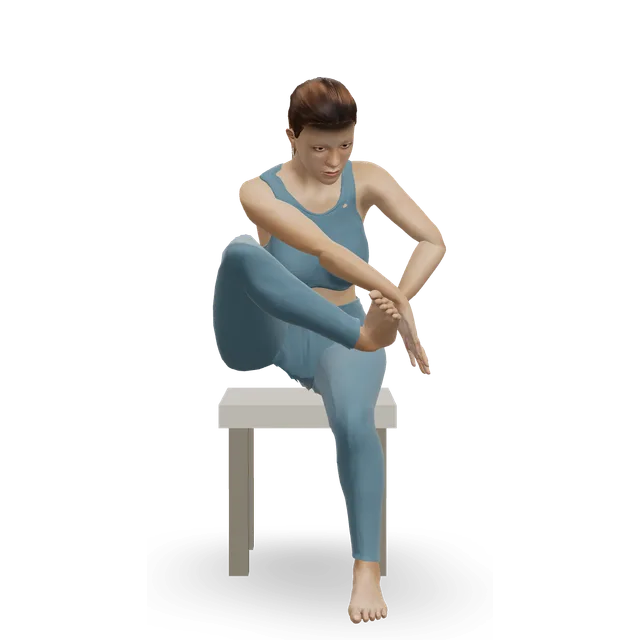
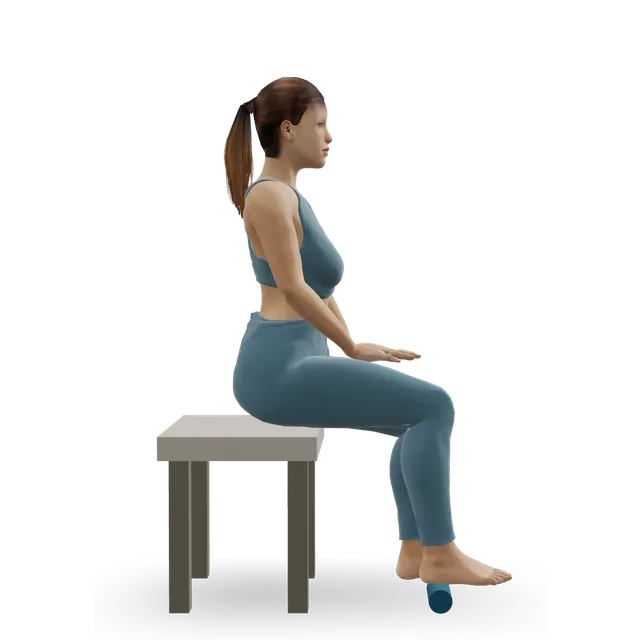
Sole stretch: "3 to 5 holds of 10 to 30 seconds, 2 to 3 times a day" (the move page's dose). Isometric calf raise hold: "5 holds of 30 to 45 seconds" (the move page's dose). Seated calf raises: 3 sets of 15; soleus stretch, only if your ankle is stiff: 2 to 3 holds of 30 seconds each side (our Achilles tendinopathy guide). Stop if heel pain gets sharper.

The spine

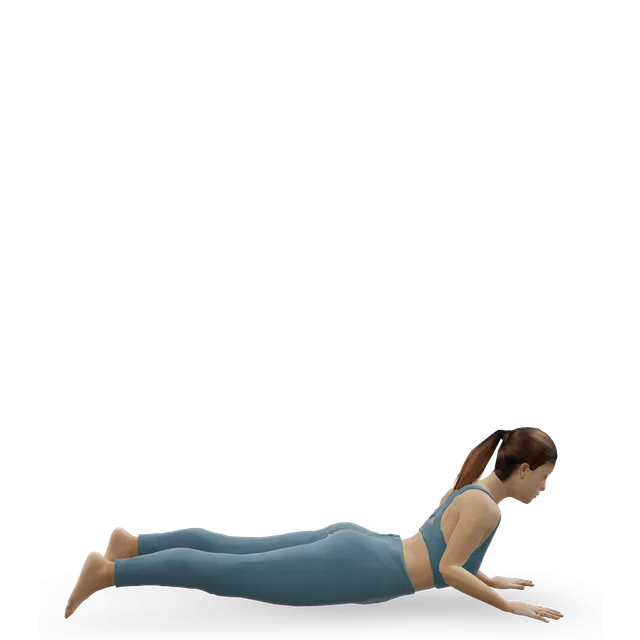
Rib breathing: "5 to 8 breaths at the start of every session" (the move page's dose). Sphinx, 2 holds of 3 to 5 breaths; low cobra, 5 lifts held 3 to 5 seconds; locust with your arms by your sides, 3 to 5 lifts held 3 to 5 seconds; open book, 8 each side; wall angel, 8 slow slides (our yoga for ankylosing spondylitis class).

Standing strength and balance, with a chair

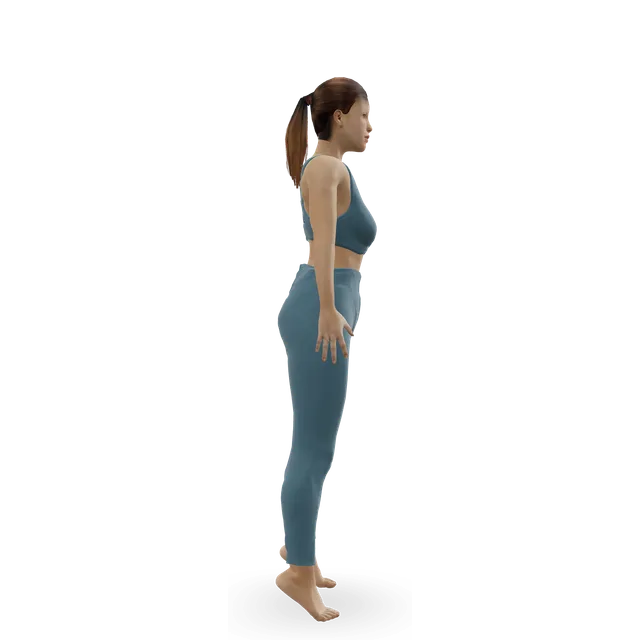
Mountain pose, 5 breaths, a hand on the chair; chair pose, 3 holds of 10 to 15 seconds, a small knee bend; warrior II with a short stance, 3 breaths each side; tree pose with your heel at your ankle, 3 breaths each side; sit to stand, 8 to 10 slow reps (our yoga for rheumatoid arthritis class).

Rest

Reclining bound angle with a cushion under each thigh, 2 minutes; corpse pose with cushions under your knees and arms, 5 minutes (our yoga for rheumatoid arthritis class).

Poses to change or leave out

Flat hands and bent-back wrists

With sore wrists or fingers, a swollen finger, or psoriasis on your palms or nails: do downward dog, plank, all-fours cat-cow and sun salutations on your forearms or fists, with a wedge under your palms, or with your hands on a chair or wall (our suggestion).

Kneeling and forearm poses

With sore knees or plaques on your knees or elbows: pad well, or use seated and standing versions (our suggestion).

Source 34

Jumping and long standing

With a sore heel: step back in sun salutations and shorten standing holds.

Source 30

Long holds at the end of your range

Inflamed joints can be left less stable, so move within comfort rather than holding deep, passive stretches (as our rheumatoid arthritis yoga guide advises).

Thin bones

Modify or avoid exercises that round your back deeply or repeatedly, especially with a weight: sit-ups, toe touches, Pilates roll-downs and curl-ups, and extreme yoga forward folds. Bend from the hips instead. You do not need to avoid bending, twisting or lifting altogether: move smoothly and keep your upper back straight.

Twisting should be safe if you do it smoothly and comfortably. Slow down and shorten fast or forceful twists, and leave out the added weight.

Classes to follow

For hands, feet and flare days, our rheumatoid arthritis class (mostly in a chair, with a 15-minute flare-day version); for the back and neck, our ankylosing spondylitis class. Two or 3 sessions a week, with walking or cycling for your heart, is our editorial starting point. The hand exercises come from a rheumatoid arthritis trial.

Breathe, move and rest: a 30-minute gentle yoga class for rheumatoid arthritis, mostly in a chair, with a flare-day version

A gentle 30-minute yoga class for rheumatoid arthritis: slow breathing, hand, foot and spine moves in a chair, standing poses with a chair, then supported rest.

30 minBeginner19 movesA bench or box, Other / check instructions

Yoga for ankylosing spondylitis: a 25-minute breathing, extension and rotation class

Twenty-five minutes of yoga for ankylosing spondylitis: rib breathing, posture work, standing strength, face-down back bends, gentle rotation and a supported rest.

25 minBeginner18 movesA wall

Yoga for arthritis: a 30-minute joint-friendly class with a chair

A 30-minute joint-friendly yoga class for arthritis: seated breathing and joint warm-ups, standing poses with a chair, gentle lying poses and a long relaxation.

30 minBeginner17 movesA bench or box, A wall

Hand exercises for rheumatoid arthritis (the SARAH programme)

The daily stretches and strengthening moves from the SARAH hand trial and NHS hand therapy leaflets: finger bends, finger walking, wrist circles, squeezes and pinches.

15 minBeginner7 movesA dumbbell, A bench or box

Chronic pain flare-up routine: gentle movement for a bad day

A 10-minute routine for a pain flare-up: slow breathing, small gentle moves lying and sitting, a short stroll if you can, then rest. Repeat later in the day.

10 minBeginner10 movesA band, A bench or box

Restorative yoga sequence: 45 minutes of supported rest

A 45-minute restorative yoga sequence: five fully supported poses held for 4 to 10 minutes each, with slow breathing and a long final rest.

45 minBeginner6 movesFirm cushion, A wall

Plantar fascia routine

Plantar fascia and calf stretches, a gentle foot roll and the towel heel raise: the exercises the 2023 heel pain guideline supports.

8 minBeginner7 movesA bench or box, A massage ball

Add walking for your heart

Yoga is mostly light activity; a walking plan builds towards the 150 minutes a week the NHS recommends.

Warning signs: when to get help

These are the warning signs from our psoriatic arthritis, rheumatoid arthritis and ankylosing spondylitis guides, word for word. This is general information, not a diagnosis. A&E means accident and emergency; in the US, call 911 for 999.

Call 999 or go to A&E: a serious skin flare

If you have psoriasis and your skin quickly turns red with white, pus-filled bumps that join together, patches on your feet turn yellow-brown and fill with pus, or red, scaly, pus-filled bumps appear on the tips of your fingers and toes, especially with a fast heartbeat, a high temperature, or feeling hot, cold or shivery.

Source 36

Urgent GP appointment or NHS 111: a hot, swollen joint

Infection in a joint (septic arthritis) is more likely if your immune system is weakened. Ask for an urgent GP appointment or contact NHS 111 if you have:

Get help the same day for a hot, swollen joint with a fever, or severe pain and swelling that came on suddenly in one joint.

  • Severe pain that started suddenly, usually in 1 joint.
  • Swelling around a joint, or skin around it that has changed colour.
  • Difficulty moving a joint.
  • Joint pain with a high temperature, or feeling hot, cold or shivery.

Source 13

A red, painful eye

NICE asks for an eye assessment the same day for symptoms of eye inflammation (uveitis), such as eye pain, redness, sensitivity to light or blurred vision. The NHS says to ask for an urgent GP appointment or contact NHS 111; untreated, it can cause the loss of some or all of your vision.

Sources 15, 14

On methotrexate: tell your doctor or call 111 immediately

Call 999 if your lips, mouth, throat or tongue suddenly swell, or you're struggling to breathe. Tell your doctor or call 111 immediately if you get:

  • A high temperature, muscle aches or a sore throat (signs of infection).
  • A cough that won't go away, chest pain, difficulty breathing or breathlessness.
  • Yellowing of your skin or the whites of your eyes.
  • Swollen hands, ankles or feet, or peeing much less than usual.
  • Bleeding gums, blood in your pee, vomiting blood or unexplained bruising.

Back pain with leg symptoms: call 999

Call 999 or go to A&E: loss of feeling or numbness around the genitals or bottom, new trouble peeing or controlling your bladder or bowels, changes in genital sensation during sex or problems with erections or orgasm, or pain, tingling, weakness or numbness in both legs. These are signs of cauda equina syndrome, which needs treating in hospital urgently. Don't drive yourself.

Source 42

See a GP or your rheumatology team

  • Joint pain, stiffness and swelling that keeps coming back, even if you don't have psoriasis.
  • Pain, heat and swelling that last more than a few days after exercise.
  • A whole finger or toe that swells, or heel or tendon pain that doesn't settle.
  • Low back pain that started before 45 and has lasted more than 3 months.

Sources 1, 15

Stop exercising

Stop if exercise brings sharp pain or swelling, and check how you're doing the move before trying again with less. Stop and get help for chest pain, palpitations (your heart pounding or fluttering) or unusual breathlessness, and rest if you feel feverish or unwell.

Chest pain or fainting: call 999

Call 999 if:

  • You get sudden pain or discomfort in your chest that doesn't go away; it can feel like squeezing or pressure, burning or indigestion.
  • The pain spreads to your left or right arm, or your neck, jaw, stomach or back.
  • You have chest pain and feel sweaty, sick, light-headed or short of breath.
  • Someone faints while exercising, can't be woken within 1 minute, or has chest pain or a pounding, fluttering or irregular heartbeat.

Sources 43, 44

If you're struggling

If you feel you can't keep yourself safe, call 999 or go to A&E. For urgent mental health help, call NHS 111 and choose the mental health option, or call Samaritans free on 116 123, any time. In the US, call or text 988.

Before you start

The NHS advises getting advice from a healthcare professional first if you have a health problem, an injury or symptoms, or have recently had a heart attack or an operation.

Never stop or change your psoriatic arthritis medicines because of exercise or a flare without your team (our suggestion; the NHS says medicines are the main treatment).

Myths

"Exercise makes psoriatic arthritis worse"Emerging evidence

In the best trial, hard interval training didn't raise disease activity or inflammation on scans, and flares from exercise looked uncommon across 13 studies. The evidence is very low certainty overall, so build up gradually.

Sources 5, 6, 26, 8

"Yoga reduces the inflammation of psoriatic arthritis"Emerging evidence

No yoga trial exists, and exercise trials didn't change disease activity or scan inflammation. Medicines treat the inflammation.

Sources 3, 5, 6, 1

"Rest completely in a flare"Strong evidence

Slow, gentle movement during a flare, rather than stopping altogether, is what Arthritis UK's physiotherapists advise.

Source 12

"Sweating it out in hot yoga clears psoriasis"Mixed evidence

No study has tested it, and psoriasis in skin folds can be made worse by friction and sweating.

Sources 38, 35

"Yoga is the best exercise for PsA"Mixed evidence

US guidance prefers low-impact exercise including yoga, on very low-quality evidence; strength and interval training are what the PsA trials tested. A mix of all three suits most people.

Sources 2, 7, 24

Questions people ask

Is yoga good for psoriatic arthritis?

It's a reasonable low-impact choice: the NHS lists yoga among exercise that can help protect your joints. No trial has tested yoga in psoriatic arthritis, so it works alongside medicines, strength work and walking, not instead of them.

What type of yoga is best for psoriatic arthritis?

Gentle, low-impact classes with props, such as hatha or chair yoga, suit most people. Our rheumatoid arthritis class, mostly in a chair with a flare-day version, suits sore hands and feet, and our ankylosing spondylitis class suits the back.

Is hot yoga good for psoriatic arthritis?

No study has tested it. Psoriasis in skin folds can be made worse by friction and sweating, so a room at normal temperature is the safer choice.

Can I do yoga during a psoriatic arthritis flare?

Gently: slow, small movements, breathing and supported rest rather than stopping altogether. Stretch rather than strengthen hot, swollen joints, and call your team if a flare won't settle.

Will yoga reduce my inflammation?

There's no evidence that it does. Exercise trials in psoriatic arthritis improved fitness and function without changing disease activity or inflammation on scans; medicines treat the inflammation.

My wrists and fingers hurt: can I do downward dog or plank?

Use your forearms, fists, a wedge under your palms, or your hands on a chair or wall instead of flat hands. Rest a hot, swollen finger from weight and gripping until it settles.

I have psoriasis on my knees and elbows. Any tips for yoga?

Pad kneeling and forearm poses, because psoriasis can appear where skin is rubbed. Wear loose cotton, use your own mat and a towel, and shower, pat dry and moisturise afterwards.

What about sore heels?

Pain where tendons attach to bone is common in psoriatic arthritis, most often at the Achilles and under the heel. Keep impact low, do calf holds and seated raises, and skip jumping while a heel is sore; heel pain that doesn't settle needs checking.

Can yoga help my back and neck?

If psoriatic arthritis affects your spine, the exercise used in ankylosing spondylitis applies: breathing, back bends that strengthen, and turning. Mind-body exercise gave small gains in function in that condition, and our ankylosing spondylitis yoga guide has a class.

Can yoga help psoriatic arthritis fatigue?

About half of people with psoriatic arthritis have fatigue. Exercise may ease it a little, though the trial result was uncertain; pace your practice and keep a gentle version for low days.

Does yoga help psoriasis on the skin?

Yoga poses haven't been tested for skin. Meditation helped in small trials as an addition to treatment, and stress can trigger psoriasis; our yoga for your skin guide covers it.

When should I get help?

Urgently for a hot, swollen joint with a fever, a red, painful eye, or skin that suddenly turns red with pus-filled bumps, and tell your doctor straight away about infection signs on methotrexate or a biologic. See your team about joint swelling that keeps coming back or heel pain that won't settle.


Sources

  1. NHS · Psoriatic arthritis (past its review date: reviewed September 2023, review due September 2026)
  2. Singh 2019 · American College of Rheumatology and National Psoriasis Foundation guideline for psoriatic arthritis (US guideline, Arthritis Care Res; read in full)
  3. PubMed and Europe PMC · Searches for yoga trials in psoriatic arthritis and psoriasis: 1, 7 and 0 records, no trial (31 October 2026)
  4. Rausch Osthoff 2018 · EULAR recommendations for physical activity in inflammatory arthritis and osteoarthritis (European guideline, Ann Rheum Dis)
  5. Thomsen 2019 · High-intensity interval training and disease activity in 67 people with psoriatic arthritis (randomised trial, Arthritis Care Res)
  6. Thomsen 2023 · Inflammation on ultrasound and MRI after interval training in psoriatic arthritis (randomised trial, BMC Musculoskelet Disord)
  7. Roger-Silva 2018 · Strength training in 41 people with psoriatic arthritis (randomised trial, Clin Rheumatol)
  8. Lyu 2026 · Exercise and physical activity in psoriasis and psoriatic arthritis: 9 reviews (umbrella review, Front Immunol)
  9. Pignon 2025 · Enthesitis in psoriatic arthritis: 212 studies (systematic review and meta-analysis, Joint Bone Spine)
  10. Polachek 2017 · Enthesitis in 803 people with psoriatic arthritis (cohort study, Arthritis Care Res)
  11. Psoriasis Association 2017 · Triggers (review was due December 2020)
  12. Arthritis UK 2025 · How to maintain movement during a flare-up
  13. NHS · Septic arthritis
  14. NHS · Uveitis
  15. NICE NG65 · Spondyloarthritis in over 16s: diagnosis and management (last updated June 2017; read in full)
  16. Alinaghi 2019 · Psoriatic arthritis in people with psoriasis: 266 studies, 976,408 people (systematic review and meta-analysis, J Am Acad Dermatol)
  17. Pittam 2020 · Problems outside the joints in psoriatic arthritis: 65 studies (systematic review and meta-analysis, Rheumatology)
  18. Torgutalp 2026 · The spine in early psoriatic arthritis: 409 people in 19 countries (AXIS study, Ann Rheum Dis)
  19. Tang 2025 · Fatigue in psoriatic arthritis: 15 studies, 6,482 people (systematic review and meta-analysis, BMC Rheumatol)
  20. Polachek 2017 · Heart and circulation disease in psoriatic arthritis: 11 studies, 32,973 people (meta-analysis of observational studies, Arthritis Care Res)
  21. Coates 2022 · GRAPPA treatment recommendations for psoriatic arthritis 2021 (international guideline, Nat Rev Rheumatol; read in full)
  22. Hojeij 2025 · Flares in psoriatic arthritis: how often, how defined and why: 54 studies (systematic review, Rheumatology)
  23. Rausch Osthoff 2026 · EULAR recommendations for physical activity in inflammatory arthritis and osteoarthritis: 2025 update (European guideline, Ann Rheum Dis)
  24. Thomsen 2018 · High-intensity interval training, fitness and body composition in psoriatic arthritis (randomised trial, RMD Open)
  25. Kaerts 2024 · Physical therapy in psoriatic arthritis: 15 papers (systematic review, Rheumatol Adv Pract; read in full)
  26. Kessler 2021 · Psoriatic arthritis and physical activity: 13 studies (systematic review, Clin Rheumatol)
  27. Wang 2024 · Mind-body exercise for axial spondyloarthritis: 15 trials (systematic review and meta-analysis, J Orthop Surg Res; read in full)
  28. Huo 2026 · Types of exercise for axial spondyloarthritis: 59 trials, 3,404 people (network meta-analysis, Ann Phys Rehabil Med)
  29. Regnaux 2019 · Exercise programmes for ankylosing spondylitis: 14 trials (Cochrane review)
  30. Kaerts 2025 · Physical fitness and physical activity in psoriatic arthritis (systematic review, Rheumatol Adv Pract; read in full)
  31. Fagni 2023 · One badminton session in 16 people with psoriasis or psoriatic arthritis (ultrasound study, RMD Open)
  32. Psoriasis Association 2017 · Hands (information sheet; review was due December 2020)
  33. National Psoriasis Foundation · Causes and triggers (updated January 2025)
  34. Zhang 2023 · Characteristics and causes of the Koebner phenomenon (narrative review, Exp Dermatol)
  35. Psoriasis Association 2024 · Sensitive psoriasis (information sheet)
  36. NHS · Psoriasis
  37. Enos 2022 · Exercise and itch in plaque psoriasis: 20 people and 23 controls (lab study, J Dermatolog Treat)
  38. PubMed · Search for hot yoga with psoriasis, skin conditions or arthritis: 4 records, none about psoriasis (31 October 2026)
  39. Kabat-Zinn 1998 · A mindfulness recording during light treatment for psoriasis: 37 people (randomised trial, Psychosom Med)
  40. Bartholomew 2022 · Mindfulness and meditation for psoriasis: 6 randomised trials (systematic review, Dermatol Ther (Heidelb))
  41. National Axial Spondyloarthritis Society (NASS) · Your flares
  42. NHS · Back pain
  43. NHS · Chest pain (past its review date: reviewed August 2023, review due August 2026)
  44. NHS · Heart attack

Exercise education, not a personal prescription, and clinical review of these guides is pending. If you are pregnant, have a health condition such as glaucoma, high blood pressure or osteoporosis, or have had recent surgery, check with a doctor, midwife or physiotherapist before starting, and stop for sharp or increasing pain. Health disclaimer.