Yoga flows
Yoga for ankylosing spondylitis: a 25-minute breathing, extension and rotation class
A yoga class built around what NICE asks your exercise programme to cover: deep breathing, posture, bending back, turning and side bending through your whole spine, and strength. It starts sitting, so stiff mornings are easier, and every pose stays within your range: the National Axial Spondyloarthritis Society (NASS) says it "will not be beneficial or possible to force the spine into a range that is uncomfortable". There are no headstands, shoulder stands, plough or rolling, and no hands-on adjustments, because a stiff or fused spine can break after a minor knock. If your spine is fused, your bones are thin or you're in a flare, check with your physiotherapist first. It adds to your medicines, physiotherapy and aerobic exercise, and it won't straighten a fused spine. The order and doses are our editorial choice from our AS daily routine and yoga for posture class; no trial has tested this class.
Sitting: breathe and loosen (about 5 minutes)
- Beginner · 3D demoSit tall on a chair, hands on your lower ribs. Breathe in through your nose for about 4, letting your ribs widen into your hands, and out for about 6. No holds; stop if you feel light-headedEasier: Breath reachHarder: Crocodile breathing (prone diaphragmatic breathing)
- Breath reach5 breathsBeginner · 3D demoArms float up in a wide V as you breathe in, down on a longer breath out. Only as high as is comfortableHarder: Slow breathing (6 breaths a minute)
- Chin tuck10 holds of 5 sBeginner · Neck · 3D demoGlide your head straight back, eyes level. Don't force a stiff neckEasier: Lying chin tuckHarder: Isometric neck holds (four-way)
- Thoracic rotation6 each sideBeginner · 3D demoArms crossed, hips facing forward; turn from your upper back, slowlyEasier: Side-lying open bookHarder: World's greatest stretch




Posture at the wall (about 4 minutes)
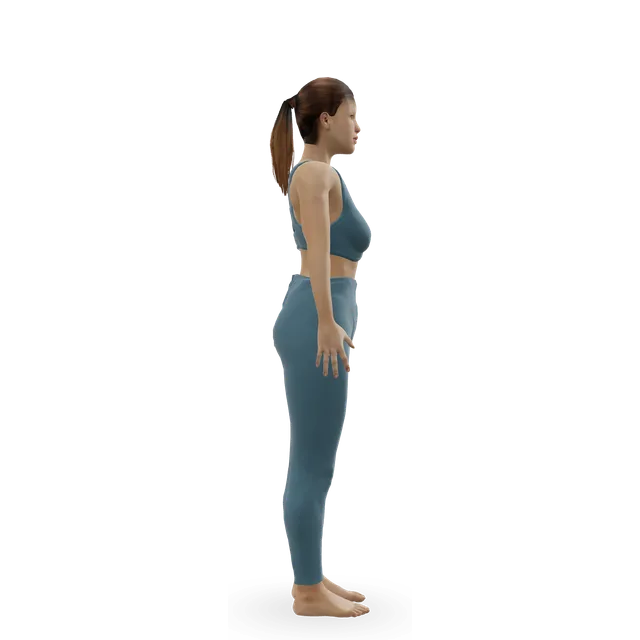
- Mountain pose (Tadasana)5 to 10 slow breathsBeginner · Calves, Back, Abs · 3D demoBack to a wall, heels a little away from it, buttocks and shoulders close to it. Let the back of your head reach the wall only if it gets there without your chin liftingHarder: Tree pose (Vrksasana)
- Wall angel8 slow slidesBeginner · Back, Shoulders · 3D demoA small range is fine. Feet a step forward if your back can't reach the wallEasier: Table slide (seated forward reach)Harder: Prone Y-T-W raises
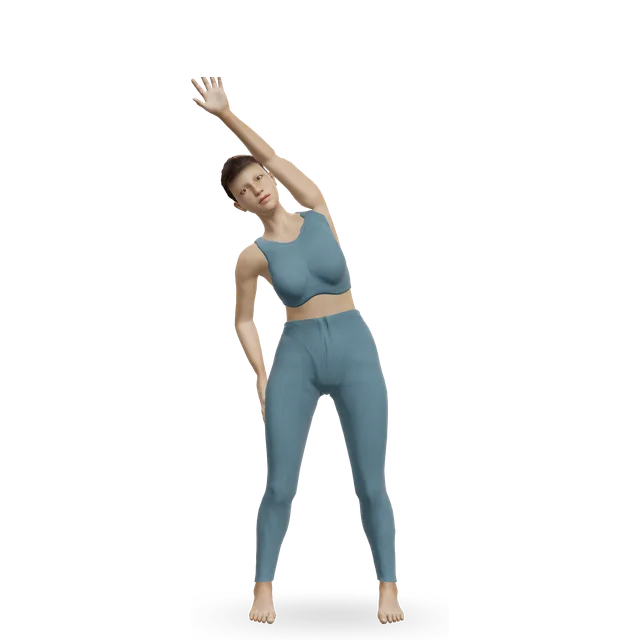
- Overhead side bend3 each sideBeginner · 3D demoFeet planted, reach up and over, breathing out into each bendEasier: Seated overhead side bendHarder: Overhead lat stretch at a bench (elbows on the bench)


Standing strength and balance (about 4 minutes)
- Chair pose (Utkatasana)3 holds of 5 breathsBeginner · Quads, Glutes, Shoulders · 3D demoSit back as if onto a tall stool, chest lifted, arms forward or hands on your thighsHarder: Revolved chair pose (Parivrtta Utkatasana)
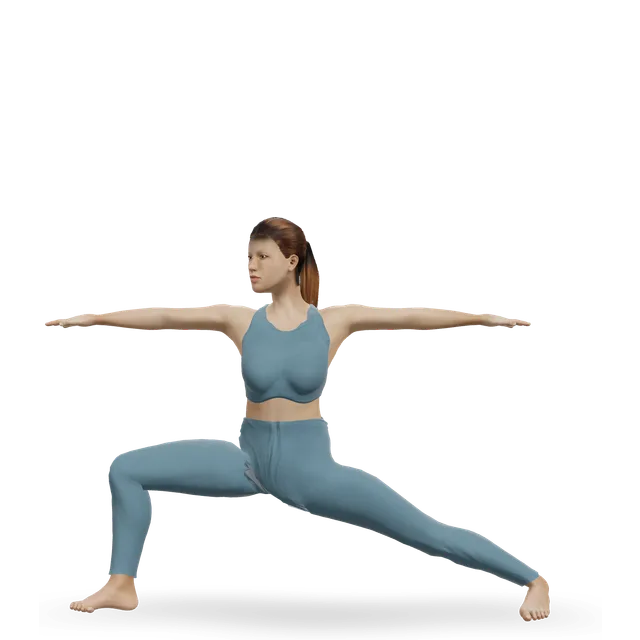
- Warrior II (Virabhadrasana II)5 breaths each sideIntermediate · Quads, Glutes, Adductors · 3D demoFront knee over your second toe. A shorter stance if your hips are stiffEasier: Chair pose (Utkatasana)Harder: Extended side angle (Utthita Parsvakonasana)
- Tree pose (Vrksasana)3 to 5 breaths each sideBeginner · Glutes, Hip abductors, Calves · 3D demoFingertips on the wall. Foot on your ankle or calf, never pressed into the side of your kneeEasier: Mountain pose (Tadasana)Harder: Standing hand-to-big-toe pose (Utthita Hasta Padangusthasana)



Face down: bend back (about 5 minutes)
- Sphinx pose (Salamba Bhujangasana)2 holds of 3 to 5 breathsBeginner · Back, Abs, Chest · 3D demoForearms down, elbows under your shoulders; lengthen forward through the top of your head. If lying face down is hard, sit on a chair and lift your breastbone insteadHarder: Cobra pose (Bhujangasana)
- Low cobra (Bhujangasana)5 lifts, held 3 to 5 sBeginner · Back, Chest, Shoulders · 3D demoLift with your back, hands barely pressing; forehead on your hands between liftsEasier: Sphinx pose (Salamba Bhujangasana)Harder: Cobra pose (Bhujangasana)
- Locust pose (Salabhasana)3 to 5 lifts, held 3 to 5 sBeginner · Back, Glutes, Hamstrings · 3D demoArms by your sides, neck long, eyes down. Lower if your back pinches or pain goes down a legEasier: Seated upper-back lift (sit tall, shoulders back)Harder: One-legged bow (half locust)



Side-lying and all fours (about 5 minutes)
- Side-lying open book8 each sideBeginner · Back, Chest, Shoulders · 3D demoA pillow under your head. Knees stacked; open your top arm and let your eyes followHarder: Thoracic rotation
- Cat-cow8 slow wavesBeginner · Back, Abs · 3D demoMove your whole spine with your breath; do it sitting on the chair if kneeling is hardHarder: Half lord of the fishes (Ardha Matsyendrasana)
- Bird dog, one limb at a time5 each arm and leg, holding 3 to 5 sBeginner · Abs, Back, Glutes · 3D demoReach long rather than high; your back stays stillEasier: Side-lying tummy draw-inHarder: Bird dog



Hips and rest (about 5 minutes)
- Half-kneeling hip flexor stretch1 hold of 30 s each sideBeginner · Quads, Glutes · 3D demoPad your knee and tuck your tailbone under; hold a chair for balanceHarder: Couch stretch
- Beginner · 3D demoA pillow or folded towel under your head so your chin is level, knees on a cushion. To get up, roll to your side and push up with your arms


Tips
- Do it 2 or 3 times a week, with a few minutes of the breathing and spine moves on other days. The yoga trials used 1 to 3 sessions a week for 8 weeks to 3 months, and the NHS says some daily stretching matters even if you do other exercise.
- If mornings are stiff, do it later in the day or after a warm bath or shower, which NASS calls good preparation.
- Mild aches that ease after the class are normal. NASS says to get advice if you have more than mild aches and pains after exercising.
- With a stiff or fused spine or osteoporosis, never push into a fused section, keep the back bends small and keep a hand on the wall for balance. Tell your teacher which parts of your spine are stiff or fused, and ask not to be adjusted.
- In a flare, keep the sitting block and the open book going with a smaller range, and leave the rest for a few days (our suggestion).
- Add aerobic exercise towards 150 minutes a week and strength work on 2 days: our exercise for AS guide has both.
- New neck or back pain after a fall or knock: get checked the same day, and call 999 and keep still if your arms or legs are numb, tingling or weak.
The doses are suggested starting points, not a prescription. Choose a range you can control and stop for sharp or increasing pain, numbness or tingling. Get individual advice after an injury or surgery, or if you are pregnant or managing a health condition.
Guides that recommend it
Find more moves like these
More yoga flows
Beginner yoga flow
A 20-minute beginner yoga sequence: mountain, chair, warrior II, triangle, tree, down dog, cobra and child's pose.
20 minBeginner11 movesA step

Sun salutation flow
A 20-minute flow built on sun salutations A and B, with warrior poses and a short cool-down.
20 minIntermediate8 movesNo equipment



Yoga for tight hips
A hip-opening yoga sequence: low lunge, lizard, goddess, pigeon, bound angle and happy baby.
25 minBeginner10 movesA wallQuestions people ask
How long does the yoga for ankylosing spondylitis: a 25-minute breathing, extension and rotation class take?
About 25 minutes, including any warm-up and cool-down listed. Shorten it by doing fewer rounds; lengthen it by adding one.
What equipment do I need?
You need: A wall. Each move links to its guide, where you can find an alternative if you are missing something.
Is it suitable for beginners?
It is written for beginners. 10 of its 18 moves have an easier option listed beside them if you need one.
How do I make it easier or harder?
Use the easier or harder option listed under each move, change the number of rounds, or adjust the rest. Progress one change at a time.