Warning signs: when to get help
These are the site's lines from our hand pain, arthritis, rheumatoid arthritis and carpal tunnel guides, word for word, with the NHS's own words where the site has no line. This is general information, not a diagnosis. A&E means accident and emergency; in the US, call 911 for 999, and use your doctor's urgent line or urgent care for NHS 111.
After a hand injury: call 999
- Call 999 or go to A&E after an injury (don't drive yourself) if the arm, wrist or hand is numb, tingling or has pins and needles; a bone is sticking out or a bad cut is bleeding heavily; or the wrist, thumb or a finger has changed shape, is at an odd angle, or has turned blue, grey, white or cold.
- Call 999 or go to A&E: sudden, severe pain in a muscle of the forearm or hand, which may be worse when you stretch it, with swelling, numbness, weakness or pins and needles, or tightness or difficulty moving the fingers. This can be acute compartment syndrome, which needs surgery as soon as possible. It usually follows an injury, a crush, or a cast or bandage that is too tight. Do not drive yourself to A&E.
Source 2
Weakness in one arm with a drooping face: call 999
Call 999, even if it passes: sudden weakness or numbness in one arm, with a drooping face or slurred speech. These are signs of a stroke.
An injured, hot or numb hand: the same day
- Same day (NHS 111, an urgent treatment centre or an urgent GP appointment): a wrist or hand injury that is very painful, getting worse, very swollen or bruised, stiff, or that you can't use. It may be broken. Get the same help if you also have a very high temperature, or feel hot, cold or shivery: this could be an infection.
- Same day (urgent GP appointment or NHS 111): sudden, severe pain in one joint, with swelling, a change in skin colour or difficulty moving it, especially if you feel unwell, hot, cold or shivery or have a high temperature (although not everyone has one). It could be an infection in the joint, gout or calcium crystals (pseudogout), and only a sample of fluid from the joint can tell them apart.
- Same day: you have lost the feeling in part or all of your hand.
- Same day: both hands numb or clumsy (dropping things, trouble with buttons or handwriting), especially with unsteady walking or falls. Pressure on the spinal cord in the neck can do this, and it is often first mistaken for carpal tunnel syndrome.
Source 2
A finger that won't straighten or bend: the same day
- Same day (NHS 111): you can't straighten the tip of a finger after catching it. It may be mallet finger.
- Same day (NHS 111): you can't bend the end of a finger after it was pulled or caught, for example grabbing a shirt. The tendon may have come off the bone, and a hand surgeon should see it within days.
Signs of inflammatory arthritis: see a GP soon
- Morning stiffness that lasts much longer than 30 minutes, several swollen joints (often on both sides), or feeling tired, feverish or losing weight. These can be signs of an inflammatory arthritis such as rheumatoid arthritis, where early treatment matters.
- Swollen, stiff joints in several fingers or both hands, with morning stiffness lasting more than 30 minutes. NICE asks GPs to refer suspected rheumatoid arthritis urgently when the small joints of the hands or feet, or more than one joint, are affected, or there has been a delay of 3 months or longer between the symptoms starting and seeking medical advice, even if blood tests are normal.
Sources 50, 18
Numbness, tingling or a weak thumb
- Carpal tunnel symptoms that are getting worse, not going away, or not helped by treatment at home; sooner if the thumb is weak or the muscle at the base of the thumb looks thinner.
- Any tingling or loss of feeling in the hand or wrist.
Sources 19, 2
With carpal tunnel syndrome
Our carpal tunnel syndrome guide's rule: some discomfort is fine if it stays at about 5 out of 10 or less and settles within half an hour or so. With nerve glides, a little extra tingling is expected but should fade within an hour. Stop and get advice if numbness spreads, lasts, or your grip or thumb gets weaker.
See a GP or physiotherapist
- Not improved after 2 weeks of looking after it at home, getting worse, keeps coming back, or stopping you doing normal activities. In many areas you can refer yourself to NHS physiotherapy.
- You have diabetes and a hand problem: the NHS says hand problems can be more serious if you have diabetes.
Source 2
Lumps, bent fingers and pain after an injury
- Fingers bent into the palm so you can't put your hand flat.
- A lump that gets bigger, is hard or doesn't move.
- After an injury or operation, pain that is getting worse instead of better or far worse than you'd expect, with swelling, colour or temperature changes, or skin that is very sensitive to touch: contact your fracture clinic, physiotherapist or GP promptly. It can be complex regional pain syndrome (CRPS), and early treatment may help.
With osteoarthritis
The NHS: "You should see your GP if you have persistent symptoms of osteoarthritis so they can confirm the diagnosis and prescribe any necessary treatment."
Source 20
With rheumatoid arthritis: a hot, swollen joint
Get help the same day for a hot, swollen joint with a fever, or severe pain and swelling that came on suddenly in one joint.
Some pain when you start is common and isn't a sign of harm if it settles. A hot, swollen joint is different: rest it from strengthening.
Source 51
With rheumatoid arthritis: a flare
In a flare, rest the inflamed joints but keep them moving gently, then build back up.
NICE says everyone with RA should have rapid access to specialist care for flares. If a flare doesn't settle, or comes with feeling unwell, call your rheumatology advice line rather than pushing through.
Sources 52, 11
A hot, swollen finger joint
If a joint is hot and swollen, do the stretches only, gently, until it settles.
During practice
"If it hurts, stop", the Johns Hopkins arthritis team says. Stop and rest if a pose makes a joint warm and swollen or causes severe pain, and ease off next time if a joint aches more the next day.
Source 53
Squeezing on a sore day
Squeeze gently, not as hard as you can, on a sore day; with arthritis at the base of the thumb use a soft ball, and rest grip work while a finger joint is hot and swollen (our suggestion, from the NHS finger pain advice not to grip anything too tightly).
Source 2
Chest pain or fainting while exercising: call 999
Call 999 if:
- You get sudden pain or discomfort in your chest that doesn't go away; it can feel like squeezing or pressure, burning or indigestion.
- The pain spreads to your left or right arm, or your neck, jaw, stomach or back.
- You have chest pain and feel sweaty, sick, light-headed or short of breath.
- Someone faints while exercising, can't be woken within 1 minute, or has chest pain or a pounding, fluttering or irregular heartbeat.
Sources 54, 55
Unusual breathlessness
Call 999 or go to A&E (accident and emergency) straight away for severe difficulty breathing (gasping, choking or not able to get words out), a chest that feels tight or heavy, pain that spreads to your arms, back, neck and jaw, lips or skin turning very pale, blue or grey, or sudden confusion. If you're more short of breath than usual, or your heart is racing, fluttering or skipping beats, contact NHS 111.
Source 56
Stop and get medical help
If you get chest pain or pressure, feel faint or dizzy, are unusually breathless, or your heart races or beats irregularly during exercise, as our plans advise.
During yoga
A joint pain that is sharp, gets worse during a session, lingers into the next day or changes how you move is a reason to use an easier version, and to see a GP or physiotherapist if it keeps happening (the rule in our plans). Muscle soreness for a day or two after something new is normal. In a hot class, stop if you feel dizzy, sick or unwell; our hot yoga guide lists the signs of heat illness.
You can say no to any hands-on adjustment, and a teacher registered with Yoga Alliance must get your explicit consent each time.
Sources 57, 58
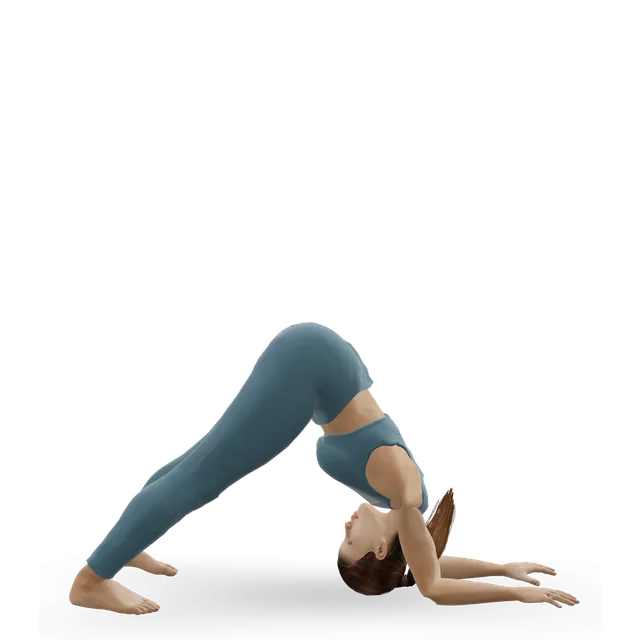
Head-down poses, bones and pregnancy
With glaucoma, or high blood pressure that isn't under control, skip headstands, shoulder stands and long head-down holds. With osteoporosis, swap deep forward folds for a flat-back hinge from the hips, and twist smoothly. In pregnancy, our yoga in pregnancy guide covers the changes. NCCIH advises beginners to avoid headstands, shoulder stands, the lotus position and forceful breathing.
Sources 59, 57
Before you start
The NHS advises getting advice from a healthcare professional first if you have a health problem, an injury or symptoms, or have recently had a heart attack or an operation.
If you have a heart, lung or joint condition, are pregnant or have recently been unwell, start gently and read our guide for your condition. Muscle soreness for a day or two after a new exercise is common and fades as you repeat it.
If you have a heart condition, follow your cardiac team's advice on how hard to work, and stop for the warning signs above. People with long-term conditions may wish to ask their specialist before starting. With uncontrolled high blood pressure, avoid straining against a held breath; the high blood pressure guide has more.