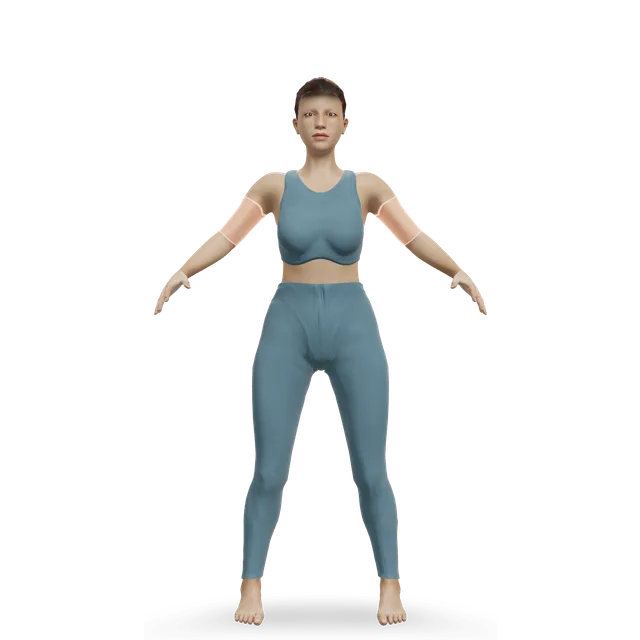
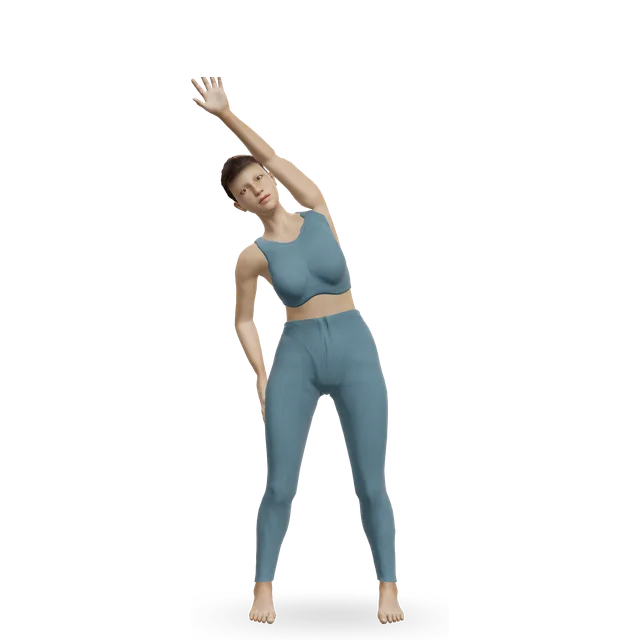
27 bones in each hand
The usual count is 8 wrist bones (carpals) in two rows, 5 palm bones (metacarpals) and 14 finger bones (phalanges): two in the thumb and three in each finger. Small sesamoid bones at the knuckles aren't part of the count.
Joint guide
Each hand has 27 bones in the usual count: 8 small wrist bones in two rows, 5 in the palm and 14 in the fingers and thumb. The wrist joint itself is between the radius and three of those wrist bones, the carpal tunnel at the front of the wrist carries 9 tendons and the median nerve, and a saddle-shaped joint at the base of the thumb lets it swing across to meet each fingertip.
Your grip comes mostly from muscles in your forearm, fine-tuned by small muscles in the hand, and it is a well-studied marker of health: on average, people with a weaker grip die younger. That is an association, and no trial has shown that training your grip changes it.
This guide covers how the wrist and hand are built and move, grip strength by age, what keeps hands healthy, and the moves and a grip workout to train them, with links to the hand and wrist pain guides.
The usual count is 8 wrist bones (carpals) in two rows, 5 palm bones (metacarpals) and 14 finger bones (phalanges): two in the thumb and three in each finger. Small sesamoid bones at the knuckles aren't part of the count.
The wrist joint is between the radius and three wrist bones; the ulna isn't part of it. At the front of the wrist, the carpal bones and a tough band about 3 cm long form the carpal tunnel, which carries 9 tendons and the median nerve.
The joint at the base of the thumb is shaped like two saddles fitting together, so the thumb can move in two planes and turn to touch each fingertip (opposition).
In a power grip, one deep forearm muscle pulls all four fingers in together while the wrist extensors hold the wrist steady. The small muscles inside the hand fine-tune the fingers and add to pinch and grip strength.
Each 5 kg lower grip went with a 16% higher risk of death over about 4 years in 139,691 adults in 17 countries, and UK Biobank found the same in half a million people. That is an association: exercise raises grip a little, but no trial has tested whether that changes your risk.
In a study of 40 adults, most daily tasks fitted within about 40 degrees of wrist bending each way, and in 24 adults the hand's joints stayed 5 to 28 degrees short of their full range during daily activities. Moving them fully takes deliberate practice.
Each hand has 27 bones in the usual count. The 8 carpal bones sit in two rows: the scaphoid, lunate, triquetrum and pisiform nearest the forearm, and the trapezium, trapezoid, capitate and hamate nearest the hand. The capitate is the largest and most central, the trapezoid the smallest, and the scaphoid the one most often broken, at 60 to 70% of carpal fractures. The hook of the hamate protects the ulnar nerve and artery in a passage called Guyon's canal.
Beyond them are 5 metacarpals in the palm and 14 phalanges: two in the thumb and three in each finger. A pair of small sesamoid bones sits at the thumb's knuckle, and single ones appear over the index and little-finger knuckles in about 60% of people; they aren't part of the usual count. The bones form three arches, one along the hand and two across it, which help it cup and grip.
From the forearm to the fingertips:
The palmar radiocarpal ligaments, at the front, are the wrist's strongest supports, helped by ligaments at the back and on each side. On the little-finger side, the triangular fibrocartilage complex (TFCC), a cushion of cartilage and ligament, is the main stabiliser of the distal radioulnar joint and also carries load.
The carpal tunnel is a passage at the front of the wrist. Its floor is the arch of the carpal bones, and its roof is the flexor retinaculum, a band about 3 cm long and 2.5 cm wide that thickens from 1.5 to 6 mm, anchored to the scaphoid and trapezium on the thumb side and the pisiform and hook of the hamate on the little-finger side.
Through it run 9 tendons, the 4 superficial and 4 deep finger flexors and the long flexor of the thumb, with the median nerve. Raised pressure in the tunnel squeezes the nerve: carpal tunnel syndrome has a reported rate of 1 to 5% in the general population, is three times as common in women as in men, and usually starts at 40 to 60.
The thumb's base is a saddle joint: the surfaces are concave one way and convex the other, so the thumb can bend and straighten alongside the palm and move away from and towards it, which makes it opposable. Opposition, the thumb tip meeting a fingertip, combines bending, turning inward and moving away from the palm, driven mainly by the opponens pollicis, one of three thenar muscles at the base of the thumb.
In a power grip, the deep finger flexor (flexor digitorum profundus), a forearm muscle with a tendon to each finger, pulls all four fingers in together. The wrist extensors hold the wrist in slight extension so the flexors can produce their full force, which is why gripping loads the tendons at the outer elbow.
Fine movements, such as typing, rely more on the small muscles inside the hand: the lumbricals are essential for precision grip and fine control, and the intrinsic muscles together add to pinch and grip strength.
The median nerve gives feeling to the palm side of the thumb, index, middle and half of the ring finger, and powers the three thenar muscles and two of the lumbricals. The ulnar nerve gives feeling to the little finger and the other half of the ring finger, and powers most of the small muscles inside the hand. The radial nerve gives feeling to the rest of the back of the hand.
The long muscles that bend and straighten the wrist and fingers live in the forearm. The small muscles inside the hand don't have their own guide yet.
The wrist bends forward (flexion) and back (extension) and tilts towards the thumb (radial deviation) and the little finger (ulnar deviation). In a study of 30 adults aged 23 to 30, the reported averages ranged from about 62 to 80 degrees for forward bending, 65 to 70 for bending back, 15 to 25 for tilting towards the thumb and 33 to 45 for tilting towards the little finger, depending on sex, hand and how the forearm was turned.
Source 21
In a 1991 study of 40 adults, most tasks could be done with about 40 degrees of bending each way and 40 degrees of side-to-side tilt, and every task tested fitted within 60 degrees back, 54 forward, 40 towards the little finger and 17 towards the thumb. A smaller 1985 study of 10 adults doing 52 tasks found smaller needs, so the figures depend on the tasks chosen.
The finger knuckles bend, straighten, spread and close, and the middle and end joints bend and straighten. In a small 1990 study of 11 daily activities, the fingers used only a small share of their range: on average about 61 degrees of bend at the knuckle, 60 at the middle joint and 39 at the end joint, and about 21 degrees at the thumb's knuckle, which can bend up to 80 to 90.
In a study of 24 adults doing 24 daily activities, the hand's joints moved 5 to 28 degrees less than their full range, and the authors suggest daily activities alone may not keep or restore full range. Moving the wrist and fingers through their whole range on purpose fills the gap.
Source 14
In the same study of 30 young adults, wrist range changed with the forearm's position, and grip was weakest with the palm facing down, in both men and women.
Source 21
We found no large study of wrist range by age that we could check. Range falls with age across the body's joints in general, while grip strength, which is well studied, peaks in early adult life and declines from midlife.
Across 49,964 people in 12 British studies, grip strength rose to a peak in early adult life, held until midlife and then declined. The peak median was 51 kg in men aged 29 to 39 and 31 kg in women aged 26 to 42. By age 80, 23% of men and 27% of women had weak grip, defined as well below the average peak for their sex.
Source 26
The European consensus on sarcopenia, the loss of muscle strength and mass that is common with age, uses a grip under 27 kg for men and under 16 kg for women as low strength, based on the British data. UK Biobank used a similar cut-off for weakness: under 26 kg for men and 16 kg for women.
Grip is measured with a handheld dynamometer, and the European consensus says accurate measurement needs a calibrated device under well-defined conditions. If you track your own grip, test it the same way each time: grip changes with forearm position, and was weakest palm down in one study.
In the PURE study (Prospective Urban Rural Epidemiology) of 139,691 adults aged 35 to 70 in 17 countries, followed for a median of 4 years, each 5 kg lower grip went with a 16% higher risk of death from any cause and 17% from heart and circulation disease, and grip predicted death better than systolic blood pressure. It wasn't linked with diabetes, falls injuries or fractures.
In 502,293 UK Biobank adults aged 40 to 69, followed for about 7 years, each 5 kg lower grip went with 20% higher death rates in women and 16% in men, with links to heart disease, lung disease and several cancers. Both are observational studies.
In 6,089 healthy Japanese-American men aged 45 to 68, those in the weakest third of grip had nearly 3 times the odds of very slow walking 25 years later, and more than twice the risk of needing help with self-care, compared with the strongest third. It is one cohort, of men only.
Source 28
The European sarcopenia consensus says grip correlates moderately with strength elsewhere in the body, which is why it serves as a quick stand-in for arm and leg strength. A review calls it an indispensable biomarker for older adults, linked with function, falls, fractures, mood, cognition and death.
No trial has tested whether raising grip strength lowers anyone's risk; the PURE authors call for research to test whether improving strength reduces deaths. Exercise of many kinds raised grip a little in older adults (24 trials, 3,018 people, average age 73), and the authors point to task-specific and multimodal training as a suitable stimulus.
In a Cochrane review of 7 trials, hand exercise reduced pain by about half a point on a 0 to 10 scale, stiffness by about 0.7 points and improved function a little, on low-quality evidence. The benefits weren't sustained at 6 to 12 months.
Source 30
In a UK trial of 490 adults with rheumatoid arthritis of the hands, a tailored strengthening and stretching programme on top of usual care improved hand function more than usual care alone at 12 months (7.9 against 3.6 points), with no serious harms, at a cost of £156 a person. Our rheumatoid arthritis hand exercises follow the same approach.
Source 31
Daily tasks don't take the hand's joints through their full range. Our editorial starting point: once or twice a day, take the wrist through all four directions and the fingers through tendon glides (the move's page gives 4 to 6 of each position, held for 5 seconds, the dose in an NHS hand-therapy leaflet).
Source 14
Train your grip for what it lets you do (carry shopping, open jars, hang from a bar) as part of whole-body strength training. Carries, hangs, wrist curls and squeezes all work it. Our editorial starting point: grip work 2 or 3 times a week, alongside your other strength training.
Before push-ups, planks or yoga, warm the wrists through their range and build up time on your hands gradually. If your wrists ache only in those positions, our guide to wrist pain in push-ups covers changes of position (our advice).
Exercise helps a little with hand osteoarthritis and clearly helped rheumatoid hands in a large trial. Our hand arthritis guide and our rheumatoid arthritis hand exercises have the plans.
Start at our wrist and hand pain guide, which maps pain by where it hurts. These are pointers, not a diagnosis.
An aching pain that's worse at night, with tingling, numbness or pins and needles in the fingers, hand or arm, a weak thumb or difficulty gripping, can be carpal tunnel syndrome. Our carpal tunnel guide has the plan.
Source 32
Pain, swelling and stiffness near the base of the thumb that lasts a long time can be de Quervain's tenosynovitis (a tendon problem) or arthritis. Our de Quervain's and thumb arthritis guides cover both.
Source 32
Stiff, aching finger joints, sometimes with bony bumps, are often hand osteoarthritis; our hand arthritis guide covers it. Pain and stiffness on both sides of the body that's worse after rest, such as first thing in the morning, can be rheumatoid arthritis and needs a GP; our rheumatoid arthritis guide covers exercise for it.
Source 33
Pain or tenderness in the palm at the base of a finger, with stiffness and clicking when you move it, can be trigger finger. Our trigger finger guide covers it.
Source 34
Pain, swelling and bruising with a wrist that's hard to move or grip with can be a sprain, but a scaphoid fracture can be missed at first and mistaken for one. Pain at the base of the thumb after a fall needs checking; our wrist sprain guide explains.
A smooth lump on top of the wrist, which may be painful, can be a ganglion cyst. Our wrist and hand pain guide covers ganglions and little-finger-side pain.
Source 32
Take the wrists and fingers through their whole range once or twice a day: about 10 slow reps each way, stretches held for about 30 seconds (each move's page gives its own dose). The nerve glide is only for carpal tunnel symptoms.
 3D demoWrist & forearm flowBeginner · No equipment
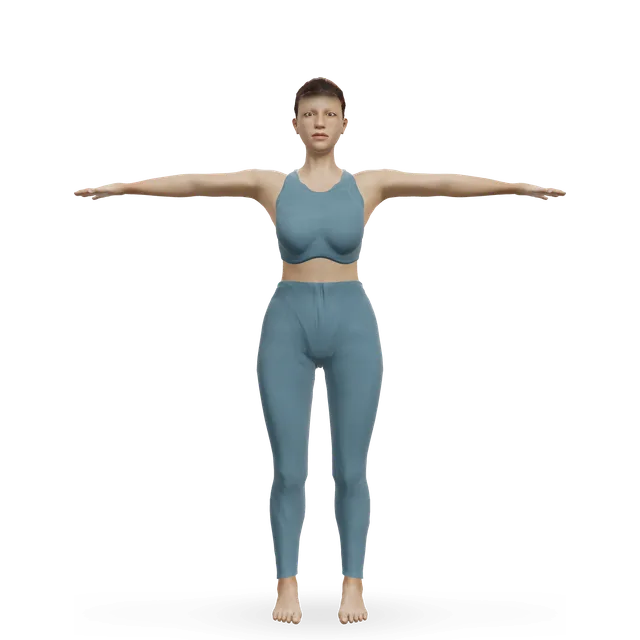 3D demoWrist circlesBeginner · No equipment
 3D demoQuadruped wrist rocksBeginner · No equipment
 3D demoWrist flexor stretchBeginner · A wall
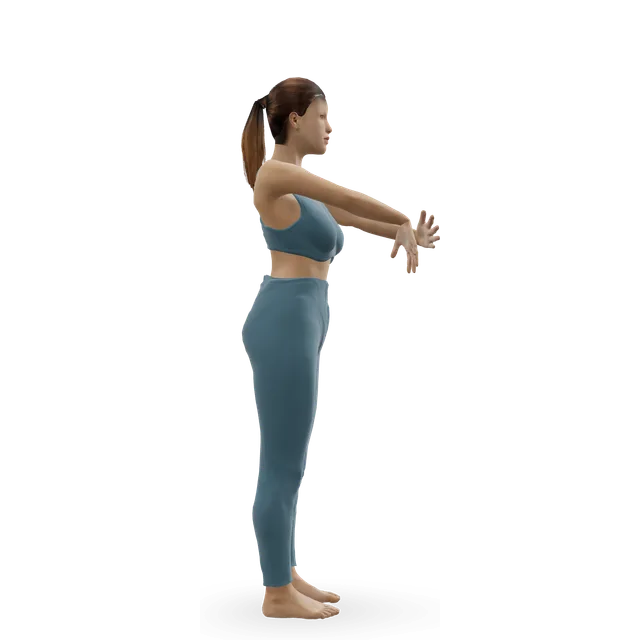 3D demoWrist extensor stretch (tennis elbow stretch)Beginner · No equipment
 3D demoTendon glides (hand tendon gliding exercises)Beginner · No equipment
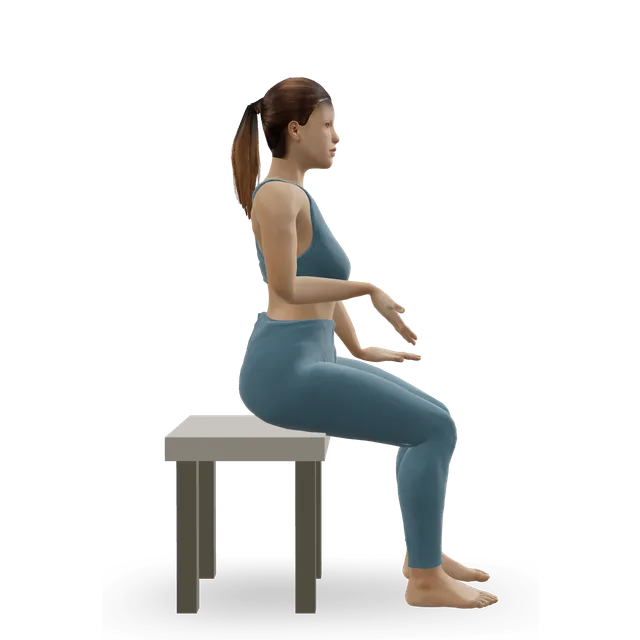 3D demoMedian nerve glide (six hand positions, for carpal tunnel)Beginner · No equipment
Squeezes and curls for the hand and forearm, then carries and hangs for grip. Our starting point: 2 to 3 sets, 2 or 3 times a week. With arthritis at the base of the thumb or a trigger finger, start light and use thick or padded handles.
 3D demoBall squeezeBeginner · Other / check instructions
 3D demoBand finger extensionBeginner · A band
 3D demoWrist curlsBeginner · A dumbbell
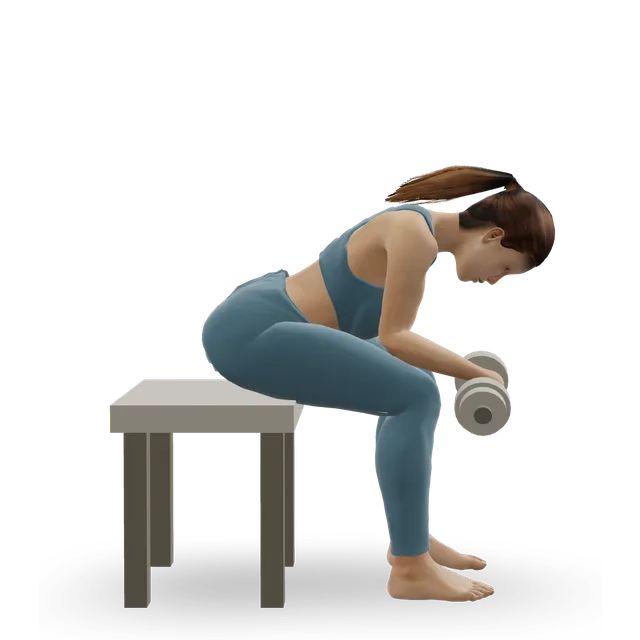 3D demoReverse wrist curlBeginner · A dumbbell + A bench or box
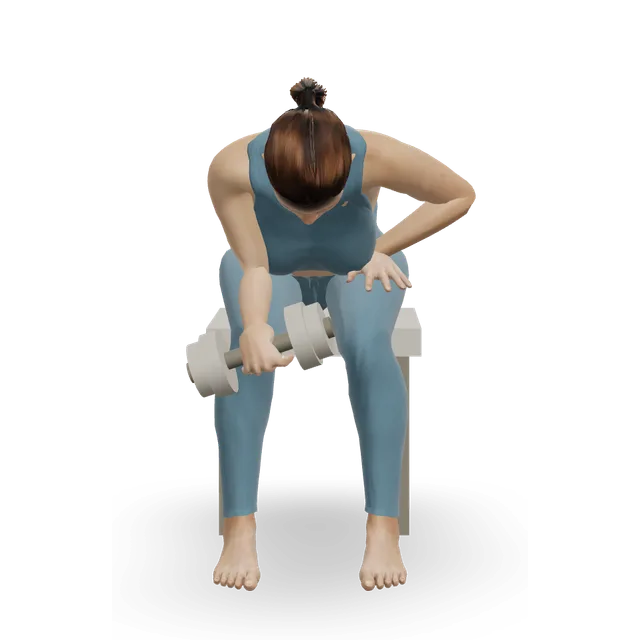 3D demoDumbbell forearm rotationBeginner · A dumbbell + A bench or box
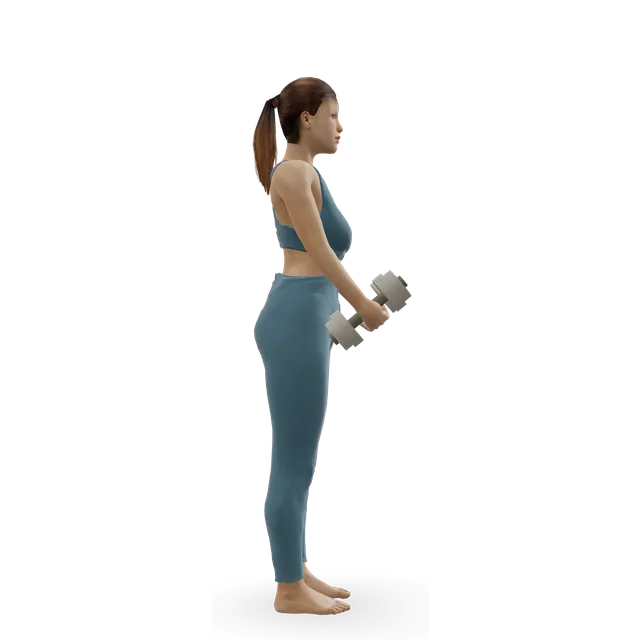 3D demoHammer curlBeginner · A dumbbell
 3D demoFarmer's carryBeginner · A dumbbell + A kettlebell
 3D demoSuitcase carryIntermediate · A dumbbell + A kettlebell
 3D demoBar hangIntermediate · Pull-up bar + A step
The grip strength workout trains squeezes, curls, carries and hangs in 20 minutes. The wrist and forearm routine is a shorter warm-up and strength routine, and the rheumatoid arthritis routine is built for sore hands.
A 20-minute grip session: warm up the wrists and fingers, train the hand and forearm muscles, then carry and hang to load your grip the way everyday life does.
20 minBeginner10 movesOther / check instructions, A bandWrist mobility and forearm strength for desk work, climbing, push-ups and handstands.
10 minBeginner7 movesA wall, A dumbbellThe daily stretches and strengthening moves from the SARAH hand trial and NHS hand therapy leaflets: finger bends, finger walking, wrist circles, squeezes and pinches.
15 minBeginner7 movesA dumbbell, A bench or boxA quick stretch break you can do beside your desk: neck, back, chest, wrists, hips and quads.
5 minBeginner7 movesA wallIf you have severe wrist pain; you feel faint, dizzy or sick from the pain, or unwell, hot, cold or shivery; you heard a snap, grinding or popping noise at the time of the injury; you can't move your wrist or hold things; your wrist has changed shape or colour; you have a lump on your wrist that's very painful, hot or red; or you've lost the feeling in part or all of your hand. These might be signs of a broken wrist or an infection. In the US, contact your doctor or urgent care.
Source 32
If finger pain is severe, you feel faint, dizzy or sick from it, you heard a snap, grinding or popping noise at the time of the injury, you can't move the finger or hold things, it has changed shape or colour, you've lost feeling in part or all of your hand after an injury, or you also have a very high temperature or feel sick.
Source 34
If wrist pain is stopping you doing normal activities, is getting worse or keeps coming back, or hasn't improved after 2 weeks of treating it at home; if you have any tingling or loss of feeling in your hand or wrist; if you have diabetes, because hand problems can be more serious; if you feel unwell with a high temperature; or if your wrist is painful, warm, swollen and stiff.
Source 32
Pain and swelling at the base of the thumb after a fall needs checking even if the wrist still moves: a broken scaphoid is often missed at first and mistaken for a sprain.
Source 15
The usual count of 27 already includes the 8 wrist (carpal) bones, with 5 in the palm and 14 in the fingers and thumb. The radius and ulna belong to the forearm.
Grip predicts health, but no trial has shown that training it changes your risk. A strong grip is a sign of overall strength, so train it as part of whole-body strength training, for what it lets you do.
In a 2011 case-control study of 215 adults with hand X-rays, people who cracked their knuckles had no more arthritis, however long or often they had done it, and a 2017 study with blinded examiners found no swelling and no loss of hand function or grip in crackers. None of the studies followed crackers forward for years.
Change the position first: our guide to wrist pain in push-ups covers fists or handles, leaning on a table or wall, and building up the weight through your hands gradually.
27 in the usual count: 8 wrist (carpal) bones, 5 metacarpals in the palm and 14 finger bones (phalanges), two in the thumb and three in each finger. Most people also have small sesamoid bones at the thumb's knuckle, which aren't usually counted.
Still 27, because the usual count of 27 already includes the 8 wrist bones. The two forearm bones, the radius and ulna, are counted separately.
The 8 small wrist bones in two rows: the scaphoid, lunate, triquetrum and pisiform nearest the forearm, and the trapezium, trapezoid, capitate and hamate nearest the hand. The capitate is the largest, and the scaphoid is the one most often broken, at 60 to 70% of wrist-bone fractures.
A narrow passage at the front of your wrist, with the carpal bones as its floor and a tough band about 3 cm long as its roof. Nine tendons that bend your fingers and thumb pass through it with the median nerve, which is why swelling there causes tingling in the thumb and first fingers.
The base of the thumb is a saddle joint, between the trapezium and the first metacarpal, which lets the thumb swing across your palm to touch each fingertip (opposition). The thumb's knuckle and its end joint are hinges.
In a study of 30 young adults, the averages ranged from about 62 to 80 degrees of bending forward, 65 to 70 back, 15 to 25 towards the thumb and 33 to 45 towards the little finger, depending on sex, hand and forearm position. In a study of 40 adults, most daily tasks needed only about 40 degrees each way.
Across 12 British studies, grip peaked in early adult life at a median of about 51 kg in men and 31 kg in women, held until midlife and then declined. Below 27 kg for men or 16 kg for women counts as low strength, and by age 80 about a quarter of people have weak grip.
It's linked: in 139,691 adults, each 5 kg lower grip went with a 16% higher risk of death over about 4 years, a better predictor than blood pressure, and UK Biobank found the same. That's an association; no trial has shown that training your grip changes the risk.
Carry heavy things (farmer's and suitcase carries), hang from a bar, and add wrist curls, reverse wrist curls and squeezes. Exercise programmes raised grip modestly in older adults, with task-specific training a suitable stimulus, and our grip strength workout puts it together.
The same as knuckle cracking: pulling a joint apart forms a gas cavity in the joint fluid with a pop. It hasn't been linked with arthritis. A finger that clicks and catches, or locks bent, is different (it can be trigger finger) and is worth checking.
The knuckles at the base of each finger are the metacarpophalangeal (MCP) joints; the middle and end joints are the proximal and distal interphalangeal (PIP and DIP) joints. The thumb has one interphalangeal joint, a knuckle and the saddle joint at its base.
Education about how your joints work, not a diagnosis, and clinical review of these guides is pending. For a painful, swollen or injured joint, see the pain guide for that area and a doctor or physiotherapist, and stop any exercise that causes sharp or increasing pain. Health disclaimer.