No yoga trial in figure skaters
We found no trial of yoga, stretching or flexibility training in figure skaters. The only yoga study in any skaters followed 15 short track speed skaters for 8 weeks, with no comparison group.
Yoga guide
Figure skating lands every jump on one leg in a stiff boot, spins and jumps turn the same way for years, and laybacks and spirals take the back and hips to the end of their range. Yoga off the ice can give skaters ankle range the boot takes away, balance on one bent leg, hip control on both sides, turning the other way and a calm way to settle before a skate. No trial has tested yoga in figure skaters, and more flexibility isn't what keeps skaters' backs and feet healthy.
This guide covers where skaters get hurt, why yoga shouldn't add back arching, ankles and boots, balance and landings, spins and dizziness, young skaters, growth and eating enough, and a free 25-minute class with a 3D demo of every move. It suits ice skaters who don't compete too. It ends with the warning signs, from a fall with a head knock to back pain in a young skater.
We found no trial of yoga, stretching or flexibility training in figure skaters. The only yoga study in any skaters followed 15 short track speed skaters for 8 weeks, with no comparison group.
In 294 young skaters at a US sports medicine clinic, 68.9% of injuries came from overuse, and about 1 in 9 was a bone stress injury, most often in the back, the foot and ankle or the lower leg. Pairs skaters and ice dancers are hurt more by falls from lifts and throws.
Nearly 1 in 3 young skaters seen for back pain had a bone stress injury at the back of a vertebra. Laybacks and Biellmann positions already take the back to the end of its range, so yoga shouldn't add more arching (our suggestion).
In the one randomised trial in skaters, 4 weeks of off-ice neuromuscular training improved eyes-closed landing balance by 21% against basic exercise, in 44 skaters. It measured balance, not injuries. One-leg poses in the landing shape suit skaters.
Source 7
Adult skaters who stretched weren't injured less, stretching programmes don't prevent sports injuries, and a yoga article on U.S. Figure Skating's own site warns against practices that focus on "extreme flexibility".
Skipped meals went with severe injury in young skaters, and more than half of 57 skaters had had comments about their weight or shape, which went with disordered eating. Missed periods and bone pain that builds need a GP.
Singles skaters jump several turns and land on one leg in a stiff boot; pairs add lifts and throws; ice dancers and synchronised teams skate in close contact. Jumps keep getting harder: at European and World Championships, men went from an average of under one quadruple jump to more than three in recent years.
Source 13
At four Junior World Championships, about a quarter of 469 skaters recalled an acute injury and over 40% an overuse problem; in singles women, stress fractures and jumper's knee led. Pairs skaters and ice dancers had more acute injuries, from falls from lifts and throws, and in synchronised skating about 1 in 5 acute injuries in women was a head injury. A 2025 review of 29 studies warned that the data are of low quality.
In barefoot one-leg landings, skaters landed at 3.5 times body weight, more than non-skaters. About a quarter of 164 competitive skaters had had a stress fracture, a third of those training 12 or more sessions a week against under a fifth of the rest, and in world-class skaters every stress fracture was in the take-off leg. In elite skaters, the landing leg's bone was denser than the take-off leg's.
Off the ice: ankle range lost in the boot, balance on one bent leg in the landing shape, hip control on both sides, turning the other way from your spins and jumps, back endurance without extra arching, and slow breathing before a skate. It doesn't train landings or jumps (the off-ice workout does), replace boot fitting, coaching or the concussion rules, or treat a back stress fracture. Our figure skating page has the off-ice workout, the warm-up and the safety advice, and our yoga for dancers guide is the nearest yoga page.
Off-ice balance training has one small trial in skaters. No trial has tested yoga or stretching in figure skaters.
PubMed found 4 records for yoga with skating, none a yoga trial in figure skaters. The only yoga study in any skaters gave 15 short track speed skaters yoga sessions during 8 weeks of heavy training, and 11 of 14 posture angles improved. There was no comparison group, the journal isn't indexed in MEDLINE (the main index of medical journals), and its remark that no skater had an overuse injury in 8 weeks can't show prevention.
Our PubMed search for stretching, flexibility or Pilates in figure skaters found 24 records and no trial. The one randomised trial of any off-ice programme found that 4 weeks of neuromuscular training, 3 times a week, improved eyes-closed landing balance by 21% against basic exercise in 44 skaters. It measured balance, not injuries.
In adult skaters, stretching and warm-up habits didn't differ between those who had been injured and those who hadn't. An old study found that three in four young skaters who improved their thigh flexibility lost their knee pain, but it had no comparison group (28 skaters retested).
Across 25 trials, stretching programmes didn't prevent sports injuries, while strength and balance training did better. A 2025 consensus of 20 stretching researchers agreed that stretching raises range of motion but isn't an all-round injury prevention strategy, and holds of 60 seconds or more just before explosive work cost a little power.
In 39 dance students over 6 weeks, active range improved more with strength at the end of range or gentle stretching than with hard stretching. Slow, forced stretching tore the hamstring tendon in 15 professional dancers, who took a median of 50 weeks to return. Spiral and layback range is the coach's job, built with strength at the end of range.
Skaters' balance organs adapt to spinning: in a laboratory test, 11 skaters had much less motion sickness than 11 non-skaters. No study has tested yoga or balance poses for spin dizziness.
Source 26
Slow breathing raises heart rate variability in the moment, but in 34 people, 4 weeks of it after sprint training added no recovery or performance benefit. It's a calming tool before a competition skate, untested in skaters.
Yoga doesn't train jumping or landing forces. Our off-ice workout for figure skaters has the jumps, landings and strength; yoga adds one-leg balance in the landing shape and calm control (our reading).
Stress fractures went with 12 or more sessions a week, and the International Olympic Committee calls poor load management a major risk factor for injury. Count a strong yoga class as training, not rest.
Nearly 1 in 3 young skaters seen for back pain at one US clinic had a bone stress injury at the back of a vertebra. A review names laybacks and Biellmann positions, which need extreme arching of the lower back and hip, as the suspected cause; that is a likely mechanism, not one that has been measured.
Leave deep backbends and long arching holds out of yoga: wheel, camel, bow, a deep dancer pose and long upward dogs. With back pain, leave out sphinx and locust too until it's checked. Back endurance in this guide comes from bird dog and small locust lifts.
Source 6
A teenager in a sport that arches or twists the back, such as gymnastics, dance, diving, volleyball, tennis, cricket fast bowling, baseball pitching, weightlifting, football or rugby, with back pain that lasts more than a couple of weeks, is worse arching back or stops them training: get it checked by a GP or sports physiotherapist. It can be a stress fracture in the spine.
Back pain that lasts more than a couple of weeks or is worse arching back, and bone pain that builds with training, need a GP or sports physiotherapist before more jumping. Our spondylolisthesis and stress fracture guides explain why.
A review links hip impingement and labral tears in skaters to the range advanced skills need, as in dancers and gymnasts. At hip arthroscopy, athletes from flexibility sports, skaters among them, had more cartilage damage on the ball of the hip than other athletes (12.0% against 2.0%).
In 32 elite skaters, women reached less far on the landing leg in a balance test. The class works the side of the hip with clamshells and side planks, and the front of the hip with a mild low lunge, the same on both sides (our reading).
Source 32
In 95 skaters, only a third wore the right boot size, half couldn't bend the ankle properly in their skates, and about a third had bursitis at the back of the heel. Ankle and calf work off the ice helps range and strength; boot fit is the fitter's job.
Source 33
Lace bite is irritation of the tendons at the front of the ankle where they rub on the boot's tongue. Keep kneeling on pointed feet, as in hero pose, short if that area is sore (our suggestion).
Source 6
Off-ice neuromuscular training improved landing balance in the one trial in skaters, and across sport, balance training roughly halved injuries, though none of those trials was in skaters. Yoga's one-leg poses in a landing shape are a similar kind of training, untested as yoga.
Each skater jumps and spins one way, season after season. Upper-back turns the same amount each way, including the way you don't spin, are our suggestion: no study has tested them.
Skaters' balance organs adapt to spinning. Dizziness after a fall or a knock to the head is a concussion question first, and an expert plan for elite skaters' return after concussion brings spins, jumps and upside-down positions back last. Leave head-down poses and fast head turns out while you're dizzy, and see a GP if dizziness keeps coming back (our suggestion); our vertigo guide covers inner-ear causes.
Injury risk peaks around the growth spurt. Modify training, go back to basics, keep flexibility rather than push it, and tell the coach about joint pain, back pain or tight muscles, as British Gymnastics advises.
Source 35
The American Orthopaedic Society for Sports Medicine's consensus names figure skating as a possible exception to the advice against early specialisation, because the top level comes in the teens, but asks that children training more hours a week than their age be watched for burnout and overuse injury.
Source 36
In 137 young Swedish skaters, a severe injury went with more skipped meals a week. In 57 skaters, 35.1% screened positive for disordered eating, and fewer than 16% had heard of the female athlete triad or relative energy deficiency in sport (REDs), where too little energy for the training harms health and performance in both sexes. In a year-long study of young aesthetic-sport athletes, wanting to be leaner to perform better came before disordered eating.
See a GP if you've missed your period 3 times in a row, your periods haven't started by 15 or have become irregular, or you've had a stress fracture from ordinary activity or more than one. If you're worried about your eating, see a GP as soon as you can, or call the eating disorder charity Beat on 0808 801 0677.
See a GP, and tell the club's welfare officer about comments on bodies (our suggestion). Our eating disorders and menstrual cycle guides explain more.
Our editorial starting point:
Source 29
Ankle circles: "10 slow circles each way with each foot" (the move page's dose). Knee-to-wall: "10 slow rocks per side" (the move page's dose), heel down. Calf raises, 2 sets of 10 (our yoga for volleyball players class); single-leg calf raises from a step, once two-leg raises are easy, 2 sets of 12 each leg with a hand on a rail (our off-ice workout for figure skaters).
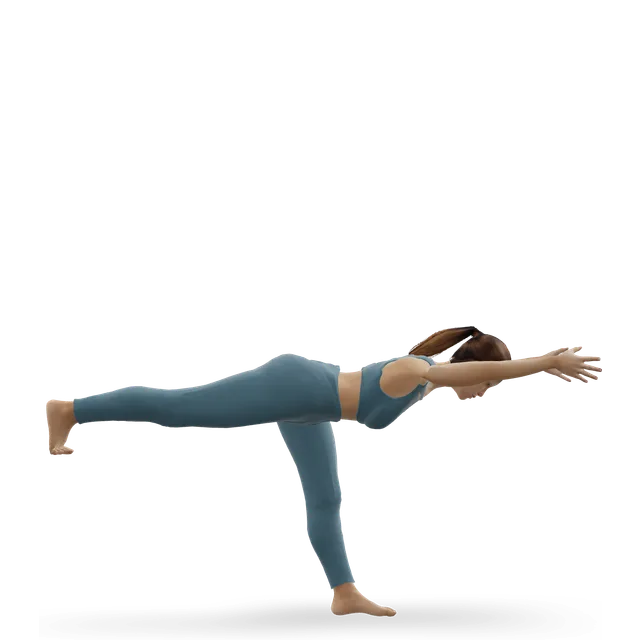
Single-leg stand, free leg back and arms out like a landing, 2 holds of 30 seconds each leg (our yoga for volleyball players class); close your eyes only when it's easy, near a wall. Chair pose, 2 holds of 30 seconds (our yoga for volleyball players class). Warrior III, 3 breaths each side, twice, and tree pose, 3 to 5 breaths each side, twice (our yoga for dancers class).
Clamshell, 10 each side; side plank, 2 holds of 20 seconds each side, knees down to start; low lunge, 45 seconds each side at a mild pull (all our yoga for dancers class). Glute bridge, 2 sets of 10 (our yoga for a hip labral tear class).
Thoracic rotation: "6 rotations per side, moving with the breath" (the move page's dose), the same amount each way, including the way you don't spin. Open book: "8 to 10 slow openings each side, pausing 2 seconds at the end" (the move page's dose). Cat-cow: "8 waves, slower than feels natural" (the move page's dose), keeping the arching small.
Bird dog, 2 sets of 6 each side (our yoga for a hip labral tear class). Locust, small lifts, 3 to 5 lifts held 3 to 5 seconds (our yoga for dancers class); leave it out if arching hurts.
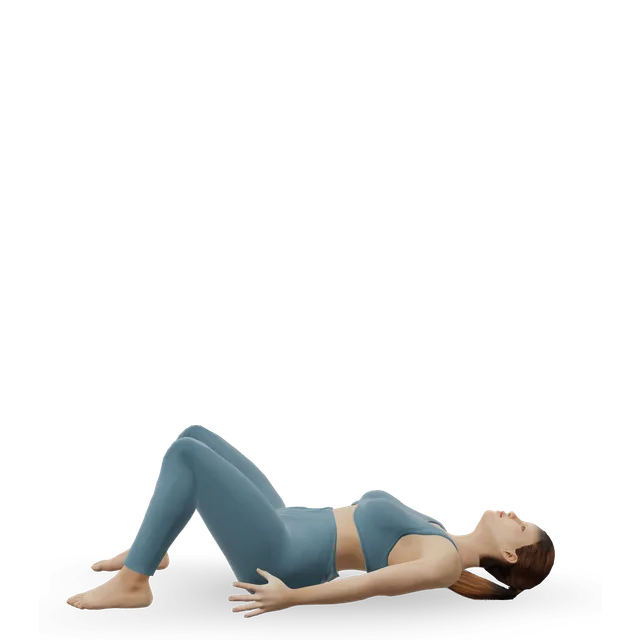
Slow breathing, 2 minutes, in for about 4 and out for about 6, with no holds (our yoga for dancers class; adapted from the move page's dose). Reclined figure four, 45 seconds each side (our yoga for dancers class). Corpse pose, 2 minutes (adapted from the move page's dose).
No extra end-range arching in yoga, and none at all with back pain (our suggestion): leave out wheel, camel, bow, a deep dancer pose and long upward dogs. No forced splits or long end-range holds for spirals: build that range with your coach. Heat makes range feel easier without making it usable, as our yoga for dancers guide says, so hot yoga isn't a flexibility shortcut. Keep kneeling on pointed feet short if the front of the ankle or a lace-bite area is sore (our suggestion). After a fall with a head knock, nothing head-down and no fast head turns until you're cleared.
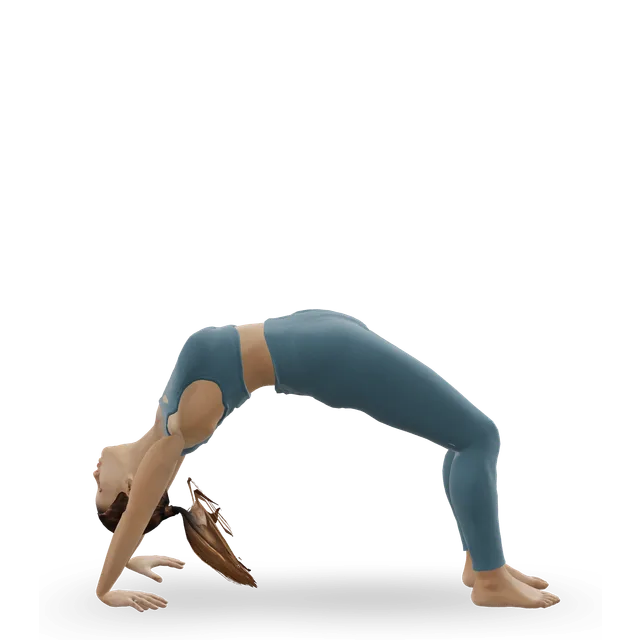 3D demoWheel pose (Urdhva Dhanurasana)Advanced · No equipment
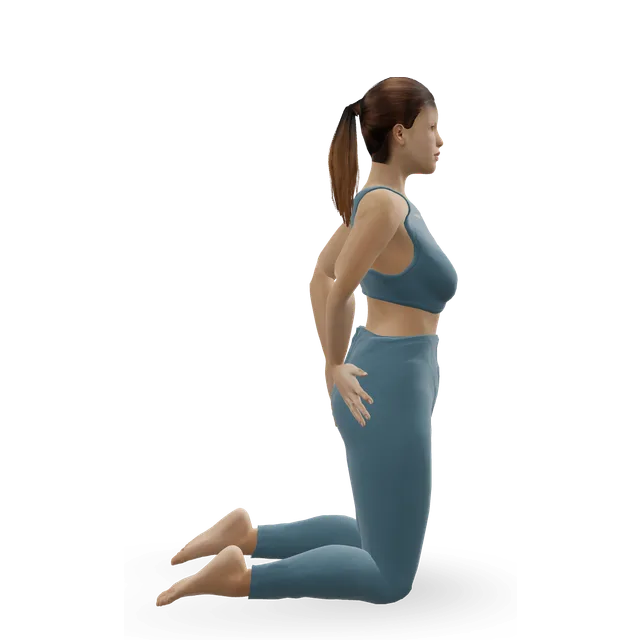 3D demoCamel pose (Ustrasana)Intermediate · No equipment
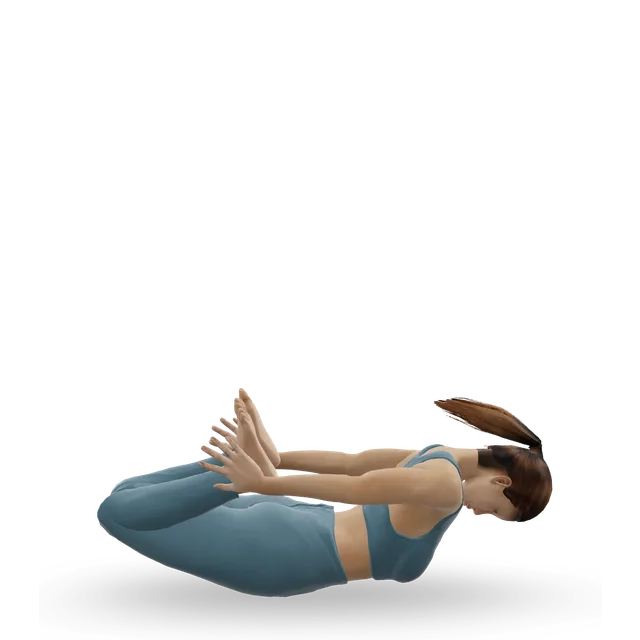 3D demoBow pose (Dhanurasana)Intermediate · No equipment
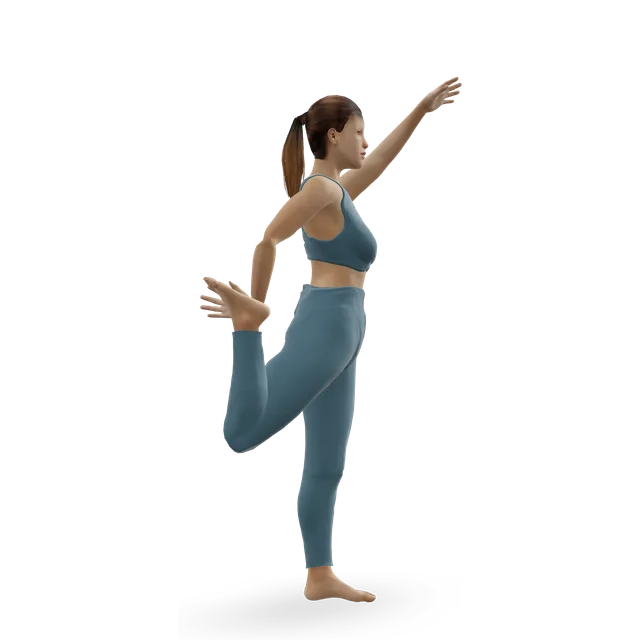 3D demoDancer pose (Natarajasana)Advanced · No equipment
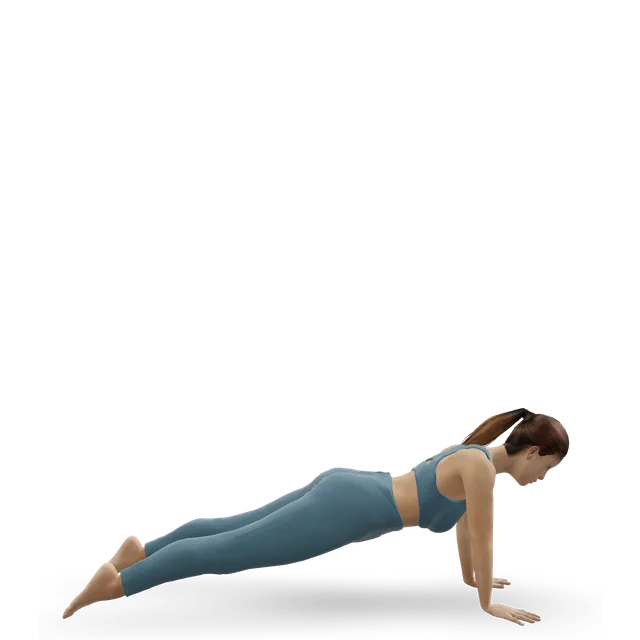 3D demoUpward-facing dog (Urdhva Mukha Svanasana)Intermediate · No equipment
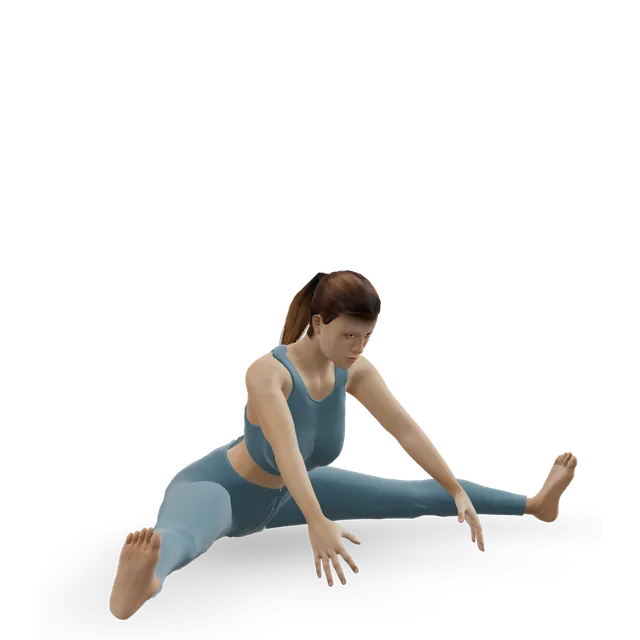 3D demoWide-angle seated forward fold (Upavistha Konasana)Intermediate · No equipment
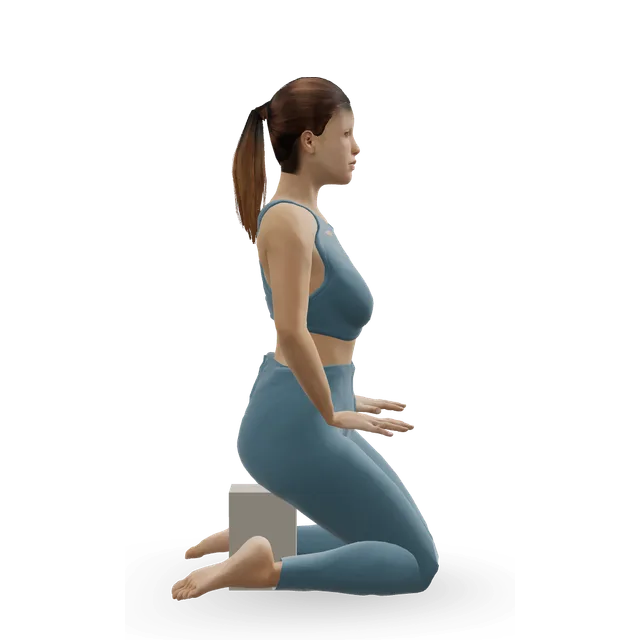 3D demoHero pose (Virasana)Intermediate · Firm cushion
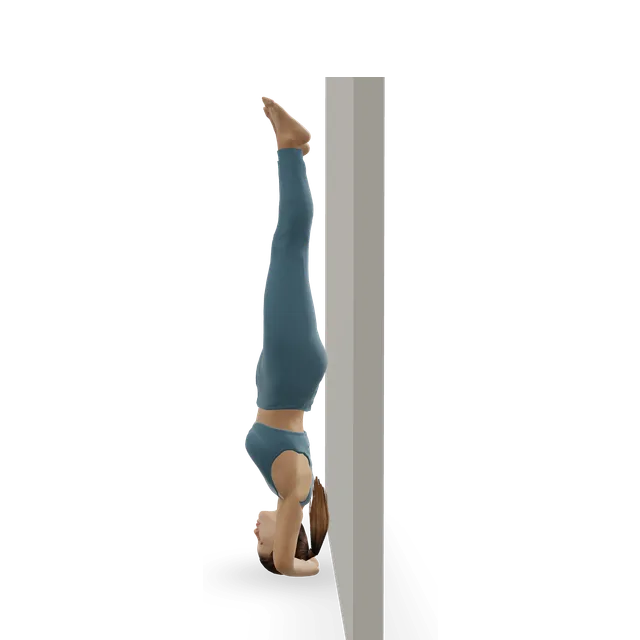 3D demoSupported headstand (Salamba Sirsasana)Expert · A wall
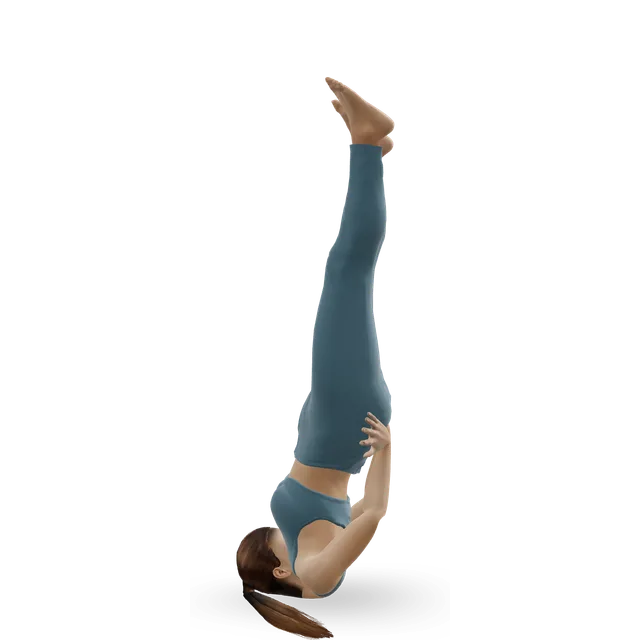 3D demoSupported shoulderstand (Salamba Sarvangasana)Advanced · No equipment
Off the ice, on a rest day or after training, our 25-minute class for figure skaters: our own selection, untested in a trial. Before the ice, the figure skating warm-up; for landings, jumps and strength, the off-ice workout. Our yoga for dancers class is the nearest alternative, and very flexible skaters can start with the hypermobility class. Yoga after a concussion only within the concussion stages.
A 25-minute off-ice yoga class for figure skaters: ankles out of the boot, one-leg balance in the landing shape, hips on both sides and turning both ways.
25 minBeginner15 movesWallA 15-minute off-ice warm-up for skaters: skips, ankle circles and rocks, leg swings, hip circles, cat-cow, band walks, landing balance, jumps and bursts.
15 minBeginner15 movesWall, bandA 45-minute off-ice session for skaters: landing-position balance, drop landings, hops, jump squats, tuck jumps, bounds, single-leg strength, groins and trunk.
45 minIntermediate22 movesWall, other / check instructionsTwenty-five minutes of yoga for dancers: feet and ankles, turnout from the hips, balances you control yourself, trunk strength, then gentle stretches and rest.
25 minBeginner17 movesOther / check instructions, bench or boxA 25-minute yoga class for hypermobile joints, HSD and hEDS: supported lying work, all-fours control, standing poses with soft joints, balance and a legs-up rest.
25 minBeginner15 movesBand, wallA 25-minute yoga class after an ankle sprain: ankle range, calf and ankle strength, short standing poses and a one-leg balance progression, with no jumping.
25 minBeginner16 movesBench or box, wallA 15-minute barefoot routine for stronger toes, arches, calves and ankles, finishing with balance. You need only a towel, a wall and a resistance band.
15 minBeginner11 movesWall, other / check instructionsThirty minutes of standing yoga for balance: strong standing poses, one-leg poses at the wall, and side steps, backward steps, reaches and sit-to-stands.
30 minBeginner16 movesWall, bench or boxA 45-minute restorative yoga sequence: five fully supported poses held for 4 to 10 minutes each, with slow breathing and a long final rest.
45 minBeginner6 movesFirm cushion, wallA 6-minute breathing routine: slow breathing, crocodile breathing, alternate nostril breathing, box breathing and 4-7-8 breathing.
6 minBeginner5 movesNo equipmentA 15-minute head-up yoga class after a concussion: seated breathing and spine moves, then gentle standing poses at a counter, with a symptom check.
15 minBeginner12 movesBench or box, wallThese are the warning signs from our figure skating, ankle pain, dance and yoga guides, word for word. This is general information, not a diagnosis. A&E means accident and emergency; in the US, call 911 for 999.
Call 999 if someone has hit their head and has been knocked out and hasn't woken up, can't stay awake or keep their eyes open, has a fit, has fallen from a height of more than 1 metre or 5 stairs, has problems with their vision or hearing, has clear fluid coming from their ears or nose, has new numbness or weakness, has problems with walking, balance, understanding, speaking or writing, hit their head at high speed, or their behaviour has changed. Get help from NHS 111 if they're being sick, feel dizzy or take medicine that thins the blood. If you're told to go to A&E (accident and emergency), don't drive yourself there if you have hit your head.
Off the ice: if in doubt, sit them out. No return that day, and an assessment within 24 hours by a healthcare professional or NHS 111. Get help from NHS 111 straight away if they're being sick, feel dizzy, take medicine that thins the blood, or had been drinking alcohol.
With a suspected concussion, if in doubt, sit them out. The UK's grassroots guidelines say no sport for at least 24 hours, get checked by a healthcare professional or NHS 111 within 24 hours, follow a staged return, and no competition before day 21; if symptoms last beyond 28 days, stay out of sport and see a doctor. Yoga waits too: gentle breathing fits the early, light-activity stages, and no head-down poses or inversions until you're cleared (our reading). Our concussion guide has the stages.
Don't move them: the UK guidelines say someone with a suspected neck injury should be moved only by healthcare professionals with the right training. Call 999 (our suggestion).
Source 42
A teenager in a sport that arches or twists the back, such as gymnastics, dance, diving, volleyball, tennis, cricket fast bowling, baseball pitching, weightlifting, football or rugby, with back pain that lasts more than a couple of weeks, is worse arching back or stops them training: get it checked by a GP or sports physiotherapist. It can be a stress fracture in the spine.
Back pain that lasts more than a couple of weeks or is worse arching back, and bone pain that builds with training, need a GP or sports physiotherapist before more jumping. Our spondylolisthesis and stress fracture guides explain why.
Call 999 or go to A&E: after an injury, you heard a crack, the foot or ankle has changed shape or points at an odd angle, a bone is sticking out, there is a bad cut over it, you're in severe pain, or the toes look blue or white, feel numb or are cold to touch. These can mean a broken bone. Don't drive yourself.
Same day (NHS 111 or an urgent treatment centre): after an injury, you can't put weight on it or walk more than a few steps, the pain is very bad or getting worse, there is a lot of swelling or bruising or it is getting worse, it feels very stiff, or it's not feeling any better after treating it yourself. Get the same help if you also have a very high temperature, or feel hot, cold or shivery: this could be an infection. If you think it's broken, don't treat it yourself.
Same day: a sudden snap or pop at the back of the heel or calf, or a feeling of being kicked there, then walking flat-footed and being unable to push off, stand on tiptoe or climb stairs. It could be an Achilles tendon rupture or a broken heel bone. Go to A&E or a minor injuries unit, or contact NHS 111.
See a GP or physiotherapist for:
Source 44
Go to A&E or call 999 if the arm or wrist is numb, tingling or has pins and needles, a bone is sticking out, or it has changed colour or shape or is at an odd angle. Get help from NHS 111 if it's very painful, you can't use it, or the swelling or bruising is large or getting worse. Pain in the hollow at the base of the thumb after a fall needs checking the same day: see our scaphoid fracture guide.
Source 45
See a GP, and tell the club's welfare officer about comments on bodies (our suggestion). Our eating disorders and menstrual cycle guides explain more.
See a GP if you've missed your period 3 times in a row, your periods haven't started by 15 or have become irregular, or you've had a stress fracture from ordinary activity or more than one. If you're worried about your eating, see a GP as soon as you can, or call the eating disorder charity Beat on 0808 801 0677.
Call 999 if:
If you're hypermobile, don't use mobility work to push further: the NHS says "do not overextend your joints just because you can". See a GP if you think you have joint hypermobility syndrome: for example, your joints keep dislocating, or you keep getting sprains, strains, pain or stiffness.
Source 48
A joint pain that is sharp, gets worse during a session, lingers into the next day or changes how you move is a reason to use an easier version, and to see a GP or physiotherapist if it keeps happening (the rule in our plans). Muscle soreness for a day or two after something new is normal. In a hot class, stop if you feel dizzy, sick or unwell; our hot yoga guide lists the signs of heat illness.
With glaucoma, or high blood pressure that isn't under control, skip headstands, shoulder stands and long head-down holds. With osteoporosis, swap deep forward folds for a flat-back hinge from the hips, and twist smoothly. In pregnancy, our yoga in pregnancy guide covers the changes. NCCIH advises beginners to avoid headstands, shoulder stands, the lotus position and forceful breathing.
You can say no to any hands-on adjustment, and a teacher registered with Yoga Alliance must get your explicit consent each time.
Source 49
The NHS advises getting advice from a healthcare professional first if you have a health problem, an injury or symptoms, or have recently had a heart attack or an operation.
Adult skaters who stretched weren't injured less, stretching programmes didn't prevent injuries across sport, and laybacks and spirals already take the back and hips to the end of their range. Skaters need control of the range they have, and more range only where the coach says a skill needs it.
No study has counted injuries after yoga in figure skaters. The speed skating study's remark that no skater had an overuse injury in 8 weeks was an observation in 15 athletes with no comparison group.
Not in adult skaters or across sport. Use the figure skating warm-up before the ice.
No study shows it, and the arched positions are the suspected cause of back stress injuries in young skaters.
One former ice dancer's essay credits hot yoga with healing her back, but that's one person's story. Back pain in a young skater needs a GP or sports physiotherapist first.
Skipped meals went with more severe injuries, and comments about weight went with disordered eating.
Stretching before or after exercise barely changes next-day soreness, across 12 studies.
Source 50
No. The class here is about balance, ankles and control, not the splits, and every pose has an easier version.
It can help off the ice with ankle range, one-leg balance, hip control, turning both ways and settling before a skate. No trial has tested yoga in figure skaters, so it goes alongside your off-ice training and coaching, not instead of them.
Ankle circles, knee-to-wall rocks and calf raises; chair pose, single-leg stands, warrior III and tree pose in a landing shape; clamshells and side planks; upper-back turns both ways. Our 25-minute class puts them together.
Not by stretching harder. Range is built with your coach and with strength at the end of your range; in dance students, hard stretching added less usable range than gentle stretching or strength work. A yoga article on U.S. Figure Skating's own site warns against chasing "extreme flexibility".
It hasn't been tested. Stress fractures go with heavy training weeks and skipped meals with severe injuries, and only a third of skaters in one study wore the right boot size: training load, eating enough and boot fit are the things to manage.
Gentle back endurance work is fine, but skip extra arching: about 1 in 3 young skaters with back pain at one clinic had a stress injury in the spine. Back pain that lasts more than a couple of weeks or is worse arching back needs a GP or sports physiotherapist.
Off-ice balance training improved landing balance with the eyes closed in the one trial in skaters. Yoga's one-leg poses are a similar kind of training, though yoga itself hasn't been tested.
No study has tested it. Skaters' balance organs adapt to spinning over time, and dizziness after a fall or a knock to the head is a concussion question first.
After, or on a rest day. Before the ice, use the figure skating warm-up: long holds just before jumping cost a little power.
Gentle yoga for balance and body awareness is fine. In a growth spurt, keep the range you have rather than chasing more, and make sure young skaters eat enough: skipped meals went with more injuries.
Neither has been tested in figure skaters. Yoga here focuses on ankles, balance and turning both ways; choose the one you'll keep doing, alongside your off-ice strength work.
If in doubt, sit them out: off the ice, checked within 24 hours, and no competition before day 21 under the UK guidelines, which British Ice Skating recommends. Yoga waits too, with nothing head-down until you're cleared.
Exercise education, not a personal prescription, and clinical review of these guides is pending. If you are pregnant, have a health condition such as glaucoma, high blood pressure or osteoporosis, or have had recent surgery, check with a doctor, midwife or physiotherapist before starting, and stop for sharp or increasing pain. Health disclaimer.