Pain guide · Back pain

Lower back pain when bending backwards: facet joints, stress fractures, back bends and what helps

Lower back pain when you bend backwards, lean back or arch is very common, and it is usually ordinary back pain that settles within weeks. Many backs have a sore direction and an easy one. From mid-life, pain on arching is often put down to the small facet joints at the back of the spine, though no test can confirm that; with ache or heaviness in the legs on standing and walking, it can be a narrowing called spinal stenosis. In a teenager or young adult who arches a lot in sport, such as gymnastics, dance or fast bowling, back pain that lasts can be a stress fracture, which usually heals well. Back bends aren't bad for your back: the answer is to build them back gradually, not to avoid them for good.

This guide starts with the signs that need help, from a 999 call or accident and emergency (A&E) for numbness around your genitals or bottom, new bladder or bowel problems or weakness in both legs, to a same-day check through the National Health Service's 111 line (NHS 111) or a general practitioner (GP) for back pain with a fever, and a GP or sports physiotherapist for a young athlete's back pain that lasts more than a couple of weeks. It then maps the causes by where it hurts and who you are, explains why a scan rarely helps (except for a suspected stress fracture), shows how to change back bends, yoga and sport for now, and gives a four-stage plan with a 3D demo of every move, from easing the pain to wheel pose.

When to get help first

Exercise is for pain that has been checked or is clearly mild and settling.

Get urgent medical help if

  • Call 999 or go to A&E: loss of feeling or numbness around the genitals or bottom, new trouble peeing or controlling your bladder or bowels, changes in genital sensation during sex or problems with erections or orgasm, or pain, tingling, weakness or numbness in both legs. These are signs of cauda equina syndrome, which needs treating in hospital urgently. Don't drive yourself.
  • Call 999 or go to A&E: back pain with chest pain, or back pain that started after a serious accident, such as a car crash.
  • Same day (NHS 111): back pain after a new, significant injury in the last 7 days, such as a fall from a height (off a trampoline, a wall or a horse) or a direct blow to the back.
  • Call 999: sudden, severe pain in the tummy or back, which can come with breathlessness, pale or grey skin, or collapse. It can be a burst abdominal aortic aneurysm, most common in men aged 65 or over and in people who smoke or used to smoke.
  • Call 999 or go to A&E: pain spreading from the tummy to the back, with vomiting.
  • Same day (GP or NHS 111): back pain and you feel hot, cold, shivery or generally unwell, or severe pain that starts suddenly or is getting worse quickly.
  • Same day: you have or have had cancer, and new back pain that is severe and doesn't let up, is getting steadily worse, is worse at night and disturbs your sleep, is worse when you cough, sneeze or strain, or comes with tenderness over the spine. Contact your cancer team or GP urgently. With cancer, new weakness, difficulty walking, numbness or bladder or bowel problems are an emergency.
  • Same day: leg weakness that is getting worse.
  • Same day (urgent GP appointment or NHS 111): new difficulty lifting the front of your foot or toes (foot drop), or a foot that slaps down or catches as you walk, especially if it is getting worse. Weakness in both legs, or with numbness around the genitals or bottom or bladder or bowel changes, is the 999 emergency above.
  • Ask for an urgent GP appointment or get help from NHS 111 if you think you may have a kidney infection (often pain in your lower back or side, with burning or stinging when you pee or needing to pee more often) and you have a very high temperature or feel hot, cold or shivery, a temperature below 36C, pain in the lower tummy or in the back just under the ribs, blood in your pee, you feel or are sick, you haven't had a pee all day, or you're pregnant. Call 999 or go to A&E if you're confused, drowsy or have difficulty speaking.
  • Contact your GP or midwife urgently: back pain in the second or third trimester of pregnancy, or back pain in pregnancy with a fever, vaginal bleeding, pain when you pee, or pain in one or more of your sides (under your ribs). It could be early labour or an infection.

See a doctor or physiotherapist if

  • A teenager in a sport that arches or twists the back, such as gymnastics, dance, diving, volleyball, cricket fast bowling, baseball pitching, weightlifting, football or rugby, with back pain that lasts more than a couple of weeks, is worse arching back or stops them training: get it checked by a GP or sports physiotherapist. It can be a stress fracture in the spine.
  • Back pain that hasn't improved after a few weeks of looking after it at home, stops you doing day-to-day activities, worries you, or you're struggling to cope.
  • Unexplained weight loss, or a lump, swelling or change in the shape of your back.
  • Pain that doesn't improve with rest or is worse at night, or pain that is worse when you sneeze, cough or poo.
  • Pain, tingling or numbness spreading below the knee that isn't settling after a few weeks, is getting worse or stops your normal activities: see a GP.
  • Buttock or leg pain, heaviness or tingling that comes on when you stand or walk and only eases when you sit or bend forward, or the distance you can walk keeps shrinking: see a GP or physiotherapist (possible spinal stenosis). Leg weakness that is getting worse, or numbness around your genitals or bottom, is urgent (above).
  • Back pain that started before 45 and has lasted more than 3 months, especially if it started before 35, wakes you in the second half of the night, comes with buttock pain, gets better with movement or within 48 hours of anti-inflammatory painkillers, or you have or have had arthritis, pain where a tendon attaches to bone (enthesitis) or psoriasis, or a parent, brother, sister or child with spondyloarthritis. These can point to inflammatory back pain (axial spondyloarthritis, such as ankylosing spondylitis). The National Institute for Health and Care Excellence (NICE) asks GPs to refer people with 4 or more of these 9 features to a rheumatologist, and to do a blood test for the HLA-B27 gene marker if exactly 3 are present, referring if it is positive.
  • Back pain and stiffness that persists in a teenager or young adult. Ankylosing spondylitis tends to start at that age and can affect the whole spine.
  • Unexplained back pain with muscle spasms, loss of height, or a curved spine or change in posture: a possible osteoporotic spinal fracture, more likely with older age or long-term steroid tablets.
  • Pain at the top of the back, between the shoulders, rather than in the lower back.

Where does it hurt?

Location narrows the likely causes; it does not diagnose.

Across the low back or to one side, sore arching, straightening up and turning, after an awkward movement or a new activity, with no leg symptoms

Ordinary back pain, often called a pulled muscle or a spasm: the commonest cause.

Read: Back spasm and pulled back muscle →
Worse arching back or standing upright for long, easing when you bend forward or sit, from mid-life; a scan may mention the facet joints

Often labelled facet joint pain. No test can confirm it, and it's managed like other back pain.

Read: Facet joint pain →
A teenager or young adult in a sport that arches the back (gymnastics, dance, fast bowling, diving, weightlifting), pain building over weeks, worse arching and lasting more than a couple of weeks

Possibly a stress fracture of the spine (spondylolysis): get it checked, as the warning signs say.

Read: Spondylolisthesis →
Buttock or leg ache, heaviness or tingling when you stand or walk, worse leaning back, eased by sitting or leaning forward, usually from 60

Possibly spinal stenosis, a narrowing of the spaces the nerves pass through.

Read: Lumbar spinal stenosis →
Low back pain worse standing and walking, with a slipped vertebra on a scan

Spondylolisthesis.

Read: Spondylolisthesis →
Pain, tingling or numbness down one leg below the knee

Sciatica, usually from a disc.

Read: Sciatica →
The opposite pattern: worse bending forward or sitting slumped, easing when you stand or arch back

Disc-type pain, where arching may be the direction that helps.

Read: Herniated or bulging disc →
Worse bending both forwards and backwards

Common in ordinary back pain; our bending guide covers bending forward and lifting.

Read: Back pain when bending →
Low on one side, by the dimple at the back of the pelvis

Possibly the sacroiliac (SI) joint.

Read: SI joint pain →
Stiff for more than half an hour in the morning, easing with movement, starting before 45 and lasting more than 3 months

Possibly inflammatory back pain (axial spondyloarthritis).

Read: Back pain in the morning →
Mainly when standing still for long, or walking

Our standing and walking guides cover those.

Read: Back pain when standing →
When you twist, or arch and twist together

Our twisting guide covers it.

Read: Back pain when twisting →
The front of the hip or groin as you lean back or lunge

Possibly the hip flexors.

Read: Hip flexor pain →
Between the shoulder blades when you arch the upper back

Upper back pain.

Read: Upper back pain →
Sudden back pain after a minor fall, lift or cough, from 50 or on long-term steroid tablets

A possible osteoporotic spinal fracture.

Read: Spinal compression fracture →
In pregnancy

Our pregnancy back pain guide covers it.

Read: Back pain in pregnancy →
Pain spreading from the tummy, or side pain with a high temperature and burning when you pee

This may not be the back at all: see the warning signs.

Understand it

What bending backwards asks of the back, and who gets painEmerging evidence

Arching the lower back closes up the back of the spine. The facet joints (the small paired joints at the back of each vertebra) take more of the load: in cadaver spines, about 16% of the squeezing force standing upright, against none sitting. The pars, a thin bridge of bone at the back of each vertebra, is loaded too, and the spaces the nerves pass through narrow, which is why an NHS leaflet says "standing straight can narrow the space for the spinal nerves" in stenosis.

Three groups get most of the pain: anyone with an ordinary back strain, which can be sore in any direction; young athletes who arch again and again, at risk of a stress fracture; and people from mid-life, in whom facet joint changes, slips and narrowing become more common. No study counts the causes of pain on arching, so the map on this page is built from what each condition is known to do.

Sources 1, 2, 3, 4, 5, 6, 7, 8

Ordinary back pain, and a sore directionStrong evidence

The NHS says a common cause of back pain "is an injury like a pulled muscle (strain)" and that it "usually improves within a few weeks". Across 33 groups (11,166 people), new back pain fell from 52 to 23 out of 100 within 6 weeks, and to 6 by a year; pain that had already lasted a while improved more slowly.

Many backs hurt one way and ease the other, which clinicians call a directional preference. In 312 people with back pain, 74% had a direction (bending forward, arching or to the side) that eased their pain, and across 5 studies (2,368 people) about 70% did. So "it only hurts when I bend backwards" is a pattern, not a diagnosis.

Sources 3, 9, 10, 11

Pain on arching doesn't prove it's the facet jointsStrong evidence

In 176 people with long-lasting back pain, 47% responded to a first numbing injection into the facet joints but only 15% to a confirming one, and no symptom picked them out. Reviews of 41 and 62 studies found no examination test that identifies facet joint pain. The best-known set of facet signs (Revel's criteria) actually included pain that was not worse arching back, and it didn't hold up when retested in 116 people.

At one US spine centre, the facet joints were judged the source in 31% of 170 people with long-lasting back pain, more often with age, but these were selected clinic patients. Facet "wear" is common on scans of people without pain: about 18% at 40, 50% at 60 and 83% at 80. From mid-life, an arching-sore back is often labelled facet joint pain, and it is managed like other back pain.

Sources 12, 13, 14, 15, 16, 17, 6

In a young athlete who arches a lot, pain that lasts can be a stress fractureStrong evidence

Spondylolysis is a stress fracture of the pars. At one children's hospital sports clinic, it was found in 47 of 100 adolescent athletes with back pain, against 5 of 100 adults with new back pain; at another, in 30% of 1,025 non-elite adolescent athletes with back pain. Pars defects are commonest in diving, cricket, baseball and softball, rugby and weightlifting, with 13.8% of 1,391 gymnasts across 11 studies, and the American Academy of Orthopaedic Surgeons (AAOS) names sports with "frequent overstretching (hyperextension)" of the lower back.

Our warning line says to get a teenager's back pain checked if it lasts more than a couple of weeks. That 2-week threshold comes from one clinic study: in a Japanese orthopaedic clinic, 136 under-19s whose back pain had lasted more than 2 weeks had a magnetic resonance imaging (MRI) scan, and 39.7% had spondylolysis, all of them active in sport. The NHS spondylolisthesis page uses 3 to 4 weeks for adults, and the AAOS says to see a doctor if a young child's back pain lasts "more than several days". In English professional fast bowlers, a peak week of more than 234 deliveries went with 11 times the odds of a lumbar stress fracture, and the England and Wales Cricket Board (ECB) says young bowlers in or just after a growth spurt are at greatest risk.

Sources 18, 19, 4, 5, 20, 21, 22, 23, 24

Spinal stenosis, slips and inflammatory back painStrong evidence

From about 60, buttock or leg ache, heaviness or tingling that comes on when you stand or walk and eases when you sit or lean forward points to spinal stenosis: NHS inform says the leg symptoms are "usually worse with walking or standing, and are relieved by sitting or leaning forward". Leaning back narrows the space for the nerves further. It is rare under 50.

A slipped vertebra (spondylolisthesis) brings back pain "often worse when standing or walking and relieved when sitting or bending forward", the NHS says. Slips from wear are commoner over 50 and in women, often with stenosis; slips from a childhood stress fracture "very rarely" get worse, the AAOS says. Back pain that started before 45, has lasted more than 3 months, is stiff in the morning and eases with movement can be inflammatory back pain; NICE asks GPs to refer people with 4 or more of 9 features to a rheumatologist.

Sources 25, 8, 2, 21, 7, 26

Yoga, dance, gymnastics and fast bowlingEmerging evidence

Back bends (cobra, upward dog, camel, wheel, walkovers, cambrés) arch the spine to the end of its range. The only data on yoga back bend injuries come from one clinic series: of 89 people seen at one US spine clinic for injuries they put down to yoga, the poses most often involved extreme bending or arching, and flares of facet joint arthritis (38%) and slips (17%) were among the problems. It had no count of how many people did yoga safely. Across 94 trials (8,430 people), yoga was as safe as usual care and other exercise.

Dancers report low back pain often (a median of 73% in a year across 50 studies), and competitive gymnasts 25% to 50%, more in rhythmic gymnastics. The ECB explains that fast bowling arches, bends and twists the lower back under heavy load. These are surveys and case series: they show what can go wrong, not how often back bends cause it.

Sources 27, 28, 29, 30, 24

What a scan or test shows, and when it mattersStrong evidence

For most back pain, NICE says "Do not routinely offer imaging in a non-specialist setting", and the Chartered Society of Physiotherapy (CSP) answers the idea that a scan will show what's wrong with "Sometimes it will, but most often it won't". Facet changes and slips are common in people without pain, and in 188 US adults, cracks in the pars on computed tomography (CT) scans (11.5%) weren't linked with back pain; 5.9% of 2,000 Japanese adults scanned for other reasons had them.

A young athlete with lasting pain is the exception. The one-legged arching ("stork") test is unreliable (it missed up to half of stress fractures and gave many false alarms), so the diagnosis needs a scan, and MRI is preferred because it avoids radiation and picks up early stress reactions; it matched CT and other scans closely in small studies. US radiology guidance cited by a family medicine review delays imaging in children in general unless there are nerve signs, night pain, spreading pain or pain beyond 4 weeks. For adults with leg pain, numbness or weakness, the NHS may arrange an MRI.

Sources 31, 32, 6, 33, 34, 35, 36, 37, 38, 39, 40, 21

How it usually goesEmerging evidence

Ordinary back pain improves most in the first 6 weeks, more slowly after that. Young athletes with a stress fracture mostly return to sport: a median of 74 days with early physiotherapy in the one trial, though fast bowlers may be out for up to 8 months, and in one follow-up about 45% had significant symptoms again within 3 to 4 years. Stenosis symptoms improve or stay the same in up to 60% of people with mild to moderate symptoms, a hospital trust says.

In 500 schoolchildren followed into adulthood, pars defects rose from 4.4% at 6 to 6% in adults, and slips rarely got worse after adolescence; 45 years on, people with the defects had a quality of life like everyone else's. No one can promise a date.

Sources 9, 41, 24, 42, 8, 43, 44

What helps, and how strong the evidence is

Keep moving: staying active and exercise helpStrong evidence

Advice to stay active did a little better than bed rest for new back pain (2 trials, 401 people, moderate quality), and NICE advises carrying on with normal activities and considering a group exercise programme. Across 249 trials, exercise reduced long-lasting back pain by about 15 points out of 100 against no treatment or usual care, a worthwhile difference, with a smaller gain in function. No trial has tested exercise for pain on bending backwards on its own.

Sources 45, 31, 46

Favour the direction that eases it, for nowEmerging evidence

In 312 people with back pain, exercises in the direction that eased their pain did better than exercises in the opposite direction or general exercise, and about a third of those given the opposite direction dropped out within 2 weeks. The abstract doesn't say how many preferred arching. If arching hurts and bending forward eases it, the bending-forward moves come first; if arching eases it, the gentle arches do. NHS trust leaflets use arching for people it helps: Wrightington, Wigan and Leigh's (WWL's) forearm press-up, held about 30 seconds, 3 to 4 times a week (the leaflet is past its expiry date), and South Tees's lumbar extension, repeated as your physiotherapist directs.

The McKenzie method, which builds on this, gives small or no clinically worthwhile benefits as a whole package in new back pain (a Cochrane review of 5 trials, 563 people, low certainty; an earlier review of 11 trials and a trial of 148 people agree). In long-lasting pain, one meta-analysis found it a little better than exercise alone for disability. The United States physiotherapy guideline lists it as an option.

Sources 10, 11, 47, 48, 49, 50, 51, 52, 53

A stress fracture usually heals well without surgery, and early physiotherapy helpsStrong evidence

In the one trial (64 athletes aged 10 to 19 with an active stress fracture on MRI), starting physiotherapy straight away, out of sport and without a brace, got them back to sport 38 days sooner than resting first (a median of 74 against 112 days), with fewer relapses over a year (3% against 29%). Across 11 studies (376 athletes), 92.2% returned to sport without an operation and 90.3% with one.

Across 15 observational studies (665 young people), 83.9% did well whether or not they wore a brace, and only 28% of the cracks healed on scans (71% of one-sided ones, 18% of two-sided ones), so healing on a scan isn't needed for a good result. In one follow-up of 121 athletes, 45.5% had significant symptoms again within about 3.4 years.

Sources 41, 54, 55, 42

Spinal stenosis: exercise first, often bending forwardEmerging evidence

NHS stenosis leaflets use bending-forward exercises and walking in short spells, sitting or leaning forward when symptoms build. In 169 people aged 50 or over who were candidates for surgery, physiotherapy and surgery did about as well at 2 years when analysed as randomised, though 57% of the physiotherapy group crossed over to surgery.

Sources 25, 56, 2, 57

Facet joint injections and nerve burningStrong evidence

NICE says "Do not offer spinal injections for managing low back pain", and to consider burning the small nerves to the facet joints (radiofrequency denervation) only for localised pain of 5 out of 10 or more after a positive test block. In the MINT facet trial (251 people), it added 0.18 points out of 10 to exercise, where 2 points would have been worthwhile, and a Cochrane review found no high-quality evidence for it. A review of 12 studies found history and examination can't diagnose facet joint pain.

Sources 31, 58, 59, 60

Yoga and back bends: safe on the whole, with deep arching lastEmerging evidence

In 94 trials, yoga was as safe as usual care and other exercise. In long-lasting back pain, yoga brought more side effects than no exercise, mostly more back pain (43 against 9 in 1,000 people), and about the same as other exercise. Injury reports point to extreme poses: the one spine clinic series names poses of extreme bending and arching, and a review of case reports names headstand, shoulder stand and lotus most. That supports changing back bends for a while, not giving up yoga.

Sources 28, 61, 27, 62, 63

How much pain is OK while you exercise?

Up to about 5 out of 10, no worse the next morning, never into a legEmerging evidence

This guide uses the back hub's rule, as our bending and standing guides do. Some discomfort during exercise is fine, and it does not mean you are doing damage. Aim for pain you would call mild to moderate, no more than about 5 out of 10. It should settle within an hour or so, and your back should be no worse the next morning. If it is worse, do less next time (fewer reps, a smaller range, a lighter load), not nothing. Leg symptoms are the exception: stop or shrink any arch that sends pain, pins and needles or numbness further down a leg. The 5 out of 10 figure matches NHS inform's back exercise bands (0 to 3 minimal, 4 to 5 acceptable, 6 to 10 excessive, and no worse the morning after); an NHS trust's back programme says discomfort should ease within 2 hours; and in long-lasting pain, exercise into some pain did no worse than pain-free exercise (7 trials, 385 people).

Two exceptions. A young athlete with a diagnosed or suspected stress fracture keeps the back pain-free, as our spondylolisthesis guide says: in the trial, return to sport needed pain-free repeated bending to the end of the range in every direction, 2 weeks of pain-free sport-like activity in physiotherapy, and no reported pain. And with leg symptoms on arching from mid-life (possible stenosis), don't push arching: walk in spells, and sit or lean forward when symptoms build, as NHS inform says.

For back bends (our suggestion, built on the same rule): use the step of the ladder (sphinx, small cobra, press-up, full cobra, camel, wheel) where the last breath of the hold stays at 5 out of 10 or less and your back is no worse the next morning. If it isn't, go back one step, not to nothing.

Sources 64, 47, 65, 41, 25

The exercise plan: 4 stages

Start at the first stage. Each move opens a full guide with a 3D demo.

Stage 1

Settle: keep moving, and favour the direction that eases it

About the first 2 weeks, little and often: walking several times a day, and the bending-forward moves if arching hurts and bending forward eases it (or the sphinx from stage 3 if arching eases it: you don't need both). No deep back bends, back extensions past straight or overhead lifts with an arched back for now. With a diagnosed condition (a stress fracture or slip, spinal stenosis, sciatica, or facet joint pain under a pain clinic), that guide's plan comes first; a young athlete with a suspected stress fracture is checked first and follows our spondylolisthesis guide, out of the sport that hurts.

Treadmill walking demonstrated on the 3D figure3D demoTreadmill walkingBeginner · Cardio machine

5 to 10 min, several times a day · As in our back pain guide (editorial); walking outdoors or around the house counts. With leg symptoms on standing and walking, walk until they build, then sit or lean forward, as NHS inform advises for stenosis

Harder: Treadmill jogging

Double knee-to-chest stretch demonstrated on the 3D figure3D demoDouble knee-to-chest stretchBeginner · No equipment

Hold 20 to 30 s, 2 to 4 times · The move page's dose, an editorial starting point. With a stenosis pattern, Leeds's flexion in lying: hold for 10 seconds, repeat 10 times, 3 times a day. Keep it only if bending forward eases your pain

Easier: Single knee-to-chest stretch · Harder: Overhead lat stretch at a bench (elbows on the bench)

Child's Pose (Balasana) demonstrated on the 3D figure3D demoChild's Pose (Balasana)Beginner · No equipment

Hold 1 to 3 minutes, breathing into the back ribs · The move page's dose. A rest position that bends the back forward

Harder: Extended puppy pose (Uttana Shishosana)

Cat-cow demonstrated on the 3D figure3D demoCat-cowBeginner · No equipment

8 waves, slower than feels natural, a small range · The move page's dose; like NHS inform's cat camel. Keep the arching half small for now

Harder: Half lord of the fishes (Ardha Matsyendrasana)

Hip windshield wipers demonstrated on the 3D figure3D demoHip windshield wipersBeginner · No equipment

10 slow passes side to side, 2 rounds · The move page's dose, an editorial starting point; like NHS inform's knee rolls

Easier: Supine heel slide · Harder: 90/90 switch

Pelvic tilt into bridge demonstrated on the 3D figure3D demoPelvic tilt into bridgeBeginner · No equipment

2 to 3 repetitions at a time, building to 2 sets of 8, 2 to 3 times a day · NHS inform's back exercise dose for its pelvic tilts

Harder: Glute bridge

Move on when: You can walk for 15 to 20 minutes and get through daily tasks, standing up straight is comfortable, and your back is no worse the next morning (the first two are our back pain guide's test).

Follow along: a timer, a cue and the next move, one step at a time.
Stage 2

Build the trunk and hips with the back still

About weeks 2 to 6, 2 or 3 sessions a week, plus walking: strength in the trunk and hips without arching, using the moves our facet joint and spondylolisthesis guides use, with the lower back level.

Dead bug demonstrated on the 3D figure3D demoDead bugBeginner · No equipment

2 sets of 6 to 8 each side, lower back still · As in our back pain guide (editorial); start with dead bug heel taps if it's hard

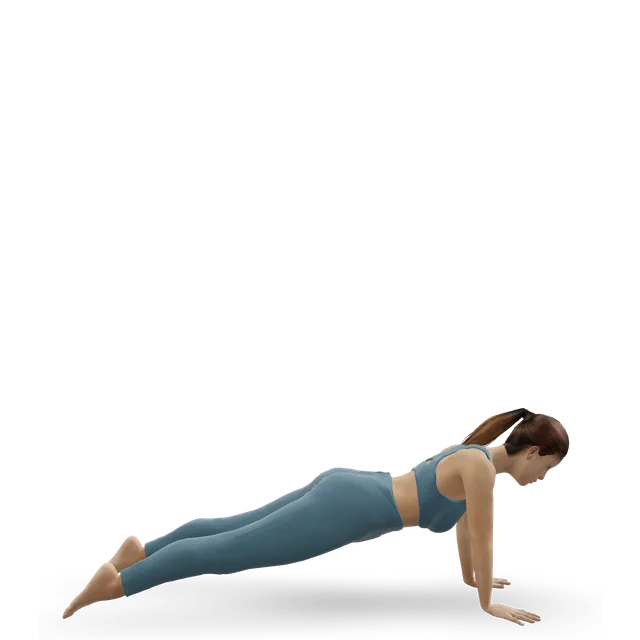
Easier: Dead bug heel taps · Harder: Forearm plank

Bird dog demonstrated on the 3D figure3D demoBird dogBeginner · No equipment

2 to 3 sets of 6 to 8 each side, 3 to 5 s holds, back level with no arching · As in our back pain and spondylolisthesis guides (editorial)

Easier: Bird dog, one limb at a time · Harder: Bear crawl

Glute bridge demonstrated on the 3D figure3D demoGlute bridgeBeginner · No equipment

2 to 3 sets of 10, lifting only to a straight line from shoulders to knees · As in our spondylolisthesis guide (editorial): no arching at the top

Easier: Pelvic tilt into bridge · Harder: Single-leg glute bridge

Knee side plank demonstrated on the 3D figure3D demoKnee side plankBeginner · No equipment

3 holds of 15 to 20 s each side · As in our back pain guide (editorial)

Harder: Side plank

Half-kneeling hip flexor stretch demonstrated on the 3D figure3D demoHalf-kneeling hip flexor stretchBeginner · No equipment

Hold 20 to 30 s, 2 to 3 sets, tucking the pelvis so the lower back doesn't arch · NHS inform's stretch dose; the stretch is our choice. Pad the kneeling knee

Harder: Couch stretch

Hip-hinge practice demonstrated on the 3D figure3D demoHip-hinge practiceBeginner · No equipment

2 to 3 sets of 10 · As in our back pain guide (editorial)

Harder: Kettlebell deadlift

Move on when: Every set feels controlled, a small standing back bend is comfortable, and your back is no worse the next morning (editorial). A young athlete moves on only when the physiotherapist says so, as in the trial.

Follow along: a timer, a cue and the next move, one step at a time.
Stage 3

Bring arching back, a little at a time

About weeks 4 to 8, 2 or 3 sessions a week: arching on purpose, from small to larger, as the teenage trial did (about half-range arching, then full arching, as our spondylolisthesis guide puts it). Adults with leg symptoms on arching leave this stage out and follow our spinal stenosis guide.

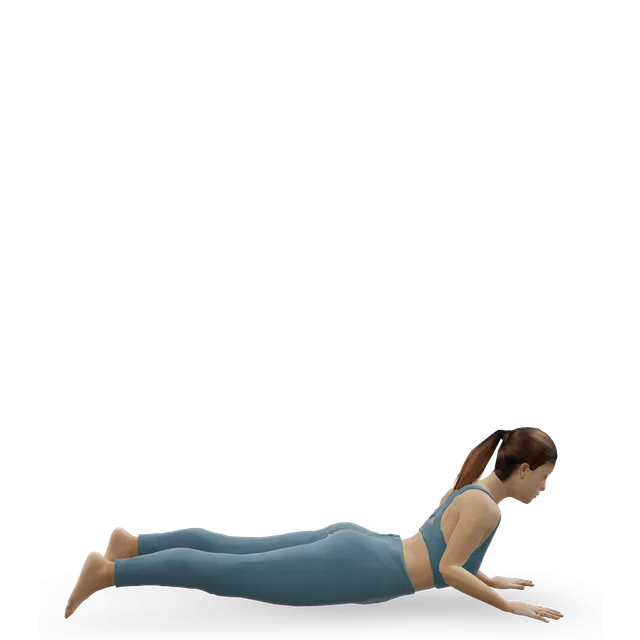
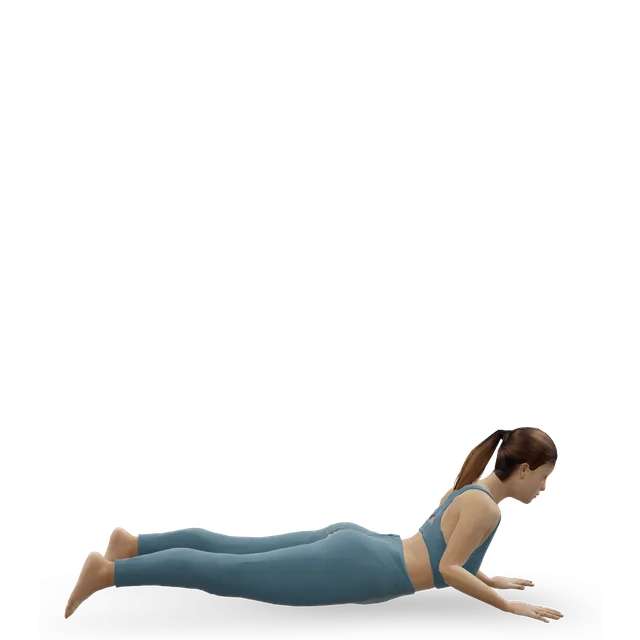
Sphinx pose (Salamba Bhujangasana) demonstrated on the 3D figure3D demoSphinx pose (Salamba Bhujangasana)Beginner · No equipment

Hold about 30 seconds, 3 to 4 times a week · WWL's forearm back extension, the only NHS trust dose we found for arching (the leaflet is past its expiry date). Skip it with spinal stenosis or if arching sends symptoms down a leg, as the move page says

Harder: Cobra pose (Bhujangasana)

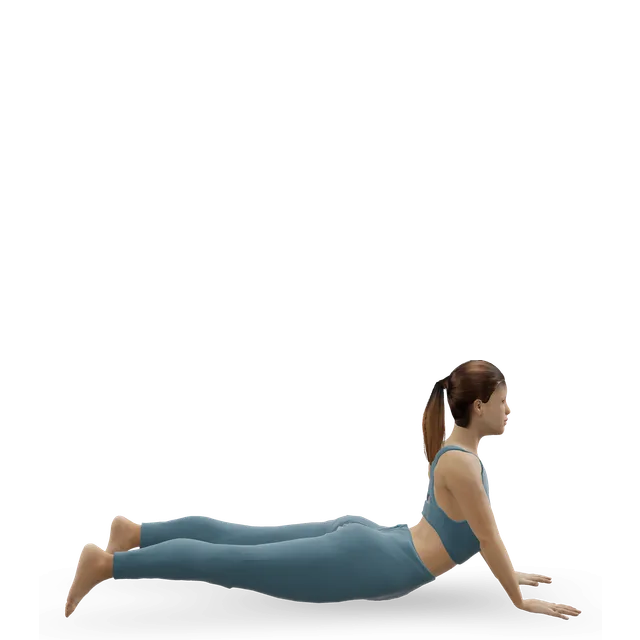
Low cobra (Bhujangasana) demonstrated on the 3D figure3D demoLow cobra (Bhujangasana)Beginner · No equipment

3 holds of 3 to 5 breaths · Editorial. Lift only as far as stays within the pain rule

Easier: Sphinx pose (Salamba Bhujangasana) · Harder: Cobra pose (Bhujangasana)

Prone press-up (McKenzie press-up) demonstrated on the 3D figure3D demoProne press-up (McKenzie press-up)Beginner · No equipment

10 slow repetitions, once a session, once the sphinx is comfortable · The move page's dose (10 slow repetitions, 3 to 5 times a day, while it helps) is written for people whose pain arching eases; once a session here is editorial, as in our spondylolisthesis guide

Easier: Sphinx pose (Salamba Bhujangasana)

Locust pose (Salabhasana) demonstrated on the 3D figure3D demoLocust pose (Salabhasana)Beginner · No equipment

3 holds of 3 to 5 breaths · As in our back pain guide (editorial). Lower the chest and legs if the back pinches

Easier: Seated upper-back lift (sit tall, shoulders back) · Harder: One-legged bow (half locust)

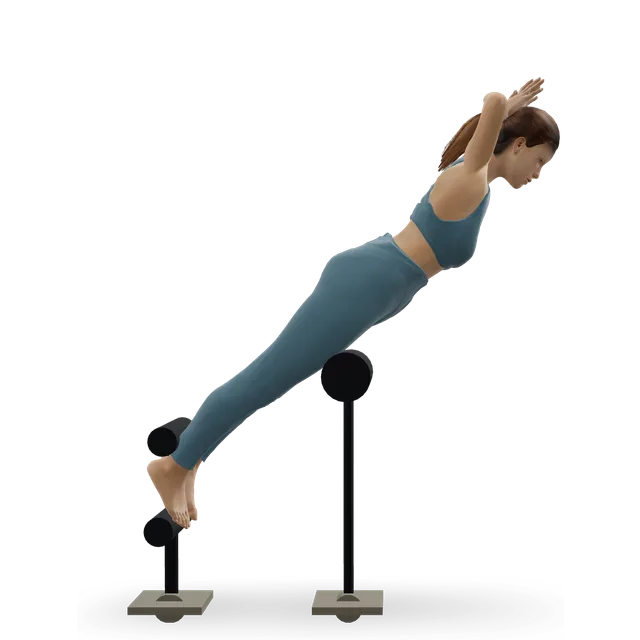
Back extension on a 45-degree bench demonstrated on the 3D figure3D demoBack extension on a 45-degree benchIntermediate · A bench or box

2 to 3 sets of 8 to 12, rising only to straight · As in our back pain guide (editorial). The aim is straight, not bent backwards, as our back extension guide says

Easier: Ball back extension · Harder: Horizontal back extension (hyperextension, Roman chair)

Supported bridge pose (Setu Bandha Sarvangasana) demonstrated on the 3D figure3D demoSupported bridge pose (Setu Bandha Sarvangasana)Beginner · Firm cushion

Rest 3 to 5 minutes on the block · The move page's dose. A gentle, supported arch; lower the block if the back pinches

Harder: Glute bridge

Move on when: The stage 3 moves pass the pain rule for a week, and standing back bends to your usual range are comfortable (editorial). Young athletes: bending forwards and backwards 10 times standing without pain, our spondylolisthesis guide's test, and the physiotherapist's clearance.

Follow along: a timer, a cue and the next move, one step at a time.
Stage 4

Back to back bends, sport and your usual training

From about week 8, often later: the deeper back bends your activity needs, one at a time, with strength work kept going, by the written steps below. No study has tested a return to back bends after back pain, so the order is editorial, built on the teenage trial's phased return and one clinic series pointing to extreme arching.

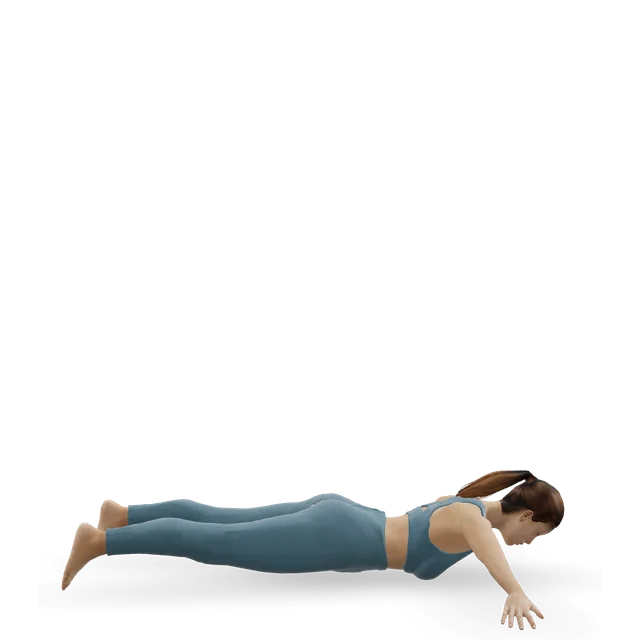
Prone back raise, arms out to the sides demonstrated on the 3D figure3D demoProne back raise, arms out to the sidesBeginner · No equipment

2 to 3 sets of 10 to 15 slow reps, stopping with 2 or 3 reps in reserve · The move page's dose, an editorial starting point

Harder: Bent-over cable rear raise

Side plank demonstrated on the 3D figure3D demoSide plankIntermediate · No equipment

3 holds of 20 to 30 s each side · As in our back pain guide (editorial)

Easier: Knee side plank · Harder: Side plank with leg lift

Cobra pose (Bhujangasana) demonstrated on the 3D figure3D demoCobra pose (Bhujangasana)Intermediate · No equipment

3 holds of 3 to 5 breaths · Editorial. The move page says clear it with a clinician if you have spondylolisthesis or a diagnosed pars stress injury

Easier: Sphinx pose (Salamba Bhujangasana) · Harder: Upward-facing dog (Urdhva Mukha Svanasana)

Upward-facing dog (Urdhva Mukha Svanasana) demonstrated on the 3D figure3D demoUpward-facing dog (Urdhva Mukha Svanasana)Intermediate · No equipment

3 holds of 3 to 5 breaths, once cobra is comfortable · Editorial. Choose cobra instead with wrist pain or a recent shoulder injury, as the move page says

Easier: Cobra pose (Bhujangasana) · Harder: Camel pose (Ustrasana)

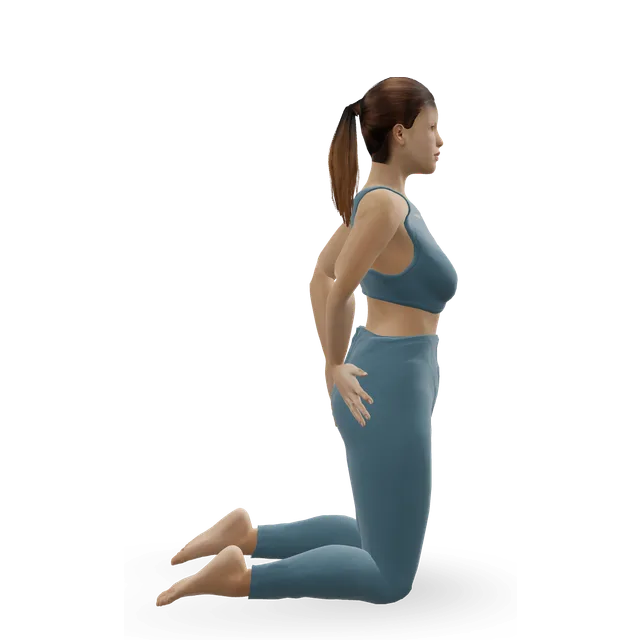
Camel pose (Ustrasana) demonstrated on the 3D figure3D demoCamel pose (Ustrasana)Intermediate · No equipment

2 or 3 holds of 3 to 5 breaths, hands on your lower back first · Editorial. Come up slowly, as the move page says

Easier: Cobra pose (Bhujangasana) · Harder: Wheel pose (Urdhva Dhanurasana)

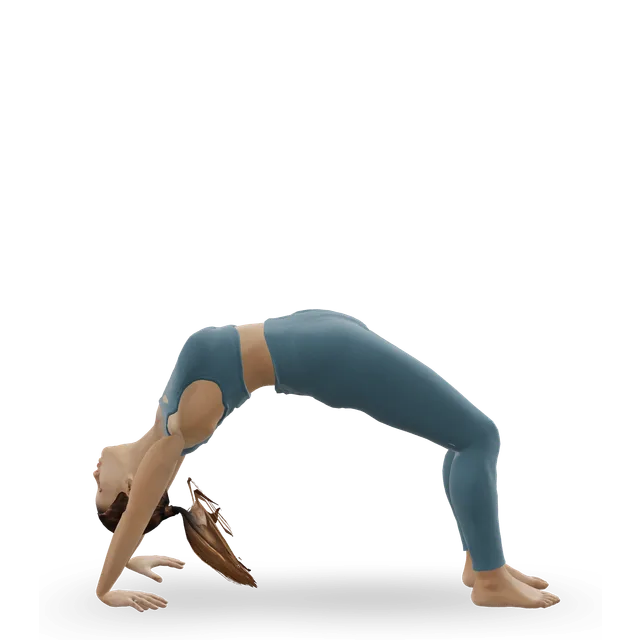
Wheel pose (Urdhva Dhanurasana) demonstrated on the 3D figure3D demoWheel pose (Urdhva Dhanurasana)Advanced · No equipment

Hold 3 to 5 slow breaths, 2 or 3 times, resting fully in between · The move page's dose, an editorial starting point. Last and optional: the move page notes that repeatedly arching to the limit is a risk factor for stress fractures in young athletes

Easier: Camel pose (Ustrasana) · Harder: Drop-back to wheel (Urdhva Dhanurasana from standing)

Move on when: Each deeper back bend passes the pain rule for a week before the next comes back. If it flares after a big session, go back a stage for a few days, not to bed, then build again (editorial).

Follow along: a timer, a cue and the next move, one step at a time.

What to change for now

Bending backwards for now (written steps)

Our 3D figure can't show these. They come from the NHS, NHS trust leaflets, the ECB and our guides; where a step is our suggestion, it says so. No trial has tested a way of bending backwards for back pain.

  • 1. Keep moving and keep up your daily activities, as the NHS says, and favour the direction that eases your back for now.
  • 2. Arch only as far as stays within the pain rule, and never into a leg symptom (our suggestion, in line with the back hub).
  • 3. Standing: break up long spells, rest one foot on a low step, and lean forward on something when standing tasks build symptoms (our suggestion; leaning on a trolley eases stenosis, NHS trusts say).
  • 4. Reaching up: use a step stool for high shelves, washing lines and ceilings rather than leaning back to reach (our suggestion).
  • 5. Yoga: sphinx and a small cobra instead of deep back bends for now, leaving out wheel, camel and bow (our suggestion; in one clinic series, injuries came mostly from extreme arching).
  • 6. A teenager in sport with back pain lasting more than a couple of weeks: stop the training that arches the back and get checked. The 2-week threshold comes from one clinic study.
  • 7. Fast bowlers: stay within the ECB's overs and rest-day limits for your age (for example, 14 and 15 year olds: 20 to 24 overs a week, at most 4 bowling days in any 7).
  • 8. Back extensions at the gym: rise only to straight, as our back extension guide says.

Sources 3, 10, 8, 2, 27, 20, 24

After a stress fracture

In the trial, athletes rested from all sport, wore no brace and had two 1-hour physiotherapy sessions a week until they could bend to the end of the range in every direction without pain, had done 2 weeks of pain-free sport-like activity and reported no pain or disability. Our spondylolisthesis guide's plan takes over, and your physiotherapist decides when you go back. Fast bowlers can be out for up to 8 months, the ECB says, and symptoms can come back, so keep the strength work going.

Sources 41, 24, 42

Back to your usual activity (written steps)

No study has tested how back bends come back after back pain, so the order below is editorial unless a source is named.

  • 1. Yoga: bring back one deeper back bend at a time (sphinx, small cobra, full cobra, upward dog, camel, wheel), a few breaths each, with the poses that rest the back between them. Yoga trials for back pain used gentle programmes rather than deep back bends.
  • 2. Dance and gymnastics: build walkovers, bridges, cambrés and arabesques back gradually in number and depth over weeks, with the trunk strength work kept going, especially through growth spurts (our spondylolisthesis guide's advice).
  • 3. Fast bowling: follow the ECB's limits (for 14 and 15 year olds, 20 to 24 target overs a week, at most 4 bowling days in any 7 with only one pair of days in a row, and set rest days). In professionals, a peak week of more than 234 deliveries went with 11 times the odds of a stress fracture.
  • 4. The gym: overhead pressing and other arching lifts last, with the back long rather than arched (our suggestion).
  • 5. Keep two strength sessions a week after the pain has gone (our suggestion, as in our other back guides).
  • 6. If it flares after a big session, go back a stage for a few days, not to bed, then build again.

Sources 61, 24, 23

Positions to swap, and why

Habit or positionWhy it mattersInstead
Deep back bends while it's soreInjuries in one spine clinic's series came mostly from poses taken to extreme bending or arching.Sphinx, then a small cobra.Try: Sphinx pose (Salamba Bhujangasana)
Pushing through an arch that sends symptoms down a legSpreading leg symptoms mean a nerve is irritated, and arching narrows the space for the nerves in stenosis.Bending-forward moves.Try: Double knee-to-chest stretch
Back extensions past straightNothing supports arching past straight, and our back extension guide says stop at straight.The 45-degree bench, rising to straight.Try: Back extension on a 45-degree bench
Training through lasting back pain in a young athlete who archesIt can be a stress fracture: in one clinic study, 39.7% of young athletes with pain for more than 2 weeks had one.Stop the arching training and get checked.
Bowling more overs than the ECB limits, or too many days in a rowBig bowling weeks went with lumbar stress fractures in professional fast bowlers.The ECB's limits for your age.
Staying in bed or holding your back rigidThe NHS says don't stay in bed for long periods, and staying active did a little better than bed rest.Short walks through the day.Try: Treadmill walking
Leaning back to reach high shelves or hang washingIt arches the back under load (our suggestion).A step stool, and the stage 1 moves.Try: Cat-cow
A back brace "to protect it"NICE says don't offer belts or corsets for back pain, and in young athletes with a stress fracture, bracing made no difference to the results.Strength work.Try: Bird dog
Asking for a scan to find the facet jointNo test or scan can confirm facet joint pain, and facet changes are common without pain.Get checked if a warning sign appears; an MRI scan is for a suspected stress fracture.

Routines to follow

More moves for this area

Questions people ask

Why does my lower back hurt when I bend backwards?

Usually it's ordinary back pain, such as a pulled muscle, which often settles within a few weeks. Many backs have a sore direction and an easy one, and from mid-life arching-sore backs are often put down to the facet joints, though no test can confirm that. In a young athlete, pain that lasts can be a stress fracture.

Is it my facet joints?

Possibly, but no examination or scan can tell, and facet changes on scans are common in people without pain. It doesn't change the first treatment: keep moving, use the comfortable direction for now and build strength.

Could it be a stress fracture?

In teenagers and young adults who arch a lot (gymnastics, dance, fast bowling, diving, weightlifting), back pain that lasts more than a couple of weeks and is worse arching back can be spondylolysis: in one clinic study, 39.7% of young people with back pain for more than 2 weeks had one on MRI. See a GP or sports physiotherapist; it usually heals well without surgery.

Can I go back to gymnastics, dance or bowling after a stress fracture in my back?

Most do: 92.2% of adolescent athletes returned to sport without surgery across 11 studies, and in one trial, a median of 74 days after starting physiotherapy early. Fast bowlers can need up to 8 months. Your physiotherapist decides when, using pain-free tests.

Why does my back hurt when I stand up straight or lean back in a chair?

Standing upright arches the lower back a little, which loads the facet joints and narrows the spaces for the nerves. If it also sends ache or heaviness into your buttocks or legs on walking, eased by sitting or leaning forward, ask a GP or physiotherapist about spinal stenosis.

Are back bends bad for your back?

Not for a healthy back: yoga was as safe as other exercise in trials, and many people with back pain feel better arching. While it's sore, swap deep back bends for sphinx and a small cobra, and bring the deeper ones back one at a time.

Should I do cobra or McKenzie press-ups?

If arching eases your pain or moves leg pain back towards your spine, they can help: exercises in the easing direction did better than the opposite direction in a trial of 312 people. If arching makes it worse or sends pain down a leg, leave them out for now and bend forward instead.

What exercises help lower back pain when bending backwards?

Walking and the moves that ease it first, then trunk and hip strength with the back still, then arching brought back gradually, as in the plan above. Exercise reduced long-lasting back pain by about 15 points out of 100 across 249 trials.

Should I stop yoga?

Usually not: change the poses. Keep the ones that feel fine, swap deep back bends for sphinx and a small cobra, and bring them back gradually. Stop and get checked for leg numbness or weakness, or anything on the warning list.

Do I need a scan?

Usually not: NICE advises against routine imaging, and scans often show changes in pain-free backs. A young athlete with lasting pain on arching may need an MRI scan to look for a stress fracture.

How long will it take to get better?

No one can promise a date. New back pain usually improves most in the first 6 weeks, and young athletes with a stress fracture mostly return to sport within a few months.

When should I see a doctor?

Call 999 or go to A&E for numbness around your genitals or bottom, new bladder or bowel problems, or weakness or numbness in both legs. Get a same-day check for back pain with a high temperature or feeling unwell, and see a GP or physiotherapist if it isn't improving after a few weeks, or for a young athlete whose pain lasts more than a couple of weeks. In the US, call 911 where this page says 999.

Related exercise guides

Other pain guides

Sources

  1. Adams 1980 · How much load the facet joints carry in standing and sitting (cadaver study, J Bone Joint Surg Br)
  2. NHS Fife · Spinal stenosis (physiotherapy leaflet, past its review date: issued September 2014, review due September 2022)
  3. NHS · Back pain
  4. Tawfik 2020 · How common pars defects are in athletes, by sport: 114 studies (review, Global Spine J)
  5. AAOS OrthoInfo · Spondylolysis and spondylolisthesis
  6. Brinjikji 2015 · Spine scan findings in people without back pain: 33 studies, 3,110 people (systematic review, AJNR)
  7. AAOS OrthoInfo · Adult spondylolisthesis in the low back
  8. South Tees Hospitals NHS Foundation Trust · Ten lumbar spinal stenosis facts (patient information)
  9. Menezes Costa 2012 · How new and long-lasting low back pain go: 33 cohorts, 11,166 people (meta-analysis, CMAJ)
  10. Long 2004 · Exercise matched to the direction that eases low back pain, in 312 people (randomised trial, Spine)
  11. May 2012 · Centralisation and directional preference in back pain: 62 studies (systematic review, Man Ther)
  12. Schwarzer 1994 · Is facet joint syndrome a clinical entity? 176 people with chronic back pain (diagnostic study, Spine)
  13. Hancock 2007 · Tests to identify the disc, sacroiliac joint or facet joints as the source of back pain: 41 studies (systematic review, Eur Spine J)
  14. Han 2023 · Diagnostic tests for back pain from the disc, sacroiliac joint or facet joints: 62 studies (systematic review, EClinicalMedicine)
  15. Revel 1998 · Clinical features of back pain relieved by facet joint anaesthesia: 80 people (diagnostic study, Spine)
  16. Laslett 2004 · Revel's criteria retested as a screen for facet joint blocks: 116 people (diagnostic study, BMC Musculoskelet Disord)
  17. DePalma 2011 · The source of chronic low back pain by age: 170 cases at a spine centre (chart review, Pain Med)
  18. Micheli 1995 · Back pain in 100 young athletes against 100 adults (case comparison, Arch Pediatr Adolesc Med)
  19. Selhorst 2019 · Spondylolysis in 1,025 non-elite adolescent athletes with low back pain (case series, Clin J Sport Med)
  20. Nitta 2016 · Spondylolysis on MRI in 136 under-19s with low back pain lasting more than 2 weeks (prospective clinic study, Orthopedics)
  21. NHS · Spondylolisthesis
  22. AAOS OrthoInfo · Back pain in children
  23. Alway 2019 · Lumbar stress fractures and bowling workload in 368 English professional fast bowlers (cohort study, BMJ Open Sport Exerc Med)
  24. England and Wales Cricket Board · Recreational cricket safety guidelines: fast bowling (December 2025)
  25. NHS inform · Spinal stenosis
  26. NICE NG65 · Spondyloarthritis in over 16s: diagnosis and management (2017)
  27. Lee 2019 · Injuries put down to yoga in 89 people at one spine clinic (case series, Mayo Clin Proc)
  28. Cramer 2015 · The safety of yoga: 94 trials, 8,430 people (systematic review and meta-analysis, Am J Epidemiol)
  29. Swain 2019 · Low back pain and injury in dance: 50 studies (systematic review, J Orthop Sports Phys Ther)
  30. Qin 2026 · Low back pain in competitive gymnasts: 10 studies (systematic review, BMC Sports Sci Med Rehabil)
  31. NICE NG59 · Low back pain and sciatica in over 16s: assessment and management (2016, updated 2026)
  32. Chartered Society of Physiotherapy · Back pain myth busters (2016)
  33. Kalichman 2009 · Spondylolysis and slips on CT in 188 adults, and back pain (community study, Spine)
  34. Sakai 2009 · Spondylolysis on CT scans in 2,000 Japanese adults (population study, Spine)
  35. Grødahl 2016 · History and examination to detect spondylolysis in athletes: 8 studies (systematic review, Man Ther)
  36. Alqarni 2015 · Clinical tests for spondylolysis and spondylolisthesis: 4 studies (systematic review, Phys Ther Sport)
  37. Sugiura 2021 · Examination findings and early spondylolysis on MRI in 101 young people (cohort study, Spine Surg Relat Res)
  38. Esh 2020 · How accurate MRI is for stress injuries at the back of the spine in athletes: 4 studies (systematic review, BMJ Open Sport Exerc Med)
  39. Goetzinger 2020 · Spondylolysis in young athletes, with a focus on treatment without surgery (review, J Sports Med)
  40. Achar 2020 · Back pain in children and adolescents (review, Am Fam Physician)
  41. Selhorst 2026 · Physiotherapy straight away against rest first for spondylolysis in 64 adolescent athletes (randomised trial, Br J Sports Med)
  42. Selhorst 2016 · Long-term outcomes after spondylolysis in 121 athletes (retrospective review, J Orthop Sports Phys Ther)
  43. Fredrickson 1984 · The natural history of spondylolysis in 500 schoolchildren (cohort study, J Bone Joint Surg Am)
  44. Beutler 2003 · Spondylolysis followed for 45 years (cohort study, Spine)
  45. Dahm 2010 · Advice to stay active against bed rest for new low back pain and sciatica: 10 trials (Cochrane review)
  46. Hayden 2021 · Exercise for long-lasting low back pain: 249 trials (Cochrane review)
  47. Wrightington, Wigan and Leigh NHS trust · Low back pain exercises levels 2 and 3 (physiotherapy leaflets, past their expiry date: produced January 2024, expiry January 2026)
  48. South Tees Hospitals NHS Foundation Trust · Lumbar spine extension (physiotherapy information for patients)
  49. Almeida 2023 · The McKenzie method for new low back pain: 5 trials, 563 people (Cochrane review)
  50. Machado 2006 · The McKenzie method for low back pain: 11 trials (systematic review and meta-analysis, Spine)
  51. Lam 2018 · The McKenzie method for low back pain: 17 studies (systematic review and meta-analysis, J Orthop Sports Phys Ther)
  52. Machado 2010 · The McKenzie method added to first-line care for new low back pain: 148 people (randomised trial, BMC Med)
  53. George 2021 · Interventions for acute and chronic low back pain (clinical practice guideline, J Orthop Sports Phys Ther)
  54. Overley 2018 · Return to play after spondylolysis in adolescent athletes: 11 studies, 376 people (meta-analysis, Global Spine J)
  55. Klein 2009 · Treatment without surgery for spondylolysis and low-grade slips in young people: 15 studies, 665 people (meta-analysis, J Pediatr Orthop)
  56. Leeds Community Healthcare NHS Trust · Spinal stenosis and neurogenic claudication (MSK patient page)
  57. Delitto 2015 · Surgery against physiotherapy for lumbar spinal stenosis: 169 people (randomised trial, Ann Intern Med)
  58. Juch 2017 · Radiofrequency denervation added to exercise for chronic back pain: the MINT trials, 681 people (randomised trials, JAMA)
  59. Maas 2015 · Radiofrequency denervation for chronic low back pain: 23 trials (Cochrane review)
  60. Maas 2017 · History and examination to diagnose facet joint pain: 12 studies (systematic review, Eur J Pain)
  61. Wieland 2022 · Yoga for chronic low back pain: 21 trials, 2,223 people (Cochrane review)
  62. Cramer 2013 · Adverse events linked with yoga: 76 case reports and case series (systematic review, PLoS One)
  63. Swain 2016 · Yoga-related injuries in US emergency departments, 2001 to 2014 (surveillance study, Orthop J Sports Med)
  64. NHS inform · Exercises for back pain
  65. Smith 2017 · Should exercise be painful in long-lasting muscle and joint pain? 7 trials, 385 people (systematic review and meta-analysis, Br J Sports Med)

Exercise education, not a diagnosis or treatment plan. It is written from the guidelines and studies listed above; review by a clinician is pending. If your pain follows an injury, is severe, is getting worse, or comes with any warning sign listed on this page, get it assessed. Health disclaimer.