Pain guide · Back pain

Back pain in children and teenagers: muscles, sport, school bags, warning signs and staying active

Back pain is common in children and teenagers, and in kids it's usually nothing serious: about a third have it at some point in a year, more as they get older, and most comes from the back's muscles, a growth spurt or sport, and settles within a few weeks. School bags and screens get the blame, but studies of more than 70,000 children haven't shown that bags cause back pain, and posture isn't a proven cause. A few signs matter more in children than in adults, so this guide starts with them.

Call 999 or go to accident and emergency (A&E) for numbness around the genitals or bottom, new bladder or bowel problems, symptoms in both legs, or signs of sepsis. Get help the same day from a general practitioner (GP) or the National Health Service's 111 line (NHS 111) if your child is unwell with a high temperature, or a young child won't walk, stand or sit. See a GP if your child is under 6, or the pain wakes them at night, keeps getting worse or lasts more than 4 weeks. This guide, for parents and for teenagers themselves, sorts the causes by age, covers a stress fracture of the spine in young athletes, school bags, screens and physical education (PE), and gives a three-stage plan with 3D demos back to sport.

When to get help first

Exercise is for pain that has been checked or is clearly mild and settling.

Get urgent medical help if

  • Call 999 or go to A&E: loss of feeling or numbness around the genitals or bottom, new trouble peeing or controlling your bladder or bowels, changes in genital sensation during sex or problems with erections or orgasm, or pain, tingling, weakness or numbness in both legs. These are signs of cauda equina syndrome, which needs treating in hospital urgently. Don't drive yourself.
  • Call 999 or go to A&E: back pain with chest pain, or back pain that started after a serious accident, such as a car crash.
  • Call 999 or go to A&E if you think your child could have sepsis. For a baby or child under 5: breathing very fast or having difficulty breathing; blue, grey, pale or blotchy skin, lips or tongue; a rash that does not fade when you press it; a very high temperature (38C or more under 3 months, 39C or more at 3 to 6 months) or a very low one (under 36C), or feeling cold to the touch or shivery; a weak, high-pitched or continuous cry; not responding like they normally do, not feeding, difficult to wake or more sleepy than usual; or no pee for the last 12 hours. For a child aged 5 or over: breathing very fast; confused, slurred speech or not making sense; blue, pale or blotchy skin; a very high or very low temperature, feeling hot or cold to the touch, or shivery; or a rash that does not fade when you press it. Call too for any other symptoms you're worried might be sepsis.
  • Call 999 or go to A&E if your child gets sudden pain in their hip, knee or thigh (hip problems can sometimes be felt in the thigh or knee), can't put any weight on their leg, their leg has changed shape or is pointing at an odd angle, they feel generally unwell and have a high temperature, or feel hot, cold or shivery, they also have severe pain in the lower part of their tummy, or their symptoms get worse.
  • A young child, usually under 5, who suddenly won't walk, stand or sit, holds their back stiff and won't bend to pick things up, or cries when their nappy is changed: get help the same day, through an urgent GP appointment or NHS 111. At this age a disc or bone infection is one cause, and young children don't always get a high temperature (our suggestion, from guidance for doctors).
  • Same day (GP or NHS 111): back pain and you feel hot, cold, shivery or generally unwell, or severe pain that starts suddenly or is getting worse quickly.
  • Ask for an urgent GP appointment or get help from NHS 111 if you think your child may have a urine or kidney infection, for example with pain in the lower tummy or in the back just under the ribs, a high temperature or feeling hot, cold or shivery, blood in their pee, being sick, or not having had a pee all day. The NHS asks for this for any child aged 15 or under with a suspected urine infection. Call 999 or go to A&E if they're confused, drowsy or have difficulty speaking.
  • Pain, swelling, redness and warmth over a bone, or a very high temperature with feeling generally unwell: ask for an urgent GP appointment or contact NHS 111. It could be a bone infection. Take your child to a GP if they don't want to use an arm or leg and seem irritable: young children don't always get a high temperature with a bone infection.
  • Same day (NHS 111): back pain after a new, significant injury in the last 7 days, such as a fall from a height (off a trampoline, a wall or a horse) or a direct blow to the back.
  • Same day: leg weakness that is getting worse.
  • Ask for an urgent GP appointment or call 111 if your child is bleeding or bruising easily or for no reason.

See a doctor or physiotherapist if

  • See a GP if your child is under 6 and has back pain, or if back pain lasts more than 4 weeks, stops them doing things, is getting worse or disturbs their sleep, or comes with weight loss, night sweats, a change in the shape of their spine, stiffness or difficulty moving, or pins and needles, weakness or numbness. This is the advice of the NHS children's physiotherapy services in Gwent (Aneurin Bevan University Health Board) and in York and Scarborough. A high temperature or feeling unwell needs help the same day, and bladder or bowel changes, numbness around the genitals or bottom, or symptoms in both legs need 999 (see above).
  • Pain that doesn't improve with rest or is worse at night, or pain that is worse when you sneeze, cough or poo.
  • See a GP for bone pain or tenderness, particularly if it's worse at night, a lump or swelling, or looking more pale than usual, getting ill a lot or swollen glands. NICE (the National Institute for Health and Care Excellence) asks GPs to arrange a very urgent blood test for persistent or unexplained bone pain in a child, and to consider a very urgent X-ray for unexplained bone swelling or pain.
  • A teenager in a sport that arches or twists the back, such as gymnastics, dance, diving, volleyball, cricket fast bowling, baseball pitching, weightlifting, football or rugby, with back pain that lasts more than a couple of weeks, is worse arching back or stops them training: get it checked by a GP or sports physiotherapist. It can be a stress fracture in the spine.
  • A teenager's upper back that looks rounded and stays rounded when they stand up straight or lie flat, especially if it looks sharp or angled when they bend forward: see a GP. A growing teenager's curve may need X-rays and a specialist, and a brace only works before growth ends.
  • See a GP if you think your child has scoliosis: a curve to one side, one shoulder or hip higher than the other, or clothes not hanging evenly. It's unlikely that there's anything seriously wrong, but it's best to get it checked out. A curve that hurts needs checking for another cause.
  • Back pain and stiffness that persists in a teenager or young adult. Ankylosing spondylitis tends to start at that age and can affect the whole spine.
  • Back pain that keeps coming back, or stops your child going to school or joining in, especially alongside worry or low mood: talk to a GP. Help with the worry is part of the treatment (our suggestion; a German guideline suggests psychological support, such as cognitive behavioural therapy, for back pain that keeps coming back).

Where does it hurt?

Location narrows the likely causes; it does not diagnose.

A dull ache across the low back after sport, PE, a growth spurt or a long day sitting, in a child who is otherwise well

Usually the back's muscles and other ordinary structures (non-specific back pain). It eases with movement and settles: the plan below is for this.

Low back pain that is worse arching backwards, in a teenager who trains

Possibly a stress fracture of the spine (spondylolysis), common in young athletes. Stop the sports that arch the back and get it checked.

Read: Spondylolisthesis →
A rounded upper back that stays rounded when they stand tall or lie flat

Possibly Scheuermann's disease, the commonest cause of upper back pain in teenagers: see a GP.

Read: Scheuermann's disease →
A curve to one side: one shoulder or hip higher, or clothes hanging unevenly

Possibly scoliosis, which usually isn't very painful. See a GP, and a curve that hurts needs checking for another cause. Our scoliosis page covers the curve.

The middle of the back, or between the shoulder blades

Usually the muscles. Our middle back pain guide maps the causes and the warning signs.

Read: Middle back pain →
After lifting weights, a new class or a new sport, in an older teenager

Usually soreness or a strain. Our back pain after a workout guide covers technique and a plan back to training.

Read: Back pain after a workout →
Down one leg below the knee, with tingling or numbness

An irritated nerve, which is uncommon in children: see a GP. Symptoms in both legs, or bladder or bowel changes, need 999.

Read: Sciatica →
Stiff for more than 30 minutes each morning and eased by moving, in a teenager

Possibly inflammatory back pain, such as ankylosing spondylitis, which tends to start in the teens or early adulthood: see a GP.

The side, or the back just under the ribs, with a high temperature, pain peeing or being sick

Possibly a urine or kidney infection: see the warning signs.

A young child who won't walk, stand or sit, or keeps the back stiff

Possibly an infection of a disc or bone, even without a high temperature: get help the same day.

Hip, groin, thigh or knee pain with a limp

Hip problems can be felt in the thigh or knee, and a limp needs help the same day.

Read: Hip pain in children →
Aching legs in the evening or at night, gone by the morning

Growing pains are leg pains, not back pain.

Read: Growing pains →
After a fall from a height, off a trampoline or a horse, or a crash

Check the injury warning signs first.

Back or bone pain with tiredness, looking pale, bruising or fevers

Rare, but these need a GP soon: see the warning signs.

Understand it

Common, mostly from the muscles, and it settlesStrong evidence

About 12% of children and teenagers have back pain at any one time, 34% over a year and 40% at some point (59 studies). It is uncommon before school age and climbs through the teens towards adult levels by about 18: in Danish children, low back pain in the past month went from 4% at 9 to 22% at 13 and 36% at 15. Girls report it a little more often than boys (in surveys of 650,851 adolescents in 33 countries and regions, 21.9% of girls and 17.8% of boys reported back pain that the surveys counted as chronic), and in North-West England few children with it sought care.

Most of it is non-specific: it comes from the back's muscles and other ordinary structures, not from a disease, and it settles. In one clinic, 78% of 73 children with pain for 3 months or more had no specific diagnosis 2 years later; in a children's emergency department, 76.8% of 177 visits had no underlying cause; and 0.4% of 25,130 children sent home from US emergency departments with back pain had a serious diagnosis within 30 days. In 615 Brazilian schoolchildren, 83% of those with back pain had recovered within a year.

Sources 1, 2, 3, 4, 5, 6, 7, 8, 9, 10

The causes by ageEmerging evidence

NHS children's physiotherapists and Paediatric Musculoskeletal Matters, a teaching resource for doctors, say the same thing: most back pain in children comes from the muscles and the ordinary structures of the back, and serious causes are rare, but the younger the child, and the more sudden the pain, the more likely an underlying cause. In children's orthopaedic clinics a specific cause turns up in about a third (36% of 87 in one series), more often than in adults.

Under 5, back pain is uncommon, and an infection of a disc or bone (discitis) or, rarely, a tumour or leukaemia is more likely than at other ages. A toddler with discitis may refuse to walk, stand or sit, keep the back stiff, or cry when their nappy is changed, often without a high temperature. From 5 to 10, strains from play and sport are common, and the things to rule out are an infection (including a kidney infection), arthritis and, rarely, a tumour. A German guideline treats back pain in the first 10 years of life as a warning sign in itself, and the American Academy of Orthopaedic Surgeons says a young child's back pain that lasts more than several days or keeps getting worse should always be seen by a doctor.

From 10 to 18, non-specific back pain is by far the commonest, often with training, sport or a growth spurt. Less often it is a stress fracture of the spine in a young athlete; Scheuermann's disease, the commonest cause of upper back pain in teenagers; inflammatory back pain (ankylosing spondylitis tends to start in the teens or early adulthood, the NHS says); a slipped disc, which is rare and often follows an injury; or, rarely, a harmless bone growth (an osteoid osteoma) with dull night pain that eases with anti-inflammatory painkillers, or a bone tumour.

Sources 11, 12, 13, 14, 15, 16, 17, 18

Young athletes: a stress fracture of the spineStrong evidence

In young athletes the picture shifts. In a US sports clinic, a stress fracture of the spine (spondylolysis) explained the back pain of 47 of 100 adolescent athletes, against 5 of 100 adults; in 1,025 non-elite athletes aged about 15 with low back pain, 30% had one, most often in boys' baseball, American football and hockey and in girls' gymnastics. It typically hurts more arching backwards, standing or after sport, and builds over weeks.

The same crack is common and usually painless in the general population: 4.4% of children have one by the age of 6, and 6% of adults, and people followed for 45 years did as well as everyone else. Our spondylolisthesis guide covers the scan and the plan.

Sources 19, 20, 21, 22, 23

A rounded back or a curveEmerging evidence

Scheuermann's disease, a stiff, rounded upper back that doesn't straighten when standing tall or lying flat, affects about 3 in 100 (2.8% in Danish twins) and is diagnosed more often in boys; exercise helps the pain but doesn't straighten the curve. Scoliosis, a curve to one side, usually isn't very painful and isn't caused by posture, bags or sport, the NHS says. But in 2,442 children with scoliosis, 23% had back pain when first seen, and 9% of those had another cause, so a curve that hurts needs checking.

Sources 24, 25, 26, 27, 28

Causes outside the back muscles, and their signsEmerging evidence

Rarely, back pain in a child comes from somewhere else: a urine or kidney infection (pain in the lower tummy or the back just under the ribs, a high temperature, wetting themselves or being sick); an infection of a bone or disc; leukaemia (bone or back pain with tiredness, looking pale, fevers, bruising or swollen glands); or a bone tumour (pain that is worse at night, or a lump or swelling). These are why the warning signs come first. The National Institute for Health and Care Excellence (NICE) asks GPs to offer a very urgent blood count to a child with persistent or unexplained bone pain, and to consider a very urgent X-ray for unexplained bone pain or swelling.

Sources 29, 30, 31, 32, 33, 34, 11

When a scan or test helpsStrong evidence

Most children don't need one. The American College of Radiology says constant, night or radiating pain lasting 4 weeks or more should prompt imaging, and without such warning signs imaging is likely not needed; an abnormal nerve examination, or signs of an infection or a tumour, need imaging straight away. X-rays come first, then magnetic resonance imaging (MRI). Computed tomography (CT) scans and some extra X-ray views carry more radiation, which matters more in children. Blood tests are used for young children and for night pain or feeling unwell.

Scan findings can mislead: signs of disc wear showed up in about a third of 439 Danish 13-year-olds. The warning signs aren't perfect either: in children scanned for pain lasting more than 4 weeks, a cause was found in 42% of those with constant pain, 38% with night pain and 8 of 9 with an abnormal nerve examination. For a suspected stress fracture of the spine, the NHS describes an X-ray, with an MRI scan if there are leg symptoms, and NHS inform says most back problems don't need an X-ray or MRI.

Sources 35, 36, 17, 16, 13, 34, 37, 38, 23, 39

How it usually goesEmerging evidence

An NHS children's physiotherapy page says simple back pain should ease in 2 to 4 weeks and settle by 6 weeks, and NHS inform expects most new back problems to begin to settle within 6 weeks. In Brazilian schoolchildren, 83% of those with back pain had recovered within a year, though 31% of those who recovered within 6 months had it again by a year. In 178 English schoolchildren with low back pain, 26% still had it 4 years later, more often after long episodes, pain spreading down a leg or problems with friends, and a German guideline estimates that it keeps coming back or lasts in 10% to 30%.

Teenagers with long spells of back pain were more likely to have back pain as adults (in 9,600 Danish twins), but in 1,249 young people followed from 17 to 22, more than half stayed low throughout and 15% improved. A stress fracture of the spine takes longer: in one trial, the median return to sport was 74 days. No one can promise a timescale.

Sources 40, 39, 10, 41, 16, 42, 43, 44

What helps, and how strong the evidence is

School bags haven't been shown to cause back painStrong evidence

Across 69 studies of 72,627 children (only 5 followed children over time, and most were at moderate to high risk of bias), bag weight, design and the way it was carried didn't raise the risk of back pain. An analysis of individual data from 9,188 children found no link with bags over 10% of body weight (low certainty), and in a 5-day diary study bag weight didn't predict pain. One Chinese study linked carrying a backpack on one shoulder with back pain over time, an observational finding.

The "10% of body weight" rule is expert agreement, not evidence, and suggested limits run from 5% to 20%. Comfortable carrying is still sensible (the written steps below).

Sources 45, 46, 47, 48, 49, 50, 11

Screens and sitting: small links, not shown to cause back painMixed evidence

In 44 snapshot studies, children who sat or used screens more reported a little more back pain (adjusted odds ratio 1.25), but in 4 studies that followed 1,292 children over time there was no clear rise in new back pain (adjusted risk ratio 1.07, anywhere from 0.84 to 1.35; low certainty). A 2026 review found no overall link, though one analysis in it suggested about 26% higher odds for each extra hour a day, from self-reported and varied studies. Breaking up long spells of sitting is still the NHS's advice for children, for health in general.

Sources 51, 52, 53, 54

Keep moving, and keep going to schoolEmerging evidence

NHS children's physiotherapy services agree: keep moving, because in most cases movement and activity won't damage the back; a child doesn't need to be pain-free to go back to school; and higher impact activities, such as PE, sport and running, may need cutting down for a while and building back up as the pain improves. Paediatric Musculoskeletal Matters says too much rest can make back pain worse, and a German guideline sets normal activities, sport and school as the goals. This is consistent expert advice; no trial in children has tested it.

Sources 12, 40, 55, 56, 11, 57

Exercise helps teenagers whose back pain lastsEmerging evidence

In a review of treatments, supervised exercise improved pain by about 3 points out of 10 against no treatment, from 2 small trials of 125 children at high risk of bias. In 185 US teenagers with low back pain that lasted or kept coming back, 12 weeks of supervised exercise (bridges, curl-ups, bird dogs, side planks and back extensions, with aerobic activity at home) cut pain by about 2 points out of 10, and it stayed down at a year; about half had some short-lived extra soreness, with no serious problems. Eight exercise classes cut pain in 72 children aged 12 to 13, and a review of 8 small studies found that conditioning exercise did best.

For prevention, four daily spine movements with education didn't change the main measure in 708 children aged 8 to 11, but meant fewer episodes of back pain, and back care lessons on their own didn't reduce back pain. A German guideline recommends active physiotherapy with home exercise, from trials that ran 4 to 12 weeks.

Sources 58, 59, 60, 61, 62, 57

Being active and playing sportEmerging evidence

In 7,596 Norwegian teenagers, moderate activity (odds ratio 0.75) and endurance sport (0.77) went with less low back pain, while competitive and technical sports and high training volumes went with more; in reviews, both very little and very much activity went with back pain. Young athletes report a lot of it: 42% over a year across 80 studies, with more training, older age, being female and earlier pain as risk factors. So keep children active, with rest days and a mix of sports (our suggestion).

Sources 63, 64, 65, 66, 67

A stress fracture of the spine usually heals without surgeryEmerging evidence

Across 15 observational studies of 665 young people, 83.9% had good results without surgery, and a brace made no difference; 92% of 592 athletes went back to sport, after about 4.6 months on average. In one trial of 64 young athletes, starting physiotherapy within a week, out of sport and without a brace, got them back to sport sooner than resting first (a median of 74 against 112 days), with fewer recurrences over a year (3% against 29%). Our spondylolisthesis guide has the plan.

Sources 68, 69, 44

Medicines, manipulation and bracesMixed evidence

Children's ibuprofen or paracetamol for a short spell is NHS advice, but a German guideline advises against medicines for back pain that keeps coming back or lasts, because no trial in children has tested them. Adding spinal manipulation to exercise gave a small extra benefit at 6 and 12 months in the US trial, but didn't reduce recurrences in 238 Danish children aged 9 to 15, and the guideline makes no recommendation either way. A brace made no difference for a stress fracture of the spine, and for Scheuermann's disease a brace is a specialist's decision while there is growth left. We found no evidence for a brace for ordinary back pain in children.

Sources 70, 57, 59, 71, 68, 25

Posture, tight hamstrings and worryEmerging evidence

Paediatric Musculoskeletal Matters says that, contrary to popular belief, poor posture doesn't cause low back pain, and children should change position often; a German review found no link with posture either. Tight thigh muscles barely predicted new back pain in 502 Montreal teenagers, though a fast growth spurt did (odds ratio 3.09). Low mood, worry, headaches and tiredness go with back pain in children, and the German guideline suggests psychological support, such as cognitive behavioural therapy (CBT), for pain that keeps coming back.

Sources 11, 16, 72, 47, 73, 57

How much pain is OK while you exercise?

Some ache is fine when moving; sharp pain arching back in a young athlete, or any warning sign, isn'tEmerging evidence

Teenagers with ordinary back pain: keep moving within comfort. During exercise, aim for pain of 0 to 5 out of 10, and the back should be no worse the next morning; if it is, do less next time, not nothing. This borrows NHS inform's back exercise scale (0 to 3 minimal, 4 to 5 acceptable, 6 to 10 too much), which is written for adults: no study has tested a pain rule in children. In trials of long-lasting muscle and joint pain in adults, exercise that allowed some pain did slightly better in the short term and no worse later. NHS Lothian's advice for teenagers is the same idea in plain words: keep moving, and cut down the high impact activities or positions that make it worse until it settles.

Younger children don't need a pain scale or a programme: normal play is the aim, and pain that stops them playing, keeps coming back or comes with any warning sign needs a GP (our suggestion; the American Academy of Orthopaedic Surgeons says a young child's back pain that lasts more than several days or gets worse should be seen by a doctor).

A young athlete whose back hurts more arching backwards stops the sport and the moves that arch the back until it has been checked. With a diagnosed stress fracture, the spondylolisthesis guide's rule applies: exercises and daily activities shouldn't bring the back pain on, and the trial's checks (bending forwards and backwards 10 times standing without pain, then running and jumping without pain) decide each step.

Pain that wakes them at night, a fever, feeling unwell, weight loss, numbness, weakness, pain down a leg, bladder or bowel changes, or a young child who won't walk, stand or sit isn't a pain-rule question: see the warning signs.

Sources 74, 75, 12, 15, 44

The exercise plan: 3 stages

Start at the first stage. Each move opens a full guide with a 3D demo.

Stage 1

Settle: keep moving, little and often

About weeks 0 to 2, daily. Keep up school, walking and gentle activity, ease stiffness with NHS Lothian's four back stretches, and ease off the sport or high-impact activity that hurts for about 2 weeks, not all activity. Children under about 10 don't need a programme: normal active play is the aim, and our animal moves workout is a playful way back. With any warning sign, get checked first; with a diagnosed stress fracture, Scheuermann's disease or scoliosis, that guide's or the specialist's plan comes first.

Treadmill walking demonstrated on the 3D figure3D demoTreadmill walkingBeginner · Cardio machine

10 to 20 min a day, or the walk to school and normal play · Editorial; walking outdoors counts the same. UK guidance asks children and teenagers to average 60 minutes of activity a day

Harder: Treadmill jogging

Cat-cow demonstrated on the 3D figure3D demoCat-cowBeginner · No equipment

10 times, holding each end for about 10 s, daily · NHS Lothian's dose for its "cat and hollow" on hands and knees

Harder: Half lord of the fishes (Ardha Matsyendrasana)

Child's Pose (Balasana) demonstrated on the 3D figure3D demoChild's Pose (Balasana)Beginner · No equipment

Hold 20 s with the hands walked forward, 5 times, daily · NHS Lothian's dose for its kneeling sit-back. Pad behind the knees, or skip it with a knee injury, as the move page says

Harder: Extended puppy pose (Uttana Shishosana)

Side-lying open book demonstrated on the 3D figure3D demoSide-lying open bookBeginner · No equipment

5 to 10 slow openings each side · NHS Lothian's dose for its lying twist with arm openings, which is done on the back; the open book is the nearest move with a 3D demo (editorial choice)

Harder: Thoracic rotation

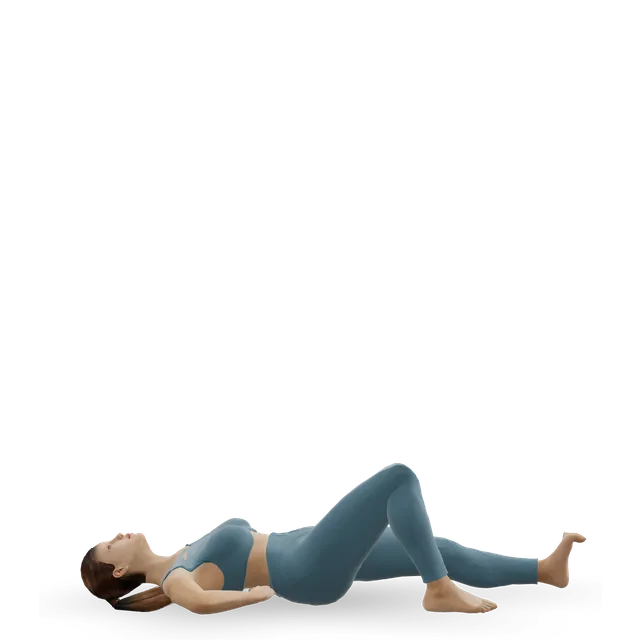
Supine hamstring stretch with a strap demonstrated on the 3D figure3D demoSupine hamstring stretch with a strapBeginner · No equipment

Hold at least 30 s, 2 to 3 times each leg · NHS Lothian's dose; hands behind the thigh work instead of a strap. Burning or tingling down the leg means back off and get it checked, as the move page says

Easier: Leg-up hamstring stretch · Harder: Contract-relax hamstring stretch (PNF)

Move on when: School, walking and play are comfortable, and the back is no worse the next morning (editorial).

Follow along: a timer, a cue and the next move, one step at a time.
Stage 2

Build: the back and trunk muscles

About weeks 2 to 6: 2 or 3 sessions a week, with activity on most days. The kinds of exercise a trial in 185 teenagers used (bridges, curl-ups, bird dogs, side planks and back extensions, plus aerobic activity), within the pain rule. The sets and reps are our back guides' (editorial), because the trial progressed by position rather than a fixed dose.

Glute bridge demonstrated on the 3D figure3D demoGlute bridgeBeginner · No equipment

2 to 3 sets of 10 · As in our back pain guide (editorial)

Easier: Pelvic tilt into bridge · Harder: Single-leg glute bridge

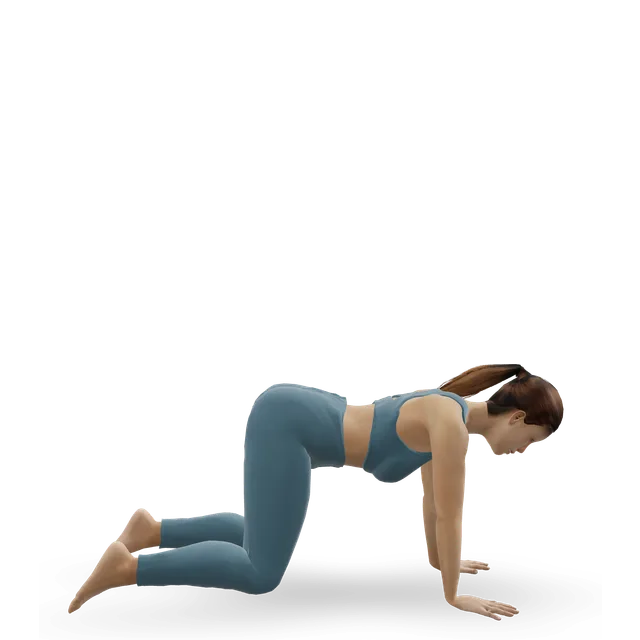
Bird dog demonstrated on the 3D figure3D demoBird dogBeginner · No equipment

2 to 3 sets of 6 to 8 each side, with 3 to 5 s holds · As in our back pain guide (editorial). Make fists if the wrists complain, as the move page says

Easier: Bird dog, one limb at a time · Harder: Bear crawl

McGill curl-up demonstrated on the 3D figure3D demoMcGill curl-upBeginner · No equipment

3 to 5 holds of 8 to 10 s, switching the bent leg halfway · Editorial, following the move page's steps. It stands in for the trial's crunches, and curl-ups load the lower spine less than sit-ups

Harder: Crunch

Knee side plank demonstrated on the 3D figure3D demoKnee side plankBeginner · No equipment

3 holds of 15 to 20 s each side · As in our back pain guide (editorial)

Harder: Side plank

Locust pose (Salabhasana) demonstrated on the 3D figure3D demoLocust pose (Salabhasana)Beginner · No equipment

3 holds of 3 to 5 breaths · As in our back pain guide (editorial): the home version of the trial's back extensions. Leave it out while arching backwards hurts, and with a known or possible stress fracture until that guide's checks allow it

Easier: Seated upper-back lift (sit tall, shoulders back) · Harder: One-legged bow (half locust)

Stationary cycling demonstrated on the 3D figure3D demoStationary cyclingBeginner · Cardio machine

20 to 40 min, at least twice a week, or the same time walking, swimming or cycling outdoors · The trial's home aerobic dose

Easier: Recumbent exercise bike · Harder: Air bike intervals

Move on when: Every set is comfortable within the pain rule, and normal PE or a lighter training session leaves the back no worse the next morning (editorial).

Follow along: a timer, a cue and the next move, one step at a time.
Stage 3

Strengthen, then back to PE and sport

From about week 6: 2 or 3 sessions a week. Stronger legs and trunk for lifting, carrying and sport, then the sport itself back in steps, by the written steps below. Teenagers lifting weights need a qualified adult teaching technique; our children's exercise page explains why supervised strength training is safe at this age.

Side plank demonstrated on the 3D figure3D demoSide plankIntermediate · No equipment

3 holds of 20 to 30 s each side · As in our back pain guide (editorial)

Easier: Knee side plank · Harder: Side plank with leg lift

Dumbbell goblet squat demonstrated on the 3D figure3D demoDumbbell goblet squatIntermediate · A dumbbell

1 or 2 sets of 10 to 15 with a light weight, 2 to 3 times a week on non-consecutive days · The starting dose our children's exercise page gives for teenagers, from the US National Strength and Conditioning Association

Easier: Bodyweight squat · Harder: Barbell front squat

Hip-hinge practice demonstrated on the 3D figure3D demoHip-hinge practiceBeginner · No equipment

2 to 3 sets of 10 · As in our back pain guide (editorial): bending from the hips to lift a bag or kit

Harder: Dumbbell Romanian deadlift

Farmer's carry demonstrated on the 3D figure3D demoFarmer's carryIntermediate · A dumbbell + A kettlebell

3 walks of 20 to 30 m, a weight in each hand · As in our back pain guide (editorial): carrying practice, light at first

Harder: Suitcase carry

Skipping demonstrated on the 3D figure3D demoSkippingBeginner · No equipment

Short blocks, once running is comfortable · Editorial. Leave it out with a suspected stress fracture, as the move page says

Easier: Ankle bounces (mini pogo) · Harder: Alternate-leg bounding

Bear crawl demonstrated on the 3D figure3D demoBear crawlIntermediate · No equipment

4 crawls of 8 to 10 m, forwards and back · The move page's dose (editorial), for younger children; it is part of our animal moves workout

Easier: Knee hover (Pilates tabletop hover) · Harder: Spider crawl (low push-up knee drive)

Move on when: Our suggestion, as in our children's knee guide: full PE, play and training stay comfortable for 2 weeks, then matches and competitions. Keep two strength sessions a week, a mix of sports and rest days. Back pain that keeps coming back needs a GP.

Follow along: a timer, a cue and the next move, one step at a time.

What to change for now

School, sport and pain relief (written steps)

Our 3D figure can't show these. Each step names its source or is our suggestion.

  • 1. Keep going to school. A child doesn't need to be pain-free to go back (York and Scarborough's children's physiotherapists). Tell the PE teacher what hurts and what can still be done (our suggestion).
  • 2. Keep moving: walking, swimming, cycling and dancing are all fine (Gloucestershire's children's physiotherapists), and in most cases movement and activity won't damage the back (NHS Lothian).
  • 3. Sport: ease off the sport or high-impact activity that hurts. NHS Grampian suggests 2 weeks off the painful sport, then a gradual return; NHS Lothian suggests starting with lower impact activities such as swimming or cycling, with a warm-up and cool-down. High training volumes went with more back pain in young athletes, so rest days and a mix of sports are sensible (our suggestion).
  • 4. A teenager whose back hurts more arching backwards stops the sports that arch the back and gets it checked: it can be a stress fracture.
  • 5. Pain relief: children's ibuprofen or paracetamol, at the dose for their age (the NHS). Do not give aspirin to children aged 15 years or under: it can cause a serious condition called Reye's syndrome in rare cases (the NHS). Heat, such as a wrapped heat pad or hot water bottle for 10 to 15 minutes, can ease tight muscles (NHS Lothian), and ice wrapped in a cloth can help in the short term (York and Scarborough).

Sources 40, 55, 12, 56, 66, 70, 76

School bags, screens and homework (written steps)

These are for comfort and general health: bags and screens haven't been shown to cause back pain.

  • 1. Bags: a rucksack with both straps on and tightened, the heaviest items packed at the back, close to the body, and the school locker for heavy books if there is one (NHS Lothian). Pack only what's needed for the day, or use a cross-body bag (the American Academy of Orthopaedic Surgeons).
  • 2. Signs a bag is too heavy: struggling to put it on or take it off, a change in posture when wearing it, pain while wearing it, or red marks on the shoulders (Sherwood Forest Hospitals' leaflet).
  • 3. Screens and homework: get up and move every 20 to 30 minutes (NHS Lothian's and Aneurin Bevan's children's leaflets), and keep up an average of an hour of activity a day (the NHS). These timings are expert advice; no study shows that a screen limit prevents back pain.

Sources 12, 77, 78, 79, 54

Coming back to sport (written steps)

Our suggestion, except where a source is named. No trial has tested how to bring sport back after ordinary back pain in children.

  • 1. Low-impact first: swimming, cycling and walking, with a warm-up and cool-down (NHS Lothian).
  • 2. Then the skills of the sport at an easy pace.
  • 3. Then running and jumping, building up over a week or two.
  • 4. Then full training, then matches.
  • 5. Move up a step after a session that leaves the back no worse the next morning, and drop back a step if it flares. For a diagnosed stress fracture of the spine, the trial-based checks in our spondylolisthesis guide decide each step.

Sources 12, 44

Worry, mood and pain that keeps coming back

Low mood, worry and feeling unhappy with life go with back pain in children, and a German guideline suggests psychological support, such as CBT, for back pain that keeps coming back. If pain is stopping your child going to school or joining in, talk to the GP and the school together (our suggestion).

Sources 16, 47, 73, 57

Positions to swap, and why

Habit or positionWhy it mattersInstead
Bed rest, or staying off school until it stops hurtingNHS children's physiotherapists say keep moving and go back to school before it's pain-free, and too much rest can make back pain worse.Short walks and normal routines.Try: Treadmill walking
Stopping all sport and activityOnly the painful, high-impact activity needs easing, and only for a while.Swimming, cycling and walking for a couple of weeks.Try: Stationary cycling
Training through back pain that is worse arching backwardsIn a young athlete it can be a stress fracture of the spine.Stop the sports that arch the back and get it checked; moves that keep the back level meanwhile.Try: Bird dog, one limb at a time
Backbends such as the cobra, the wheel or walkovers while arching hurtsThe cobra's move page says to clear it with a clinician if you have spondylolisthesis or a diagnosed stress fracture of the spine.Moves that keep the back level.Try: Dead bug heel taps
Sit-ups for repsThe sit-up's move page says sit-ups load the lower spine more than curl-ups.Curl-ups.Try: McGill curl-up
A heavy bag on one shoulderBags haven't been shown to cause back pain, but one study linked one-shoulder carrying with it, and comfort matters.Both straps, heavy items close to the back, and the locker for heavy books.
Hours on a screen without movingThe NHS asks children to break up long periods of not moving.Get up and move every 20 to 30 minutes.Try: Cat-cow
Nagging about posturePosture isn't a proven cause, and changing position often is the advice.Changing position often.
A brace or posture corrector for ordinary back painWe found no evidence for one in children's ordinary back pain.Trunk strength.Try: Knee side plank
Heavy or maximal lifts without supervision, or home weights left outSupervision and good technique make strength training safe for young people; accidents with unsupervised equipment are the real risk (our children's exercise page).Light, supervised sessions.Try: Dumbbell goblet squat
AspirinThe NHS says don't give it to children aged 15 or under: it can cause Reye's syndrome in rare cases.Children's ibuprofen or paracetamol.
Waiting out night pain, a fever, weight loss or a young child who won't walkThese are warning signs that matter more in children.Check the warning signs and get help.

Routines to follow

Animal moves for kids: a 15-minute active play workout

Fifteen minutes of animal moves, jumps and balance games for children, building the muscle- and bone-strengthening activity they need, with nothing to buy.

15 minBeginner16 movesA wall

Yoga for kids: a 20-minute animal adventure

Twenty minutes of animal poses, star jumps, crawls, balloon breaths and a short relaxation for children, with no headstands or shoulder stands.

20 minBeginner17 movesNo equipment

Pilates for kids: a 20-minute follow-along class with games

A 20-minute Pilates class for children: star jumps, the hundred, swimming, animal crawls and balance games, finishing with slow, calm breathing.

20 minBeginner14 movesNo equipment

Strength workout for teenagers: technique first, with jumps and landings

A 40-minute first strength workout for teenagers: a warm-up, landing and jump drills, then squats, hinges, push-ups, rows, step-ups and carries, kept light.

40 minBeginner19 movesA wall, A dumbbell

Beginner core workout

A 15-minute beginner core workout on the floor: dead bugs, bird dogs, knee planks, side planks and curl-ups.

15 minBeginner6 movesNo equipment

McGill big 3 core routine

The McGill big three for the core: curl-ups, side planks and bird dogs, each held for 10 seconds at a time in falling sets of 5, 3 and 1 reps.

12 minBeginner3 movesNo equipment

Spine mobility routine: neck to pelvis, every direction

A 15-minute routine that moves your neck, upper back and lower back through bending, arching, side bending and twisting, then holds the spine steady.

15 minBeginner12 movesNo equipment

10-minute dynamic warm-up

A 10-minute warm-up for any workout: raise your heart rate, move each joint through its range, rehearse the main movements, then ramp up to your first lift.

10 minBeginner12 movesA wall, A band

More moves for this area

Questions people ask

Is it normal for a child or teenager to have back pain?

Yes: about a third of children and teenagers have back pain in a year, more as they get older, and most of it comes from the muscles and settles within a few weeks. It is less common in young children, so a child under 6 with back pain should see a GP.

When should I worry about my child's back pain?

Call 999 for numbness around the genitals or bottom, new bladder or bowel problems, symptoms in both legs, or signs of sepsis, and get help the same day if your child is unwell with a high temperature or a young child won't walk, stand or sit. See a GP if your child is under 6, or the pain lasts more than 4 weeks, wakes them at night, keeps getting worse, or comes with weight loss, night sweats or a change in the shape of the back.

Can school bags cause back pain?

Studies of more than 70,000 children haven't shown that heavy bags cause back pain. A heavy bag can still be uncomfortable, so use both straps, keep heavy items close to the back and use a locker for heavy books, as NHS children's physiotherapists suggest.

Can phones, gaming or homework cause back pain?

Children who sit more report a little more back pain in snapshot studies, but studies that followed children over time didn't show that screens cause new back pain. Getting up and moving every 20 to 30 minutes is sensible, and an hour of activity a day on average is the UK target.

My teenager's back hurts after gymnastics, dance or football. What could it be?

Usually tired or strained muscles. But low back pain that is worse arching backwards and lasts more than a couple of weeks can be a stress fracture of the spine, which was the cause in 30% of teenage athletes with back pain in one large study, so stop the sports that arch the back and get it checked. Most settle without surgery, and our spondylolisthesis guide has the plan.

My child's back hurts at night. Is that serious?

Back pain that wakes a child, or is worse at night and doesn't ease with rest, should be checked by a GP. It is often nothing serious, but in children it is one of the signs doctors look for, along with a fever, weight loss and tiredness.

Is it growing pains?

No: growing pains are aching legs, usually in both legs, in the evening or at night, and gone by the morning. Back pain has its own causes, though ordinary back pain is more common during a growth spurt.

Does my child need an X-ray or a scan?

Most children don't. Scans are for warning signs, or constant, night or spreading pain that has lasted 4 weeks or more; X-rays come first, then an MRI scan. A GP may also arrange blood tests.

Should my child stop sport or PE?

Ease off the sport or high-impact activity that hurts for a week or two, keep walking, swimming or cycling, then build back up. Stopping everything isn't needed, and too much rest can make back pain worse.

What exercises help?

Gentle stretches first, then bridges, bird dogs, curl-ups, side planks and back extensions, which cut pain in a trial of 185 teenagers whose back pain lasted. Keep active alongside, and build back to sport in steps, as in the plan above.

What can I give my child for the pain?

Children's ibuprofen or paracetamol at the dose for their age, and heat wrapped in a cloth for 10 to 15 minutes. Don't give aspirin to children aged 15 or under. If the pain keeps needing painkillers, see a GP.

I'm a teenager and my back hurts. What should I do?

Keep moving, keep going to school, and ease off whatever makes it worse for a little while: most back pain at your age is from the muscles and gets better within a few weeks. Tell someone and see a GP if it wakes you at night, lasts more than 4 weeks, spreads down a leg or you feel unwell.

Related exercise guides

Other pain guides

Sources

  1. Calvo-Muñoz 2013 · Prevalence of low back pain in children and adolescents (meta-analysis, BMC Pediatr)
  2. Jeffries 2007 · How common spinal pain is in adolescents (systematic overview, Spine)
  3. MacDonald 2017 · Muscle and joint low back pain in school-aged children (review, JAMA Pediatr)
  4. Kjaer 2011 · Back pain from childhood to adolescence in Danish children (cohort study, BMC Musculoskelet Disord)
  5. Roy 2022 · Back pain trends in 650,851 adolescents across 33 countries and regions, 2001 to 2014 (HBSC surveys, J Pain)
  6. Watson 2002 · Low back pain in 1,446 schoolchildren in North-West England (survey, Pain)
  7. Bhatia 2008 · Tests for children with back pain lasting 3 months or more (clinic study of 73 children, J Pediatr Orthop)
  8. Brooks 2018 · The causes of back pain in 177 children seen in a children's emergency department (clinic study, Pediatr Emerg Care)
  9. Zhou 2021 · Serious diagnoses within 30 days in 25,130 children sent home from emergency departments with back pain (cohort study, Acad Emerg Med)
  10. Santos 2022 · Back pain over a year in 615 Brazilian schoolchildren (cohort study, JOSPT)
  11. Paediatric Musculoskeletal Matters (Newcastle and Northumbria universities) · Back pain in children: red flags, causes and top tips (teaching resource for clinicians)
  12. NHS Lothian, Royal Hospital for Children and Young People · Adolescent back pain (physiotherapy leaflet, 2021, past its review date of May 2024)
  13. León-Domínguez 2023 · Examining children and teenagers with back pain (review, J Child Orthop)
  14. Feldman 2006 · A step-by-step approach to back pain in 87 children (clinic study, J Pediatr Orthop)
  15. AAOS OrthoInfo · Back pain in children
  16. Frosch 2022 · Back pain in children and adolescents: evidence- and consensus-based recommendations (guideline, Children)
  17. Achar 2020 · Back pain in children and adolescents (review, Am Fam Physician)
  18. NHS · Ankylosing spondylitis (past its review date: reviewed January 2023, review due January 2026)
  19. Micheli 1995 · Back pain in 100 young athletes and 100 adults: the causes compared (clinic series, Arch Pediatr Adolesc Med)
  20. Selhorst 2019 · Spondylolysis in 1,025 non-elite adolescent athletes with back pain (cohort, Clin J Sport Med)
  21. Fredrickson 1984 · The natural history of spondylolysis and spondylolisthesis (cohort of 500 children, J Bone Joint Surg Am)
  22. Beutler 2003 · Spondylolysis and spondylolisthesis: 45-year follow-up (cohort, Spine)
  23. NHS · Spondylolisthesis
  24. Damborg 2006 · How common and how inherited Scheuermann's is: almost 35,000 twins (twin study, J Bone Joint Surg Am)
  25. NHS · Kyphosis
  26. NHS · Scoliosis (past its review date: reviewed April 2023, review due April 2026)
  27. Ramirez 1997 · Back pain in children who have idiopathic scoliosis (retrospective study, J Bone Joint Surg Am)
  28. Ilharreborde 2023 · Is scoliosis a source of pain? (review, J Child Orthop)
  29. NHS · Urinary tract infections (UTIs)
  30. NHS · Kidney infection
  31. NHS · Osteomyelitis (past its review date: reviewed August 2023, review due August 2026)
  32. NHS · Symptoms of acute lymphoblastic leukaemia (past its review date: reviewed July 2023, review due July 2026)
  33. NHS · Symptoms of bone cancer
  34. NICE NG12 · Suspected cancer: recognition and referral (2015, updated 2026)
  35. American College of Radiology 2017 · Appropriateness Criteria: back pain in children (imaging guideline, J Am Coll Radiol)
  36. American College of Radiology 2025 · Appropriateness Criteria: back pain in children, 2024 update (imaging guideline, J Am Coll Radiol)
  37. Kjaer 2005 · MRI findings and low back pain in 439 Danish 13-year-olds (population study, Spine)
  38. Ramírez 2019 · Constant pain, night pain and nerve signs as clues to a cause of children's back pain (clinic study, J Pediatr Orthop)
  39. NHS inform · Back problems
  40. York and Scarborough Teaching Hospitals NHS Foundation Trust · Back pain (children's physiotherapy page)
  41. Jones 2009 · Which schoolchildren's low back pain persists: 4 years in 178 children (cohort study, Arthritis Rheum)
  42. Hestbaek 2006 · Back pain from adolescence to adulthood in 9,600 Danish twins (cohort study, Spine)
  43. Coenen 2017 · Low back pain from 17 to 22 years old in 1,249 young people (cohort study, Arthritis Care Res)
  44. Selhorst 2026 · Immediate physiotherapy vs resting first for adolescent athletes with active spondylolysis (RCT of 64, BJSM)
  45. Yamato 2018 · Do schoolbags cause back pain in children and adolescents? (systematic review, BJSM)
  46. Calvo-Muñoz 2020 · Schoolbag weight and low back pain in schoolchildren (meta-analysis with individual patient data, European Journal of Pain)
  47. Watson 2003 · School bags, activity, mood and low back pain in schoolchildren (survey and diary study, Arch Dis Child)
  48. Ding 2026 · Carrying a backpack on one shoulder, sitting posture and back pain in 3,420 Chinese school students (cross-sectional and longitudinal study, Front Public Health)
  49. Association of Paediatric Chartered Physiotherapists · Choosing the right school bag (leaflet, 2016, past its review date of January 2019)
  50. Brzęk 2025 · School bag weight limits for children of different body weights (cross-sectional study, PeerJ)
  51. Montgomery 2025 · Does sitting and screen time cause spinal pain in children and adolescents? (systematic review and meta-analysis, BJSM)
  52. Calvo-Muñoz 2026 · Sitting and screen time and low back pain in children and adolescents (systematic review and meta-analysis, Healthcare)
  53. Yue 2023 · Daily screen time and low back pain in 57,831 children and adolescents (meta-analysis, Environ Health Prev Med)
  54. NHS · Physical activity guidelines for children and young people
  55. Gloucestershire Health and Care NHS Foundation Trust · Back pain in children and young people (children's physiotherapy leaflet, 2021, past its review date of November 2023)
  56. NHS Grampian, Royal Aberdeen Children's Hospital · How to manage your back pain (children's physiotherapy leaflet, 2018, past its review date of August 2020)
  57. Frosch 2022 · Treating non-specific back pain in children and adolescents (evidence-based German guideline, Children)
  58. Michaleff 2014 · Treatments for low back pain in children and adolescents (systematic review and meta-analysis, Eur Spine J)
  59. Evans 2018 · Exercise, with or without spinal manipulation, for low back pain in 185 adolescents (RCT, Pain)
  60. Fanucchi 2009 · Exercise classes for low back pain in 72 children aged 12 to 13 (RCT, Aust J Physiother)
  61. Calvo-Muñoz 2013 · Physical therapy for low back pain in children and adolescents (meta-analysis of 8 studies, BMC Musculoskelet Disord)
  62. Hill 2015 · Daily exercises and education to prevent low back pain in 708 children aged 8 to 11 (cluster RCT, Phys Ther)
  63. Guddal 2017 · Physical activity, sport and pain in 7,596 Norwegian adolescents: the Young-HUNT study (population study, Orthop J Sports Med)
  64. Kędra 2021 · Physical activity and low back pain in children and adolescents (systematic review, Eur Spine J)
  65. Calvo-Muñoz 2018 · Risk factors for low back pain in children and adolescents (systematic review, Clin J Pain)
  66. Wall 2022 · Low back pain in adolescent athletes (systematic review and meta-analysis, BJSM)
  67. Trompeter 2017 · How common back pain is in sport (systematic review, Sports Med)
  68. Klein 2009 · Non-surgical treatment of spondylolysis in children and young adults (meta-analysis of observational studies, J Pediatr Orthop)
  69. Grazina 2019 · Return to sport after conservative or surgical treatment of spondylolysis (systematic review of 14 studies, Phys Ther Sport)
  70. NHS · Ibuprofen for children
  71. Dissing 2018 · Adding manipulation to usual care for back or neck pain in 238 Danish children (RCT, BMJ Open)
  72. Feldman 2001 · Growth, tight muscles and new back pain in 502 Montreal teenagers (cohort study, Am J Epidemiol)
  73. Batley 2019 · Psychological and social factors and spinal pain in adolescents (systematic review, Eur J Pediatr)
  74. NHS inform · Exercises for back pain
  75. Smith 2017 · Should exercises be painful in chronic musculoskeletal pain? (systematic review and meta-analysis, Br J Sports Med)
  76. NHS · Aspirin for pain relief
  77. American Academy of Orthopaedic Surgeons · Backpack safety (OrthoInfo)
  78. Sherwood Forest Hospitals NHS Foundation Trust · Back care advice for children and adolescents (leaflet, 2024, past its review date of July 2026)
  79. Aneurin Bevan University Health Board (NHS Wales), Move Better Gwent · Low back pain in children and young people
  80. NHS · Back pain
  81. NHS · Sciatica
  82. NHS · Sepsis
  83. NHS · Limping in children

Exercise education, not a diagnosis or treatment plan. It is written from the guidelines and studies listed above; review by a clinician is pending. If your pain follows an injury, is severe, is getting worse, or comes with any warning sign listed on this page, get it assessed. Health disclaimer.