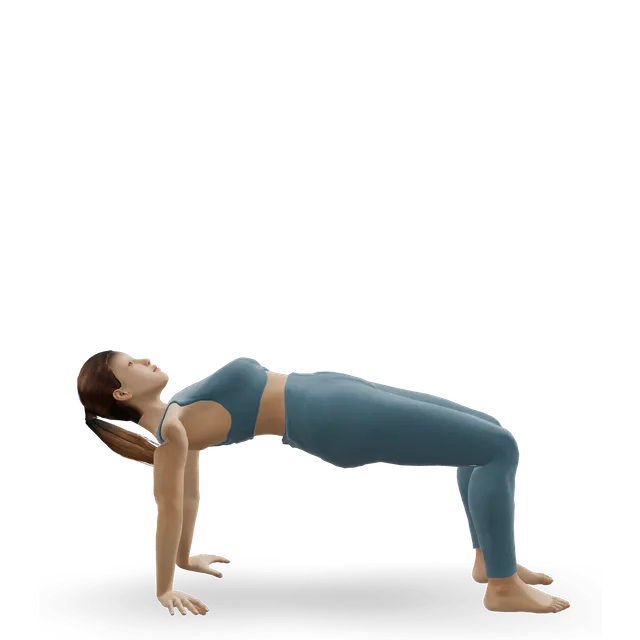
Pain guide · Neck pain

Neck pain in children and teens: stiff necks, screens, a baby's tilted head, and when it's urgent

Neck pain is common in children and teenagers, and in kids it's usually nothing serious: most comes from the neck's muscles and small joints after a night in an awkward position, a long spell at a desk or screen, sport, or a cold or sore throat with swollen glands, and a sudden wry neck usually settles within about a week. Phones, posture and school bags get the blame, but they haven't been shown to cause it. Babies are different: a baby whose head always tilts to one side usually has a tight neck muscle and needs a general practitioner (GP), because physiotherapy works best when it starts early.

A few signs matter more, so this guide starts with them. Call 999 or go to accident and emergency (A&E) for a stiff neck with a high temperature, a rash that doesn't fade when you press a glass on it, dislike of bright lights, drooling or trouble breathing, a neck injury with severe pain or tingling in the arms or legs, or a baby who is floppy, not feeding or hard to wake. A wry neck with a fever, unsteadiness, a headache or being sick needs A&E the same day, and the warning signs say when an urgent GP appointment or the National Health Service's 111 line (NHS 111) is right. This guide, for parents and for teenagers themselves, sorts the causes by age, covers screens, school bags, sleep, physical education (PE) and sport, and gives a three-stage plan with 3D demos.

When to get help first

Exercise is for pain that has been checked or is clearly mild and settling.

Get urgent medical help if

  • Call 999 if your child has a high temperature and a stiff neck, is bothered by light, has a rash that does not fade when you press a glass against it, has a fit for the first time, has unusually cold hands and feet, or is drowsy and hard to wake. This is the NHS's advice for a child with a high temperature.
  • Call 999 or go to A&E if you think your child might have meningitis. For a baby or child under 5: a very high temperature (38C or more under 3 months, 39C or more at 3 to 6 months) or a very low one (under 36C), or feeling cold to the touch or shivery; a weak, high-pitched or continuous cry; a rash that does not fade when you press it; or not responding like they normally do, not feeding, or being floppy, difficult to wake or more sleepy than usual. For a child aged 5 or over: a very high or very low temperature, feeling hot or cold to the touch, or shivery; a very painful headache; confusion, slurred speech or not making sense; a stiff neck and not being able to look at bright lights; a rash that does not fade when you press it; or a first seizure (fit). Call too for any other symptoms you're worried might be meningitis. A stiff neck is often missing in babies with meningitis. Don't drive yourself.
  • Call 999 or go to A&E if you think your child could have sepsis. For a baby or child under 5: breathing very fast or having difficulty breathing; blue, grey, pale or blotchy skin, lips or tongue; a rash that does not fade when you press it; a very high temperature (38C or more under 3 months, 39C or more at 3 to 6 months) or a very low one (under 36C), or feeling cold to the touch or shivery; a weak, high-pitched or continuous cry; not responding like they normally do, not feeding, difficult to wake or more sleepy than usual; or no pee for the last 12 hours. For a child aged 5 or over: breathing very fast; confused, slurred speech or not making sense; blue, pale or blotchy skin; a very high or very low temperature, feeling hot or cold to the touch, or shivery; or a rash that does not fade when you press it. Call too for any other symptoms you're worried might be sepsis.
  • Call 999 or go to A&E after a neck injury if the person is unresponsive, has severe neck pain or cannot move their head, or fell from a height such as 5 or more stairs. Do not drive yourself. A dangerous fall or crash (from more than 1 metre or 5 steps, diving, a high-speed or rollover crash, being thrown from a vehicle, or a bike or horse-riding accident), or tingling in the arms or legs after an injury puts you at high risk of a broken neck: get checked.
  • Call 999 or go to A&E if a child has a neck injury that wasn't accidental, for example if someone else has hurt them on purpose.
  • Call 999 or go to A&E: new problems walking, loss of bladder or bowel control, or a sudden loss of coordination, such as difficulty doing up buttons. These can be signs of pressure on the spinal cord.
  • Call 999 or go to A&E: a headache that came on suddenly and is extremely painful; numbness or weakness in the face or body; a drooping face, or being unable to lift both arms and keep them up; difficulty speaking, swallowing, balancing, walking or remembering; double vision or loss of vision; drowsiness or confusion. A torn neck artery often starts with headache and neck pain, sometimes with dizziness or tingling, so head or neck pain unlike any you have had before needs checking.
  • Call 999 or go to A&E: you can't swallow or you're drooling, you have difficulty breathing or a high-pitched sound as you breathe (stridor), or a sore throat with severe symptoms that are getting worse quickly.
  • Call 999 or go to A&E: a severe sore throat that quickly gets worse, swelling inside your mouth and throat, difficulty speaking, swallowing or breathing, or you can't open your mouth. It can be quinsy, an abscess from tonsillitis.
  • A wry neck with a high temperature, drooling or trouble swallowing, a change in voice, pain or swelling when the neck is touched, pins and needles in the arms, legs or face, a recent injury, unsteadiness, a headache, being sick, a change in behaviour, pain that is severe or getting worse, or a neck your child suddenly can't move at all despite pain relief: take them to A&E the same day, and call 999 for noisy or difficult breathing. A painful twisted neck that started after a cold, a throat infection or an operation on the tonsils or adenoids needs checking the same day too: rarely, a joint at the top of the neck has slipped (our suggestion, from a review of this condition, Grisel's syndrome).
  • Ask for an urgent GP appointment or get help from NHS 111 if your child has had a high temperature for 5 days or more, especially with swollen glands in the neck, a rash, red eyes, dry, cracked lips, or the palms of the hands and soles of the feet turning bright red. It can be Kawasaki disease, which is rare and usually affects children under 5.
  • Same day (urgent GP appointment or NHS 111): severe neck pain that starts suddenly or gets worse quickly; heaviness or weakness in the arms or legs; pins and needles in an arm along with neck or arm pain; or pain between the shoulder blades.
  • Same day: clumsiness, numbness, pins and needles or weakness in one or both arms that is getting worse; problems with balance or walking since the neck pain started; or neck pain with a severe headache.
  • At the pitch: neck pain or tenderness after a collision, or severe neck pain. Keep the player still and call 999. Only trained healthcare professionals should move a player with a suspected neck injury.
  • Numbness, tingling, burning or weakness in both arms, in more than one limb, or in the legs: keep the player still and call 999. It can be an injury to the spinal cord, even if it passes in minutes.

See a doctor or physiotherapist if

  • See a GP if your baby's head is always tilted to one side, or they have difficulty turning their head. Physiotherapy works best when it starts early; you can mention it to your health visitor too (our suggestion).
  • A baby's tilted head that started at 6 months or older or came on suddenly, comes with wobbly eyes, a squint or eyes that don't follow you, a body that seems unusually floppy or stiff, or a head that tilts and turns towards the same side: see a GP soon. A US physiotherapy guideline lists these as reasons for a doctor's check as well as physiotherapy.
  • A wry neck that isn't clearly better within 7 days, or that keeps coming back: see a GP. NHS children's emergency departments expect most to settle within about a week.
  • Neck pain in a child under 5, neck pain that wakes your child at night, or a twisted neck that came on without a clear reason and isn't settling: see a GP (our suggestion, from the signs a teaching resource for doctors lists for urgent referral).
  • Swollen glands in your neck that are getting bigger or haven't gone down within 1 week, feel hard or don't move, or come with night sweats or a very high temperature: see a GP.
  • A very high temperature or feeling hot, cold or shivery, a severe sore throat, swelling on both sides of the neck, extreme tiredness, or a sore throat that isn't getting better: see a GP. It can be glandular fever, which is most common at 15 to 24, and the NHS advises against strenuous activities, such as heavy lifting or sport, while recovering.
  • Neck pain with feeling generally unwell, or that started while you were ill with another condition such as rheumatoid arthritis or cancer; or neck pain with blurred vision, ringing in the ears or dizziness.
  • Neck pain that hasn't improved within 6 weeks of following the advice and exercises, or that gets worse: talk to a GP or physiotherapist, as NHS inform advises.
  • A child with Down syndrome who has neck pain or a stiff neck that doesn't get better quickly, a tilted or unusual head position, a change in walking, unsteadiness or tiring more easily when walking, clumsier hands, difficulty holding the head up, nodding or turning it, or weakness in the arms or legs: stop sport and see a doctor, urgently if these come on suddenly. Extra movement at the top of the neck is common on X-rays but rarely causes problems; new bladder or bowel problems need 999 (above).
  • A stiff or twisted neck that lasts for weeks, especially if it's stiffer in the morning or after rest, or comes with other swollen, stiff joints: see a GP. Rarely, it's juvenile arthritis.
  • Severe pain that is constant or disturbs your sleep, a fever or unexplained weight loss, or a history of cancer, inflammatory arthritis, tuberculosis (TB), a weakened immune system, neck surgery or a violent injury. Serious causes are very rare, but these need checking.
  • Arm symptoms or weakness that last more than a few days: see a sports doctor or physiotherapist for a full examination. Symptoms beyond 2 to 3 weeks need further tests, such as nerve tests and an MRI (magnetic resonance imaging) scan.
  • A second stinger, or stingers that keep coming back: see a sports medicine or spine specialist, usually with an MRI scan, before going back to contact sport.

Where does it hurt?

Location narrows the likely causes; it does not diagnose.

An ache at the back or side of the neck after a long day, a screen, homework or sport, in a child who is otherwise well

Usually the neck's muscles and small joints (ordinary neck pain). It eases with movement and warmth: the plan below is for this.

Woke up with the neck stuck, the head tilted to one side and turned to the other

Usually a sudden wry neck (acute torticollis) from sleeping awkwardly, which settles within about a week. Our stiff neck guide is written for adults; the first days for a child are in the written steps below.

Read: Stiff neck and wry neck →
A tender lump on the side of the neck with a cold, sore throat or earache

Usually swollen glands, which go down within 1 to 2 weeks. The neck can be stiff and held tilted while they're sore.

Read: Side neck pain →
A baby who always looks one way, or whose head tilts to one side

Usually a tight neck muscle (congenital muscular torticollis), which is common and usually painless: see a GP, because physiotherapy works best early.

A stiff neck with a high temperature, a rash, dislike of light, or a drowsy, floppy child

Possibly meningitis or sepsis: call 999 (the warning signs).

A twisted neck with a fever, drooling, trouble swallowing or not wanting to look up, in a young child

Rarely, an infection deep in the throat: see the warning signs.

A high temperature for 5 days or more, with swollen neck glands, a rash or red eyes

Possibly Kawasaki disease, which is rare: get an urgent GP appointment or call NHS 111.

After a fall, a tackle, a trampoline or a crash

Check the injury warning signs first. Our whiplash guide covers recovery once a serious injury has been ruled out.

Read: Whiplash →
A burning, electric or dead arm straight after a tackle or fall

Usually a stinger, which often passes in seconds to minutes. No sport until it has completely gone.

Read: Stingers and burners →
Pain down one arm with pins and needles, in a teenager

An irritated nerve in the neck, which is uncommon at this age: see a GP.

Read: Pinched nerve in the neck →
Waking with a sore neck most mornings

Our neck pain from sleeping guide covers pillows and positions.

Read: Neck pain from sleeping →
After hours on a phone, a tablet or homework

Usually stillness rather than posture. Our tech neck guide covers breaks and strength.

Read: Tech neck →
Headaches with the neck pain

Often a tension headache. Headaches with being sick, or a sudden, severe headache, are in the warning signs.

Read: Tension headaches →
A stiff or twisted neck lasting weeks, worse in the morning, or with other swollen joints

Rarely, juvenile arthritis: see a GP.

A child with Down syndrome with neck pain, a tilted head or a change in walking

Stop sport and see a doctor (the warning signs). Our Down syndrome exercise page covers the neck.

Neck and back pain together

Our children's back pain guide covers the back, school bags and sport.

Read: Back pain in children →
Hip, thigh or knee pain with a limp

Hip problems can be felt in the thigh or knee, and a limp needs help the same day.

Read: Hip pain in children →

Understand it

Common in teenagers, usually mild, and few see a doctorStrong evidence

Neck pain is an uncommon complaint in young children and becomes commoner through the teens, especially in girls. In Finnish national surveys of 62,677 young people, neck and shoulder pain at least once a week affected 24% of girls and 12% of boys at 14, rising to 45% and 19% at 18. In Finnish twins aged 11 to 12, 16% had neck pain at least weekly, with no difference yet between boys and girls; in another Finnish group the gap had appeared by 13 to 16. In 643 Australian 14 year olds, 34.1% of girls and 23.5% of boys had had neck or shoulder pain in the past month.

Exact figures vary hugely with the age, the time asked about and how often pain has to happen to count: from 4.6% to 92.3% for spinal pain across four European birth cohorts. The honest summary is that neck pain is common in teenagers and usually mild. Few see a doctor for it: neck problems led to 45 general practice consultations per 10,000 children aged 3 to 17 a year in England, against about 100 each for the foot, the knee and the back.

Sources 1, 2, 3, 4, 5, 6

The usual causes, and how common each isEmerging evidence

Most neck pain in children comes from the neck's muscles and small joints, though no study gives the exact share. A sudden wry neck (acute torticollis) is common: the head is stuck tilted to one side and turned to the other, and it hurts to move. Leeds' children's emergency department says most children get it from sleeping in an unusual position, often waking with it, and Alder Hey's mentions sleepovers and naps on the sofa; minor knocks, and colds or throat infections with swollen glands, can cause it too.

Swollen glands in the neck usually come from colds, tonsillitis and ear or throat infections, can make the neck sore and stiff, and go down within 1 to 2 weeks; they are rarely caused by anything more serious, such as leukaemia or lymphoma, the NHS says. Glandular fever, with a sore throat, a high temperature and swollen glands, is most common at 15 to 24. A stinger, a burning or electric arm after a tackle or fall, usually lasts seconds to minutes. A serious neck injury is uncommon even among injured children: 433 of 22,430 (1.9%) brought to US children's emergency departments after a fall, crash or blow had an injury to the bones or ligaments of the neck. In children's emergency departments, injuries and infections are the commonest causes of the neck pain doctors see, a teaching resource for doctors says, which is one reason the warning signs come first.

Sources 7, 8, 9, 10, 11, 12, 13, 14, 15

A baby's tilted head: usually a tight neck muscleStrong evidence

A baby whose head tilts to one side and turns to the other, who mostly looks one way and may find it hard to turn to feed on one side, usually has congenital muscular torticollis: a tight sternocleidomastoid, the long muscle on the side of the neck. It is common, though figures range from 3.9% to 16% of newborns because studies define it differently, and most babies feel no pain from it; some have a soft swelling in the muscle that gradually goes down, and some a flattened head. The NHS says see a GP if a baby's head is always tilted to one side or they have difficulty turning their head.

A physiotherapist teaches gentle stretches, positioning and tummy time, and with treatment most babies regain full movement. Starting early matters: in one study that a US physiotherapy guideline reports, 99% of babies who started before 1 month had excellent results after an average of 1.5 months, against 89% starting at 1 to 3 months (5.9 months), 62% at 3 to 6 months (7.2 months) and 19% at 6 to 12 months (8.9 months). The guideline also lists reasons for a doctor's check as well as physiotherapy: a tilt that starts at 6 months or older or comes on suddenly, eye signs such as wobbly eyes or a squint, unusually floppy or stiff muscles, or a head that tilts and turns to the same side.

Sources 16, 17, 18, 19

A twisted neck that isn't the muscle: uncommon, with clear cluesEmerging evidence

In 352 children seen with a twisted neck in an Israeli children's emergency department, 59 (17%) had a cause that needed treatment: an infection in 35, a stuck joint at the top of the neck in 18 and a tumour in 6. Infection went with a younger age and a fever, and the stuck joint with longer-lasting symptoms and tenderness in the middle of the neck. This is one hospital sample, read from its summary, so it overstates the risk for a child at home who woke with a wry neck and is otherwise well; it is why a fever, an injury, long-lasting symptoms or nerve signs need checking.

A painful twisted neck after a cold, a throat infection or an operation on the tonsils or adenoids should be treated as Grisel's syndrome, a rare slipped joint at the top of the neck, until proven otherwise, a 2026 review says, because early treatment prevents a fixed deformity. An abscess behind the throat is rare (0.10 to 0.22 hospital cases per 10,000 US children a year) and mostly affects children under 5: in 64 children with one, difficulty looking up (45%) and a twisted neck (36.5%) were common. Kawasaki disease is rare too (8.9 per 100,000 children under 5 a year in England), with a high temperature for 5 days or more, often with swollen neck glands. Very rarely, a twisted neck that keeps getting worse, with headaches and being sick or with unsteadiness, comes from a tumour in the spine or at the back of the brain.

Sources 20, 21, 22, 23, 24, 25, 15

Meningitis: rare, and the signs that matterStrong evidence

Bacterial meningitis is rare: about 1.5 cases per 100,000 people a year in England, most often in babies under 3 months (55.6 per 100,000). Most stiff necks in children come from the muscles; what matters is the company a stiff neck keeps. A high temperature with a stiff neck, a rash that doesn't fade under a glass, dislike of bright lights, a first fit, or a drowsy or confused child is a 999 call, the NHS says.

In children, a reported stiff neck was one of the stronger clues to meningitis (a likelihood ratio of 7.7, from 10 studies), but no single sign rules it in or out. The National Institute for Health and Care Excellence (NICE) warns that classic signs such as a stiff neck, a bulging soft spot or a high-pitched cry are often missing in babies, so a baby who is floppy, not feeding, has a weak or high-pitched cry or is hard to wake needs 999 whether or not the neck is stiff.

Sources 26, 27, 28, 29, 30, 31

Juvenile arthritis and Down syndromeEmerging evidence

Juvenile arthritis affects at least 10,000 young people under 16 in the UK, more often girls, with joints that are swollen and stiff, especially in the morning or after rest. It rarely affects the neck: the neck was involved in 3.9% of 155 children in one clinic. In 9 children whose first sign of it was arthritis in the neck, a twisted neck was the commonest symptom, diagnosis took about 7 months on average, and 7 needed specialist medicines.

In Down syndrome, extra movement at the top of the neck shows on X-rays in 10% to 27% of people, but symptoms are very rare. UK guidance advises against routine neck X-rays for children without symptoms and says they shouldn't be barred from sport, but neck pain, a tilted head, less neck movement, a change in walking, more falls, tiring on walking or clumsier hands need checking promptly (the warning signs).

Sources 32, 33, 34, 15, 35

When a scan or test helpsStrong evidence

Usually not at all: a sudden wry neck or ordinary neck pain is recognised from the story and an examination. Leeds' children's emergency department says it is extremely rare for a child with a wry neck to need tests, and a Royal Berkshire leaflet says X-rays are usually not needed.

After a head or neck injury, NICE sets out which children need imaging: neck X-rays for neck pain or tenderness after a dangerous fall or crash (more than 1 metre or 5 stairs, a dive, a high-speed or rollover crash, or a bike collision), or if the child can't turn the neck 45 degrees each way; computed tomography (CT) for a reduced level of consciousness, nerve signs, tingling in the arms or legs, or a strong suspicion of injury despite normal X-rays. A US checklist of similar signs picked out the injured children who needed imaging. Specific worries get specific tests: an ultrasound scan for a lump in a baby's neck muscle that persists; blood and urine tests and a heart scan for suspected Kawasaki disease; a blood test for glandular fever; a CT scan for a suspected abscess behind the throat; and a magnetic resonance imaging (MRI) scan for suspected arthritis in the neck. Routine neck X-rays aren't advised in Down syndrome without symptoms.

Sources 8, 36, 37, 14, 18, 24, 12, 23, 34, 35

How it usually goesEmerging evidence

A sudden wry neck usually starts to ease after a day of rest and is better within about a week, though it can take 7 to 10 days to go completely; see a GP if it isn't better within 7 days. Most neck problems improve within 8 weeks, NHS inform says. Swollen glands go down within 1 to 2 weeks, and most young people start to feel better from glandular fever within 2 to 4 weeks.

Over months and years, children's neck pain tends to come and go: of 1,756 Finnish 9 to 12 year olds followed for 4 years, 24% never had weekly neck pain, 71% had it on and off and 5% had it persistently, more often those who also had frequent other aches or signs of stress. Weekly neck and shoulder pain rose from 17% to 28% between the late teens and the mid twenties in 394 Finnish students. A baby's tight neck muscle usually resolves with physiotherapy, faster when it starts early, and the physiotherapist can refer to a specialist if there's no improvement in 3 months. No one can promise a timescale.

Sources 9, 8, 7, 11, 12, 38, 39, 18

What helps, and how strong the evidence is

Keep the neck moving, and no collarEmerging evidence

The NHS says don't wear a neck collar, because it's better to keep your neck moving, and NHS inform advises moving the neck for short periods every hour and carrying on with normal activities, even at a slower pace. NHS Lothian's children's leaflet says gentle movement of the neck is important to stop the muscles stiffening up, and Leeds' children's emergency department adds pain relief, a warm compress and a pause from sport, trampolines and bouncy castles until the neck has been pain-free for 3 to 5 days. This is consistent health-service advice; no trial in children has tested it.

Sources 40, 7, 10, 8

Strength exercise helps lasting neck pain in adults; trials in children are fewEmerging evidence

In adults with lasting neck pain, strength training for the neck, shoulder blades and arms improved pain by a moderate to large amount (moderate-quality evidence, from a review of 27 trials of 2,485 people), while stretching alone may not change it (low quality). This is borrowed evidence: no trial has compared an exercise programme with no treatment in children with neck pain.

In 127 high school students with lasting neck pain, 8 weeks of exercise, with or without lessons about pain, eased pain in both groups for up to 6 months, but there was no untreated group to compare with. Across 17 trials of physical treatments for children's muscle and joint pain, the treatments were described too poorly to repeat. So the plan below borrows our adult neck guides' moves and doses for teenagers whose pain lasts or keeps coming back.

Sources 41, 42, 43

Screens and posture: weak evidence, not shown to cause neck painMixed evidence

Children who sit and use screens more report a little more neck pain in snapshot studies (adjusted odds ratio 1.62, from 12 estimates in 22,401 young people), but the 4 studies that followed 1,292 children over time found no clear rise in new spinal pain (adjusted risk ratio 1.07, anywhere from 0.84 to 1.35; low certainty), and none gave a long-term figure for the neck on its own. A review of reviews found no or insufficient evidence linking screen time with pain, and the UK Chief Medical Officers say research can't yet support guidelines on how much screen time is safe. So the evidence on screens and children's necks is weak.

Posture isn't a proven cause either: across 15 snapshot studies, teenagers with and without neck pain held their heads equally far forward. Texting posture wasn't linked with neck pain in 150 young adults aged 18 to 21, "text neck" met none of the standard tests of cause across 21 studies of mostly young adults, and in 396 adults followed over time, bending the neck over a phone didn't raise the risk while poor sleep and too little activity did. In 643 Australian 14 year olds, neck and shoulder pain wasn't related to how active they were or to time spent on TV, computers or reading, and in Finnish teenagers a lot of screen time was only weakly linked with neck pain.

Sources 44, 45, 46, 47, 48, 49, 50, 4, 51

School bags: untested for the neckEmerging evidence

The large review of school bags (69 studies, 72,627 children) covers back pain only and found no convincing evidence that bags raise the risk. For the neck there is one snapshot study: in 1,202 Australian teenagers, more than half felt their bags were heavy, and carrying a bag for more than 30 minutes a day went with a little more neck and back pain. No study has followed children over time to test bags and neck pain, so comfortable carrying is sensible rather than proven.

Sources 52, 53

Sleep: the better-supported linkEmerging evidence

In a Finnish birth cohort, too little or poor sleep at 16 predicted neck pain at 18 in girls (odds ratio 4.4) and boys (2.2); after allowing for neck pain already there at 16, the link held in girls (3.2). In adults followed over time, poor sleep predicted neck pain while phone posture didn't. This is observational evidence, not proof that better sleep prevents neck pain, but protecting sleep is worthwhile anyway.

Sources 54, 50

A baby's tight neck muscle: physiotherapy, the earlier the betterStrong evidence

Stretches and positioning taught by a physiotherapist are the first treatment, with supervised tummy time and play that encourages the baby to turn both ways, and starting early shortens treatment, a US physiotherapy guideline says. NHS trust leaflets ask parents to do the exercises slowly and gently, often through the day, and to stop and try again later if the baby is distressed. With treatment most babies regain full movement; if there's no improvement in 3 months, the physiotherapist can refer to an orthopaedic specialist. Helmets and headbands for a flat head aren't available on the NHS, because there isn't enough evidence that they work.

Sources 16, 17, 18, 55, 19

Pain relief, manipulation and massageMixed evidence

Children's ibuprofen or paracetamol at the dose for their age is NHS advice: most children over 3 months can have ibuprofen, and most over 2 months paracetamol. Leeds suggests regular ibuprofen for the first 2 to 3 days of a wry neck. Sources differ on giving both: the NHS high temperature page says don't alternate them unless a health professional tells you to, while NHS Lothian's wry neck leaflet suggests both together in the first days, so ask a pharmacist before giving both. Do not give aspirin to children aged 15 years or under.

Adding spinal manipulation to advice, exercise and soft-tissue treatment didn't reduce recurrences in 238 Danish children aged 9 to 15 with back or neck pain, though those who had it rated their improvement higher, and no harms were reported. In 52 children with lasting neck pain, instrument-assisted and classical massage eased pain about equally in the short term, and longer-term effects are unknown. We found no reason to recommend either for children's neck pain.

Sources 56, 57, 8, 28, 10, 58, 59, 60

How much pain is OK while you exercise?

Teenagers: up to 5 out of 10 and no worse the next morning; younger children: normal play; a fever, a rash, an injury or arm symptoms aren't pain-rule questionsEmerging evidence

Teenagers with ordinary neck pain or a wry neck that is settling: rate the pain from 0 to 10. During exercise, 0 to 3 is minimal and 4 to 5 acceptable; above that, do fewer repetitions, move more slowly or rest longer between movements. Exercise shouldn't make the neck worse overall: soreness from a new exercise should ease quickly, and the neck should be no worse the next morning. Stop an exercise that makes symptoms worse or causes new pain. This is NHS inform's neck exercise advice, written for adults; no study has tested a pain rule in children, and our neck guides use the same rule.

Arm symptoms are the exception, as in our neck pain guide: if a move sends pain, tingling or numbness further down an arm, or the extra symptoms last more than an hour afterwards, make it smaller or leave it out, and see the warning signs if they don't settle.

Younger children don't need a pain scale or a programme: normal play is the aim, with gentle neck movement often and no trampolines, bouncy castles or contact games until the neck has been pain-free for 3 to 5 days, as Leeds advises. Pain that stops play, keeps coming back or comes with any warning sign needs a GP (our suggestion, as in our children's back guide).

A baby's stretches are done only as the physiotherapist shows you, slowly and gently: they shouldn't hurt, a baby may resist from frustration or tightness, and if your baby seems distressed, stop and try again later that day (NHS trust leaflets).

A high temperature, a rash, dislike of light, drowsiness, drooling or trouble swallowing, noisy breathing, an injury, pins and needles or weakness, unsteadiness, headaches with being sick, a neck that suddenly can't move at all, or a baby who is floppy or not feeding isn't a pain-rule question: see the warning signs.

Sources 61, 8, 55, 19

The exercise plan: 3 stages

Start at the first stage. Each move opens a full guide with a 3D demo.

Stage 1

Settle: keep the neck moving, little and often

The first days to about 2 weeks, daily. Pain relief, warmth and gentle movement every hour or two, school as normal, and no trampolines, bouncy castles or contact sport until the neck has been pain-free for 3 to 5 days, as Leeds' children's emergency department advises; walking, cycling and normal play carry on. Younger children (under about 10) need only the gentle movement and normal play, with a parent nearby. With any warning sign, get checked first; a baby's tilted head follows the physiotherapist's plan (the written steps below), not this one. No trial has tested this plan: stage 1 follows NHS inform's and the NHS trust leaflets' movement advice.

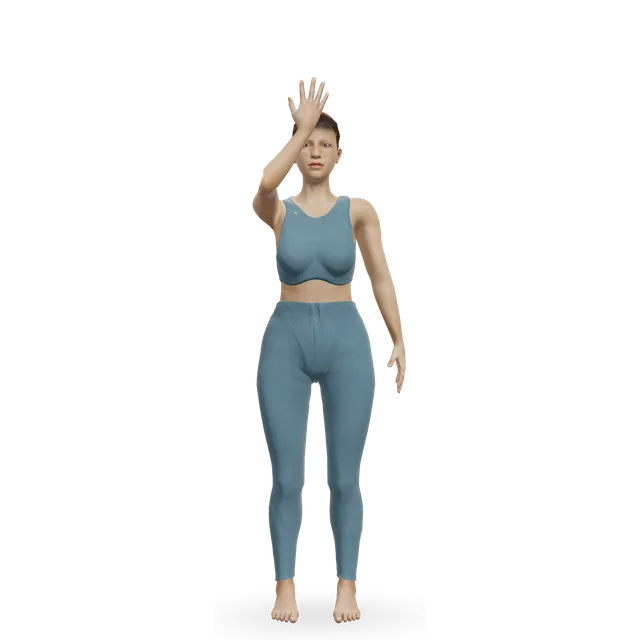
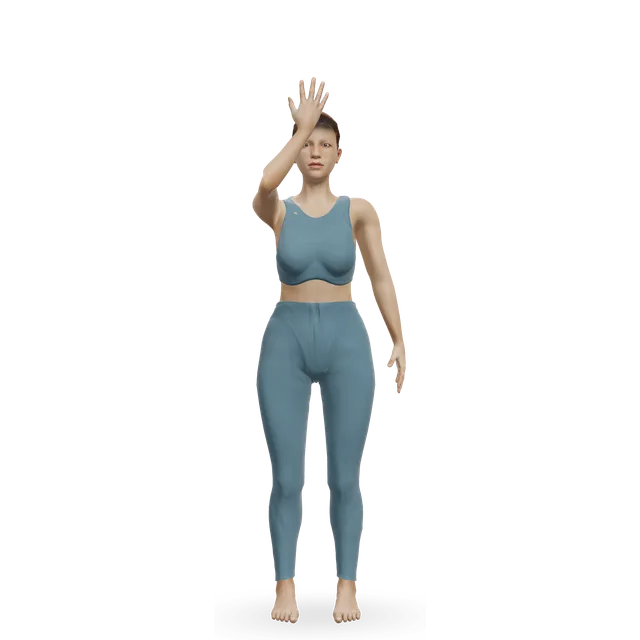
Neck CARs (controlled articular rotations) demonstrated on the 3D figure3D demoNeck CARs (controlled articular rotations)Beginner · No equipment

Separate nods, tilts and turns: 2 to 3 of each at a time, every hour or two, adding 1 or 2 every few days towards about 10 · NHS inform's pacing for neck movements; NHS Lothian's children's leaflet uses the same directions (look up and down, side to side, ear towards the shoulder, chin to chest and chin out). Use separate movements while the neck is sore, as the move page says; its full circles (3 slow circles each way, once or twice a day) are the move page's dose (editorial), for once the neck moves freely

Harder: Rabbit pose (Sasangasana)

Lying chin tuck demonstrated on the 3D figure3D demoLying chin tuckBeginner · No equipment

5 to 10 gentle holds of up to 10 s, once or twice a day · As in our neck pain guide (editorial), for older children and teenagers; it can be done lying in bed

Harder: Chin tuck

Shoulder rolls demonstrated on the 3D figure3D demoShoulder rollsBeginner · No equipment

10 to 15 slow circles each way, once or twice through · The move page's dose (editorial)

Harder: Shoulder CARs (controlled articular rotations)

Thoracic rotation demonstrated on the 3D figure3D demoThoracic rotationBeginner · No equipment

6 rotations each side, moving with the breath · The move page's dose

Easier: Side-lying open book · Harder: World's greatest stretch

Treadmill walking demonstrated on the 3D figure3D demoTreadmill walkingBeginner · Cardio machine

The walk or ride to school and normal play, building back to an average of 60 minutes of activity a day · Editorial; the 60 minutes is the NHS's guidance for children and young people, and walking outdoors counts the same

Harder: Treadmill jogging

Move on when: The head sits straight, the neck turns and nods within the pain rule, and it is no worse the next morning (adapted from NHS inform and the NHS trust leaflets). Most children need nothing more: a wry neck usually settles within about a week.

Follow along: a timer, a cue and the next move, one step at a time.
Stage 2

Build: neck and shoulder-blade strength

For older children and teenagers whose neck pain lasts more than a couple of weeks or keeps coming back: about weeks 2 to 6, 2 or 3 days a week, with gentle movement on the other days. Strength work for the neck and shoulder blades helped lasting neck pain most in adult trials; no trial has tested it in children, so the doses are our adult neck guides' and the move pages' (editorial). Keep within the pain rule.

Isometric neck press, front and back demonstrated on the 3D figure3D demoIsometric neck press, front and backBeginner · No equipment

Build to a 10-second press, 3 times in each direction, for 3 rounds, starting with light pressure · The move page's dose, from an NHS leaflet. Ease off if a press brings on a headache, as the move page says

Easier: Chin tuck · Harder: Chin tuck with head lift

Isometric neck press, sides demonstrated on the 3D figure3D demoIsometric neck press, sidesBeginner · No equipment

Build to a 10-second press, 3 times each side, for 3 rounds, starting with light pressure · The move page's dose, from the same NHS leaflet

Easier: Chin tuck · Harder: Chin tuck with head lift

Chin tuck with head lift demonstrated on the 3D figure3D demoChin tuck with head liftIntermediate · No equipment

3 to 5 holds of 5 s, building to 10 holds of 10 s · As in our neck pain guide (editorial)

Easier: Chin tuck

Band row demonstrated on the 3D figure3D demoBand rowBeginner · A band + An anchor point

3 sets of 10 to 15, stopping 2 to 3 reps short of failure · The move page's dose (editorial). Check the band and the anchor before every set, as the move page says

Harder: Supported single-arm dumbbell row

Prone Y-T-W raises demonstrated on the 3D figure3D demoProne Y-T-W raisesBeginner · No equipment

2 rounds of 5 to 8 of each shape · As in our neck pain guide (editorial). Keep the neck long and the face down, as the move page says

Easier: Wall angel · Harder: Bent-over reverse fly

Side-lying open book demonstrated on the 3D figure3D demoSide-lying open bookBeginner · No equipment

8 to 10 slow openings each side, pausing 2 s at the end · The move page's dose (editorial). A cushion under the head helps a stiff neck, as the move page says

Harder: Thoracic rotation

Move on when: Every set stays within the pain rule, the neck is no worse the next morning, and a full school day, homework and PE are comfortable (editorial).

Follow along: a timer, a cue and the next move, one step at a time.
Stage 3

Stronger, then back to full sport

From about week 2 after a wry neck, or week 6 after lasting neck pain: 2 or 3 sessions a week. Carrying, pushing and pulling strength for school bags, PE and sport, then the sport itself back in steps (the written steps below). Teenagers lifting weights need a qualified adult teaching technique; our children's exercise page explains why supervised strength training is safe at this age. Contact sport, trampolining and tumbling come back last. Younger children can play the animal moves instead.

Farmer's carry demonstrated on the 3D figure3D demoFarmer's carryIntermediate · A dumbbell + A kettlebell

3 walks of 20 to 30 m, a light weight in each hand, shoulders level and head tall · As in our neck pain guide (editorial): practice for carrying a school bag or kit bag

Harder: Suitcase carry

Knee push-up demonstrated on the 3D figure3D demoKnee push-upBeginner · No equipment

2 to 3 sets of 8 to 12, head in line with the back · Editorial

Easier: Incline push-up · Harder: Push-up

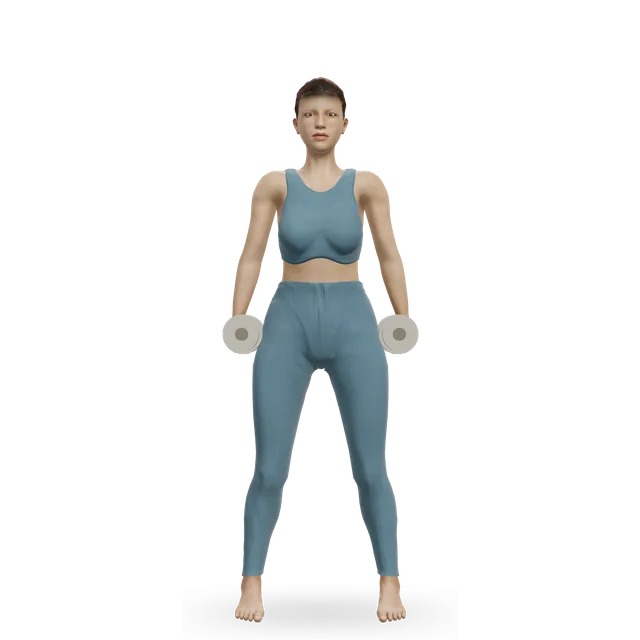
Dumbbell shrug demonstrated on the 3D figure3D demoDumbbell shrugBeginner · A dumbbell

2 to 3 sets of 8 to 12, stopping with 2 or 3 reps in reserve and pausing a second at the top · The move page's dose (editorial), for teenagers in a supervised strength session. Lighten it if it brings on headaches or arm tingling, as the move page says

Harder: Snatch shrug

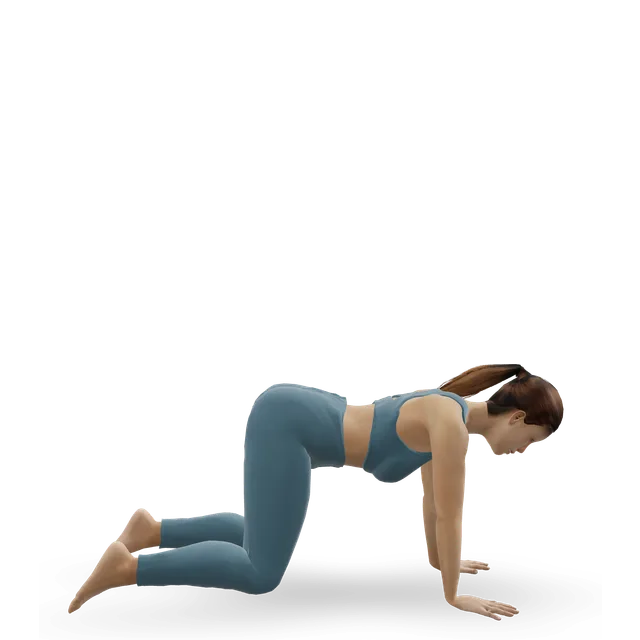
Bear crawl demonstrated on the 3D figure3D demoBear crawlIntermediate · No equipment

4 crawls of 8 to 10 m, forwards and back · The move page's dose (editorial), for younger children; it is part of our animal moves workout

Easier: Knee hover (Pilates tabletop hover) · Harder: Spider crawl (low push-up knee drive)

Crab walk demonstrated on the 3D figure3D demoCrab walkIntermediate · No equipment

4 crawls of 6 to 8 m, resting 45 s between · The move page's dose (editorial), for younger children

Easier: Crab reach · Harder: Alternate-leg bounding

Move on when: Our suggestion, as in our children's back guide: full PE, play and training stay comfortable for 2 weeks, then matches and competitions. Teenagers whose neck pain keeps coming back can keep the stage 2 moves twice a week. After a stinger, contact sport waits until the arm symptoms have completely gone. Neck pain that keeps coming back needs a GP.

Follow along: a timer, a cue and the next move, one step at a time.

What to change for now

A baby whose head tilts to one side (written steps)

Our 3D figure can't show these. Each step names its source; do the stretches only as your physiotherapist shows you.

  • 1. See a GP if your baby's head is always tilted to one side or they have difficulty turning their head (the NHS). You can mention it to your health visitor too (our suggestion).
  • 2. Do only the stretches your physiotherapist shows you, slowly and gently. They shouldn't hurt your baby; if your baby seems distressed, stop and try again later that day. East Kent's leaflet does each exercise for about 5 to 10 minutes, 3 to 5 times a day, and NHS Lothian's holds each stretch for 10 to 15 seconds, repeated through the day.
  • 3. Tummy time: set aside time every day to play with your baby on their tummy while they're awake and watched (NHS Lothian); a US physiotherapy guideline suggests 3 or more times a day.
  • 4. Encourage turning both ways: move toys and mobiles to the side your baby turns to less, set the cot and car seat so they turn that way to see you or the light, and vary the side you feed and carry them (the NHS and NHS Lothian). Your physiotherapist will tell you which side.
  • 5. Always lay your baby on their back to sleep, and don't leave them for long lying in a pram or sitting in a car seat: take them out when you arrive (the NHS).
  • 6. A flattened head often gets better in around 1 to 2 years as the head grows. Helmets and headbands aren't available on the NHS, because there isn't enough evidence that they work (the NHS).

Sources 17, 55, 19, 16

A sudden wry neck: the first days (written steps)

Each step names its source.

  • 1. Pain relief: children's ibuprofen or paracetamol at the dose for their age; Leeds suggests regular ibuprofen for the first 2 to 3 days. Ask a pharmacist before giving both, as NHS sources differ on alternating them, and don't give aspirin to children aged 15 or under (the NHS).
  • 2. Warmth: a warm compress, such as a clean cloth soaked in warm water, for no longer than 20 minutes, 2 to 3 times a day (Leeds) or every 3 to 4 hours (Alder Hey), never straight on the skin.
  • 3. Movement: gentle neck movements often, in four directions: look up and down, look side to side, ear towards the shoulder, then chin to chest and chin out (NHS Lothian), for short spells every hour (NHS inform). No collar (the NHS).
  • 4. If it started on waking, check the bed for a lumpy pillow or toys (Alder Hey).
  • 5. No sport, trampolines or bouncy castles until the neck has been pain-free for 3 to 5 days (Leeds); school and normal daily activities carry on, even at a slower pace (NHS inform).

Sources 56, 57, 8, 28, 58, 9, 10, 7, 40

School, sleep, screens and bags (written steps)

These are for comfort and general health: screens, posture, pillows and school bags haven't been shown to cause neck pain in children.

  • 1. School: keep going. Tell the PE teacher what hurts and what can still be done, and skip contact games, trampolining and tumbling for now (our suggestion, as in our children's back guide).
  • 2. Sleep: a low, firm pillow, the head the same height as the rest of the body, no sleeping on the front and no twisting the neck in bed (the NHS's advice, written for adults; no pillow has been tested in children). Protect sleep: phones outside the bedroom at bedtime is the UK Chief Medical Officers' advice, and poor sleep at 16 predicted neck pain at 18 in a Finnish cohort.
  • 3. Screens and homework: a break and a move about after a couple of hours sitting or lying with a screen (the UK Chief Medical Officers), breaking up long spells of not moving, and an average of 60 minutes of activity a day (the NHS). Changing position often matters more than a "perfect" posture, which hasn't been shown to prevent neck pain in teenagers (our reading of the evidence).
  • 4. School bags: both straps, the heaviest things close to the back, and the locker for heavy books, as our children's back guide advises for comfort. No study has followed children to test bags and neck pain (editorial).

Sources 40, 46, 54, 62, 47, 52, 53

Sport after a wry neck, a stinger or glandular fever (written steps)

Our suggestion, except where a source is named. No source gives staged rules for coming back to sport after ordinary neck pain in children.

  • 1. After a wry neck: no sport, trampolines or bouncy castles until the neck has been pain-free for 3 to 5 days (Leeds).
  • 2. After a stinger: no return to sport until the symptoms have completely gone, and never with weakness or neck pain (the American Academy of Orthopaedic Surgeons).
  • 3. With glandular fever: the NHS advises against strenuous activities, such as heavy lifting or sport, while recovering. Contact sport waits until your child has recovered and a doctor agrees, because the NHS lists a burst spleen among the problems glandular fever can sometimes cause (our suggestion).
  • 4. Then in steps: low-impact activity (walking, swimming, cycling), then the skills of the sport at an easy pace, then full training, then matches. Trampolining, tumbling, rugby scrums and tackles come back last.
  • 5. Move up a step after a session that leaves the neck no worse the next morning, and drop back a step if it flares.

Sources 8, 13, 12

Positions to swap, and why

Habit or positionWhy it mattersInstead
Keeping the neck still, or a collarThe NHS says it's better to keep your neck moving, and NHS inform doesn't recommend a collar unless a doctor prescribes one.Gentle nods, tilts and turns every hour or two.Try: Neck CARs (controlled articular rotations)
Trampolines, bouncy castles, tumbling and contact sport in the first daysLeeds' children's emergency department says wait until the neck has been pain-free for 3 to 5 days.Walking, swimming and cycling.Try: Treadmill walking
Pulling the head down into a side neck stretchThe move page says let the weight of the head do the work, especially with a sore neck, and stretching alone may not help lasting neck pain in adults.Separate nods, tilts and turns.Try: Neck CARs (controlled articular rotations)
Forcing a baby's stretches, or doing ones the physiotherapist didn't show youNHS trust leaflets say do only the exercises your physiotherapist highlights, slowly and gently, and stop if your baby is distressed.The physiotherapist's stretches, tummy time and positioning (the written steps).
A helmet or headband for a baby's flat or tilted headThey aren't available on the NHS, because there isn't enough evidence that they work.Physiotherapy, tummy time and positioning, with your baby always sleeping on their back.
Hours at a screen without movingThe UK Chief Medical Officers advise a break after a couple of hours, and the NHS asks children to break up long periods of not moving.Get up and move; a few upper-back rotations.Try: Thoracic rotation
Nagging about posture or "text neck"Teenagers with and without neck pain held their heads equally far forward, and text neck isn't a proven cause.Changing position often, and strength work such as band rows.Try: Band row
A heavy bag on one shoulderUntested for the neck, but comfort matters.Both straps, with heavy items close to the back, and farmer's carry practice.Try: Farmer's carry
Headstands, shoulderstands and forward rolls while the neck hurtsThe headstand's move page says it isn't for anyone with neck problems, and to leave out moves that put weight through the head and neck with Down syndrome unless a doctor has checked the neck.Positions that don't load the neck, such as legs up the wall.Try: Legs up the wall (Viparita Karani)
Cracking or manipulating your own neckIt isn't a recommended treatment, and new, unusual neck pain needs checking, not cracking, as our stiff neck guide says.Gentle nods, tilts and turns within comfort.Try: Neck CARs (controlled articular rotations)
Aspirin, or ibuprofen and paracetamol given in turns without adviceThe NHS says don't give aspirin to children aged 15 or under (it can cause Reye's syndrome in rare cases), and don't alternate ibuprofen and paracetamol unless a health professional tells you to.Children's ibuprofen or paracetamol at the dose for their age; ask a pharmacist.
Waiting out a stiff neck with a high temperature, drooling or a rash, or a baby who won't feedThese are warning signs.Check the warning signs and get help now.

Routines to follow

Animal moves for kids: a 15-minute active play workout

Fifteen minutes of animal moves, jumps and balance games for children, building the muscle- and bone-strengthening activity they need, with nothing to buy.

15 minBeginner16 movesA wall

Yoga for kids: a 20-minute animal adventure

Twenty minutes of animal poses, star jumps, crawls, balloon breaths and a short relaxation for children, with no headstands or shoulder stands.

20 minBeginner17 movesNo equipment

Pilates for kids: a 20-minute follow-along class with games

A 20-minute Pilates class for children: star jumps, the hundred, swimming, animal crawls and balance games, finishing with slow, calm breathing.

20 minBeginner14 movesNo equipment

Strength workout for teenagers: technique first, with jumps and landings

A 40-minute first strength workout for teenagers: a warm-up, landing and jump drills, then squats, hinges, push-ups, rows, step-ups and carries, kept light.

40 minBeginner19 movesA wall, A dumbbell

Neck and shoulder stretches

Eight gentle neck and shoulder stretches for desk stiffness, done standing or seated in ten minutes.

10 minBeginner8 movesA wall

Neck and shoulder strength routine

Deep neck holds and shoulder-blade strength in under 20 minutes: one of the best-supported kinds of exercise for a stiff, sore neck.

18 minBeginner11 movesA band, An anchor point

Yoga for neck pain: a 20-minute gentle sequence

Twenty minutes of slow breathing, small neck movements, poses that keep your head supported or level, and upper-back strength, with nothing that loads the neck.

20 minBeginner14 movesA step

Strength workout for rugby players: legs, upper body, hamstrings and neck

A 55-minute gym session for rugby: jump squats and chest throws, heavy squats, bench press, Romanian deadlifts, rows, Nordic lowers, shoulder and neck work.

55 minIntermediate15 movesA band, Medicine ball

More moves for this area

Questions people ask

Is it normal for a child to have neck pain?

Yes, especially in teenagers: in Finnish surveys, about 1 in 4 girls and 1 in 8 boys aged 14 had neck and shoulder pain at least weekly, and more by 18. Most comes from the neck's muscles and small joints after a long spell in one position, sleeping awkwardly, sport or a cold, and it settles. A child under 5 with neck pain, or pain that wakes them at night, should see a GP.

When should I worry about my child's neck pain?

Call 999 for a stiff neck with a high temperature, a rash that doesn't fade under a glass, dislike of bright lights, a fit, drooling or trouble breathing, a neck injury with severe pain or tingling, or a baby who is floppy, not feeding or hard to wake. Take your child to A&E the same day for a wry neck with a fever, unsteadiness, a headache or being sick. See a GP if a wry neck isn't better within a week or keeps coming back.

My child woke up with a stiff neck and can't turn their head. What should I do?

It's probably a wry neck from sleeping in an awkward position, the commonest cause in children, and most kids feel better within about a week, though it can take 7 to 10 days to go completely. Give children's ibuprofen or paracetamol, use a warm compress for up to 20 minutes a few times a day, encourage gentle neck movement often, and check the bed for a lumpy pillow or toys. A high temperature, drooling, pins and needles or a recent injury needs checking the same day, and a wry neck that isn't better within 7 days needs a GP.

Is a stiff neck a sign of meningitis?

It can be, alongside a high temperature, a severe headache, dislike of bright lights, a rash that doesn't fade under a glass, or drowsiness, and then it's a 999 call. On its own, in a child who is otherwise well, a stiff neck far more often comes from the muscles, after sleeping awkwardly or with a cold, and bacterial meningitis is rare. Babies with meningitis often don't have a stiff neck, so a floppy, hard-to-wake baby needs 999 regardless.

Can a sore throat or swollen glands cause neck pain?

Yes: swollen glands with a cold, tonsillitis or an ear or throat infection can make the neck sore and stiff, and some children hold their head tilted until they settle, usually within 1 to 2 weeks. See a GP if the glands keep growing, haven't gone down after a week, feel hard, or come with night sweats. Drooling, trouble swallowing or breathing, or a very sore throat that is quickly getting worse is a 999 call.

My baby's head always tilts to one side. What is it?

Usually congenital muscular torticollis, a tight muscle on the side of the neck, which is common and usually painless. The NHS says see a GP; a physiotherapist will show you gentle stretches and positions, and starting early shortens treatment a lot. A tilt that starts at 6 months or older, comes on suddenly, or comes with wobbly eyes, a squint or floppiness needs a doctor's check too.

Can phones, gaming or school bags cause neck pain in kids?

They haven't been shown to. Children who use screens more report a little more neck pain, but studies that followed children over time found no rise in new spinal pain, teenagers with neck pain don't hold their heads further forward than others, and there is only one snapshot study on bags and the neck. Breaks every couple of hours, plenty of sleep and an hour of activity a day are sensible anyway.

What can I give my child for neck pain?

Children's ibuprofen (most children over 3 months) or paracetamol (most over 2 months) at the dose for their age, and warmth wrapped in a cloth. Don't give aspirin to anyone aged 15 or under, and ask a pharmacist before giving ibuprofen and paracetamol together or in turns. If the pain keeps needing painkillers, see a GP.

Does my child need an X-ray or a scan?

Usually not: NHS children's emergency departments say tests are extremely rare for a wry neck. After a neck injury, doctors use NICE's checklist, which looks at how dangerous the fall or crash was, tingling in the arms or legs and whether the neck can turn, to decide on an X-ray, a CT scan or an MRI scan. Blood tests or scans are for specific worries, such as a long fever or signs of arthritis.

What exercises help a teenager's neck pain?

Gentle neck movements little and often first, then neck presses, head lifts, rows and shoulder-blade raises if the pain lasts or keeps coming back, as in the plan above. No trial has tested a programme in children, but in adults, strength training for the neck and shoulder blades helped lasting neck pain most. Stretching alone may not help.

When can my child go back to sport, trampolining or rugby?

After a wry neck, wait until the neck has been pain-free for 3 to 5 days before sport, trampolines or bouncy castles. After a stinger, not until the symptoms have completely gone, and never with weakness or neck pain. Build back in steps: low-impact activity, then skills, then full training, then matches.

I'm a teenager and my neck hurts. What should I do?

Keep moving your neck gently and keep going to school: most neck pain at your age comes from the muscles, often after sleeping awkwardly, long spells on a phone or at a desk, or sport, and gets better within days to weeks. Take breaks from screens, protect your sleep, and try the plan above if it lasts. Tell someone and get help if you have a high temperature with a stiff neck, a rash, tingling or weakness in your arms, or pain that wakes you at night.

Related exercise guides

Other pain guides

Sources

  1. Hakala 2002 · Back, neck and shoulder pain in 62,677 Finnish adolescents (national surveys, BMJ)
  2. Ståhl 2013 · Neck pain in Finnish twins aged 11 to 12 (twin study, Eur J Pain)
  3. Ståhl 2004 · Neck pain over 4 years in 366 Finnish children who started pain-free (cohort, Pain)
  4. Briggs 2009 · Neck and shoulder pain, activity and screen time in 643 Australian 14 year olds (cohort, BMC Musculoskelet Disord)
  5. Dyhr 2026 · Spinal pain in children and adolescents in four European birth cohorts (cohort study, Eur J Pediatr)
  6. Tan 2018 · Children's muscle and joint problems in English general practice (records study, BMC Musculoskelet Disord)
  7. NHS inform · Neck problems
  8. Leeds Teaching Hospitals NHS Trust · Torticollis: information for parents and carers (children's emergency department leaflet, 2025)
  9. Alder Hey Children's NHS Foundation Trust · Torticollis advice leaflet for parents and families (emergency department, 2024)
  10. NHS Lothian · Acquired torticollis: information for parents and carers (2024)
  11. NHS · Swollen glands (past its review date: reviewed September 2023, review due September 2026)
  12. NHS · Glandular fever
  13. American Academy of Orthopaedic Surgeons, OrthoInfo · Burners and stingers
  14. Leonard 2024 · Which injured children need neck imaging: a rule tested in 22,430 children (prospective study, Lancet Child Adolesc Health)
  15. Paediatric Musculoskeletal Matters · Neck pain (teaching resource for doctors, Newcastle University)
  16. Kaplan 2018 · Physiotherapy for congenital muscular torticollis (clinical practice guideline, Pediatr Phys Ther)
  17. NHS · Flat head syndrome (plagiocephaly and brachycephaly)
  18. Royal Berkshire NHS Foundation Trust · Congenital muscular torticollis (children's physiotherapy leaflet, 2023, past its review date of December 2025)
  19. NHS Lothian, Royal Hospital for Children and Young People · Torticollis (left side): information for parents (physiotherapy leaflet, 2021, past its review date of February 2024)
  20. Shemer 2026 · Serious causes of a twisted neck in 352 children in an emergency department (cohort, Paediatr Child Health)
  21. Heck 2026 · Grisel's syndrome, a slipped joint at the top of the neck after throat infections or surgery (case series and systematic review, Int J Pediatr Otorhinolaryngol)
  22. Novis 2014 · Deep neck infections in US children, 2000 to 2009 (population study, Int J Pediatr Otorhinolaryngol)
  23. Craig 2003 · An abscess behind the throat in 64 children (case series, Pediatrics)
  24. NHS · Kawasaki disease
  25. Odingo 2023 · How common Kawasaki disease is in England, 2006 to 2021 (hospital admissions study, Rheumatology)
  26. Subbarao 2023 · Bacterial meningitis in England, 2012 to 2019 (national surveillance study, Lancet Reg Health Eur)
  27. NHS · Meningitis
  28. NHS · High temperature (fever) in children
  29. Curtis 2010 · Signs that suggest meningitis in children (systematic review, Pediatrics)
  30. NICE NG143 · Fever in under 5s: assessment and initial management (2019, updated 2021)
  31. NICE NG240 · Meningitis (bacterial) and meningococcal disease: recognition, diagnosis and management (2024)
  32. Arthritis UK · Juvenile idiopathic arthritis (JIA): symptoms, causes and treatment
  33. Sarısoy 2026 · Rarely affected joints, including the neck, in 155 children with juvenile arthritis (cohort, Eur J Pediatr)
  34. Quesada-Masachs 2025 · Neck arthritis as the first sign of juvenile arthritis in 9 children (case series, Pediatr Rheumatol)
  35. Down Syndrome Medical Interest Group 2012 · Neck (cervical spine) instability: UK medical surveillance guidance
  36. Royal Berkshire NHS Foundation Trust · Acute torticollis (wry neck): emergency department leaflet (2024, past its review date of June 2026)
  37. NICE NG232 · Head injury: assessment and early management (2023)
  38. Ståhl 2008 · The course of neck pain in 1,756 Finnish schoolchildren over 4 years (cohort, Pain)
  39. Siivola 2004 · Neck and shoulder pain from the teens into the twenties in 394 Finnish students (cohort, Spine)
  40. NHS · Neck pain (past its review date: reviewed April 2023, review due April 2026)
  41. Gross 2015 · Exercises for mechanical neck disorders (Cochrane review)
  42. Andias 2022 · Exercise, with or without pain education, for 127 high school students with lasting neck pain (RCT, Phys Ther)
  43. Figueiredo 2024 · How well 17 trials describe physical treatments for children's muscle and joint pain (meta-research study, BMC Musculoskelet Disord)
  44. Montgomery 2025 · Does sitting and screen time cause spinal pain in children and adolescents? (systematic review and meta-analysis, BJSM)
  45. Stiglic 2019 · Screen time and the health of children and adolescents (review of reviews, BMJ Open)
  46. UK Chief Medical Officers 2019 · Commentary on screen-based activities and children and young people's mental health and psychosocial wellbeing (Department of Health and Social Care)
  47. Mahmoud 2019 · Forward head posture and neck pain: 15 studies (systematic review and meta-analysis, Curr Rev Musculoskelet Med)
  48. Damasceno 2018 · Texting posture and neck pain in 150 young adults (cross-sectional study, Eur Spine J)
  49. Resende 2025 · Is text neck a cause of neck pain? 21 studies against the standard tests of cause (scoping review, J Bodyw Mov Ther)
  50. Correia 2025 · Poor sleep, not neck posture on a phone, predicted neck pain in 396 adults (cohort, Braz J Phys Ther)
  51. Rossi 2016 · Back, neck and shoulder pain in Finnish adolescents in and out of sports clubs (cross-sectional study, BMC Musculoskelet Disord)
  52. Yamato 2018 · Do schoolbags cause back pain in children and adolescents? (systematic review, BJSM)
  53. Haselgrove 2008 · School bags, carrying time and spinal pain in 1,202 Australian teenagers (cross-sectional study, Aust J Physiother)
  54. Auvinen 2010 · Sleep at 16 and neck, shoulder and low back pain at 18 (birth cohort, Eur Spine J)
  55. East Kent Hospitals University NHS Foundation Trust · Activities for babies with torticollis (paediatric orthopaedic leaflet, reviewed 2024)
  56. NHS · Ibuprofen for children
  57. NHS · Paracetamol for children
  58. NHS · Aspirin for pain relief
  59. Dissing 2018 · Adding manipulation to usual care for back or neck pain in 238 Danish children (RCT, BMJ Open)
  60. Mıhçıoğlu 2026 · Instrument-assisted vs classical massage for 52 children with lasting neck pain (RCT, J Back Musculoskelet Rehabil)
  61. NHS inform · Exercises for neck problems
  62. NHS · Physical activity guidelines for children and young people
  63. NHS · Sepsis
  64. NHS inform · Neck injury
  65. NHS · Sore throat
  66. NHS · Tonsillitis, including quinsy
  67. Paediatric Musculoskeletal Matters · Red flags: back and neck pain (teaching resource for doctors, Newcastle University)

Exercise education, not a diagnosis or treatment plan. It is written from the guidelines and studies listed above; review by a clinician is pending. If your pain follows an injury, is severe, is getting worse, or comes with any warning sign listed on this page, get it assessed. Health disclaimer.