Pain guide · Shoulder pain

Shoulder pain in children and teens: falls, sport, a shoulder that slips, and the signs to check

Shoulder pain is uncommon in young children and common in teenagers, and in kids it's usually nothing serious: most comes from a fall or a knock, a strained muscle, or the load of throwing, swimming or other overhead sport, and it settles. A broken collarbone, one of the bones children break most often, usually heals well in a sling within weeks. Teenagers who throw or swim can strain a growth plate or overload the shoulder, and a shoulder that has dislocated once often slips again. Babies are different: a baby who moves one arm less than the other needs a doctor's check.

A few signs matter more, so this guide starts with them. Go to accident and emergency (A&E) or call 999 if, after a fall, the shoulder or collarbone looks out of place, the arm can't move, or it's numb or a changed colour. Get help the same day, through an urgent appointment with a general practitioner (GP) or the National Health Service's 111 line (NHS 111), for a hot, swollen shoulder or a high temperature, or a young child who stops using an arm. This guide, for parents and for teenagers themselves, sorts the causes by age, covers slings, school, throwing and swimming limits, and gives a three-stage plan with 3D demos back to play and sport.

When to get help first

Exercise is for pain that has been checked or is clearly mild and settling.

Get urgent medical help if

  • Call 999 or go to A&E: after a fall or injury, your shoulder looks out of place or has changed shape, you cannot move your arm, or your shoulder is painful, bruised or swollen. Do not drive yourself, and do not try to put it back in yourself.
  • Go to A&E, or call 999 if you can't get there: after an injury, your shoulder has changed shape, has swollen very quickly or has bone sticking out of the skin; you're bleeding heavily; or you have difficulty breathing, chest pain or are coughing up blood.
  • Go to A&E or call 999 if you've injured your arm and it is numb, tingling or has pins and needles; a bone is sticking out or a bad cut is bleeding heavily; or the arm or elbow has changed colour or shape, or is at an odd angle. Don't drive yourself.
  • Call 999 or go to A&E if you think your child could have sepsis. For a baby or child under 5: breathing very fast or having difficulty breathing; blue, grey, pale or blotchy skin, lips or tongue; a rash that does not fade when you press it; a very high temperature (38C or more under 3 months, 39C or more at 3 to 6 months) or a very low one (under 36C), or feeling cold to the touch or shivery; a weak, high-pitched or continuous cry; not responding like they normally do, not feeding, difficult to wake or more sleepy than usual; or no pee for the last 12 hours. For a child aged 5 or over: breathing very fast; confused, slurred speech or not making sense; blue, pale or blotchy skin; a very high or very low temperature, feeling hot or cold to the touch, or shivery; or a rash that does not fade when you press it. Call too for any other symptoms you're worried might be sepsis.
  • Call 999 or go to A&E if a child has an injury that wasn't accidental, for example if someone else has hurt them on purpose.
  • Call 999: sudden chest pain or discomfort, or chest pain with feeling sweaty, sick, light-headed or breathless. A collapsed lung (pneumothorax) causes a sudden, sharp, stabbing pain in the chest or shoulder that gets worse when you breathe in, with breathlessness; it is more common in people aged 15 to 34, people who smoke, and tall, thin people.
  • Call 999 or go to A&E: if you are or could be pregnant, shoulder tip pain (where the shoulder ends and the arm begins) with sudden severe tummy pain, dizziness or fainting. It can mean bleeding from an ectopic pregnancy.
  • Call 999 or go to A&E if your child has severe tummy pain, or pain behind the left ribs with dizziness or a fast heartbeat after a blow to the tummy or ribs, for example in sport or a bike accident. Rarely, pain from the tummy is felt in the tip of the shoulder.
  • Numbness, tingling, burning or weakness in both arms, in more than one limb, or in the legs: keep the player still and call 999. It can be an injury to the spinal cord, even if it passes in minutes.
  • Same day: sudden severe pain at the top of the arm during a throw or a fall, and the arm can't be lifted or is badly swollen or bruised. A weakened growth plate can break, and it needs an X-ray.
  • Same day (GP or NHS 111): sudden or very bad shoulder pain; you cannot move your arm; the arm or shoulder is badly swollen or has changed shape; pins and needles that do not go away; no feeling in the arm; the arm is hot or cold to the touch; pain that started after an injury such as a fall; or severe pain in both shoulders.
  • Ask for an urgent GP appointment or get help from NHS 111 for severe joint pain, usually in just 1 joint, that started suddenly; swelling around a joint; skin around a joint that has changed colour; difficulty moving a joint; or pain in a joint with feeling generally unwell and a high temperature, or feeling hot, cold or shivery: it could be a joint infection.
  • Pain, swelling, redness and warmth over a bone, or a very high temperature with feeling generally unwell: ask for an urgent GP appointment or contact NHS 111. It could be a bone infection. Take your child to a GP if they don't want to use an arm or leg and seem irritable: young children don't always get a high temperature with a bone infection.
  • A baby or young child who suddenly stops using an arm, or cries when it's moved: get them seen the same day. If the arm was pulled or they had a fall, take them to an urgent treatment centre or A&E; with no clear injury, ask for an urgent GP appointment or contact NHS 111. It can be a pulled elbow, a hidden break or, rarely, an infection, and young children don't always get a high temperature (our suggestion, from the NHS bone infection page and a children's hospital series).
  • Ask for an urgent GP appointment or call 111 if your child is bleeding or bruising easily or for no reason.

See a doctor or physiotherapist if

  • See a GP for bone pain or tenderness, particularly if it's worse at night, a lump or swelling, or looking more pale than usual, getting ill a lot or swollen glands. NICE (the National Institute for Health and Care Excellence) asks GPs to arrange a very urgent blood test for persistent or unexplained bone pain in a child, and to consider a very urgent X-ray for unexplained bone swelling or pain.
  • Pain at the top or outside of the upper arm when throwing, or throws that are slower or less accurate: stop throwing and see a GP or a sports physiotherapist. X-rays of both shoulders may be needed, and stopping straight away gives the best early results.
  • Pain that is constant, wakes the child at night or doesn't ease with rest, an unexplained lump or swelling, a fever or weight loss: see a GP. These aren't typical of a throwing injury.
  • A child or teenager who swims with shoulder pain that lasts more than 2 weeks, keeps coming back or stops them training: get it checked by a GP or sports physiotherapist (our suggestion).
  • A child who isn't moving the arm well 4 weeks after the injury, still has pain at the break after 6 weeks, or has tingling or an odd feeling in the arm or hand that doesn't go away: contact the fracture clinic or emergency department that saw them.
  • Your shoulder has partly or fully come out of joint, or you worry it might.
  • A shoulder that slips, clunks or gives a dead arm without an injury: see a GP or physiotherapist; physiotherapy is the first treatment. Ask about a specialist if it keeps needing to be put back in A&E, stays out, or is making your child miss more than 1 day in 5 of school.
  • Pain that is getting worse or has not improved after 2 weeks of looking after it yourself, or it is very hard to move your arm. In many areas you can refer yourself to physiotherapy.
  • Pins and needles or a cold arm alongside neck pain, or a new loss of strength or feeling in the arm that you cannot explain (a possible nerve problem).
  • Arm symptoms or weakness that last more than a few days: see a sports doctor or physiotherapist for a full examination. Symptoms beyond 2 to 3 weeks need further tests, such as nerve tests and an MRI (magnetic resonance imaging) scan.
  • A newborn baby who moves one arm less than the other, or cries when it's moved: tell your midwife, health visitor or GP. It is usually a collarbone broken at birth, which heals well, or a stretched nerve (Erb's palsy), from which about 85 in 100 babies recover fully.
  • Painful, swollen joints that last for longer than 6 weeks: see a GP. It can be a type of juvenile arthritis, which often brings stiffness that is worse in the morning or after rest.
  • See a GP if you think you or your child have joint hypermobility syndrome: for example, you keep getting pain and stiffness in your joints, sprains and strains, or joints that pop out, or you often feel tired even after rest.

Where does it hurt?

Location narrows the likely causes; it does not diagnose.

An ache at the top or front of the shoulder after sport, swimming or a busy day, in a child who is otherwise well

Usually a strained or overloaded shoulder, which settles. The plan below is for this.

Along the collarbone after a fall onto the shoulder, from a bike, in sport or at play

Often a broken collarbone, one of the bones children break most often. It needs an X-ray, and it usually heals well in a sling.

Read: Broken collarbone →
After a fall, the shoulder looks out of place or the arm can't move

Possibly a dislocation or a break: go to A&E (the warning signs), and don't try to put it back. Our shoulder dislocation guide covers recovery.

Read: Shoulder dislocation and instability →
The top or outside of the upper arm when throwing, in a young pitcher, bowler or tennis player

Possibly Little League shoulder, a stress injury of the growth plate: stop throwing and see a GP or sports physiotherapist.

Read: Little League shoulder →
Shoulder pain in a young swimmer, worse as training builds

Usually an overloaded shoulder after a jump in training. Our swimming guide covers the pool.

Read: Shoulder pain when swimming →
A shoulder that slips, clunks or gives a dead arm, often in a very flexible teenager

Shoulder instability, which physiotherapy treats first. Our hypermobility exercise page covers very flexible joints.

Read: Shoulder dislocation and instability →
A burning, electric or dead arm straight after a tackle

Usually a stinger from the neck, which often passes in seconds to minutes. No sport until it has completely gone.

Read: Stingers and burners →
Pain from the neck, or with pins and needles down the arm

Our children's neck pain guide covers it.

Read: Neck pain in children →
Pain at the outer end of the collarbone, or along it with no fall

Our collarbone pain guide covers the small joint at the end of the collarbone and the other causes.

Read: Collarbone pain →
Around or under the shoulder blade, or with back pain

Our children's back pain guide covers the back, school bags and sport.

Read: Back pain in children →
Shoulder tip pain with tummy pain, or chest or shoulder pain that is worse breathing in

Rarely, the pain comes from the tummy or the chest: see the warning signs.

A newborn baby who moves one arm less than the other

Usually a collarbone broken at birth or a stretched nerve (Erb's palsy), and both usually do well: tell your midwife, health visitor or GP.

A baby or young child who suddenly stops using an arm

Possibly a pulled elbow, which can seem to be in the shoulder; sometimes a hidden break, and rarely an infection. Get them seen the same day (the warning signs); our children's elbow guide covers a pulled elbow.

Read: Elbow pain in children →
A hot, swollen shoulder, or bone pain with a fever

Rarely, a joint or bone infection: get help the same day (the warning signs).

Bone pain at night, a lump, or a break after a minor fall

Not typical of sport or strains: see a GP. Bone tumours are rare.

Several swollen, stiff joints, worse in the morning

Rarely, juvenile arthritis: see a GP.

Wrist or elbow pain too

Our children's wrist and elbow guides cover them.

Read: Wrist pain in children →

Understand it

Uncommon in young children, common in teenagersStrong evidence

Few children see a doctor for shoulder pain, especially when they're young. In 12 English general practices, shoulder problems were the least common of 12 body areas that children aged 3 to 17 consulted for: 13 consultations per 10,000 children a year, against about 100 each for the foot, the knee and the back. In boys the rate rose from none at 3 to 5 to 13 per 10,000 at 10 to 13. Most broken bones are seen in A&E rather than general practice, so these figures undercount injuries.

By the teens it is common. In 2,953 Danish 12 to 19 year olds, 13.3% had shoulder pain when asked, third after the knee and the back, and over a quarter of those had it almost every day. In a UK study of 2,901 young people, 9.5% had at least moderately troublesome shoulder pain at nearly 18, second only to the lower back. Figures vary widely with how pain is counted, from 6% to 63% across studies of 10 to 19 year olds, and some "shoulder" pain may really be the neck or upper back. In children up to about 12, wrist, hand and finger complaints outnumber shoulder ones, and most arm complaints at that age follow an injury.

Sources 1, 2, 3, 4

Overhead sport and swimming raise itStrong evidence

Shoulder pain is common in young athletes who throw, serve or swim. Surveys found it in 43.5% of 310 Brazilian athletes aged 10 to 19, and shoulder overuse injuries in 31.3% of 434 young athletes in Singapore, more often in older teenagers. Over a season, 23% of 471 Swedish elite handball players aged 15 to 18 had shoulder problems that cut their training or performance, more girls than boys, and half of 476 US pitchers aged 9 to 14 had elbow or shoulder pain during one season.

Swimmers report it most. Across 12 studies of 1,460 competitive swimmers, 91.3% of 15 to 17 year olds had had shoulder pain, and they trained the most, about 17 hours a week. About 1 in 5 female competitive swimmers had shoulder pain with disability, whether aged 8 to 11, 12 to 14 or of high school age. In 80 young elite swimmers aged 13 to 25, 91% had shoulder pain, and scans showed an overloaded tendon at the top of the shoulder in 69% of those scanned, linked to how much they swam. Most teenage club swimmers thought mild to moderate shoulder pain was normal, and 73% used painkillers to keep swimming.

These are links, not proven causes: being an older teenager, training more, specialising in one sport (1.81 times the risk of an overuse injury in highly specialised young athletes, pooling studies), throwing with arm pain or when tired, and very flexible joints, which went with 1.68 times the odds of troublesome shoulder pain at nearly 18 in the UK study.

Sources 5, 6, 7, 8, 9, 10, 11, 12, 13, 14, 3

The usual causes change with ageEmerging evidence

Babies: a collarbone broken at birth affected 0.23% of 1,224,709 Swedish babies born at full term between 2010 and 2022, and a stretched nerve in the neck and shoulder (a brachial plexus birth injury, or Erb's palsy) 0.13%, both becoming less common over that time. Most collarbones broken at birth heal without long-term problems, and about 85 in 100 babies with Erb's palsy recover fully, mild cases within 1 to 8 weeks, an NHS trust leaflet says.

Toddlers and young children: falls cause most broken bones, most often from below bed height (under 1 metre). A young child who won't use an arm after a pull on the hand may have a pulled elbow, which our children's elbow guide covers. Rarely, a young child stops using an arm because of a bone or joint infection: bone infection affects about 13 in 100,000 children a year in Norway, about 3 times as often under 3, and the shoulder is an uncommon site.

School-age children: a broken collarbone is one of the commonest breaks, 11% of all fractures in Swedish 0 to 19 year olds, second only to the wrist end of the forearm (26%). Breaks at the top of the arm bone are about 2% to 3%, and the growth plate there makes most of the bone's growth, so these breaks remodel strongly.

Teenagers: sport takes over. Little League shoulder, a stress injury of the growth plate at the top of the arm bone, mostly affects young pitchers around 12 to 13; swimmers and other overhead athletes overload the rotator cuff, the muscles that hold and turn the shoulder; and a shoulder can dislocate in a fall or a tackle (2.5 in 100,000 children aged 14 and under a year in Edinburgh, average age 12, mostly boys). A shoulder that slips without an injury, mostly in people under 25 and often with very flexible joints, is a different problem with a different treatment.

Sources 15, 16, 17, 18, 19, 20, 21, 22, 23, 24, 25

A dislocated shoulder often comes out again in teenagers, though figures varyMixed evidence

How often a shoulder dislocates again after the first time depends on age, and studies give different figures. Pooling 6 retrospective studies of mixed quality in children aged 18 and under, 73% dislocated again: 93% of those aged 14 to 18, against 40% of those aged 13 and under. In 41 children aged 14 and under seen in Edinburgh over 11 years, 18 (43.9%) dislocated again, a median of 14.7 months later, more often once their growth plates had closed (12 of 17, against 6 of 24 whose growth plates were still open), and 1 in 5 had an operation to stabilise the shoulder.

The UK care pathway from the British Elbow and Shoulder Society and the British Orthopaedic Association gives estimated chances from a modelled table: 86% for a 15 year old boy and 54% for a 15 year old girl within 2 years of a first dislocation, and it says almost 90% of repeat dislocations happen within 2 years. So a teenager's shoulder may well come out again, especially an older teenage boy's. Physiotherapy, then a specialist's view if it keeps happening, is what matters, and the NHS says surgery is sometimes needed to reduce the risk.

Sources 26, 24, 27, 28

Pain from somewhere else: uncommon, with clear cluesEmerging evidence

A burning, electric or dead arm straight after a tackle or a fall is usually a stinger, a stretched or pinched nerve in the neck, which often lasts seconds to minutes. A trapped nerve in the neck causing arm pain and pins and needles is uncommon in teenagers: in a US population study, the average age was about 48.

Rarely, pain is felt in the shoulder from the chest or the tummy. A collapsed lung (pneumothorax) brings a sudden, sharp, stabbing chest or shoulder pain that is worse breathing in, with breathlessness; fewer than 1 in 2,000 people aged 15 and over go to hospital with one each year, and it is more common at 15 to 34, in people who smoke and in tall, thin people. In a teenage girl who could be pregnant, shoulder tip pain with sudden tummy pain or fainting can mean bleeding from an ectopic pregnancy, the only shoulder tip pain the NHS describes. Severe tummy pain, or pain behind the left ribs after a blow, needs 999 or A&E. The NHS pneumonia and spleen pages don't mention shoulder pain, and pneumonia showing as tummy pain in children appears only in case reports, so these links are rare.

Sources 29, 30, 31, 32, 33, 34, 35, 36

Infection, arthritis and bone tumours: rare, and the signs that matterStrong evidence

Bone and joint infections are rare, and the shoulder is an uncommon site. In 22 children with an infected shoulder joint, using the arm less was the commonest sign (59%), and the first X-rays were often normal; a small series found it from 1 month to 15 years old. The NHS says take a child to a GP if they don't want to use an arm or leg and seem irritable, because young children don't always get a high temperature with a bone infection.

Juvenile arthritis affects at least 10,000 under 16s in the UK, more often girls, often starting between 2 and 10, with swollen, stiff joints that are worse in the morning or after rest; Arthritis UK's list of joints starts with the hands, wrists and elbows.

Bone tumours are rare: about 35 children under 15 in the UK develop osteosarcoma each year, most often around the knee and shoulder, and about 30 develop Ewing sarcoma. The pain comes and goes at first, then becomes constant and is often worse at night, sometimes with swelling, or a break after a minor fall. A harmless bone cyst, mostly found in children and almost 90% in the top of the arm or thigh bone, is usually painless until it breaks, and most go by the end of growth. Leukaemia can start with limb pain (43% of children at diagnosis, in a review of 33 studies), often alongside looking pale, tiredness, fevers or bruising easily. The National Institute for Health and Care Excellence (NICE) asks GPs to arrange a very urgent blood test for persistent or unexplained bone pain in a child, and to consider a very urgent X-ray.

Growing pains are leg pains in 3 to 12 year olds, in both legs, in the evening or at night; the NHS doesn't describe them in the arms, so shoulder pain shouldn't be put down to growing pains.

Sources 19, 20, 37, 38, 39, 40, 41, 42, 43, 44, 45, 46, 47

When a scan or test helpsStrong evidence

Usually not at all: ordinary shoulder pain without an injury or warning signs is recognised from the story and an examination, and NHS inform says new shoulder pain often settles within 6 weeks (advice written for adults).

After a fall, an X-ray checks for a broken collarbone or upper arm, and usually a dislocation; the NHS says a broken collarbone needs to be treated in hospital. A young thrower's growth plate is checked with X-rays of both shoulders, used in 20 of 23 studies, but a widened growth plate also shows in throwers without pain, so the X-ray is read alongside the symptoms. A magnetic resonance imaging (MRI) scan helps if a shoulder keeps dislocating; for a shoulder that slips without an injury, the UK pathway says scans aren't needed in primary care, as X-rays are often unhelpful.

A suspected infection is checked in hospital with blood tests and an X-ray, then an MRI scan, ideally within 48 hours, and an infected joint is washed out, ideally within 24 hours; the first X-ray was normal in 12 of 22 children with an infected shoulder. Unexplained bone pain or swelling needs a very urgent X-ray, NICE says.

Sources 48, 49, 50, 28, 23, 51, 25, 52, 20, 46

How it usually goesEmerging evidence

A broken collarbone: children often recover in 3 to 4 weeks, the NHS says. Children's leaflets expect good movement by 2 to 4 weeks and usual sport at about 6 weeks, with a small risk of injury for up to 12 weeks; the bump over the break usually goes within a year in young children, while over 10 some thickening may last. In teenagers with completely displaced breaks, the bone failed to join in 0.4% and broke again in 2.6% over 2 years. A break at the top of the arm bone remodels strongly as children grow, and treatment without surgery rarely leaves lasting problems.

Little League shoulder: symptoms settled at about 2.6 months, and children were back competing at about 3 to 4 months in US and Japanese series; pain came back in 7% to 25%. A dislocation takes 6 to 12 weeks to recover, and up to 16 weeks before some sports, the NHS says, and a teenager's shoulder may come out again. A shoulder that slips without an injury usually improves with physiotherapy, though it can take up to 6 months.

Most babies with Erb's palsy recover fully, a bone infection treated within 3 to 5 days often clears up completely, and harmless bone cysts mostly go by the end of growth. No one can promise a timescale.

Sources 49, 53, 54, 55, 21, 22, 56, 23, 28, 25, 16, 38, 43
What helps, and how strong the evidence is

Keep the shoulder moving; slings are for breaks and dislocationsStrong evidence

The NHS says do not completely stop using a painful shoulder, because it can stop it getting better, and don't make up strenuous exercises or use heavy gym equipment; NHS inform suggests moving it little and often through the day. This is consistent health-service advice, written for adults; no trial in children has tested it.

Slings are for injuries. After a broken collarbone, NHS children's leaflets use a sling for 2 to 4 weeks, off to wash and dress and not needed at night, and say not to worry if a child won't keep it on, because this won't affect healing. After a dislocation in a child, a collar and cuff sling is used for 2 to 4 weeks. Ice or warmth wrapped in a towel can ease pain: the NHS suggests up to 20 minutes, a few times a day.

Sources 57, 58, 53, 54, 51

Exercise therapy: untested in children, so the plan borrowsEmerging evidence

No trial has tested exercise as a treatment for shoulder pain in children or teenagers. In adults with rotator cuff pain, a progressive exercise programme and one good advice session with a home programme both helped, with no clear difference between them, in a UK trial of 708 people, and specific strengthening reduced the need for surgery in 102 people with shoulder impingement. This is borrowed evidence, so the plan below uses NHS inform's adult shoulder exercises and pacing and the moves of our Little League shoulder guide.

For a shoulder that slips without an injury, physiotherapy is the first treatment, and most people respond, though it can take up to 6 months, the UK pathway says. In 41 people with a shoulder loose in several directions, one structured exercise programme beat another by 12.6 points on a shoulder instability score at 24 weeks (a trial not only of teenagers). For very flexible joints, the NHS says strength and fitness are the main treatment.

Sources 59, 60, 58, 25, 61, 62

Prevention for young overhead athletes: one good trialEmerging evidence

In 627 Swedish elite handball players aged 15 to 19, a shoulder warm-up done 3 times a week (the Shoulder Control programme: 5 exercises with 4 levels each, a partner exercise and a gradual build-up of throwing after the off-season) cut shoulder injuries by 56%, about 1 injury prevented for every 9 players who did it, even though players averaged only about 1.3 sessions a week. A similar programme lowered the share of mostly adult elite players with shoulder problems (17% against 23%), while a small trial in 106 junior girls found no effect. So one good trial in teenagers supports a shoulder warm-up for young overhead athletes; it is prevention, not treatment.

Sources 63, 64, 65

Throwing: stop when it hurts, and keep within the limits for ageEmerging evidence

In 87 Japanese players with Little League shoulder, a longer delay before stopping throwing went with poorer results at 2 months. In 754 US pitchers aged 9 to 18, those who often pitched with arm pain had 7.5 times the odds of a pitching injury, and pitching on consecutive days, for two teams at once or in several games a day went with more arm pain. In 476 pitchers aged 9 to 14, more pitches per game and per season went with more pain, and throwing the curveball with 52% more shoulder pain; injured teenage pitchers had pitched more, and more often with pain and tiredness. Specialising early in one sport went with more overuse injuries.

These are links from observational studies, not trial results, and they are why sporting bodies set limits by age: Pitch Smart's pitch counts and rest days in the US, the British Baseball Federation's youth pitch caps, and the England and Wales Cricket Board's (ECB) limits on fast bowlers' spells and overs. The written steps below give the numbers.

Sources 56, 14, 8, 66, 13, 67, 68, 69

Swimming: avoid sudden jumps in training, and pain isn't normalEmerging evidence

In 201 pain-free young swimmers (average age 13.9) followed over 2 seasons, a sudden rise in training load (4.3 times the odds) and weaker endurance in the muscles at the back of the shoulder predicted shoulder pain that interfered with training, and a review advises young swimmers to avoid a sudden, large increase in swimming volume. After finding that 73% of teenage club swimmers used painkillers to keep swimming, researchers suggested teaching swimmers, coaches and parents that shoulder pain shouldn't be put up with. Our swimming guide covers paddles, kick sets and the stroke.

Sources 70, 9, 12

A broken collarbone: a sling, and rarely surgeryEmerging evidence

Most children's broken collarbones heal in a sling, and children's leaflets keep trampolines, bikes, scooters, physical education (PE) and contact sport off for about 6 weeks (4 weeks at 3 or under), with swimming once it's comfortable. Surgery is rarely needed, the NHS says.

In 416 US teenagers with completely displaced breaks, who weren't randomly allocated, surgery gave no better function at 2 years but more further operations (10.4% against 1.4%) and more complications (20.8% against 5.2%). In 671 Edinburgh 13 to 17 year olds, only 1 of 245 displaced breaks treated without surgery failed to join, and a review of 7 studies of 578 teenagers found similar function, with fewer repeat operations and complications, without surgery.

Sources 49, 53, 54, 55, 71, 72

After a dislocation: physiotherapy first, and the type of sling doesn't matterEmerging evidence

Once a dislocated shoulder has been put back in hospital, a children's hospital uses a collar and cuff sling for 2 to 4 weeks, refers to physiotherapy, and keeps swimming off for 8 weeks and contact or overhead sport off for 4 months, with an MRI scan if it keeps happening. A sling holding the arm turned outwards for 3 weeks didn't lower the chance of another dislocation compared with a standard sling in 188 people (adults and older teenagers), and the UK pathway says keeping the arm still for more than a week doesn't lower it either. The NHS says surgery is sometimes needed to reduce the risk of dislocating the same shoulder again; a specialist can talk it through if it keeps happening.

Sources 51, 73, 27, 28

Strength training is safe for children when it's supervisedStrong evidence

In a review of weight training in young people, supervised training didn't affect growth in height or weight, and only 3 injuries were recorded in the 10 studies that monitored them; a US position statement supports resistance training for young people when it is properly prescribed and supervised. The NHS says young people can use weights if a qualified adult trains and supervises them, and recommends an average of at least 60 minutes of activity a day.

Sources 74, 75, 76

School bags: not shown to cause shoulder painEmerging evidence

In 307 Iranian primary school children, 70% reported shoulder symptoms, but bag weight went only with hand and wrist symptoms, not shoulder ones, and the large review of school bags, which covered back pain only, found no convincing evidence that bags cause pain. No study has followed children over time to test bags and shoulder pain, so comfortable carrying, with both straps and heavy items low and central as the American Academy of Orthopaedic Surgeons advises, is sensible rather than proven.

Sources 77, 78, 79

Pain relief for childrenStrong evidence

Children's ibuprofen (for most children over 3 months) or paracetamol (most over 2 months), at the dose for their age, can ease the pain. The NHS says don't give them for more than 3 days without speaking to a doctor or pharmacist, don't give ibuprofen and paracetamol at the same time, and alternate them only if a health professional tells you to; ibuprofen may not suit a child with asthma or an infection such as chickenpox. Do not give aspirin to children aged 15 or under.

Sources 80, 81, 82

How much pain is OK while you exercise?

Teenagers: up to 5 out of 10 and no worse the next morning; no pain at a young thrower's growth plate; stop at any slipping feeling; younger children: normal playEmerging evidence

Teenagers with ordinary shoulder pain or an overloaded shoulder: rate the pain from 0 to 10. During exercise, 0 to 3 is minimal and 4 to 5 acceptable; aim to keep it at 5 or less, and if it goes higher, do fewer repetitions, move more slowly or rest longer between them. Soreness from new exercises should ease quickly, and the shoulder should be no worse the morning after. Stop an exercise that makes symptoms worse or causes new pain. This is NHS inform's shoulder exercise advice, written for adults; no study has tested a pain rule in children, and the 5 out of 10 limit is the same as in an adult shoulder trial.

A young thrower with growth plate pain: stricter. No pain at the top or outside of the upper arm during throwing, straight afterwards or the next morning (our Little League shoulder guide's rule, editorial); stopping straight away when it hurt went with better early results.

A shoulder that has dislocated or slips: stop an exercise, or make the movement smaller, at any feeling that the shoulder is about to slip (our shoulder pain guide's rule). Swimmers: our swimming guide's rule for the pool, and the rule above for the exercises.

After a broken collarbone: follow your child's comfort. One children's leaflet encourages writing, drawing and games with that arm from 2 weeks if they don't cause discomfort, and another keeps the sling on for as long as your child seems to need it.

Younger children (under about 10) don't need a pain scale or a programme: normal play guided by comfort is the aim (our suggestion, as in our children's neck guide).

A shoulder that has changed shape, an arm that can't move, numbness or a cold arm, a hot, swollen shoulder or a fever, a child who stops using an arm, shoulder tip pain with tummy pain, chest pain or breathlessness, night pain in a bone, a lump, or pins and needles that don't settle isn't a pain-rule question: see the warning signs.

Sources 58, 60, 56, 53, 54

The exercise plan: 3 stages

Start at the first stage. Each move opens a full guide with a 3D demo.

Stage 1

Settle: keep the shoulder moving, little and often

The first days to about 2 weeks, daily. Pain relief, ice or warmth and gentle movement every hour or two, school as normal, and no throwing, contact sport, trampolines or overhead sport while it hurts; walking, cycling and normal play carry on. After a break or a dislocation, the fracture clinic's or physiotherapist's plan comes first, and this stage starts when they say the shoulder can move. Babies don't follow this plan, and younger children (under about 10) need only this stage's gentle movement and normal play; the animal moves workout is a playful way back (our suggestion). No trial has tested this plan: stage 1 follows NHS inform's adult shoulder exercises and pacing.

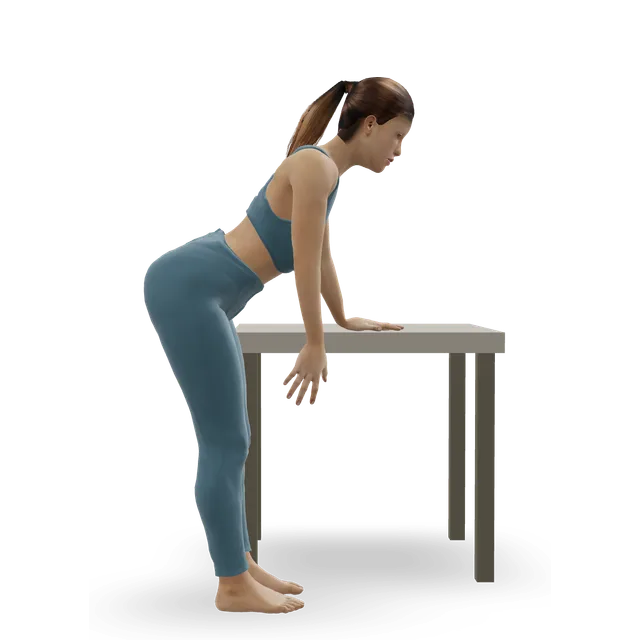
Pendulum exercise (Codman's pendulum) demonstrated on the 3D figure3D demoPendulum exercise (Codman's pendulum)Beginner · A bench or box

Start with 2 to 3 slow swings at a time (forwards and back, side to side, then small circles), every hour or two, adding 1 or 2 every few days · NHS inform's pendulum and its pacing, written for adults, not the move page's dose. The move page's dose (about 1 minute, 10 small circles each way, 2 to 3 times a day, editorial) is for once the shoulder moves freely

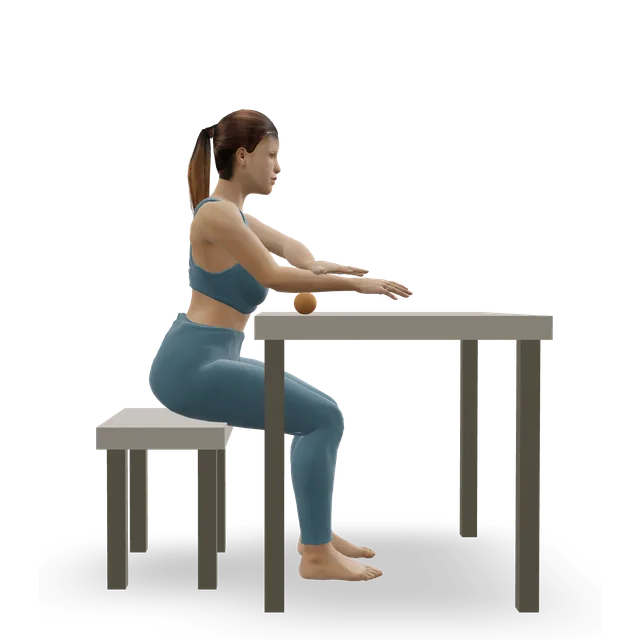
Harder: Table slide (seated forward reach)

Table slide (seated forward reach) demonstrated on the 3D figure3D demoTable slide (seated forward reach)Beginner · A bench or box

10 slow slides, 1 to 3 times a day · The move page's dose (editorial). After a dislocation, keep the hand below shoulder height until the clinician says otherwise, as the move page says

Easier: Pendulum exercise (Codman's pendulum) · Harder: Overhead lat stretch at a bench (elbows on the bench)

Shoulder rolls demonstrated on the 3D figure3D demoShoulder rollsBeginner · No equipment

10 to 15 slow circles each way, once or twice through · The move page's dose (editorial)

Harder: Shoulder CARs (controlled articular rotations)

Thoracic rotation demonstrated on the 3D figure3D demoThoracic rotationBeginner · No equipment

6 rotations each side, moving with the breath · The move page's dose

Easier: Side-lying open book · Harder: World's greatest stretch

Treadmill walking demonstrated on the 3D figure3D demoTreadmill walkingBeginner · Cardio machine

The walk or ride to school and normal play, building back towards an average of 60 minutes of activity a day · Editorial; the 60 minutes is the NHS's guidance for children and young people, and walking outdoors counts the same

Harder: Treadmill jogging

Move on when: The shoulder moves freely, school and daily tasks are comfortable within the pain rule, and it is no worse the next morning (adapted from NHS inform). Most children need nothing more.

Follow along: a timer, a cue and the next move, one step at a time.
Stage 2

Build: rotator cuff and shoulder-blade strength

For older children and teenagers whose pain lasts more than a couple of weeks, keeps coming back, or follows a dislocation or a throwing or swimming overload, once the clinician agrees: about weeks 2 to 6, 3 days a week, with the stage 1 moves on other days. Strength for the muscles that hold and turn the shoulder and steady the shoulder blade, within the pain rule. A young thrower doesn't throw yet, until the clinician clears it. The doses are NHS inform's or our Little League shoulder guide's (editorial), as no trial in children has tested them.

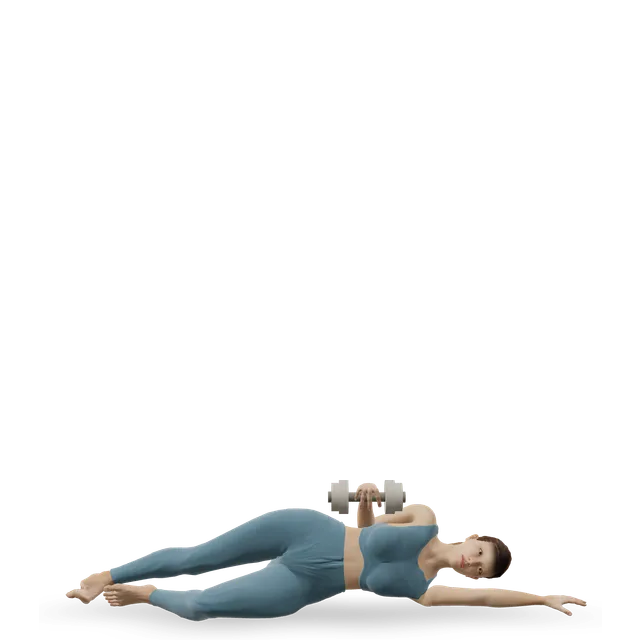
Side-lying external rotation demonstrated on the 3D figure3D demoSide-lying external rotationBeginner · A dumbbell

Lying on your side, start with 2 to 3 lifts at a time, then sets of 8, building to 2 sets of 15, with a light weight such as a tin of beans · NHS inform's side-lying exercise and its dose, written for adults

Easier: Standing band external rotation · Harder: Cuban rotation

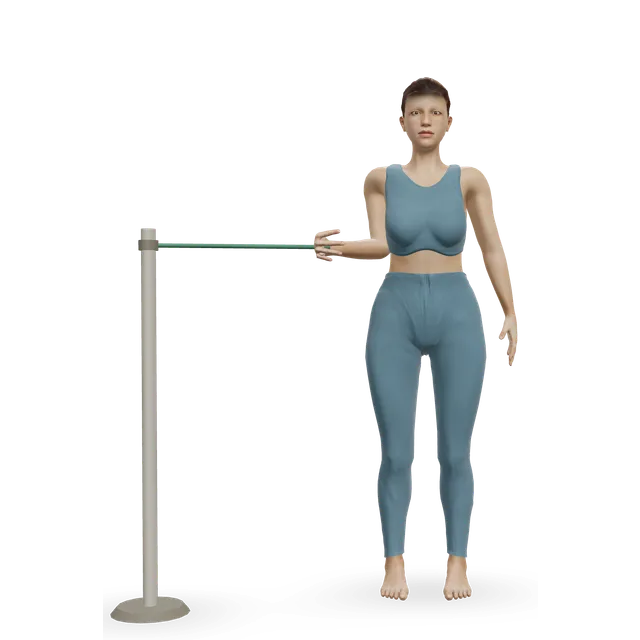
Standing band external rotation demonstrated on the 3D figure3D demoStanding band external rotationBeginner · A band + An anchor point

2 sets of 12 each arm with a light band, elbow by your side · As in our Little League shoulder guide (editorial)

Easier: Stick-assisted external rotation (lying) · Harder: Side-lying external rotation

Band row demonstrated on the 3D figure3D demoBand rowBeginner · A band + An anchor point

3 sets of 10 to 15, stopping 2 to 3 reps short of failure, with 60 to 90 seconds' rest · The move page's dose (editorial). Check the band and the anchor before every set, as the move page says

Harder: Supported single-arm dumbbell row

Scapular push-up (push-up plus) demonstrated on the 3D figure3D demoScapular push-up (push-up plus)Beginner · No equipment

2 sets of 10, against a wall or on the knees first · Editorial, as in our Little League shoulder guide; in the teenage handball trial's warm-up, this push-up plus moved from the knees to the toes as it became easy. Use an incline or the knees if the back sags or the wrists complain, as the move page says

Easier: Dumbbell shoulder-blade punch · Harder: Push-up

Prone Y-T-W raises demonstrated on the 3D figure3D demoProne Y-T-W raisesBeginner · No equipment

2 sets of 5 of each shape, forehead on a towel · As in our Little League shoulder guide (editorial). Keep the neck long and the face down, as the move page says

Easier: Wall angel · Harder: Bent-over reverse fly

Move on when: Every set stays within the pain rule, the shoulder is no worse the next morning, it moves fully, and strength feels similar on both sides (editorial, as in our Little League shoulder guide). After a dislocation, or for a young thrower, the clinician agrees too.

Follow along: a timer, a cue and the next move, one step at a time.
Stage 3

Stronger, then back to full play and sport

From about week 6, or when the fracture clinic, physiotherapist or coach clears it: 2 or 3 sessions a week. Pushing, pulling, carrying and throwing strength for PE, play and sport, then the sport itself back in steps (the written steps below). Teenagers lifting weights need a qualified adult teaching technique, as the NHS says; our children's exercise page explains why supervised strength training is safe at this age. Younger children can play the animal moves instead.

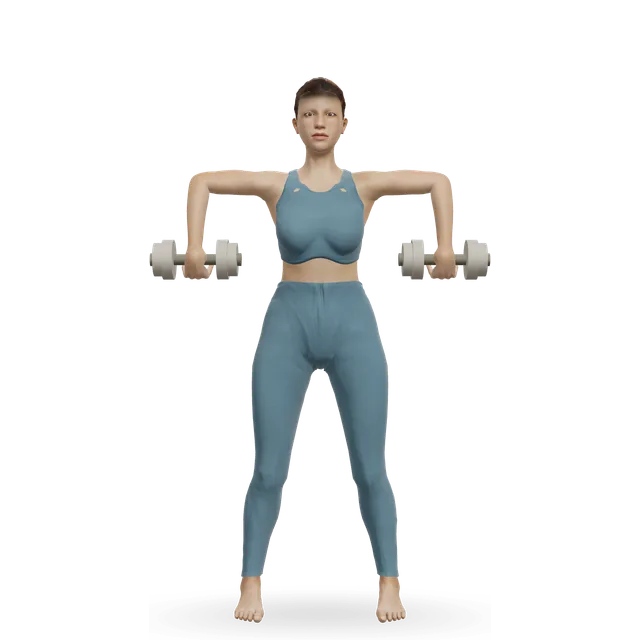
Scaption raise demonstrated on the 3D figure3D demoScaption raiseBeginner · A dumbbell

2 sets of 10 with a light weight, thumbs up, to shoulder height · Editorial, as in our Little League shoulder guide

Easier: Band lateral raise · Harder: Smith machine upright row

Knee push-up demonstrated on the 3D figure3D demoKnee push-upBeginner · No equipment

2 to 3 sets of 8 to 12, moving to full push-ups when easy · Editorial

Easier: Incline push-up · Harder: Push-up

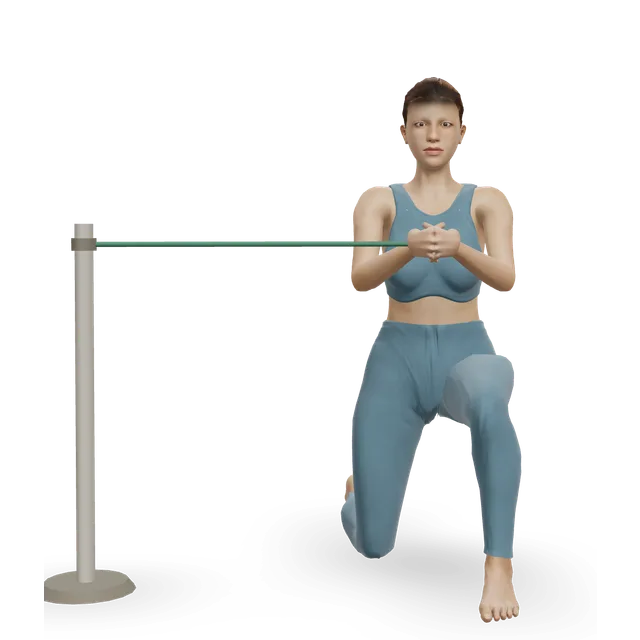
Half-kneeling Pallof press demonstrated on the 3D figure3D demoHalf-kneeling Pallof pressBeginner · A band + An anchor point

2 sets of 10 each side · Editorial, as in our Little League shoulder guide: trunk control for throwing and overhead sport. If kneeling irritates the front knee, do it standing, as the move page says

Harder: Pallof press

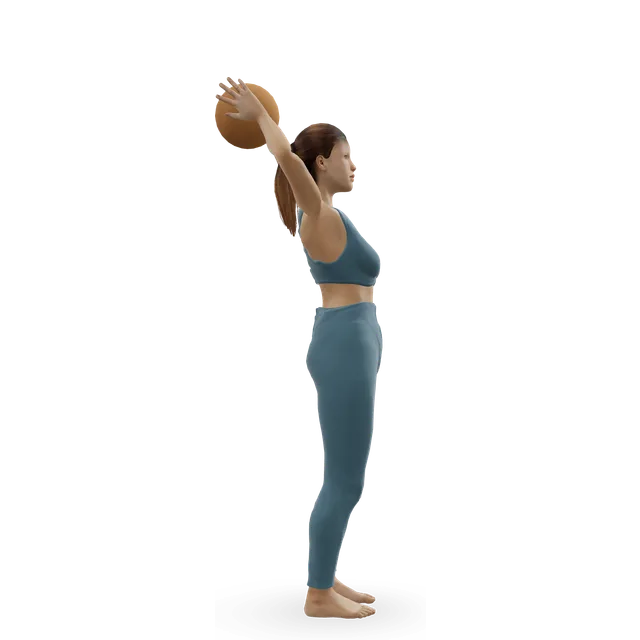
Two-hand overhead throw demonstrated on the 3D figure3D demoTwo-hand overhead throwIntermediate · Medicine ball

2 sets of 5 with a light ball, against a wall or to a partner, for throwers once the clinician agrees · Editorial, as in our Little League shoulder guide

Easier: Medicine-ball chest push · Harder: Lying one-arm overhead throw

Farmer's carry demonstrated on the 3D figure3D demoFarmer's carryIntermediate · A dumbbell + A kettlebell

3 walks of 20 to 30 m with a light weight in each hand, shoulders level · Editorial, as in our children's neck guide: practice for school and kit bags

Harder: Suitcase carry

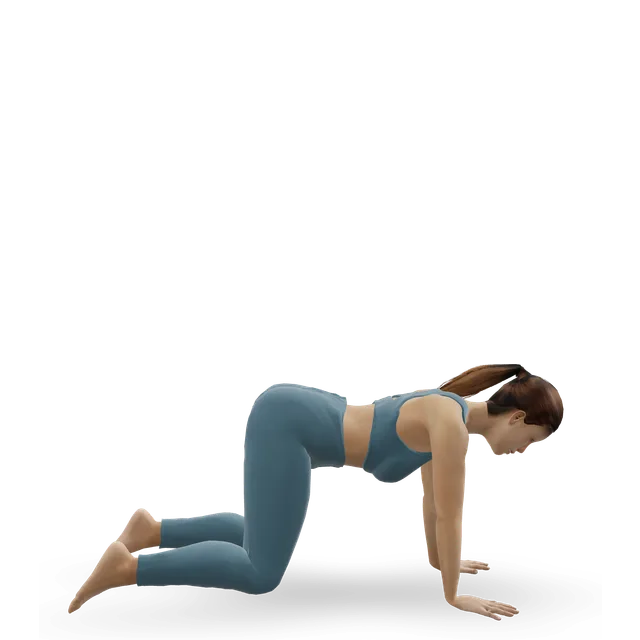
Bear crawl demonstrated on the 3D figure3D demoBear crawlIntermediate · No equipment

Younger children: 4 crawls of 8 to 10 m, forwards and back · The move page's dose (editorial). With a painful shoulder, try it on fists or with the hands raised, or leave it out, as the move page says. It is part of our animal moves workout

Easier: Knee hover (Pilates tabletop hover) · Harder: Spider crawl (low push-up knee drive)

Move on when: Everyday life and sport come back in full, in steps. After a broken collarbone: swimming once it's comfortable, then trampolining, cycling, scooters, PE, football, gymnastics, dance and contact sport from about 6 weeks (4 weeks at 3 or under), as NHS children's leaflets advise. After a dislocation: swimming from 8 weeks, and contact or overhead sport from 4 months, as a children's hospital advises. After Little League shoulder: the graded throwing steps in our Little League shoulder guide, within the pitch counts and rest days for your child's age. Swimmers build distance back gradually, with no sudden jumps. Otherwise, low-impact activity first, then the skills of the sport, then full training, then matches, once full PE, play and training have stayed comfortable for 2 weeks (our suggestion, as in our children's back and neck guides). Young overhead athletes can keep a shoulder warm-up 3 times a week; our handball warm-up includes the trial's moves.

Follow along: a timer, a cue and the next move, one step at a time.

What to change for now

Straight after a fall, and a broken collarbone at home (written steps)

Our 3D figure can't show these. Each step names its source.

  • 1. While you wait to be seen after a fall: support the arm in a sling made from a towel or a bandage, hold an ice pack or frozen peas wrapped in a tea towel to the shoulder for up to 20 minutes every 2 to 3 hours, and give children's paracetamol at the dose on the packet (the NHS broken collarbone page). Never try to put a shoulder back in (the NHS dislocated shoulder page), and take off rings or a watch on that side in case the hand swells (the NHS broken arm or wrist page).
  • 2. A sling for 2 to 4 weeks, off to wash and dress and not needed at night. A toddler who won't wear one doesn't need to: it won't affect healing (NHS children's leaflets in Sussex and Glasgow).
  • 3. For the first days, keep the sling under a T-shirt or pyjama top, expect more pain on the second night than the first, and let your child sleep propped up on pillows or sitting up (the same leaflets).
  • 4. An ice pack wrapped in a damp towel, never straight on the skin (the Sussex leaflet).
  • 5. From about 2 weeks, encourage writing, drawing and games with that arm if they don't cause discomfort (the Sussex leaflet). At school, the sling can stay on for 4 weeks to remind others to be careful (the same leaflets).
  • 6. Many children aren't seen again: contact the fracture clinic if your child isn't moving the arm well by 4 weeks (the Sussex leaflet), and check the warning signs for anything else.

Sources 49, 28, 50, 53, 54

After a dislocation, and a newborn with Erb's palsy (written steps)

Each step names its source.

  • 1. After a dislocation in a child: a collar and cuff sling for 2 to 4 weeks, back to school as soon as they feel comfortable, and a physiotherapy referral (a children's hospital in Southampton).
  • 2. No non-contact sport such as swimming for 8 weeks, and no contact or overhead sport, such as basketball, cricket, football, hockey, horse riding, ice skating, rugby or skiing, for 4 months. An MRI scan is arranged if the shoulder keeps coming out (the same leaflet).
  • 3. A newborn with Erb's palsy: support the arm when you handle, feed and cuddle your baby, don't pick your baby up from under the arms, and dress the affected arm first and undress it last. The children's therapy team takes over after the first days (an NHS trust leaflet in Hull).

Sources 51, 16

Throwing and bowling limits by age (written steps)

These are sporting bodies' rules, built on observational studies rather than trials. Each step names its source.

  • 1. Stop throwing straight away when the arm hurts, and get it checked if it keeps hurting: in Little League shoulder, stopping sooner went with better early results (a Japanese series).
  • 2. Pitch counts: Pitch Smart's daily maximum is 50 pitches at 7 to 8, 75 at 9 to 10, 85 at 11 to 12, 95 at 13 to 16 and 105 at 17 to 18, with rest days that rise with the count (4 days after 66 or more pitches at 9 to 14), and no pitching on 3 days in a row (Pitch Smart, US).
  • 3. In UK youth baseball, the British Baseball Federation caps pitches at 85 for under 12s and 95 for under 14s and under 16s, in one game a day, as absolute maximums.
  • 4. Cricket: the ECB limits fast bowlers by age to 4 overs a spell and 8 a day at 11 and under, 5 and 10 at 12 and 13, 5 and 12 at 14 and 15, 6 and 15 at 16 and 17, and 7 and 18 at 18 and 19. After a spell, the bowler rests until the same number of overs has been bowled from that end. The limits apply in hard ball cricket, to anyone who bowls even one ball at high intensity, including seam, swing and medium pace (the ECB's fast bowling regulations).
  • 5. Don't pitch for two teams at once or in two games a day, avoid pitches other than fastballs and changeups while young, take at least 4 months off throwing each year, 2 to 3 of them in a row, and play other sports (Pitch Smart). Young pitchers who often threw with arm pain had 7.5 times the odds of injury, and specialising early in one sport went with more overuse injuries (US studies).

Sources 56, 67, 68, 69, 14, 13

Swimming, school, PE, bags and flexible joints (written steps)

Each step names its source or is our suggestion.

  • 1. Swimming: build distance and intensity gradually, tell the coach early, and don't swim through pain on painkillers (studies of young swimmers). Our swimming guide covers paddles, kick sets and the stroke.
  • 2. School and PE: keep going to school, tell the PE teacher or coach what hurts and what your child can still do, and skip throwing, contact games, trampolining and tumbling until the plan says (our suggestion, as in our children's neck and back guides).
  • 3. School bags: both straps, tightened so the bag sits close to the back, heavy items low and central, and only what's needed for the day (the American Academy of Orthopaedic Surgeons). Signs a bag is too heavy include a change in posture when wearing it, struggling to put it on or take it off, pain while wearing it and red marks on the shoulders (an NHS trust leaflet). No study has shown that bags cause shoulder pain, and the same leaflet's claim that a bag over 10% of body weight damages the spine isn't supported by the evidence (editorial).
  • 4. Very flexible joints: strength and fitness are the main treatment; don't overextend joints just because you can, and take regular breaks from repetitive activities (the NHS).

Sources 70, 12, 79, 83, 78, 62

Positions to swap, and why

Habit or positionWhy it mattersInstead
Keeping the arm still, or a sling, for ordinary shoulder painThe NHS says don't stop using your shoulder completely: it can stop it getting better.Gentle pendulum swings every hour or two.Try: Pendulum exercise (Codman's pendulum)
A sling worn for weeks after a sprain or a knockSlings are for breaks and dislocations, and children's leaflets keep them to 2 to 4 weeks even then.Table slides and shoulder rolls.Try: Table slide (seated forward reach)
Throwing through arm painYoung pitchers who often threw with arm pain had 7.5 times the odds of injury.Stop for the day, then band rotations in the strength stage.Try: Standing band external rotation
Pitching on consecutive days, for two teams, or in two games a dayEach went with more arm pain, and Pitch Smart advises against them.Rest days by pitch count, and other sports in the off-season.
Big jumps in swim training, or swimming through pain on painkillersA sudden rise in training load predicted pain in young swimmers, and 73% of teenage club swimmers used painkillers to keep swimming.Gradual increases, and our swimming guide's rule.
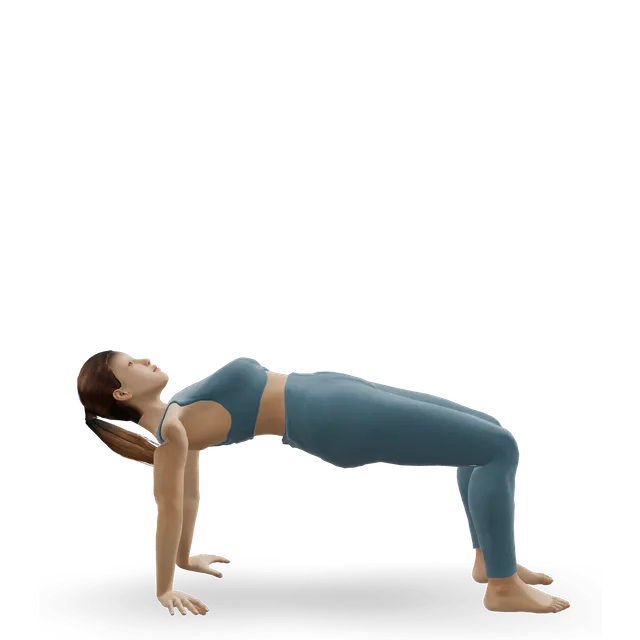
Crab walks, dips and handstands with a shoulder that slipsThe crab walk's move page says shorten the range or skip it with shoulder instability or a history of dislocation.Push-up plus against a wall or on the knees.Try: Scapular push-up (push-up plus)
Hanging from bars soon after a dislocationIts move page says leave it out after a recent dislocation, or if the shoulder slips when you hang.Band rows.Try: Band row
Sleeper stretches, or stretching into a pinch at the front of the shoulderThe sleeper stretch's move page says skip it with a painful or unstable shoulder, and most shoulder stretch evidence comes from adults without pain.Upper-back rotations; the cross-body stretch only for a thrower who is stiff turning the arm inwards, lowering the arm if it pinches.Try: Thoracic rotation
Trampolines, bikes, scooters, PE and contact sport too soon after a broken collarboneChildren's leaflets keep high-impact play off for about 6 weeks (4 weeks at 3 or under).Walking, and swimming once it's comfortable.Try: Treadmill walking
Contact and overhead sport too soon after a dislocationA children's hospital waits 4 months.Swimming from 8 weeks, and the stage 2 strength moves.Try: Side-lying external rotation
Party tricks with very flexible jointsThe NHS says don't overextend joints just because you can.Strength and control work, such as band rotations.Try: Standing band external rotation
A heavy bag on one shoulderUntested for shoulder pain, but comfort matters, and the American Academy of Orthopaedic Surgeons advises both straps.Both straps, heavy items low and central, and farmer's carry practice.Try: Farmer's carry
Aspirin, or ibuprofen and paracetamol at the same timeThe NHS says no aspirin for children aged 15 or under, and don't give the two painkillers at the same time.Children's ibuprofen or paracetamol at the dose for their age.
Waiting out shoulder tip pain with tummy pain, a hot, swollen shoulder with a fever, or a child who stops using an armThese are warning signs.Check the warning signs and get help now.

Routines to follow

Animal moves for kids: a 15-minute active play workout

Fifteen minutes of animal moves, jumps and balance games for children, building the muscle- and bone-strengthening activity they need, with nothing to buy.

15 minBeginner16 movesA wall

Yoga for kids: a 20-minute animal adventure

Twenty minutes of animal poses, star jumps, crawls, balloon breaths and a short relaxation for children, with no headstands or shoulder stands.

20 minBeginner17 movesNo equipment

Strength workout for teenagers: technique first, with jumps and landings

A 40-minute first strength workout for teenagers: a warm-up, landing and jump drills, then squats, hinges, push-ups, rows, step-ups and carries, kept light.

40 minBeginner19 movesA wall, A dumbbell

Shoulder mobility and stability routine (with a band)

A 25-minute band routine for healthy shoulders: move the shoulder and upper back through their range, then strengthen the rotator cuff and shoulder blades.

25 minBeginner12 movesA wall, A band

Throwing arm strength workout

A 35-minute session for baseball and softball players: the five Shoulder Control exercises, rotator cuff and forearm work, medicine-ball throws and legs.

35 minIntermediate17 movesA dumbbell, A cable machine

Baseball arm care warm-up

A 12-minute arm care warm-up for baseball and softball, built on a Japanese youth programme: an arm massage, shoulder, forearm and hip stretches, and balance.

12 minBeginner9 movesA massage ball, A wall

Shoulder care routine for swimmers

A 20-minute rotator cuff and shoulder-blade routine for swimmers, from a 12-week trial in competitive swimmers, plus a daily cross-body stretch.

20 minBeginner9 movesA wall, A dumbbell

Handball warm-up: Knee Control, Shoulder Control, landings and a throwing build-up

A 20-minute handball warm-up: easy running, leg swings, Knee Control, landings and cuts, Shoulder Control, then build-up runs before passes and shots.

20 minBeginner18 movesCardio machine, A wall

More moves for this area

Questions people ask

Is it normal for a child to have shoulder pain?

In teenagers it's common: about 13 in 100 Danish teenagers had shoulder pain when asked, and more of those who play overhead sport. In younger children it's less common, and most of it follows a fall or a knock. Pain that wakes them at night, a lump, or a child who stops using the arm needs a doctor.

When should I worry about my child's shoulder pain?

Go to A&E or call 999 after a fall if the shoulder or collarbone looks out of place, the arm can't move, a bone is through the skin, or the arm is numb, tingling or a changed colour. Get help the same day for a hot, swollen shoulder or a fever, or a young child who stops using an arm. See a GP for bone pain at night, a lump, or looking pale and unwell.

My child fell on their shoulder. How do I know if it's broken?

Pain, swelling or a bump along the collarbone, a drooping shoulder or not wanting to lift the arm suggest a broken collarbone, and it needs an X-ray: being able to move the arm doesn't rule a break out. Make a sling from a towel, hold an ice pack wrapped in a tea towel to it, give children's paracetamol, and get it seen.

How long does a broken collarbone take to heal in a child?

The NHS says children often recover in 3 to 4 weeks, and a sling usually stays on for 2 to 4 weeks. Trampolines, bikes, PE and contact sport wait about 6 weeks (4 weeks at 3 or under). A bump over the break usually goes within a year in young children.

What does shoulder tip pain mean in a child, or shoulder pain when breathing?

Most shoulder pain comes from the shoulder itself, but pain at the very tip can rarely come from the tummy, and a sudden, sharp chest or shoulder pain that is worse breathing in, with breathlessness, can be a collapsed lung. Call 999 or go to A&E for severe tummy pain, chest pain or breathlessness, and if a teenage girl could be pregnant, shoulder tip pain with sudden tummy pain or fainting is an emergency.

My child's shoulder hurts when they throw or swim. What should we do?

Stop throwing straight away and see a GP or sports physiotherapist: in young throwers it can be a growth plate stress injury that needs weeks to months off throwing, and most are back competing after about 3 to 4 months. Swimmers should cut back and build up gradually, as sudden jumps in training predicted pain. Our Little League shoulder and swimming guides have the full plans.

My teenager dislocated their shoulder. Will it happen again?

It may, and the figures vary: across 6 studies, 93% of 14 to 18 year olds dislocated again, against 44% of 41 children aged 14 and under in Edinburgh, half of them within about 15 months. Physiotherapy strengthens the muscles that hold the shoulder, and a specialist can talk through surgery if it keeps coming out. One children's hospital keeps contact and overhead sport off for 4 months.

My child's shoulder keeps slipping or clunking, but they haven't injured it. Why?

It is often looseness in very flexible joints, which mostly affects young people. Physiotherapy is the first treatment, most improve though it can take up to 6 months, and scans aren't usually needed at first. See a GP if it keeps coming out or stops your child going to school.

Can a heavy school bag or a phone cause shoulder pain?

They haven't been shown to: in one study, bag weight went with hand and wrist symptoms, not shoulder symptoms, and no study has followed children over time. Both straps, heavy items low and central, and an hour of activity a day are sensible anyway.

What can I give my child for shoulder pain?

Children's ibuprofen (most children over 3 months) or paracetamol (most over 2 months) at the dose for their age, and ice or warmth wrapped in a towel. Don't give the two at the same time, and never give aspirin to anyone aged 15 or under. If the pain needs painkillers for more than 3 days, speak to a doctor or pharmacist.

Does my child need an X-ray or a scan?

After a fall with pain over a bone or a changed shape, yes, an X-ray. A young thrower may need X-rays of both shoulders, and an MRI scan helps if a shoulder keeps dislocating. Most ordinary shoulder pain needs no scan, but unexplained bone pain or swelling gets a very urgent X-ray.

I'm a teenager and my shoulder hurts with sport. What should I do?

Ease off the throwing, serving or swimming that hurts, keep the shoulder moving, and try the plan above, keeping the pain at 5 out of 10 or less and no worse the next morning. Don't throw or swim through pain on painkillers. Tell someone and get it checked if your shoulder slips, your arm goes numb or weak, or the pain wakes you at night.

Related exercise guides

Other pain guides

Sources

  1. Tan 2018 · Children's muscle and joint problems in English general practice (records study, BMC Musculoskelet Disord)
  2. Rathleff 2013 · Daily pain and pain in several places in about 3,000 Danish teenagers (cross-sectional study, BMC Pediatr)
  3. Tobias 2013 · Joint hypermobility at 14 and muscle and joint pain at 18 in 2,901 UK teenagers (prospective cohort, Arthritis Rheum)
  4. Fuglkjær 2017 · How common arm and leg complaints are in children and teenagers (systematic review, BMC Musculoskelet Disord)
  5. Oliveira 2017 · Shoulder pain in 310 Brazilian athletes aged 10 to 19 (cross-sectional study, Braz J Phys Ther)
  6. Lau 2023 · Shoulder and elbow overuse injuries in 434 competitive overhead youth athletes in Singapore (cross-sectional study, Orthop J Sports Med)
  7. Asker 2018 · Shoulder problems over a season in 471 adolescent elite handball players (cohort, Knee Surg Sports Traumatol Arthrosc)
  8. Lyman 2002 · Pitch type, pitch counts and elbow and shoulder pain in 476 young baseball pitchers aged 9 to 14 (cohort, Am J Sports Med)
  9. Feijen 2020 · Swim training volume and shoulder pain across the competitive swimmer's life (systematic review, J Athl Train)
  10. Tate 2012 · Shoulder pain and disability in female competitive swimmers of all ages (cross-sectional study, J Athl Train)
  11. Sein 2010 · Shoulder pain and swim training in 80 young elite swimmers aged 13 to 25 (cross-sectional study, Br J Sports Med)
  12. Hibberd 2013 · Training habits and attitudes to shoulder pain in high school club swimmers (survey, Clin J Sport Med)
  13. Bell 2018 · Sport specialisation and overuse injuries in young athletes (systematic review and meta-analysis, Pediatrics)
  14. Yang 2014 · Risky pitching habits and injuries in 754 young US baseball pitchers aged 9 to 18 (national survey, Am J Sports Med)
  15. Voss 2026 · A collarbone broken at birth and brachial plexus birth injury in 1.2 million Swedish births (national cohort, Arch Dis Child Fetal Neonatal Ed)
  16. Hull University Teaching Hospitals NHS Trust · Obstetric brachial plexus injury (Erb's palsy) (leaflet, 2024)
  17. Hedström 2010 · Fractures in children and teenagers aged 0 to 19 in Umeå, Sweden, 1993 to 2007 (population study, Acta Orthop)
  18. Rennie 2007 · Fractures in children in Edinburgh over a year (population study, Injury)
  19. Riise 2008 · Bone infection in Norwegian children: how common, and how to tell it apart (population study, BMC Pediatr)
  20. Ernat 2017 · Septic arthritis of the shoulder in 22 children, often with bone infection (case series, J Pediatr Orthop)
  21. Kim 2023 · Breaks at the top of the arm bone in children: management (review, J Pediatr Soc North Am)
  22. Heyworth 2016 · Little League shoulder in 95 children: presentation, treatment and outcomes (case series, Am J Sports Med)
  23. Bednar 2021 · Diagnosis and management of Little League shoulder: 23 studies (systematic review, Orthop J Sports Med)
  24. Yapp 2021 · Shoulder dislocation and repeat dislocation in 41 children aged 14 and under in Edinburgh (cohort, J Pediatr Orthop)
  25. Noorani 2019 · BESS/BOA patient care pathway: atraumatic shoulder instability (UK consensus pathway, Shoulder Elbow)
  26. Olds 2016 · What makes a shoulder dislocate again after a first dislocation in children aged 18 and under: 6 retrospective cohorts (systematic review and meta-analysis, Br J Sports Med)
  27. Brownson 2015 · BESS/BOA patient care pathway: traumatic anterior shoulder instability (UK consensus pathway, Shoulder Elbow)
  28. NHS · Dislocated shoulder
  29. American Academy of Orthopaedic Surgeons, OrthoInfo · Burners and stingers
  30. Radhakrishnan 1994 · A trapped nerve in the neck (cervical radiculopathy) in Rochester, Minnesota, 1976 to 1990 (population study, Brain)
  31. Asthma + Lung UK · Pneumothorax (collapsed lung)
  32. NHS · Ectopic pregnancy: symptoms (past its review date: reviewed August 2022, review due August 2025)
  33. NHS · Appendicitis
  34. NHS · Pneumonia
  35. NHS · Spleen problems and spleen removal (past its review date: reviewed February 2023, review due February 2026)
  36. Kanegaye 1995 · Pneumonia as a hidden cause of tummy pain in children (case series, J Emerg Med)
  37. Walker 2016 · Septic arthritis of the shoulder in 4 children aged 1 month to 15 years (case series, Int J Pediatr)
  38. NHS · Osteomyelitis (past its review date: reviewed August 2023, review due August 2026)
  39. Arthritis UK · Juvenile idiopathic arthritis (JIA): symptoms, causes and treatment
  40. Children's Cancer and Leukaemia Group (CCLG) · Osteosarcoma in children (reviewed August 2022)
  41. Children's Cancer and Leukaemia Group (CCLG) · Ewing sarcoma in children (reviewed August 2022)
  42. NHS · Symptoms of bone cancer
  43. Noordin 2018 · Simple (unicameral) bone cysts: current concepts (review, Ann Med Surg)
  44. Clarke 2016 · How childhood leukaemia first shows itself (systematic review and meta-analysis, Arch Dis Child)
  45. NHS · Symptoms of acute lymphoblastic leukaemia (past its review date: reviewed July 2023, review due July 2026)
  46. NICE NG12 · Suspected cancer: recognition and referral (2015, updated 2026)
  47. NHS · Growing pains
  48. NHS inform · Shoulder problems
  49. NHS · Broken collarbone (past its review date: reviewed August 2023, review due August 2026)
  50. NHS · Broken arm or wrist
  51. University Hospital Southampton NHS Foundation Trust · Shoulder dislocations in children (factsheet, 2026)
  52. British Orthopaedic Association · BOAST: the management of children with acute musculoskeletal infection (standard, 2022)
  53. University Hospitals Sussex NHS Foundation Trust · Your child's clavicle fracture (children's physiotherapy leaflet, 2025)
  54. Royal Hospital for Children, Glasgow (NHS Greater Glasgow and Clyde) · Broken collar bone (clavicle): parent advice leaflet
  55. Heyworth 2022 · Surgery or no surgery for completely displaced collarbone breaks in 416 teenagers: 2-year results (prospective multicentre cohort, Am J Sports Med)
  56. Harada 2018 · Results of stopping throwing and rehabilitation for Little League shoulder in 87 young baseball players (case series, J Shoulder Elbow Surg)
  57. NHS · Shoulder pain (past its review date: reviewed May 2023, review due May 2026)
  58. NHS inform · Exercises for shoulder problems (including how to tell if you're exercising at the right level)
  59. Hopewell 2021 · Progressive exercise against one advice session, with or without a steroid injection, in 708 people with rotator cuff problems: the GRASP trial (RCT, Lancet)
  60. Holmgren 2012 · Specific exercise and the need for surgery in subacromial impingement, in 102 people (RCT, BMJ)
  61. Warby 2018 · Two exercise programmes for multidirectional shoulder instability in 41 people (RCT, Am J Sports Med)
  62. NHS · Joint hypermobility syndrome (past its review date: reviewed August 2023, review due August 2026)
  63. Asker 2022 · Shoulder and knee injury prevention programmes in adolescent elite handball players (three-armed cluster RCT, Sports Med Open)
  64. Andersson 2017 · Preventing overuse shoulder injuries in 660 elite handball players (cluster RCT, Br J Sports Med)
  65. Sommervold 2017 · A shoulder strengthening programme to prevent shoulder pain in junior female handball players (RCT, Open Access J Sports Med)
  66. Olsen 2006 · Risk factors for shoulder and elbow injuries in adolescent baseball pitchers (case-control study, Am J Sports Med)
  67. Major League Baseball and USA Baseball · Pitch Smart: pitching guidelines by age
  68. British Baseball Federation · Youth National Baseball League rules 2026, with pitch limits by age (April 2026)
  69. England and Wales Cricket Board (ECB) · Fast bowling regulations for players aged 19 and below (2025)
  70. Feijen 2021 · Predicting shoulder pain in 201 youth competitive swimmers over 2 seasons (prognostic cohort, Am J Sports Med)
  71. Ng 2021 · Displaced collarbone breaks in 13 to 17 year olds in Edinburgh: healing and long-term function (cohort, Bone Joint J)
  72. Galán-Olleros 2025 · Surgery or no surgery for displaced collarbone breaks in teenagers: 7 comparative studies (systematic review and meta-analysis, Int Orthop)
  73. Liavaag 2011 · A brace holding the arm turned outwards after a first shoulder dislocation, in 188 people (RCT, J Bone Joint Surg Am)
  74. Malina 2006 · Weight training in young people: growth, maturation and safety (evidence-based review, Clin J Sport Med)
  75. Faigenbaum 2009 · Youth resistance training: updated position statement of the US National Strength and Conditioning Association (position statement, J Strength Cond Res)
  76. NHS · Physical activity guidelines for children and young people
  77. Dianat 2011 · School bag weight and shoulder, hand and wrist, and low back symptoms in Iranian primary school children (cross-sectional study, Health Promot Perspect)
  78. Yamato 2018 · Do school bags cause back pain in children and teenagers? (systematic review, Br J Sports Med)
  79. American Academy of Orthopaedic Surgeons, OrthoInfo · Backpack safety
  80. NHS · Ibuprofen for children
  81. NHS · Paracetamol for children
  82. NHS · Aspirin for pain relief
  83. Sherwood Forest Hospitals NHS Foundation Trust · Back care advice for children and adolescents (leaflet, 2024, past its review date of July 2026)
  84. NHS · Sepsis
  85. NHS · Septic arthritis
  86. NICE CG89 · Child maltreatment: when to suspect maltreatment in under 18s (2009, updated 2025)

Exercise education, not a diagnosis or treatment plan. It is written from the guidelines and studies listed above; review by a clinician is pending. If your pain follows an injury, is severe, is getting worse, or comes with any warning sign listed on this page, get it assessed. Health disclaimer.