Yoga guide

Yoga for vertigo and dizziness: what helps, the poses to take slowly, and staying safe

Yoga isn't a treatment for vertigo, but it can help you move, breathe and balance again once you're steadier, as long as you choose the right poses. Brief spins when you lie down, roll over or look up are usually benign paroxysmal positional vertigo (BPPV), which a repositioning manoeuvre such as the Epley treats, and dizziness that lingers after an inner-ear illness needs vestibular rehabilitation exercises. Those come first.

Two small trials suggest a yoga programme may help long-lasting inner-ear dizziness about as much as vestibular exercises, but neither is strong enough to rely on, and some common poses are exactly the movements that set off a spin. This guide covers the causes and what each needs, what the evidence shows for yoga and tai chi, the poses to take slowly or leave out, staying safe, the warning signs, and a 20-minute class done sitting and at a kitchen counter.

The short version

The cause decides what helps

Vertigo feels like you or the room is spinning. Inner-ear problems are the commonest causes: BPPV, labyrinthitis and vestibular neuritis, and Ménière's disease, plus migraine and some medicines, and most people get better without treatment. Feeling light-headed when you stand up is usually a drop in blood pressure, not vertigo.

Sources 1, 2, 3

BPPV needs a manoeuvre, not a pose

A repositioning manoeuvre such as the Epley, done by a trained clinician, cleared BPPV in 56% of people against 21% with a sham, and the National Institute for Health and Care Excellence (NICE) says to offer it when a trained professional is available. Yoga can't move the loose crystals in the inner ear back into place.

Sources 4, 5

Lasting dizziness needs vestibular rehabilitation

Head and eye exercises, balance and walking that make you mildly dizzy on purpose made dizziness less frequent and less disabling across 39 trials, and a free booklet version helped in a UK trial in general practice. Our vertigo exercise guide has the routine.

Sources 6, 7, 8

Two small yoga trials, neither strong enough to rely on

In 150 people with long-lasting inner-ear vertigo, a home yoga programme did about as well as vestibular exercises, and both beat tablets alone, but the trial has limits we set out below. A 32-person, 3-week study found something similar. Tai chi helped balance in small studies alongside or after rehabilitation. Use yoga as a gentle extra once you're steadier, not instead of the treatment your cause needs.

Sources 9, 10, 11, 12

Some poses can set off a spin

Lying back or sitting up quickly, bending forward with your head down, looking up, rolling onto your side and fast head turns are the classic BPPV triggers, and the National Health Service (NHS) says not to bend over or stretch your neck during vertigo. These spins are unpleasant but not harmful. Take those poses slowly, or leave them out during a bad spell.

Sources 13, 14, 1

Not during an attack

Lie still in a quiet, dark room until an attack passes, then start moving again as soon as you can: avoiding movement slows recovery.

Sources 1, 15, 8

Which kind of dizziness?

Use this to describe your symptoms to a general practitioner (GP), not to diagnose yourself. Our vertigo exercise guide has more on each cause.

Vertigo or dizziness?

Vertigo is the feeling that you, or everything around you, is spinning, enough to affect your balance. An attack can last from a few seconds to hours, and severe vertigo can last days or months. Dizziness is the wider word: feeling off-balance, giddy, light-headed or faint. Causes of dizziness include ear infections, migraine, dehydration, stress or anxiety, low blood sugar, anaemia and medicines.

Sources 1, 2

How balance works

Your brain combines what your eyes see, signals from sensors in your body, and the balance organ in each inner ear, which signals whenever your head moves. When one part sends faulty signals you feel dizzy, and the brain adjusts, faster when you practise the movements that bring the dizziness on. That's how vestibular rehabilitation works, and yoga doesn't do it on purpose.

Source 8

Brief spins when you move your head: BPPV

Loose chalk crystals in one of the inner ear's canals cause short spins, usually 5 to 30 seconds, when you lie flat, sit up, turn over in bed, look up or bend down. In a German population study, 2.4% of adults had had it at some point. It's common after a head injury or labyrinthitis. At least half of people get better without treatment, though it may take months, and medicines don't move the crystals.

Sources 13, 14, 16, 4

After an inner-ear infection: labyrinthitis and vestibular neuritis

Usually caused by a virus. Symptoms often ease after a few days and balance usually comes back over 2 to 6 weeks, sometimes longer. The NHS suggests getting out for a walk as soon as you can, with someone at first, and says vestibular rehabilitation for lasting problems should be supervised by a specialist such as a physiotherapist or audiologist.

Source 15

Attacks with ringing or a full ear: Ménière's disease

Sudden attacks lasting from a few minutes to 24 hours, with spinning, ringing in the ear (tinnitus), hearing loss and a feeling of pressure in the ear. Exercises can't stop the attacks, but they can help the unsteadiness between them, and the NHS says relaxation techniques, such as breathing exercises, can help.

Sources 17, 8

Dizziness with migraine: vestibular migraine

Migraine in which dizziness is the main symptom, in episodes lasting 5 minutes to 72 hours (NICE's description). There's almost no trial evidence for non-drug ways to prevent it. Our yoga for headaches and exercise for migraine guides have more.

Sources 4, 18

Dizzy most days for months: PPPD

Persistent postural-perceptual dizziness (PPPD) means dizziness or unsteadiness on most days for months. A Cochrane review found no trial of rehabilitation that met its standards. Our vertigo exercise guide covers what specialists offer.

Source 19

Light-headed when you stand up

Dizziness or light-headedness when you stand up or change position can be a drop in blood pressure (postural hypotension), not vertigo. Get up slowly, from lying to sitting to standing, and see a GP if you keep getting dizzy or fainting. Our exercise for PoTS guide covers postural tachycardia syndrome.

Source 3

Dizziness and the neck

Dizziness coming from the neck (cervicogenic dizziness) is a debated diagnosis, made once other causes are ruled out. Across 13 trials (898 people), hands-on treatment eased it (moderate-quality evidence), more so with exercise (very low quality). Yoga poses for "cervical vertigo" haven't been tested. Our yoga for neck pain guide covers the neck.

Source 20

Stroke: rare, but an emergency

In 1,666 emergency patients with dizziness, vertigo or imbalance, 3.2% had a stroke or mini-stroke (transient ischaemic attack), and 0.7% of those with dizziness alone. Dizziness with the warning signs below needs 999.

Sources 21, 22

The treatments that work come first

BPPV: a repositioning manoeuvreStrong evidence

NICE says to offer a test called the Hallpike manoeuvre for brief spinning set off by head movement and, if it shows BPPV, a repositioning manoeuvre such as the Epley when a trained professional is available. In a Cochrane review, the Epley cleared vertigo in 56% of people against 21% with a sham or no treatment (5 trials, 273 people). It came back in 36%, and 17% to 32% felt sick during the manoeuvre.

Sources 4, 5

Lasting dizziness: vestibular rehabilitationStrong evidence

For dizziness from inner-ear damage on one side, vestibular rehabilitation made people more likely to report less frequent dizziness (odds ratio 2.67, 4 trials, 565 people) and reduced disability, across 39 trials (2,441 people), with no side effects reported. A 2022 US physiotherapy guideline recommends it, preferably supervised. In 337 people in UK general practice, a free booklet improved dizziness at a year: for every 5 people given it, one more improved than with usual care.

The Balance Retraining booklet's exercises take under 10 minutes, every day and ideally twice, work by making you mildly dizzy on purpose, and take about 6 weeks. Our vertigo exercise guide teaches them step by step.

Sources 6, 23, 7, 8

Migraine, PPPD and Ménière's: little trial evidenceMixed evidence

For vestibular migraine, a Cochrane review found one small trial of vestibular rehabilitation (40 people), with low or very low certainty. For PPPD, no trial of rehabilitation met its standards. For Ménière's disease, the evidence on lifestyle and diet changes is very uncertain, with no placebo-controlled trials of cutting salt or caffeine. The NHS lists vestibular rehabilitation, counselling and relaxation for Ménière's.

Sources 18, 19, 24, 17

What the evidence says about yoga

Yoga trials: two, neither strong enough to rely onMixed evidence

In an Indian hospital's ear, nose and throat (ENT) department, 150 adults who had had peripheral vertigo for at least a year (about half with BPPV and about a third with Ménière's disease) did 12 weeks of yoga (20 poses with breathing and candle gazing, learnt in a week, then practised daily at home with an audio recording), vestibular exercises, or took a tablet (prochlorperazine) alone. Dizziness handicap scores (0 to 100, higher is worse) fell from 44 to 0.32 with yoga and from 40 to 1.26 with vestibular exercises, against 51 to 30 with the tablet alone, with no difference between yoga and the exercises.

By our reading of the full text, the trial has limits: it ran from 2009 to 2012 but was registered only in 2019, the three groups started at different scores, and the starting scores given in the abstract don't match those in the tables. A second study, of 32 people over 3 weeks, found that yoga poses and vestibular exercises both helped, yoga more on a motion sensitivity score and the exercises more on the handicap score; its summary doesn't say how people were put into groups.

Sources 9, 10

Tai chi: helpful alongside rehabilitationEmerging evidence

In 26 people with inner-ear balance problems randomised to 10 weeks of tai chi or vestibular rehabilitation, rehabilitation steadied the gaze more and tai chi steadied the whole body while walking more. In 36 older adults, both improved walking. In 40 men aged 60 to 80 with dizziness, 18 weeks of twice-weekly tai chi improved balance. In 37 people whose progress had stalled after rehabilitation, 8 tai chi classes improved a walking balance test, though not the dizziness questionnaire in the 18 who filled it in. A 2019 review found only 4 studies.

Sources 11, 25, 26, 12, 27

Exercise for older people with dizzinessEmerging evidence

A 2016 review of 7 controlled trials of exercise for dizziness in older people found a high risk of bias and too little evidence to be sure. A later review of 22 trials (1,876 older people) found vestibular rehabilitation better than usual care for balance, mobility and symptoms (moderate quality), with tai chi used as the rehabilitation in 3 trials.

Sources 28, 29

Yoga, balance and fallsEmerging evidence

In people aged 60 and over, yoga improved balance a little (Hedges' g 0.40, 6 trials, 307 people) and mobility (g 0.50, 3 trials). Exercise cut the rate of falls in older people by 23% across 59 studies (12,981 people), and balance and functional exercise by 24%. No yoga trial has counted falls in people with dizziness, and in a US survey, people with an inner-ear balance problem who felt dizzy had 12 times the odds of falling, so practise standing poses next to a counter.

Sources 30, 31, 32

Moving again helps recoveryEmerging evidence

The NHS says to start walking as soon as possible after labyrinthitis. The Balance Retraining booklet warns that avoiding movement leads to a stiff neck, headaches and becoming unfit, and Ménière's & Vestibular UK describes avoidance as a downward spiral. After a successful Epley, people who went back to their usual daily activity had much less leftover dizziness (69 people; an association, not proof). The booklet says sport, dance or exercise such as yoga can help once dizziness is nearly better.

Sources 15, 8, 33, 34

No trial for BPPV, migraine or Ménière's attacksMixed evidence

A PubMed search for yoga with vertigo, dizziness, vestibular problems, Ménière's or BPPV returned 25 records, and a Europe PMC search 29. Beyond the two trials above, none tested yoga for BPPV, vestibular migraine, Ménière's attacks or PPPD.

Sources 35, 36

Poses that can bring on a spin

The BPPV triggersStrong evidence

Ménière's & Vestibular UK and an NHS hospital leaflet list lying flat, sitting up, turning over in bed, lying on either side, bending forwards and looking up or down. The leaflet says these positions can bring on symptoms but are not harmful. In yoga terms (our mapping): lying back into corpse pose or a bridge, sitting up from the floor, forward folds, downward dog and sun salutations, looking up in warrior I or back bends, and rolling to your side to get up.

Sources 13, 14, 1

Our caution on head-down and head-back posesStrong evidence

With vertigo or BPPV, head-down positions, lying back quickly and tipping your head back can bring on a spin: move into and out of them slowly, sit up slowly, and leave them out during a bad spell. This caution shows on our move pages for poses including downward dog, plough, shoulder stand, headstand, forearm stand, dolphin, the wide-legged forward fold, fish, camel, upward-facing dog and sun salutations A and B.

Sources 13, 1, 37

Tipping your head back and fast turnsMixed evidence

The NHS says don't stretch your neck during vertigo, for example reaching up to a high shelf. In a 2026 case report, a 56-year-old woman had blurred vision and dizziness during yoga, especially in upward-facing dog, and a scan done while she moved her neck showed reduced blood flow to the back of the brain; the authors warn that bending the neck far back or turning it hard may cause this. It's a single case, but it fits the advice to keep your head in line with your spine and turn it slowly.

Sources 1, 37

Heat, breathing and standing upMixed evidence

In an online survey of 157 hot yoga participants, just over half reported a problem during a session, most often feeling light-headed or dizzy, sick or dehydrated, and the US National Center for Complementary and Integrative Health (NCCIH) warns that hot yoga risks overheating and dehydration. Fast or forceful breathing and breath holds can make you dizzy: if you feel dizzy, the booklet suggests breathing no faster than one breath every 4 to 6 seconds. Standing up quickly from the floor can drop your blood pressure.

Sources 38, 39, 8, 3

Staying safe

Set up next to a counter

Practise standing poses next to a kitchen counter or a sturdy table, on a clear floor, with a firm chair without wheels behind you, and keep your eyes open and on a fixed point ahead (our suggestion). The NHS suggests a walking stick if you're at risk of falling, and turning the lights on if you get up at night.

Sources 32, 1

Change position slowly

The NHS advice for vertigo: move your head carefully and slowly, sit down straight away when you feel dizzy, get out of bed slowly and sit on the edge for a while before standing, and squat rather than bend over to pick things up. In yoga, that means rolling to your side slowly, pausing, and sitting for a while before you stand.

Sources 1, 3

During an attack

No yoga. Lie still in a quiet, dark room. The NHS suggests sleeping with your head slightly raised on 2 or more pillows, and getting moving again once it settles.

Sources 1, 15

Anxiety and breathing

The NHS says anxiety can make vertigo worse, and its Ménière's page says breathing exercises can help. Slow breathing at the booklet's pace, no faster than one breath every 4 to 6 seconds, is the default in our class.

Sources 1, 17, 8

Tell your teacher

Tell your teacher you get dizzy, so they can offer head-up options, and take a spot near a wall (our suggestion). Skip heated rooms.

Driving

Don't drive, cycle or use machinery while you feel dizzy. In the UK, you must tell the Driver and Vehicle Licensing Agency (DVLA) about dizziness that is sudden, disabling or keeps coming back, as our vertigo exercise guide explains.

Sources 1, 17

How much

Our editorial starting point: once a GP has checked your dizziness and any attack has settled, 15 to 20 minutes of head-up yoga, 2 or 3 times a week. If you've been given vestibular exercises, they're a separate daily session on top.

Sources 8, 23

Sitting: breath, shoulders and spine

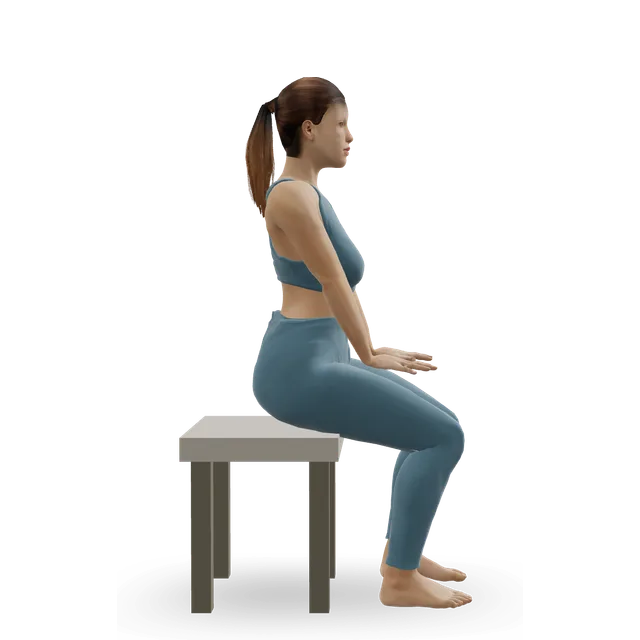
On a firm chair, head level. Slow breathing: 2 to 3 minutes, in for about 4 and out for about 6 (our editorial starting point, at the booklet's pace; the move's page suggests at least 5 minutes as a daily practice). Breath reach: 5 breaths, breathing out for longer than in; seated side bend: 10 to 20 seconds, 2 or 3 times each side; seated march: 1 to 2 minutes (the moves' pages). Shoulder rolls: 10 each way (our seated chair yoga class). Seated upper-back lift: 5 holds of 3 to 5 seconds; cat-cow, seated: 6 slow rounds; seated twist: 5 each side with 5-second holds, eyes on a point ahead if turning your head makes you dizzy (our chair yoga class).

Standing at a counter: strength and balance

Fingertips on the counter, eyes open and looking ahead. Mountain pose: 5 to 10 slow breaths, 2 or 3 times; side-stepping: 10 steps each way (the moves' pages). Sit to stand: 5 to 8; chair pose: 3 holds of 10 to 15 seconds, knees only a little bent; warrior II: 3 breaths each side, side-on to the counter with a short stance; tree: 3 breaths each side, heel at your ankle; calf raises: 8 to 10 (our chair yoga class). Semi-tandem stance: 2 holds of 20 seconds each side; heel-to-toe: hold 20 seconds, then 5 to 10 steps; one-leg stand: 2 holds of 5 to 10 seconds each leg (our vestibular rehabilitation routine).

Later, once one-leg standing is steady

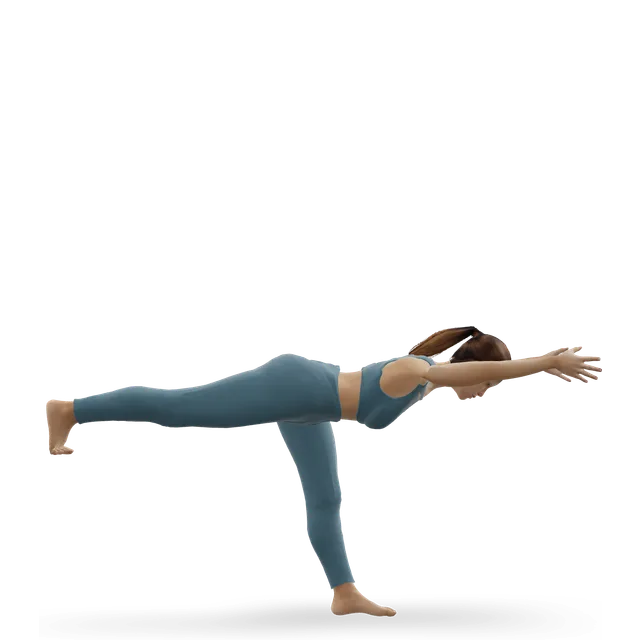
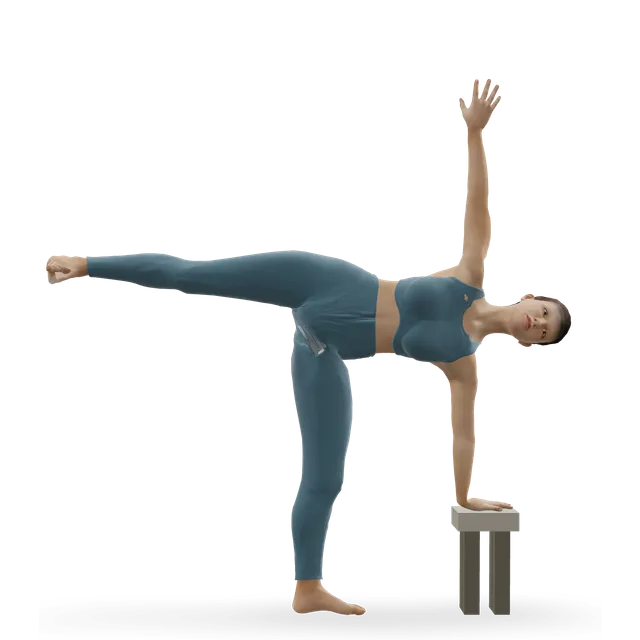
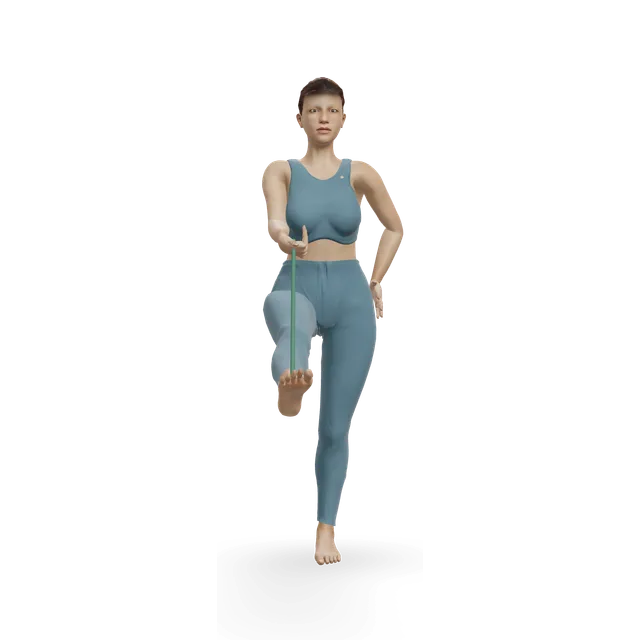
Next to a wall, looking down rather than up if looking up makes you wobble. Warrior III and half moon: 3 to 5 breaths each side, hands on a wall or a block to start (our yoga for legs class); standing hand-to-big-toe: 3 breaths each side (our yoga for balance class). Our yoga for balance guide has the full progression.

Rest without lying back

Finish sitting, with 3 minutes of slow breathing (our editorial starting point). Corpse pose is optional, only if lying down doesn't bring on dizziness: head raised on a pillow, 3 to 5 minutes (our editorial starting point; the move's page suggests at least 5), then roll to your side and sit for a while before you stand.

The exercises that treat lasting dizziness

Head turns and gaze exercises are taught step by step on our vertigo exercise guide, from the Balance Retraining booklet. Do them every day as their own session, not as part of a yoga class (our suggestion).

Poses to change or leave out

Head-down poses and inversions

Downward dog, forward folds, headstand, shoulder stand, plough, dolphin, forearm stand and sun salutations: move in and out slowly with your head higher, such as a half fold with a flat back and your hands on a chair, or leave them out during a bad spell (our caution, from the BPPV triggers).

Sources 13, 14

Lying back and tipping your head back

Fish, camel, wheel and upward-facing dog: use low cobra or sphinx with your head level instead (our suggestion).

Sources 37, 1

Fast head turns and neck circles

Dizziness is a stop sign on our neck circles move page. Add head turns to balance poses only when your physiotherapist does, as our vestibular rehabilitation routine advises.

Source 8

Getting down to the floor and back up

Roll to your side slowly, pause, and sit for a while before you stand. Our class stays off the floor.

Sources 1, 3

Hot rooms, fast breathing and breath holds

Skip hot yoga and heated rooms, fast or forceful breathing such as kapalabhati (skull-shining breath) and bhastrika (bellows breath), and breath holds (our suggestion, as in our yoga for anxiety and breathing guides).

Sources 38, 39

Eyes-closed balance

Only once eyes-open balance is easy, as your rehabilitation progresses.

Source 8

Glaucoma and blood pressure

With glaucoma, skip headstands, shoulder stands and other full inversions, and keep other head-down poses brief or use a supported version. With high blood pressure that isn't controlled, skip headstands, shoulder stands and long head-down holds, with no breath holds. (Our glaucoma and high blood pressure guides.)

Free classes

Start with our 20-minute head-up class on steady days, 2 or 3 times a week (our suggestion), alongside the daily vestibular rehabilitation routine if you've been given one. Seated chair yoga has no standing at all. In the breathing class, use the slow and crocodile breathing and skip the patterns with breath holds. Yoga for balance comes later: it ends lying down and adds head turns and eyes-closed work.

Yoga for vertigo and dizziness: a 20-minute head-up class, sitting then at a counter

A 20-minute yoga class for people who get dizzy: slow breathing and spine moves sitting down, then strength and balance at a counter, with no head-down poses.

20 minBeginner15 movesA bench or box, A wall

Vestibular rehabilitation exercises: a balance routine for dizziness

A 15-minute routine for lasting dizziness from an inner-ear problem: the vertigo guide's head and eye exercises, then balance at a counter and a short walk.

15 minBeginner7 movesA wall, Cardio machine

Chair yoga for seniors

A free 20-minute chair yoga class for older adults: slow breathing, gentle seated stretches and twists, standing poses holding the chair, and a calm finish.

20 minBeginner18 movesA bench or box, Something with weight

Seated chair yoga: 15 minutes, no standing

A 15-minute chair yoga routine done entirely sitting: slow breathing, neck, shoulder and wrist stretches, seated twists and side bends, and a calm finish.

15 minBeginner16 movesA bench or box

Balance exercises routine

Balance practice in 10 minutes: tandem stance, single-leg stands, marches, heel walks, tree pose and floor transfers.

10 minBeginner7 movesA wall, A bench or box

Strength and balance exercises for seniors

A 40-minute strength and balance session for over-65s, built from the Otago home programme and NHS exercises, using a chair, a counter and a step.

40 minBeginner18 movesA bench or box, Something with weight

Breathing exercises to relax

A 6-minute breathing routine: slow breathing, crocodile breathing, alternate nostril breathing, box breathing and 4-7-8 breathing.

6 minBeginner5 movesNo equipment

Yoga for balance: a 30-minute standing class, from steady to moving

Thirty minutes of standing yoga for balance: strong standing poses, one-leg poses at the wall, and side steps, backward steps, reaches and sit-to-stands.

30 minBeginner16 movesA wall, A bench or box

Warning signs: when to get help

These follow our vertigo exercise guide word for word, and the NHS. A&E means accident and emergency. In the US, call 911 for 999, and use your doctor's urgent line or urgent care for NHS 111.

Call 999 (911 in the US) or go to A&E

  • Vertigo with double vision or loss of vision, hearing loss, trouble speaking, or weakness, numbness or tingling in an arm or leg.
  • Spinning with a face that droops on one side, arms you can't lift and keep up, slurred or garbled speech, sudden problems with the sight in one eye, or feeling very off-balance: possible signs of a stroke. Call even if the signs have gone, if they happened in the last 24 hours.
  • Sudden dizziness with a severe headache, confusion or blurred vision: the NHS lists these among the other signs of a stroke.
  • In the US, the BE FAST check starts with B for balance: ask whether the person feels off-balance or dizzy, and call 911.
  • Chest pain that feels tight or squeezing or spreads to your arms, neck or jaw, or severe difficulty breathing.
  • After a fall, if someone may have hurt their head, back, neck or hip, or can't get up.
  • Don't drive yourself to A&E.

Sources 1, 17, 22, 40

Urgent GP appointment or NHS 111

  • Vertigo with a severe headache.
  • Vertigo with being sick or feeling very sick.
  • Vertigo with a very high temperature, or feeling hot, cold or shivery.
  • Sudden hearing loss in one ear.
  • A fall that may have left you in pain, injured or unwell.

Sources 1, 15

See a GP

  • Vertigo that won't go away or keeps coming back.
  • Labyrinthitis or vestibular neuritis that isn't better after a few days, is getting worse, or hasn't improved within a week of starting treatment.
  • Symptoms of Ménière's disease.
  • You keep feeling dizzy or faint, especially when you stand up.
  • You've had a fall or you're worried about your balance.
  • Dizziness that comes with hearing loss or ringing in the ears, double or blurred vision, numbness or weakness, fainting or headaches.

Sources 1, 15, 17, 3, 2

Stop the session

Stop, and don't start again until a doctor says it's safe, if the exercises bring on:

  • Sharp, severe or long-lasting pain in your neck, head or ear.
  • A feeling of fullness in the ear, deafness or noises in the ear.
  • Fainting or blacking out.
  • Double vision.
  • Numbness, weakness or tingling in your arms or legs.

Source 8

During yoga

If a pose brings on a spin, stay still with your eyes on one point until it passes, then come out slowly and sit down. Short spins from position changes in BPPV are unpleasant but not harmful; get them diagnosed and treated rather than practising through them (our suggestion).

If a pose that tips your head back or turns it hard brings on dizziness, blurred vision or a sudden headache, come out slowly and sit down. If it doesn't settle within a few minutes, treat it as one of the urgent signs above, and don't repeat that pose.

Sources 14, 37

Myths

"Yoga cures vertigo"Mixed evidence

No trial shows yoga cures any cause of vertigo. Two small studies found a yoga programme helped long-lasting inner-ear dizziness about as much as vestibular exercises, but neither is strong enough to rely on. BPPV needs a repositioning manoeuvre, and lasting dizziness after an inner-ear illness needs vestibular rehabilitation.

Sources 9, 10, 5, 6

"Headstands and inversions help vertigo"Strong evidence

Some yoga pages recommend them, but head-down positions and lying back are the classic BPPV triggers, and the NHS says not to bend over during vertigo. Take them slowly, or leave them out.

Sources 13, 14, 1

"Balance poses fix positional vertigo"Strong evidence

Tree pose trains standing balance, but BPPV is loose crystals in the inner ear, which a repositioning manoeuvre moves back.

Sources 5, 4, 30

"Keep your head still until it passes"Strong evidence

Lie still during a bad attack, but start moving again as soon as you can: avoiding movement slows recovery and stiffens the neck.

Sources 1, 15, 8

"If yoga makes me dizzy, it's doing me harm"Strong evidence

Short spins from position changes in BPPV are unpleasant but not harmful, and vestibular exercises work by making you mildly dizzy. Dizziness with stroke signs, or dizziness that doesn't settle, is different: see the warning signs.

Sources 14, 8, 1

"Any yoga will retrain my balance"Emerging evidence

Fitness exercise without a balance element hasn't been found to help a balance-organ problem. Vestibular rehabilitation is specific, and yoga's standing balance work is the useful part, best added once dizziness is nearly better.

Sources 23, 8

"Yoga for cervical vertigo"Mixed evidence

Dizziness from the neck is a debated diagnosis; hands-on treatment with exercise has some evidence, and yoga none. See a GP or physiotherapist.

Source 20

"Hot yoga is fine with vertigo"Mixed evidence

In a survey of hot yoga participants, the commonest problems during a session were feeling light-headed or dizzy, and NCCIH warns of overheating and dehydration.

Sources 38, 39

Questions people ask

Can yoga help vertigo?

Not as a treatment for the cause. BPPV, the brief spins when you lie down or look up, needs a repositioning manoeuvre such as the Epley, and lasting dizziness after an inner-ear illness needs vestibular rehabilitation. Gentle, head-up yoga can help your balance, strength and calm once you're steadier.

What are the best yoga poses for vertigo and dizziness?

Ones that keep your head up and your body steady: seated breathing and spine moves, then mountain pose, chair pose, warrior II and tree pose at a kitchen counter. Our free 20-minute class puts them together.

Which yoga poses should I avoid with vertigo?

Take head-down poses (downward dog, forward folds, headstands), lying back quickly, tipping your head back and fast head turns slowly, or leave them out during a bad spell. They're the classic triggers for BPPV.

Can yoga cause vertigo or dizziness?

It can. The positions that set off BPPV come up in many classes, and hot rooms, fast breathing and standing up quickly can make anyone dizzy. In rare cases, tipping the head far back has been linked with reduced blood flow to the back of the brain.

Is yoga good for BPPV?

It can't move the loose crystals; a repositioning manoeuvre does, and NICE says to offer it when a trained professional is available. Once BPPV is treated, getting back to your usual activities, including yoga, has been linked with less leftover dizziness.

Is there any research on yoga for vertigo?

Two small studies from India found a yoga programme helped long-lasting inner-ear dizziness about as much as vestibular exercises, but neither is strong enough to rely on. Tai chi has helped balance in small studies of people with inner-ear problems, alongside or after rehabilitation.

Can I do yoga with Ménière's disease?

Between attacks, yes, with care: exercise helps the unsteadiness between attacks but can't stop them, and the NHS says relaxation techniques such as breathing exercises can help. Practise balance poses at a counter, and don't practise during an attack.

Is yoga good for vestibular migraine?

It hasn't been tested, and the evidence for any non-drug prevention is very thin. Gentle, regular yoga without hot rooms or breath holds is reasonable, and our yoga for headaches guide has more.

Is yoga or vestibular rehabilitation better?

Vestibular rehabilitation has the evidence: 39 trials, and a free booklet version helped in a UK trial in general practice. Do your exercises every day and add yoga on top, not instead.

Should I do yoga during a vertigo attack?

No. Lie still in a quiet, dark room until it passes, then start moving again as soon as you can.

Why do I feel dizzy when I stand up after yoga?

Usually it's a drop in blood pressure as you change position. Come up slowly from lying to sitting to standing, and see a GP if it keeps happening.

When is dizziness an emergency?

Call 999 for vertigo with double vision or loss of vision, hearing loss, trouble speaking, weakness or numbness in an arm or leg, or a drooping face. Get an urgent GP appointment or call 111 for vertigo with a severe headache, being very sick or a high temperature.

Sources

  1. NHS · Vertigo (past its review date: reviewed May 2023, review due May 2026)
  2. NHS · Dizziness (past its review date: reviewed April 2023, review due April 2026)
  3. NHS · Low blood pressure (hypotension) (past its review date: reviewed July 2023, review due July 2026)
  4. NICE NG127 · Suspected neurological conditions: recognition and referral, section 1.2, dizziness and vertigo in adults
  5. Hilton 2014 · The Epley manoeuvre for benign paroxysmal positional vertigo (Cochrane review, Cochrane Database Syst Rev)
  6. McDonnell 2015 · Vestibular rehabilitation for one-sided inner-ear loss: 39 trials, 2,441 people (Cochrane review, Cochrane Database Syst Rev)
  7. Yardley 2012 · Booklet-based vestibular rehabilitation for chronic dizziness in UK general practice: 337 people (randomised trial, BMJ)
  8. Yardley · Balance Retraining: exercises which speed recovery from dizziness and unsteadiness (booklet, University of Southampton and Ménière's & Vestibular UK, reviewed November 2025)
  9. Vaishali 2024 · Yoga, vestibular exercises or tablets for long-lasting peripheral vertigo: 150 people (randomised trial, F1000Research; full text read)
  10. Gazbare 2021 · Yoga poses or gaze and habituation exercises for inner-ear dizziness: 32 people over 3 weeks (comparison study, Neurol India)
  11. McGibbon 2004 · Tai chi or vestibular rehabilitation: gaze and whole-body stability in 26 people (randomised trial, J Vestib Res)
  12. Chow 2023 · Tai chi classes for 37 people whose progress stalled after vestibular rehabilitation (uncontrolled study, J Laryngol Otol)
  13. Ménière's & Vestibular UK · What is BPPV?
  14. Gloucestershire Hospitals NHS · Understanding benign paroxysmal positional vertigo (BPPV) (patient leaflet, reviewed July 2026)
  15. NHS · Labyrinthitis and vestibular neuritis (last reviewed August 2026)
  16. von Brevern 2007 · How common BPPV is: a German population study (population survey, J Neurol Neurosurg Psychiatry)
  17. NHS · Ménière's disease (last reviewed September 2026)
  18. Webster 2023 · Non-drug treatments to prevent vestibular migraine (Cochrane review, Cochrane Database Syst Rev)
  19. Webster 2023 · Non-drug treatments for persistent postural-perceptual dizziness (Cochrane review, Cochrane Database Syst Rev)
  20. De Vestel 2022 · Treating dizziness from the neck (cervicogenic dizziness): 13 trials, 898 people (systematic review and meta-analysis, J Man Manip Ther)
  21. Kerber 2006 · Stroke among 1,666 emergency patients with dizziness, vertigo or imbalance (population-based study, Stroke)
  22. NHS · Symptoms of a stroke (last reviewed September 2024)
  23. Hall 2022 · Vestibular rehabilitation for peripheral vestibular hypofunction (clinical practice guideline, J Neurol Phys Ther)
  24. Webster 2023 · Lifestyle and diet changes for Ménière's disease (Cochrane review, Cochrane Database Syst Rev)
  25. McGibbon 2005 · Tai chi or vestibular rehabilitation and walking in 36 older adults (randomised trial, preliminary report, BMC Neurol)
  26. Maciaszek 2012 · Tai chi and balance in 40 older men with dizziness (randomised trial, Am J Chin Med)
  27. Huang 2019 · Tai chi for balance disorders (systematic review, Am J Audiol)
  28. Kendall 2016 · Non-drug treatments for dizziness in older people (systematic review, Phys Ther)
  29. Regauer 2020 · Physiotherapy for older people with vertigo, dizziness and balance problems: 22 trials, 1,876 people (systematic review, BMC Geriatr)
  30. Youkhana 2016 · Yoga, balance and mobility in people aged 60 and over (systematic review and meta-analysis, Age Ageing)
  31. Sherrington 2019 · Exercise for preventing falls in older people living in the community (Cochrane review, Cochrane Database Syst Rev)
  32. Agrawal 2009 · Balance and inner-ear function in 5,086 US adults (national survey, Arch Intern Med)
  33. Ménière's & Vestibular UK · Vestibular rehabilitation
  34. Martellucci 2022 · Getting back to daily activity after BPPV treatment and leftover dizziness: 69 people (observational study, Int J Environ Res Public Health)
  35. PubMed · Search for yoga with vertigo, dizziness, vestibular problems, Ménière's or BPPV: 25 records, two yoga trials and no trial for BPPV, vestibular migraine or Ménière's attacks (27 October 2026)
  36. Europe PMC · Search for yoga with vertigo, dizziness, vestibular problems or Ménière's in the title or abstract: 29 records, no further trials (27 October 2026)
  37. Shenouda 2026 · Yoga, reduced blood flow to the back of the brain and blurred vision in a 56-year-old woman (case report, Case Rep Ophthalmol)
  38. Mace 2016 · Benefits and problems reported by 157 hot yoga participants (online survey, Int J Yoga Therap)
  39. NCCIH · Yoga: effectiveness and safety (US National Center for Complementary and Integrative Health, updated August 2023)
  40. NHS · Heart attack (last reviewed March 2026)

Exercise education, not a personal prescription, and clinical review of these guides is pending. If you are pregnant, have a health condition such as glaucoma, high blood pressure or osteoporosis, or have had recent surgery, check with a doctor, midwife or physiotherapist before starting, and stop for sharp or increasing pain. Health disclaimer.