Yoga flows
Yoga for vertigo and dizziness: a 20-minute head-up class, sitting then at a counter
For days when you're steady, between attacks of vertigo and once a GP has checked your dizziness. Everything is done sitting on a firm chair or standing at a kitchen counter, with your head kept up: no forward folds, no lying back, no floor work, and slow changes of position. It doesn't treat the cause of vertigo: brief spins when you lie down or look up are usually BPPV, which needs a repositioning manoeuvre, and lasting dizziness after an inner-ear illness needs the vestibular exercises on our vertigo guide, done every day as their own session.
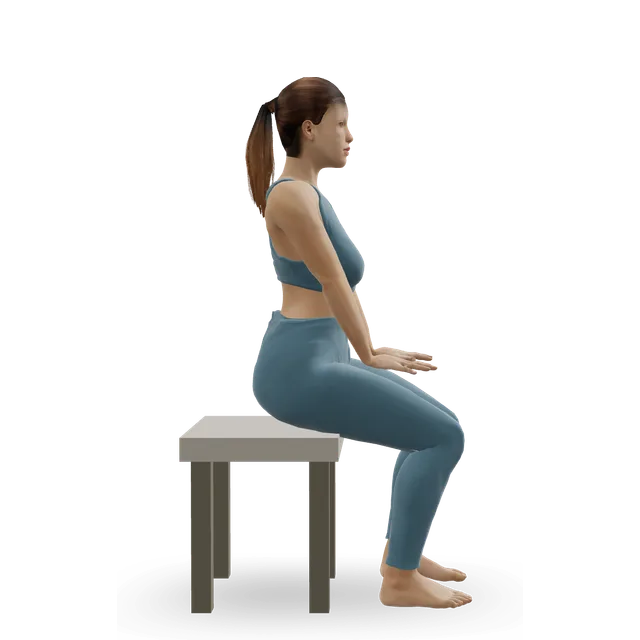
Settle, sitting (3 minutes)
- Beginner · 3D demoSit on a firm chair, feet flat. No more than one breath every 4 to 6 seconds; take smaller breaths if you feel light-headedEasier: Breath reachHarder: Crocodile breathing (prone diaphragmatic breathing)
- Shoulder rolls10 each wayBeginner · Shoulders, Back, Neck · 3D demoSlow and smooth; keep your head stillHarder: Shoulder CARs (controlled articular rotations)


Spine, sitting (5 minutes)
- Seated upper-back lift (sit tall, shoulders back)5 holds of 3 to 5 sBeginner · Back, Shoulders, Neck · 3D demoSit tall near the front of the seat; lift your breastbone, eyes levelEasier: Elbows backHarder: Prone Y-T-W raises
- Cat-cow6 slow roundsBeginner · Back, Abs · 3D demoSeated, hands on your knees (the demo shows all fours). Keep it small, with your head in line with your spineHarder: Half lord of the fishes (Ardha Matsyendrasana)
- Seated overhead side bend2 each side, 10 to 20 s holdsBeginner · Back, Abs · 3D demoReach one arm up and over; both sitting bones stay on the seatHarder: Overhead lat stretch at a bench (elbows on the bench)
- Thoracic rotation5 each side, 5 s holdsBeginner · 3D demoSeated, arms crossed, hips facing forward. Turn slowly; keep your eyes on a point ahead if turning your head makes you dizzyEasier: Side-lying open bookHarder: World's greatest stretch




Stand at the counter (5 minutes)
- Sit to stand, pushing on the thighs5 to 8 repsBeginner · Quads, Glutes, Triceps · 3D demoStand up slowly, then wait a moment with your hands on the counter before you let goHarder: Bodyweight squat
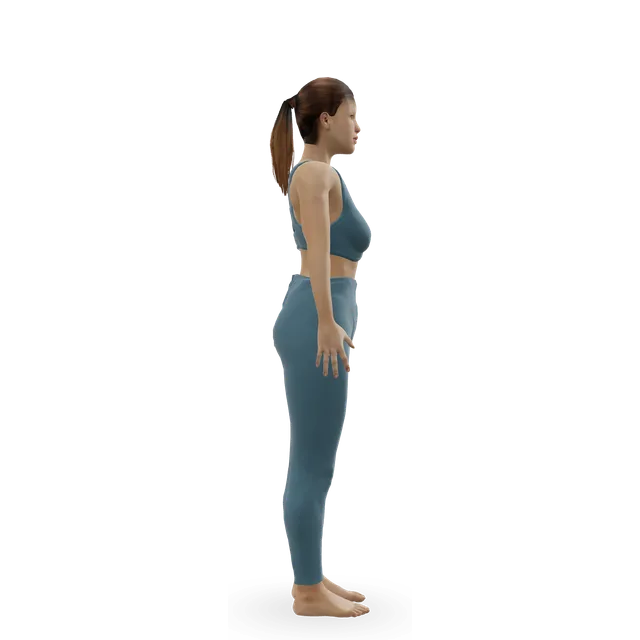
- Mountain pose (Tadasana)5 to 10 slow breaths, twiceBeginner · Calves, Back, Abs · 3D demoFingertips on the counter, weight even, eyes open and looking aheadHarder: Tree pose (Vrksasana)
- Chair pose (Utkatasana)3 holds of 10 to 15 sBeginner · Quads, Glutes, Shoulders · 3D demoHold the counter and bend your knees only a little; keep your head upHarder: Revolved chair pose (Parivrtta Utkatasana)
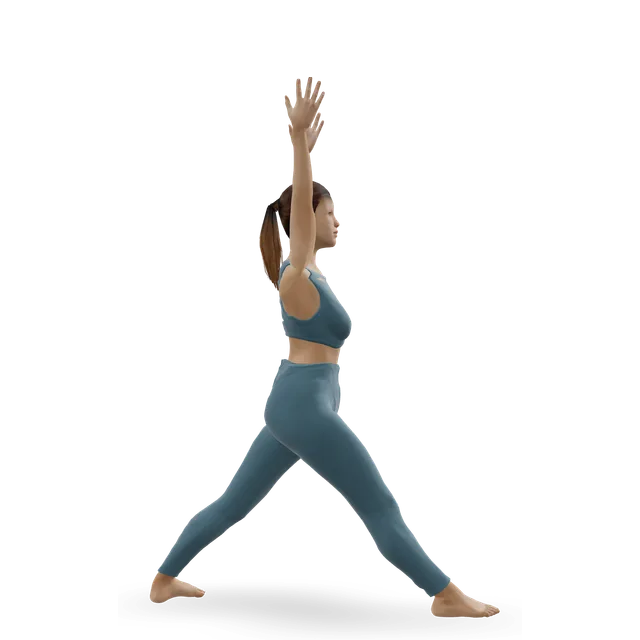
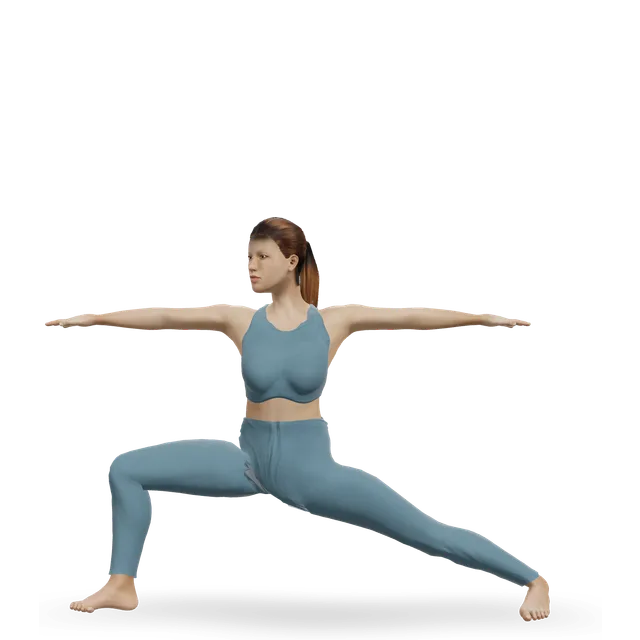
- Warrior II (Virabhadrasana II)3 breaths each sideIntermediate · Quads, Glutes, Adductors · 3D demoSide-on to the counter, one hand on it, short stance. Look straight ahead, not over your handEasier: Chair pose (Utkatasana)Harder: Extended side angle (Utthita Parsvakonasana)



Balance at the counter (4 minutes)
- Semi-tandem stance2 holds of 20 s each sideBeginner · Calves, Hip abductors · 3D demoFingertips on the counter; lift one finger at a time as you get steadierHarder: Tandem stance and heel-to-toe walk
- Tandem stance and heel-to-toe walkHold 20 s, then 5 to 10 stepsBeginner · Calves, Hip abductors · 3D demoAlong the counter; look ahead, not at your feetEasier: Semi-tandem stanceHarder: Single-leg stand
- Tree pose (Vrksasana)3 breaths each sideBeginner · Glutes, Hip abductors, Calves · 3D demoHeel against your ankle, toes on the floor, fingertips on the counter. Never press your foot into your kneeEasier: Mountain pose (Tadasana)Harder: Standing hand-to-big-toe pose (Utthita Hasta Padangusthasana)
- Side-stepping (sideways walking)10 steps each wayBeginner · Hip abductors, Glutes, Adductors · 3D demoAlong the counter, hips level, eyes aheadHarder: Lateral band walk
- Slow calf raise8 to 10 repsBeginner · Calves · 3D demoHands on the counter; rise and lower slowlyEasier: Seated bent-knee calf raise (soleus raise)Harder: Standing dumbbell calf raise





Finish, sitting (3 minutes)
- Beginner · 3D demoSit down before you stop. Breathe slowly, eyes open or closed, and stay seated until any wobble has passedEasier: Breath reachHarder: Crocodile breathing (prone diaphragmatic breathing)
Tips
- Not during an attack: lie still in a quiet, dark room until it passes, then start moving again as soon as you can.
- This class doesn't replace your treatment. If you've been given head and eye exercises or Brandt-Daroff exercises, do those every day as their own session: they work by making you mildly dizzy on purpose.
- Getting steadier? Our yoga for balance class adds one-leg poses, head turns and eyes-closed work. Add head turns only when your physiotherapist does.
- Stop, and see a doctor before you start again, if it brings on sharp or lasting pain in your neck, head or ear, a full feeling or new noises in the ear, deafness, double vision, fainting, or numbness or weakness in your arms or legs. Call 999 for vertigo with double vision, loss of vision, hearing loss, trouble speaking, or weakness or numbness in an arm or leg.
- Keep the room cool and your breathing slow: hot rooms and fast or held breathing can make you dizzy.
- With glaucoma, high blood pressure or osteoporosis, this class already keeps your head up; our yoga for vertigo guide has the rest of the swaps.
The doses are suggested starting points, not a prescription. Choose a range you can control and stop for sharp or increasing pain, numbness or tingling. Get individual advice after an injury or surgery, or if you are pregnant or managing a health condition.
Guides that recommend it
Find more moves like these
More yoga flows
Beginner yoga flow
A 20-minute beginner yoga sequence: mountain, chair, warrior II, triangle, tree, down dog, cobra and child's pose.
20 minBeginner11 movesA step
Sun salutation flow
A 20-minute flow built on sun salutations A and B, with warrior poses and a short cool-down.
20 minIntermediate8 movesNo equipment



Yoga for tight hips
A hip-opening yoga sequence: low lunge, lizard, goddess, pigeon, bound angle and happy baby.
25 minBeginner10 movesA wallQuestions people ask
How long does the yoga for vertigo and dizziness: a 20-minute head-up class, sitting then at a counter take?
About 20 minutes, including any warm-up and cool-down listed. Shorten it by doing fewer rounds; lengthen it by adding one.
What equipment do I need?
You need: A bench or box, A wall. Each move links to its guide, where you can find an alternative if you are missing something.
Is it suitable for beginners?
It is written for beginners. 7 of its 15 moves have an easier option listed beside them if you need one.
How do I make it easier or harder?
Use the easier or harder option listed under each move, change the number of rounds, or adjust the rest. Progress one change at a time.