Eye yoga won't change your eyesight
In controlled studies, eye exercises didn't improve sharpness of vision or prescriptions: a 2024 meta-analysis of 11 studies (921 people) found them no better than the comparison groups.
Yoga guide
Eye yoga (palming, eye movements, looking near and far, and candle gazing) can be a pleasant break for tired eyes, and short breaks with full blinks help screen strain and dry eyes a little. It won't change your eyesight: in controlled studies, eye exercises didn't improve sharpness of vision or prescriptions, and we found no study of anyone giving up their glasses.
Some eye advice matters for safety: head-down yoga poses raise the pressure in your eyes, which matters with glaucoma, and gazing at the sun can burn the retina. This guide covers what eye yoga is, what the evidence shows for eyesight, screens and dry eyes, the one place eye exercises do work, yoga with glaucoma and after eye surgery, the claims that don't hold, eye tests, and the eye symptoms that need help straight away.
In controlled studies, eye exercises didn't improve sharpness of vision or prescriptions: a 2024 meta-analysis of 11 studies (921 people) found them no better than the comparison groups.
Clinic-based eye exercises work for children whose eyes struggle to turn inward for close work (convergence insufficiency), prescribed and supervised by an optometrist or orthoptist.
Source 3
Screen work doesn't permanently damage your eyes. In small trials, candle gazing eased self-rated eye strain no more than a cold eye pack, and blinking exercises eased dry eye for as long as people kept doing them.
Breaks from screens, cleaning your eyelids, a humidifier, and a pharmacist's advice on drops come first.
Source 8
Downward dog and headstands raise the pressure in your eyes while you hold them, which matters with glaucoma: skip full inversions and keep head-down poses brief.
Sun gazing can burn the retina permanently. Everyone should have an eye test at least every 2 years.
Palming (warm palms cupped over closed eyes), slow eye movements (side to side, up and down, circles), looking near then far, blinking, and candle gazing (trataka). Some pages add gazing at the rising or setting sun, which isn't safe. Eye yoga overlaps with the Bates method of eye exercises, which one small trial compared with candle gazing.
Source 13
Short sight (myopia) blurs distant things; long sight, and the need for reading glasses with age (presbyopia), blur close things. They come from the shape of the eye and, with age, a stiffening lens, and glasses or contact lenses correct them. Eye muscles move and focus your eyes, but exercising them doesn't change the eye's shape or the lens, which is why trials find no change in prescriptions (our explanation).
As a relaxing break from close work, alongside screen breaks, blinking, the right glasses and eye tests, and as head-up yoga for people with eye conditions. Not as a way to change your prescription, treat an eye disease or skip an eye test.
A systematic review of 43 studies found no clear evidence that eye exercises improve short sight, sharpness of vision or eye strain. A 2024 meta-analysis (11 controlled studies, 921 people) found eye exercises no better than control for sharpness of vision or prescriptions, and its authors suggested retiring school eye-exercise policies. Across 12 observational studies of 134,201 children, Chinese school eye exercises weren't linked with less short sight once other factors were taken into account.
In 24 people with short sight, 8 weeks of Bates exercises or candle gazing changed neither their prescription nor sharpness of vision. A near-and-far focusing exercise didn't improve near vision in 23 people with age-related reading problems, though they were more satisfied. In 156 young adults, 2 weeks of eye exercises had small effects, and being encouraged to try harder improved results more than most of the exercises did.
The NHS (National Health Service) says short sight can usually be corrected with glasses or contact lenses, and that more time outdoors may help stop it getting worse, especially in children. In a PubMed search of 103 records on yoga and eye exercises, we found no trial in which eye exercises let people stop wearing glasses.
In children whose eyes drift outward during close work, causing strain or double vision when reading, clinic-based therapy with home practice worked well against placebo (12 trials, 1,289 people; high certainty), while home "pencil push-ups" on their own did no better than placebo. In adults the evidence is less clear. If reading gives you double vision or eye strain, see an optometrist: any exercises should come from them or an orthoptist.
Source 3
The Health and Safety Executive (HSE) says screen work doesn't cause permanent damage to the eyes, but long spells can cause tired eyes, discomfort, temporary short sight and headaches, and the College of Optometrists says screens are unlikely to cause lasting harm to your vision. An international expert report links digital eye strain mainly to blinking less and less fully, uncorrected sight problems and focusing problems. Estimates of how common it is vary widely, because there's no agreed definition.
In 291 computer users given daily yoga or a waiting list, self-rated eye discomfort fell with yoga, but only 62 and 55 people were analysed. Two weeks of candle gazing eased self-rated strain in 106 IT workers compared with a waiting list, and no more than a cold eye pack in 300 people. Yoga eye exercises eased fatigue scores in 32 optometry students and in 40 nursing students. All these trials were unblinded and used self-rated symptoms. A therapist's Thai yoga facial massage eased symptoms in 32 young adults over 4 weeks, without changing their prescriptions.
Every 20 minutes, look at something 20 feet (about 6 metres) away for 20 seconds. Reminders eased eye strain and dry eye symptoms over 2 weeks in 29 computer users, but there was no comparison group and the benefit was gone a week after stopping. In a 30-person lab trial, 20-second breaks made no difference to symptoms or reading. The College of Optometrists recommends it anyway, with regular blinking and a screen below eye level, 40 to 75 cm away. Our sitting guide covers screen set-up.
The Tear Film and Ocular Surface Society's 2023 report says treatments for digital eye strain aren't well established; the right glasses for your working distance, better blinking, your work set-up and breaks may help, and blue-light blocking glasses don't appear to.
Source 19
Clean your eyelids every day, take breaks from screens, keep your screen just below eye level, use a humidifier, and wear glasses instead of contact lenses to rest your eyes. A pharmacist can suggest drops, gels or ointments. See an optician or GP (general practitioner) if your eyes are still dry after a few weeks of home treatment.
Source 8
In 41 people with dry eye, a 10-second blinking routine every 20 minutes for 4 weeks improved symptoms and incomplete blinking, without a comparison group. In 100 people, blinking exercises with artificial tears for 3 days beat tears alone. In a 98-person trial in dry eye, the best routine was 15 cycles of close, squeeze and open, 3 times a day, and the benefits mostly faded within 2 weeks of stopping.
In 49 adults with mild to moderate dry eye, online candle gazing (25 minutes, 3 times a week for 12 weeks) improved symptom scores and tear stability compared with no treatment, but not tear volume, in a small trial in which everyone knew their group. A 2026 review of 14 yoga studies in eye conditions called the evidence for short sight and dry eye limited and inconclusive.
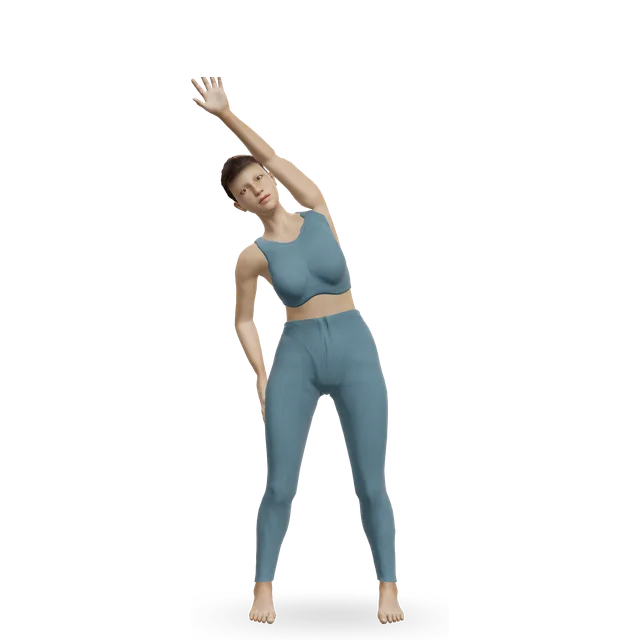
Written steps, because the 3D figure has no face. It's a rest, not a treatment, and it won't change your eyesight.
With each screen break (our suggestion):
The evidence is two small trials for screen strain (no better than a cold eye pack) and one for dry eye, which built up to 25-minute sessions. If you try it: a candle at arm's length with the flame just below eye level, blink whenever you need to, start with a minute or two, then close your eyes (our suggestion). Stop if your eyes get sore or stay watery. Never gaze at the sun.
For your body at a screen: slow breathing for 1 minute, 5 slow chin tucks holding each for a couple of seconds, shoulder rolls 10 each way and thoracic rotation 6 each side, sitting (our desk yoga routine). Side neck stretch: 5 to 10 seconds, 2 to 4 times each side; mountain pose: 5 to 10 slow breaths (the moves' pages).
Poses that keep your head above your heart, as our glaucoma guide suggests. Chair pose: 3 holds of 20 to 30 seconds (our yoga for legs class); tree: 3 to 5 breaths each side near a wall (our yoga for balance class); warrior I and II: 3 to 5 breaths each side (our editorial starting point). Cat-cow: 8 waves; alternate nostril breathing: 3 to 5 minutes of slow rounds (the moves' pages), breathing out gently with no holds. Easy pose: 1 minute; supine twist: 45 seconds each side (our yoga for headaches class).
 3D demoMountain pose (Tadasana)Beginner · No equipment
 3D demoChair pose (Utkatasana)Beginner · No equipment
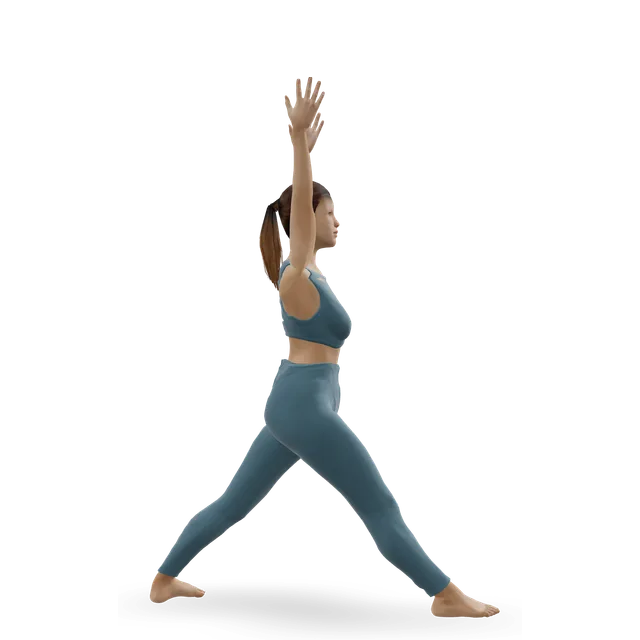 3D demoWarrior I (Virabhadrasana I)Intermediate · No equipment
 3D demoWarrior II (Virabhadrasana II)Intermediate · No equipment
 3D demoTree pose (Vrksasana)Beginner · No equipment
 3D demoCat-cowBeginner · No equipment
 3D demoEasy pose (Sukhasana)Beginner · No equipment
 3D demoSupine spinal twist (Supta Matsyendrasana)Beginner · No equipment
 3D demoAlternate nostril breathing (Nadi Shodhana)Beginner · No equipment
Our exercise with glaucoma guide has the full advice, and our guides to diabetic retinopathy and cataract surgery cover those conditions.
In 10 people with glaucoma and 10 without, eye pressure rose within a minute of going upside down: in people with glaucoma, from 17 to 28 mmHg (millimetres of mercury) in downward dog, 17 to 27 in a standing forward bend, 18 to 24 in plough and 17 to 21 in legs up the wall, falling back within 2 minutes of sitting up. A headstand doubled eye pressure in 75 practitioners for as long as it was held, and a case report linked years of headstands with worsening glaucoma damage.
Skip headstands, shoulder stands and other full inversions, and keep other head-down poses brief or use a supported version.
In 90 people with glaucoma, 21 days of mindfulness meditation lowered eye pressure (from 18.8 to 12.7 mmHg), and it also helped in 60 people waiting for glaucoma surgery. Six months of pranayama and breathing from the tummy lowered it in 90 people. But in a 4-week randomised trial, yoga eye exercises (tratak) didn't lower eye pressure more than usual care, and alternate nostril breathing had no short-term effect in another study. A 2023 meta-analysis of 6 studies found slow breathing and candle gazing lowered pressure and inversions raised it.
These are small trials, mostly from one country, and none replaces drops, laser or surgery. Keep using your treatment.
Breathe out gently and slowly, with no breath holds and no restricted out-breath, such as the narrowed-throat breathing of ujjayi (our glaucoma guide).
Single case reports describe a blocked retinal vein after a headstand in a man taking warfarin, a bleed in the retina after a back bend, and a vitreous detachment after a head-down posture in a short-sighted woman. They support our existing advice rather than new rules: after eye surgery, no head-down yoga until your eye team says it's safe, and with severe or proliferative diabetic retinopathy (eye damage from diabetes), avoid holding your breath, hard holds, jumping, jarring and head-down positions.
Leave out headstand, shoulder stand, forearm stand and plough. Keep downward dog and forward folds brief or supported, with your hands on a chair or your forehead on a block, and keep your hips flat in legs up the wall.
Our move pages already say to leave out head-down positions, such as downward dog and inversions, after recent eye surgery until your eye team says they are safe (our cataract surgery and retinal detachment guides).
Never gaze at the sun, including at sunrise or sunset.
Rest your palms lightly and don't press on your eyes (our desk yoga guide).
Don't stop wearing your glasses or using eye drops because of eye yoga.
The NHS says everyone should have an eye test at least every 2 years, more often if you're at higher risk of glaucoma. NHS eye tests are free for some people, including children under 16, people aged 60 or over, and people with diabetes or glaucoma.
If your eyes are often tired or your sight seems to change, have an eye test. In the UK, employers must arrange and pay for an eye test for screen users who ask.
Source 4
Eye exercises don't treat floaters. New or sudden floaters or flashes need checking: see the warning signs below.
Source 45
There's no eye yoga class: the eye break above is short and written out. Pair it with the 10-minute desk yoga routine for your neck and back. Chair yoga keeps your head up throughout.
Ten minutes of yoga at your desk, no mat needed: slow breathing, neck, shoulder, wrist and spine moves in your chair, then standing poses with a hand on the desk.
10 minBeginner13 movesA bench or box, A wallA 3-minute standing break to repeat every 30 to 60 minutes at your desk: sit-to-stands, calf raises, marching, an upper-back turn and chin tucks.
3 minBeginner5 movesA bench or box, A wallA quick stretch break you can do beside your desk: neck, back, chest, wrists, hips and quads.
5 minBeginner7 movesA wallA 6-minute breathing routine: slow breathing, crocodile breathing, alternate nostril breathing, box breathing and 4-7-8 breathing.
6 minBeginner5 movesNo equipmentA free 20-minute chair yoga class for older adults: slow breathing, gentle seated stretches and twists, standing poses holding the chair, and a calm finish.
20 minBeginner18 movesA bench or box, Something with weightThese follow our glaucoma and eye guides word for word, and the NHS. A&E means accident and emergency. In the US, call 911 for 999, and use your doctor's urgent line or urgent care for NHS 111.
Ask for an urgent GP appointment or get help from NHS 111 if you have blurred or double vision, flashing lights or shapes, a dark shadow moving across your vision, pain in one or both eyes, or an eye that's red and painful. Go to A&E or call 999 if you suddenly can't see from one or both eyes, or suddenly have severe eye pain.
Source 46
Don't drive yourself to A&E: ask someone to drive you, or call 999 for an ambulance.
Source 47
The NHS says this is a medical emergency that may need immediate treatment. Don't drive yourself: ask someone to drive you, or call 999. Signs include:
Source 12
Get help from NHS 111 if floaters suddenly appear or increase, you see flashes of light, a dark curtain or shadow moves across your vision, or your sight suddenly blurs. These can be signs of a detached retina. The NHS also says to ask for an urgent opticians appointment for floaters or flashes you're seeing for the first time.
See an optician if you think your sight may be getting worse, and an optician or GP if your eyes are still dry after a few weeks of home treatment.
Eye pain, sudden blurring, rainbow rings around lights, or a headache with feeling sick aren't normal effects of exercise: stop, and use the NHS advice above (our suggestion).
Source 12
Eye exercises didn't improve sharpness of vision or prescriptions in 11 controlled studies, and Bates exercises and candle gazing didn't change short sight. Glasses or contact lenses correct the eye's focus.
We found no study that tested palming on its own; it's a pleasant rest. Don't press on your eyes.
School eye exercises weren't linked with less short sight in 134,201 children, and a meta-analysis found no effect. Time outdoors may help slow it, and an optometrist can advise on short sight in children.
A 2-month focusing exercise didn't improve near vision or focusing in 23 people with age-related reading problems.
Source 16
Screen work doesn't cause permanent damage. It can cause tired, dry eyes and headaches, which breaks, blinking and the right glasses help.
Sun gazing burns the retina, sometimes permanently: case series describe lasting blind spots and loss of vision after religious sun gazing.
Head-down poses raise eye pressure. Meditation and slow breathing lowered it in small trials, but nothing here replaces drops, laser or surgery.
The exception is convergence insufficiency: clinic-based exercises from an eye professional work well in children.
Source 3
No. In controlled studies, eye exercises didn't improve sharpness of vision or change prescriptions. Glasses, contact lenses or treatment from an eye professional correct eyesight problems.
We found no study showing it. Short sight, long sight and needing reading glasses with age come from the eye's shape and lens, and in trials, exercises didn't change short sight or near focusing.
Palming, slow eye movements, looking near and far, blinking and candle gazing. It can be a relaxing break from close work.
A little, in small unblinded trials: candle gazing eased self-rated strain, but no more than a cold eye pack. Breaks, blinking, the right glasses and a good screen set-up matter more.
It's a reasonable habit with thin evidence: it helped in a small study without a comparison group, and made no difference in a lab trial. The College of Optometrists recommends it.
Blinking exercises did in small trials: 15 gentle close, squeeze and open cycles, 3 times a day, helped people with dry eye while they kept doing them. The NHS self-care steps help too.
It's a pleasant rest, but no study has tested it on its own. Rest your palms lightly and don't press on your eyes.
For most people, yes, if you keep the flame at a safe distance, blink when you need to and stop if your eyes get sore. Never gaze at the sun: it can burn the retina.
Yes, with changes: skip headstands and shoulder stands, keep head-down poses brief or supported, and breathe out gently with no breath holds. Keep using your drops, and see our exercise with glaucoma guide.
Meditation and slow breathing lowered it in small trials, but yoga eye exercises didn't, and head-down poses raise it. Nothing replaces drops, laser or surgery.
At least every 2 years, or more often if your optician advises. NHS eye tests are free for some people, including children, people aged 60 or over and people with diabetes or glaucoma.
Go to A&E or call 999 if you suddenly can't see, have sudden severe eye pain, or have a red eye with changes in your sight or a severe headache and feeling sick. Get help from NHS 111 or an urgent opticians appointment for new floaters, flashes or a curtain across your vision.
Exercise education, not a personal prescription, and clinical review of these guides is pending. If you are pregnant, have a health condition such as glaucoma, high blood pressure or osteoporosis, or have had recent surgery, check with a doctor, midwife or physiotherapist before starting, and stop for sharp or increasing pain. Health disclaimer.