Yoga flows
Head-up yoga after a concussion: a 15-minute seated and standing class with a symptom check
A short yoga class for the early stages after a concussion: head up, eyes open, sitting and then standing at a counter, with no lying down, head-down poses, fast head turns or fast breathing. It fits stages 2 and 3 of the UK concussion guidelines, after the first 24 to 48 hours of relative rest, on days when your symptoms at rest are mild and stable. Before you start, score your worst symptom from 0 (none) to 10. A rise of no more than 2 points that settles within an hour is fine; if it rises more, or a new symptom starts, stop and try again the next day at an easier level. No trial has tested this class: the structure is our editorial choice. Do it at most once a day, alongside walking or a static bike, which is what sped recovery in trials (our suggestion).
Check in (1 minute)
- Beginner · 3D demoSit and score your worst symptom out of 10 before you start. Breathe gently, with no holds; eyes openEasier: Breath reachHarder: Crocodile breathing (prone diaphragmatic breathing)

Sitting (about 5 minutes)
- Breath reach5 breaths, exhale longer than inhaleBeginner · 3D demoArms rise as you breathe in and lower as you breathe out; stop at shoulder height if your neck complainsHarder: Slow breathing (6 breaths a minute)
- Shoulder rolls10 each wayBeginner · Shoulders, Back, Neck · 3D demoSlow and smooth; keep your head stillHarder: Shoulder CARs (controlled articular rotations)
- Seated upper-back lift (sit tall, shoulders back)5 holds of 3 to 5 sBeginner · Back, Shoulders, Neck · 3D demoSit tall near the front of the seat; eyes levelEasier: Elbows backHarder: Prone Y-T-W raises
- Cat-cow6 slow roundsBeginner · Back, Abs · 3D demoSeated, hands on your knees; small, with your head in line with your spineHarder: Half lord of the fishes (Ardha Matsyendrasana)
- Thoracic rotation5 each side, 5 s holdsBeginner · 3D demoArms crossed; turn slowly, and keep your eyes on a point ahead if turning your head brings on symptomsEasier: Side-lying open bookHarder: World's greatest stretch





Standing at a counter (about 6 minutes)
- Sit to stand from a chair5 slow repsBeginner · Quads, Glutes, Hamstrings · 3D demoStand up slowly, then wait a moment with your hands on the counterEasier: Sit to stand, pushing on the thighsHarder: Bodyweight squat
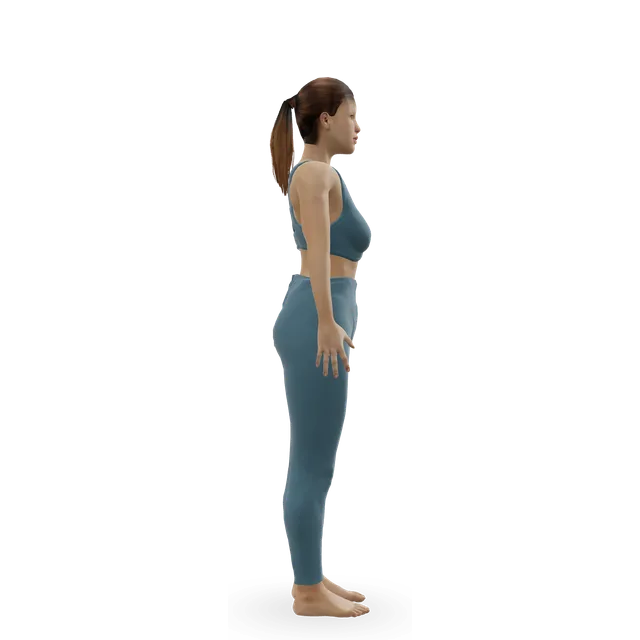
- Mountain pose (Tadasana)5 to 10 slow breaths, twiceBeginner · Calves, Back, Abs · 3D demoFingertips on the counter, eyes open and looking aheadHarder: Tree pose (Vrksasana)
- Chair pose (Utkatasana)3 holds of 10 to 15 sBeginner · Quads, Glutes, Shoulders · 3D demoHold the counter, bend your knees a little, keep your head upHarder: Revolved chair pose (Parivrtta Utkatasana)
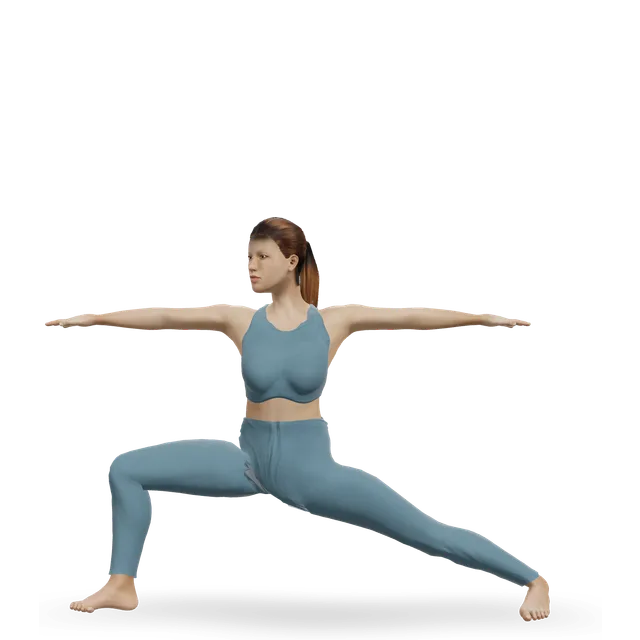
- Warrior II (Virabhadrasana II)3 breaths each sideIntermediate · Quads, Glutes, Adductors · 3D demoSide-on to the counter, one hand on it, short stance; look straight aheadEasier: Chair pose (Utkatasana)Harder: Extended side angle (Utthita Parsvakonasana)
- Slow calf raise8 to 10 repsBeginner · Calves · 3D demoHands on the counter; rise and lower slowlyEasier: Seated bent-knee calf raise (soleus raise)Harder: Standing dumbbell calf raise
- Standing march1 minBeginner · Hip flexors, Abs, Glutes · 3D demoHold a counter if you feel unsteadyEasier: Seated marchHarder: Standing band hip flexion






Finish sitting (about 3 minutes)
- Beginner · 3D demoSitting. Score your symptoms again now, and again an hour laterEasier: Breath reachHarder: Crocodile breathing (prone diaphragmatic breathing)
Tips
- "Stop and rest if your symptoms rise by more than 2 points out of 10, a new symptom starts, or the rise lasts more than an hour. Try again the next day at an easier level."
- "Any red flag at any time, such as a severe or worsening headache, repeated vomiting, getting drowsier, or new weakness or double vision, means 999."
- Leave out head-down poses and upside-down poses until you have no symptoms at rest (our suggestion, timed to the UK guidelines, which start sport training "once not experiencing symptoms at rest from the recent concussion"). Anything you could fall or be knocked in waits until you've been free of symptoms at rest for 14 days.
- Balance poses away from the counter wait until a GP or physiotherapist has checked any lasting dizziness. "If dizziness, neck pain or headaches last more than 10 days, ask about physiotherapy for the neck and balance system."
- Keep screens, including follow-along videos, to a minimum in the first 48 hours (our suggestion, from the UK guidelines' advice on screen time).
- "You can say no to any hands-on adjustment, and a teacher registered with Yoga Alliance must get your explicit consent each time." After a head injury, ask for no adjustments to your head or neck (our suggestion).
- Our exercise after a concussion guide has the six stages in full, and our yoga after a concussion guide has the other warning signs.
The doses are suggested starting points, not a prescription. Choose a range you can control and stop for sharp or increasing pain, numbness or tingling. Get individual advice after an injury or surgery, or if you are pregnant or managing a health condition.
Guides that recommend it
Find more moves like these
More yoga flows
Beginner yoga flow
A 20-minute beginner yoga sequence: mountain, chair, warrior II, triangle, tree, down dog, cobra and child's pose.
20 minBeginner11 movesA step
Sun salutation flow
A 20-minute flow built on sun salutations A and B, with warrior poses and a short cool-down.
20 minIntermediate8 movesNo equipment



Yoga for tight hips
A hip-opening yoga sequence: low lunge, lizard, goddess, pigeon, bound angle and happy baby.
25 minBeginner10 movesA wallQuestions people ask
How long does the head-up yoga after a concussion: a 15-minute seated and standing class with a symptom check take?
About 15 minutes, including any warm-up and cool-down listed. Shorten it by doing fewer rounds; lengthen it by adding one.
What equipment do I need?
You need: A bench or box, A wall. Each move links to its guide, where you can find an alternative if you are missing something.
Is it suitable for beginners?
It is written for beginners. 7 of its 12 moves have an easier option listed beside them if you need one.
How do I make it easier or harder?
Use the easier or harder option listed under each move, change the number of rounds, or adjust the rest. Progress one change at a time.