What a push-up asks of the neck, and what no study has countedEmerging evidence
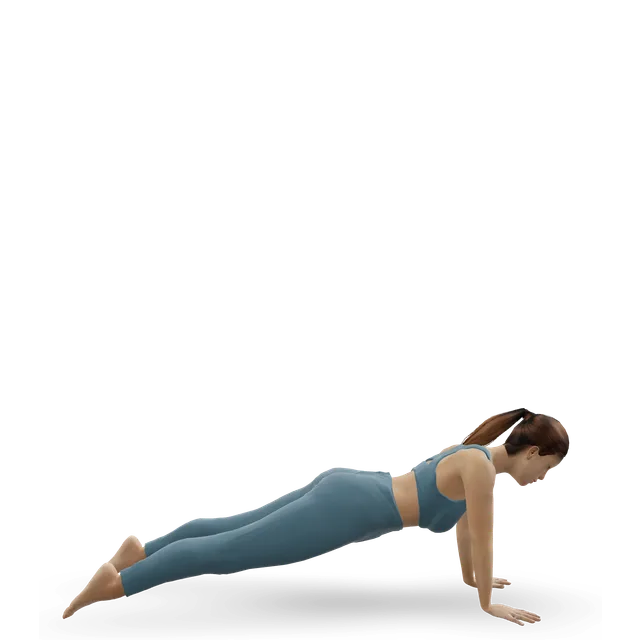
Face down, your head is a weight held out in front of your shoulders, and the muscles at the back of your neck hold it level. Nobody has measured them in a push-up. The closest evidence comes from lifting while standing: a bent or poked-forward head loaded all the muscles at the back of the neck more than a neutral one in 21 adults, and fully bent or fully tipped-back neck positions raised neck muscle activity in 15, more so as the load in the arms rose. The only study that changed head position in a plank is an unreviewed preprint of 20 people: a neutral head felt easiest, and its authors didn't measure the neck muscles.
So a head that drops towards the floor, a chin that pokes down to reach depth, or a neck craned up to watch a mirror probably asks more of your neck. That is our inference from those studies, not a measured fact. The upper trapezius, the muscle that runs from the base of the skull to the shoulder, has been measured: across 30 studies it was the least active of the shoulder muscles in a standard push-up, and it did relatively more when the shoulders shrugged, the surface was unstable or the push-up was done against a wall.
No study counts neck pain or injury from push-ups or planks, so the map on this page is built from what each cause is known to do. Handstand and pike push-ups are different again: there, the head can carry body weight.
Sources 1, 2, 3, 4, 5, 6
How common it is, and who gets itEmerging evidence
In 10 years of gym and fitness injury claims in New Zealand (345,254 claims), the neck and back of the head made up 11%, with no exercise named. In weight-training sports and CrossFit the neck isn't among the most often injured places, and in one conditioning programme barbell lifts, not bodyweight moves, were behind most injuries. Young people who met a push-up fitness standard were less likely to have severe neck pain (1,054 people aged 10 to 17), though a study like that can't show cause.
It tends to bother people new to push-ups or doing a challenge or class with many reps, people who train watching a mirror or a screen, and people whose necks are already sore from desk work, stress or poor sleep (our reading). NHS inform names muscle strain or tension, and repeating the same strained movements in sports and hobbies, among the causes of neck problems. A trapped nerve in the neck is commonest in the early 50s.
Sources 9, 11, 12, 10, 13, 20, 38
Posture is a weaker cause than people thinkMixed evidence
Across 15 studies, adults with neck pain carried their head a few degrees further forward on average than adults without it, and there was no link in teenagers. Every one of those studies measured people once, so they can't show which came first, and a review of 26 studies found the link depended on how posture was measured. A rounder upper back goes with a forward head, and some studies link it with neck pain, but it hasn't been shown to cause it.
Sources 14, 15, 16, 17
Rare but serious: an artery, a bleed, the spinal cord and the heartEmerging evidence
A torn neck artery can start with neck pain and a headache, and in 966 people with one, 40.5% had a minor knock or strain in the month before, mostly mild; exercise and weightlifting appear among 190 published cases linked with sport, though no case after push-ups was found. Pressure on the spinal cord in the neck shows as clumsy hands in both arms, unsteady walking and falls, getting worse over months. The heart can show as neck, jaw or arm pain with chest tightness, and the NHS says call 999 for chest pain spreading to the arms, neck or jaw.
One teenager developed air in the chest and neck (chest pain, a swollen, crackly neck) after 4 hours of push-ups, which settled with care in hospital. These are all rare, and none is a reason to fear push-ups, but they are why the warning signs at the top of this page come first.
Sources 44, 45, 46, 43, 22, 47
What a scan shows, and when it mattersStrong evidence
Ordinary neck pain is recognised from the story and an examination and looked after with self-care and exercise. Scans mislead on their own: 87.6% of 1,211 people without neck symptoms had bulging discs on magnetic resonance imaging (MRI), including 73.3% of men and 78.0% of women in their 20s.
A scan matters for a trapped nerve that isn't settling, for weakness that is getting worse, and for signs of pressure on the spinal cord. A first headache brought on by exercise, a sudden severe headache, stroke signs or chest pain need hospital checks, not a neck scan.
Sources 19, 20, 23, 40, 43
How it usually goesStrong evidence
A neck that aches during the set settles soon after you stop, and soreness after a new session goes within about a week. For a strain or ordinary neck pain, the NHS says "Most neck pain only lasts a few weeks", and NHS inform says "You should see the biggest change in your symptoms within the first couple of weeks. Most problems should have improved within 8 weeks." In 181 people seeking care for a new episode, pain fell from 6.1 to 2.5 out of 10 within 2 weeks and 53% had fully recovered by 3 months, with what was left mostly mild. In the general population, about a third of people with neck pain were free of it a year later and another third had improved, and most of the change in a new episode came in the first month.
Neck pain often comes back: half to three quarters of people report it again 1 to 5 years later. A trapped nerve improves a lot within 4 to 6 months, about 83% recover fully within 2 to 3 years, and in a population study only 14.8% of trapped nerves followed exertion or an injury. No one can promise a date.
Sources 19, 20, 24, 25, 26, 27, 39, 38