Pain guide · Neck pain

Neck pain when doing sit-ups: pulling on your head, the neck muscles, technique and swaps

Neck pain when you do sit-ups or crunches usually comes from the muscles at the front of your neck, which lift and hold your head through every rep, and from pulling on your head with your hands. It often shows up as an ache or burn at the front of the neck or the throat during the set, or a stiff, sore neck the next day. Small changes lowered the neck muscles' work in two tiny lab studies of healthy young adults, which didn't measure pain: resting your fingertips at your temples or crossing your arms, a small chin tuck and breathing out as you curl. A sudden catch on one side is more often a strain, and arm tingling or a headache are different and need checking. Sit-ups aren't bad for your neck, but while it is sore, dead bugs and planks train your abs with your head down.

This guide starts with the signs that need help, from a 999 call for a sudden, extremely painful headache, weakness down one side, a stiff neck with a fever, or new trouble walking or with bladder control, to a same-day check through the National Health Service's 111 line (NHS 111) or a general practitioner (GP) for arm numbness or weakness that is getting worse or a headache that comes on with exercise. It then maps the causes by where it hurts, explains what the small studies show, and don't, about hands, chin, breathing and head support, and why a scan rarely helps, shows how to change your sit-ups today, and gives a three-stage plan with a 3D demo of every move, from dead bugs and head lifts back to crunches and sit-ups.

When to get help first

Exercise is for pain that has been checked or is clearly mild and settling.

Get urgent medical help if

  • Call 999 or go to A&E: a headache that came on suddenly and is extremely painful; numbness or weakness in the face or body; a drooping face, or being unable to lift both arms and keep them up; difficulty speaking, swallowing, balancing, walking or remembering; double vision or loss of vision; drowsiness or confusion. A torn neck artery often starts with headache and neck pain, sometimes with dizziness or tingling, so head or neck pain unlike any you have had before needs checking.
  • Call 999: a sudden headache that is extremely painful and doesn't go away, during or after a heavy lift or at any other time, or weakness or numbness in one arm or down one side of the body. A bleed on the brain may be more likely when lifting something heavy.
  • Call 999 or go to A&E: a stiff neck and you can't look at bright lights; a very painful headache; a very high or very low temperature, feeling hot or cold to the touch, or shivering; confusion, slurred speech or not making sense; a rash that does not fade when you press a glass on it; or a first seizure (fit). These can be signs of meningitis. Call too for any other symptoms you're worried might be meningitis.
  • Call 999 or go to A&E: new problems walking, loss of bladder or bowel control, or a sudden loss of coordination, such as difficulty doing up buttons. These can be signs of pressure on the spinal cord.
  • Call 999 or go to A&E after a neck injury if the person is unresponsive, has severe neck pain or cannot move their head, has fallen from a height such as 5 or more stairs, or is drunk or has taken recreational drugs. Do not drive yourself. Being 65 or over, a dangerous fall or crash (from more than 1 metre or 5 stairs, diving, a high-speed or rollover crash, being thrown from a vehicle, a bicycle collision or an accident on a motorised recreational vehicle), or tingling in the arms or legs after an injury puts you at high risk of a broken neck: get checked.
  • Call 999: chest pain that spreads to your arm, neck or jaw, especially with breathlessness, sweating or feeling sick. It could be a heart attack.
  • Get help from NHS 111: pain or tightness in your chest, neck, shoulders, jaw or arms that comes and goes, often brought on by exercise, stress, emotion or cold and easing after a few minutes' rest. It can be angina, a sign of a heart problem. If you've been diagnosed with angina, get help from NHS 111 too if it feels worse than before, is happening more often, lasts longer or happens when you're resting.
  • Call 999 or go to A&E: a swelling at the front of your neck and you're finding it hard to breathe, or you have a wheezing noise when you breathe.
  • Same day (urgent GP appointment or NHS 111): severe neck pain that starts suddenly or gets worse quickly; heaviness or weakness in the arms or legs; pins and needles in an arm along with neck or arm pain; or pain between the shoulder blades.
  • Same day: clumsiness in your hands, or numbness, pins and needles or weakness in one or both arms, that is getting worse; problems with balance or walking since the neck pain started; or neck pain with a severe headache.
  • Same day (urgent GP appointment or NHS 111): a headache with vision or eye problems, a headache triggered or made worse by coughing, sneezing, bending down or exercising, or a headache with vomiting.
  • Same day (call NHS 111, or go to A&E if you feel very unwell): after a big or unusual session, such as hundreds of squats, sit-ups, back extensions or burpees, a challenge or a new class, muscle pain, swelling or weakness far worse than the session explains, and dark pee (red, brown, tea or cola coloured), sometimes starting hours or days later. Dark pee isn't always there, so muscles far sorer, more swollen or weaker than the session explains still need the same-day check. It can be rhabdomyolysis, a breakdown of muscle that can harm the kidneys.
  • If you think you had signs of a stroke that passed (a mini stroke) and didn't get advice at the time, make an urgent appointment with a GP.

See a doctor or physiotherapist if

  • Neck pain or stiffness that has not eased after a few weeks, or after 8 weeks of looking after it yourself; painkillers are not helping; or you are worried. In many areas you can refer yourself to NHS physiotherapy.
  • Pins and needles or a cold arm alongside neck pain, or a new loss of strength or feeling in the arm that you cannot explain (a possible nerve problem).
  • Neck pain with feeling generally unwell, or that started while you were ill with another condition such as rheumatoid arthritis or cancer; or neck pain with blurred vision, ringing in the ears or dizziness.
  • Severe pain that is constant or disturbs your sleep, a fever or unexplained weight loss, or a history of cancer, inflammatory arthritis, tuberculosis (TB), a weakened immune system, neck surgery or a violent injury. Serious causes are very rare, but these need checking.
  • Soreness that isn't better after a week, keeps coming back after normal sessions, or is in one spot: see a GP or physiotherapist (our suggestion).
  • A painful, tender swelling at the front of your neck with a sore throat or a flu-like illness, sometimes with a racing heart or shakiness: see a GP. It can be an inflamed thyroid, which usually settles but needs checking (our suggestion).
  • A lump in your neck, a hoarse voice that isn't getting better, difficulty swallowing that isn't getting better, or pain in the front of your neck or a feeling of something pressing on it: see a GP.
  • Swollen glands in your neck that are getting bigger or haven't gone down within 1 week, feel hard or don't move, or come with night sweats or a very high temperature: see a GP.

Where does it hurt?

Location narrows the likely causes; it does not diagnose.

The front and sides of the neck, both sides, an ache or burn during the reps that eases soon after

The neck muscles working hard to hold your head up through every rep: the changes on this page lower their work.

The front and sides of the neck, a dull ache a day or two after a new or bigger session

Usually muscle soreness, which fades within about a week.

Read: Neck pain after a workout →
The back of the neck or the base of the skull, with hands laced behind the head

Usually pulling on your head: rest your fingertips at your temples or cross your arms.

A sudden catch or sharp pain on one side during a rep, then stiff to turn

Usually a strain or ordinary neck pain, which eases with movement over a few weeks.

Read: Stiff neck and wry neck →
A stiff, achy neck in mid or later life that sit-ups flare

Possibly neck arthritis, which is a normal part of ageing and often causes no pain at all.

Read: Neck arthritis →
Down one arm, with pins and needles, numbness or weakness

Possibly a trapped nerve. Weakness or numbness that is getting worse, or clumsy hands, needs help the same day.

Read: Pinched nerve in the neck →
A headache that comes on with the exercise

Often an exercise headache, but the first one needs an urgent GP appointment or NHS 111; a sudden, extremely painful headache needs 999.

Read: Neck pain after a workout →
A one-sided headache brought on by neck movement or holding a position

Possibly a headache coming from the neck.

Read: Headaches from the neck →
A lump, swollen glands, a sore throat or pain when swallowing

The glands or the throat, not the sit-ups.

Read: Side neck pain →
A painful, tender swelling at the front of the neck with a sore throat or a flu-like illness

Possibly an inflamed thyroid: see a GP.

Read: Side neck pain →
Lower back pain or the hip flexors during sit-ups

Our back pain after a workout guide covers it.

Read: Back pain after a workout →
A sudden sharp pain in one spot of the tummy wall, sore to tense, twist, cough or sit up

Possibly a pulled stomach muscle.

Read: Abdominal strain →
A stiff neck with a fever, a very painful headache or a rash that doesn't fade

Possibly meningitis: call 999 or go to A&E, as the warning signs say.

Neck, jaw or arm pain with breathlessness, sweating, feeling sick or a tight chest

Possibly the heart: see the warning signs.

Understand it

What a sit-up asks of the neck, and what no study has countedEmerging evidence

Lying on your back, your head is a weight the neck has to lift and hold before your trunk even starts to curl. In a traditional curl-up with the arms by the sides, the sternocleidomastoid (the strap-like muscle from behind the ear to the breastbone) worked at 32% of its maximum in 13 healthy men and at about 54% in 12 healthy adults. Laced hands used to pull bend the neck further, which is why a review of 87 abdominal muscle studies lists "do not pull with the hands behind the head" among its safety rules, though no study has measured it.

No study counts neck pain or injury from sit-ups or crunches. In a trial of 1,141 soldiers, sit-up training caused no more injuries than core stabilisation work, but neck injuries weren't reported separately. NHS inform names muscle strain and "repeating the same strained movements in work, sports and hobbies" among the causes of neck problems, and says they "are rarely caused by any serious disease or damage". So the map on this page is built from what each cause is known to do; that the neck hurts when its muscles, or a neck that was already sore, are asked to do more than they are used to is our reading, not a counted fact.

Sources 1, 2, 3, 4, 5, 6

Where it hurts, and what it often isEmerging evidence

The front and sides of the neck, both sides, during the reps or a day or two after: the neck muscles holding the head up, or soreness in them after a new or bigger session. The back of the neck or the base of the skull: often pulling on the head. A sudden catch on one side, then stiff to turn: a strain or ordinary neck pain, which NHS inform says usually improves within weeks.

A neck that was already sore or stiff can flare with sit-ups. Neck arthritis (cervical spondylosis) "is a normal part of ageing and many people do not have any symptoms", the NHS says, and people with long-lasting neck pain tend to use the deep neck muscles less and the superficial ones more in a nod test (10 people against 10).

Some front-of-neck pain isn't the sit-ups: swollen glands, a sore throat and an inflamed thyroid (tender, with a sore throat or a flu-like illness) have their own signs and need checking. A tear of the sternocleidomastoid itself is rare, known from case reports after exercise or lifting weights, and a sudden painful swelling needs blood vessel causes ruled out first.

Sources 4, 5, 7, 8, 9, 10, 11, 12

Rare but serious: an artery, a bleed, meningitis and the spinal cordStrong evidence

A torn neck artery affects about 2.6 people per 100,000 a year, and 80% have head or neck pain; 40.5% of 966 people with one had a minor knock or strain in the month before, most of them mild. A bleed on the brain brings a sudden, extremely painful headache, and the NHS says it may be more likely when "lifting something heavy"; in 250 people, vigorous exercise carried a relative risk of 2.4. Meningitis brings a stiff neck with a fever, a very painful headache or a rash that doesn't fade. No study links any of these to sit-ups, and they are rare, but they are why a sudden, severe headache or neck pain unlike any before is a 999 call.

The NHS sends new problems walking, loss of bladder or bowel control or a sudden loss of coordination to 999, as signs of pressure on the spinal cord, and a headache triggered or made worse by exercising to an urgent GP appointment or NHS 111. Muscle breakdown after a big, unaccustomed session, such as hundreds of sit-ups in a challenge, is rare and needs a same-day check.

Sources 13, 14, 15, 16, 17, 7, 18, 19, 20, 21, 22

What a scan shows, and when it mattersStrong evidence

Ordinary neck pain is recognised from the story and a simple examination; neither the NHS nor NHS inform suggests a scan for it, and Arthritis UK says "it's unlikely that you'll need any special tests". The US physical therapy guideline asks clinicians to follow imaging guidelines. Tests matter after a fall or accident, for arm weakness or numbness that is getting worse, for a sudden severe headache and for a fever with a stiff neck.

Scans mislead when used alone: 87.6% of 1,211 people without symptoms had bulging discs on MRI (magnetic resonance imaging), including 73.3% of men and 78.0% of women in their 20s; disc changes rose with age to 86% to 89% of discs over 60 in 497 people; and across 17 studies (5,059 people), 64.5% of people without symptoms had changes at several discs.

Sources 5, 4, 23, 24, 25, 26, 27

How it usually goesEmerging evidence

The neck working hard during a set eases as soon as you stop, and soreness after a new session fades within about a week. For a strain or ordinary neck pain, the NHS says "Most neck pain only lasts a few weeks", and NHS inform says "You should see the biggest change in your symptoms within the first couple of weeks. Most problems should have improved within 8 weeks."

Neck pain often comes back: between half and three quarters of people with neck pain report it again 1 to 5 years later, and feelings and coping were the strongest predictors of how it went. No one can promise a date.

Sources 5, 4, 28

What helps, and how strong the evidence is

Chin, breathing and hands: two tiny studies, no pain outcomesEmerging evidence

A chin tuck (a small nod) held through the curl-up lowered sternocleidomastoid activity from about 54% to 39% of its maximum with no loss of ab work in 12 adults. A chin tuck with one hand resting lightly on the jaw lowered it from 32% to 22% while ab activity rose, in 13 men. Breathing out slowly as you curl lowered it too, in 12 adults. These are two or three small lab studies in healthy young adults, with the arms by the sides; none tested people with neck pain or measured pain, and none tested a "fist-sized gap" under the chin or the tongue on the roof of the mouth.

The advice not to pull on your head is a review's safety rule, not a measured effect. A Canadian health service suggests crossing your arms, or putting your hands "behind your neck (not your head)" if crossed arms bother your neck, and says "don't press your chin to your chest".

Sources 2, 1, 29, 3, 36

Head support and ab devicesEmerging evidence

In 22 students, a frame that supported the head and arms gave lower sternocleidomastoid activity than ordinary curl-ups. The Ab Roller and other device studies measured only the trunk and hip muscles, so they can't show that a device spares the neck.

Sources 30, 31, 32, 33, 34, 35

Swaps: the trunk can be trained with the head downEmerging evidence

Partial curl-ups gave the best ab challenge for the least low-back load of 12 exercises in 9 volunteers. Curl-ups, dead bugs and bird dogs worked the trunk muscles harder as each was made harder (10 men); the side plank worked the side of the trunk hard, while the front plank and bird dog worked it at endurance levels (30 adults); and Swiss ball roll-outs and pikes worked the abs hardest of the exercises in another study (18 people). No study has measured neck muscles in the dead bug, plank or bird dog, so a lower neck load is a reasonable inference from the head resting or staying in line, not a measured fact.

In 1,141 soldiers, replacing sit-up training with core stabilisation work made no difference to injuries, and their sit-up test results were no worse.

Sources 37, 38, 39, 40, 6

Does neck pain from sit-ups mean a weak neck? Not necessarilyMixed evidence

Everyone's neck works hard in a sit-up. People with neck pain held a neck-bending endurance test for less time on average in one study (24.1 against 38.95 seconds in 41 people), but not in another, and the test is noisy. In the only study that followed people forward, neck flexor endurance didn't predict who developed lasting neck pain in 171 new office workers over a year (39.3 against 36.9 seconds), while low extensor endurance and low mood did. A review of physical capacity found the evidence for neck pain inconclusive.

Sources 41, 42, 43, 44, 45, 46

Exercise helps neck pain that lastsStrong evidence

Across 27 trials (2,485 people), strength training for the neck, shoulder blades and arms improved long-lasting neck pain by a moderate to large amount immediately after treatment (moderate-quality evidence), while stretching alone, general fitness and breathing exercises may not change pain (low quality); for neck pain that has only just started, the review found no evidence either way. Deep neck flexor training changes the nod test more than pain, but with pressure feedback it beat strength-endurance training by small amounts for pain and disability, and across 68 trials resistance and motor control exercise beat no treatment, on very low to moderate certainty.

In 180 women office workers, 12 months of neck training (head lifts, or neck presses against an elastic band, each with dumbbell work for the shoulders) cut pain and disability. A US physical therapy guideline recommends neck and shoulder endurance exercise for neck pain that has lasted a few weeks. NHS trust leaflets hold neck presses against the hand for 3 to 5 seconds, 10 times, or for 5 to 10 seconds until the muscles tire.

Sources 50, 47, 48, 49, 51, 24, 52, 53

"A weak core causes neck pain": no evidenceMixed evidence

No study shows that weak abdominal or core muscles cause neck pain. In one trial of 113 people, adding low back control exercises to deep neck flexor training helped more (with oddly reported effect sizes); in another of 41 young adults, shoulder-blade stabilisation beat core stabilisation for pain; and one small trial in forward head posture favoured adding core work. The US guideline allows trunk endurance exercise for long-lasting neck pain only as a weak recommendation.

Sources 54, 55, 56, 24

Sit-ups with osteoporosis or neck arthritisEmerging evidence

A UK consensus on osteoporosis notes reports of spinal fractures with "end-range, sustained, repeated or loaded flexion exercises, including sit-ups" and advises modifying or avoiding them, with a "how to" rather than "don't do" approach; the Royal Osteoporosis Society names sit-ups among the moves to adapt. The best-known study is small, old and not randomised: new fractures followed in 8 of 9 women given bending exercises against 4 of 25 given extension exercises. No NHS or Arthritis UK page says sit-ups harm a neck with arthritis.

Sources 57, 58, 59, 7, 23

How much pain is OK while you exercise?

Up to about 5 out of 10, no worse the next morning; arm symptoms and headaches are differentEmerging evidence

This guide uses the neck hub's rule, as our neck pain after a workout guide does. NHS inform's neck exercise advice: rate your pain from 0 to 10. During exercise, 0 to 3 is minimal and 4 to 5 is acceptable; 6 to 10 is too much, so do fewer repetitions, move more slowly or rest longer between movements. Exercise shouldn't make your neck worse overall: soreness from a new exercise should ease quickly, and your neck should be no worse the next morning. Arthritis UK says some aches during or after exercise are normal, but stop an exercise that makes your symptoms significantly worse.

For sit-ups (our suggestion, built on the same rule): the front of the neck working hard during a set is expected. Choose the hand position, chin tuck, range and number of reps where it stays at 5 out of 10 or less, eases within minutes of stopping and leaves the neck no worse the next morning. If it doesn't, go back a step (fewer reps, the McGill curl-up or the dead bug), not to nothing.

Arm symptoms are the exception: if an exercise sends pain, tingling or numbness down your arm, make the movement smaller or leave it out (our neck pain guide's rule). A headache that comes on with exercise, and any of the warning signs, aren't pain-rule questions: stop and get them checked.

Sources 60, 23

The exercise plan: 3 stages

Start at the first stage. Each move opens a full guide with a 3D demo.

Stage 1

Train your trunk with your head down

About days 0 to 7, or until the front of the neck no longer aches with daily life: keep the abs working without asking the neck to lift the head, and keep the neck moving. With a warning sign, get checked first; with arm symptoms, a diagnosed trapped nerve or neck surgery, that guide's plan or your team's comes first.

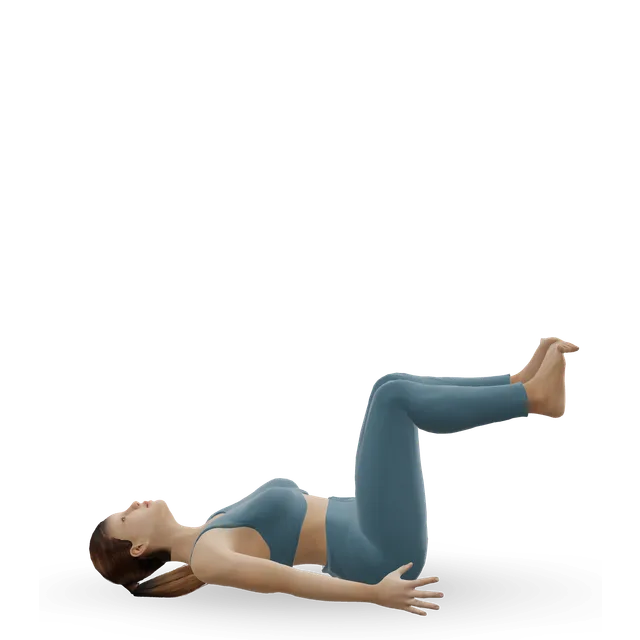
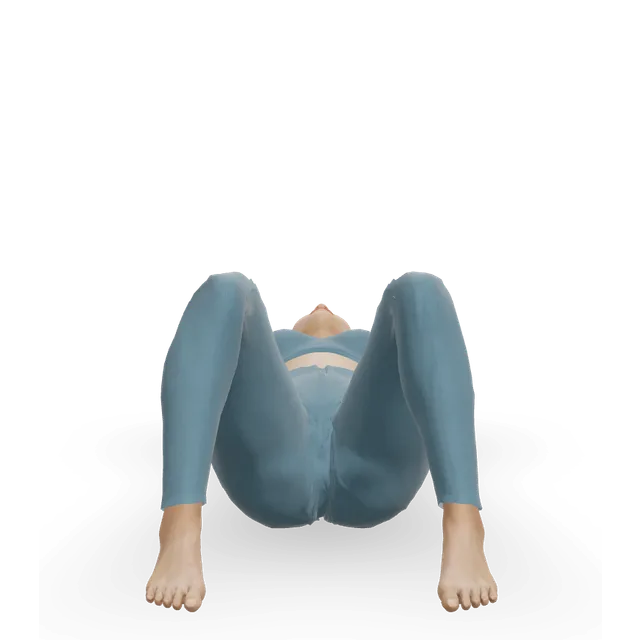
Dead bug demonstrated on the 3D figure3D demoDead bugBeginner · No equipment

2 sets of 6 to 8 each side · The dose our sit-up guide uses (editorial). The head stays on the floor; dead bug heel taps are the easier version

Easier: Dead bug heel taps · Harder: Forearm plank

Knee plank demonstrated on the 3D figure3D demoKnee plankBeginner · No equipment

3 holds of 20 to 30 s · Our beginner core workout's dose (editorial). Head in line with your back, eyes to the floor

Harder: Forearm plank

Bird dog demonstrated on the 3D figure3D demoBird dogBeginner · No equipment

6 each side · Our beginner core workout's dose (editorial). Head in line, not lifted

Easier: Bird dog, one limb at a time · Harder: Bear crawl

Neck CARs (controlled articular rotations) demonstrated on the 3D figure3D demoNeck CARs (controlled articular rotations)Beginner · No equipment

While the neck is sore, separate nods, tilts and turns: 2 to 3 of each at a time, every hour, adding 1 or 2 every few days towards about 10 · NHS inform's pacing; the move page says use separate movements with a sore neck. Its full circles (3 each way, once or twice a day, the move page's dose) come once those are comfortable

Harder: Rabbit pose (Sasangasana)

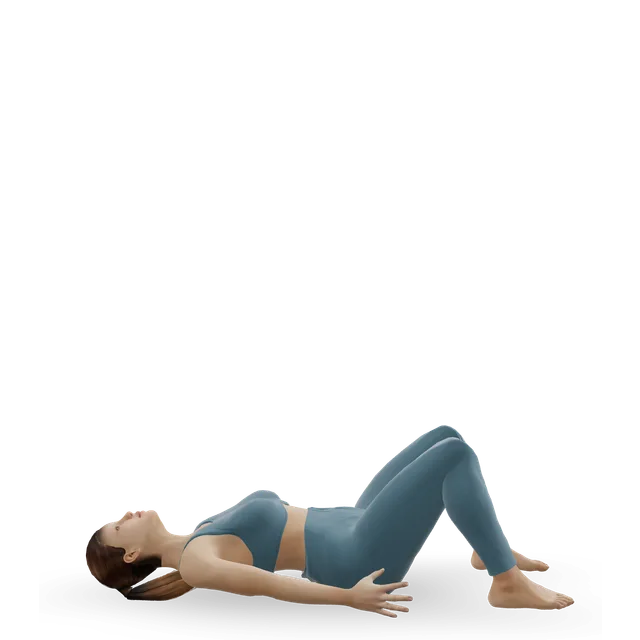
Lying chin tuck demonstrated on the 3D figure3D demoLying chin tuckBeginner · No equipment

5 to 10 gentle holds of up to 10 s, once or twice a day · As in our neck pain guide (editorial): the gentle nod the deep neck muscle studies use

Harder: Chin tuck

Move on when: You can nod, tilt and turn within the pain rule, the stage 1 moves pass it, and the neck is no worse the next morning (adapted from NHS inform).

Follow along: a timer, a cue and the next move, one step at a time.
Stage 2

Build the front of the neck and a supported curl

About weeks 1 to 4, 3 days a week: endurance for the neck muscles, and a small curl-up with the chin tucked or the head resting between reps.

Chin tuck with head lift demonstrated on the 3D figure3D demoChin tuck with head liftIntermediate · No equipment

3 to 5 holds of 5 s, building to 10 holds of 10 s · As in our neck pain guide (editorial). Head lifts were the endurance exercise in a 12-month neck pain trial; its dose couldn't be checked

Easier: Chin tuck

Isometric neck press, front and back demonstrated on the 3D figure3D demoIsometric neck press, front and backBeginner · No equipment

Build to a 10-second press, 3 times in each direction, for 3 rounds, starting with light pressure · The move page's dose. NHS trust leaflets hold neck presses for 3 to 5 s, 10 times, or 5 to 10 s until tired

Easier: Chin tuck · Harder: Chin tuck with head lift

McGill curl-up demonstrated on the 3D figure3D demoMcGill curl-upBeginner · No equipment

Holds of about 10 s in falling sets of 5, 3 and 1, chin slightly tucked · As in our McGill big 3 routine (editorial). Head and shoulders lift only a little

Harder: Crunch

Chest lift (Pilates curl-up) demonstrated on the 3D figure3D demoChest lift (Pilates curl-up)Beginner · No equipment

8 to 10 reps, resting your head between reps · The move page's dose (a suggested starting point). The move page says rest your head between reps if your neck aches

Harder: Single-leg stretch (Pilates one leg stretch)

Knee side plank demonstrated on the 3D figure3D demoKnee side plankBeginner · No equipment

15 to 20 s each side, 3 rounds · Our beginner core workout's dose (editorial)

Harder: Side plank

Move on when: 10 head-lift holds of 10 s and the curl-up and chest lift pass the pain rule, with the neck no worse the next morning, for a week (editorial).

Follow along: a timer, a cue and the next move, one step at a time.
Stage 3

Back to crunches and sit-ups

From about week 2 to 6: crunches, then full sit-ups, with the changes below, then your usual ab work, one change at a time. No study has tested a return to sit-ups after neck pain, so the order is editorial.

Crunch demonstrated on the 3D figure3D demoCrunchBeginner · No equipment

2 sets of 12 to 20, stopping 1 to 3 reps short of failure · The crunch track of our crunch and sit-up workout (editorial). Fingertips light at your temples or arms crossed, a small chin tuck, and breathe out as you curl

Easier: McGill curl-up · Harder: Sit-up (3/4 sit-up)

Sit-up (3/4 sit-up) demonstrated on the 3D figure3D demoSit-up (3/4 sit-up)Intermediate · No equipment

2 sets of 8 to 15, stopping 1 to 3 reps short · The sit-up track of the same workout (editorial), once 2 sets of 20 crunches are easy, as that workout says

Easier: Crunch · Harder: Jackknife sit-up (V-up)

Reverse crunch demonstrated on the 3D figure3D demoReverse crunchIntermediate · No equipment

2 to 3 sets of 10 to 12 · Our ab workout's dose (editorial). The head stays down while the hips curl

Easier: Cross-body crunch · Harder: Captain's chair knee raise

Forearm plank demonstrated on the 3D figure3D demoForearm plankIntermediate · No equipment

3 holds of 20 to 45 s · Our plank guide's dose, as our sit-up guide says (editorial)

Easier: Stomach vacuum (drawing-in) · Harder: Plank walk-up

Chin tuck with head lift demonstrated on the 3D figure3D demoChin tuck with head liftIntermediate · No equipment

10 holds of 10 s, twice a week · Editorial. Keeps the neck's endurance work going, since neck pain often comes back

Easier: Chin tuck

Move on when: Your usual ab sessions pass the pain rule for 2 weeks. Keep about 60 bending reps a session at most, as our sit-up guide suggests, and if it flares, go back a stage for a few days, not to nothing (editorial).

Follow along: a timer, a cue and the next move, one step at a time.

What to change for now

Your sit-up for now (written steps)

Our 3D figure can't show all of these. They come from small lab studies, a review, health-service pages and our sit-up guide; where a step is our suggestion or coaching advice, it says so. No trial has tested a change to sit-ups for neck pain.

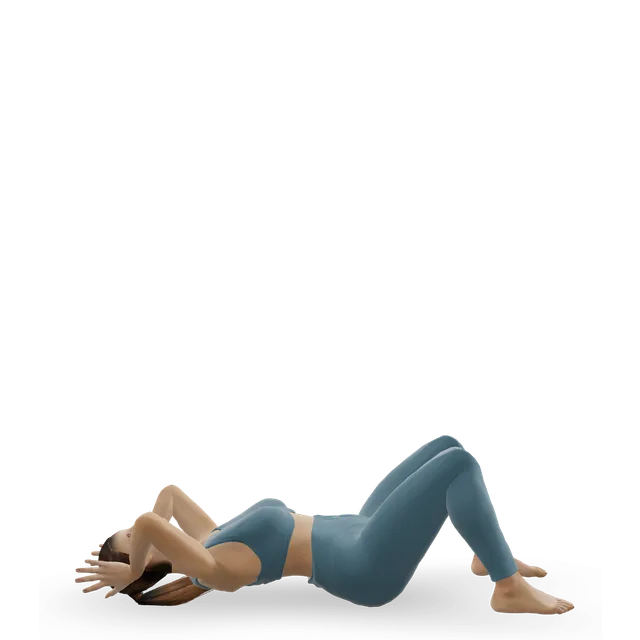
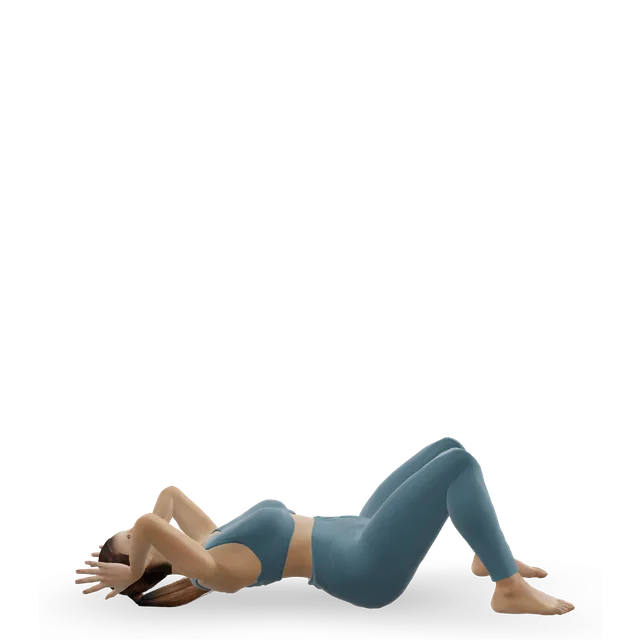
  • 1. Hands: rest your fingertips lightly at your temples, or cross your arms on your chest; never lace them behind your head and pull, as a review of 87 studies advises. If crossed arms bother your neck, one health service suggests hands behind your neck (not your head), with your elbows spread apart.
  • 2. Chin: a small nod, not your chin pressed to your chest. In two tiny lab studies of healthy young adults, a chin tuck lowered the neck muscles' work; they didn't measure pain. Our sit-up guide's "fist-sized gap under your chin" is coaching advice for the same idea, not something a study tested.
  • 3. Support: one hand resting lightly on your jaw, as in one of those studies, or your head resting in your hands without pulling (our suggestion).
  • 4. Breathing: breathe out slowly as you curl up; in one small study this lowered the neck muscles' work.
  • 5. Range: curl up only until your shoulder blades leave the floor while the neck is sore; partial curl-ups gave the best ab challenge for the least back load in a lab study.
  • 6. Rests: rest your head on the floor between reps, and stop each set 1 to 3 reps short of failure, before you start pulling (our sit-up guide; editorial).
  • 7. Swaps: dead bugs, planks, side planks, bird dogs and reverse crunches while the front of the neck hurts (our suggestion).
  • 8. Daily life: keep moving your neck for short periods every hour, use a low, firm pillow, and don't drive or cycle if you can't turn your neck, as the NHS and NHS inform advise.

Sources 3, 36, 1, 2, 29, 37, 5, 4

Back to your usual training (written steps)

No study has tested how sit-ups come back after neck pain, so these steps are our suggestion unless a source is named.

  • 1. Add one thing at a time: more reps, then full sit-ups, then weighted, decline or V-up versions, then fast reps and timed sit-up tests.
  • 2. In classes and challenges, rest your head between sets and swap to dead bugs or planks when your neck tires, rather than pulling on your head.
  • 3. A timed sit-up test that puts your hands behind your head: practise with your fingertips touching, never pulling, and build the count over weeks.
  • 4. With osteoporosis, keep to the dead bug, bird dog and plank, as a UK consensus on osteoporosis advises.
  • 5. Keep the neck work twice a week for a while: neck pain often comes back.

Sources 57, 28

Positions to swap, and why

Habit or positionWhy it mattersInstead
Hands laced behind your head, pullingA review of 87 studies lists not pulling with the hands behind the head among its safety rules.Fingertips at your temples or arms crossed.Try: Crunch
Your chin jammed to your chest, or your head poking forwardA small chin tuck lowered neck muscle work in two tiny lab studies, and a health service says don't press your chin to your chest.A small nod with a hand lightly on the jaw, in a small curl-up.Try: McGill curl-up
Holding your breath through the setBreathing out slowly lowered neck muscle work in a small study.Breathe out as you curl.
Full sit-ups and fast reps to failure while the neck is soreMore reps with the head lifted, and form breaks down into pulling on the neck (our reading).The chest lift, resting your head between reps.Try: Chest lift (Pilates curl-up)
Hollow holds while the neck is soreThe move page says neck strain is common in it.Dead bugs, with your head down.Try: Dead bug
Repeated or loaded sit-ups with osteoporosisA UK consensus advises modifying or avoiding repeated or end-range bending, especially with a weight.Bird dogs, dead bugs and planks.Try: Bird dog
A neck collar, or keeping the neck stillThe NHS says it's better to keep your neck moving.Gentle movement every hour.Try: Neck CARs (controlled articular rotations)
Carrying on through a headache that came on with the exerciseThe NHS asks for an urgent GP appointment or NHS 111.Stop the session and get it checked.

Routines to follow

More moves for this area

Questions people ask

Why does my neck hurt when I do sit-ups?

The muscles at the front of your neck lift and hold your head through every rep, working at about a third to a half of their maximum in healthy adults, and pulling on your head adds to it. A small chin tuck, light hands and breathing out lowered that work in tiny lab studies, which didn't measure pain.

Why does the front of my neck or my throat hurt after crunches?

Usually the neck muscles at the front, tired or sore after holding your head up. An even ache that eases within a few days is normal. A lump, swollen glands, a sore throat or a tender swelling at the front of the neck point elsewhere and need checking.

How do I do sit-ups without hurting my neck?

Rest your fingertips at your temples or cross your arms, tuck your chin slightly, breathe out as you curl, rest your head between reps and stop short of failure. If it still aches, swap to dead bugs and planks for a while, then build back with the plan on this page.

Where should my hands be for sit-ups?

Fingertips lightly at your temples or arms crossed on your chest, never pulling on your head. One health service suggests hands behind the neck, not the head, if crossed arms bother your neck.

Should I tuck my chin when I do crunches?

A small nod, yes: it lowered neck muscle work without reducing ab work in two tiny studies of healthy young adults. Don't press your chin hard to your chest. The "fist under the chin" picture is coaching advice for the same idea.

Does neck pain from sit-ups mean my neck is weak?

Not necessarily: everyone's neck works hard in a sit-up, and in a year-long study neck flexor endurance didn't predict who developed lasting neck pain. The neck exercises in the plan help because they build endurance, not because weakness caused the pain.

Should I stop doing sit-ups?

Usually not: change them. Take your head out of it for a few days with dead bugs and planks, then build back with the curl-up and chest lift. The NHS says keep your neck moving.

What can I do instead of sit-ups?

Dead bugs, planks, side planks, bird dogs and reverse crunches train your trunk with your head down or in line. Soldiers who swapped sit-ups for core stabilisation work did no worse on a sit-up test.

Can I do sit-ups with neck arthritis or osteoporosis?

With neck arthritis, no NHS or Arthritis UK page bans them: use the changes on this page and the pain rule. With osteoporosis, a UK consensus advises modifying or avoiding repeated bending like sit-ups and using the dead bug, bird dog and plank instead.

How long does neck pain from sit-ups last?

Most neck pain lasts only a few weeks, and NHS inform expects most neck problems to improve within 8 weeks. No one can promise a date, and neck pain often comes back, so keep some neck work in your week.

Do I need a scan?

Not usually: scans show disc changes in most people without pain, and most neck problems are diagnosed from your symptoms and an examination. A scan matters with warning signs, after an injury or with arm symptoms that aren't settling.

When should I see a doctor?

Call 999 for a sudden, extremely painful headache, weakness or numbness down one side, a stiff neck with a fever or a rash, or new trouble walking or with bladder control. Get help the same day for arm numbness or weakness that is getting worse or a headache brought on by exercise, and see a GP if the pain hasn't eased after a few weeks. In the US, call 911 where this page says 999.

Related exercise guides

Other pain guides

Sources

  1. Lee 2016 · Restricting neck bending during curl-ups in 13 men (lab study, J Phys Ther Sci)
  2. Yoon 2013 · A chin tuck during curl-ups in 12 adults (lab study, Phys Ther Korea)
  3. Monfort-Pañego 2009 · Muscle activity in abdominal exercises: 87 studies (literature synthesis, J Manipulative Physiol Ther)
  4. NHS inform · Neck problems
  5. NHS · Neck pain (past its review date: reviewed April 2023, review due April 2026)
  6. Childs 2010 · Sit-up training against core stabilisation in 1,141 soldiers (cluster trial, Phys Ther)
  7. NHS · Cervical spondylosis (past its review date: reviewed August 2023, review due August 2026)
  8. Falla 2004 · Deep neck muscle activity in 10 people with neck pain and 10 without (cross-sectional study, Spine)
  9. Özkaçmaz 2025 · A torn sternocleidomastoid after exercise (case report, J Int Med Res)
  10. NHS · Swollen glands (past its review date: reviewed September 2023, review due September 2026)
  11. NHS · Sore throat
  12. British Thyroid Foundation · Thyroiditis
  13. Lee 2006 · How often neck arteries tear: a Minnesota population, 1987 to 2003 (population study, Neurology)
  14. Engelter 2013 · Neck artery tears and the minor injuries and strains before them in 966 people (case-control study, Neurology)
  15. NHS · Subarachnoid haemorrhage
  16. Vlak 2011 · Triggers for the rupture of brain aneurysms in 250 people (case-crossover study, Stroke)
  17. NHS · Meningitis
  18. NHS · Headaches
  19. NHS · Stroke: symptoms
  20. NHS · Transient ischaemic attack (TIA) (past its review date: reviewed June 2023, review due June 2026)
  21. Rawson 2017 · Exertional rhabdomyolysis (review, Sports Med)
  22. Vangstad 2026 · Exertional rhabdomyolysis in 136 people in Norwegian emergency departments (cohort study, BMJ Open Sport Exerc Med)
  23. Arthritis UK · Neck pain
  24. Blanpied 2017 · Neck pain: revision 2017 (clinical practice guideline, J Orthop Sports Phys Ther)
  25. Nakashima 2015 · Neck MRI findings in 1,211 people without symptoms (cross-sectional study, Spine)
  26. Matsumoto 1998 · Neck disc changes on MRI in 497 people without symptoms (cross-sectional study, J Bone Joint Surg Br)
  27. Banerjee 2022 · Neck MRI findings in people without symptoms: 17 studies (meta-analysis, J Clin Neurosci)
  28. Carroll 2008 · The course of neck pain in the general population (best evidence synthesis, Spine)
  29. Yoon 2014 · Breathing out slowly during curl-ups in 12 adults (lab study, J Electromyogr Kinesiol)
  30. Warden 1999 · A head and arm support frame against ordinary curl-ups in 22 students (lab study, Med Sci Sports Exerc)
  31. Demont 1999 · Two abdominal devices against crunches (training study, J Sports Med Phys Fitness)
  32. Sternlicht 2003 · Portable abdominal devices against crunches in 33 adults (lab study, J Strength Cond Res)
  33. Hildenbrand 2004 · The Ab Roller and other devices against curl-ups in 23 students (lab study, J Athl Train)
  34. Escamilla 2006 · Commercial and common abdominal exercises in 14 people (lab study, J Orthop Sports Phys Ther)
  35. Escamilla 2006 · Traditional and newer abdominal exercises in 21 adults (lab study, Phys Ther)
  36. HealthLinkBC (British Columbia health service) · Curl-ups
  37. Axler 1997 · Low back loads in 12 abdominal exercises in 9 volunteers (lab study, Med Sci Sports Exerc)
  38. Kim 2016 · Trunk muscles in graded curl-ups, dead bugs and bird dogs in 10 men (lab study, PM R)
  39. Ekstrom 2007 · Trunk and hip muscles in 9 rehabilitation exercises in 30 adults (lab study, J Orthop Sports Phys Ther)
  40. Escamilla 2010 · Swiss ball and traditional abdominal exercises in 18 people (lab study, J Orthop Sports Phys Ther)
  41. Jull 2008 · The craniocervical flexion test of the deep neck muscles (clinical review, J Manipulative Physiol Ther)
  42. Romeo 2022 · How reliable the craniocervical flexion test is: 21 studies (systematic review, Phys Ther)
  43. Harris 2005 · Neck flexor endurance in 41 people with and without neck pain (reliability study, Phys Ther)
  44. Lourenço 2016 · Neck muscle endurance in students with and without mild neck pain (cross-sectional study, J Manipulative Physiol Ther)
  45. Shahidi 2015 · What predicts lasting neck pain in 171 new office workers (cohort study, J Pain)
  46. Hamberg-van Reenen 2007 · Physical capacity and future back, neck and shoulder pain: 26 cohorts (systematic review, Pain)
  47. Blomgren 2018 · Deep neck flexor training for neck pain: 12 trials (systematic review, BMC Musculoskelet Disord)
  48. Tsiringakis 2020 · Deep neck flexor training with pressure feedback for neck pain: 17 studies (systematic review, Musculoskelet Sci Pract)
  49. Mueller 2023 · Exercise for chronic neck pain: 68 trials (systematic review, J Orthop Sports Phys Ther)
  50. Gross 2015 · Exercises for mechanical neck disorders: 27 trials (Cochrane review)
  51. Ylinen 2003 · Neck muscle training for chronic neck pain in 180 women (trial, JAMA)
  52. Calderdale and Huddersfield NHS Foundation Trust · Neck strength and stability exercises (physiotherapy hand-out)
  53. Wrightington, Wigan and Leigh NHS Foundation Trust · Mechanical neck pain (patient leaflet, 2022, past its expiry date)
  54. Khosrokiani 2022 · Adding low back control exercises to neck exercises in 113 people with neck pain (trial, Clin Rehabil)
  55. Shabana 2025 · Core stabilisation for forward head posture in 36 young adults (trial, Asian Spine J)
  56. Ayan 2025 · Core against shoulder-blade stabilisation in 41 young adults with neck pain (trial, Percept Mot Skills)
  57. Brooke-Wavell 2022 · Strong, steady and straight: UK consensus on exercise for osteoporosis (consensus statement, Br J Sports Med)
  58. Royal Osteoporosis Society · How to exercise safely for bones
  59. Sinaki 1984 · Bending against extension exercises in 59 women with spinal osteoporosis (clinical series, Arch Phys Med Rehabil)
  60. NHS inform · Exercises for neck problems

Exercise education, not a diagnosis or treatment plan. It is written from the guidelines and studies listed above; review by a clinician is pending. If your pain follows an injury, is severe, is getting worse, or comes with any warning sign listed on this page, get it assessed. Health disclaimer.