Pain guide · Neck pain

Neck pain when looking down: phones and screens, the muscles and joints, nerve pain and what helps

Neck pain when you look down, at a phone, a laptop, a book or your work, is common, and it's usually ordinary neck pain from the muscles at the back of the neck and the small joints at the side of it, made worse by long, still spells. The posture itself hasn't been shown to damage your neck: in adults followed for a year, how far they bent the neck to text didn't predict neck pain, while poor sleep and too little activity did. Most of it eases within a few weeks.

A few signs need help first, from a 999 call or accident and emergency (A&E) to a general practitioner (GP) or the National Health Service's 111 line (NHS 111) the same day: an electric-shock feeling down your back when you bend your head, clumsy or numb hands, unsteady walking, or a stiff neck with a fever. This guide covers those, what the spot and the pattern point to, how to set up screens and phones, pillows and breaks, and a three-stage plan with a 3D demo of every move that ends with long days at a screen.

When to get help first

Exercise is for pain that has been checked or is clearly mild and settling.

Get urgent medical help if

  • Call 999 or go to A&E: new problems walking, loss of bladder or bowel control, or a sudden loss of coordination, such as difficulty doing up buttons. These can be signs of pressure on the spinal cord.
  • Call 999 or go to A&E: a stiff neck and you can't look at bright lights; a very painful headache; a very high or very low temperature, feeling hot or cold to the touch, or shivering; confusion, slurred speech or not making sense; a rash that does not fade when you press a glass on it; or a first seizure (fit). These can be signs of meningitis. Call too for any other symptoms you're worried might be meningitis.
  • Call 999 or go to A&E: a headache that came on suddenly and is extremely painful; numbness or weakness in the face or body; a drooping face, or being unable to lift both arms and keep them up; difficulty speaking, swallowing, balancing, walking or remembering; double vision or loss of vision; drowsiness or confusion. A torn neck artery often starts with headache and neck pain, sometimes with dizziness or tingling, so head or neck pain unlike any you have had before needs checking.
  • Call 999 or go to A&E after a neck injury if the person is unresponsive, has severe neck pain or cannot move their head, has fallen from a height such as 5 or more stairs, or is drunk or has taken recreational drugs. Do not drive yourself. Being 65 or over, a dangerous fall or crash (from more than 1 metre or 5 stairs, diving, a high-speed or rollover crash, being thrown from a vehicle, a bicycle collision or an accident on a motorised recreational vehicle), or tingling in the arms or legs after an injury puts you at high risk of a broken neck: get checked.
  • Call 999: chest pain that spreads to your arm, neck or jaw, especially with breathlessness, sweating or feeling sick. It could be a heart attack.
  • Same day (urgent GP appointment or NHS 111): a new electric-shock feeling that runs down your back, or into your arms or legs, when you bend your head forward, if no cause has been found (our suggestion: no NHS page covers it outside an injury). It can come from the spinal cord, for example multiple sclerosis, pressure from age-related changes in the neck, or a lack of vitamin B12, which heavy use of nitrous oxide (laughing gas) can cause. Call 999 for new problems walking or loss of bladder or bowel control.
  • Same day: clumsiness in your hands, or numbness, pins and needles or weakness in one or both arms, that is getting worse; problems with balance or walking since the neck pain started; or neck pain with a severe headache.
  • Same day (urgent GP appointment or NHS 111): severe neck pain that starts suddenly or gets worse quickly; heaviness or weakness in the arms or legs; pins and needles in an arm along with neck or arm pain; or pain between the shoulder blades.
  • Same day after whiplash (urgent GP appointment or NHS 111): severe pain despite taking paracetamol or ibuprofen; tingling or pins and needles on one or both sides of the body; problems walking or sitting upright; a sudden "electric shock" feeling in the neck and back, which may also go into the arms and legs; or weak hands, arms or legs. Don't drive or cycle until you've spoken to a GP or NHS 111.
  • Get help from NHS 111: pain or tightness in your chest, neck, shoulders, jaw or arms that comes and goes, often brought on by exercise, stress, emotion or cold and easing after a few minutes' rest. It can be angina, a sign of a heart problem. If you've been diagnosed with angina, get help from NHS 111 too if it feels worse than before, is happening more often, lasts longer or happens when you're resting.

See a doctor or physiotherapist if

  • Neck pain or stiffness that has not eased after a few weeks, or after 8 weeks of looking after it yourself; painkillers are not helping; or you are worried. In many areas you can refer yourself to NHS physiotherapy.
  • Pins and needles or a cold arm alongside neck pain, or a new loss of strength or feeling in the arm that you cannot explain (a possible nerve problem).
  • Neck pain with feeling generally unwell, or that started while you were ill with another condition such as rheumatoid arthritis or cancer; or neck pain with blurred vision, ringing in the ears or dizziness.
  • Severe pain that is constant or disturbs your sleep, a fever or unexplained weight loss, or a history of cancer, inflammatory arthritis, tuberculosis (TB), a weakened immune system, neck surgery or a violent injury. Serious causes are very rare, but these need checking.
  • See a GP if you have pain and stiffness for more than a week, especially if you're over 50, it's in both shoulders (often the neck and hips too) and the stiffness lasts longer than 45 minutes in the morning. It can be polymyalgia rheumatica.

Where does it hurt?

Location narrows the likely causes; it does not diagnose.

An ache across the back of the neck and the tops of the shoulders, building through a spell at a phone, laptop or book, easing when you look up and move

Usually ordinary neck pain with tired muscles. Our tech neck guide has the desk and phone strengthening routine.

Read: Tech neck →
Stiff and sore looking down and up, often after a night's sleep or a long desk day

Usually ordinary neck pain and stiffness, which eases with gentle movement every hour.

Read: Stiff neck and wry neck →
Neck pain when you wake up, most mornings

Often the night's position or pillow. Our sleeping guide covers pillows and positions.

Read: Neck pain from sleeping →
Woke with the head stuck, tipped to one side with the chin turned the other way

A wry neck (acute torticollis), which usually settles within a few days.

Read: Stiff neck and wry neck →
Sore when you turn your head or look over your shoulder

Usually the small joints and muscles at the side of the neck. Our turning guide covers driving and screens set off to one side.

Read: Neck pain turning your head →
Sharp pain, pins and needles or numbness down one arm, worse tipping the head back or towards that side

Points to a trapped nerve in the neck. Both hands clumsy or numb, or trouble with balance, is different and urgent.

Read: Pinched nerve in the neck →
A brief electric shock down your back, or into your arms or legs, as you bend your head forward

Lhermitte's sign, which comes from the spinal cord rather than a muscle: get it checked the same day if it's new, as the warning signs say.

Clumsy or numb hands (buttons, keys, writing, your phone), or unsteady walking, mostly from about 50

Possibly pressure on the spinal cord, which is uncommon but easily missed: see the warning signs. Our neck pain in older adults guide covers it.

Read: Neck pain in older adults →
A stiff, achy neck that comes and goes, from mid-life

Often called neck arthritis (cervical spondylosis). The same changes show on scans of many people without pain.

Read: Neck arthritis →
A one-sided headache from the back of the head, brought on by holding a position

It can come from the neck.

Read: Headaches from the neck →
Between the shoulder blades or the upper back after long spells at a desk

Our upper back pain from sitting guide covers the desk, laptop and upper back.

Read: Upper back pain from sitting →
Looking down to feed a baby, in pregnancy or after the birth

Our pregnancy neck guide covers feeding positions.

Read: Neck pain in pregnancy →
A child or teenager after hours on a phone, a tablet or homework

Our children's neck guide covers screens and school bags.

Read: Neck pain in children →
After a crash, a fall or a dive

Whiplash or a neck injury: check the injury warning signs first.

Read: Whiplash →
A stiff neck, bending it forward hurts, with a fever, a very bad headache or dislike of bright light

Possibly meningitis: call 999 or go to A&E, as the warning signs say.

Understand it

Why looking down can hurtStrong evidence

The Chartered Society of Physiotherapy (CSP) says the exact cause of neck pain usually can't be found, serious damage is rare, and the most likely source is "a strain of one of the small joints located on the side of the neck", the facet joints, with the discs less often and the nerves less often still. NHS inform says neck problems "are rarely caused by any serious disease or damage".

The NHS lists "bad posture - for example, when sitting at a desk for a long time" among the common causes, while the CSP says posture "plays a much smaller role in neck problems than previously thought" and points to long, still positions, poor sleep, muscle tension, low activity and stress. Both agree on the practical point: don't hold your neck in one position for long.

Sources 1, 2, 3

What looking down does to the neckStrong evidence

Using a phone bends the head 33 to 45 degrees, more when texting and more sitting than standing. The load on the neck and the work of the muscles at the back of it rise with the angle, and in a modelling study the demand on the neck muscles during tablet use was 3 to 5 times that of a level head, least with the tablet propped high. In the lab, holding the neck bent brought on discomfort within minutes and signs of muscle fatigue within an hour. Healthy necks are built to carry this; these are short lab studies in young adults, and they measure load and discomfort, not injury.

Sources 4, 5, 6, 7, 8

Does looking down at screens cause neck pain? The cohort and the surveysMixed evidence

The posture: in 396 adults without neck pain followed for a year in Brazil, how far they bent the neck to text, measured with a device, didn't predict neck pain (odds ratio 1.0 per degree); poor sleep (1.76) and too little physical activity (2.41) did. Only 40 people developed neck pain, so the study is small. Texting posture wasn't linked to neck pain in 582 adults, 150 young adults or 192 students measured once, and two reviews found no agreed definition of "text neck" and no study showing it causes neck pain.

The amount: surveys that pool many one-off studies find heavier phone and screen use goes with more neck pain (odds ratios about 1.8 to 2.3 for phone use in adults, 1.36 in children and teenagers), with signs that studies finding no link went unpublished. In 1,691 Singapore teenagers followed for a year, phone use predicted neck and shoulder symptoms (odds ratio 1.61), but the hours of use didn't; in 7,092 young Swedish adults, texting went with neck pain lasting, not with new neck pain. Office workers followed over time didn't show posture as a risk factor; low job satisfaction, a keyboard close to the body, little variety in tasks and feeling muscle tension did. So the fair summary is mixed: long, unbroken spells, poor sleep and little activity seem to matter more than the angle.

Sources 9, 10, 11, 12, 13, 14, 15, 16, 17, 18, 19, 20, 21

The "27 kg head" figureEmerging evidence

The widely shared claim that your head "weighs 27 kg (60 lb)" when you look down is credited to a 2014 paper whose published summary gives no figures or methods, and its full text couldn't be checked. Studies that measured posture and muscle activity estimate compression in the neck at about 1.6 to 2 times that of a level head at 45 degrees (8 men, a model driven by muscle readings), and muscle demand 3 to 5 times with a tablet. The head's weight doesn't change: the muscles at the back of the neck work harder to hold it.

Sources 23, 22, 6

How the causes are told apartEmerging evidence

Tests can't reliably tell which structure hurts in ordinary neck pain: a multisociety guideline says "there are no single pathognomonic historical symptoms or physical examination signs" that identify facet joint pain, and disc pain's share "appears to be low". No study opened ties looking down to one structure, so this guide says "often the muscles and small joints" rather than naming one. It doesn't change the first treatment.

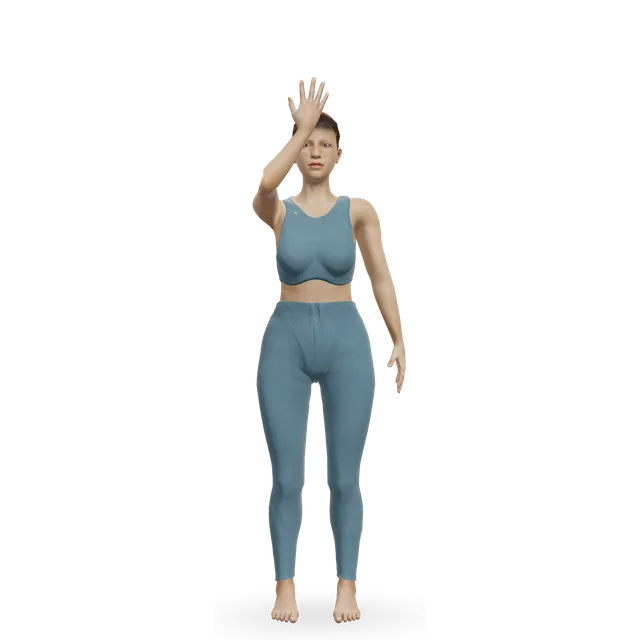
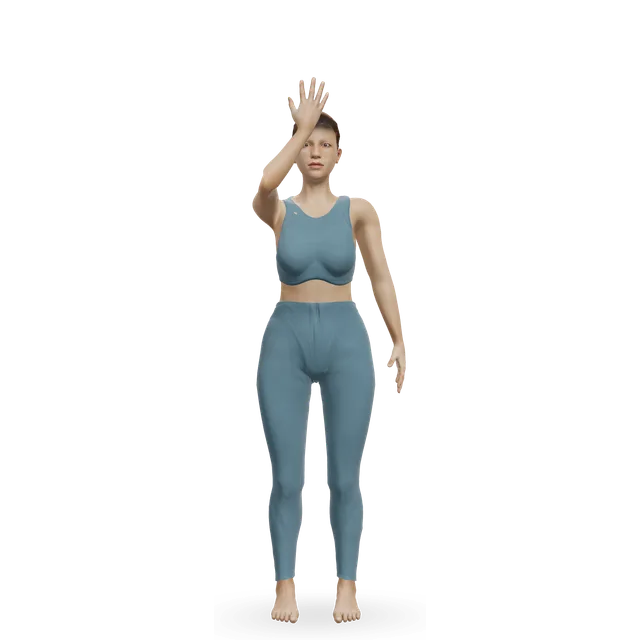
A trapped nerve (cervical radiculopathy) gives sharp arm pain, pins and needles or numbness in one arm. It's usually brought on by tipping the head back and towards the sore side, and sometimes eased by resting the hand on the head; no single test is decisive. In a US population study it affected 83 people per 100,000 a year, peaking at 50 to 54, and 90% were symptom-free or only mildly affected at follow-up; a review found most improvement comes within 4 to 6 months.

Sources 24, 25, 26, 27, 28

The spinal cord: rare, but worth knowingEmerging evidence

Pressure on the spinal cord in the neck (degenerative cervical myelopathy) causes "loss of dexterity (difficulty doing up buttons, using keys, mobile phones, or writing)" or trouble walking and falls, mostly from the 50s, and people often put it down to getting older. One review put it at about 2.3% of adults, and on average people had symptoms for over a year before diagnosis. A guideline recommends surgery for moderate and severe cases.

An electric shock that runs down the spine, sometimes into the arms or legs, when you bend your head forward is called Lhermitte's sign. The MS Trust says it "usually only lasts a few seconds", "is not life-threatening", and that anyone without a diagnosis of multiple sclerosis (MS) should get it checked. It was reported by 16% to 41% of people with MS in two clinic studies, by about 45% of 47 people harmed by heavy nitrous oxide use (which causes a lack of vitamin B12), and in severe spinal cord pressure. The NHS MS and vitamin B12 pages don't mention it, so the same-day tier in the warning signs is our suggestion.

Sources 29, 30, 31, 32, 33, 34, 35, 36, 37, 38, 39, 40

When a scan or test helpsStrong evidence

Not for ordinary neck pain. In 1,211 people with no neck symptoms, MRI showed bulging discs in 87.6%, including about three quarters of people in their 20s, and spinal cord compression without symptoms showed in 24.2% of people across another set of studies. A US radiology panel rates MRI "Usually Not Appropriate" for new neck pain without arm symptoms or warning signs, and the CSP says scan findings aren't strongly linked to pain.

Scans matter for suspected spinal cord pressure that is getting worse (an urgent MRI), a trapped nerve that has lasted, and a significant injury, where clinicians follow the Canadian C-spine rule that NICE uses. With an unexplained electric-shock feeling, numbness or unsteadiness, a blood test for vitamin B12 can be part of the checks.

Sources 42, 30, 43, 1, 29, 44, 39

How it usually goesStrong evidence

"Most neck pain only lasts a few weeks", the NHS says. NHS inform expects the biggest change "within the first couple of weeks" and most problems to improve within 8 weeks, and the CSP says most neck pain problems get "a lot better within three months". A wry neck usually settles within a few days. Neck pain often comes back: in population studies, half to three quarters of people report it again 1 to 5 years later, and younger people tend to do better. No one can promise a date.

Sources 3, 2, 49, 47, 1, 48, 46

What helps, and how strong the evidence is

Move often and take short, frequent breaksStrong evidence

NHS inform advises "moving your neck for short periods every hour" and avoiding "staying in one position for too long without moving"; the NHS says "do not keep your neck in the same position for a long time". The Health and Safety Executive (HSE) says short breaks often beat longer ones less often: "5 to 10 minutes every hour is better than 20 minutes every 2 hours". In a lab study, five short breaks in an hour of looking down prevented the muscle fatigue that one or two longer breaks allowed. A Cochrane review found extra breaks reduced neck discomfort only a little, on very low-quality evidence.

Sources 2, 3, 50, 8, 57

Screens and devices: raise them, though set-up alone isn't a cureEmerging evidence

The HSE suggests the "Top of screen level with eyes, about an arm's length away", the screen directly in front of you, and for a laptop a separate keyboard and mouse "so screen can be elevated on a laptop riser or similar". It counts tablets and smartphones as display screen equipment but gives no advice specific to them, so holding a phone higher and propping a tablet up is our suggestion, from lab studies that found less neck bending and lower neck muscle load when devices sit higher. In trials, workstation adjustment and sit-stand desks on their own didn't prevent neck or shoulder problems.

Sources 51, 52, 53, 54, 6, 55, 56, 57

Strength for neck pain that lastsStrong evidence

A Cochrane review of 27 trials found moderate-quality evidence that strengthening the neck, shoulders and upper back eases chronic neck pain by a moderate to large amount in the short term, while stretching alone may not help; for new neck pain there were no trials to judge. Across 38 trials, motor control, yoga or Pilates and strengthening all beat no treatment, with no clear winner. The CSP says it doesn't seem to matter much which exercise you do, as long as you stay active.

In 198 workers with frequent neck and shoulder pain, as little as 2 minutes a day of elastic band exercise, 5 days a week, eased pain by 1.4 points out of 10 more than health advice at 10 weeks. Reviews of office workers support strengthening on low-certainty evidence.

Sources 58, 59, 47, 60, 61

Chin tucks and posture exercises: control improves more than painEmerging evidence

Deep neck flexor training (the lying chin tuck) improves the control of the deep neck muscles and the ability to hold an upright neck during computer work. Exercise for forward head posture moved the head back about 3.4 degrees and eased pain by about 1.4 points out of 10 across 10 trials, on low to moderate certainty, and the posture change hasn't been shown to be why the pain eased.

Sources 62, 63, 64

Pillows, heat, painkillers and collarsMixed evidence

The NHS suggests "a low, firm pillow", your head "the same height as the rest of your body", and not sleeping on your front. No pillow type is clearly better in reviews, though latex pillows eased waking pain slightly in one pooled analysis. The NHS suggests paracetamol or ibuprofen, or ibuprofen gel, and heat or cold, and says "do not wear a neck collar - it's better to keep your neck moving". A short spell in a collar is an option only for a recent trapped nerve, where it helped about as much as physiotherapy over the first 6 weeks.

Sources 3, 65, 66, 2, 67

How much pain is OK while you exercise?

Up to 5 out of 10 during exercise, no worse the next morning, and the arm-symptom exceptionEmerging evidence

This guide uses our neck pain guide's rule, from NHS inform's neck exercise advice: "0 to 3 - minimal pain; 4 to 5 - acceptable pain; 6 to 10 - excessive pain". If it goes higher, do fewer repetitions, move more slowly or rest longer between movements, and your neck should be "no worse the morning after you've exercised". In long-lasting muscle and joint pain, exercise that allowed some pain did no worse than pain-free exercise.

Arm symptoms are the exception (our neck pain guide's rule): if an exercise sends pain, tingling or numbness further down your arm, or the extra symptoms last more than an hour, make the movement smaller or leave it out.

For looking down in daily life (our suggestion): an ache across the back of the neck that eases within a few minutes of looking up, moving or standing is fine, and it's the cue to take the break. If the ache comes on earlier each day, shorten the spells. An electric-shock feeling, clumsy or numb hands, or a change in your walking aren't pain-rule questions: see the warning signs.

Sources 49, 70

The exercise plan: 3 stages

Start at the first stage. Each move opens a full guide with a 3D demo.

Stage 1

Settle: break up the looking down, and keep the neck moving

About the first 2 weeks. Short movement breaks every hour, nods within comfort, screens and phones raised (the written steps below), and gentle work for the front of the neck and the upper back. With arm symptoms, our pinched nerve guide's plan comes first; after a crash or fall, our whiplash guide's, once the injury checks are clear; with an electric-shock feeling on bending, get checked before the plan.

Neck CARs (controlled articular rotations) demonstrated on the 3D figure3D demoNeck CARs (controlled articular rotations)Beginner · No equipment

Separate nods first (chin towards your chest as far as is comfortable, then slowly back up), then turns and tilts: 2 to 3 at a time, every hour or so, adding 1 or 2 every few days towards about 10. Full circles wait until stage 3 · NHS inform's forward head tilt and pacing, as our neck pain guides use it; the move page's own sore-neck version holds each movement for 5 s, 5 times. Stop for an electric-shock feeling

Harder: Rabbit pose (Sasangasana)

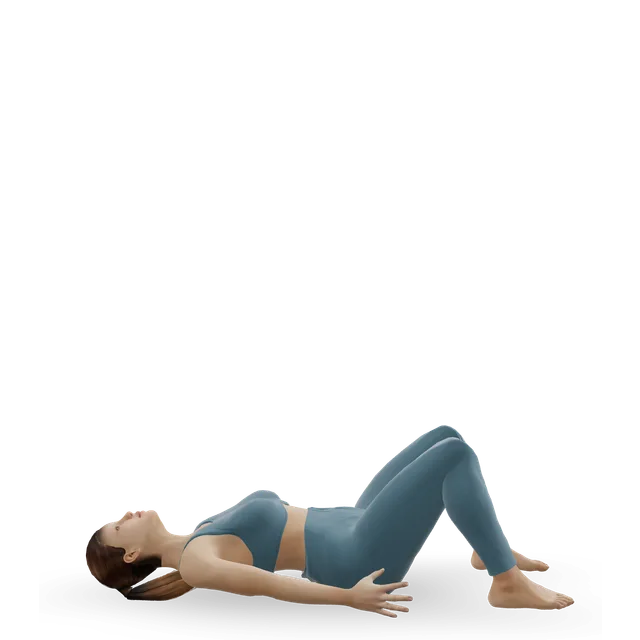
Lying chin tuck demonstrated on the 3D figure3D demoLying chin tuckBeginner · No equipment

5 to 10 gentle holds of up to 10 s, once or twice a day · As in our neck pain guide: the low-load nod used in deep neck flexor trials

Harder: Chin tuck

Chin tuck demonstrated on the 3D figure3D demoChin tuckBeginner · No equipment

5 to 10 slow reps with a 5 s hold, 2 to 3 times a day, and at screen breaks · As in our neck pain guide

Easier: Lying chin tuck · Harder: Isometric neck holds (four-way)

Seated upper-back lift (sit tall, shoulders back) demonstrated on the 3D figure3D demoSeated upper-back lift (sit tall, shoulders back)Beginner · A bench or box

3 to 5 repetitions, each held 3 to 5 s, at screen breaks · The move page's dose (a UK osteoporosis consensus, at least twice a week); using it as a screen break is our suggestion

Easier: Elbows back · Harder: Prone Y-T-W raises

Thoracic rotation demonstrated on the 3D figure3D demoThoracic rotationBeginner · No equipment

6 rotations per side, moving with the breath · The move page's dose

Easier: Side-lying open book · Harder: World's greatest stretch

Shoulder rolls demonstrated on the 3D figure3D demoShoulder rollsBeginner · No equipment

10 to 15 slow circles each way, once or twice through · The move page's dose (an editorial starting point)

Harder: Shoulder CARs (controlled articular rotations)

Move on when: Nodding and looking up and down are comfortable within the pain rule through the day, you can do about 10 nods each way, and your neck is no worse the next morning (editorial).

Follow along: a timer, a cue and the next move, one step at a time.
Stage 2

Build: endurance for the back and front of the neck, and the shoulder blades

About weeks 2 to 6: still holds for the neck, head-lift endurance, and the band and shoulder-blade work with the best evidence for neck pain that lasts. Neck work daily; band and shoulder work 3 to 5 days a week (editorial, with the band dose from its trial).

Chin tuck with head lift demonstrated on the 3D figure3D demoChin tuck with head liftIntermediate · No equipment

3 to 5 holds of 5 s, building to 10 holds of 10 s · As in our neck pain guide

Easier: Chin tuck

Isometric neck press, front and back demonstrated on the 3D figure3D demoIsometric neck press, front and backBeginner · No equipment

Light pressure first, building to a 10 s press, 3 times in each direction, for 3 rounds · The move page's dose (a North Cheshire and Mersey NHS leaflet). The backward press works the muscles that hold your head up as you look down (our reasoning). Ease off if a press brings on a headache, as the move page says

Easier: Chin tuck · Harder: Chin tuck with head lift

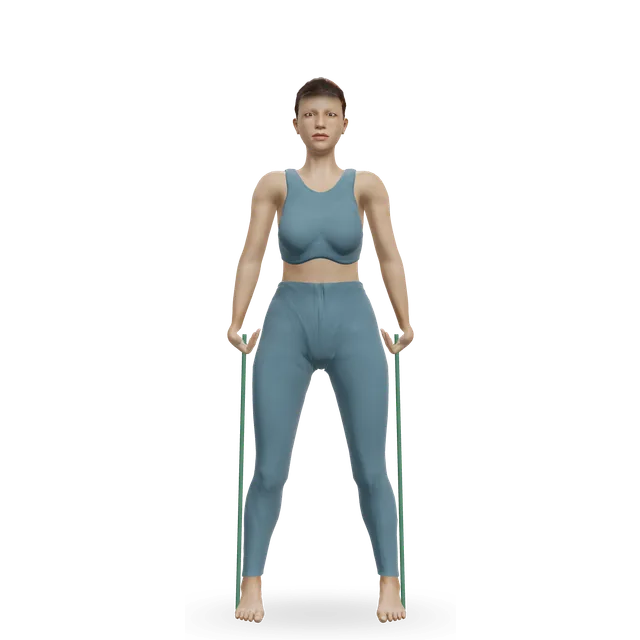
Band lateral raise demonstrated on the 3D figure3D demoBand lateral raiseBeginner · A band

2 minutes a day, 5 days a week, using a stronger band as it gets easy · The trial's dose: 2 minutes a day of band training eased neck and shoulder pain in 198 workers; the exercise choice is our tech neck guide's

Harder: Dumbbell lateral raise

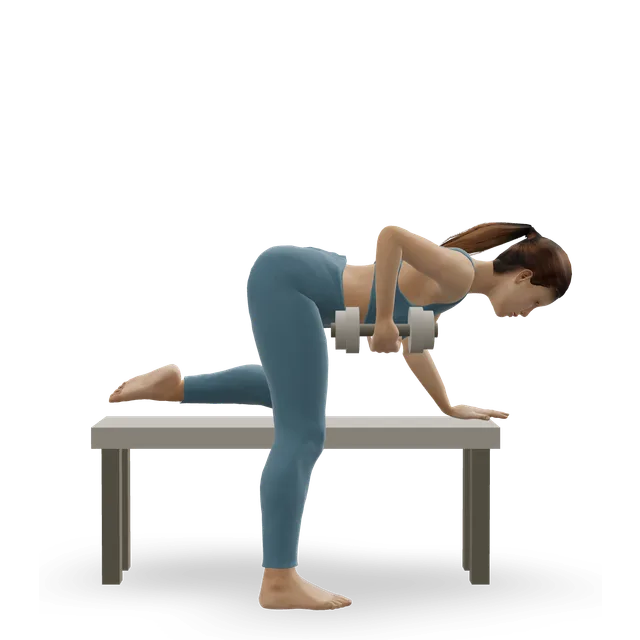
Band row demonstrated on the 3D figure3D demoBand rowBeginner · A band + An anchor point

3 sets of 10 to 15, stopping 2 to 3 reps short of failure · The move page's dose (an editorial starting point)

Harder: Supported single-arm dumbbell row

Prone Y-T-W raises demonstrated on the 3D figure3D demoProne Y-T-W raisesBeginner · No equipment

5 to 8 of each shape, 2 rounds, forehead on a folded towel · As in our neck pain guide; keep the neck long

Easier: Wall angel · Harder: Bent-over reverse fly

Move on when: The holds and head lifts are comfortable, an hour at a screen with breaks leaves only a mild ache that settles within minutes, and your neck is no worse the next morning (editorial).

Follow along: a timer, a cue and the next move, one step at a time.
Stage 3

Strengthen, and long screen days, reading and hobbies come back

From about week 6, 2 to 3 days a week, then twice a week for the long term: the shoulder and upper back strength of the trapezius trials, while longer spells looking down come back by the written steps below.

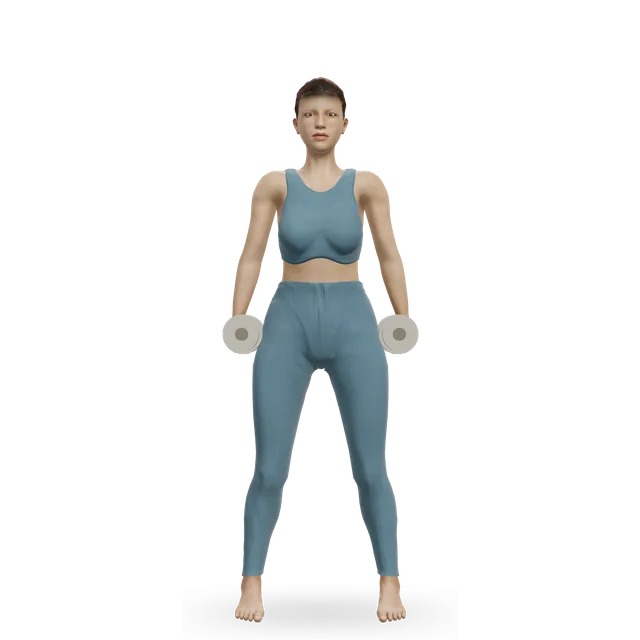
Dumbbell shrug demonstrated on the 3D figure3D demoDumbbell shrugBeginner · A dumbbell

2 to 3 sets of 8 to 12, pausing a second at the top, stopping with 2 or 3 reps in reserve · The move page's dose (an editorial starting point)

Harder: Snatch shrug

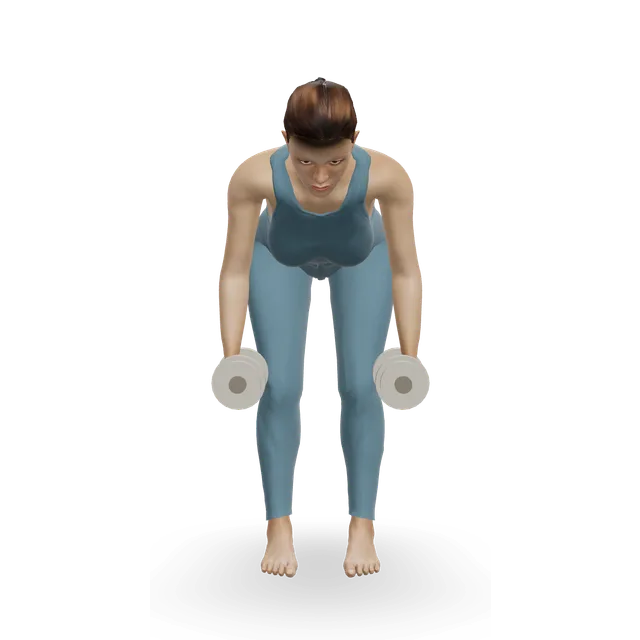
Bent-over reverse fly demonstrated on the 3D figure3D demoBent-over reverse flyIntermediate · A dumbbell

3 sets of 10 to 12 · As in our neck pain guide

Easier: Prone Y-T-W raises · Harder: Barbell rear-delt row

Face pull demonstrated on the 3D figure3D demoFace pullIntermediate · A band

2 to 3 sets of 12 to 15 · As in our tech neck guide

Easier: Prone Y-T-W raises · Harder: Tuck back lever

Isometric neck holds (four-way) demonstrated on the 3D figure3D demoIsometric neck holds (four-way)Beginner · No equipment

3 holds of 10 s each direction at a moderate effort · As in our neck pain guide's later stage

Easier: Chin tuck · Harder: Chin tuck with head lift

Neck CARs (controlled articular rotations) demonstrated on the 3D figure3D demoNeck CARs (controlled articular rotations)Beginner · No equipment

3 slow circles each way, once or twice a day · The move page's dose (an editorial starting point), as full circles once separate nods are comfortable

Harder: Rabbit pose (Sasangasana)

Move on when: Our suggestion: build the spells you spend looking down by 10 to 15 minutes at a time, keeping the hourly break, and keep two strength sessions a week. If a long day flares it, drop back a stage for a few days rather than stopping.

Follow along: a timer, a cue and the next move, one step at a time.

What to change for now

Screens, phones, reading and sleep (written steps)

Our 3D figure can't show these. They come from NHS inform, the NHS and the HSE; where a step is our suggestion, it says so. No trial has tested a way of using a phone for neck pain.

  • 1. Move your neck for short periods every hour, don't stay in one position for too long, and carry on with your normal activities and work if you can (NHS inform).
  • 2. Take short, frequent breaks: 5 to 10 minutes every hour beats 20 minutes every 2 hours, getting up and moving or at least stretching and changing position (the HSE). While it's sore, also look up from the screen for a few seconds every 10 to 15 minutes (our suggestion, from a lab study of short breaks).
  • 3. At a desk: the top of the screen about level with your eyes, about an arm's length away, directly in front of you; a laptop on a riser with a separate keyboard and mouse; a document holder for paper (the HSE).
  • 4. Phones and tablets: hold the phone up nearer eye level with your elbows resting, prop a tablet on a table or a stand rather than your lap, and use a case that tilts it; voice notes or a call can replace long texts (our suggestion, from lab studies).
  • 5. Reading, knitting, crafts and homework: raise the work on a cushion, a book stand or a slope, sit with your back supported, and take the same breaks (our suggestion).
  • 6. In bed: one low, firm pillow with your head level with your body, no sleeping on your front and no twisting your neck (the NHS); avoid long spells on a phone propped on pillows in bed (our suggestion).
  • 7. Heat or cold for comfort: a pack of frozen peas wrapped in a tea towel for 5 minutes, 3 times a day, or a hot water bottle wrapped in a tea towel for 20 minutes, 2 to 3 times a day; paracetamol or ibuprofen, or ibuprofen gel; no collar (the NHS).
  • 8. At work: you don't need to be pain-free to work (NHS inform); ask your employer about adjustments and a workstation assessment if you use a screen daily for an hour or more at a time (the HSE).

Sources 2, 50, 51, 52, 53, 3, 8, 54, 6

Looking down comes back (written steps)

No study has tested how to build screen time back after neck pain. These steps are our suggestion.

  • 1. Note how long you can look down before the ache starts to build, and take your break just before that point.
  • 2. When your neck has been no worse the next morning for 3 or 4 days, add 10 to 15 minutes before the break.
  • 3. Long films, flights, exams or a long day at a laptop: raise the screen, plan the breaks, and do a few nods and chin tucks at each one.
  • 4. If it flares, go back to shorter spells and the stage 1 moves for a few days, then build again.

Positions to swap, and why

Habit or positionWhy it mattersInstead
Long, unbroken spells looking down at a phone, laptop or bookDiscomfort and muscle fatigue build with time; the HSE and NHS inform advise short, frequent breaks.A movement break every hour, and a few seconds looking up every 10 to 15 minutes.Try: Neck CARs (controlled articular rotations)
A laptop flat on the desk or on your lap all dayIt bends the head more than a raised screen.A riser and a separate keyboard, with the top of the screen at eye level.
A tablet flat on your lapThe most neck bending of the set-ups tested in a lab study.Prop it on a table or a stand (our suggestion).
Chasing a perfect posture or wearing a posture correctorPosture is a weak predictor of neck pain, and corrective exercise moves the head about 3 degrees.Change position often and build strength.Try: Band row
A neck collar to rest itThe NHS says it's better to keep your neck moving.Gentle nods within comfort.Try: Neck CARs (controlled articular rotations)
Pulling your head down into a chin-to-chest stretchBending forward is the movement that hurts, and a hand-loaded stretch at the end of the range is a lot for a sore neck.Unloaded nods and chin tucks.Try: Chin tuck
Sleeping on your front, or on a stack of pillowsThe NHS says don't sleep on your front and keep your head level with your body.One low, firm pillow.
Pushing on through an electric-shock feeling on bending your neckIt's a spinal cord sign, not a tired muscle.Stop the movement and get checked the same day.
Neck manipulation with clumsy hands or unsteady walkingIt is strictly ruled out when the spinal cord may be under pressure.See a GP first.

Routines to follow

More moves for this area

Questions people ask

Why does my neck hurt when I look down?

Usually it's ordinary neck pain: the muscles at the back of your neck work harder to hold your head as you bend it, and long, still spells at a phone, laptop or book make them ache. It's rarely serious. An electric-shock feeling down your back when you bend your head is different and needs checking the same day.

Is looking down at my phone damaging my neck?

The evidence doesn't show that the posture damages it. In adults followed for a year, how far they bent the neck to text didn't predict neck pain, while poor sleep and too little activity did. Surveys do link heavier phone use with more neck pain, so take breaks, hold the phone higher and keep active.

Does my head really weigh 27 kg when I look down?

No study we could check shows that. The figure comes from a 2014 paper whose published summary gives no figures, and studies that measured posture and muscle activity estimate the load at about 1.6 to 2 times that of a level head at 45 degrees. Healthy necks are built to handle that.

Why does my neck hurt when I look down and up?

Stiffness both ways is usually ordinary neck pain, often after a night's sleep or a long day at a desk, and it usually eases within weeks with gentle movement every hour. Pain that spreads down one arm when you look up points to a trapped nerve.

Why does my neck hurt when I look down after sleeping?

Often it's the night's position or pillow: the NHS suggests one low, firm pillow with your head level with your body, and not sleeping on your front. A neck that's locked to one side on waking is a wry neck, which usually settles within days. Our sleeping and stiff neck guides have more.

I get an electric shock down my back when I bend my neck. What is it?

It's called Lhermitte's sign, and it comes from the spinal cord: for example multiple sclerosis, pressure on the cord from age-related changes, or a lack of vitamin B12, which heavy nitrous oxide use can cause. It usually lasts seconds and isn't dangerous in itself, but if it's new, get checked the same day. With new problems walking or with your bladder, call 999.

How should I set up my laptop or phone?

The HSE suggests the top of the screen level with your eyes, about an arm's length away, and a laptop raised on a riser with a separate keyboard and mouse. Hold a phone higher and prop a tablet on a table or stand. Breaks matter more than the perfect set-up.

How often should I take a break from looking down?

The HSE says short, frequent breaks beat long, rare ones: 5 to 10 minutes every hour is better than 20 minutes every 2 hours. NHS inform suggests moving your neck for short periods every hour. In a lab study, five short breaks in an hour stopped neck muscle fatigue building.

What exercises help neck pain from looking down?

Start with gentle nods within comfort and chin tucks every hour or so, then strengthen the neck, shoulders and upper back, which has the best evidence for neck pain that lasts. Even 2 minutes a day of band exercise helped workers with neck and shoulder pain in a trial.

Will fixing my posture fix my neck?

Probably not on its own. Physiotherapists now say posture plays a smaller role than once thought, and posture exercises move the head back only about 3 degrees. Moving often and building strength help more.

Do I need a scan?

Usually not: scans show disc bulges in most people without any neck pain. A scan is needed for clumsy or numb hands, unsteady walking, arm weakness that's getting worse, or after a significant injury.

How long will it take to get better?

Most neck pain lasts a few weeks, and most problems improve within 8 weeks. It often comes back, so keep moving and keep the strength work going. See a GP or physiotherapist if it hasn't eased after a few weeks.

Related exercise guides

Other pain guides

Sources

  1. Chartered Society of Physiotherapy · Causes of neck pain
  2. NHS inform · Neck problems
  3. NHS · Neck pain (past its review date: reviewed April 2023, review due April 2026)
  4. Lee 2015 · Head flexion angle while using a smartphone (lab study, Ergonomics)
  5. Tapanya 2021 · Neck flexion angle, neck load and muscle activity when texting standing (lab study of 32 young adults, Ergonomics)
  6. Vasavada 2015 · The load on the neck muscles during tablet use (modelling and posture study, Ergonomics)
  7. Tahernejad 2023 · How long 40 students could hold common sitting postures before discomfort (lab study, Int J Occup Saf Ergon)
  8. Sarker 2021 · Break schedules and neck and shoulder muscle fatigue during an hour of neck flexion (lab study, Appl Ergon)
  9. Correia 2025 · Neck bending while texting did not predict neck pain in 396 adults followed for a year; poor sleep and low activity did (cohort, Braz J Phys Ther)
  10. Grasser 2023 · Defining text neck: 41 articles (scoping review, Eur Spine J)
  11. Resende 2025 · Neck pain and text neck against Hill's criteria of causation (scoping review, J Bodyw Mov Ther)
  12. Correia 2021 · Text neck and neck pain in 582 adults (cross-sectional study, Spine)
  13. Damasceno 2018 · Text neck and neck pain in 18 to 21 year olds (cross-sectional study, Eur Spine J)
  14. Souza 2024 · Text neck and neck disability in 192 young adults (cross-sectional study, Eur Spine J)
  15. Mazaheri-Tehrani 2023 · Sedentary behaviour, screens and neck pain in adults (systematic review and meta-analysis, Prev Med)
  16. Meng 2025 · Sedentary behaviour, screens and neck pain: 25 studies, 43,184 people (systematic review and meta-analysis, BMC Public Health)
  17. Chen 2025 · Smartphone overuse and neck pain: 7 studies, 10,715 people (systematic review and meta-analysis, Postgrad Med J)
  18. Baradaran Mahdavi 2022 · Sedentary behaviour and neck pain in children and adolescents (systematic review and meta-analysis, Health Promot Perspect)
  19. Toh 2020 · Phone and tablet use and musculoskeletal symptoms in 1,691 adolescents followed for a year (cohort, Appl Ergon)
  20. Gustafsson 2017 · Texting and musculoskeletal symptoms in 7,092 young adults over 5 years (cohort, Appl Ergon)
  21. Jun 2017 · Physical risk factors for neck pain in office workers (systematic review and meta-analysis, Int Arch Occup Environ Health)
  22. Barrett 2020 · Neck joint loading with neck flexion in 8 men (EMG-driven model, Ergonomics)
  23. Hansraj 2014 · Stresses in the neck caused by the position of the head (Surg Technol Int; the published summary gives no figures or methods)
  24. Hurley 2022 · Consensus practice guidelines on the neck's facet joints (multisociety guideline, Reg Anesth Pain Med)
  25. Peng 2019 · Cervical discs as a source of neck pain (analysis of the evidence, Pain Med)
  26. Thoomes 2026 · Examination tests for a trapped nerve in the neck (systematic review update, BMC Musculoskelet Disord)
  27. Radhakrishnan 1994 · Cervical radiculopathy in Rochester, Minnesota, 1976 to 1990: 561 people (population study, Brain)
  28. Wong 2014 · Course of a trapped nerve from a neck disc (systematic review, Spine J)
  29. Davies 2018 · Degenerative cervical myelopathy (clinical review, BMJ)
  30. Smith 2021 · Spinal cord compression on MRI with and without symptoms: 19 studies (systematic review and meta-analysis, Global Spine J)
  31. Malone 2025 · How long symptoms last before cervical myelopathy is diagnosed: 78 studies (systematic review and meta-analysis, Brain Spine)
  32. Fehlings 2017 · Managing degenerative cervical myelopathy (clinical practice guideline, Global Spine J)
  33. Khare 2015 · Lhermitte's sign: the current status (review, Ann Indian Acad Neurol)
  34. MS Trust · Lhermitte's sign
  35. Al-Araji 2005 · Lhermitte's sign in 300 people with multiple sclerosis (clinic study, Mult Scler)
  36. Beckmann 2015 · Lhermitte's sign in 694 people with multiple sclerosis (clinic study, Acta Neurol Belg)
  37. Tuan 2020 · Spinal cord injury in 47 people harmed by nitrous oxide (case series, Neurol Int)
  38. FRANK (UK government drugs advice) · Nitrous oxide
  39. NHS · Vitamin B12 or folate deficiency anaemia (past its review date: reviewed February 2023, review due February 2026)
  40. NHS · Multiple sclerosis
  41. NHS · Cervical spondylosis (past its review date: reviewed August 2023, review due August 2026)
  42. Nakashima 2015 · Neck MRI findings in 1,211 people without symptoms (cross-sectional study, Spine)
  43. American College of Radiology 2025 · Appropriateness Criteria: neck pain or cervical radiculopathy, 2024 update (J Am Coll Radiol)
  44. NICE NG41 · Spinal injury: assessment and initial management
  45. NHS inform · Neck injury
  46. Royal Berkshire NHS Foundation Trust · Acute torticollis (wry neck): emergency department leaflet (2024, past its review date of June 2026)
  47. Chartered Society of Physiotherapy · Treatment for neck pain
  48. Carroll 2009 · Course and prognostic factors for neck pain in the general population (Bone and Joint Decade Task Force, JMPT)
  49. NHS inform · Exercises for neck problems (including how to tell if you're exercising at the right level)
  50. Health and Safety Executive · Work routine and breaks (display screen equipment)
  51. Health and Safety Executive · Good posture when using display screen equipment
  52. Health and Safety Executive · Working with display screen equipment: a brief guide (INDG36)
  53. Health and Safety Executive · Working safely with display screen equipment
  54. Young 2012 · Tablet set-up, case tilt and head and neck flexion in 15 users (lab study, Work)
  55. Asundi 2010 · A laptop on a desk, the lap or a lap desk: posture and comfort in 15 adults (lab study, Ergonomics)
  56. Guo 2024 · Laptop screen height and neck and shoulder muscle fatigue (lab study, Work)
  57. Hoe 2018 · Ergonomic interventions for preventing neck and upper limb disorders in office workers: 15 RCTs (Cochrane review)
  58. Gross 2015 · Exercises for mechanical neck disorders: 27 trials (Cochrane review)
  59. de Zoete 2020 · Exercise types for chronic neck pain compared: 40 RCTs (network meta-analysis, BJSM)
  60. Andersen 2011 · 2 or 12 minutes a day of band training for neck and shoulder pain in 198 workers (RCT, Pain)
  61. Jones 2024 · Exercise for office workers with chronic neck pain: 8 RCTs (systematic review and meta-analysis, Appl Ergon)
  62. Blomgren 2018 · Deep neck flexor training in chronic neck pain: 12 RCTs (systematic review, BMC Musculoskelet Disord)
  63. Falla 2007 · Neck exercise and sitting posture in 58 people with chronic neck pain (RCT, Phys Ther)
  64. Xing 2026 · Exercise for forward head posture in people with neck pain: 10 RCTs (systematic review and meta-analysis, J Pain Res)
  65. Ghosh 2025 · Pillows for chronic neck pain (systematic review, Rehabilitación)
  66. Chun-Yiu 2021 · Pillow designs, neck pain and sleep (systematic review and meta-analysis, Clin Biomech)
  67. Kuijper 2009 · Collar or physiotherapy vs wait and see for a recent trapped nerve in the neck: 205 people (RCT, BMJ)
  68. Zhang 2015 · The neck in rheumatoid arthritis over time: 59 studies (meta-analysis, Arthritis Res Ther)
  69. Lee 2006 · Incidence and outcome of neck artery tears (population study, Neurology)
  70. Smith 2017 · Should exercises be painful in chronic musculoskeletal pain? (systematic review and meta-analysis, BJSM)
  71. NHS · Meningitis
  72. NHS · Whiplash

Exercise education, not a diagnosis or treatment plan. It is written from the guidelines and studies listed above; review by a clinician is pending. If your pain follows an injury, is severe, is getting worse, or comes with any warning sign listed on this page, get it assessed. Health disclaimer.