Pain guide · Neck pain

Neck pain in pregnancy: posture, sleep and feeding positions, headaches, and the signs to check

Neck pain in pregnancy is less common than back pain, and it usually comes from the neck and shoulder muscles: long spells looking down at a screen, sleeping on your side later in pregnancy, poor sleep and, after the birth, feeding and carrying your baby. It isn't just the bump: it can start in the first trimester, and it is commonest in the months after the birth. Moving your neck little and often, a supported feeding position and strength work for the shoulders and upper back help most.

A few signs need a call. A severe headache that doesn't go away with paracetamol, vision problems, pain below the ribs or sudden swelling can be pre-eclampsia, even in the weeks after the birth: call your maternity unit, or the National Health Service's 111 line (NHS 111) after the birth. A stiff neck with a high temperature, a very painful headache or a rash is a 999 call. This guide covers how to tell the causes apart, sleeping and feeding positions, headaches after an epidural, safe painkillers, and a four-stage plan with 3D demos through pregnancy and after the birth.

When to get help first

Exercise is for pain that has been checked or is clearly mild and settling.

Get urgent medical help if

  • Get urgent medical help: you're pregnant or have given birth in the last few weeks and have symptoms of pre-eclampsia, such as pain below the ribs, a severe headache that does not go away with simple painkillers, vision problems such as blurred vision or seeing flashing lights, sudden swelling of the face, hands or feet, heartburn that does not go away with heartburn medicines, being sick, or feeling very unwell. If you're pregnant, call your maternity unit if you have the number; if you've recently given birth or cannot call your maternity unit, call 111.
  • Get help for any of these in pregnancy: vaginal bleeding, fluid leaking from your vagina, a change in your baby's movements, a high temperature, a severe headache, vision problems such as blurring or seeing flashing lights, or sudden swelling in your face, hands, legs or feet (vision problems and sudden swelling need checking immediately). In the first 12 weeks, contact your GP surgery or early pregnancy unit; from 12 to 19 weeks, your midwife or early pregnancy unit; from 20 weeks, your midwife or maternity unit. Always call 999 if you think it's a life-threatening emergency, and call NHS 111 if you're not sure what to do.
  • Call 999 or go to A&E: a stiff neck and you can't look at bright lights; a very painful headache; a very high or very low temperature, feeling hot or cold to the touch, or shivering; confusion, slurred speech or not making sense; a rash that does not fade when you press a glass on it; or a first seizure (fit). These can be signs of meningitis. Call too for any other symptoms you're worried might be meningitis.
  • Call 999 or go to A&E: a headache that came on suddenly and is extremely painful; numbness or weakness in the face or body; a drooping face, or being unable to lift both arms and keep them up; difficulty speaking, swallowing, balancing, walking or remembering; double vision or loss of vision; drowsiness or confusion. A torn neck artery often starts with headache and neck pain, sometimes with dizziness or tingling, so head or neck pain unlike any you have had before needs checking.
  • Same day (your maternity unit, GP or NHS 111): a severe headache after an epidural. It can come from an accidental puncture of the fluid sac around the spine, which can be treated.
  • Call 999 or go to A&E: new problems walking, loss of bladder or bowel control, or a sudden loss of coordination, such as difficulty doing up buttons. These can be signs of pressure on the spinal cord.
  • Same day (urgent GP appointment or NHS 111): severe neck pain that starts suddenly or gets worse quickly; heaviness or weakness in the arms or legs; pins and needles in an arm along with neck or arm pain; or pain between the shoulder blades.
  • Same day: clumsiness, numbness, pins and needles or weakness in one or both arms that is getting worse; problems with balance or walking since the neck pain started; or neck pain with a severe headache.
  • Numbness in both arms at the same time, dizziness, double vision or blackouts, an unusual, severe and persistent headache, legs giving way for no reason, or changes in your speech or swallowing: call your GP straight away or go to your nearest A&E department. This is the advice of POGP, the UK's pelvic and obstetric physiotherapists. Tingling in both hands at night is common in pregnancy and is usually carpal tunnel syndrome, not this.
  • Call 999 or go to A&E if breathing suddenly becomes difficult, if pain in your chest or upper back comes on suddenly with breathlessness or a very fast heartbeat, or if someone passes out. These are the NHS's signs of a blood clot in the lungs (a pulmonary embolism) or another serious condition. Don't drive yourself.
  • Call 999: chest pain that spreads to your arm, neck or jaw, especially with breathlessness, sweating or feeling sick. It could be a heart attack.
  • Get help from NHS 111: pain or tightness in your chest, neck, shoulders, jaw or arms that comes and goes, often brought on by exercise, stress, emotion or cold and easing after a few minutes' rest. It can be angina, a sign of a heart problem. If you've been diagnosed with angina, get help from NHS 111 too if it feels worse than before, is happening more often, lasts longer or happens when you're resting.
  • Ask for an urgent GP appointment or get help from NHS 111: you have a migraine attack and you're pregnant or have just had a baby, it has lasted longer than 72 hours, or aura symptoms last longer than 1 hour at a time.
  • Call 999 or go to A&E after a neck injury if the person is unresponsive, has severe neck pain or cannot move their head, has fallen from a height such as 5 or more stairs, or is drunk or has taken recreational drugs. Do not drive yourself. Being 65 or over, a dangerous fall or crash (from more than 1 metre or 5 stairs, diving, a high-speed or rollover crash, being thrown from a vehicle, a bicycle collision or an accident on a motorised recreational vehicle), or tingling in the arms or legs after an injury puts you at high risk of a broken neck: get checked.
  • After a fall or a knock to your bump, even if you feel fine, call your maternity unit: they may want to check you and your baby. If you hit your head, call your GP or NHS 111 as well. This is our suggestion, from NHS Greater Glasgow and Clyde's and NHS Wales's maternity advice: the NHS website gives no tier for a fall in pregnancy.

See a doctor or physiotherapist if

  • Neck pain or stiffness that has not eased after a few weeks, or after 8 weeks of looking after it yourself; painkillers are not helping; or you are worried. In many areas you can refer yourself to NHS physiotherapy.
  • Pins and needles or a cold arm alongside neck pain, or a new loss of strength or feeling in the arm that you cannot explain (a possible nerve problem).
  • Neck pain with feeling generally unwell, or that started while you were ill with another condition such as rheumatoid arthritis or cancer; or neck pain with blurred vision, ringing in the ears or dizziness.
  • Tingling, numbness or an ache in the fingers or hand, often worse at night, that is getting worse or not going away, or isn't helped by a wrist splint: see a GP. It is more likely in pregnancy, and it can be carpal tunnel syndrome rather than the neck.
  • Neck, shoulder or back pain since having a baby that is bothering you: ask a GP or health visitor at any time, or raise it at your 6 to 8 week postnatal check.
  • Muscle and joint pain in pregnancy or after the birth that is bothering you: these problems are common, but they are not normal and should not be put up with in silence. Ask your GP or midwife to refer you to a specialist women's health physiotherapist (the pelvic and obstetric physiotherapists' advice).

Where does it hurt?

Location narrows the likely causes; it does not diagnose.

An ache across the back of the neck and the top of the shoulders after screens, sitting or a long day

Usually the neck and shoulder muscles. It eases with moving, heat and a change of position, and this guide's plan covers it.

A stiff, sore neck when you wake, worse turning one way

Often the sleeping position or pillow, especially once you sleep on your side. Our neck pain from sleeping guide covers pillows for everyone.

Read: Neck pain from sleeping →
Neck and upper back pain during or after feeds

Common in the months after the birth, especially with long feeds in a chair. Supported positions, side-lying or laid-back feeds and the plan below help. Pain between the shoulder blades is covered in our upper back pain in women guide.

Read: Upper back pain in women →
Pain from the neck down one arm, with pins and needles or numbness

Possibly a pinched nerve in the neck, which is uncommon at these ages. Weakness, or symptoms that are getting worse, need a check the same day, as the warning signs say.

Read: Pinched nerve in the neck →
Tingling in the thumb and first fingers of both hands at night, with swollen fingers

Usually carpal tunnel syndrome at the wrist, which about a third of pregnant women report, not the neck. Our wrist pain in pregnancy guide covers splints and exercises.

Read: Wrist pain in pregnancy →
A pressing, tight headache on both sides, with tight neck muscles

Often a tension-type headache, once the warning signs are ruled out. Our tension headache guide covers it.

Read: Tension headaches →
A headache that starts in the neck and spreads up the back of the head

Possibly a headache coming from the neck. Our guide to neck pain and headaches covers it.

Read: Headaches from the neck →
A severe headache that doesn't go away with paracetamol, from 20 weeks or after the birth

Especially with vision problems, pain below the ribs, sudden swelling or being sick, this can be pre-eclampsia: get urgent help, as the warning signs say.

A severe headache within a week of an epidural or spinal, worse sitting or standing and better lying flat

Possibly a leak of spinal fluid, which can come with a stiff neck and can be treated: call your maternity unit, as the warning signs say.

A stiff neck with a high temperature, a very painful headache, dislike of bright light or a rash

Possibly meningitis: call 999, as the warning signs say.

The neck and the top of the shoulder together, or pain spreading between them

Our neck and shoulder pain guide sorts the causes, and our shoulder pain in pregnancy guide covers the shoulder.

Read: Shoulder pain in pregnancy →
A neck that is locked and won't turn

Our stiff neck guide covers it.

Read: Stiff neck and wry neck →
Neck pain at other times of life

Our neck pain in women guide covers desk work, migraine and the menopause.

Read: Neck pain in women →

Understand it

Less common than back pain, and no UK figuresEmerging evidence

In 1,835 pregnant women in Australia, 12.4% reported neck pain, against 39.5% with back pain (we read that study's summary, not the full paper). In one Turkish hospital study of 184 women, 7.1% reported neck pain in the first trimester, 8.7% in the second and 10.9% in the third, though the paper's text and table disagree on whether that rise is real. In 300 women in Bangladesh it was 1.7%. There is no UK figure.

The UK's pelvic and obstetric physiotherapists (POGP) list neck pain and stiffness among the muscle and joint problems of pregnancy, most likely in the third trimester but possible earlier, and sometimes carrying on after the birth.

Sources 1, 2, 3, 4

Commoner after the birth, with feedingEmerging evidence

Neck pain with breastfeeding was reported by 51.7% of 310 mothers at clinics in Nigeria and 35.5% of 110 in Cameroon, mostly during feeds and usually lasting less than 10 minutes. In an online survey of 395 mothers in Poland, 48% had neck pain at least once a week; those who fed for longer had more pain, and those who preferred to feed lying down or on a bed or sofa had less intense neck pain than those feeding in a chair.

These are clinic and online surveys, which can't show cause and may not reflect mothers in the UK. In 471 mothers in Arabic-speaking countries, support during feeds, such as cushions, went with lower pain scores.

Sources 5, 6, 7, 8

It isn't just the bumpMixed evidence

Neck pain is reported from the first trimester, before much of a bump, and is commonest after the birth. POGP lists many possible contributors: changes in posture as the baby grows, more flexible joints, enlarged breasts, feeding in an awkward position, lifting and carrying after the birth, long spells sitting, injuries you already had, and your strength before pregnancy.

Posture does change in pregnancy, but differently in different women: a review of 87 studies found "no consistent biomechanical pattern", and in 30 women in Poland the upper back rounded slightly by the second trimester. In adults who aren't pregnant, people with neck pain had only slightly more forward head posture than people without, in studies that can't show which came first.

Sources 2, 4, 9, 10, 11

Breasts, bras and sleep: plausible, but little studiedEmerging evidence

No study has looked at breast size or bra fit and neck pain in pregnancy. In 339 women hospital staff who weren't pregnant, bra cup size didn't track neck and shoulder pain across sizes, and in 400 new mothers in Nigeria, breast size wasn't linked with upper back pain. POGP advises a supportive bra through pregnancy and after the birth, as a comfort step.

Sleep is often broken: "As your bump gets bigger, it can be difficult to get a good night's sleep", the NHS says, and across 17 studies about a third of women had poor sleep that lasted from pregnancy into the first year. No study has linked this to neck pain in pregnancy, but poor sleep and neck pain go together in other adults.

Sources 12, 13, 4, 14, 15

Headaches: common early, and the ones that need a callStrong evidence

"Headaches can be common in early pregnancy. They usually improve as your pregnancy goes on", and they don't harm your baby, the NHS says. A tension-type headache, a pressing ache on both sides with tight neck muscles, is about a quarter of headaches in pregnancy, a review says, and headaches in the first week after the birth are common.

A severe headache can be a sign of pre-eclampsia, which is most likely from 20 weeks but can happen at any point, and sometimes "develops in the days or weeks after your baby is born", the NHS says. In most cases pre-eclampsia is not severe, and blood pressure and pee checks at every antenatal appointment pick it up. In 151 pregnant women sent to neurologists with a sudden headache, most had a migraine or another primary headache; raised blood pressure, a fever or an abnormal examination pointed to another cause.

Sources 16, 17, 18, 19, 20

A headache after an epidural, and other rare causesEmerging evidence

After an epidural or a spinal, about 1 in 100 women get a headache from a small leak of the fluid around the spine, usually between a day and a week afterwards: "It is usually a severe headache ... which gets better when lying down and worse on sitting or standing", sometimes with neck pain or stiffness, a Cambridge hospital leaflet says. It can be treated, and "In 60-70% of cases, a blood patch will cure the headache within 24 hours".

A stiff neck with a fever, a very painful headache or a rash can be meningitis, which is rare but an emergency. A tear in an artery in the neck is "a rare complication of pregnancy and puerperium", a review says. A pinched nerve in the neck is uncommon at childbearing ages (63.5 per 100,000 women a year in one US population, peaking at 50 to 54), while carpal tunnel symptoms at the wrist are common in pregnancy: 34% of 639 Dutch women reported them.

Sources 21, 22, 23, 19, 24, 25

Where to get help, and how fastStrong evidence

In pregnancy, where to turn depends on how far along you are, the NHS says: your GP surgery or early pregnancy unit in the first 12 weeks, your midwife or early pregnancy unit from 12 to 19 weeks, and your midwife or maternity unit from 20 weeks. "Always call 999 if you think it's a life-threatening emergency", and call NHS 111 if you're not sure what to do.

A headache that came on suddenly and is extremely painful, or comes with weakness, a drooping face, speech problems or loss of vision, is a 999 call at any time, as are sudden breathlessness and chest or upper back pain. These are rare; the warning signs list them in full.

Sources 26, 27, 28, 29

When a scan or test helpsStrong evidence

Ordinary neck pain in pregnancy needs no scan: the story and an examination decide, and most neck problems improve within 8 weeks, NHS inform says. Blood pressure and pee checks at antenatal appointments look for pre-eclampsia.

With arm weakness, numbness or signs of pressure on the spinal cord, "you may be sent for other tests such as X-rays or scans", the NHS says. In pregnancy, UK radiology guidance says ultrasound or magnetic resonance imaging (MRI), which use no X-rays, should be considered first, that the few studies after MRI in pregnancy "have not revealed any adverse effects, but are very limited", and that the dose to the baby from diagnostic X-rays "should present no risk". Tell the radiographer you're pregnant: the NHS MRI form asks.

Sources 30, 17, 31, 32, 33

How it usually goesEmerging evidence

"Most neck pain only lasts a few weeks", the NHS says, and NHS inform expects the biggest change in the first couple of weeks and most problems to improve within 8 weeks. In pregnancy, these symptoms are most likely in the third trimester and can continue after the birth (POGP). Neck pain with feeds usually lasts minutes rather than all day.

Headaches early in pregnancy usually improve as it goes on. Carpal tunnel symptoms often ease after the birth, but in some women they last a year or more. No one can promise a timescale.

Sources 34, 30, 4, 5, 16, 35, 36

What helps, and how strong the evidence is

No trial in pregnancy; strength work has the best evidence in other adultsEmerging evidence

No trial has tested neck exercise in pregnancy. In adults who aren't pregnant, a Cochrane review of 27 trials found that strengthening the neck, shoulders and upper back eased long-lasting neck pain by a moderate to large amount straight after treatment (moderate-quality evidence), while stretching alone may not change pain (low-quality evidence). In 198 workers with frequent neck and shoulder pain, 174 of them women, 2 minutes a day of band training on 5 days a week eased pain by 1.4 points out of 10 more than health advice over 10 weeks.

NHS inform's neck movements are the gentle start: hold each turn or tilt for 2 seconds, start with 2 to 3 repetitions at a time, practise every hour, and add 1 or 2 every few days towards about 10. This plan borrows these doses, and says so.

Sources 37, 38, 39

After the birth: one small Pilates trialEmerging evidence

In 74 breastfeeding women in Egypt, 6 to 12 months after the birth and all with a forward head posture, 8 weeks of supervised Pilates 3 times a week plus advice on feeding positions cut neck pain from 7.6 to 2.6 out of 10, against 4.2 with the advice alone. It is one small trial with unusually large effects and no follow-up after 8 weeks, and the advice-only group had no untreated comparison.

Adding Tui-Na massage or a positional release technique to posture exercises eased neck pain more over 4 weeks in 60 women after the birth (we read that trial's summary). A single craniosacral therapy session was tested with no comparison group, so it can't show the therapy worked.

Sources 40, 41, 42

Exercise is safe in pregnancy, with a few changesStrong evidence

"Exercise is safe for you and your baby in pregnancy", the NHS says: aim for 150 minutes of moderate activity a week with 2 sessions of muscle strengthening, starting with about 10 minutes a day if you're new to it. The UK Chief Medical Officers add "There is no evidence of harm" and "Listen to your body and adapt", and a Canadian guideline found no harms.

"In later pregnancy, try to avoid any activity that involves lying flat on your back for more than a few minutes", and avoid sports with a risk of falling or bumping your tummy, the NHS says. So the plan's neck exercises are done sitting or standing in pregnancy. After the birth, the Chief Medical Officers say restart gradually, and "You can be active while breastfeeding".

Sources 43, 44, 45

Feeding positions: NHS advice, lightly tested for the neckEmerging evidence

"It's worth getting comfortable before a feed. Use pillows or cushions if necessary. Your shoulders and arms should be relaxed", the NHS says, and there are lots of positions to try. Its Best Start in Life pages suggest a footstool "to stop you from leaning forward", side-lying for night feeds and after a caesarean, and a laid-back position with cushions "so your back, shoulders and neck feel supported".

The evidence that positions ease neck pain is thin: feeding lying down went with less intense neck pain in one online survey, the football hold went with more in one clinic survey and holds made no difference in another, where most mothers said changing position helped. In the Pilates trial, feeding-position advice alone was followed by less pain, but with no untreated group to compare.

Sources 46, 47, 48, 7, 6, 5, 40

Sleep on your side from 28 weeks; any pillow will doStrong evidence

"The safest position to go to sleep is on your side, either left or right", the NHS says, because after 28 weeks going to sleep on your back is linked with stillbirth; "Do not worry if you wake up on your back". The National Institute for Health and Care Excellence (NICE) suggests pillows to help you stay on your side. In one small trial, ordinary pillows kept women off their backs as well as pregnancy pillows did (as a summary reports it).

For the neck, the NHS says "use a low, firm pillow" and keep your head "the same height as the rest of your body". In adults who aren't pregnant, reviews found small benefits from latex pillows and no clear winner among pillow types; no pillow has been tested for neck pain in pregnancy.

Sources 14, 49, 50, 51, 52, 53, 34

Painkillers: paracetamol, not ibuprofen, in pregnancyStrong evidence

"Paracetamol is the first choice of painkiller if you're pregnant", taken "for the shortest possible time", the NHS says, and avoid painkillers containing codeine and anti-inflammatories such as ibuprofen "unless prescribed by your doctor". The NHS ibuprofen page covers gels and sprays too. The medicines regulator "has confirmed taking paracetamol during pregnancy remains safe and there is no evidence it causes autism in children".

While breastfeeding, "Paracetamol is usually the best painkiller to take ... but ibuprofen can often be used if needed". Check with your pharmacist, midwife or GP before taking any medicine in pregnancy.

Sources 16, 54, 55, 56

Massage, posture fixes and new pillows: popular, little evidenceMixed evidence

About 4 in 10 Australian women with neck pain in pregnancy saw a massage therapist, but massage has only been tested as an add-on after the birth, in one small trial. Posture braces and "corrective" drills rest on a weak link between posture and neck pain, and stretching alone may not help; strengthening has the better evidence. A new bra is a comfort step, not a proven treatment.

Sources 1, 11, 37, 41, 12

How much pain is OK while you exercise?

0 to 5 out of 10 during neck exercises, no worse the next morning, and stop for warning signsEmerging evidence

This guide uses the neck hub's rule, from NHS inform: rate your pain from 0 to 10. "Aim to keep your pain within a rating of 0 to 5", where 0 to 3 is minimal and 6 to 10 is too much. If it goes higher, do fewer repetitions, move more slowly or rest longer, and your pain "should be no worse the morning after you've exercised". Stop any exercise that makes your symptoms worse or causes new pain.

Arm symptoms are the exception, as in our neck pain in women guide: if a movement sends pain, tingling or numbness further down an arm, or the extra symptoms last more than an hour, make it smaller or leave it out.

In pregnancy, the NHS says listen to your body and "stop if you feel uncomfortable, too hot or unwell", the Chief Medical Officers say "Listen to your body and adapt", and POGP says that if you feel dizzy or unwell during exercise, change to lying on your left side or sitting, or stop. After the birth, the Pilates trial moved on only after two sessions in a row with good technique and no pain. A severe headache, vision problems, sudden swelling, a stiff neck with a fever or a weak arm are never pain-rule questions. No study has tested a pain rule for neck pain in pregnancy.

Sources 39, 43, 44, 57, 40

The exercise plan: 4 stages

Start at the first stage. Each move opens a full guide with a 3D demo.

Stage 1

Keep the neck moving, little and often

Any trimester, daily, spread through the day. Gentle neck movement every hour or so, as NHS inform advises, shoulder and upper back movement, and walking, all sitting or standing. With a pinched nerve, migraine or another diagnosis, that guide's plan comes first; with any warning sign, get checked first. No trial has tested this plan as a whole.

Neck CARs (controlled articular rotations) demonstrated on the 3D figure3D demoNeck CARs (controlled articular rotations)Beginner · No equipment

Separate turns, tilts and nods first: as far as is comfortable, hold 2 s and return; 2 or 3 each way at a time, every hour or so, adding 1 or 2 every few days towards about 10 · NHS inform's dose and pacing, sitting, not the move page's circles. Full circles wait until the pain settles, as the move page says

Harder: Rabbit pose (Sasangasana)

Chin tuck demonstrated on the 3D figure3D demoChin tuckBeginner · No equipment

5 to 10 slow reps with a 5 s hold, 2 to 3 times a day, sitting tall · Editorial, as in our neck pain from sleeping guide. The sitting version suits every trimester

Easier: Lying chin tuck · Harder: Isometric neck holds (four-way)

Shoulder rolls demonstrated on the 3D figure3D demoShoulder rollsBeginner · No equipment

10 to 15 slow circles each way, once or twice through · The move page's dose, an editorial starting point

Harder: Shoulder CARs (controlled articular rotations)

Thoracic rotation demonstrated on the 3D figure3D demoThoracic rotationBeginner · No equipment

6 rotations each side, sitting tall, moving with the breath · The move page's dose

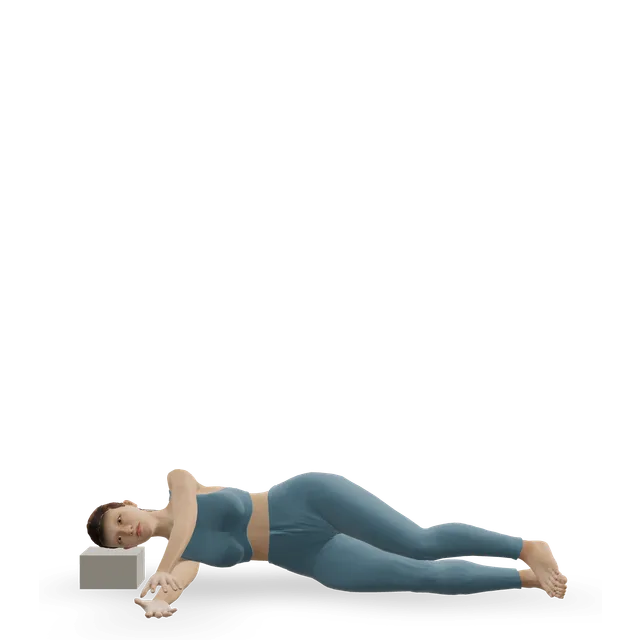
Easier: Side-lying open book · Harder: World's greatest stretch

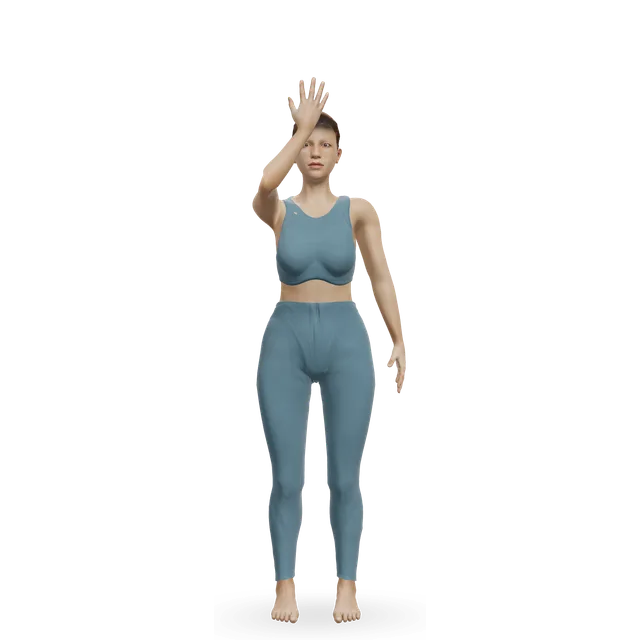
Upper trap release demonstrated on the 3D figure3D demoUpper trap releaseBeginner · No equipment

2 slow holds of 30 s each side, only if it eases · The move page's dose. For comfort: stretching alone hasn't been shown to change neck pain

Easier: Side neck stretch

Treadmill walking demonstrated on the 3D figure3D demoTreadmill walkingBeginner · Cardio machine

About 10 minutes a day if you're new to exercise, building towards 150 minutes a week · The NHS's starting point and its 150 minutes; walking outdoors or swimming counts the same

Harder: Treadmill jogging

Move on when: Turning, tilting and nodding feel easier, the pain stays within 0 to 5, and your neck is no worse the next morning (our neck pain guide's check, editorial). Stages 1 and 2 can run side by side.

Follow along: a timer, a cue and the next move, one step at a time.
Stage 2

Endurance and strength for the neck and shoulder blades, until the birth

Neck holds daily, strength work 2 or 3 times a week and the band raise on most days, sitting or standing, within the pain rule. Strength for the neck, shoulders and upper back has the best evidence in adults who aren't pregnant, and it prepares you for feeding and carrying.

Isometric neck holds (four-way) demonstrated on the 3D figure3D demoIsometric neck holds (four-way)Beginner · No equipment

Sitting: 3 to 5 holds of 5 to 10 s in each direction at a light effort, building to 5 holds of 10 s at about half effort · Editorial, as in our neck pain guide. Never push into pain, dizziness or visual symptoms, as the move page says. It replaces head lifts on your back in later pregnancy

Easier: Chin tuck · Harder: Chin tuck with head lift

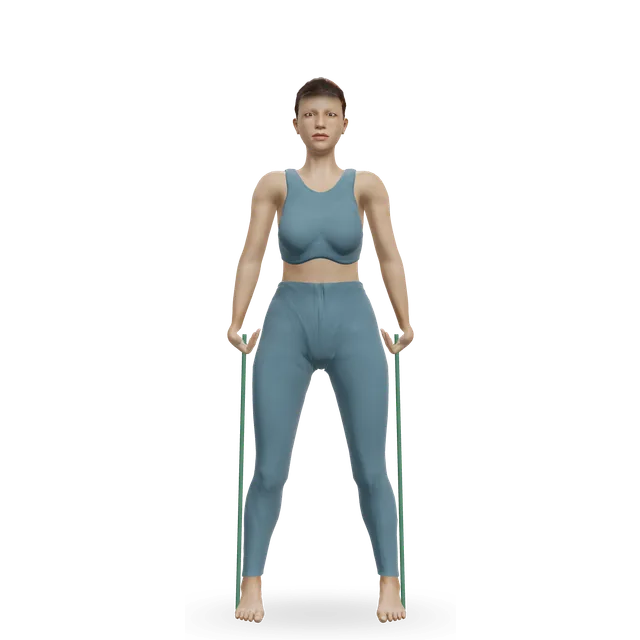
Band lateral raise demonstrated on the 3D figure3D demoBand lateral raiseBeginner · A band

2 minutes a day, 5 days a week, progressing the band · The daily dose from a trial in 198 workers, 174 of them women; the trial's summary doesn't name the exercises, so this one is our neck guides' choice

Harder: Dumbbell lateral raise

Band row demonstrated on the 3D figure3D demoBand rowBeginner · A band + An anchor point

3 sets of 10 to 15, sitting or standing tall, stopping 2 to 3 reps short of failure · The move page's dose, an editorial starting point. Check the band and the anchor before every set, as the move page says

Harder: Supported single-arm dumbbell row

Wall angel demonstrated on the 3D figure3D demoWall angelBeginner · A wall

8 slow slides, in the range you have · Editorial, as in our neck pain guide

Easier: Table slide (seated forward reach) · Harder: Prone Y-T-W raises

Cat-cow demonstrated on the 3D figure3D demoCat-cowBeginner · No equipment

10 slow rounds: round your back up, hold for a few seconds, then return to a straight back without letting it sag · The NHS's all-fours back exercise for pregnancy, not the move page's 8 waves

Harder: Half lord of the fishes (Ardha Matsyendrasana)

Move on when: Carry on until the birth within the pain rule. Drop back to the first stage during a flare, and stop for any warning sign.

Follow along: a timer, a cue and the next move, one step at a time.
Stage 3

After the birth: the first weeks

From the first days, as you feel able: pelvic floor and deep tummy muscles first, with walking, as POGP and the NHS advise, and short neck and upper back breaks between feeds. After a caesarean, a tear or a complicated birth, go at your own pace and follow your team's advice.

Pelvic floor exercise (Kegel) demonstrated on the 3D figure3D demoPelvic floor exercise (Kegel)Beginner · No equipment

10 long squeezes held for up to 10 s, with 10 s rest, then 10 short squeezes, at least 3 times a day; start little and often · POGP's dose after the birth; the move page starts at 8 of each. With a urinary catheter, start once it's out and you're passing urine normally, as the move page says

Side-lying tummy draw-in demonstrated on the 3D figure3D demoSide-lying tummy draw-inBeginner · No equipment

Hold for up to 10 s, breathing normally, up to 10 times · The move page's dose, which is the NHS's after the birth

Harder: Bird dog, one limb at a time

Lying chin tuck demonstrated on the 3D figure3D demoLying chin tuckBeginner · No equipment

1 set of 8 to 10 gentle nods with 5 to 10 s holds, once a day · The postnatal Pilates trial's first-fortnight sets, reps and holds (the trial ran 3 sessions a week; once a day is editorial). Lying on your back is fine after the birth

Harder: Chin tuck

Thoracic rotation demonstrated on the 3D figure3D demoThoracic rotationBeginner · No equipment

6 slow turns each side, sitting tall, between feeds · The move page's dose

Easier: Side-lying open book · Harder: World's greatest stretch

Treadmill walking demonstrated on the 3D figure3D demoTreadmill walkingBeginner · Cardio machine

A walk every day, gradually increasing the time and pace over the first 6 weeks, with the pram handles at a height that stops you bending forward or reaching up · POGP's advice; a buggy walk counts

Harder: Treadmill jogging

Move on when: Daily life with your baby is comfortable, and nothing brings on heaviness, leaking or more bleeding: often from about 6 weeks after a straightforward birth, later after a caesarean (our suggestion, as in our back pain in pregnancy guide). After a caesarean, lift nothing heavier than your baby for about 6 weeks, as the move pages say.

Follow along: a timer, a cue and the next move, one step at a time.
Stage 4

Strength for feeding, lifting and carrying, then everything

From about 6 weeks, 2 or 3 sessions a week, then twice a week for the long term: deep neck, upper back and grip strength for feeding, lifting a car seat and carrying a growing baby. Feeding, carrying, screens and your usual exercise come back by the written steps below.

Lying chin tuck demonstrated on the 3D figure3D demoLying chin tuckBeginner · No equipment

2 sets of 10 nods with 10 to 15 s holds, then 3 sets of 10 with holds up to 20 s, moving on after 2 sessions in a row with good technique and no pain · The postnatal Pilates trial's progression and rule

Harder: Chin tuck

Chin tuck with head lift demonstrated on the 3D figure3D demoChin tuck with head liftIntermediate · No equipment

Tuck your chin and roll your head up from the pillow, hold for a few moments, then lower; build up to 10 · POGP's head lift after the birth, which it says not to continue if you have neck pain or it hurts, so only once the nods are pain-free

Easier: Chin tuck

Bird dog demonstrated on the 3D figure3D demoBird dogBeginner · No equipment

1 set of 5 to 6 each side with 3 to 5 s holds, building to 3 sets of 10 to 12 with 8 to 10 s holds · The postnatal Pilates trial's progression. Make fists if your wrists hurt, as the move page says

Easier: Bird dog, one limb at a time · Harder: Bear crawl

Supported single-arm dumbbell row demonstrated on the 3D figure3D demoSupported single-arm dumbbell rowIntermediate · A dumbbell + A bench or box

3 sets of 8 to 12 each side · Editorial, as in our neck pain guide

Easier: Incline ring row · Harder: Bent-over barbell row

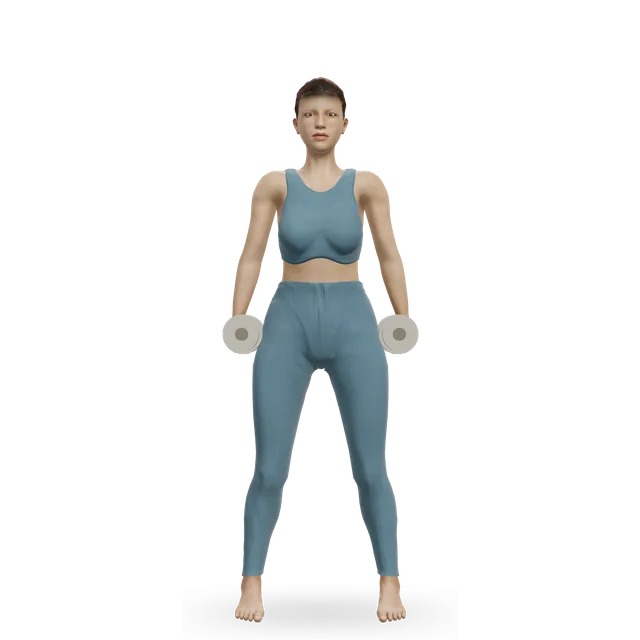
Dumbbell shrug demonstrated on the 3D figure3D demoDumbbell shrugBeginner · A dumbbell

2 to 3 sets of 8 to 12, stopping with 2 or 3 reps in reserve, pausing a second at the top · The move page's dose, an editorial starting point. Lighten it if it brings on headaches or arm tingling, as the move page says

Harder: Snatch shrug

Farmer's carry demonstrated on the 3D figure3D demoFarmer's carryIntermediate · A dumbbell + A kettlebell

2 to 3 carries of 20 to 30 m, light to start · Editorial, as in our neck pain guide: practice for shopping, a car seat and a toddler. After a caesarean, nothing heavier than your baby for about 6 weeks, as the move page says

Harder: Suitcase carry

Move on when: Our suggestion: feeding, carrying, screens, sleep and your usual exercise have been comfortable for 2 weeks. Build back to 150 minutes of activity a week and strength work twice a week, as the UK Chief Medical Officers advise; running and jumping wait for our postpartum exercise page's readiness checks, from about 3 months. If neck pain comes back, drop back a stage for a week or two.

Follow along: a timer, a cue and the next move, one step at a time.

What to change for now

Sleeping in pregnancy and after the birth (written steps)

Our 3D figure can't show these. Each step names its source or is our suggestion.

  • 1. From 28 weeks, go to sleep on your side, either side. Support your bump with pillows and put a pillow between your knees. If you wake up on your back, turn onto your side and go back to sleep (the NHS and NICE).
  • 2. Earlier in pregnancy, any comfortable position is safe (POGP).
  • 3. For the neck, use a low, firm pillow that keeps your head the same height as the rest of your body (the NHS). On your side, that usually means one fuller pillow filling the gap between your ear and the mattress (our suggestion).
  • 4. Ordinary pillows work as well as a special pregnancy pillow for staying on your side, in one small trial.

Sources 14, 50, 57, 34, 51

Feeding your baby (written steps)

These come from the NHS and POGP; where a step is our suggestion, it says so.

  • 1. Get comfortable before a feed, with pillows or cushions if you need them, and your shoulders and arms relaxed (the NHS). Bring your baby to the breast rather than leaning your breast forward (the NHS, for a good latch).
  • 2. Sit well back in the chair or bed, with a small cushion behind your waist, your feet on the floor or a footstool so you don't lean forward, and pillows on your lap (the NHS and POGP).
  • 3. Try other positions through the day: lying on your side, good at night and after a caesarean, or laid back on a sofa or bed with cushions so your back, shoulders and neck feel supported (the NHS). Mothers who fed lying down had less intense neck pain in one survey.
  • 4. Look up and around between sucks rather than holding your head down for the whole feed (our suggestion).
  • 5. For bottle feeds, sit comfortably with your baby close (the NHS).
  • 6. If you can't get comfortable, ask your midwife or a breastfeeding supporter for help (POGP).

Sources 46, 47, 58, 48, 59, 7

Screens, carrying and baby care (written steps)

These come from the NHS, NHS inform and POGP; where a step is our suggestion, it says so.

  • 1. Don't keep your neck in the same position for a long time, for example at a desk (the NHS). Move your neck for short periods every hour (NHS inform).
  • 2. Set your work surface at the right height, at home and at work (POGP). Hold your phone higher rather than looking down at it for long spells (our suggestion).
  • 3. In pregnancy, carry evenly weighted loads in each hand, and avoid carrying a toddler on one hip, or swap hips if you must (POGP).
  • 4. After the birth, kneel or squat for jobs near the floor, change nappies on a raised surface or kneeling by a sofa or bed, never leaving your baby unattended up high, and carry your baby in a well-fitting sling (the NHS).
  • 5. Keep loads such as a car seat in front of you, and have a baby carrier properly adjusted "to avoid neck and back strain" (POGP).
  • 6. Wear a supportive bra through pregnancy and after the birth (POGP).

Sources 34, 30, 57, 58, 48, 4

Heat, painkillers and getting help

A hot water bottle wrapped in a tea towel for up to 20 minutes, 2 to 3 times a day, or a cold pack for 5 minutes, 3 times a day, can ease neck pain; keep a towel between it and your skin. Don't wear a neck collar: "it's better to keep your neck moving", the NHS says. In pregnancy, paracetamol is the painkiller to use, and avoid ibuprofen, including gels, unless a doctor or pharmacist advises it.

These problems are common but shouldn't be put up with: POGP suggests asking your GP or midwife about a women's health physiotherapist. After the birth, the NHS says ask a GP or health visitor at any time, or raise it at your 6 to 8 week postnatal check.

Sources 34, 30, 16, 55, 4, 58

Positions to swap, and why

Habit or positionWhy it mattersInstead
Looking down at a phone or laptop for long spellsThe NHS says don't keep your neck in the same position for a long time.Raise the screen, and move your neck every hour with the neck circles.Try: Neck CARs (controlled articular rotations)
Feeding hunched forward, with nothing supporting your arms or feetThe NHS says get comfortable first, with your shoulders and arms relaxed and your feet supported so you don't lean forward.Pillows under your baby and your arms, a footstool, and side-lying or laid-back feeds with your neck supported.
Lying chin tucks flat on your back in later pregnancyThe NHS advises against lying flat on your back for more than a few minutes in later pregnancy.The sitting chin tuck.Try: Chin tuck
Head lifts while your neck hurts after the birthPOGP says don't continue with the head lift if you have neck pain or it hurts.Gentle lying chin nods first.Try: Lying chin tuck
Face-down Y-T-W raises once lying on your front is uncomfortableLying on the bump becomes uncomfortable, and the move page says use an all-fours move as the bump grows.The band row in pregnancy, and the bird dog after the birth.Try: Band row
Going to sleep on your back after 28 weeksThe NHS and NICE say going to sleep on your back after 28 weeks is linked with stillbirth.Your side, either side, with pillows; if you wake on your back, turn over.
A tall stack of pillows, or none, when you sleep on your sideThe NHS says keep your head the same height as the rest of your body.One pillow that fills the gap between your ear and the mattress (our suggestion).
Wearing a neck collarThe NHS says it's better to keep your neck moving.Gentle movement every hour.
Ibuprofen tablets or gel in pregnancyThe NHS says avoid ibuprofen in pregnancy unless a doctor or pharmacist advises it.Paracetamol, for the shortest time, and heat.
Waiting to see whether a severe headache with vision problems or swelling settlesIt can be pre-eclampsia, in pregnancy or the weeks after the birth.Call your maternity unit, or NHS 111 after the birth.
Carrying a toddler on one hip, or all the shopping in one handPOGP advises even loads and swapping hips.Two bags, and the toddler in front; after the birth, carries build the strength.Try: Farmer's carry

Routines to follow

Pregnancy strength workout (no lying on your back)

A 30-minute strength workout for any trimester with dumbbells and a band: squats, rows, hinges, presses and side-lying hip work, none on your back.

30 minBeginner14 movesA dumbbell, A bench or box

Prenatal yoga workout (no lying on your back)

A 20-minute prenatal yoga workout for any trimester: seated breathing, all-fours and kneeling poses, supported standing poses and rest, none flat on your back.

20 minBeginner15 movesA step, A wall

Pregnancy Pilates workout (no lying on your back)

A 20-minute Pilates workout for any trimester: seated, standing, all-fours and side-lying moves, with no lying on your back or front and no jumping.

20 minBeginner15 movesA wall, A bench or box

Neck and shoulder stretches

Eight gentle neck and shoulder stretches for desk stiffness, done standing or seated in ten minutes.

10 minBeginner8 movesA wall

Neck and shoulder strength routine

Deep neck holds and shoulder-blade strength in under 20 minutes: one of the best-supported kinds of exercise for a stiff, sore neck.

18 minBeginner11 movesA band, An anchor point

Postnatal exercises

A gentle 25-minute routine for the first weeks after birth: pelvic floor, breathing, tummy and hip exercises on the floor, sit-to-stands and a walk.

25 minBeginner12 movesA bench or box, Cardio machine

Postnatal strength workout (from about 6 weeks)

A 25-minute strength workout from about 6 weeks after birth: sit-to-stands, deadlift practice, push-ups, rows, bridges and tummy work, with the knack.

25 minBeginner14 movesA bench or box, A kettlebell

More moves for this area

Questions people ask

Is neck pain normal in pregnancy?

It's fairly common, though less common than back pain: about 1 in 8 pregnant women reported it in one Australian study. It usually comes from the neck and shoulder muscles, sleep and long, still spells. A severe headache, vision problems, pain below the ribs or sudden swelling is different: call your maternity unit.

Is neck pain a sign of early pregnancy?

We found no evidence that it is. Headaches are common early in pregnancy, but neck pain has many everyday causes, and only a pregnancy test can tell you whether you're pregnant.

Which trimester is neck pain worst?

In one Turkish hospital study, 7.1%, 8.7% and 10.9% of women reported it in the first, second and third trimesters, and the UK's pelvic and obstetric physiotherapists say these symptoms are most likely in the third. It can start at any point, and it is commoner still after the birth, with feeding.

Why do I have a headache and neck pain in pregnancy?

Usually a tension-type headache or a migraine, with tight neck muscles. Get urgent help for a severe headache that doesn't go away with paracetamol, vision problems, pain below the ribs, sudden swelling or vomiting, which can be pre-eclampsia, and call 999 for a stiff neck with a high temperature, dislike of bright light or a rash.

What can I take for neck pain while pregnant?

Paracetamol is the first choice in pregnancy, for the shortest time. Avoid ibuprofen, including gels, and codeine unless a doctor prescribes them. Heat or a cold pack wrapped in a tea towel helps too, and ask your pharmacist, midwife or GP before taking any medicine.

What's the best sleeping position for neck pain in pregnancy?

From 28 weeks, go to sleep on your side, either side, with pillows supporting your bump and between your knees. For your neck, use one firm pillow that keeps your head level with your body. If you wake on your back, turn onto your side and don't worry.

Do I need a pregnancy pillow?

No. The NHS suggests pillows but not a type, and in one small trial ordinary pillows kept women off their backs as well as pregnancy pillows did. Use whatever lets you sleep comfortably on your side.

What exercises help neck pain in pregnancy?

Gentle neck turns, tilts and nods every hour, sitting chin tucks and shoulder rolls, then strength work for the shoulder blades, such as band rows, 2 or 3 times a week. Strengthening has the best evidence for neck pain in other adults. In later pregnancy, keep moves off your back.

Why does my neck hurt when I breastfeed?

Long feeds looking down at your baby, often in a chair without support, load the neck: a third to a half of breastfeeding mothers had neck pain with feeds in clinic surveys. Get comfortable first with pillows, rest your feet on a stool, and try side-lying or laid-back feeds with your head supported.

I have a bad headache and a stiff neck after my epidural. What is it?

About 1 in 100 women get a headache from a small leak of spinal fluid after an epidural or spinal, usually within a week, worse sitting or standing and better lying flat, sometimes with a stiff neck. It can be treated, so call your maternity unit. With a high temperature or feeling very unwell, call 999.

Is it my neck or carpal tunnel?

Tingling in the thumb and first fingers of both hands at night, with swollen fingers, is usually carpal tunnel syndrome at the wrist, which about a third of pregnant women report. Pain that starts in the neck and runs down one arm, and changes when you move your neck, points to a nerve in the neck. Weakness needs a check the same day.

How long does neck pain last after giving birth?

Most neck pain lasts a few weeks, and most neck problems improve within 8 weeks. Pain with feeds usually lasts minutes and eases with better support. If it's still bothering you, ask your GP or health visitor, including at your 6 to 8 week check.

Other pain guides

Sources

  1. Sibbritt 2016 · Back, neck and pelvic pain in 1,835 pregnant women in Australia (cohort study, Int J Clin Pract; read as an abstract)
  2. Kesikburun 2018 · Muscle and joint pain and symptoms in pregnancy (descriptive study of 184 women, Ther Adv Musculoskelet Dis)
  3. Uddin 2025 · Muscle and joint pain in 300 pregnant women in Bangladesh (cross-sectional study, Healthcare)
  4. POGP · Other musculoskeletal symptoms in pregnancy (web page, 2020)
  5. Ojukwu 2023 · Neck pain with breastfeeding in 310 mothers in Nigeria (cross-sectional clinic survey, Int Health)
  6. Womsi 2026 · Neck pain with breastfeeding in 110 mothers in Cameroon (cross-sectional clinic survey, BMC Pregnancy Childbirth)
  7. Ratajczak 2024 · Breastfeeding habits and back and neck pain in 395 mothers in Poland (online survey, BMC Musculoskelet Disord)
  8. AlMohri 2026 · Muscle and joint pain from breastfeeding in 471 mothers (online survey, BMC Womens Health)
  9. Topalidou 2025 · The biomechanics of pregnancy and labour (scoping review of 87 studies, PLOS One)
  10. Popajewski 2024 · Spine posture through pregnancy in 30 women (photogrammetry study, Healthcare; read as an abstract)
  11. Mahmoud 2019 · Forward head posture and neck pain: 15 studies (systematic review and meta-analysis, Curr Rev Musculoskelet Med)
  12. Oo 2012 · Bra cup size and shoulder and neck pain in 339 women (cross-sectional study, Open Orthop J)
  13. Petronilla 2024 · Breast size, upper back curve and upper back pain in new mothers in Nigeria (cross-sectional study, BMC Musculoskelet Disord)
  14. NHS · Tiredness and sleep problems in pregnancy
  15. Wang 2025 · Sleep from pregnancy to a year after the birth: 17 cohort studies (systematic review and meta-analysis, Sleep; read as an abstract)
  16. NHS · Headaches in pregnancy
  17. NHS · Pre-eclampsia
  18. NICE NG133 · Hypertension in pregnancy: diagnosis and management (2019, updated 2023): recommendations
  19. Negro 2017 · Headache and pregnancy (systematic review, J Headache Pain)
  20. Raffaelli 2017 · Acute headache in 151 pregnant women seen by neurologists (retrospective study, J Headache Pain)
  21. Cambridge University Hospitals NHS · Headache after an epidural or spinal anaesthetic (patient information, 2026)
  22. NHS · Epidural: side effects (past its review date: reviewed February 2023, review due February 2026)
  23. NHS · Meningitis
  24. Meems 2015 · Carpal tunnel symptoms in 639 pregnant women (prospective cohort, BJOG)
  25. Radhakrishnan 1994 · A pinched nerve in the neck in a Minnesota population, 1976 to 1990 (population study, Brain)
  26. NHS · Pregnancy symptoms you need to get help for
  27. NHS · Headaches
  28. NHS · Symptoms of a stroke
  29. NHS · Pulmonary embolism
  30. NHS inform · Neck problems
  31. NHS · Cervical spondylosis (past its review date: reviewed August 2023, review due August 2026)
  32. Health Protection Agency, the Royal College of Radiologists and the College of Radiographers 2009 · Protection of pregnant patients during diagnostic medical exposures to ionising radiation (RCE-9)
  33. NHS · MRI scan
  34. NHS · Neck pain (past its review date: reviewed April 2023, review due April 2026)
  35. Padua 2010 · Carpal tunnel syndrome in pregnancy (systematic review, Muscle Nerve)
  36. NHS · Carpal tunnel syndrome
  37. Gross 2015 · Exercises for mechanical neck disorders (Cochrane review)
  38. Andersen 2011 · Small daily amounts of resistance training for frequent neck and shoulder pain (RCT, Pain)
  39. NHS inform · Exercises for neck problems
  40. El Blasy 2026 · Pilates plus feeding-position advice for neck pain and forward head posture in 74 breastfeeding women (RCT, Sci Rep)
  41. Elabd 2026 · Tui-Na massage or positional release added to exercises for neck pain after the birth in 60 women (RCT, Physiother Res Int; read as an abstract)
  42. Hurtigkarl 2026 · Craniosacral therapy for neck pain after the birth (single-group study without a control group, Int J Ther Massage Bodywork)
  43. NHS · Exercise in pregnancy
  44. Department of Health and Social Care 2026 · Physical activity guidelines: pregnancy and after childbirth (the UK Chief Medical Officers' infographics)
  45. Mottola 2018 · 2019 Canadian guideline for physical activity throughout pregnancy (guideline, Br J Sports Med)
  46. NHS · Breastfeeding: positioning and attachment
  47. NHS Best Start in Life · Breastfeeding positions
  48. POGP · Fit for the Future: advice and exercises after childbirth (leaflet, 2024)
  49. NHS · What you can do to reduce the risk of stillbirth
  50. NICE NG201 · Antenatal care (2021)
  51. Kember 2025 · Sleeping posture in pregnancy: five things to know (summary, CMAJ)
  52. Chun-Yiu 2021 · Pillow designs, neck pain and sleep (systematic review and meta-analysis, Clin Biomech)
  53. Ghosh 2025 · Pillows for chronic neck pain (systematic review, Rehabilitación)
  54. NHS · Paracetamol for adults (Pregnancy and paracetamol)
  55. NHS · Ibuprofen for adults
  56. NHS · Medicines in pregnancy (past its review date: reviewed September 2022, review due September 2025)
  57. POGP · Fit for Pregnancy: exercises and advice to stay fit and healthy during pregnancy (leaflet, 2021; past its review date)
  58. NHS · Your post-pregnancy body
  59. NHS · Bottle feeding advice

Exercise education, not a diagnosis or treatment plan. It is written from the guidelines and studies listed above; review by a clinician is pending. If your pain follows an injury, is severe, is getting worse, or comes with any warning sign listed on this page, get it assessed. Health disclaimer.