Pain guide · Neck pain

Neck pain after a workout: soreness or a strain, crunches, shrugs and presses, and training again

A dull ache across the back of your neck and the tops of your shoulders a day or two after a new or harder session is usually muscle soreness: it starts 12 to 24 hours later, is worst at 1 to 3 days and goes within about a week. A sudden catch during a lift, pain on one side or a neck you can't turn is more often a strain of the neck's muscles and small joints, which usually eases over a few weeks. Crunches that pull on your head, heavy shrugs, deadlifts and carries, pressing and headstands are the usual culprits, and the answer is a changed session, not stopping.

Call 999 or go to accident and emergency (A&E) for a sudden, extremely painful headache during or after a lift, weakness or numbness down one side, or chest pain spreading to your arm, neck or jaw. A headache that comes on with exercise needs an urgent appointment with a general practitioner (GP) or the National Health Service's 111 line (NHS 111), and so does arm numbness or weakness that is getting worse. This guide tells soreness from a strain, a trapped nerve and the warning signs, then gives a three-stage plan with 3D demos back to your usual training.

When to get help first

Exercise is for pain that has been checked or is clearly mild and settling.

Get urgent medical help if

  • Call 999: a sudden headache that is extremely painful and doesn't go away, during or after a heavy lift or at any other time, or weakness or numbness in one arm or down one side of the body. A bleed on the brain may be more likely when lifting something heavy.
  • Call 999 or go to A&E: a headache that came on suddenly and is extremely painful; numbness or weakness in the face or body; a drooping face, or being unable to lift both arms and keep them up; difficulty speaking, swallowing, balancing, walking or remembering; double vision or loss of vision; drowsiness or confusion. A torn neck artery often starts with headache and neck pain, sometimes with dizziness or tingling, so head or neck pain unlike any you have had before needs checking.
  • Call 999: chest pain that spreads to your arm, neck or jaw, especially with breathlessness, sweating or feeling sick. It could be a heart attack.
  • Call 999: a heart attack can cause pain or discomfort in your chest that happens suddenly and doesn't go away; pain that spreads to either arm, your neck, jaw, upper back or stomach; or feeling sick, sweaty, light-headed or short of breath. Women sometimes have the less well-known symptoms rather than chest pain, the British Heart Foundation says.
  • Get help from NHS 111: pain or tightness in your chest, neck, shoulders, jaw or arms that comes and goes, often brought on by exercise, stress, emotion or cold and easing after a few minutes' rest. It can be angina, a sign of a heart problem.
  • Call 999 or go to A&E if breathing suddenly becomes difficult, if pain in your chest or upper back comes on suddenly with breathlessness or a very fast heartbeat, or if someone passes out. These are the NHS's signs of a blood clot in the lungs (a pulmonary embolism) or another serious condition. Don't drive yourself.
  • Call 999 or go to A&E: a stiff neck and you can't look at bright lights; a very painful headache; a very high or very low temperature, feeling hot or cold to the touch, or shivering; confusion, slurred speech or not making sense; a rash that does not fade when you press a glass on it; or a first seizure (fit). These can be signs of meningitis. Call too for any other symptoms you're worried might be meningitis.
  • Call 999 or go to A&E: new problems walking, loss of bladder or bowel control, or a sudden loss of coordination, such as difficulty doing up buttons. These can be signs of pressure on the spinal cord.
  • Call 999 or go to A&E after a neck injury if the person is unresponsive, has severe neck pain or cannot move their head, or fell from a height such as 5 or more stairs. Do not drive yourself. Being 65 or over, a dangerous fall or crash (from more than 1 metre or 5 steps, diving, a high-speed or rollover crash, being thrown from a vehicle, or a bike or horse-riding accident), or tingling in the arms or legs after an injury puts you at high risk of a broken neck: get checked.
  • At the pitch: neck pain or tenderness after a collision, or severe neck pain. Keep the player still and call 999. Only trained healthcare professionals should move a player with a suspected neck injury.
  • Numbness, tingling, burning or weakness in both arms, in more than one limb, or in the legs: keep the player still and call 999. It can be an injury to the spinal cord, even if it passes in minutes.
  • Same day: arm weakness, numbness or burning that is still there after the game, or that keeps coming back. Go to an urgent treatment centre or A&E, or get help from NHS 111.
  • Same day (urgent GP appointment or NHS 111): a headache with vision or eye problems, a headache triggered or made worse by coughing, sneezing, bending down or exercising, or a headache with vomiting.
  • Same day (call NHS 111, or go to A&E if you feel very unwell): after a big or unusual session, such as hundreds of shrugs, pull-ups, push-ups or burpees, a challenge or a new class, muscle pain, swelling or weakness far worse than the session explains, and dark pee (red, brown, tea or cola coloured), sometimes starting hours or days later. Dark pee isn't always there, so muscles far sorer, more swollen or weaker than the session explains still need the same-day check. It can be rhabdomyolysis, a breakdown of muscle that can harm the kidneys.
  • Same day (urgent GP appointment or NHS 111): severe neck pain that starts suddenly or gets worse quickly; heaviness or weakness in the arms or legs; pins and needles in an arm along with neck or arm pain; or pain between the shoulder blades.
  • Same day: clumsiness, numbness, pins and needles or weakness in one or both arms that is getting worse; problems with balance or walking since the neck pain started; or neck pain with a severe headache.

See a doctor or physiotherapist if

  • Neck pain or stiffness that has not eased after a few weeks, or after 8 weeks of looking after it yourself; painkillers are not helping; or you are worried. In many areas you can refer yourself to NHS physiotherapy.
  • Soreness that isn't better after a week, keeps coming back after normal sessions, or is in one spot: see a GP or physiotherapist (our suggestion).
  • Pins and needles or a cold arm alongside neck pain, or a new loss of strength or feeling in the arm that you cannot explain (a possible nerve problem).
  • Arm symptoms or weakness that last more than a few days: see a sports doctor or physiotherapist for a full examination. Symptoms beyond 2 to 3 weeks need further tests, such as nerve tests and an MRI (magnetic resonance imaging) scan.
  • A second stinger, or stingers that keep coming back: see a sports medicine or spine specialist, usually with an MRI scan, before going back to contact sport.
  • Neck pain with feeling generally unwell, or that started while you were ill with another condition such as rheumatoid arthritis or cancer; or neck pain with blurred vision, ringing in the ears or dizziness.
  • Severe pain that is constant or disturbs your sleep, a fever or unexplained weight loss, or a history of cancer, inflammatory arthritis, tuberculosis (TB), a weakened immune system, neck surgery or a violent injury. Serious causes are very rare, but these need checking.
  • See a GP if you regularly get headaches, or you've tried treating a headache yourself and it's not getting better or is getting worse.

Where does it hurt?

Location narrows the likely causes; it does not diagnose.

A dull, even ache across the back of the neck and the tops of the shoulders, the day after a session

Usually muscle soreness, worst at 1 to 3 days and gone within about a week. Our muscle soreness guide covers what helps.

A sudden catch or sharp pain at one moment of a rep, often on one side, then stiff to turn

Usually a strain or ordinary neck pain, which eases with movement over a few weeks.

Read: Stiff neck and wry neck →
The front and sides of the neck after crunches or sit-ups

The neck muscles that hold your head up through every rep. Our sit-ups guide covers how to spare your neck.

The tops of the shoulders and the base of the neck after shrugs, deadlifts or carries

Usually the upper trapezius and the neck muscles. Our shrugs guide covers form and load.

Read: Neck and shoulder pain →
Turning your head hurts afterwards

Usually the small joints and muscles at the side of the neck.

Read: Neck pain turning your head →
Down one arm, with pins and needles, numbness or weakness

Possibly a trapped nerve. Weakness that is getting worse, or clumsy hands, needs help the same day.

Read: Pinched nerve in the neck →
A burning, electric or dead arm straight after a tackle, a scrum or a fall

Usually a stinger, which settles within minutes; neck pain, both arms or weakness that doesn't settle is a 999 call.

Read: Stingers and burners →
A headache that comes on with hard exercise

Often an exercise headache, which is usually harmless, but the first one needs an urgent GP appointment or NHS 111. A sudden, extremely painful headache needs 999. Our migraine exercise page covers headaches and training.

A one-sided headache brought on by neck movement or holding a position

Possibly a headache coming from the neck.

Read: Headaches from the neck →
After a headstand, a shoulderstand or the plough

The head and neck take a lot of weight in these poses. Our headstand guide covers the technique and who should skip it.

The side of the neck when you swim

Usually turning too far to breathe, or swimming with your head up.

Read: Neck pain when swimming →
On the bike

From holding your head up to see the road, worse on long rides.

Read: Neck pain when cycling →
The shoulder joint itself after pressing, with a painful arc or a catch

Usually the rotator cuff or the joint at the end of the collarbone.

Read: Shoulder pain after a workout →
Muscles far sorer, more swollen or weaker than the session explains

Possibly muscle breakdown (rhabdomyolysis): see the warning signs. Our rhabdomyolysis exercise page explains it.

Neck, jaw or arm pain with breathlessness, sweating, feeling sick or a tight chest

Possibly the heart: see the warning signs at the top of this page.

Understand it

Usually soreness or a strainStrong evidence

Muscle soreness after new or harder exercise, especially work that lowers a weight slowly, starts 12 to 24 hours later, peaks at 24 to 72 hours and is gone within 5 to 7 days; how sore you feel doesn't track muscle damage well, and the same session leaves you less sore the next time. It is commonest at the start of a season, after a break and with new activities. When researchers brought on soreness in the neck and shoulder muscles on purpose, it was mild (about 20 to 26 out of 100) and worst at 24 to 48 hours.

A strain is an overstretched or torn muscle, with pain, tenderness, weakness or spasm; the NHS names not warming up, tired muscles and sport as common causes. NHS inform lists muscle strain or tension, and repeating the same strained movements in work, sports and hobbies, among the causes of neck problems, and says they are rarely caused by any serious disease or damage. The Chartered Society of Physiotherapy says the commonest cause of neck pain is a strain of the neck's small joints.

Sources 1, 2, 3, 4, 5, 6, 7, 8, 9

How common: the neck and gym injuriesEmerging evidence

In 10 years of New Zealand injury claims from gyms and fitness classes (345,254 claims), 96% were soft-tissue injuries, and the neck and back of the head made up 11% of them, after the lower back (24%) and the shoulder (19%); strenuous lifting was the commonest cause. These are claims, not a rate, so they can't say how likely an injury is. In Swedish powerlifters, women reported more neck and upper back injuries than men, and the neck was a third of the barbell head and neck injuries seen in US emergency departments.

Weight-training sports still have low injury rates (2.4 to 3.3 injuries per 1,000 hours in weightlifting, across 9 studies), most emergency visits from weight training were strains and sprains or weights dropped on people, and injury rates in CrossFit were similar to other sports.

Sources 10, 11, 12, 13, 14, 15, 16

The exercises that bring it onEmerging evidence

Crunches and sit-ups: the muscles at the front of the neck hold your head up through every rep, and pulling on your head adds to that. No study has measured neck injury from it, but in small muscle-activity studies, restricting neck bending and breathing out slowly lowered neck muscle activity, and a review of 87 studies advises against pulling with the hands behind the head. Shrugs, deadlifts, heavy carries and rows: the shrug works the upper trapezius hardest of the exercises tested, but no study links shrugs with neck injury, headaches or arm tingling.

Overhead and behind-the-neck pressing, and pull-downs behind the head: no study has measured neck injury from them, so pressing and pulling in front of the head while the neck is sore is a cautious swap (our suggestion). Headstands: in 45 practitioners, the head took up to 40% to 48% of body weight at peak moments, and going up with straight legs together gave lower, slower loading and a more neutral neck than going up with bent or uneven legs. Headstand was the pose most often named in published reports of harm from yoga (10 of 76 cases in a 2013 review, 8 of them eye problems; 15 of 84 in a 2026 review, where more than half of all the people harmed had an existing weak point), and one case report describes torn neck arteries and pressure on the spinal cord in a 63-year-old man with neck arthritis after a forearm balance. Yoga as a whole was as safe as usual care or other exercise across 94 trials.

A bent or jutting head position raised neck muscle load in small laboratory lifting studies, but no study links head position in training with neck pain. In contact sport, a burning, electric dead arm straight after a tackle is a stinger, a stretched or pinched nerve, and neck pain after a collision is a possible neck injury.

Sources 17, 18, 19, 20, 21, 22, 23, 24, 25, 26, 27, 28, 29

Arm symptoms: a trapped nerve or a stingerStrong evidence

A trapped nerve in the neck (cervical radiculopathy) causes arm pain, pins and needles, numbness or weakness in the arm or hand, sometimes with neck pain or headaches. It can follow lifting, but in a population study of 561 people only 14.8% had any exertion or injury before it started. NHS inform says it usually starts to improve within 12 weeks and can take up to a year, and at about 5 years, 90% were free of symptoms or only mildly affected.

A stinger is a burning or electric pain down one arm after a hit, usually lasting seconds to minutes. The American Academy of Orthopaedic Surgeons says no return to sport until the symptoms have completely gone, never with weakness or neck pain, and symptoms in both arms need a full examination.

Sources 30, 31, 32, 29

Headaches with exercise: common, but the first one needs checkingMixed evidence

How common they are depends on the definition: 12.3% of 1,838 Norwegian adults had ever had one, 30.4% of 1,963 Taiwanese 13 to 15 year olds had a headache during or just after exercise, but only 1.19% of 2,546 middle-aged Japanese adults met strict criteria, often gym beginners. The international headache classification describes primary exercise headache as one brought on only by strenuous exercise, usually throbbing, lasting under 48 hours and commoner in hot weather or at altitude, and says the first one must be checked for a bleed on the brain, a torn neck artery and narrowing of the brain's arteries. The NHS asks for an urgent GP appointment or NHS 111 for a headache triggered or made worse by exercising.

A bleed on the brain is rare. The NHS says it may be more likely when lifting something heavy, and in 250 people, vigorous exercise was one of several triggers (relative risk 2.4), alongside straining and anything else that briefly raises blood pressure; heavy lifts with a held breath pushed blood pressure above 300 mmHg in a laboratory study of 5 bodybuilders. New neck pain with an unusual headache can be the first sign of a torn neck artery, and minor knocks or strains came before 40.5% of 966 such tears.

Sources 33, 34, 35, 36, 37, 38, 39, 40, 41

The heart, and muscle breakdownEmerging evidence

Physical exertion in the hour before was linked with about 2.3 times the odds of a first heart attack in 12,461 people in 52 countries, in men and women of all ages. Angina brings pain in the chest, neck, shoulders, jaw or arms that comes on with exercise and eases with rest, and heart attack pain can spread to the arm, neck or jaw.

Muscle breakdown (rhabdomyolysis) can follow a big, unaccustomed session. Three women were admitted to hospital after 125 push-ups and 85 assisted pull-ups in 12 minutes, with arm pain, swelling and weakness at days 3 to 4, and their urine wasn't brown or even tinged. That is why the warning sign says dark pee isn't always there: muscles far sorer, more swollen or weaker than the session explains still need the same-day check.

Sources 42, 43, 44, 45, 46

When a scan or test helpsStrong evidence

Ordinary neck pain and soreness are recognised from the story and settle without tests: neither the NHS nor NHS inform suggests a scan, and scans can mislead. In 1,211 volunteers without neck symptoms, 87.6% had bulging discs on magnetic resonance imaging (MRI), including most people in their 20s. A trapped nerve usually doesn't need an X-ray or MRI either; a scan may be offered if it isn't improving or is greatly affecting your life.

Tests answer specific questions. After an injury, clinicians use the Canadian C-spine rule and the National Institute for Health and Care Excellence (NICE) guidance to decide on a scan (being 65 or over, a dangerous fall or a dive, tingling in the arms or legs, or not being able to turn the head 45 degrees each way). The first headache brought on by exercise needs hospital checks for a bleed, a torn artery or narrowed arteries; a suspected heart attack needs an electrocardiogram (ECG) and blood tests; and suspected muscle breakdown is checked with a blood test for creatine kinase, an enzyme that leaks from damaged muscle.

Sources 47, 8, 48, 30, 49, 50, 34, 44, 45

How it usually goesStrong evidence

Soreness is gone within 5 to 7 days, and the next similar session leaves you less sore. The NHS says most neck pain lasts only a few weeks, NHS inform expects the biggest change in the first couple of weeks and most problems to improve within 8 weeks, and its exercise page suggests talking to a professional if things haven't improved within 6 weeks. Neck pain often comes back: about half of people have it again, and half to three quarters still report some neck pain 1 to 5 years later.

A trapped nerve usually starts to improve within 12 weeks and can take up to a year; in a review, people with a disc pressing on a nerve improved substantially within 4 to 6 months, and about 83% recovered fully within 2 to 3 years. Exercise headaches last under 48 hours. No one can promise a timescale.

Sources 1, 47, 8, 51, 9, 52, 30, 32, 34

What helps, and how strong the evidence is

Keep the neck moving; no collarStrong evidence

The NHS says don't wear a neck collar, because it's better to keep your neck moving, and suggests heat or cold packs and paracetamol or ibuprofen. NHS inform advises moving your neck for short periods every hour and carrying on with your normal activities and hobbies, even at a slower pace. This is consistent health-service advice for ordinary neck pain.

Sources 47, 8

Soreness: train other muscles, or go lighter for a day or twoEmerging evidence

Training sore muscles again 2 and 4 days later, or daily for a week, didn't make the damage worse in small trials of young men's arm muscles. A review advises lighter, shorter sessions for 1 to 2 days after a very sore-making session, or training less affected muscles, and bringing in new exercises over 1 to 2 weeks. It found that ice, stretching and other treatments didn't ease soreness, and that exercise eased it only for a while.

Sources 2, 53, 54

Strength training helps long-lasting neck pain; stretching alone may notMixed evidence

Across 27 trials (2,485 people), strength training for the neck, shoulder blades and arms improved long-lasting neck pain by a moderate to large amount (moderate-quality evidence), while stretching alone, general fitness and breathing exercises may not change pain (low quality); for neck pain that had only just started, the review found no evidence either way. In 180 women office workers, 12 months of neck training against an elastic band, or head lifts lying on the back and front, each with dumbbell work for the shoulders and arms, cut pain and disability, and neck strength rose 69% to 110% with the band training.

In 48 women with trapezius muscle pain, 10 weeks of specific strength training cut their worst pain by about 79%, while cycling gave only a brief drop; the exercises in that rehabilitation (lateral raises, upright rows, shrugs, one-arm rows and reverse flys) mostly worked the neck and shoulder muscles hard, and a lateral raise worked the trapezius almost as hard as a shrug with a far lighter weight. In 198 office workers, 2 minutes a day of elastic band training, 5 days a week, cut neck and shoulder pain by 1.4 points out of 10. These trials were in desk workers with long-lasting pain, not gym-goers the day after a session, so the plan borrows their exercises.

Sources 55, 56, 57, 21, 58

Neck and shoulder strength didn't help tension headachesEmerging evidence

In 60 people with tension-type headache, 10 weeks of shoulder and neck strength training did no better than posture and ergonomic advice. Strength work is for the neck pain, not a headache treatment.

Source 59

A trapped nerve, an exercise headache and muscle breakdown: medical careEmerging evidence

For a trapped nerve under a month old, a semi-hard collar with rest for 3 to 6 weeks, or 6 weeks of physiotherapy and home exercises, each eased arm pain by about 12 points out of 100 more than waiting, which had eased it by 19, in 205 people: an option a specialist may suggest, not self-care. A trapped nerve that isn't settling may need a scan, and in one population study about a quarter had an operation. After the first exercise headache has been checked, a doctor may suggest a medicine (the headache classification notes that indomethacin helped most reported cases). Muscle breakdown needs hospital care: the 3 women in the case series were admitted for 7 to 8 days and recovered fully.

Sources 60, 30, 31, 34, 45

Building back upEmerging evidence

For healthy lifters, the American College of Sports Medicine adds 2% to 10% to the load once you can do 1 or 2 more reps than planned. No trial has tested a return to lifting after neck pain, so the plan's final stage borrows this step, starting at about half your usual load (editorial).

Source 61

Cracking your own neck isn't worth itEmerging evidence

Clicking and grinding as you move are common and not usually serious, NHS inform says. But case reports describe torn neck arteries after people cracked their own necks, and we found no evidence that it treats anything. These strokes are very rare: 818 in more than 100 million person-years in one Canadian study.

Sources 8, 62, 63

Sleep, stress and pillowsEmerging evidence

Sleep problems predicted new and lasting muscle and joint pain in large cohort studies (odds ratios about 1.4 to 2.0; low certainty), and NHS inform says poor sleep, stress and emotional wellbeing can affect nerve symptoms. Research on pillows is limited (5 small studies, 239 people); the NHS advises a low, firm pillow.

Sources 64, 65, 30, 66, 47

How much pain is OK while you exercise?

Up to about 5 out of 10 and no worse the next morning; a sharp catch, arm symptoms or a headache are differentEmerging evidence

NHS inform's neck exercise advice: rate your pain from 0 to 10. During exercise, 0 to 3 is minimal and 4 to 5 is acceptable; 6 or more is too much, so do fewer repetitions, move more slowly or rest longer between movements. Exercise shouldn't make your neck worse overall: soreness from a new exercise should ease quickly, and your neck should be no worse the next morning. Our neck pain guide uses the same rule.

An even, dull ache in the muscles you worked, a day or two after a new or harder session, is soreness: judge the session by the next morning, not by the soreness. Sharp, catching or one-sided pain during a rep means end that set and drop back a step (our suggestion, as in our back and shoulder workout guides).

Arm symptoms are the exception: if an exercise sends pain, tingling or numbness further down your arm, or the extra symptoms last more than an hour afterwards, make the movement smaller or leave it out (our neck pain guide's rule).

A headache that comes on with exercise, a sudden severe headache, neck, jaw or arm pain with breathlessness, sweating, feeling sick or a tight chest, dizziness, double vision or slurred speech, or muscles far sorer, more swollen or weaker than the session explains isn't a pain-rule question: see the warning signs.

Sources 51, 1

The exercise plan: 3 stages

Start at the first stage. Each move opens a full guide with a 3D demo.

Stage 1

Settle: keep the neck moving

About days 0 to 7, a little and often, after a strain. With soreness alone, no plan is needed beyond a lighter day or training other muscles: go straight to the last stage once it eases. Keep the neck and upper back moving, and keep the rest of you training without loading the neck (the written steps below). With any warning sign, get checked first; with arm symptoms, a stinger or a diagnosed trapped nerve, that guide's plan comes first.

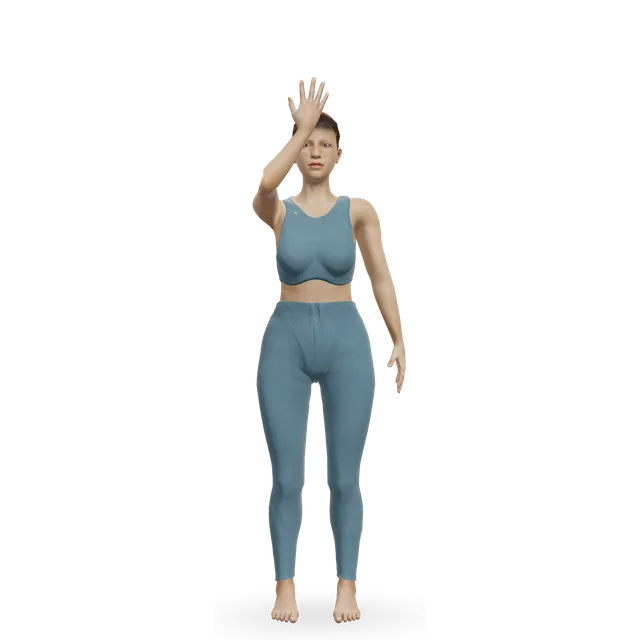
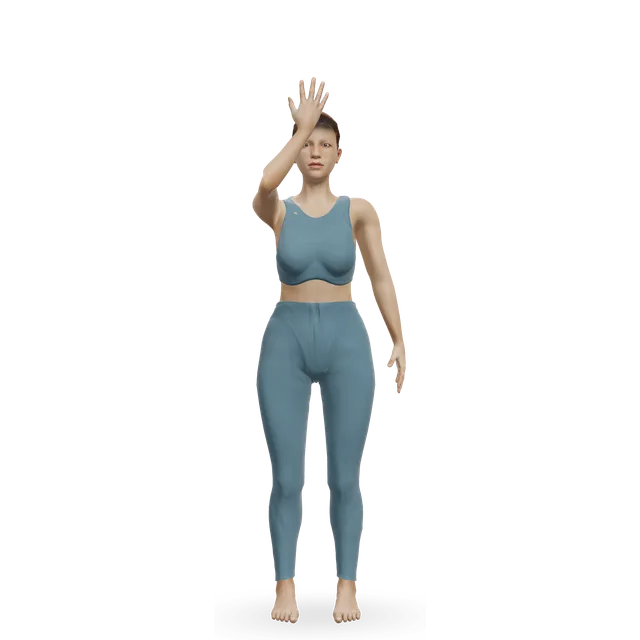
Neck CARs (controlled articular rotations) demonstrated on the 3D figure3D demoNeck CARs (controlled articular rotations)Beginner · No equipment

While the neck is sore, separate nods, tilts and turns: 2 to 3 of each at a time, every hour, adding 1 or 2 every few days towards about 10 · NHS inform's pacing; the move page says use separate movements with a sore neck. Its full circles (3 each way, once or twice a day, the move page's dose) come once those are comfortable

Harder: Rabbit pose (Sasangasana)

Lying chin tuck demonstrated on the 3D figure3D demoLying chin tuckBeginner · No equipment

5 to 10 gentle holds of up to 10 s, once or twice a day · As in our neck pain guide (editorial)

Harder: Chin tuck

Shoulder rolls demonstrated on the 3D figure3D demoShoulder rollsBeginner · No equipment

10 to 15 slow circles each way, once or twice through · The move page's dose (editorial)

Harder: Shoulder CARs (controlled articular rotations)

Thoracic rotation demonstrated on the 3D figure3D demoThoracic rotationBeginner · No equipment

6 rotations each side, moving with the breath · The move page's dose

Easier: Side-lying open book · Harder: World's greatest stretch

Treadmill walking demonstrated on the 3D figure3D demoTreadmill walkingBeginner · Cardio machine

10 to 30 min at an easy pace, or a walk outside · Editorial; NHS inform says keep generally active

Harder: Treadmill jogging

Move on when: You can turn your head to each side and look down and up within the pain rule, and the neck is no worse the next morning (adapted from NHS inform).

Follow along: a timer, a cue and the next move, one step at a time.
Stage 2

Build: the neck and the shoulder blades

About weeks 1 to 4: 3 days a week, or daily for the band work. The neck and shoulder-blade strength and endurance that the neck pain trials built, with your usual training going on around it at a lighter load.

Isometric neck press, front and back demonstrated on the 3D figure3D demoIsometric neck press, front and backBeginner · No equipment

Build to a 10-second press, 3 times in each direction, for 3 rounds, starting with light pressure · The move page's dose, from an NHS leaflet. A trial in women office workers used neck presses against an elastic band

Easier: Chin tuck · Harder: Chin tuck with head lift

Isometric neck press, sides demonstrated on the 3D figure3D demoIsometric neck press, sidesBeginner · No equipment

Build to a 10-second press, 3 times in each direction, for 3 rounds, starting with light pressure · The move page's dose, from the same leaflet

Easier: Chin tuck · Harder: Chin tuck with head lift

Chin tuck with head lift demonstrated on the 3D figure3D demoChin tuck with head liftIntermediate · No equipment

3 to 5 holds of 5 s, building to 10 holds of 10 s · As in our neck pain guide (editorial); head lifts were the endurance exercise in the 12-month trial

Easier: Chin tuck

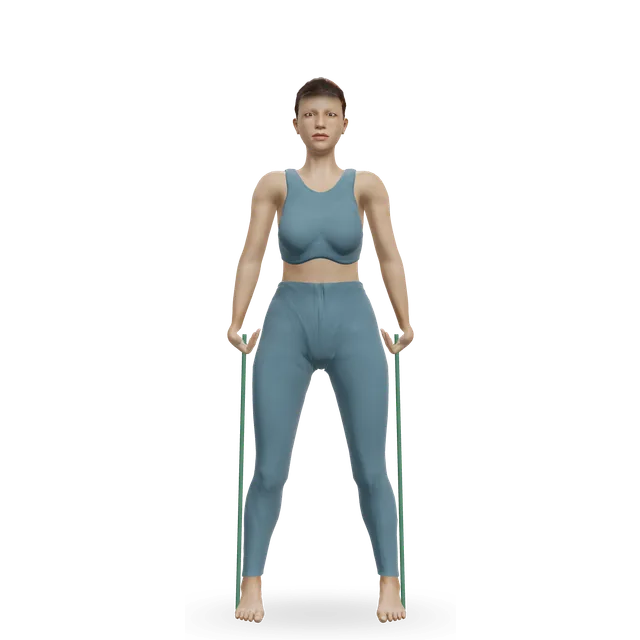
Band row demonstrated on the 3D figure3D demoBand rowBeginner · A band + An anchor point

3 sets of 10 to 15, stopping 2 to 3 reps short of failure · The move page's dose (editorial)

Harder: Supported single-arm dumbbell row

Band lateral raise demonstrated on the 3D figure3D demoBand lateral raiseBeginner · A band

2 minutes a day, 5 days a week, using a stronger band as it gets easy, to just below shoulder height · The daily dose from the trial in 198 office workers; its abstract doesn't name the exercises, so the choice is our tech neck guide's (editorial)

Harder: Dumbbell lateral raise

Prone Y-T-W raises demonstrated on the 3D figure3D demoProne Y-T-W raisesBeginner · No equipment

2 to 3 rounds of 8 of each shape · As in our shoulder guides (editorial). Keep the neck long and the face down, as the move page says

Easier: Wall angel · Harder: Bent-over reverse fly

Move on when: Every exercise stays within the pain rule, the neck is no worse the next morning, and a light version of your usual upper-body session feels normal (our suggestion).

Follow along: a timer, a cue and the next move, one step at a time.
Stage 3

Back to your usual session

From about week 2 to 6 after a strain, sooner after soreness, on your usual training days. Restart the lifts you dropped at about half your usual load and add 2% to 10% once you can do 1 or 2 more reps than planned, while the pain rule holds: the American College of Sports Medicine's step for healthy lifters, used here after neck pain by us (editorial). Crunches, heavy shrugs, overhead pressing, headstands and contact sport come back last, by the written steps below.

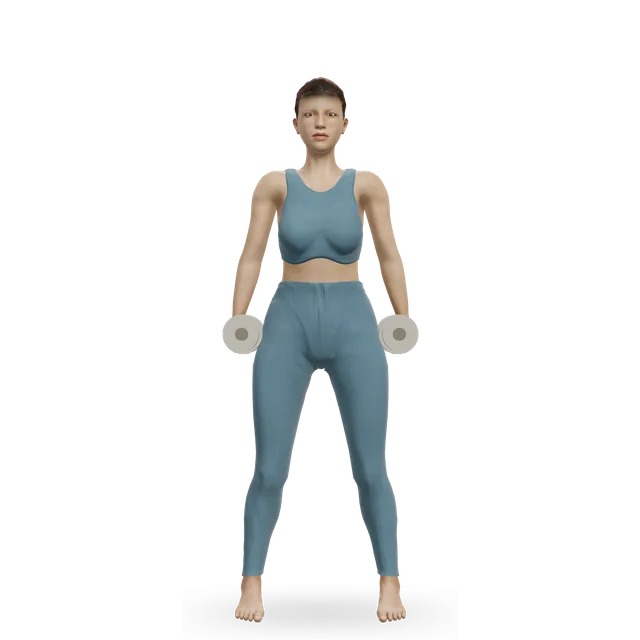
Dumbbell shrug demonstrated on the 3D figure3D demoDumbbell shrugBeginner · A dumbbell

2 to 3 sets of 8 to 12, stopping with 2 or 3 reps in reserve, pausing a second at the top · The move page's dose (editorial). Straight up and down with no rolling, and lighten it if it brings on headaches or arm tingling, as the move page says

Harder: Snatch shrug

Supported single-arm dumbbell row demonstrated on the 3D figure3D demoSupported single-arm dumbbell rowIntermediate · A dumbbell + A bench or box

3 sets of 8 to 12 each side · As in our neck pain guide (editorial)

Easier: Incline ring row · Harder: Bent-over barbell row

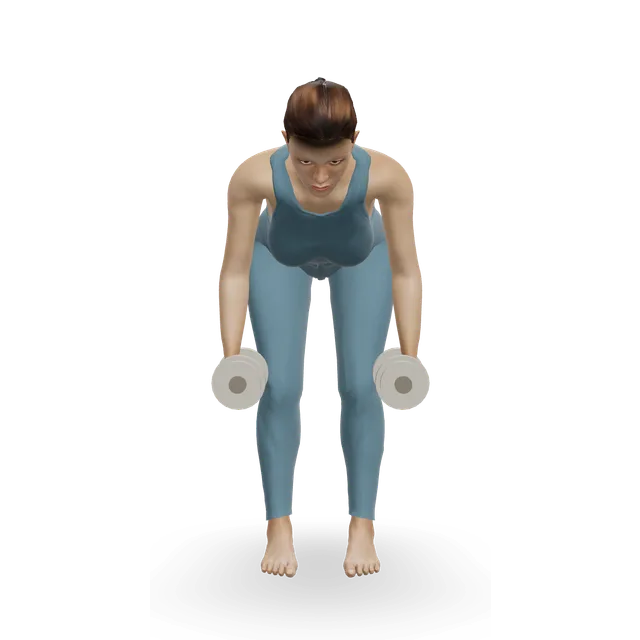
Bent-over reverse fly demonstrated on the 3D figure3D demoBent-over reverse flyIntermediate · A dumbbell

2 to 3 sets of 10 to 15, light · Editorial. A bench for chest support helps if the hinge tires, as the move page says

Easier: Prone Y-T-W raises · Harder: Barbell rear-delt row

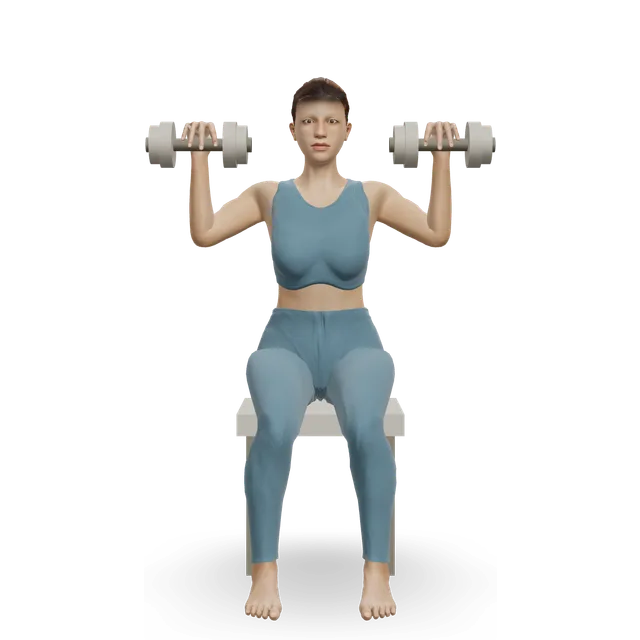
Dumbbell shoulder press (kick-up start) demonstrated on the 3D figure3D demoDumbbell shoulder press (kick-up start)Intermediate · A dumbbell + A bench or box

2 to 3 sets of 8 to 12, stopping with 2 or 3 reps in reserve · The move page's dose (editorial); press in front of your head

Easier: Machine shoulder press · Harder: Behind-the-neck press

Farmer's carry demonstrated on the 3D figure3D demoFarmer's carryIntermediate · A dumbbell + A kettlebell

3 walks of 20 to 30 m · As in our neck pain guide (editorial), with the shoulders level and down and the head tall

Harder: Suitcase carry

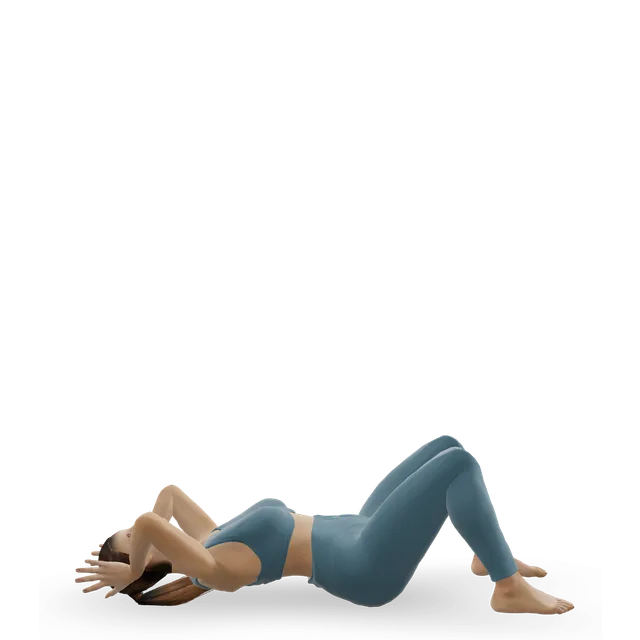
Crunch demonstrated on the 3D figure3D demoCrunchBeginner · No equipment

2 to 3 sets of 10 to 15, last · Editorial. Hands resting lightly at your head or arms crossed, a fist-sized gap under your chin, and breathe out as you curl (our sit-ups guide)

Easier: McGill curl-up · Harder: Sit-up (3/4 sit-up)

Move on when: Our suggestion: full sessions pass the pain rule for 2 weeks. Keep the neck and shoulder-blade work once or twice a week, since neck pain often comes back. Headstands come back only once full sessions are comfortable, learned with a teacher, slowly and with both legs together; contact sport after a stinger follows our stinger guide's steps once the symptoms have completely gone.

Follow along: a timer, a cue and the next move, one step at a time.

What to change for now

Today: movement, heat or cold, and painkillers (written steps)

These come from the NHS and NHS inform.

  • 1. Keep your neck moving, for short periods every hour, and carry on with your normal activities, even at a slower pace (NHS inform). Don't wear a neck collar (the NHS).
  • 2. Heat or cold: a pack of frozen peas wrapped in a tea towel for 5 minutes, 3 times a day, or a hot water bottle wrapped in a tea towel for 20 minutes, 2 to 3 times a day (the NHS). Leave a few hours between treatments, and stop if the skin gets redder or blisters (NHS inform).
  • 3. Paracetamol or ibuprofen, or ibuprofen gel on the neck (the NHS). If you take other medicines or have a health condition, ask a pharmacist which suits you (our suggestion).
  • 4. Don't drive or cycle while you can't turn your neck (the NHS).
  • 5. Sleep with a low, firm pillow and your head at the same height as the rest of your body, and don't sleep on your front (the NHS).

Sources 47, 8

Changing the session (written steps)

Our 3D figure can't show these. Each step names its source or is our suggestion.

  • 1. Soreness only: train other muscles, or go lighter and shorter for a day or two, and bring in new exercises over 1 to 2 weeks (a review's advice for athletes).
  • 2. A strain: leave out the moves that load the neck for a few days, such as shrugs, heavy carries, deadlifts and rows, overhead pressing, crunches, headstands and contact drills. Keep your legs training with the leg press, a goblet squat or the exercise bike rather than a bar across your upper back (our suggestion; no study has tested which lifts to drop).
  • 3. Crunches and sit-ups: rest your hands lightly at your head or cross your arms, leave a fist-sized gap under your chin and breathe out slowly as you curl (our sit-ups guide, from small muscle-activity studies). While the front of the neck is sore, use the dead bug, where your head stays on the floor (our suggestion).
  • 4. Shrugs: straight up and down with no rolling, a second's pause at the top, and a weight you can lift to full height; build it gradually, and lighten it if shrugs bring on headaches or arm tingling (the move page and our shrugs guide). A lateral raise works the trapezius almost as hard with a far lighter weight.
  • 5. Pressing and pulling: in front of your head, never behind the neck, while the neck is sore (the move pages; a cautious swap).
  • 6. Head position: keep your head in line with your back in push-ups, planks, rows, deadlifts and the bench press, rather than craning up or letting it hang (our suggestion: a bent or jutting neck raised neck muscle load in small laboratory studies).
  • 7. Breathing: breathe out through the hard part of each rep and don't hold your breath through a set (our breathing guide). Blood pressure passed 300 mmHg during heavy lifts with a held breath in a small study.
  • 8. Headstands, shoulderstands and the plough: leave them out while your neck hurts. When they come back, learn the headstand with a teacher, go up slowly with both legs together and never kick up (our headstand guide); legs up the wall is the gentler upside-down pose.
  • 9. A big new class, a challenge or the first session after a break: make it light, because big, unaccustomed sessions bring the worst soreness and, rarely, muscle breakdown (our suggestion).

Sources 2, 17, 18, 19, 21, 27, 28, 40, 22, 45

Contact sport, stress and cracking (written steps)

Each step names its source or is our suggestion.

  • 1. After a stinger: no contact sport until the symptoms have completely gone, and never with weakness or neck pain (the American Academy of Orthopaedic Surgeons). Our stinger guide has the steps back.
  • 2. Sleep and stress: poor sleep goes with more pain, and NHS inform says stress and poor sleep can affect nerve symptoms, so protect your sleep while the neck settles (our suggestion).
  • 3. Don't crack your own neck: case reports describe torn neck arteries afterwards, and it doesn't treat anything (our suggestion).

Sources 29, 64, 30, 62

Positions to swap, and why

Habit or positionWhy it mattersInstead
Keeping the neck still, or wearing a collarThe NHS says it's better to keep your neck moving.Gentle movement every hour.Try: Neck CARs (controlled articular rotations)
Pushing on through a sharp catch mid-setA catch at one moment points to a strain rather than soreness (our reading).End the set, then train other muscles or go lighter.
Crunches or sit-ups pulling on your headYour neck muscles hold your head up through every rep, and a review of 87 studies advises against pulling with the hands behind the head.Hands light or arms crossed, a gap under the chin, and breathing out; the dead bug while the neck is sore.Try: Dead bug heel taps
Heavy, rolled or jerked shrugsThe move page says rolling adds nothing and irritates some necks, and loads climb quickly.Straight up and down, lighter, with a pause; or band lateral raises.Try: Band lateral raise
Behind-the-neck presses and pull-downsThe move page says leave it out with neck or shoulder pain.Press and pull in front of your head.Try: Dumbbell shoulder press (kick-up start)
Headstands, shoulderstands or the plough while the neck hurtsThe head takes up to 40% to 48% of body weight in a headstand, and the move pages say not with neck problems.Legs up the wall.Try: Legs up the wall (Viparita Karani)
Craning your head up in face-down raises, push-ups or planksA bent or jutting neck raised neck muscle load in small studies, and the move page says keep the neck long.Head in line with your back, eyes to the floor.
A bar across your upper back while the neck is soreIt rests on the sore muscles (our suggestion).A goblet squat or the leg press for a while.Try: Dumbbell goblet squat
Holding your breath through heavy setsBlood pressure passed 300 mmHg with a held breath in a small study.Breathe out through the effort.
Pulling your head down into a side neck stretchThe move page says let the weight of your head do the work rather than pulling, especially with a sore neck.A gentle stretch with no pull.Try: Upper trap release
Cracking your own neckCase reports describe torn neck arteries afterwards, though such strokes are very rare.Gentle movement.Try: Neck CARs (controlled articular rotations)
A big new class, a challenge, or a heavy first session after a breakThe setting for the worst soreness and, rarely, muscle breakdown.A light first session, building over 1 to 2 weeks.
Going back to contact sport with arm symptomsThe American Academy of Orthopaedic Surgeons says not until they have completely gone, and never with weakness or neck pain.Our stinger guide's steps back.
Carrying on through a headache that came on with exerciseThe NHS asks for an urgent GP appointment or NHS 111.Stop the session and get it checked.

Routines to follow

More moves for this area

Questions people ask

Is it normal for your neck to hurt after a workout?

Often, yes: a dull ache across the back of the neck and the tops of the shoulders a day or two after a new or harder session is usually muscle soreness, which is worst at 1 to 3 days and gone within about a week. A sudden catch during a lift, pain on one side or a neck you can't turn is more often a strain. A headache, arm symptoms or chest pain with it are different: see the warning signs.

How long does neck pain from the gym last?

Soreness goes within 5 to 7 days. With a strain or ordinary neck pain, NHS inform expects the biggest change in the first couple of weeks and most to be better within 8 weeks. A trapped nerve usually starts to improve within 12 weeks, though it can take up to a year.

Why does my neck hurt after crunches or sit-ups?

The muscles at the front of your neck hold your head up through every rep, and pulling on your head adds to their work. Rest your hands lightly at your head or cross your arms, leave a fist-sized gap under your chin and breathe out slowly as you curl, which lowered neck muscle activity in small studies.

Why does my neck hurt after shrugs or deadlifts?

Shrugs, deadlifts and heavy carries work the upper trapezius, the muscle across the top of your shoulders and the back of your neck, very hard, so it's a common place for soreness after a new or heavier session. Shrugs haven't been shown to harm the neck: lift straight up without rolling, and build the weight gradually.

Why does my neck hurt after a shoulder press or bench press?

The neck and shoulder-blade muscles hold your head and shoulders steady while you press, and craning your head adds to their load. Press in front of your head rather than behind it, keep your head in line with your back, and breathe out through the effort. Pain in the shoulder joint itself has its own guide.

Can you pull a muscle in your neck at the gym?

Yes: the neck and back of the head made up 11% of soft-tissue injury claims from gyms over 10 years in New Zealand, mostly from lifting. A strain is sore and stiff, often on one side, sometimes with spasms. Keep it moving, use heat or cold and painkillers if you need them, and leave out the moves that load it for a few days.

Should I work out with a sore neck?

With soreness alone, yes: train other muscles or go lighter for a day or two, since training sore muscles didn't make the damage worse in small trials. With a strain, keep the neck moving and the rest of you training, and bring the neck-loading lifts back in stages. Don't train through a headache that came on with exercise, arm weakness or chest pain.

Is a headache with neck pain after a workout serious?

Usually not, but the first headache brought on by exercise needs checking: the NHS asks for an urgent GP appointment or NHS 111 for a headache triggered or made worse by exercising. Call 999 for a sudden, extremely painful headache, during a lift or at any time.

What does neck pain with tingling down my arm mean?

It can be a trapped nerve in the neck, which causes arm pain, pins and needles, numbness or weakness and usually starts to improve within 12 weeks; only about 15% of cases follow exertion or an injury. Weakness or numbness that is getting worse, clumsy hands or trouble walking need help the same day.

Could neck pain during exercise be my heart?

Rarely, but yes: angina causes pain in the chest, neck, shoulders, jaw or arms that comes on with exercise and eases with rest, and needs NHS 111, and chest pain spreading to the arm, neck or jaw needs 999. Neck pain that changes as you move your head, with none of those signs, points to the neck itself.

Should I use heat or ice on my neck after the gym?

Either: the NHS suggests a wrapped pack of frozen peas for 5 minutes, 3 times a day, or a wrapped hot water bottle for 20 minutes, 2 to 3 times a day. Use whichever helps, and keep moving; neither ice nor stretching speeds up recovery from soreness.

How do I stop my neck hurting when I work out?

Bring new exercises in over 1 to 2 weeks, keep your head in line with your back, don't pull on your head in crunches, press in front of your head, and breathe out through the effort. Strength work for the neck and shoulder blades eased long-lasting neck pain in trials, so keep a little in your week.

Related exercise guides

Other pain guides

Sources

  1. Hody 2019 · Eccentric muscle contractions: risks and benefits, including delayed-onset muscle soreness (review, Frontiers in Physiology)
  2. Cheung 2003 · Delayed onset muscle soreness: treatment strategies and performance factors (review, Sports Med)
  3. Nie 2005 · Muscle soreness brought on in the neck and shoulder muscles of healthy volunteers (laboratory study, Eur J Pain)
  4. Sageshima 2026 · Neck muscle soreness after lowering exercise in 20 healthy adults (laboratory study, Sci Rep)
  5. Nie 2006 · Pain sensitivity in the trapezius after muscle soreness in 16 healthy volunteers (laboratory study, Exp Brain Res)
  6. NHS · Sprains and strains
  7. NHS inform · Neck injury
  8. NHS inform · Neck problems
  9. Chartered Society of Physiotherapy · Causes of neck pain
  10. Cuthbertson-Moon 2024 · Gym and fitness injuries in 16 to 64 year olds: 10 years of New Zealand injury claims (registry study, Sports Med Open)
  11. Strömbäck 2018 · Injuries in 104 Swedish powerlifters (cross-sectional study, Orthop J Sports Med)
  12. Sharma 2024 · Barbell head and neck injuries in US emergency departments over 10 years (registry study, OTO Open)
  13. Aasa 2017 · Injuries among weightlifters and powerlifters (systematic review, BJSM)
  14. Keogh 2017 · Injuries across the weight-training sports (systematic review, Sports Medicine)
  15. Kerr 2010 · Weight-training injuries in US emergency departments, 1990 to 2007 (descriptive study, Am J Sports Med)
  16. Klimek 2018 · Are injuries more common with CrossFit than with other exercise? (critically appraised topic, J Sport Rehabil)
  17. Lee 2016 · Restricting neck bending during curl-ups in 13 men (muscle activity study, J Phys Ther Sci)
  18. Yoon 2014 · Breathing out slowly during curl-ups in 12 adults (muscle activity study, J Electromyogr Kinesiol)
  19. Monfort-Pañego 2009 · Muscle activity in abdominal exercises: 87 studies (literature synthesis, J Manipulative Physiol Ther)
  20. Ekstrom 2003 · Trapezius activity in ten exercises in 30 adults (EMG study, JOSPT)
  21. Andersen 2008 · Muscle activity in five dumbbell exercises in 12 women with neck muscle pain (EMG study, Phys Ther)
  22. Hector 2015 · Headstand technique and the load on the head and neck (lab study, J Bodyw Mov Ther)
  23. Cramer 2013 · Adverse events with yoga: 76 published cases (systematic review of case reports, PLoS One)
  24. Sharma 2026 · Yoga and its risks: adverse events in published case reports and case series (systematic review, J Integr Med)
  25. Nayar 2022 · Torn neck arteries and a spinal cord injury after yoga in a man with neck arthritis (case report, Spinal Cord Ser Cases)
  26. Cramer 2015 · The safety of yoga (systematic review and meta-analysis of 94 RCTs, Am J Epidemiol)
  27. Peolsson 2014 · Neck posture and neck muscle activity when lifting in 21 healthy adults (laboratory study, Man Ther)
  28. Nimbarte 2010 · Neck muscle load during static lifting in 15 adults (laboratory study, Ind Health)
  29. American Academy of Orthopaedic Surgeons, OrthoInfo · Burners and stingers
  30. NHS inform · Cervical radiculopathy
  31. Radhakrishnan 1994 · A pinched nerve in the neck in a Minnesota population, 1976 to 1990 (population study, Brain)
  32. Wong 2014 · The course of a trapped nerve from a neck disc (systematic review, Spine J)
  33. NHS · Headaches
  34. International Headache Society · International Classification of Headache Disorders, 3rd edition: primary exercise headache
  35. Sjaastad 2002 · Exertional headache in 1,838 Norwegian adults: the Vågå study (population study, Cephalalgia)
  36. Chen 2009 · Exertional headache in 1,963 adolescents (survey, Cephalalgia)
  37. Hanashiro 2015 · Primary exercise headache in middle-aged Japanese adults (survey of 2,546 people, Intern Med)
  38. NHS · Subarachnoid haemorrhage
  39. Vlak 2011 · Triggers for the rupture of brain aneurysms in 250 people (case-crossover study, Stroke)
  40. MacDougall 1985 · Blood pressure during heavy lifting in 5 bodybuilders (lab study, J Appl Physiol)
  41. Engelter 2013 · Neck artery tears and the minor injuries and strains before them (case-control study of 966 people, Neurology)
  42. Smyth 2016 · Physical exertion and anger as triggers of a first heart attack in 12,461 people in 52 countries (INTERHEART case-crossover study, Circulation)
  43. NHS · Angina
  44. NHS · Heart attack
  45. Cohen 2018 · Muscle breakdown in the arms after a single training session in 3 women (case series, Fed Pract)
  46. Kim 2016 · Exercise-induced rhabdomyolysis: mechanisms and prevention (review, J Sport Health Sci)
  47. NHS · Neck pain (past its review date: reviewed April 2023, review due April 2026)
  48. Nakashima 2015 · Neck MRI findings in 1,211 people without symptoms (Spine)
  49. Stiell 2001 · The Canadian C-spine rule for neck imaging after injury (JAMA)
  50. NICE NG232 · Head injury: assessment and early management (2023)
  51. NHS inform · Exercises for neck problems
  52. Carroll 2009 · Course and prognostic factors for neck pain in the general population (Bone and Joint Decade Task Force, JMPT)
  53. Nosaka 2002 · Repeating eccentric exercise on sore muscles does not worsen damage or slow recovery (study, JSCR)
  54. Chen 2001 · Seven days of eccentric training on already-damaged muscles in 22 men (RCT, MSSE)
  55. Gross 2015 · Exercises for mechanical neck disorders (Cochrane review)
  56. Ylinen 2003 · Neck muscle training for chronic neck pain in women (RCT, JAMA)
  57. Andersen 2008 · Specific strength training vs general fitness for chronic neck muscle pain (RCT of 48 women, Arthritis Rheum)
  58. Andersen 2011 · Small daily amounts of resistance training for frequent neck and shoulder pain (RCT, Pain)
  59. Madsen 2018 · Strength training for tension-type headache (RCT, Cephalalgia)
  60. Kuijper 2009 · Collar or physiotherapy vs wait and see for recent cervical radiculopathy (RCT, BMJ)
  61. ACSM 2009 · Progression models in resistance training for healthy adults (position stand, MSSE)
  62. Persons 2024 · A fatal neck artery tear after cracking one's own neck (case report, Am J Forensic Med Pathol)
  63. Cassidy 2008 · Vertebrobasilar stroke and chiropractic care (population-based case-control and case-crossover study, Spine)
  64. Runge 2024 · Sleep problems and long-lasting muscle and joint pain: which comes first (systematic review and meta-analysis, Pain)
  65. Santos 2023 · Long-lasting muscle and joint pain and sleep problems (systematic review and meta-analysis of 20 cohorts, Rheumatology)
  66. Ghosh 2025 · Pillows for chronic neck pain (systematic review, Rehabilitación)
  67. NHS · Symptoms of a stroke
  68. British Heart Foundation · Signs and symptoms of heart attacks in women
  69. NHS · DVT (deep vein thrombosis)

Exercise education, not a diagnosis or treatment plan. It is written from the guidelines and studies listed above; review by a clinician is pending. If your pain follows an injury, is severe, is getting worse, or comes with any warning sign listed on this page, get it assessed. Health disclaimer.