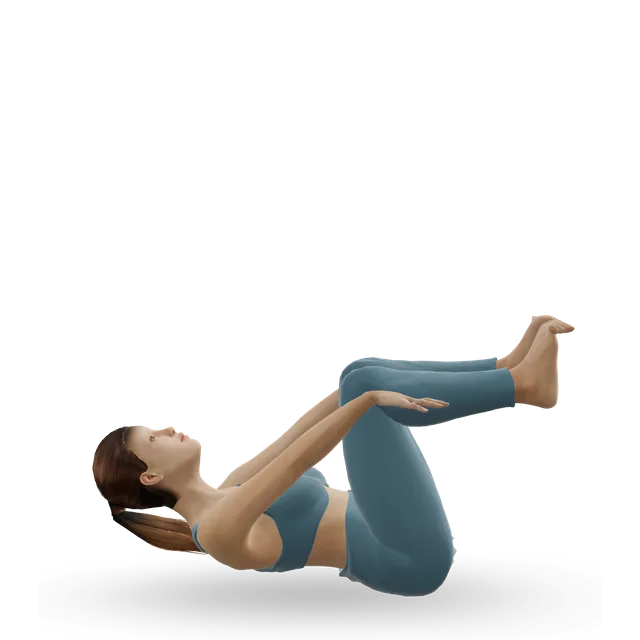
How to do bicycle crunches: the twist, the obliques, your neck, slow or fast, and how many
A bicycle crunch is a curl with a twist and a pedal: with your shoulders curled up, you draw one knee in as the other leg reaches long, and turn your ribs so the opposite elbow points towards the knee. Go slowly, keep your lower back pressed down and let your hands rest beside your head: the turn comes from your ribs, not your elbow.
It's a hard, useful ab exercise. One well-known study ranked it first of 13 for the six-pack muscle and second for the obliques, but the study was commissioned by the American Council on Exercise and wasn't peer reviewed, and it measured muscle activity, not muscle built. It doesn't burn the fat over your waist.
This guide shows you how to do it step by step on the 3D figure, what that ranking did and didn't show, how the twist works your obliques, why slow beats fast, how to spare your neck and back, how many to do, and who should leave it out.
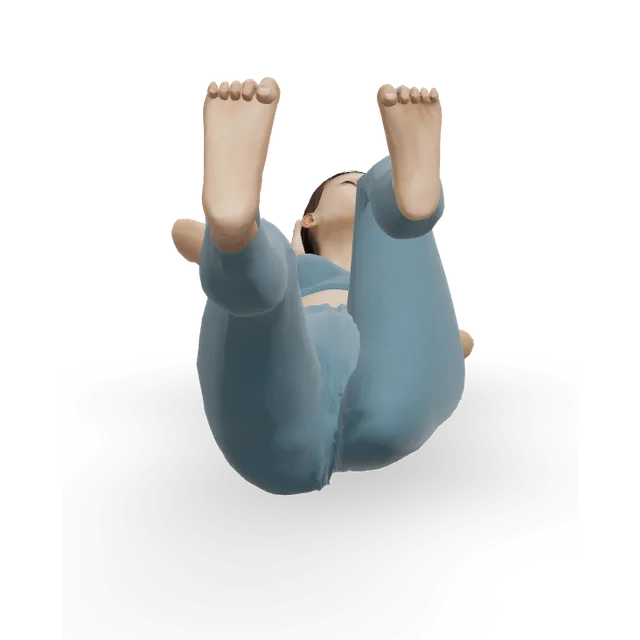
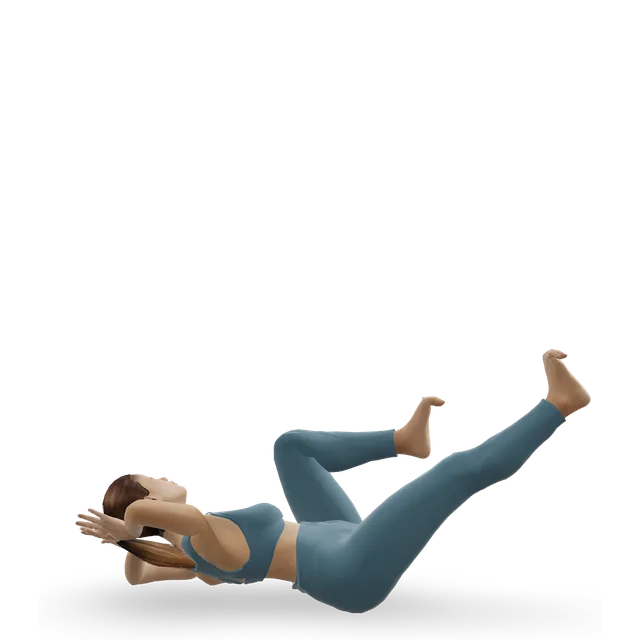
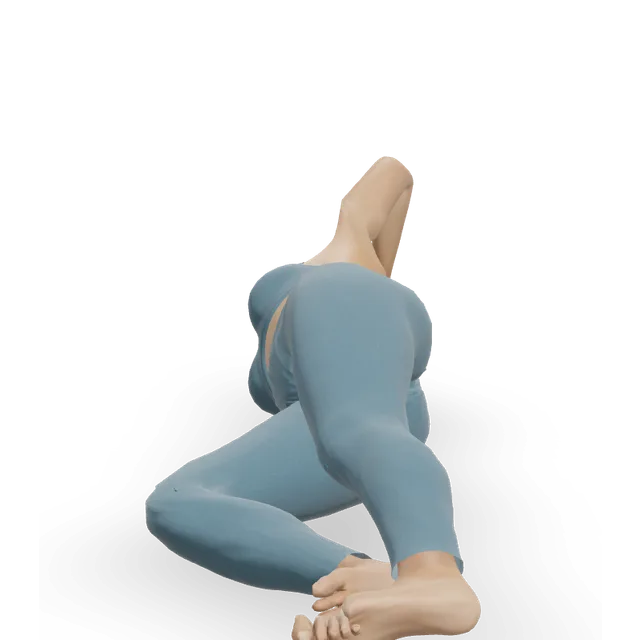
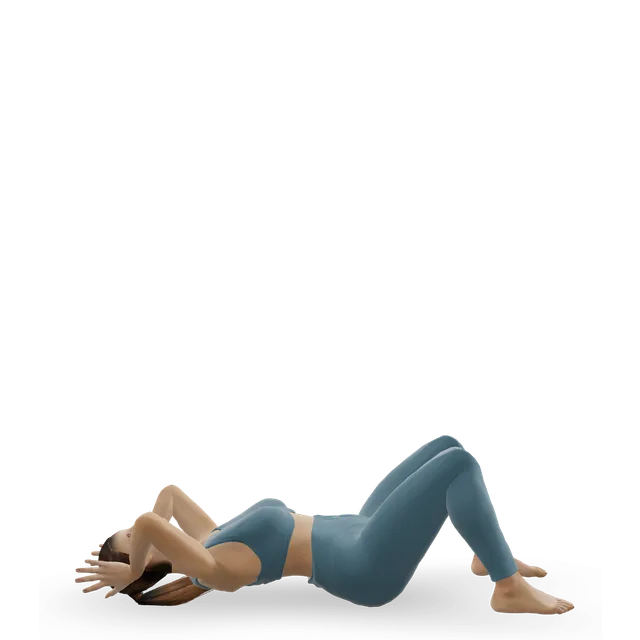
On your back with your shoulders curled up and your hands resting beside your head, draw one knee in as the other leg reaches long and turn your ribs so the opposite elbow points towards the bent knee. Hold for a moment, then switch slowly, keeping your lower back pressed down.
In a study of 13 ab exercises in 30 adults, the bicycle crunch drew about two and a half times a basic crunch's six-pack activity, first of 13, and nearly three times its oblique activity, second to the captain's chair.
That study was commissioned by the American Council on Exercise and wasn't peer reviewed, results varied from person to person, and it measured muscle activity over 10 to 12 reps, which doesn't predict which exercise builds more muscle. We found no peer-reviewed study or training trial of the bicycle crunch.
The turn shares the work between your obliques rather than adding a lot: in small studies, the direction of the twist changed which oblique worked harder, and adding a turn to a curl-up raised activity only slightly. Reaching with your elbow mostly turns your neck.
The study used 2 seconds up and 2 seconds down, and ACE's exercise library says to go slowly and hold each turn for 1 to 2 seconds. Fast pedalling lets momentum and your hip flexors do the work.
2 to 3 sets of 10 to 16 slow reps, counting each turn as one rep, stopping 1 to 3 short, 2 or 3 days a week (our editorial starting point), within about 60 bending reps a session. Leave them out with osteoporosis, a prolapse, after the first trimester of pregnancy, or in the months after a birth until our diastasis recti guide's curl-up stage is easy.
Three things at once: a curl (your head and shoulders off the floor), a turn of your ribcage to each side, and your legs pedalling, one knee drawing in as the other leg reaches long. You'll also see it called the bicycle, the air bike or bicycle kicks. The Pilates criss-cross is the same movement done slower, with each turn held. The Pilates high bicycle is a different exercise: you pedal your legs in the air with your hips lifted and held up by your hands.
What it works
Your six-pack muscle (rectus abdominis) holds the curl, and your obliques turn your trunk: each oblique worked harder in one twist direction than the other in fine-wire recordings, so turning to one side uses the outer oblique on one side and the inner one on the other. Your hip flexors move your legs, and your abs hold your pelvis while they do: lifting both legs needs the abs.
Most of these numbers come from EMG (electromyography: electrodes measuring how hard a muscle works), which shows effort in one session, not what a muscle will build.
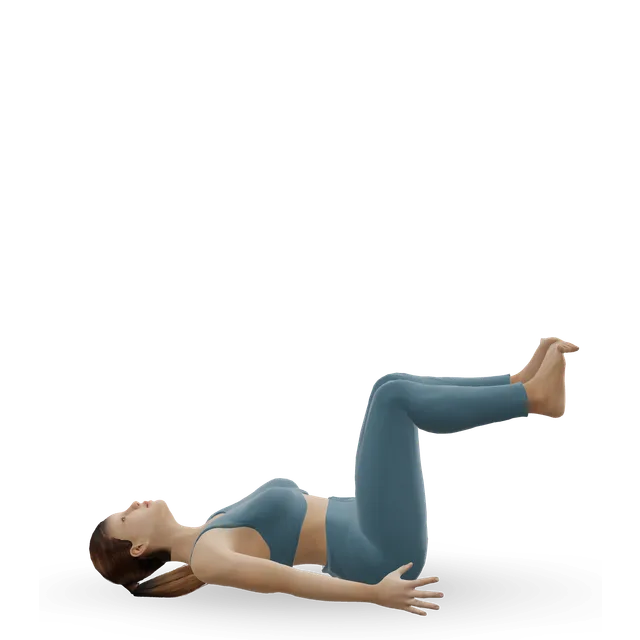
The ACE study described it lying flat with your lower back pressed down, hands beside your head, knees up at about 45 degrees and a slow pedal, touching each elbow to the opposite knee with even, relaxed breathing. ACE's exercise library starts with your thighs upright and knees bent to a right angle, then drives one knee in as the other leg straightens off the floor, holding each turn for 1 to 2 seconds. Both keep the lower back down and the movement slow.
Controlled crunches, as the bicycle crunch's move page says, and dead bug heel taps with your lower back still, which train the leg half of the movement.
How to do a bicycle crunch, step by step
From our move page and ACE (the lower back pressed down, a slow pedal, holding each turn for 1 to 2 seconds, not pulling on your head, turning from your trunk rather than your hips), with the wide elbows and the elbow following the ribs from our Pilates criss-cross. If your lower back lifts as your leg straightens, reach the leg higher, at 45 degrees or more. A standing bicycle crunch, knee to opposite elbow while standing, is a different, much easier move with no demo of its own.
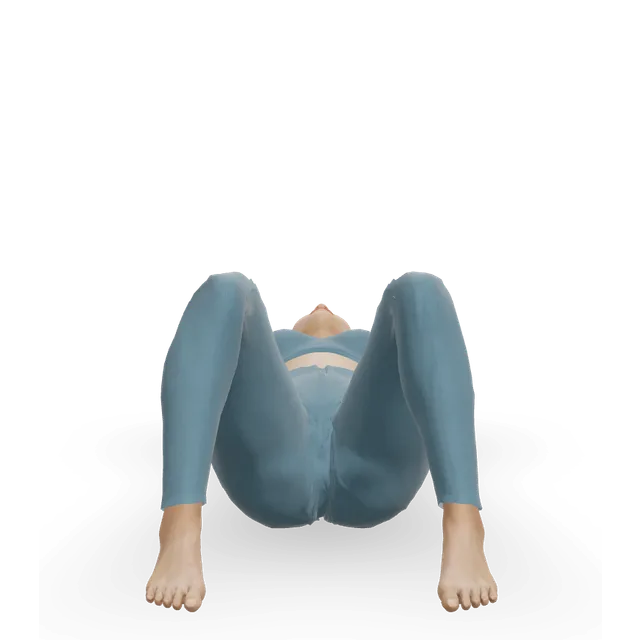
Lie on your back and press your lower back gently into the floor. Rest your fingertips beside your head with your elbows wide.
Bring both knees up over your hips, thighs upright and knees bent to a right angle, and curl your head and shoulders off the floor.
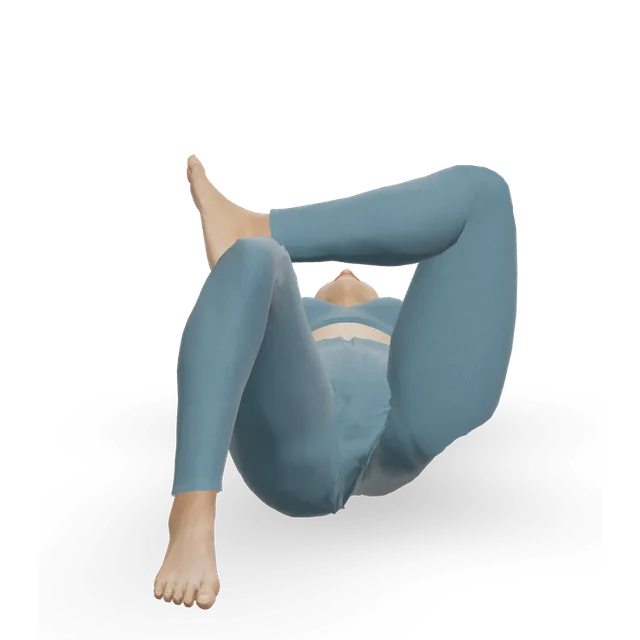
Breathe out, draw your right knee in as your left leg reaches long, off the floor, and turn your ribs so your left elbow points towards your right knee. The elbow follows your ribs; it doesn't reach.
Hold the turn for 1 to 2 seconds.
Breathe in as you pass through the middle, then turn the other way. Keep your shoulders up and your lower back down for the whole set.
Loading the 3D figure…
Drag to turn
Gets into position, then repeats the movement. Technical checks passed; qualified exercise review is pending.
Is it the best ab exercise? What the evidence says
First of 13 in one studyEmerging evidence
In 30 adults aged 20 to 45, from occasional to daily exercisers, each doing 10 to 12 reps at 2 seconds up and 2 down, the bicycle crunch drew 248% of a basic crunch's six-pack activity (first of 13) and 290% of its oblique activity (second, behind the captain's chair at 310%; the reverse crunch scored 240%). Only scores of 125% or more counted as notably better, and the effect varied from person to person.
It was commissioned by the American Council on Exercise and published in its members' magazine, not a peer-reviewed journal. It scored muscle activity in one session, which a methods review found doesn't predict which exercise builds more muscle, strength or a visible six-pack. Its own advice was to pick several exercises from its top third and swap any that feel wrong.
We found no peer-reviewed muscle activity study, spine load study or training trial of the bicycle crunch itself. The evidence below comes from twisting curl-ups and leg-lowering tests, the nearest movements.
No single exercise does everythingEmerging evidence
Of 12 ab exercises in 9 volunteers, none trained every ab muscle hard with a low load on the spine, and the researchers advised a mix. NASM's sample routine mixes a dead bug, a Pallof press, a reverse crunch and a side plank. The bicycle crunch is a good choice for the curl-and-twist part, not the whole job.
Turning shares the work between the obliquesMixed evidence
In 10 women measured with fine-wire electrodes, the twist's direction changed which oblique and which deep ab muscle worked harder, while the six-pack muscle didn't change. In 10 people, changing a curl-up to a cross curl-up raised activity only slightly, not significantly, though the authors note other studies found more outer oblique activity with a turn. In 25 adults, a curl with a twist drew the same upper six-pack activity as a plain curl. In 9 women, moving the pelvis raised oblique activity more than moving the ribcage, which suggests the pedalling legs add to the obliques' work (our reading).
The work is in turning your ribcage towards the knee. Reaching your elbow across mostly turns your neck and shoulder, which is where neck ache comes from. You don't have to touch: ACE's own cue is to bring the elbow to the knee or close to it.
Twisting and your spineMixed evidence
Each joint of the lower spine turned only about 1.2 to 1.7 degrees when 10 volunteers turned their trunk 45 degrees, so the lower back does only a small part of a turn. In pig spines, twisting added to repeated bending damaged the discs, while twisting alone didn't herniate them. Nobody has measured spine load in a bicycle crunch. With osteoporosis, the UK consensus advises modifying or avoiding repeated rounding, and smooth twisting is fine, so the bicycle crunch, which repeats both, is one to leave out (our reading).
Side planks, Pallof presses and suitcase carries train your obliques to stop you bending or twisting, with your spine still, and our oblique workout puts them together. NASM recommends covering resisting rotation and sideways bending as well as curling.
The ACE study used a 2-count each way, and ACE's exercise library says to perform the exercise in a slow, controlled manner and hold the touch for 1 to 2 seconds.
An expert review suggests about 2 seconds a rep for people who aren't athletes, because faster reps may load spinal tissue more. In a leg-lowering test in 16 men, speed changed when the abs switched on but not how hard they worked overall. Pedalling fast mostly lets your hip flexors and momentum take over (our reading). Slower is harder, and better.
No study has measured the legs in a bicycle crunch. In leg-lowering tests, legs hovering worked the six-pack muscle about twice as hard as heels resting on the floor (a median of 36% against 18% of maximum, in 22 young men), and the pelvis tipped forward early as straight legs lowered, whether or not people tried to stop it. So the straighter and lower your reaching leg, the harder it is: keep it high enough that your lower back stays down.
Easier and harder: from feet down to the criss-cross
Move up once every set is smooth at the top of its range for 2 sessions (our editorial rule, as in our 30-day ab challenge). Feet down first: the cross-body crunch, 1 to 2 sets of 8 to 10 each side (our crunch and sit-up workout uses 1), with dead bug heel taps, 2 to 3 sets of 6 to 10 each side, for the legs (our 30-day ab challenge). Then the elbow-to-knee crunch, one ankle on the other knee, 2 sets of 8 to 10 each side; the bicycle crunch with your reaching leg at about 45 degrees or higher, 2 sets of 10 to 16 slow reps; then with the leg lower, only while your back stays down, 2 to 3 sets of 10 to 16 (all three our editorial starting points). The Pilates criss-cross, 6 each side, slowly, holding each turn for a breath, is its move page's dose.
2 to 3 sets of 10 to 16 slow reps, counting each elbow-to-knee turn as one rep (5 to 8 each side), stopping 1 to 3 reps short. That's our editorial starting point: no study has tested a dose. It sits inside NASM's 2 to 3 sets of 8 to 15 for moving ab exercises, and 3 sets stay under the expert review's ceiling of about 60 bending reps a session.
60 to 90 seconds between sets, as our plans rest smaller moves, on 2 or 3 days a week, counting bicycle crunches with any crunches or reverse crunches in the same 60 bending reps. With weekly sets matched, how often you train a muscle made little difference to growth.
First slower, then your reaching leg lower, then more reps up to 16 a set. Don't add a weight to the twist (our editorial advice).
100 a day?
High-rep challenges build endurance but won't trim your waist, and one expert review suggests about 60 bending reps a session at most. Make the move harder instead.
Side planks, 15 to 40 seconds each side, half-kneeling Pallof presses, 10 each side, and suitcase carries, 20 metres each hand, as our oblique workout uses them; the side-lying oblique crunch, 2 to 3 sets of 10 to 15 slow reps each side (its move page's dose); reverse crunches, 2 to 3 sets of 8 to 15 (our 30-day ab challenge); the Pilates single-leg stretch, the pedal without the turn, 6 to 10 each side (its move page's dose); and the side-lying open book, 8 to 10 slow openings each side, as a warm-up (its move page's dose).
Against crunches, Russian twists and the criss-cross
Bicycle crunches or crunches?Emerging evidence
The bicycle crunch is harder and adds the obliques and legs: in the ACE study it drew about two and a half times a basic crunch's six-pack activity. Learn the crunch first; it's the bicycle crunch's prerequisite.
Both turn your trunk. The bicycle crunch adds a curl and leg work lying down; the Russian twist turns while you sit leaning back, feet down or lifted, with or without a weight. Our Russian twist guide covers twists, and side planks and Pallof presses train the obliques without bending.
Bicycle crunches or reverse crunches?
The reverse crunch curls your pelvis up instead of your shoulders and drew 240% of a crunch's oblique activity in the ACE study. Our reverse crunch guide teaches it.
The Pilates form of the bicycle crunch: slower, with your elbows wide and each turn held for a breath, the reaching leg at about 45 degrees, or higher if your lower back lifts. Its move page gives 6 each side, slowly, and our Pilates core guide puts it in context.
Workouts to follow
No workout on the site uses the bicycle crunch yet. Add it to the crunch track of our crunch and sit-up workout, or pair it with our oblique workout's side planks, Pallof presses and carries. Our 10-minute Pilates abs workout uses the criss-cross, 6 each side, slowly.
Leave bicycle crunches out: they repeat rounding with a turn, and the UK consensus advises modifying or avoiding repeated rounding of the spine. The Royal Osteoporosis Society names sit-ups among the moves that put pressure on the spine. Dead bugs, Pallof presses, side planks and carries train your trunk instead.
Leave them out. An NHS pelvic health leaflet advises avoiding abdominal crunches with a prolapse, the NHS says sit-ups can increase leaks, and our prolapse guide lists bicycle crunches with them. The Pallof press and side-lying work are the swaps, as our oblique workout suggests.
After the first trimester, don't do them lying flat on your back: the NHS advises avoiding lying flat for more than a few minutes in later pregnancy. Standing and side-lying oblique work is the swap, as our pregnancy guide suggests.
Not in the first weeks: the NHS advises avoiding sit-ups to start with. Twisted curl-ups are part of stage 3 of our diastasis recti guide, from the curl-up trial; bring bicycle crunches in once those feel easy, with no doming you can't control (our editorial reading of the stages).
Leave them out while you heal and build up through gentler core work, as our hernia and stoma guides advise, stopping if you notice bulging around a scar, a stoma or the hernia.
Neck or back pain
If your neck aches, rest your head between sets or swap to dead bugs and reverse crunches, which keep your head down. If bending or twisting flares your back or sends pain down a leg, stop and use the Pallof press and side plank instead.
Warning signs
Stop and get medical help
If you get chest pain or pressure, feel faint or dizzy, are unusually breathless, or your heart races or beats irregularly during exercise, as our plans advise. The American Heart Association says these need immediate medical evaluation.
For chest pain that feels tight, heavy or squeezing, or spreads to your arms, neck, jaw or back; a sudden, extremely painful headache, especially while straining; someone who faints while exercising; or palpitations that don't go away, or come with chest pain, breathlessness or feeling faint. Don't drive yourself to A&E.
Call 999 or go to A&E for loss of feeling or numbness around your genitals or bottom, new trouble peeing or controlling your bladder or bowels, changes in genital sensation during sex or problems with erections or orgasm, or pain, tingling, weakness or numbness in both legs. These are signs of cauda equina syndrome, which needs treating in hospital urgently; don't drive yourself. With everyday back pain, aim for pain no more than about 5 out of 10 that settles within an hour or so and is no worse the next morning, as our back pain guides say.
If you haven't exercised for some time or have a medical condition, speak to your GP first, as the NHS advises. Breathe out as you turn and never hold your breath, especially with high blood pressure, heart disease, glaucoma, a hernia or recent tummy surgery, as our breathing guide explains.
See a GP if you think you have a hernia. Get help from NHS 111 if you have a hernia and pain in or around it, a bloated tummy, sickness, constipation, a high temperature or sudden confusion. Call 999 or go to A&E for a femoral hernia (a lump at the top of the thigh) with very bad tummy pain, sickness, being unable to fart or poo, a high temperature or sudden confusion.
See a GP if neck pain or stiffness hasn't gone after a few weeks, or comes with pins and needles or a cold arm. Our neck pain after a workout guide has more.
A sudden sharp pain in your side or tummy wall during a set may be a strained muscle. Get help from NHS 111 or an urgent treatment centre if it's very painful or getting worse, badly swollen or bruised, or not getting better with self-care. Our abdominal strain guide covers recovery.
"The bicycle crunch is the single best ab exercise"Emerging evidence
One ACE-commissioned study, not peer reviewed, ranked it first of 13 for the six-pack muscle. The captain's chair beat it for the obliques, results varied between people, and it measured muscle activity, not muscle built. No single exercise trains every ab muscle; it's a good choice, not the only one.
The study's slow 2-count is what was measured, ACE's library says slow and controlled, and an expert review suggests about 2 seconds a rep. Fast pedalling hands the work to momentum.
"Bicycle crunches work your lower abs"Mixed evidence
They work the whole six-pack muscle and the obliques. The upper and lower parts of the six-pack worked alike in a muscle activity study, and the ACE researchers concluded they act as one sheath.
Lie on your back with your lower back pressed down, fingertips beside your head and knees over your hips. Curl your shoulders up, then draw one knee in as the other leg reaches long and turn your ribs so the opposite elbow points at the bent knee. Hold for a moment, then switch slowly.
What muscles do bicycle crunches work?
Your six-pack muscle holds the curl, your obliques turn your trunk, and your hip flexors move your legs. In the ACE study it drew about two and a half times a basic crunch's six-pack activity and nearly three times its oblique activity.
Are bicycle crunches the best ab exercise?
They ranked first of 13 for the six-pack muscle in one study commissioned by the American Council on Exercise, which wasn't peer reviewed. The captain's chair beat them for the obliques, and results varied between people. They're a good choice, not the only one.
Should I do bicycle crunches slow or fast?
Slow: about 2 seconds a side, with a short hold at each turn. That's how the study measured them, and fast pedalling lets momentum and your hip flexors do the work.
How many bicycle crunches should I do?
2 to 3 sets of 10 to 16 slow reps, counting each turn as one, stopping 1 to 3 reps short, 2 or 3 days a week, is our starting point. Count them towards about 60 bending reps a session.
Why does my neck hurt when I do bicycle crunches?
You're probably pulling on your head or reaching with your elbow. Rest your hands, keep a gap under your chin, turn your ribs rather than your elbow, and rest your head between sets.
Why does my lower back hurt when I do bicycle crunches?
Usually your lower back lifts as your leg straightens. Reach the leg higher, slow down, or go back to cross-body crunches with your feet down. Stop if bending or twisting sends pain down a leg.
How do I make bicycle crunches easier?
Keep your feet down and turn only, which is the cross-body crunch, or reach your straight leg higher. Rest your head between sides, and build back up as each set gets smooth.
Do bicycle crunches burn belly fat or love handles?
No. They work your obliques, but ab exercises don't remove the fat over them. Fat comes off with your overall activity and eating habits.
Bicycle crunches or Russian twists?
Both turn your trunk; bicycle crunches add a curl and leg work lying down, while Russian twists turn as you sit leaning back. For your obliques without bending, side planks and Pallof presses are good swaps.
Is the criss-cross the same as a bicycle crunch?
It's the Pilates version: slower, with your elbows wide and each turn held for a breath, the reaching leg at about 45 degrees. Its move page gives 6 each side, slowly.
Can I do bicycle crunches when pregnant or with a gap between my tummy muscles?
Not flat on your back after the first trimester. After a birth, start with our diastasis recti guide's stages: twisted curl-ups come in stage 3, and bicycle crunches once those feel easy, with no doming you can't control.
Exercise education, not a personal prescription, and clinical review of these guides is pending. Check with a GP before starting hard training if you have a heart condition, chest pain, dizziness or breathlessness when active, and stop for sharp or increasing pain. Health disclaimer.