Press out, don't turn
Side-on to a band or cable anchored at chest height, press the handle straight out from your chest and back, and don't let it pull you round. Your trunk's job is to stay still.
Source 1
Training guide
A Pallof press is a core exercise where you hold still against a twist. Side-on to a band or cable at chest height, you press the handle straight out from your chest and back while your trunk refuses to turn. Your spine doesn't bend or twist, which is why it suits so many people.
It's a coaching favourite, but no study has measured the muscles it works or tested it as a training programme on its own. One small study shows how to make it harder, and the wider research on core training says to expect modest carry-over to sport.
This guide shows you how to set up the band or cable, how to do it half-kneeling and standing, how many to do and how to make it harder. It covers what it can and can't do for sport and back pain, and pregnancy, the months after a birth and other times to change it, with a 3D demo of each version.
Side-on to a band or cable anchored at chest height, press the handle straight out from your chest and back, and don't let it pull you round. Your trunk's job is to stay still.
Source 1
We found no study of the muscles it works or of training with it alone. The nearest, a one-arm standing cable press, found the trunk muscles on the side opposite the pressing arm working as hard as the chest and front shoulder.
Source 2
In one study of 12 active adults, kneeling on both knees was the easiest version to hold still, standing was harder, and a wobble ball turned it into a balance exercise. Start half-kneeling, as our workouts do, though that version hasn't been tested.
Source 1
2 to 3 sets of 8 to 10 each side, pausing for 2 seconds with your arms straight, as our workouts use, or 2 or 3 holds of 10 to 30 seconds each side (our editorial starting point; one training study used 30-second holds). 2 or 3 days a week.
Source 3
It keeps your spine still, which is why our back pain plans use it. Core exercise helps chronic back pain about as much as other exercise, and a band Pallof test caused no pain in adults with chronic back pain. No trial has tested it as a treatment.
Trunk training builds trunk strength a lot, but trunk strength is only loosely linked with performance, and the carry-over to sport is modest.
The band or cable pulls you sideways towards the anchor, and the further your hands are from your chest, the bigger the twisting pull: the one study of it held the arms straight, the largest lever. Your trunk works to stay square, which is why coaches call it anti-rotation.
Source 1
Half-kneeling with a band or cable, standing at a cable, and the press and turn, each with a 3D demo. Kneeling on both knees, a split stance, holds and pressing the handle up overhead have no demo of their own: they're the same press in a different position.
No study has measured it. Expect your obliques and deep tummy muscles to resist the turn, your hips to hold your pelvis still, and your chest, shoulders and triceps to press the handle (our reading of the mechanics). In a one-arm standing cable press, the internal oblique and latissimus dorsi on the side opposite the pressing arm worked as hard as the chest and front shoulder.
Source 2
A cable machine with the pulley at chest height, or a resistance band anchored at chest height round a sturdy post or shut in a door, as our oblique workout sets it up. With no band or cable, an extra set of bird dogs trains your trunk to resist a twist, as our 30-day ab challenge suggests.
We found no study that measured muscle activity, spine load or training effects in the Pallof press itself. What we know comes from one lab study of how steady people stay, a reliability study of a band test, training programmes that include it with other exercises, and research on core training in general.
In 12 active adults holding the press out with straight arms for 15 seconds against a band set by body weight (4 to 6 kg of sideways pull), the pelvis moved least kneeling on both knees on a pad (0.17 m/s²), more standing with feet together (0.22) or one foot in front of the other (0.31, clearly more than kneeling), and most standing on a half-ball (0.55 to 0.61). It's one small study, and it didn't test half-kneeling.
Source 1
In 14 trained men, the best one-arm standing cable press was 26 kg, against 74 kg on a two-arm bench press. The authors concluded that whole-body stability, not chest and shoulder strength, limited the standing press, and the internal oblique and latissimus dorsi on the opposite side worked as hard as the chest and front shoulder.
Source 2
In 35 adults aged about 48, 18 of them with chronic low back pain, a test of 5-second Pallof holds against more and more band tension gave consistent results from one day to the next, and nobody reported pain or discomfort.
Source 6
Six weeks of band Pallof holds and other hold-still exercises, twice a week, changed trunk muscle activity against no training in a trial of 36 men, without measuring strength or performance. In amateur golfers, 8 weeks of similar training changed how fast the trunk rotated in the swing, though clubhead speed rose with traditional core training too.
Six weeks of low-dose bridging and bird dogs, twice a week, didn't improve trunk performance or balance beyond the trained moves in 60 active young men. Hold-still exercises seem to train mainly what you practise.
Source 11
From our move page and the site's workouts (the 2-second hold), with the trunk cue from our 30-day ab challenge. Kneeling on the knee nearer the anchor follows our move page; no study has compared the two ways round.
Loading the 3D figure…
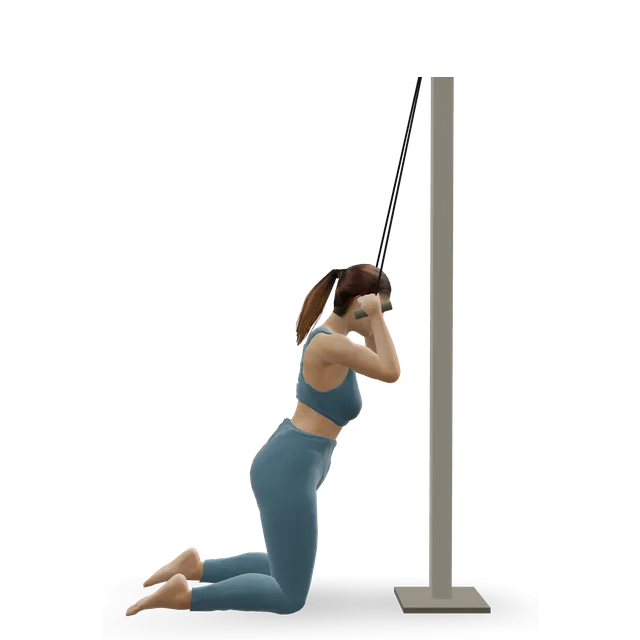
The movement on the figure: Half-kneeling Pallof press
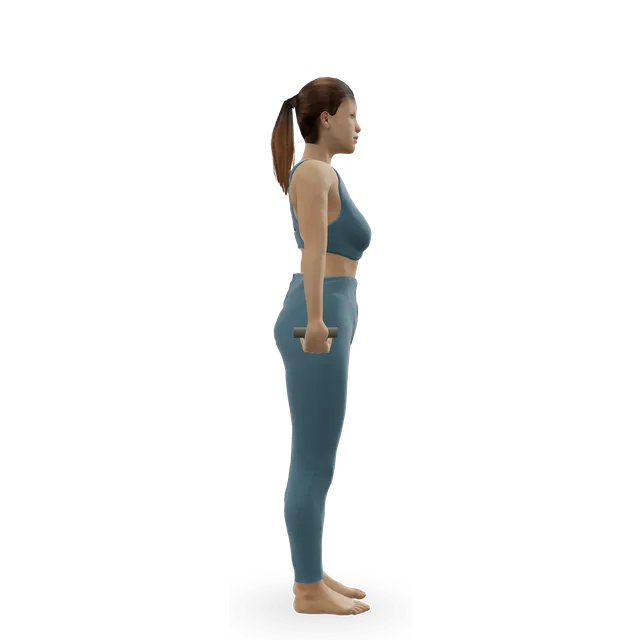
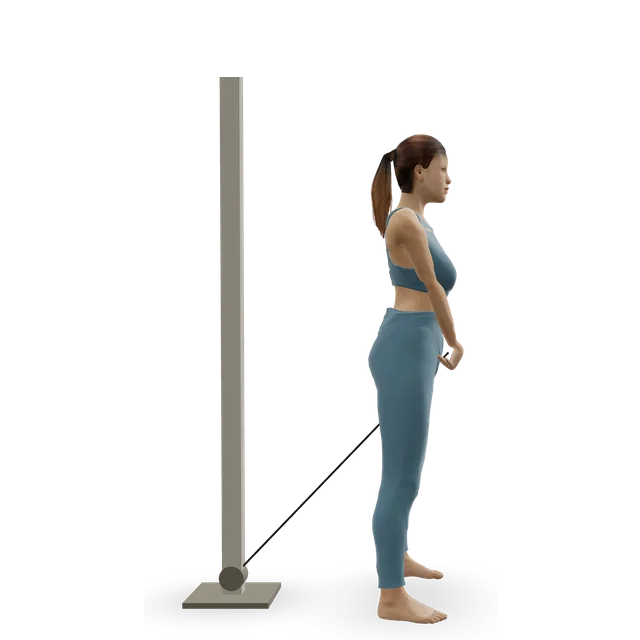
From our move page. Standing, especially with one foot in front of the other, was harder to hold still than kneeling in the one study of it.
Loading the 3D figure…
The movement on the figure: Pallof press
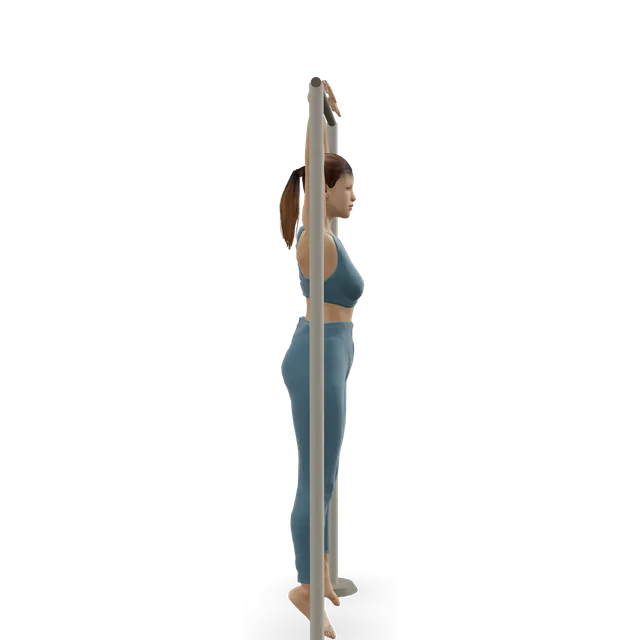
From our move page. This adds a controlled turn, so it's a different job from the Pallof press: our golf workout turns fast and returns slowly.
Loading the 3D figure…
The movement on the figure: Cable press and rotation
In the one study, kneeling on both knees was the steadiest version and standing with one foot in front of the other clearly harder. The authors suggest kneeling when you want to use a stiffer band or a heavier cable with less work for your legs, and say a half-ball turns it into a whole-body balance exercise.
Source 1
Our workouts start half-kneeling, with one knee down, which the study didn't test. It gives you a narrower base than kneeling on both knees and a lower one than standing (our editorial reading), so it's a sensible first step.
The authors point out that a higher centre of gravity and a higher band line increase the tilting pull, so standing versions may feel harder if you're tall. They found no clear difference between men and women.
Source 1
Move on when every set reaches the top of its range with the handle steady (our editorial rule). Half-kneeling, close to the anchor or with a light band, 2 sets of 8 to 10 each side (our full-body gym workout B); further away or a stronger band, 2 to 3 sets of 8 to 10 (our 30-day ab challenge); standing at a cable, 2 sets of 10 each side with 2-second holds (our gym ab workout); feet together or staggered, 2 to 3 sets of 8 to 10 (our editorial starting point); then turning moves: the press and turn, 3 sets of 6 each side (our golf workout), cable wood chops, 2 sets of 8 each side (our strength workout for boxers), and landmine 180s, 2 to 3 sets of 8 to 12 each side (its move page's dose).
 3D demoHalf-kneeling Pallof pressBeginner · A band + An anchor point
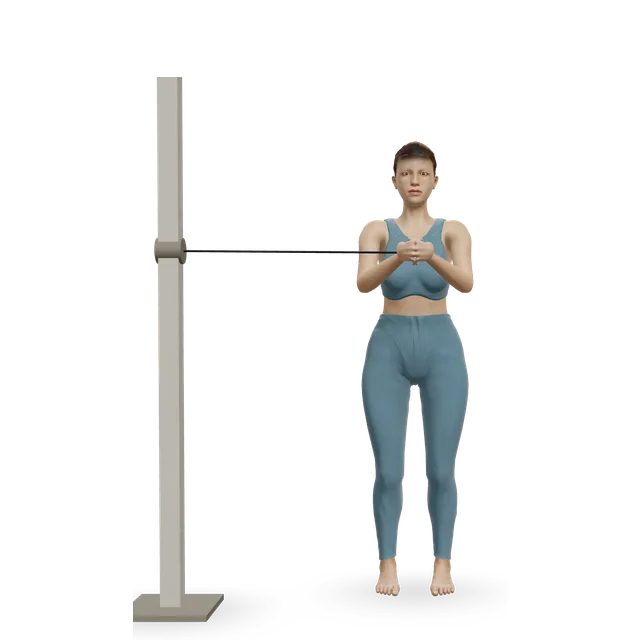 3D demoPallof pressIntermediate · A cable machine
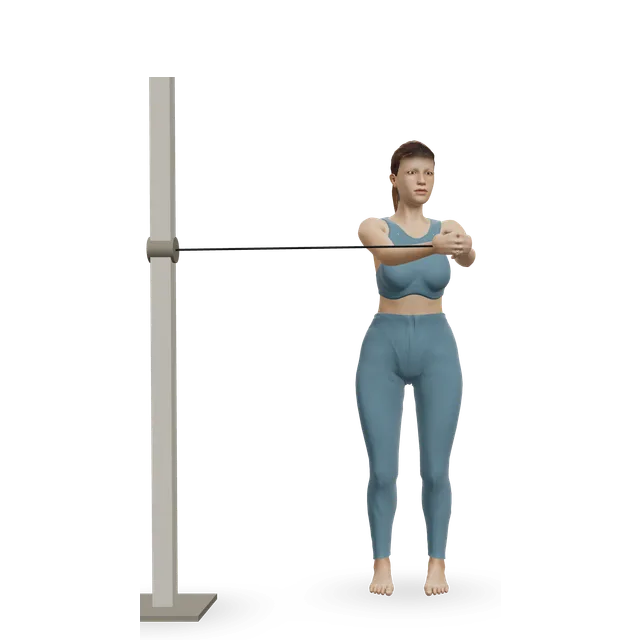 3D demoCable press and rotationIntermediate · A cable machine
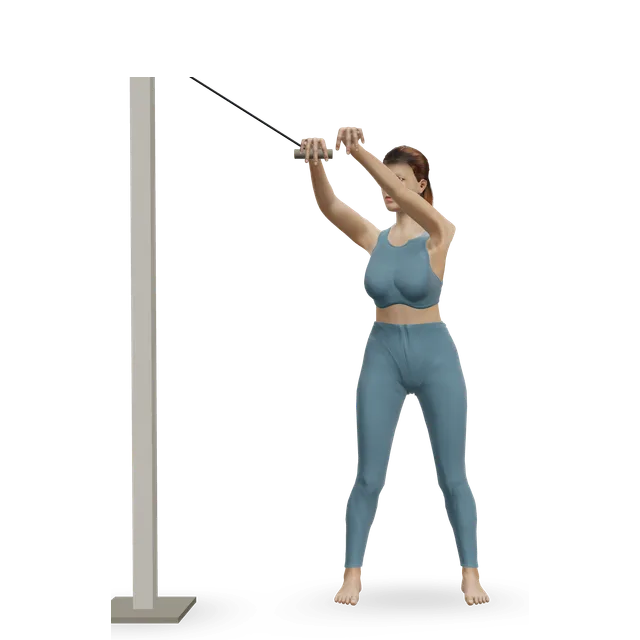 3D demoCable wood chopAdvanced · A cable machine
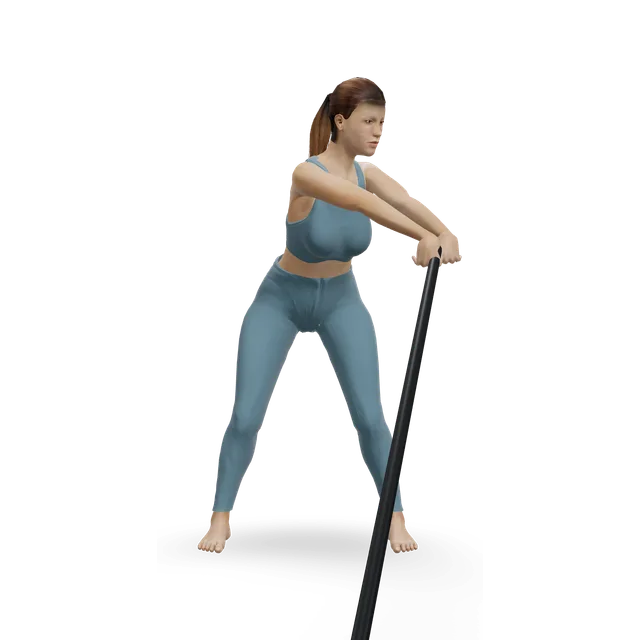 3D demoLandmine 180 (landmine rotation)Intermediate · A barbell + An anchor point
2 to 3 sets of 8 to 10 each side, pausing for 2 seconds with your arms straight, as our 30-day ab challenge, gym ab workout and cable machine workout use; our cable machine guide gives 2 to 3 sets of 8 to 15.
2 or 3 holds of 10 to 30 seconds each side (our editorial starting point). One 6-week training study used 2 holds of 30 seconds.
Source 3
Stop each set while the handle is still steady, 2 or 3 reps short of failure, or 3 or 4 short in your first two weeks, as our plans advise. Going to failure adds little, and people underestimate the reps they have left by about 1.
30 to 45 seconds between sets, as our 30-day ab challenge uses, or go straight into a leg move and rest after the pair, as our cable machine workout does.
2 or 3 days a week, as our get abs guide and oblique workout suggest. Matched for weekly sets, training more often makes little difference to growth.
Source 14
More reps or a longer pause first, then step further from the anchor or use a heavier cable, then a narrower or staggered stance (our editorial order, following our plans' advice for adding load).
If the handle drifts towards the anchor, step closer or use a lighter band.
Stay tall and square, as our move page cues.
Press straight out from your chest, with the anchor at chest height.
Keep your hips facing forward, especially when half-kneeling.
Keep your shoulders down and away from your ears (our editorial cue).
Breathe out as you press, and keep breathing in the hold, as our breathing guide advises.
Our plank guide suggests covering each job your trunk does: resisting arching (dead bug, hollow hold), resisting rotation (bird dog, Pallof press), side-bending and carrying (suitcase carry), and a gentle curl (McGill curl-up). The Pallof press is the standing or kneeling way to train the second.
Once holding still is easy, turning moves such as the press and turn, cable wood chops and landmine 180s add controlled rotation. Our oblique workout puts side planks, Pallof presses and carries before slow Russian twists.
When twisting or bending hurts your back, our Russian twist and back pain guides swap in the Pallof press. With osteoporosis, a UK consensus says smooth, comfortable twisting is fine; the Pallof press is a good choice if you'd rather keep your spine still.
Source 15
Motor control (core stability) exercise beat minimal treatment for chronic low back pain, by about 13 points on a 100-point scale in the long term, across 29 trials and 2,431 people, but it wasn't clinically better than other exercise. Exercise of any kind lowered pain by about 15 points against no treatment, usual care or placebo, across 249 trials.
No trial has tested it as a treatment. It keeps your spine still and was painless in a band test in adults with chronic back pain, which makes it a sensible part of a back pain plan. The NHS advises stopping back exercises that make the pain worse and seeing a GP.
Core training builds trunk strength a lot, but trunk strength was only loosely linked with performance (correlations of -0.05 to 0.18), and training gave small to medium gains in it. In athletes, the gains were small to moderate for strength, sprinting, changing direction and sport-specific tests; balance and jumps improved, but throwing and hitting speed didn't clearly improve.
In one trial in amateur golfers, 8 weeks of hold-still core training, three times a week, raised how fast the trunk turned in the swing; clubhead speed rose with traditional core training too. Our golf strength workout uses the Pallof press and the press and turn.
Source 10
Core strength and control were linked with later leg injuries in athletes, but only as preliminary evidence, and a critical review finds the theory behind targeted core exercise may be over-assumed in common practice.
Stand in a split stance or pad the knee, as our move page says.
A good choice: you stay upright and don't lie on your back. Our pregnancy strength workout uses it at 8 to 10 each side, and says to stand with your feet hip-width apart instead if kneeling is uncomfortable or you have pelvic girdle pain. The NHS says to stop if you feel uncomfortable, too hot or unwell.
Source 20
Our diastasis recti guide brings in "a band press that resists twisting" at its stage 2, from about 6 to 8 weeks after a straightforward birth, and our postnatal strength workout uses 8 each side. See a GP if the gap between your tummy muscles is still obvious 8 weeks after the birth, as the NHS advises.
Source 21
The NHS advises avoiding activities that put a lot of strain on the pelvic floor, and our oblique workout swaps the twist and the crunch for more Pallof presses with a prolapse.
Source 22
Our hernia guide includes the half-kneeling Pallof press in its gentle core work, at 2 sets of 6 to 8 slow reps to start, and says to leave out any move that makes a hernia bulge.
Hold the handle closer to your chest rather than pressing all the way out (our editorial suggestion).
Side planks, 15 to 40 seconds each side for 3 rounds, and suitcase carries, 20 metres each hand (our oblique workout); bird dogs, 2 to 3 sets of 6 to 8 each side with 3 to 5-second holds (our 30-day ab challenge); and dead bugs, 2 sets of 6 to 8 each side (our full-body gym workout).
Core session B of our 30-day ab challenge starts here; our oblique workout pairs it with side planks and carries; the gym ab and cable machine workouts use the standing version; the pregnancy strength workout uses it standing if kneeling is uncomfortable.
A 12-minute core session for the sides and back: side planks, bird dogs, a band press that resists twisting and an optional one-sided carry.
12 minBeginner10 movesA band, An anchor pointA 25-minute oblique workout at home: side planks, a band Pallof press and a suitcase carry to hold your trunk steady, then slow Russian twists and side-lying crunches.
25 minIntermediate8 movesA band, An anchor pointA 25-minute gym ab workout you can add weight to: cable crunches, hanging knee raises, ab wheel rollouts, Pallof presses and suitcase carries.
25 minIntermediate7 movesA cable machine, Pull-up barFull-body gym workout B: trap bar deadlifts, cable rows, seated dumbbell press, step-ups, leg curls, push-ups and a Pallof press.
50 minBeginner13 movesCardio machine, Other / check instructionsA 40-minute full-body workout on a dual cable station in four pairs: pull-through and row, press and Pallof press, pushdown and crunch, raise and curl.
40 minBeginner14 movesCardio machine, A bandA 30-minute strength workout for any trimester with dumbbells and a band: squats, rows, hinges, presses and side-lying hip work, none on your back.
30 minBeginner14 movesA dumbbell, A bench or boxThe 30-day ab challenge uses core session B; the full-body plan uses full-body gym workout B; the pregnancy and postpartum plans use our pregnancy and postnatal strength workouts.
A free 30-day ab challenge: four 12-minute core sessions a week, from dead bugs to hollow holds, with rest days and an honest word on belly fat.
4 training days12 minBeginner3 days a weekFor after about 8 weeks of a beginner plan: three full-body sessions a week, one heavy, one moderate and one light, in a gym or at home, for 12 weeks.
3 training days50 minIntermediate5 days a weekA pregnancy workout plan for each trimester: walks or swims, two strength sessions a week off your back, daily pelvic floor work and when to stop.
5 training days30 minBeginner5 days a weekA postpartum workout plan from the first days after birth to running and lifting again, week by week, with a caesarean track and readiness checks.
5 training days25 minBeginnerIf you get chest pain or pressure, feel faint or dizzy, are unusually breathless, or your heart races or beats irregularly during exercise, as our plans advise. The American Heart Association says these need immediate medical evaluation.
Source 23
For chest pain that feels tight, heavy or squeezing, or spreads to your arms, neck, jaw or back; a headache that starts suddenly and is extremely painful; someone who faints while exercising; palpitations that don't go away, or come with chest pain, breathlessness or feeling faint; severe difficulty breathing; or angina pain that doesn't stop after rest and your medicine. Don't drive yourself to A&E.
If you haven't exercised for some time or have a medical condition, speak to your GP first, as the NHS advises. Breathe throughout; never hold your breath in the press.
Source 32
See a GP after any faint, and for dizziness that won't go away or keeps coming back.
Loss of feeling or numbness around the genitals or bottom, new trouble peeing or controlling your bladder or bowels, changes in genital sensation during sex or problems with erections or orgasm, or pain, tingling, weakness or numbness in both legs. These are signs of cauda equina syndrome, which needs treating in hospital urgently. Don't drive yourself.
With a high temperature, or if you feel hot, cold, shivery or generally unwell, or if severe pain starts suddenly or gets worse quickly. In the US, use urgent care.
Source 16
Back pain that doesn't improve after a few weeks of treating it at home, stops your day-to-day activities, is worse at night or after resting, or comes with weight loss you can't explain or a lump or change in the shape of your back.
Source 16
See a GP if you think you have a hernia: a bulge or lump in your groin, upper thigh or tummy that may get bigger when you cough, sneeze or cry and smaller when you lie down. Get help from NHS 111 if you have a hernia and pain in or around it, a bloated tummy, sickness, constipation, a high temperature or sudden confusion. Call 999 or go to A&E for a femoral hernia (a lump at the top of the thigh) with very bad tummy pain, sickness, being unable to fart or poo, a high temperature or sudden confusion.
It starts easy but scales: step further from the anchor, use a heavier cable, stand rather than kneel, or narrow your stance. In a one-arm standing cable press, people pushed about a third of their two-arm bench press, and the authors put the limit down to whole-body stability. But no study has measured strength or muscle gains from the Pallof press itself, and for ab muscle size the loaded moves in our get abs guide do more (our editorial view).
Some coaching pages say moving onto your knees makes it trickier. The one study found the opposite: kneeling on both knees was the steadiest, and standing, especially with one foot in front of the other, harder to hold still. Half-kneeling hasn't been tested.
Source 1
Trunk training builds trunk strength, but carries over to sport only modestly, and throwing and hitting speed didn't clearly improve across 22 studies. One golf trial found changes in how the trunk turned in the swing.
No trial has tested it for back pain. Exercise of many kinds helps chronic back pain about equally; the Pallof press is a sensible choice when bending or twisting hurts, not a cure.
Exercising a body part doesn't remove the fat over it: 6 weeks of ab exercise changed no fat measure in 24 adults, adding ab training to a diet did no better than the diet alone in 40 women, and across 13 studies training one area didn't reduce the fat there. Fat comes off with your overall activity and eating, as our belly fat guide explains.
No study has measured it. Your obliques and deep tummy muscles work to stop the band turning you, your hips hold your pelvis still, and your chest, shoulders and triceps press the handle. In the nearest study, a one-arm standing cable press, the trunk muscles on the opposite side worked as hard as the chest.
Kneeling is easier to hold still, which lets you use a heavier band or cable; standing, especially with your feet staggered, is harder. Start half-kneeling, as our workouts do, and stand once you can hold it steady.
Either works. A band pulls harder the further it stretches, so stepping away makes it harder; a cable pulls the same all the way and goes up in plates.
2 to 3 sets of 8 to 10 on each side, pausing for 2 seconds with your arms straight, as our workouts use, or 2 or 3 holds of 10 to 30 seconds a side. Stop each set while the handle is still steady.
Step further from the anchor or use a stronger band or heavier cable, pause longer, then stand with your feet closer together or staggered. After that, add a turn with the press and rotation.
You need something that pulls you sideways: a band round a sturdy post or shut in a door at chest height works. With nothing at all, do an extra set of bird dogs, as our 30-day ab challenge suggests.
It keeps your spine still, which is why our back pain plans and twisting guide use it, and a band Pallof test caused no pain in adults with chronic back pain. No trial has tested it as a treatment, and exercise of many kinds helps back pain about equally.
Trunk training builds trunk strength but carries over to sport only modestly. One trial in golfers found hold-still core training changed how the trunk turned in the swing, though clubhead speed improved with traditional core training too.
Do both: the side plank stops you bending sideways and the Pallof press stops you twisting, two of the directions our plank guide says to cover. Our oblique workout puts them together with a suitcase carry.
It's one of the better choices: you stay upright and your spine doesn't bend. Our pregnancy workout uses it, standing if kneeling is uncomfortable or you have pelvic girdle pain, and our diastasis recti guide brings it in from about 6 to 8 weeks after a straightforward birth.
At chest height, level with the handle when it's at your chest, so you press straight out. Stand or kneel side-on, far enough away that it pulls firmly.
It strengthens the muscles that hold your trunk still, but ab exercises don't burn the fat over them, and nobody can promise a look or a timeline. Fat comes off with your overall activity and eating, as our belly fat guide explains.
Exercise education, not a personal prescription, and clinical review of these guides is pending. Check with a GP before starting hard training if you have a heart condition, chest pain, dizziness or breathlessness when active, and stop for sharp or increasing pain. Health disclaimer.