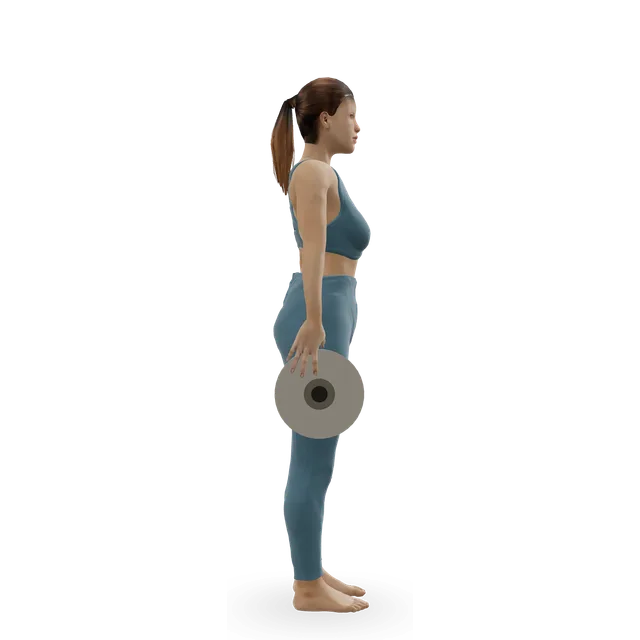
The carry
Pick up a weight in each hand with a flat back, stand tall with a tight grip and your arms long at your sides, and walk a set distance with short, even steps. Turn, walk back, and set the weights down by bending your knees.
Training guide
A farmer's carry, or farmer's walk, is picking up a heavy weight in each hand and walking tall for a set distance or time. Grip hard, keep your shoulders down and your arms long, walk with short, even steps, and put the weights down before your grip gives out. Start with 2 or 3 carries of about 30 metres.
Carries train your grip, upper back, trunk and hips together while you walk, the way you carry shopping or luggage. Two weights load your lower back far less than one, so the farmer's carry comes before the one-hand suitcase carry. No trial has tested carries on their own yet, so the weights and distances here are coaching figures, and we say so.
This guide covers the steps on the 3D figure, how heavy and how far, grip, your back, and other carries.
Pick up a weight in each hand with a flat back, stand tall with a tight grip and your arms long at your sides, and walk a set distance with short, even steps. Turn, walk back, and set the weights down by bending your knees.
Your grip, upper back, trunk and hips, together, while you walk. Carrying challenged the trunk differently from lifting in strongman athletes. In 18 young adults, walking with about 51 kg drew more back muscle activity than holding the same weights still, and slightly more than a plank, but the plank worked the front of the stomach far harder.
In 6 people, 30 kg in one hand pressed on the lower back with more than 2,800 newtons, and 15 kg in each hand with 1,570 (44% less); even 30 kg in each hand loaded the spine less than 30 kg in one. So coaches start with the farmer's carry and add the one-hand suitcase carry later.
No trial has set it. Our grip guide starts around a quarter of your body weight in each hand, which matches a coaching benchmark for rehabilitation of half your body weight in total; those figures are coaches' experience, untested in trials. The right weight lets you walk tall, without leaning or shuffling, for the whole carry.
Source 2
20 to 40 metres, or about 20 to 40 seconds, 2 to 4 times, with 60 to 90 seconds' rest, as our grip and back guides and workouts use. Change the weight or the distance from week to week, not both at once.
Source 6
The NHS counts carrying heavy shopping bags as muscle-strengthening activity, the UK consensus on osteoporosis encourages it, and our back pain guides use carries to rebuild strength.
Walking with a heavy weight in each hand: dumbbells, kettlebells, farmer's handles or full shopping bags. ACE (the American Council on Exercise) describes a dumbbell in each hand with a tight, firm grip, the arms resting at your sides so the weights sit by your hips, the back straight, walking a set distance and back, and rates it intermediate. The suitcase carry uses one weight in one hand; the overhead carry holds one weight locked out above your head.
Your forearm muscles hold the weights, and for many people grip is the first thing to give out: in one carry study, a participant was left out because they couldn't hold the dumbbells.
Source 4
In strongman carries, the stomach muscles peaked as each foot took weight and the back muscles as each leg swung. In 18 young adults carrying about 51 kg in total, the farmer's carry drew more activity from the back and stomach muscles than holding the same weights still. Against a plank, it drew 9 to 11 points more back muscle activity (in percentage points of a maximal effort), and the plank 22 to 46 points more from the front of the stomach.
With a weight in one hand, the side muscles of your trunk and the hip muscles on the other side stop you tipping towards it. Walking with 15 to 20% of body weight in one hand raised the opposite hip's abductor activity in 26 adults, and in the suitcase carry the stomach muscles on the loaded side worked harder than in a suitcase hold.
Splitting a load between two hands kept the lower back's compression far lower than carrying it in one. Of the strongman events measured, the yoke (a heavy frame across the shoulders) loaded the spine most.
In strongman athletes, a loaded farmer's walk more than doubled the peak force through the feet against an unloaded walk (3,630 against 1,510 newtons).
Source 11
The heaviest one-hand carry before form broke averaged 52 kg (64% of body weight) in 25 recreationally active men and 33 kg (53%) in 26 women, and fat-free mass predicted it well. In 16 trained men, those whose hip abductors were weak for the size of their thigh muscles used more of the side of the hip in the farmer's walk.
A coaching article in the National Strength and Conditioning Association's (NSCA) journal says there is little research on loaded carries, so the sets, times and loads come from coaches' experience. What we know comes from lab studies, strongman research and everyday-activity advice.
Source 2
In 6 people carrying buckets, 30 kg in one hand produced more than 2,800 newtons of lower back compression, 15 kg in each hand 1,570 (44% less), and 30 kg in each hand less than 30 kg in one. A small modelling study, but a clear direction.
Source 5
Comparing strongman events in the lab, the carries challenged the trunk and hips differently from the lifts, and the authors suggested carrying would add to lifting-based programmes. The yoke walk loaded the spine most.
Source 3
In 18 young adults, the farmer's and suitcase carries drew more trunk muscle activity than holding the same weights still. The farmer's carry worked the back muscles slightly more than a plank, and the plank worked the front of the stomach far more. One study of muscle activity, read in full.
Source 4
Walking with 15 to 20% of body weight in one hand raised hip abductor activity on the opposite side, not the loaded side, in 26 adults. In 16 trained men, the side of the hip worked harder in the farmer's walk in those with weaker hip abductors (42 against 26% of a maximal effort).
30 trained rugby players did 7 weeks of strongman training, including carries, or matched traditional training. Both groups improved strength, speed and power by 0.2 to 7%, with no significant difference between them. In 10 men, a strongman session with farmer's walks was a similar physical stimulus to a traditional session.
In 23 rugby players, performance in every strongman event, including the farmer's walk, tracked squat strength. Across 11 small studies, faster farmer's walkers took longer, quicker strides with shorter ground contact.
Of 213 strongman athletes, 82% reported an injury in a year, most often the lower back (24%) and shoulder (21%). Over half the injuries (54%) came from traditional lifts, but allowing for time spent, training with strongman implements was 1.9 times more likely to injure. Our strongman guide says the farmer's walk caused 5% of them.
Source 17
Coaches suggest 2 to 4 rounds of 10 to 20 seconds with a challenging weight, and benchmarks for a two-hand carry held for 30 seconds: half your body weight in total for rehabilitation, your body weight for general fitness, twice your body weight for elite athletes. No trial has tested them. A lab study of the one-hand carry found the most people could carry before their form broke, which is a maximum, not a training weight.
Steps from our move page, ACE and the NSCA coaching article. Two weights load your lower back less than one, so this comes before the suitcase carry. Use straps only once your trunk, not your grip, is the limit, as our move page says.
Loading the 3D figure…
The movement on the figure: Farmer's carry
Choose a weight you can carry for 20 to 30 metres while walking tall, without leaning, shrugging or shuffling, with your grip just about holding at the end. That's our editorial starting point, in line with our workouts' note: heavy enough that your grip works.
About a quarter of your body weight in each hand to start, as our grip strength guide says, equals the NSCA article's rehabilitation benchmark of half your body weight in total, carried for 30 seconds. Its general fitness mark is your body weight in total, and its elite mark twice your body weight. These are coaches' figures; no trial has tested them.
Source 2
Use a suitcase weight you can carry without leaning towards or away from it, as our move page says. For context, recreationally active men managed 64% of their body weight and women 53% in one hand for 20 seconds before their form broke: that is a maximum, not a training weight.
Source 12
The race's farmers carry is 200 metres with two 16 kg kettlebells (women's divisions) or two 24 kg (men's), as our Hyrox guide explains.
2 to 4 carries of 20 to 40 metres, or about 20 to 40 seconds. Our grip guide uses 3 or 4 carries of 30 to 40 metres, our back guides 3 of 20 to 30 metres, and most of our workouts 2 or 3 of 30 metres. With a heavier weight, coaches use 2 to 4 rounds of 10 to 20 seconds.
Source 2
60 to 90 seconds between carries, as our strongman and obstacle race workouts use; a little less if the weight is light.
Increase the weight or the distance, not both at the same time, as ACE's carry ladder says. Our grip guide adds weight before distance.
Source 6
Carries can go at the start of a session or at the end as a finisher. Two or three sessions a week, as part of your other strength training, is plenty (our suggestion).
Source 2
Log the weight in each hand and the distance or time. A simple test is the longest walk with a set weight, or the heaviest weight you can carry for 30 seconds, as the coaching benchmarks use. Our grip strength test measures your grip itself.
Source 2
Two hands first. Farmer's carries at 2 or 3 carries of 30 metres (our workouts); suitcase carries at 2 walks of 20 to 30 metres each side (our deadlift technique and strongman workouts); overhead carries at 2 walks of 15 to 20 metres each arm, only with pain-free shoulders (our kettlebell workout B); rucking at 20 to 45 minutes with about 10% of your body weight (our hill and stair conditioning); the rickshaw carry at 2 to 4 carries of 10 to 20 seconds (its move page's dose, from the NSCA article); the yoke walk only after strong farmer's and suitcase carries (our strongman guide).
 3D demoFarmer's carryIntermediate · A dumbbell + A kettlebell
 3D demoSuitcase carryIntermediate · A dumbbell + A kettlebell
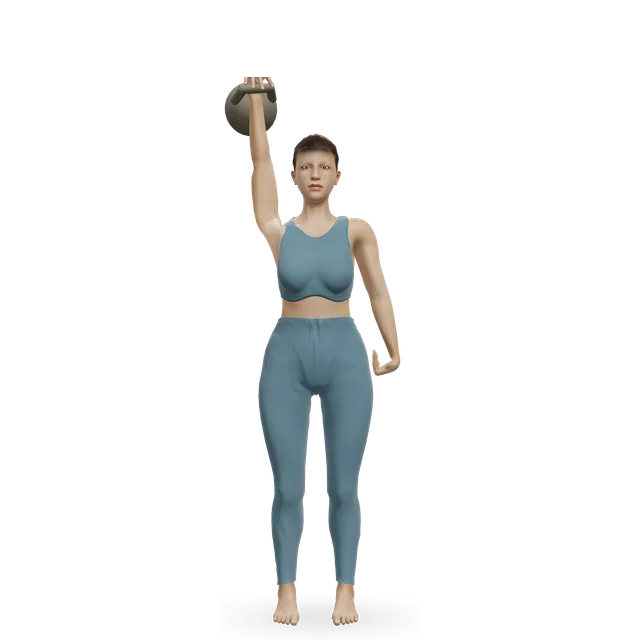 3D demoOverhead carry (waiter's walk)Intermediate · A dumbbell + A kettlebell
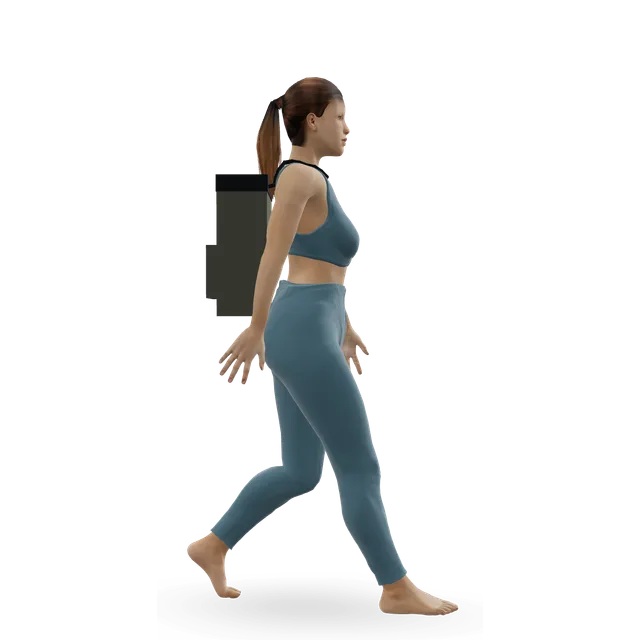 3D demoRucking (loaded walking)Intermediate · Something with weight
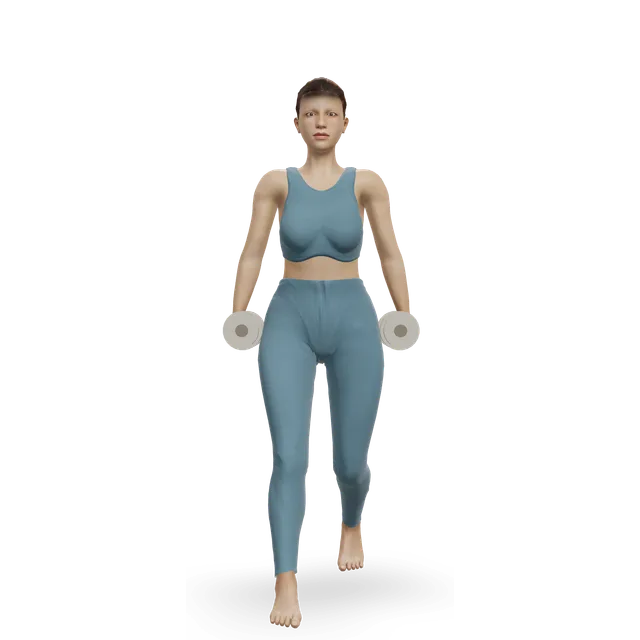 3D demoRickshaw carryIntermediate · Other / check instructions + Weight plates
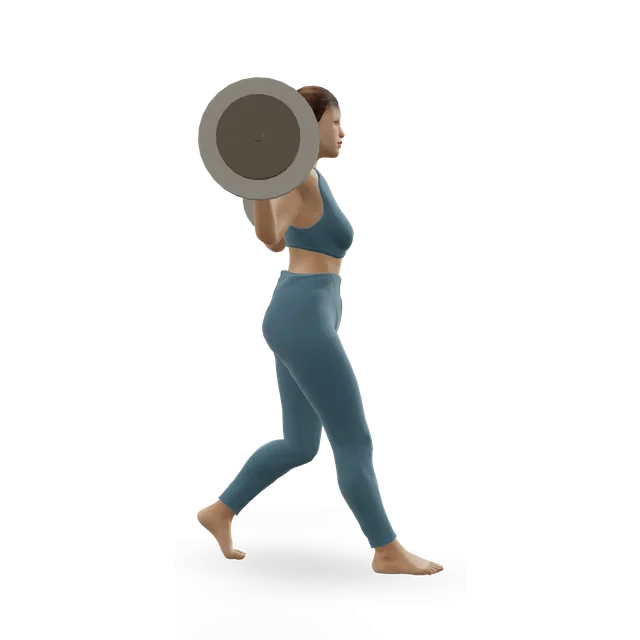 3D demoYoke walkAdvanced · Other / check instructions
Put the weights down before it fails, not after, as our workouts say. Thicker handles make it harder; a firm, full grip makes it easier.
Use lifting straps only once your trunk, not your grip, is what limits you, as our move page says. Until then, the grip work is part of the point.
Grip strength tracks with health in large studies, but that's an association, not proof that training it changes your health, as our grip strength guide explains. Carries train it well, though no trial has tested carries alone for grip.
Pins and needles, numbness or an ache in the hand, worse at night, can be carpal tunnel syndrome; the NHS advises cutting down on anything that makes you grip hard. With arthritis at the base of the thumb or trigger finger, start light with thick or padded handles, as our move page says.
Source 18
Stay upright and don't bend sideways; if you can't, the weight is too heavy.
Source 2
Short, quick, even steps are fine; a shuffle means go lighter (our suggestion).
Bend your knees and hinge at your hips with a straight back, at the start and the end of every carry.
Source 8
Change one at a time.
Source 6
Set the weights down while you still control them, as our workouts say.
Keep breathing as you walk; holding your breath under load raises blood pressure (our suggestion).
The same weight split between two hands loaded the lower back about half as much as in one hand. With a sore back, start with the farmer's carry, light.
Source 5
Mild to moderate pain, no more than about 5 out of 10, settling within an hour or so and no worse the next morning, as our back pain from deadlifts guide says. Stop or shrink anything that sends pain, pins and needles or numbness further down a leg.
Our back pain guides use farmer's carries at 3 sets of 20 to 30 metres as the easier carry, then suitcase carries at 3 sets of 20 to 30 metres each side.
In strongman athletes, the lower back was the most injured area, though most injuries came from traditional lifts. Build carries up gradually, and leave the yoke to experienced lifters.
Source 17
Kettlebell deadlifts to practise the pick-up at 3 sets of 5 (our deadlift technique workout), bar hangs at 2 or 3 holds of 10 to 20 seconds (our grip strength workout), plate pinches at 3 or 4 holds of 10 to 30 seconds each hand (its move page's dose), side planks at 2 holds of 20 to 30 seconds each side (our hiking workout), Pallof presses and wrist curls.
Two hands, light, shorter carries, within our back guides' pain rule; stop if pain spreads down a leg.
Carrying shopping and children counts as strengthening in pregnancy, and gym strength training is fine if you did it before. Stop if you feel uncomfortable, too hot or unwell.
Source 19
You may not be able to carry anything heavier than your baby straight away, possibly for about 6 weeks; start again when you feel able and it isn't uncomfortable.
Source 20
The NHS advises avoiding heavy lifting with a prolapse, and, with separated stomach muscles after the birth, avoiding heavy lifting to start with. Our prolapse strength workout uses light carries, one weight in each hand to split the load, squeezing the pelvic floor before you pick up and put down.
Carrying shopping is one of the everyday strength activities the UK consensus and the Royal Osteoporosis Society encourage. Keep a straight upper back when you pick up and put down, and talk to your doctor or physiotherapist first if you've had spinal fractures.
With carpal tunnel symptoms, cut down hard gripping; with thumb-base arthritis or trigger finger, use thick or padded handles and lighter weights.
Source 18
Follow your surgeon's advice before pushing, pulling or lifting with your arms, as our move page says.
Our loaded carry workout does farmer's, suitcase and overhead carries in one session. The grip strength workout uses 3 farmer's carries of 30 metres, the strongman workout 2 to 4 heavy carries of 10 to 20 seconds, the full-body and strength and balance workouts 2 carries of 30 metres, and the prolapse workout 2 short, light carries.
A 25-minute carry workout with dumbbells or kettlebells: farmer's carries, suitcase carries on each side and an overhead carry, with a safe pick-up first.
25 minBeginner7 movesA kettlebell, A dumbbellA 20-minute grip session: warm up the wrists and fingers, train the hand and forearm muscles, then carry and hang to load your grip the way everyday life does.
20 minBeginner10 movesOther / check instructions, A bandA 60-minute strongman starter session for an ordinary gym: trap bar deadlifts, goblet squats, clean and presses, farmer's and suitcase carries and sled pushes.
60 minBeginner13 movesCardio machine, A wallA beginner full-body gym workout: goblet squats, dumbbell bench press, lat pulldowns, Romanian deadlifts and dead bugs, with sets, reps and rest.
45 minBeginner12 movesCardio machine, A bandStrength and balance in one session: squats, Romanian deadlifts, push-ups, rows, step-ups, back extensions, carries and single-leg balance.
45 minBeginner14 movesA wall, A dumbbellA 30-minute session from the hip hinge to your first deadlift: hinge practice, kettlebell deadlifts, slow Romanian deadlifts, a light bar and a carry.
30 minBeginner9 movesA kettlebell, A dumbbellA 50-minute strength session for Hyrox and fitness races: squats, lunges, Romanian deadlifts, sleds or step-ups, thrusters, carries, calf raises and planks.
50 minIntermediate14 movesCardio machine, A wallA 25-minute session for healthy joints: slow circles to take every joint through its range, then a strength circuit for hips, knees, ankles, shoulders and grip.
25 minBeginner13 movesA wall, A bench or boxA 25-minute strength workout for a pelvic organ prolapse: pelvic floor squeezes, sit-to-stands, push-ups, rows, bridges and side-lying work, with no jumping or crunches.
25 minBeginner12 movesA bench or box, A wallCarries come round once or twice a week in each of these plans.
A beginner gym plan: three full-body sessions a week, alternating workouts A and B, with sets, reps, rest and an 8-week progression.
3 training days45 minBeginner3 days a weekA weekly plan for women over 50: strength, bone-loading and balance on 3 days plus walking, built on UK osteoporosis consensus advice.
3 training days45 minBeginner5 days a weekA 12-week first Hyrox plan: three runs, two strength sessions and one stations-and-runs session a week, built up to race weights, with a taper and race tips.
5 training days50 minIntermediate3 days a weekAn 8-week kettlebell plan for beginners: two strength sessions and a swing-interval day each week, with how to choose a bell and swing safely.
3 training days35 minBeginner3 days a weekFor after about 8 weeks of a beginner plan: three full-body sessions a week, one heavy, one moderate and one light, in a gym or at home, for 12 weeks.
3 training days50 minIntermediateFor chest pain that feels tight or squeezing, or spreads to your arms, neck or jaw; or back pain with pain, tingling, weakness or numbness in both legs, numbness around your genitals or anus, or changes in your bladder or bowels. Don't drive yourself to A&E.
Back pain with feeling hot, cold, shivery or generally unwell, or severe pain that starts suddenly or gets worse quickly. In the US, your doctor or urgent care.
Source 25
NHS 111 if it's very painful or getting worse, very swollen or bruised, or hard to move; 999 or A&E if you heard a crack, it has changed shape, or it's numb, tingling, or blue or cold. In the US, your doctor or urgent care, or 911.
Source 26
Back pain that hasn't improved after a few weeks of looking after it, or hand tingling or numbness that's getting worse, not going away, or not helped by home treatment.
For chest pain, feeling faint or unusual breathlessness, as our plans' safety note says.
We found no evidence for it. The NHS lists carrying heavy shopping as strengthening for adults and older adults, and coaches start rehabilitation with the farmer's walk. It's an everyday task that happens to be a good exercise.
Two hands load the lower back far less than one, and in strongman athletes most injuries came from traditional lifts. Start light, two hands first, and stay upright.
It worked the back muscles slightly more than a plank, but the plank worked the front of the stomach far harder. Use both.
Source 4
One hand changes the job: the spine carries more, and the side of your trunk and the opposite hip work to stop you tipping. Start with two hands.
No trial has measured muscle growth from carries, so we don't know. They train grip and posture; for size, add rows, curls and shrugs.
Source 2
Pick up a weight in each hand with a flat back, stand tall with your shoulders down and your arms long, and walk with short, even steps for a set distance or time. Don't lean or shrug, and put the weights down by bending your knees before your grip fails.
Heavy enough to test your grip and posture while you still walk tall. About a quarter of your body weight in each hand is a common coaching starting point, and coaches count carrying your body weight in total for 30 seconds as a sign of good general fitness, but no trial has tested these figures.
20 to 40 metres, or about 20 to 40 seconds, 2 to 4 times, resting 60 to 90 seconds. Add weight or distance from week to week, not both at once.
Your grip and forearms, upper back and shoulders, the muscles around your trunk and hips, and your legs as you walk. Walking with the weights worked the back muscles more than holding them still.
The farmer's carry has a weight in each hand; the suitcase carry has one, so your trunk and the opposite hip have to stop you tipping over. One hand loads your lower back more, so start with the farmer's carry and add suitcase carries once you can walk tall with it.
Yes, in its own way: it worked the back muscles slightly more than a plank, but the plank worked the front of the stomach much harder. Do both.
Not when you walk tall with a sensible weight: two hands load the lower back far less than one, and our back pain guides use carries to rebuild. With back pain, keep it to about 5 out of 10, settling within an hour, and stop if pain spreads down a leg.
It works your grip hard, and our grip strength guide uses it, but no trial has tested carries alone for grip. Strong grip is linked with better health in large studies, but that's an association, not proof that training it changes your health.
Either works; use the handles you can hold most comfortably. Thick or padded handles suit arthritis at the base of the thumb or trigger finger.
Light carrying, like shopping, is fine every day. Hard carries need recovery like any strength work, so 2 or 3 sessions a week is plenty, alongside the NHS advice to do strengthening activities on at least 2 days a week.
Carrying shopping is one of the everyday strength activities the UK osteoporosis consensus and the Royal Osteoporosis Society encourage. Pick the weights up and put them down with your back straight, bending at your hips and knees, and ask your doctor or physiotherapist first if you've had spinal fractures.
Two 16 kg kettlebells in the women's divisions and two 24 kg in the men's, carried for 200 metres. Check the current rulebook before you race, and build up with shorter carries.
Exercise education, not a personal prescription, and clinical review of these guides is pending. Check with a GP before starting hard training if you have a heart condition, chest pain, dizziness or breathlessness when active, and stop for sharp or increasing pain. Health disclaimer.