Major surgery as well as a birth
Recovery usually takes about 6 weeks but varies, and you may have more pain and a slower start than after a vaginal birth. Go gradually, and take regular pain relief so you can move.
Exercise guide
A caesarean (C-section) is major surgery as well as a birth, so recovery takes longer: usually about 6 weeks, sometimes more. Walking every day from the start, pelvic floor exercises once your catheter is out, and gentle tummy exercises all help, and they're safe in the first days.
This guide covers the first days, a week-by-week return, your pelvic floor and tummy muscles, the scar, when to lift, drive, swim, go to classes and run, and the warning signs to act on. No trial has tested these timings, and the NHS, NICE (the National Institute for Health and Care Excellence) and physiotherapists differ on some of them, so we show where: the advice of your midwife, GP (general practitioner) or physiotherapist comes first. Our postpartum guide covers breastfeeding, mood, and exercise after a vaginal birth.
Recovery usually takes about 6 weeks but varies, and you may have more pain and a slower start than after a vaginal birth. Go gradually, and take regular pain relief so you can move.
You'll be helped out of bed, often about 6 hours after the birth, and a daily walk lowers the risk of blood clots. Early walking is a strong recommendation in international caesarean guidelines.
A caesarean doesn't fully protect your pelvic floor: up to 1 in 5 women leak urine after a caesarean, against up to 1 in 2 after a vaginal birth. Aim for 10 long and 10 short squeezes at least 3 times a day.
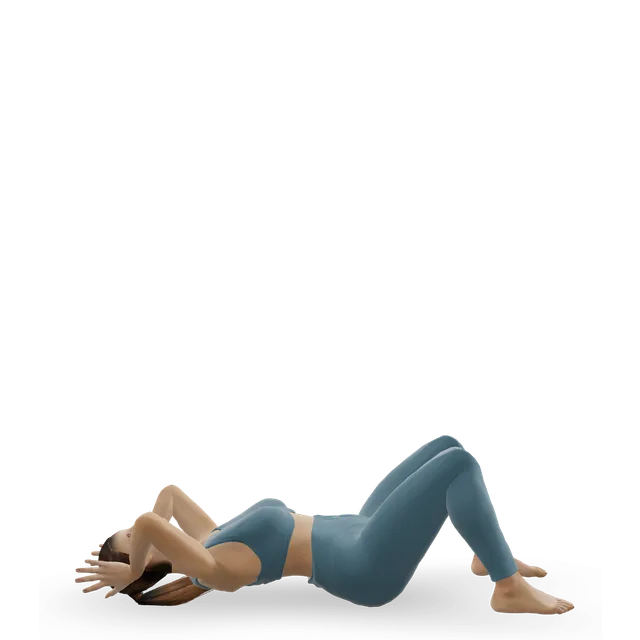
A deep tummy draw-in, pelvic tilts, knee rolls and heel slides are safe early. Add head lifts and knee lifts when they don't pull on the wound. The NHS advises avoiding sit-ups, planks and high-impact exercise to start with.
Try not to lift anything heavier than your baby for at least 6 weeks. The NHS says to start exercise, carrying heavier things and driving again only when you feel able and they don't hurt, which may not be for 6 weeks or so. These timings are expert opinion: no trial has tested them.
Running usually waits about 3 months, and a caesarean is one of the UK return-to-running guideline's reasons to expect a slower return. Get help straight away for heavy bleeding, a wound that gets more red, painful or swollen, or pain or swelling in your lower leg, and call 999 for chest pain or sudden breathlessness.
A caesarean is an operation to deliver your baby through a cut, usually 10 to 20 cm across the tummy just below the bikini line, and through the womb. Most are done under a spinal or epidural anaesthetic and take 40 to 50 minutes, and around 45% of babies in England are born this way. NICE recommends a low, straight cut across the skin with the layers underneath opened bluntly, which in our reading means the six-pack muscles are usually separated rather than cut.
You'll be encouraged to get out of bed and move around as soon as possible. A catheter stays in your bladder for at least 12 hours, and the wound is covered for at least 24 hours. Most women go home after 1 or 2 days, and NICE says you can go home after 24 hours if you're recovering well. With enhanced recovery, Nottingham's team usually helps women up about 6 hours after the birth.
The Royal College of Obstetricians and Gynaecologists (RCOG) says recovery usually takes about 6 weeks but varies, and 1 in 10 women have discomfort for the first few months. In pooled studies, wound pain was still there in about 15% of women 3 to 6 months after a caesarean and in about 11% after a year or more; at 6 months, about half of it was mild.
The scar is usually horizontal, red at first and fading with time; on darker skin it may fade to a brown or white mark. Pelvic, Obstetric and Gynaecological Physiotherapy (POGP) says caesarean scars take about 6 weeks to heal, can be tender, itchy or numb at first, and can take up to 2 years to fade. The layers underneath take longer than the skin: the UK return-to-running guideline says the scar in the womb is still remodelling at 6 weeks.
Wound infection and infection of the womb lining are the common ones: NICE puts infections of the womb, wound or urinary tract at about 8 in 100. A blood clot in the legs or lungs is rare, but a caesarean raises the risk, so you may be given stockings and blood-thinning injections. A hernia through the scar is uncommon: in Denmark about 2 in 1,000 women needed a repair within 10 years, half of them after the less common up-and-down cut.
NICE says a caesarean doesn't raise your risk of depression, post-traumatic stress symptoms or painful sex. A gap between the tummy muscles was found in 60% of 300 first-time mothers at 6 weeks, and a caesarean didn't make it more likely. And it doesn't fully protect your pelvic floor: leaking urine is less common than after a vaginal birth, but not rare.
Your GP checks how you're recovering and may examine your caesarean wound. Tell them about any leaking, pain or low mood, and ask about exercise. It isn't a fitness test, so being signed off doesn't mean you're ready to run.
Caesarean-specific exercise trials are few and small. Most of the advice comes from NHS, NICE and physiotherapy guidance built on expert opinion and general postnatal research.
We found no trial that has tested lifting, driving or exercise limits after a caesarean. NICE says you can drive, carry heavy items, exercise and have sex again when you feel you've fully recovered, including from pain, and the NHS, POGP and the UK running guideline give expert timings that differ. The grade is for that statement: the timings themselves aren't trial-tested.
The 2025 international Enhanced Recovery After Surgery guideline for caesareans strongly recommends getting up and walking early, though it rates the evidence as low quality. The NHS advises a daily walk to lower the risk of blood clots.
In 98 women after a planned caesarean, daily steps rose steadily over 2 months, and on more painful days women took fewer steps: about 119 fewer for each extra point of pain out of 10. Taking regular pain relief helps you keep moving.
Source 19
A review of 9 trials found physiotherapy after a caesarean, mostly electrical treatments with some massage and exercise, eased pain and helped daily activities. In a pilot trial of 24 women 4 to 6 months after a caesarean, adding kinesiology tape to tummy exercises gave bigger gains in tummy strength, pain and waist size than the exercises alone. The tummy programme on this page is borrowed from general postnatal advice.
RCOG says up to 1 in 5 women who give birth by caesarean leak urine, against up to 1 in 2 after a vaginal birth, and that pelvic floor exercises can help. In NICE's figures, about 1 in 5 women had urinary incontinence more than a year after a caesarean.
From POGP's Fit for the Future booklet, with the NHS and leaflets from two NHS trusts (Nottingham and Royal Berkshire). Your midwife's advice comes first.
See the movement on the 3D figure: Ankle circles
POGP's doses unless stated: pump your feet for 30 seconds every hour while resting; pelvic floor, up to 10 long squeezes held for up to 10 seconds with 10 seconds' rest, then 10 short ones, at least 3 times a day; pelvic tilts held for 3 seconds; knee rolls, heel slides and head lifts building up to 10, up to 3 times a day; knee folds, knee fall-outs and bridges, 2 sets of 5 to 10 every other day (each side for knee folds and fall-outs: the move pages' dose). Lateral breathing: 5 to 8 breaths (the move page's dose). Tummy draw-in: hold for up to 10 seconds, up to 10 times (the move page's dose, from the NHS). Cat-cow: 8 slow waves (the move page's dose). Start head lifts, knee folds and bridges once they don't pull on your wound.
 3D demoAnkle circlesBeginner · No equipment
 3D demoLateral breathing (Pilates breathing)Beginner · No equipment
 3D demoPelvic floor exercise (Kegel)Beginner · No equipment
 3D demoSide-lying tummy draw-inBeginner · No equipment
 3D demoPelvic tilt into bridgeBeginner · No equipment
 3D demoHip windshield wipersBeginner · No equipment
 3D demoSupine heel slideBeginner · No equipment
 3D demoChest lift (Pilates curl-up)Beginner · No equipment
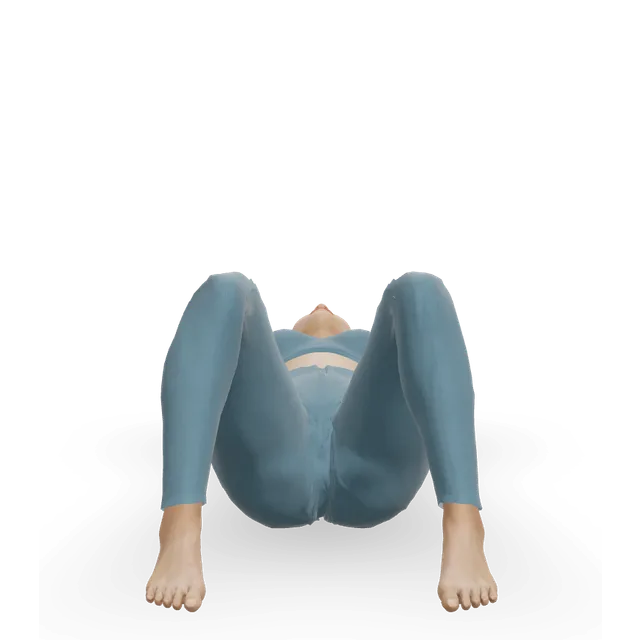
 3D demoKnee foldBeginner · No equipment
 3D demoBent-knee fall-outBeginner · No equipment
 3D demoGlute bridgeBeginner · No equipment
 3D demoCat-cowBeginner · No equipment
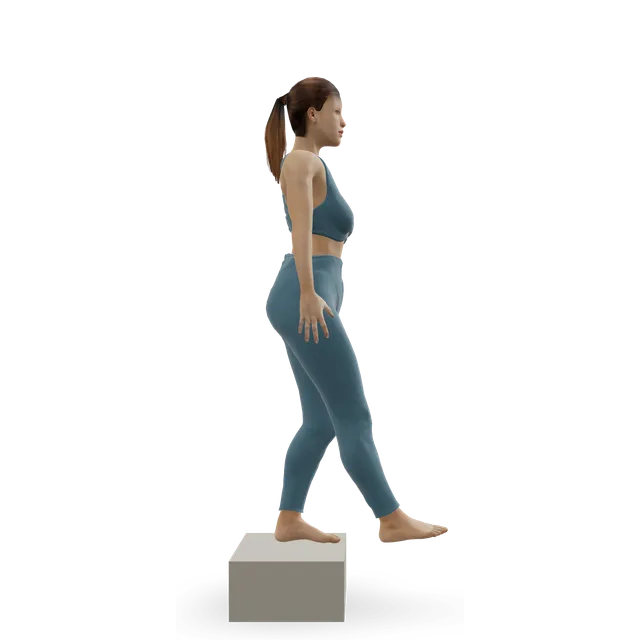
 3D demoTreadmill walkingBeginner · Cardio machine
The postnatal exercises suit the first days after a caesarean: do the head lift once your wound is comfortable, and leave out anything that pulls on it. The pelvic floor workout is a daily routine once your catheter is out; do its breathing sitting or on your side.
A gentle 25-minute routine for the first weeks after birth: pelvic floor, breathing, tummy and hip exercises on the floor, sit-to-stands and a walk.
25 minBeginner12 movesA bench or box, Cardio machineA 5-minute daily pelvic floor workout for women and men: slow holds and quick squeezes, three times a day, with how to find the right muscles.
5 minBeginner2 movesNo equipmentNo trial has tested a timeline. This one combines the NHS, POGP and the UK return-to-running guideline. Move on only if there's no pain, heaviness, leaking or increase in bleeding, and expect each step to take longer than after a vaginal birth.
West Hertfordshire's enhanced recovery leaflet asks women to be as healthy as they can before a planned caesarean, with daily walks building towards 150 minutes of moderate activity a week, starting gradually if you weren't active. Our pregnancy guide covers exercise in pregnancy.
Source 22
Up and walking as soon as you can, a daily walk, the circulation and breathing exercises, pelvic floor exercises once the catheter is out, and the gentle floor exercises. Support your wound when you cough and roll onto your side to get up.
Build up the time and pace of your walking every day, with the pram handles at the right height. Add knee folds, knee fall-outs and bridges when they're comfortable. Avoid straining for the first few weeks: long periods of standing, vacuuming, and heavy objects or bags. Lift nothing heavier than your baby, and let toddlers climb onto your lap rather than lifting them. Let pain set the pace.
The UK running guideline suggests a static bike or cross-trainer from about 4 to 6 weeks after a birth, depending on your recovery and type of birth, once sitting on a saddle is comfortable. After a caesarean, keep to walking and the floor exercises until the bike doesn't hurt your wound (our suggestion).
Source 8
If it's comfortable: exercise classes, the gym, lifting more than your baby and light strength work, starting deadlift practice no heavier than your baby in a car seat. Harder tummy exercises if the middle of your tummy doesn't bulge. Swimming once your bleeding has stopped and your wound has healed, which may mean after your 6-week check.
Running and jumping, once the readiness checks are comfortable, and heavier weight training. Royal Berkshire's leaflet asks for at least 12 weeks before any impact exercise or weight training.
The UK Chief Medical Officers say it's safe to be active after a birth, starting gently depending on your delivery, and to build towards 150 minutes of moderate activity a week, with strength work twice a week and pelvic floor exercises every day. The 2025 Canadian guideline says to build from light to harder activity once your wound has healed and your bleeding doesn't increase.
Pregnancy itself stretches the pelvic floor. Leaking after a caesarean is less common than after a vaginal birth, but up to 1 in 5 women have it, and pelvic floor exercises can help.
Imagine you're trying to stop yourself passing wind and passing urine at the same time: you should feel a squeeze and a lift inside the vagina. Don't hold your breath or clench your buttocks. POGP's aim is 10 long squeezes, each held for up to 10 seconds with 10 seconds' rest, then 10 short squeezes, at least 3 times a day, starting lying or sitting. Royal Berkshire starts with 3-second holds and suggests the NHS Squeezy app to remind you; don't practise while you're on the toilet. If your muscles were weak, POGP expects an improvement in 3 to 5 months.
See a pelvic health physiotherapist or your GP if you leak, feel heaviness or a bulge in the vagina, or can't feel the squeeze. Royal Berkshire says your health visitor or GP can refer you to maternity physiotherapy. Our pelvic floor guide has more.
In a standard caesarean the layers under the skin are opened bluntly, which in our reading means the six-pack muscles are usually separated rather than cut. In 300 first-time mothers, a caesarean wasn't a risk factor for a gap between the tummy muscles.
The NHS advises avoiding sit-ups, planks and high-impact exercises to start with, and straining on the toilet and heavy lifting. Begin with the gentle floor exercises. Royal Berkshire says you can start more progressive core exercises after 6 weeks, as long as the middle of your tummy doesn't bulge when you try to sit up.
A gap between the tummy muscles is common after any birth. Our diastasis recti guide shows how to check it and build up, with harder core work from about 6 weeks after a caesarean once your scar is comfortable.
Tummy exercises strengthen the muscles but can't burn fat from one spot: training one area didn't reduce the fat over it in 13 studies with 1,158 people. Whole-body activity, time and scar massage after your 6-week check help most. See a GP about a lump, a bulge or pain near the scar.
Source 26
If it's comfortable and the middle of your tummy doesn't bulge. Our editorial starting points, as in our postpartum guide and postnatal strength workout: bike or cross-trainer for 10 to 30 minutes at a pace where you can still talk; squats and wall push-ups, 2 sets of 8 to 12; band rows, 2 sets of 10 to 15; dead bug heel taps, 6 each side; bird dogs, 5 to 8 each side; Pallof press, 8 each side; knee side plank, 2 holds of 15 to 20 seconds each side. Deadlift practice: 2 sets of 8 to 10, starting no heavier than your baby in a car seat (the UK running guideline's limit).
 3D demoStationary cyclingBeginner · Cardio machine
 3D demoElliptical trainerBeginner · Cardio machine
 3D demoBodyweight squatBeginner · No equipment
 3D demoKettlebell deadliftBeginner · A kettlebell
 3D demoWall push-upBeginner · A wall
 3D demoBand rowBeginner · A band + An anchor point
 3D demoDead bug heel tapsBeginner · No equipment
 3D demoBird dogBeginner · No equipment
 3D demoHalf-kneeling Pallof pressBeginner · A band + An anchor point
 3D demoKnee side plankBeginner · No equipment
POGP suggests starting scar massage after your postnatal check, at about 6 weeks, once there's no infection, at least 4 times a week for 5 to 10 minutes, and the UK running guideline lists it from 6 to 8 weeks. Royal Berkshire says after 12 weeks, once the scar has fully healed. Our scar tissue guide shows how.
In 13 trials, an abdominal binder eased pain by about 1 point out of 10 in the first 2 days and helped walking in the first day, with no more complications. It's optional, for comfort, and doesn't replace walking and your pelvic floor and tummy exercises (our suggestion).
Source 27
About 15% of women still have some wound pain 3 to 6 months after a caesarean, and about 11% after a year or more; at 6 months, about half of it was mild. See a GP if pain is getting worse or stops you being active.
Source 11
None of these timings comes from a trial. Your midwife's, GP's or physiotherapist's advice comes first.
The NHS: nothing heavier than your baby until you feel able, which may not be for 6 weeks or so. NICE: when you feel fully recovered. POGP: nothing heavier than your baby for at least 6 weeks. Royal Berkshire: nothing heavier than your baby or a kettle of water for 6 weeks. The UK running guideline: deadlift practice from 6 to 8 weeks, no heavier than a baby in a car seat.
We found no fixed legal wait. The NHS says when you feel able, which may not be for 6 weeks or so; NICE when you feel fully recovered. RCOG says the standard advice is to allow 6 weeks and not plan to drive in that time, and Royal Berkshire says no driving for 6 weeks. POGP says check with your insurer, usually 4 to 6 weeks, and make sure you can wear a seatbelt comfortably, look over your shoulder and do an emergency stop without pain.
The NHS: when you feel able, which may be 6 weeks or so. POGP: build up gradually over 6 to 8 weeks. Royal Berkshire: progressive core work after 6 weeks, but no weight training until 12. The UK running guideline: low-impact exercise from 4 to 6 weeks and resistance training from 6 to 8.
POGP says you can swim once you've had 7 days with no bleeding or discharge, but after a caesarean you may need to wait until your 6-week check. The UK running guideline puts swimming at 8 to 12 weeks, once bleeding has stopped and your wound has healed.
About 6 weeks, or when it's comfortable, for classes, the gym and lifting more than your baby; swimming once your wound has healed and your bleeding has stopped; about 3 months for running and jumping. Ask at your 6-week check if you're unsure.
The 2019 UK return-to-running guideline says running isn't advisable before 3 months after a birth, or later with pelvic floor symptoms, and names a caesarean among its reasons to expect a harder return. Its authors grade the rule as expert opinion.
Source 8
A 2024 international consensus agreed that, after at least 3 weeks of rest and recovery, an individual timeline can be considered after checks. A companion consensus backed starting with walk-run intervals, increasing gradually and including strength training.
Before you run, the guideline's checks include walking for 30 minutes, standing on one leg for 10 seconds, 10 single-leg squats each side, jogging on the spot for a minute, and 10 hops on each leg, all without pain, heaviness or leaking. Our postpartum guide and its return-to-running workout take you through them.
Source 8
The postnatal strength workout from about 6 weeks after a caesarean, once it's comfortable. Easy cardio once 20 to 30 minutes of walking feels comfortable. Beginner Pilates from about 6 to 8 weeks, when the early moves feel easy and your wound is comfortable, with your head down in the hundred at first. The diastasis recti workout later, if you have a gap and stage 2 feels easy. The return-to-running workout from about 12 weeks. The pelvic floor relaxation routine if you have pain with sex or trouble emptying your bladder.
A 25-minute strength workout from about 6 weeks after birth: sit-to-stands, deadlift practice, push-ups, rows, bridges and tummy work, with the knack.
25 minBeginner14 movesA bench or box, A kettlebellA steady 30 to 45 minute cardio session at talk-but-not-sing pace: walk, cycle, row or cross-train, counting toward weekly activity guidelines.
40 minBeginner3 movesCardio machine, A wallA 20-minute mat Pilates workout for complete beginners. It covers breathing, spine position and the foundation moves, each with an easier option.
20 minBeginner13 movesNo equipmentA 12-minute tummy routine copied from a trial in women with diastasis recti: head lifts, curl-ups and twisted curl-ups, 5 days a week for 12 weeks.
12 minBeginner5 movesNo equipmentThe UK return-to-running checks after birth as a 25-minute session: balance, single-leg squats, hops and bounds, then strength tests aiming for 20.
25 minIntermediate14 movesCardio machine, A wallAn 8-minute routine for a tight pelvic floor: slow breathing and comfortable positions to help the muscles let go, with no strengthening squeezes.
8 minBeginner5 movesFirm cushionThe postpartum plan has a caesarean line in each early stage. The walking plan from the start, the Couch to 5K plan from about 3 months, and the beginner Pilates plan from about 8 weeks.
A postpartum workout plan from the first days after birth to running and lifting again, week by week, with a caesarean track and readiness checks.
5 training days25 minBeginner6 days a weekA free 8-week walking plan for beginners: build to 150 minutes of brisk walking a week, with intervals, hills and two short strength sessions.
6 training days40 minBeginner3 days a weekA 9-week beginner plan with the same walk-to-run shape as Couch to 5K: three run-walk sessions a week, from 1-minute jogs to 30 minutes of running.
3 training days35 minBeginner3 days a weekA free 4-week, 3-day Pilates plan for complete beginners. Two mat days and one wall day, with clear rules for when to move each exercise to its harder version.
3 training days25 minBeginnerThis is general information, not a diagnosis: your midwife, GP and maternity unit know your birth, so use the numbers they gave you. In the US, call 911 where this page says 999.
Call 999 or go to A&E (accident and emergency) if it feels like an emergency. Don't drive yourself:
The NHS lists these after a caesarean, as they may be signs of an infection or a blood clot. Out of hours, call your maternity unit or NHS 111.
If your bleeding turns red again, gets heavier or restarts after exercise, you've probably done too much: drop back, and tell your midwife if it continues (our rule, from Canadian and NICE guidance). The 2025 Canadian guideline says to talk to a doctor if harder exercise makes your caesarean symptoms, such as wound pain, worse.
See your GP, health visitor or a pelvic health physiotherapist if you have:
A hernia through a caesarean scar is uncommon, but a bulge near the scar needs a GP's check: our hernia guide lists the signs that need urgent help. A painful lump in the scar that swells or hurts around your period needs checking too, as our scar tissue guide explains.
Source 15
If you're thinking about suicide or can't keep yourself safe, call 999 or go to A&E. For urgent help, call Samaritans free on 116 123, any time, or in England call 111 and select the mental health option. In the US, call or text 988.
Walk every day from the start and begin pelvic floor exercises once your catheter is out. POGP's gentle floor exercises are safe in the first days and weeks. The check is the time to ask about harder exercise.
Leaking is less common after a caesarean, but up to 1 in 5 women have it, and NICE's figures show about 1 in 5 with urinary incontinence more than a year later. Pelvic floor exercises help.
The check isn't a fitness test. Running usually waits about 3 months, and a caesarean is one of the UK guideline's reasons for a slower start; the 3 months itself is expert opinion.
In a standard caesarean the six-pack muscles are usually separated, not cut, and a caesarean wasn't a risk factor for a tummy gap. Build their strength back gradually with the exercises on this page (our suggestion).
Training one area doesn't burn the fat over it (13 studies). Whole-body activity, time and scar care help most; see a GP about a bulge or lump.
Source 26
Binders eased pain by about a point out of 10 in the first 2 days in 13 trials. They're optional, for comfort, and don't replace the exercises.
Source 27
A hernia needing repair after a caesarean is rare: about 2 in 1,000 within 10 years. The advice to lift nothing heavier than your baby for about 6 weeks is for comfort and healing; let toddlers climb onto your lap in the meantime.
We found no fixed legal wait. Drive once you can wear a seatbelt comfortably, look over your shoulder and do an emergency stop without pain, and check your insurance: POGP says this is usually 4 to 6 weeks. Some hospitals advise 6 weeks.
Walk every day from the start, and begin pelvic floor exercises once your catheter is out. Wait about 6 weeks, or until it's comfortable, before exercise classes, the gym or lifting anything heavier than your baby, and until your wound has healed before swimming. These timings are expert advice, so ask your midwife or GP if you're unsure.
Walking, pelvic floor exercises, a gentle tummy draw-in, pelvic tilts, knee rolls and heel slides. Add head lifts, knee lifts and bridges when they don't pull on your wound.
Try not to lift anything heavier than your baby for about 6 weeks, and encourage toddlers to climb onto your lap while you're sitting. NICE says you can carry heavy things again when you feel fully recovered, including from pain.
Usually from about 3 months at the earliest, once you can walk for 30 minutes and hop and jog on the spot without pain, heaviness or leaking. A caesarean is one of the reasons to expect a slower start, so begin with short run-walk intervals.
The NHS advises avoiding sit-ups and planks to start with. Gentle tummy exercises are fine from the first days, and harder core work from about 6 weeks if the middle of your tummy doesn't bulge. Build up to curl-ups and planks gradually.
Tummy exercises strengthen the muscles but can't burn fat from one spot. Whole-body activity, time, and scar massage after your 6-week check help most. See a GP if there's a lump, a bulge or pain near the scar.
Yes. Up to 1 in 5 women leak urine after a caesarean, and pregnancy itself stretches the pelvic floor. Aim for 10 long and 10 short squeezes at least 3 times a day.
Once your bleeding has stopped and your wound has healed, which after a caesarean may mean after your 6-week check. The UK running guideline puts swimming at 8 to 12 weeks, once bleeding has stopped and the wound has healed.
When you can wear a seatbelt comfortably, look over your shoulder and do an emergency stop without pain, which is often 4 to 6 weeks; the NHS says it may not be for 6 weeks or so. Check with your insurer first.
From about 6 weeks, if it's comfortable and your bleeding doesn't get heavier with exercise. Start with low-impact classes and light weights. Some hospitals advise waiting 12 weeks for weight training and impact exercise, so check your own team's advice.
It's up to you. Binders eased pain a little in the first 2 days in trials, but they don't replace walking and your pelvic floor and tummy exercises.
Contact your midwife or GP straight away for severe pain, heavy bleeding, a wound that becomes more red, painful and swollen or leaks pus, leaking urine or pain when you pee, a cough or breathlessness, or pain or swelling in your lower leg. Call 999 for sudden very heavy bleeding, chest pain or sudden breathlessness.
Exercise education, not a diagnosis or treatment plan, and clinical review of these guides is pending. Stop and get advice for chest pain, unusual breathlessness, dizziness or fainting, or new pain, and check with your doctor or midwife first if they have told you to limit activity. Health disclaimer.