Training guide

How to do a Copenhagen plank: the short and long lever, your inner thighs and groin, and how long to hold

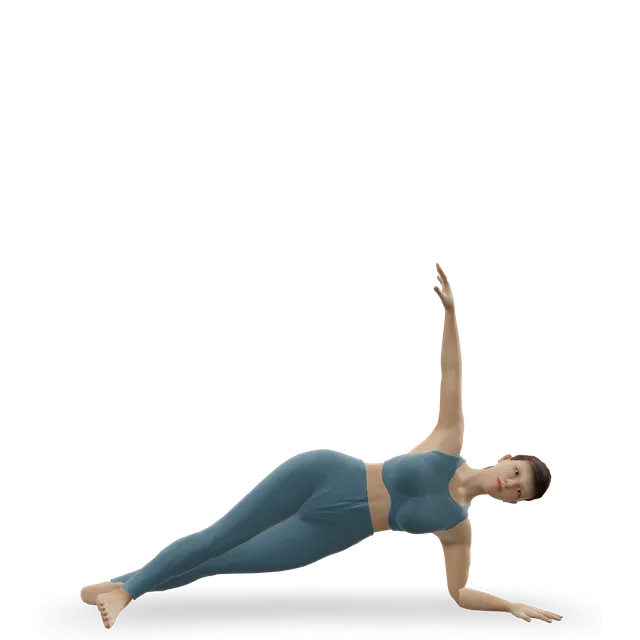
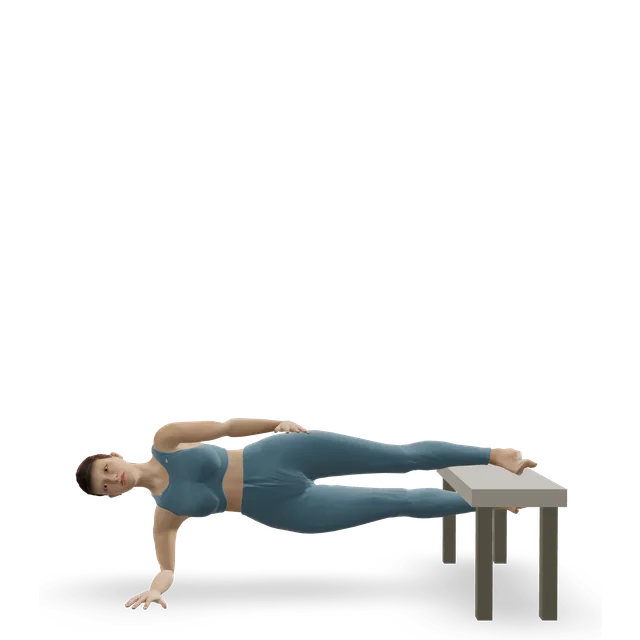
A Copenhagen plank is a side plank with your top leg resting on a bench. The inner thigh of that leg holds your body up while your bottom leg lifts to meet the bench. With your knee on the bench it's the short lever, the place to start; with your ankle on the bench it's the long lever, which loads your inner thigh about half as much again.

It builds inner-thigh strength reliably, and in men's football a short weekly programme built on it cut groin problems. Outside men's football the injury evidence is thin, so treat it there as strength training.

This guide shows you how to set it up and lift, how to build up from squeezes and side-lying lifts, whether to hold or do reps, and how many. It covers what the trials found and who they don't cover, your knees and the soreness people worry about, and when to leave it out, with a 3D demo of the long lever.

The short version

Start with the short lever

Lie on your side on one forearm with the inside of your top knee on a bench, and lift your hips until you're straight from head to knees, your bottom leg rising to meet the bench. With your ankle on the bench (the long lever, shown in our demo), your hip works about half as hard again.

Sources 1, 2

It works your inner thighs hard

The inner-thigh (adductor) muscles of your top leg hold you up. In 40 male footballers, one of them worked at up to 108% of a maximal effort, among the highest of 8 adductor exercises, and your obliques work harder than in a side plank.

Sources 3, 4, 5

It cut groin problems in men's football

In 652 semi-professional male footballers, a programme built on it lowered the share of players with groin problems in a typical week from 21.3% to 13.5%, and a trial in 202 Japanese schoolboys found less groin pain. The trials counted every groin problem, not only strains.

Sources 6, 7, 8

Elsewhere, treat it as strength training

It builds inner-thigh strength in young athletes, women and youth players. The one trial where most players were women found no clear effect on groin injuries, but it was small, had low compliance and was changed by COVID, so it can't rule an effect out.

Sources 9, 10, 11, 12

Build up slowly

The trials started at 1 set of 3 to 5 slow reps a side and built up over several weeks to 12 to 15, 2 or 3 times a week, then dropped to once a week to keep the strength. Built up that way, soreness stayed mild.

Sources 7, 12, 10

Leave it out with groin pain now

Our groin strain guide brings the Copenhagen in last, short lever first. If the inside of your knee aches, put the bench under your knee rather than your ankle.

Sources 13, 1

What a Copenhagen plank is, and what it works

The move

Its research name is the Copenhagen adduction exercise. Danish researchers singled it out in 2014 as a high-intensity inner-thigh exercise, and it was designed around a slow lowering. The original is done with a partner, who holds your top leg at hip height, supporting the knee and ankle, while you lower your hip towards the floor over about 3 seconds and lift back up. On this site it's done with a bench.

Sources 3, 13, 14, 7

Short and long lever

With the inside of your knee on the bench, the lever is short; with the inside of your ankle on it, it's long, which is what our 3D demo shows. Moving the support from the knee to the ankle raised the load on the hip from 0.93 to 1.54 Nm/kg (newton metres per kilogram of body weight) in one lab study, and peak hip torque from 1.1 to 1.7 Nm/kg in another.

Sources 1, 2

What it works

Mainly the adductors of your top leg (adductor longus, brevis and magnus, gracilis and pectineus), which hold your body up. Your bottom leg's adductors lift it to the bench, your obliques and the side of your trunk hold the line, and your supporting shoulder takes your weight.

Sources 4, 3, 5

Holds or reps

You can hold the top position or lift and lower. The trials that cut groin problems used reps with a slow lowering; holds are the gentler way in, and one programme eased professional players in with 20-second holds before the full exercise.

Sources 13, 14

Muscle activity isn't growth

Several numbers on this page come from EMG (electromyography: electrodes measuring how hard a muscle works over a few reps) or from modelled forces. They show effort, not what a muscle will build.

Source 15

What the evidence says about groin injuries

Fewer groin problems in men's footballEmerging evidence

In a trial of 35 semi-professional Norwegian men's teams (652 players), teams doing the Adductor Strengthening Programme had groin problems in 13.5% of players in an average week, against 21.3% in teams training as normal: 41% lower risk. The programme was this one exercise at three levels, three times a week through 6 to 8 weeks of pre-season, then once a week through a 28-week season. Later papers describe the levels as side-lying adduction, then the short-lever and long-lever Copenhagen; we could read only the trial's abstract.

A review graded this moderate-quality evidence, but the trial counted every groin problem, from soreness to injury, so its effect on adductor strains alone is uncertain.

Sources 6, 8, 12, 16

Less groin pain in Japanese schoolboysEmerging evidence

In 202 male high-school footballers from 7 schools, 16 weeks of the Copenhagen cut groin pain (relative risk 0.42, where 1 means no difference), and adding Nordic hamstring exercises cut it further (0.19), against usual training. With only 7 schools taking part, the result is less certain than those numbers suggest.

Source 7

Women and amateur football: no clear effect yetMixed evidence

In Swedish amateur football, an adductor programme copied from the Norwegian one didn't reduce groin injuries. Most of its 125 players were women, teams did it 1.7 times a week in pre-season and 0.7 times in season, and COVID forced changes, so it can't rule out an effect in women. So far, only the trials in male players have shown a benefit.

Sources 12, 16

Other sportsMixed evidence

In 162 rink hockey players followed for a season, monthly Copenhagen sessions weren't linked with fewer groin problems; a past groin injury was. The ice hockey study often quoted, with fewer adductor strains in one professional team, used a general adductor programme and had no comparison group. Earlier groin programmes, pooled across 7 trials and 4,191 players, showed no clear effect.

Sources 17, 18, 19

It builds inner-thigh strengthStrong evidence

In young male footballers, eccentric adductor strength (strength while the muscle lengthens under load, as when you lower slowly) rose 35.7% in 8 weeks in 24 players, 8.9% more than the FIFA 11+ warm-up alone in 45 players, and by a large amount in 42 players. Every study that measured strength in a review of 5 found gains, all of them in male football.

Sources 9, 20, 21, 22, 14

Women and youth players gain strength tooEmerging evidence

Strength rose in 52 female footballers, in 54 youth players including 23 girls, and in 23 teenage taekwondo athletes, though that last study had no comparison group.

Sources 10, 11, 23

A little goes a long wayEmerging evidence

In 52 women, 220 reps a side over 8 weeks built as much strength as 394, and one session a week of 16 reps a side kept it for 10 weeks. In 30 rink hockey players aged 14, twice a week built more strength than once a week.

Sources 10, 24

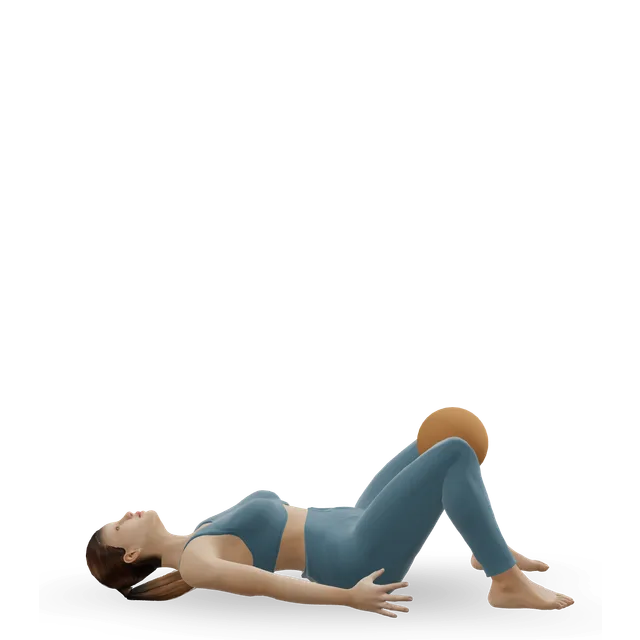
A ball squeeze works tooEmerging evidence

In 57 male youth footballers, 8 weeks of a ball squeeze programme built as much strength as the Copenhagen, with less soreness.

Source 25

Who gets groin injuriesEmerging evidence

Across 29 studies, a past groin injury, a higher level of play, less sport-specific training and weaker adductors (on their own and compared with the muscles on the outside of the hip) went with more groin injuries. Groin injuries are about twice as common in men's football as in women's.

Sources 26, 27

The most tested groin exerciseEmerging evidence

A 2025 review found the Copenhagen in 13 of 19 trials of exercise to prevent groin pain. Most measured strength; only one reported fewer injuries.

Source 28

How to do a Copenhagen plank, step by step

From our move page and the trials' descriptions (the slow 3-second lowering and the bottom leg rising to meet the support). The demo shows the long lever; for the short lever, the inside of your knee rests on the bench. One programme used a 30 cm box, raised to hip height in its later levels.

  1. Lie on your side next to a bench, a sturdy low step or a firm sofa seat, propped on your bottom forearm with your elbow under your shoulder.
  2. Rest the inside of your top knee on the bench for the short lever, or the inside of your ankle for the long lever, which our demo shows. Your bottom leg lies straight on the floor under the bench.
  3. Breathe out, tighten your trunk and press your top leg down into the bench to lift your hips until your body makes one straight line. Let your bottom leg rise to meet the bench.
  4. Lower your hips towards the floor slowly, over about 3 seconds, and lift again.
  5. Finish the set, then change sides. To hold instead, lift into the straight line and stay there, breathing, then lower.

Loading the 3D figure…

Gets into position, then repeats the movement. Technical checks passed; qualified exercise review is pending.

The movement on the figure: Copenhagen plank

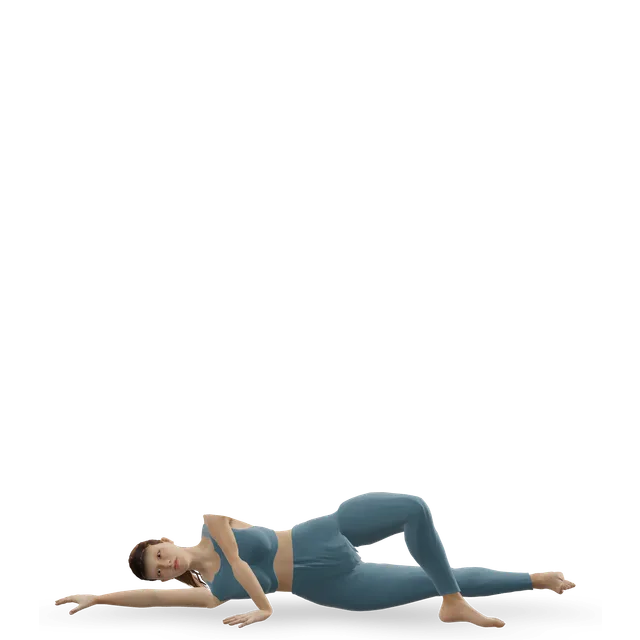
The easier start: side-lying inner thigh lifts

From our move page. Side-lying adduction like this was the first level of the Norwegian programme, as later papers describe it.

  1. Lie on your side with your head on your lower arm. Bend your top leg and put its foot on the floor in front of your bottom knee, or rest the top knee on a cushion.
  2. Straighten your bottom leg, foot flexed.
  3. Breathe out and lift your bottom leg a few centimetres, leading with the inside of your thigh, then lower it without touching down.
  4. Finish the set, then change sides.

Loading the 3D figure…

Gets into position, then repeats the movement. Technical checks passed; qualified exercise review is pending.

The movement on the figure: Side-lying inner thigh lift (Pilates side kick series)

Easier and harder: from a squeeze to the long lever

Move on when you can reach the top of the range in a straight line with no more than mild discomfort; drop back a step if your technique fails or pain goes above 3 out of 10, as the trials did. Ball squeezes, 5 to 10 holds of 5 to 10 seconds (our groin strain guide); side-lying inner thigh lifts, 10 to 12 each side (their move page's dose) or 1 set each side with the reps rising each week from 3 towards 15 (our hamstring and groin workout); the short lever, first as 2 or 3 holds of 10 to 20 seconds each side (our editorial starting point), then 1 set of 3 to 5 slow reps each side, building to 12 to 15 (the trials); then the long lever, starting again at 3 to 5 reps.

How many, and how often

Reps, the trials' way

1 set each side. The Japanese trial used 3 to 5 slow reps in weeks 1 and 2, 7 to 10 in weeks 3 and 4, then 12 to 15, on 2 or 3 days a week, each rep taking about 3 seconds; the Swedish programme also built from 3 to 5 reps to 12 to 15. The Norwegian programme ran three times a week through pre-season and once a week in season.

Sources 7, 12, 6

Keeping it

Once you've built up, once a week keeps the strength: in one trial, 16 reps a side once a week maintained it for 10 weeks.

Sources 10, 6

Holds

2 or 3 holds of 10 to 20 seconds a side, building towards 30: our editorial starting point, close to our advanced core workout's 3 holds of 15 to 20 seconds. Past about 30 seconds, make it harder rather than longer, as our hollow body hold and plank guides advise.

More, for strength

A Danish trial built from 2 sets of 6 to 3 sets of 15 a side, twice a week for 8 weeks, and found a 35.7% gain in eccentric strength. Most Norwegian professional teams used 2 sets of 7 to 10 a side twice a week in pre-season and 2 sets of 8 to 11 once a week in season, rather than the original build-up.

Sources 9, 22, 29

How hard

End each set while you can still lower slowly with your body in a straight line. In your first two weeks, stop well short, with 3 or 4 reps to spare, as our plans advise. Going to failure adds little, and people underestimate the reps they have left by about 1.

Sources 30, 31

When

After your warm-up or at the end of a session. Footballers in the trials did it as part of team training, and our hamstring and groin workout suggests not in the 48 hours before a match.

Short or long lever, and your knees

The long lever loads your hip moreEmerging evidence

With the support at the ankle, the hip's inner-thigh load was 1.54 Nm/kg, against 0.93 at the knee, in 24 adults; peak hip torque was 1.7 against 1.1 Nm/kg in 15 adults, one of whom stopped with lower back pain during the long lever. In a muscle-force model of 15 adults, the long lever was top tier for every adductor and the short lever for two of them. These are lab studies of a few reps.

Sources 1, 2, 4

Your kneeEmerging evidence

Supports below the knee added a sideways and bending load at the knee in one lab study of 24 adults, which we read as an abstract, and the authors of a training study flagged possible stress on the inside of the knee with a high support. If the inside of your knee aches, put the bench under your knee.

Sources 1, 14

Harder stillEmerging evidence

Long-lever and raised versions worked the obliques harder and felt harder: effort rose from 4.6 out of 10 in a side plank to 8.1 in the hardest Copenhagen version, in 15 men. For strong athletes, a weighted hold (loaded to 105 to 150% of body weight) produced up to 48% more force than an unweighted one in 44 rugby players, and over 8 weeks weighted holds built strength in 31 rugby players where unweighted holds didn't.

Sources 5, 32, 33

Common mistakes and how to fix them

Hips sagging or piking

Keep one straight line from head to feet, and end the set when you can't.

Dropping instead of lowering

Lower over about 3 seconds. The exercise was designed around the slow lowering, and the trials measured gains in lowering (eccentric) strength.

Sources 13, 9

Doing too much too soon

Starting on the long lever with lots of reps. It's a high-intensity exercise in any form, so start short, with few reps, and build up over weeks.

Source 13

Rolling forwards or back

Keep your top hip stacked over the bottom one, as in a side plank.

Sinking into your shoulder

Keep your elbow under your shoulder and push the floor away with your forearm.

Holding your breath

Breathe out as you lift, and keep breathing in a hold.

Groin pain, pregnancy and who should change it

With groin pain now

Leave the Copenhagen out while your groin is acutely painful, and follow our groin strain guide, which keeps pain at or below 3 out of 10 at first and brings the Copenhagen in last, short lever first. Its role in rehabilitation is less established than in prevention.

Sources 13, 34

Pregnancy and pelvic girdle pain

No study has tested the Copenhagen in pregnancy. The NHS advises against starting a new vigorous activity in pregnancy, and with pelvic pain it says to keep active but avoid things that make the pain worse. Our reading: don't start it in pregnancy, and leave it out with pelvic girdle pain; our pregnancy strength workout uses the half-kneeling Pallof press and clamshells instead.

Sources 35, 36

After a birth

The NHS advises avoiding planks to start with. Our editorial suggestion: wait until side planks on your knees feel comfortable, as in stage 2 of our diastasis recti guide, then start with the side-lying lift.

Source 37

A sore shoulder or knee

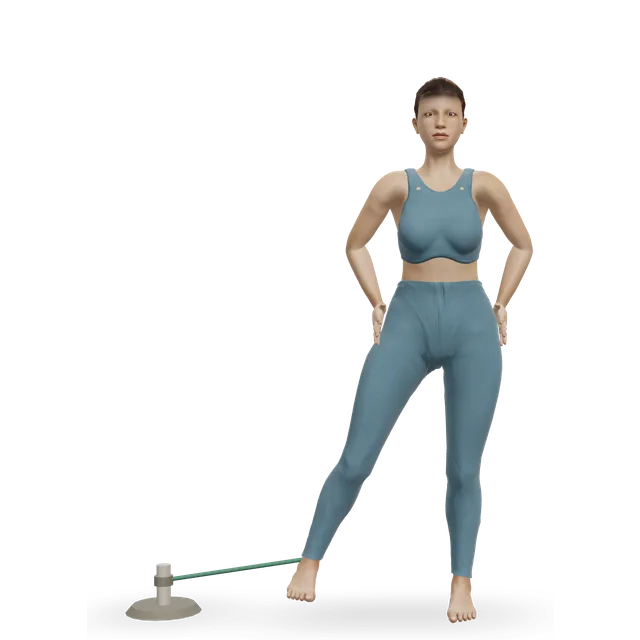
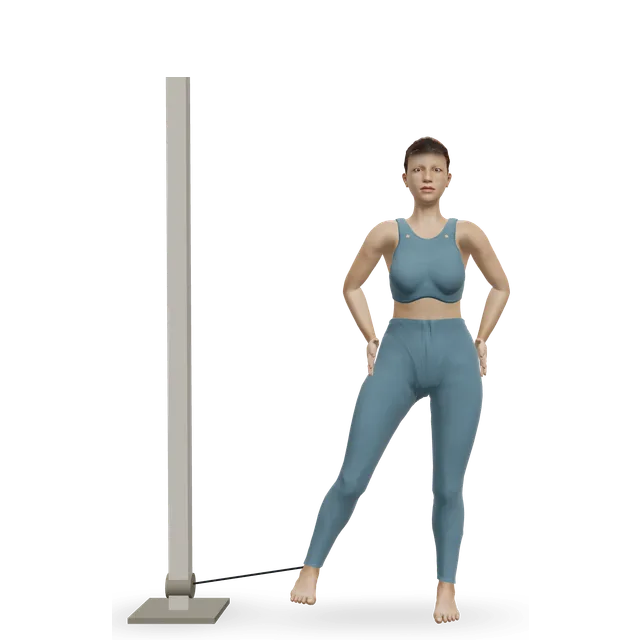
With a sore supporting shoulder, train your inner thighs without leaning on it: ball squeezes, side-lying lifts, or band, cable or machine adduction. With an aching inner knee, use the short lever only.

Source 1

Women

Women gain strength from it as men do. In one study of 131 athletes, women were weaker in adduction for their body weight (2.34 against 3.08 Nm/kg), so you may stay on the short lever longer (our suggestion).

Sources 38, 10

Moves that go with it

Side planks, 2 to 3 holds of 15 to 40 seconds each side (our 30-day ab challenge); knee side planks, 3 holds of 15 to 20 seconds each side, and standing band adduction, 3 sets of 10 to 12 each side (our groin strain guide); cable or machine adduction, 2 to 3 sets of 10 to 15 (our editorial starting point); side plank leg lifts for the outer hip, 2 sets of 5 to 8 each side (our 30-day ab challenge); Cossack squats, 6 slow shifts per side (their move page's dose); and the side-lying groin stretch, 20 to 30 seconds, 2 to 4 times each side (its move page's dose), which you skip after a recent groin strain.

Workouts to follow

Our hamstring and groin injury prevention workout sets out the three-level programme from the football trials; the advanced core workout uses Copenhagen holds; the hockey, field hockey and squash workouts use it short lever first.

A plan that uses it

The strength workout in our runners' plan offers the Copenhagen plank as the harder side plank, 5 to 10 seconds each side.

Warning signs

Stop and get medical help

If you get chest pain or pressure, feel faint or dizzy, are unusually breathless, or your heart races or beats irregularly during exercise, as our plans advise. The American Heart Association says these need immediate medical evaluation.

Source 39

Call 999 (911 in the US)

For chest pain that feels tight, heavy or squeezing, or spreads to your arms, neck, jaw or back; a headache that starts suddenly and is extremely painful, especially while straining; someone who faints while exercising; palpitations that don't go away, or come with chest pain, breathlessness or feeling faint; severe difficulty breathing; or angina pain that doesn't stop after rest and your medicine. Don't drive yourself to A&E.

Sources 40, 41, 42, 43, 44, 45, 46, 47

Check before you start

If you haven't exercised for some time or have a medical condition, speak to your GP first, as the NHS advises. Get advice before hard straining work if your blood pressure is uncontrolled, or you have heart disease or chest pain when you're active, a pacemaker or defibrillator, diabetic eye disease, glaucoma, a hernia, recent eye or tummy surgery, or you're pregnant, as our breathing guide lists.

Source 48

After a faint, or dizziness that keeps coming back

See a GP after any faint, and for dizziness that won't go away or keeps coming back.

Sources 44, 49

A pop in your groin

A pop high on the inner thigh, then a large bruise, a dent or a gap you can feel, or weakness squeezing your legs together: get it assessed within days, as our inner thigh pain guide says. A teenager with sudden pain at the front or top of the hip bone after a sprint, kick or jump, often with a pop, needs an X-ray the same day, as our groin pain guide says.

A pulled muscle

Get help from NHS 111 (in the US, urgent care) if it's very painful or getting worse, there's a lot of swelling or bruising, you can't put weight on it or walk more than a few steps, or it isn't getting better after treating it yourself. Call 999 or go to A&E if you heard a crack, the leg has changed shape or points at an odd angle, it's numb or tingling, or the skin has changed colour or feels cold.

Source 34

Your hip

Call 999 or go to A&E for severe hip pain after a fall or injury, if you can't walk or put weight on your leg, or for tingling or loss of feeling in your hip or leg after an injury. Ask for an urgent GP appointment or get help from NHS 111 for severe hip pain that starts suddenly without an injury, a hip that is swollen and hot, or hip pain with a high temperature. See a GP if hip pain hasn't improved after 2 weeks of treating it at home.

Source 50

Your knee or shoulder

Get advice from NHS 111 if your knee is very painful, badly swollen, locks or gives way, or you can't put weight on it; see a GP if knee pain doesn't improve within a few weeks. Ask for an urgent GP appointment or get help from NHS 111 for sudden or very bad shoulder pain, or if you can't move your arm; see a GP if shoulder pain is getting worse or hasn't improved after 2 weeks.

Sources 51, 52

A new lump or bulge

See a GP if you think you have a hernia: a bulge or lump in your groin, upper thigh or tummy that may get bigger when you cough, sneeze or cry and smaller when you lie down. Get help from NHS 111 if you have a hernia and pain in or around it, a bloated tummy, sickness, constipation, a high temperature or sudden confusion. Call 999 or go to A&E for a femoral hernia (a lump at the top of the thigh) with very bad tummy pain, sickness, being unable to fart or poo, a high temperature or sudden confusion. After an inguinal hernia repair, the NHS says no heavy lifting or strenuous activity for at least 4 to 6 weeks.

Sources 53, 54, 55
Myths

"The Copenhagen plank is only for footballers"Emerging evidence

It's a hard side plank and inner-thigh exercise that anyone with a steady 30-second side plank can learn, and it built strength in women footballers, rink hockey players, rugby players, taekwondo athletes and active adults. What's specific to football is the evidence on groin injuries.

Sources 3, 10, 24, 33, 56, 23

"It prevents groin injuries in everyone"Mixed evidence

It cut groin problems in men's football. A programme like it showed no clear effect in amateur football where most players were women, though that trial can't rule an effect out; it wasn't linked with fewer groin problems in rink hockey; and older groin programmes, pooled, showed no clear effect.

Sources 6, 12, 17, 19

"It will leave you crippled with soreness"Emerging evidence

Built up from a few reps, soreness was mild (a median of 0 to 2 out of 10) and rare: one case in 208 sessions in teenage hockey players. Starting hard, with lots of reps on the long lever, is the likely cause of bad soreness (our reading). A ball squeeze causes less soreness still.

Sources 9, 24, 57, 25

"It's just a harder side plank for your obliques"Emerging evidence

It does work the obliques harder than a side plank, but its main target is your inner thighs: one adductor reached 108% of a maximal effort, and the long lever was top tier for every adductor in a muscle-force model.

Sources 3, 4, 5

"It builds bigger inner thighs"Mixed evidence

Adductor thickness rose about 18% in 8 weeks in 45 active adults and was gone 4 weeks after they stopped, but in 12 young footballers it added nothing beyond normal training.

Sources 56, 58

"Copenhagen planks slim your inner thighs"Strong evidence

Exercising a body part doesn't remove the fat over it: across 13 studies and 1,158 people, training one area didn't reduce the fat there. Our guide to losing thigh fat covers what does.

Source 59

Questions people ask

What muscles does the Copenhagen plank work?

Mainly the inner-thigh (adductor) muscles of your top leg, which hold your body up, with your obliques and the side of your trunk keeping you in a line and your supporting shoulder taking your weight. In muscle activity studies, the adductors worked harder than in most other adductor exercises, and the obliques harder than in a side plank.

Short lever or long lever: which should I do?

Start with the short lever, with the inside of your knee on the bench. Moving the support to your ankle (the long lever, shown in our demo) loads your hip about half as much again, so move on once the short lever is easy and your knee is comfortable.

Should I hold a Copenhagen plank or do reps?

Holds are the gentler start; reps with a slow lowering are what the groin trials used. Begin with 2 or 3 holds of 10 to 20 seconds a side, then switch to slow reps.

How many reps, or how long should I hold?

The trials started at 1 set of 3 to 5 slow reps on each side and added reps every week or two up to 12 to 15. For holds, 2 or 3 of 10 to 20 seconds a side, building towards 30, then make it harder rather than longer.

How often should I do Copenhagen planks?

Two or three times a week while you build up, then once a week keeps the strength: in one trial, a single weekly session of 16 reps a side maintained it for 10 weeks. The football trial used three times a week in pre-season and once a week in season.

Does the Copenhagen plank prevent groin injuries?

In men's football, as far as the evidence goes, yes: a programme built on it cut the share of players with groin problems from 21.3% to 13.5% in a typical week, and a Japanese trial in schoolboys found less groin pain. The trial counted all groin problems, not only strains, and the benefit was seen in teams that kept it up through the season.

Does it work for women and other sports?

It builds inner-thigh strength in women and youth players. The one trial where most players were women found no clear effect on groin injuries, but it was small, had low compliance and was changed by COVID, so it can't rule an effect out, and in rink hockey it wasn't linked with fewer groin problems. Use it for strength, and know the injury benefit has so far been shown in men.

Why does the Copenhagen plank hurt the inside of my knee?

With the bench under your ankle, the inside of your knee takes a sideways load. Move the bench under your knee (the short lever); if knee pain lasts more than a few weeks, see a GP.

Can I do Copenhagen planks with a groin strain?

Not while it's acutely painful. Our groin strain guide brings the Copenhagen in last, short lever first, after squeezes and band work. A pop with a large bruise, a dent or weakness needs assessing within days.

How do I do a Copenhagen plank without a bench?

A sturdy low step, a firm sofa seat or a partner holding your leg works. With none of these, ball squeezes, side-lying inner thigh lifts and band adduction train the same muscles, and a squeeze programme built similar strength in a trial.

Is the Copenhagen plank better than a side plank?

It's harder and does a different job: it adds heavy inner-thigh work and works the obliques harder. Master a steady 30-second side plank first, then use the Copenhagen as the harder step, as our side plank guide does.

Are Copenhagen planks safe in pregnancy?

No study has tested them. The NHS advises against starting a new vigorous activity in pregnancy, and with pelvic girdle pain it says to avoid things that make the pain worse, so leave them out; our pregnancy workouts use the half-kneeling Pallof press and clamshells instead.

Sources

  1. Dæhlin 2026 · Hip and knee loads with the support at the knee, mid-shin or ankle in the Copenhagen exercise, in 24 adults (lab study, J Biomech)
  2. Marušič 2026 · Hip torque in the short- and long-lever Copenhagen exercise, in 15 adults (lab study, Scand J Med Sci Sports)
  3. Serner 2014 · Inner-thigh muscle activity in 8 adductor exercises, in 40 male elite footballers (EMG study, Br J Sports Med)
  4. Collings 2026 · Inner-thigh muscle forces in 8 strength and rehabilitation exercises, in 15 adults (modelling study, Med Sci Sports Exerc)
  5. García-Jaén 2026 · Oblique and six-pack activity in 10 side plank and Copenhagen plank versions, in 15 men (EMG study, J Strength Cond Res)
  6. Harøy 2019 · The Adductor Strengthening Programme and groin problems in 652 male footballers (cluster randomised trial, Br J Sports Med)
  7. Fujisaki 2022 · The Copenhagen adduction exercise and groin pain in 202 male high-school footballers (cluster randomised trial, Int J Sports Phys Ther)
  8. Ishøi 2020 · Preventing and treating common leg muscle injuries in sport: grading the evidence (Danish Society of Sports Physical Therapy statement, Br J Sports Med)
  9. Ishøi 2016 · The Copenhagen adduction exercise and eccentric adductor strength in 24 under-19 footballers (randomised trial, Scand J Med Sci Sports)
  10. Thorarinsdottir 2025 · A low or high volume of the Adductor Strengthening Programme in 52 female footballers (randomised trial, Scand J Med Sci Sports)
  11. Wang 2026 · An adductor strengthening programme in 54 youth footballers, 23 of them girls (randomised trial, Res Sports Med)
  12. Lindblom 2023 · An adductor strength programme against Knee Control in amateur football, most of the adductor arm women (cluster randomised trial, Br J Sports Med)
  13. McHugh 2023 · Adductor strains in athletes (clinical commentary, Int J Sports Phys Ther)
  14. Polglass 2019 · A gentler, step-by-step Copenhagen programme in 17 professional footballers (uncontrolled study, BMJ Open Sport Exerc Med)
  15. Vigotsky 2022 · Muscle activity measured in one session isn't a validated predictor of muscle growth (review, Sports Med)
  16. Dalen-Lorentsen 2024 · What 50 football teams change in the Copenhagen adduction exercise, and why (survey and interviews, BMJ Open Sport Exerc Med)
  17. Quintana-Cepedal 2026 · Copenhagen sessions and groin problems over a season in 162 rink hockey players (cohort study, J Sports Sci)
  18. Tyler 2002 · A preseason adductor programme and groin strains in one professional ice hockey team (before-and-after study, Am J Sports Med)
  19. Esteve 2015 · Preventing groin injuries in sport: 7 trials, 4,191 players (systematic review and meta-analysis, Br J Sports Med)
  20. Harøy 2017 · Adding the Copenhagen adduction exercise to the FIFA 11+ in 45 under-19 male footballers (randomised trial, Am J Sports Med)
  21. Kohavi 2020 · The Copenhagen adduction and sliding hip exercises in 42 young male footballers (randomised trial, Clin J Sport Med)
  22. Schaber 2021 · The Copenhagen adductor exercise's effects on strength and muscle activity: 5 studies (systematic review, Int J Sports Phys Ther)
  23. Unuvar-Yuksel 2025 · Eight weeks of the Copenhagen adduction exercise in 23 teenage taekwondo athletes (uncontrolled study, J Bodyw Mov Ther)
  24. Quintana-Cepedal 2024 · The Copenhagen adduction exercise once or twice a week in 30 young rink hockey players (randomised trial, J Sports Sci)
  25. Pippas 2025 · The Copenhagen adduction exercise against a ball squeeze in 57 male youth footballers (randomised trial, Sci Med Footb)
  26. Whittaker 2015 · Risk factors for groin injury in sport: 29 studies (systematic review, Br J Sports Med)
  27. Waldén 2015 · How common groin injuries are in men's and women's football: 34 studies (systematic review, Br J Sports Med)
  28. Saito 2025 · Exercises for preventing groin pain in athletes: 19 trials (scoping review, Cureus)
  29. Stensø 2022 · How Norwegian professional football teams use the Adductor Strengthening Programme (survey, BMJ Open)
  30. Refalo 2023 · Training to failure against stopping short, for muscle growth: 15 studies (meta-analysis, Sports Med)
  31. Halperin 2022 · How accurately people predict the reps they have left: 12 studies (scoping review and meta-analysis, Sports Med)
  32. O'Connor 2025 · A weighted isometric Copenhagen hold in 44 male rugby players (lab study, Phys Ther Sport)
  33. O'Connor 2025 · Weighted against unweighted Copenhagen holds for 8 weeks in 31 male rugby players (randomised trial, Phys Ther Sport)
  34. NHS · Sprains and strains
  35. NHS · Exercise in pregnancy
  36. NHS · Pelvic pain in pregnancy (past its review date: reviewed December 2022, review due December 2025)
  37. NHS · Your post-pregnancy body
  38. Quintana-Cepedal 2026 · Adductor strength and endurance in 131 male and female athletes (cross-sectional study, J Strength Cond Res)
  39. Paluch 2024 · Resistance exercise training with and without cardiovascular disease: 2023 update (American Heart Association scientific statement, Circulation)
  40. NHS · Heart attack
  41. NHS · Chest pain (past its review date: reviewed August 2023, review due August 2026)
  42. NHS · Headaches
  43. NHS · Subarachnoid haemorrhage
  44. NHS · Fainting
  45. NHS · Heart palpitations
  46. NHS · Shortness of breath
  47. NHS · Angina
  48. NHS · Physical activity guidelines for adults aged 19 to 64
  49. NHS · Dizziness (past its review date: reviewed April 2023, review due April 2026)
  50. NHS · Hip pain
  51. NHS · Knee pain
  52. NHS · Shoulder pain (past its review date: reviewed May 2023, review due May 2026)
  53. NHS · Hernia
  54. NHS · Femoral hernia
  55. NHS · Inguinal hernia repair
  56. Alonso-Fernández 2022 · The Copenhagen adduction exercise, adductor thickness and flexibility in 45 active adults (randomised trial, Int J Environ Res Public Health)
  57. Harøy 2019 · How 501 players took to the Adductor Strengthening Programme (survey, Scand J Med Sci Sports)
  58. Alonso-Calvete 2021 · The Copenhagen adduction exercise and adductor thickness in 12 under-17 male footballers (randomised trial, Int J Environ Res Public Health)
  59. Ramirez-Campillo 2022 · Does exercising a body part reduce the fat over it? 13 studies, 1,158 people (meta-analysis, Hum Mov)

Exercise education, not a personal prescription, and clinical review of these guides is pending. Check with a GP before starting hard training if you have a heart condition, chest pain, dizziness or breathlessness when active, and stop for sharp or increasing pain. Health disclaimer.